Perimenopause quiz: do your symptoms add up?
TL;DR: Perimenopause usually starts in the mid-to-late 40s but can begin as early as 35. Irregular periods and hot flashes are the hallmark signs, but sleep disruption, mood swings, brain fog, and joint pain are just as common and just as real. This quiz-style explainer walks through all 11 major symptom clusters so you can walk into your doctor's appointment knowing exactly what to report.
What is perimenopause and how is it different from menopause?
Perimenopause is the transition phase leading up to menopause. It is the years when your ovaries gradually produce less estrogen and progesterone, your periods become unpredictable, and a lot of your body starts behaving in ways nobody warned you about.
Menopause is a single point in time: twelve consecutive months without a period. Everything before that point is perimenopause. Everything after is postmenopause. Most women blur all three together, which is why so many spend years confused about what is happening to them.
The North American Menopause Society (NAMS) defines perimenopause as beginning when menstrual cycle irregularity first appears and ending twelve months after the final menstrual period [1]. That window can stretch anywhere from two to ten years, with four years being a rough average. So if you are 44 and your cycles started getting weird, you are likely in it, and you may have years to go before you actually reach menopause.
Why does this distinction matter? Because the symptom burden and the treatment options differ at each stage. Hormone therapy started during perimenopause carries a different risk-benefit picture than therapy started a decade after menopause. Getting the stage right shapes every decision that follows. You can read more about how the timeline works in our article on perimenopause age.
When does perimenopause start? What age should you expect it?
The average age of perimenopause onset in the United States is the mid-to-late 40s, but the range is wider than most women are told [2]. The Study of Women's Health Across the Nation (SWAN), which followed over 3,000 women across multiple ethnic groups for more than two decades, found that the median age at the final menstrual period (menopause itself) was 51.4 years [2]. Work backward and meaningful perimenopausal symptoms often start 4 to 8 years earlier, putting onset somewhere between the early and late 40s for most women.
Still, about 1 in 10 women notices changes before age 40. Early perimenopause (technically "early menopause transition") before 40 should prompt a conversation with your doctor about premature ovarian insufficiency, which has its own implications for bone density and cardiovascular health.
Race and ethnicity matter more than the textbooks used to admit. SWAN data showed Black women reach menopause an average of 8.5 months earlier than white women, and Hispanic and Japanese American women show differences in symptom severity even when they reach menopause at similar ages [2]. If your doctor is not asking about your background when talking about your timeline, they are missing something.
Smoking reliably moves the clock forward by about one to two years. High stress, low body weight, and certain autoimmune conditions also link to earlier onset. See our companion piece on when does menopause start for the full breakdown.
Perimenopause symptoms quiz: which of these 11 signs are you experiencing?
This is not a diagnostic test. No quiz is. What it is, is a structured way to catalog what you are feeling so you can have a sharper conversation with a clinician. Go through each symptom cluster and honestly note which ones apply.
1. Irregular periods Your cycles start varying by 7 or more days in length. You might skip a month entirely, then have two periods close together. Bleeding gets heavier or lighter with no pattern. This is usually the first signal, and NAMS identifies menstrual irregularity as the defining feature of early perimenopause [1].
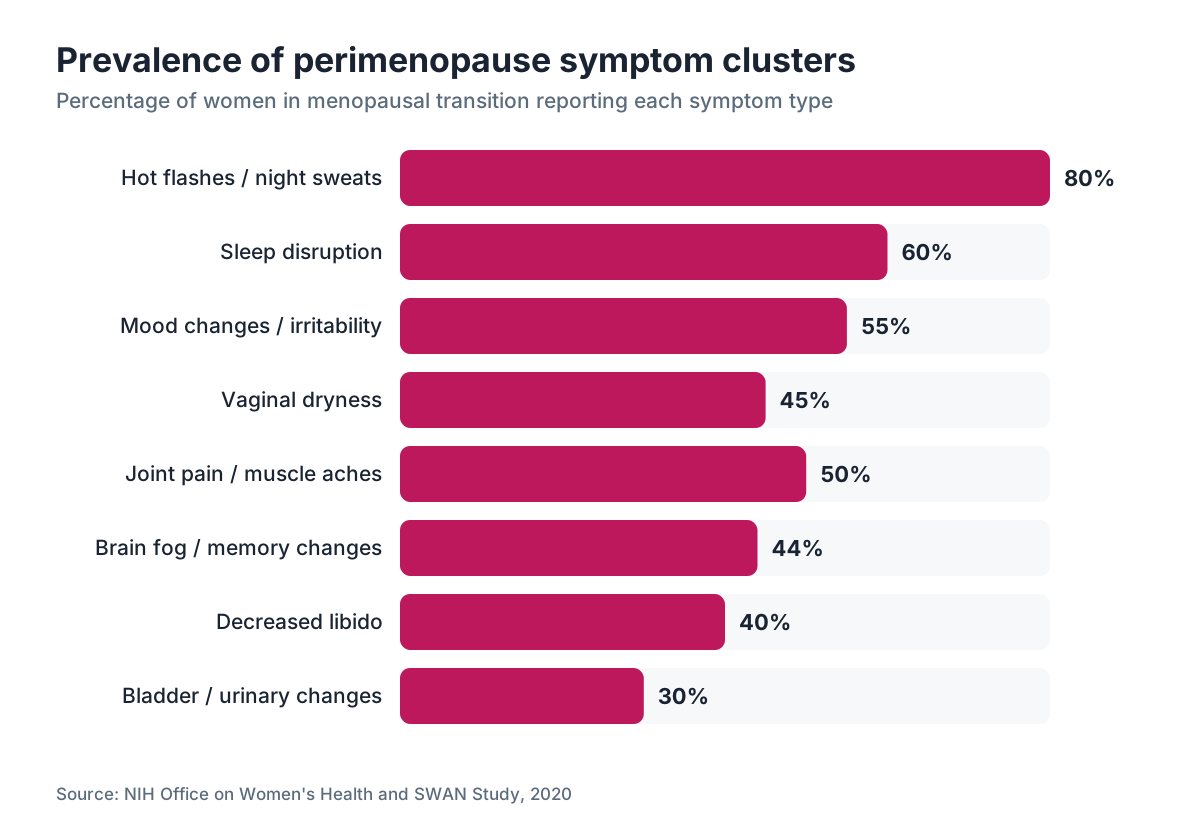
2. Hot flashes and night sweats Sudden waves of heat, usually in the upper body, lasting 1 to 5 minutes, sometimes followed by chills and sweating. Up to 80 percent of women in the menopausal transition experience vasomotor symptoms [3]. Night sweats are the nocturnal version and they wreck sleep even if you do not remember waking up.
3. Sleep disruption Falling asleep is fine. Staying asleep is not. Or you wake at 3 a.m. fully alert. This happens partly because of night sweats and partly because progesterone (which has a sedating quality) is declining. Many women get diagnosed with anxiety or depression when the root cause is terrible sleep from hormonal disruption.
4. Mood changes Irritability that comes out of nowhere. Crying at a commercial. A short fuse you did not used to have. A 2018 study in Menopause found perimenopausal women had significantly higher rates of depressive symptoms than premenopausal women, even after controlling for life stressors [4].
5. Brain fog Missing words mid-sentence. Walking into a room and blanking. Feeling mentally slower than you were five years ago. This is real, not imagined. Estrogen has receptors throughout the brain and declining levels genuinely affect working memory and processing speed, at least temporarily during the transition [5].
6. Vaginal dryness and pain during sex Decreased estrogen thins the vaginal walls, reduces lubrication, and can make sex painful. Unlike hot flashes, this symptom does not go away on its own after menopause. It tends to worsen over time without treatment.
7. Decreased libido A real drop in sexual interest, more than a relationship issue. Testosterone (yes, women have it) also declines during this phase, and it is a primary driver of sexual desire.
8. Joint pain and muscle aches Estrogen has anti-inflammatory properties. When it drops, joints can become achy and stiff, especially in the morning. Fingers, knees, and hips are the most common complaints. Many women end up in rheumatology offices getting tested for autoimmune conditions when the real driver is estrogen decline.
9. Bladder changes More frequent urination, urgency, or leaking when you sneeze or laugh. The bladder and urethra have estrogen receptors, and declining levels weaken the supporting tissue.
10. Heart palpitations A fluttery or racing heartbeat, usually benign during perimenopause but always worth mentioning to a doctor to rule out cardiac causes.
11. Weight gain, especially around the abdomen Body composition shifts during perimenopause. Even women who change nothing about their diet and exercise often gain 2 to 5 pounds and see fat redistribute toward the midsection. This is partly metabolic and partly a consequence of sleep disruption and cortisol changes.
Check 4 or more of these and you have a strong symptom profile for perimenopause. Check 2 or 3 and it could still be perimenopause, or it could be thyroid dysfunction, anemia, or sleep apnea, all of which overlap. Check 1 and you are probably here out of curiosity. Any number warrants a conversation with a clinician if the symptoms are affecting your quality of life.
How do doctors diagnose perimenopause? Does a blood test confirm it?
Here is where a lot of women get frustrated: no single blood test definitively confirms perimenopause. Your doctor may order an FSH (follicle-stimulating hormone) level and find it elevated, which is consistent with perimenopause. But FSH swings wildly during the transition, so one high reading does not confirm it and a normal reading does not rule it out [1].
NAMS guidelines state the diagnosis is primarily clinical, meaning it rests on your age, your symptom history, and your menstrual pattern, not on lab values [1]. If you are in your mid-40s, your periods are irregular, and you have hot flashes, you are almost certainly in perimenopause regardless of what your FSH shows on one particular Tuesday.
Labs still help rule out other causes. A TSH (thyroid) test is worth doing because thyroid dysfunction causes nearly identical symptoms. A complete blood count can rule out anemia (which causes fatigue and mood changes). If there is any question about premature ovarian insufficiency, AMH (anti-Müllerian hormone) levels and estradiol can add information.
The honest clinical reality is that many women spend one to three years getting told their symptoms are anxiety, depression, or just stress before someone connects the dots. If that has happened to you, you are not unusual. Bring a written symptom list to your next appointment, organized by the 11 clusters above, and use the word perimenopause out loud.
What does a perimenopause symptom quiz actually measure?
Clinicians use validated symptom assessment tools in research settings, the most common being the Menopause Rating Scale (MRS) and the Greene Climacteric Scale. These are not quizzes in the pop-culture sense. They are standardized questionnaires that score symptom severity across somatic, psychological, and urogenital domains.
The Menopause Rating Scale has 11 items scored 0 to 4 each, for a maximum score of 44. A total above 16 generally indicates moderate-to-severe symptom burden in research contexts. The Greene Climacteric Scale has 21 items and breaks symptoms into three subscales: psychological, somatic, and vasomotor. Both are validated across multiple countries and languages.
Not every telehealth platform or OB-GYN office uses these formal tools, which is a gap. A well-run intake will at least capture symptom type, severity, and duration before recommending treatment. If you want to self-score before an appointment, the MRS is publicly available and takes about four minutes.
The quiz you find in most magazine articles or wellness apps is not the MRS. It is usually a simplified yes/no checklist, which is fine as a starting point but not fine as a diagnostic substitute. Any symptom screening tool exists to create a record you can hand to a provider, not to tell you definitively that you are or are not in perimenopause.
Which perimenopause symptoms are most commonly missed or misdiagnosed?
Joint pain is probably the most underrecognized. Most clinicians do not mention musculoskeletal symptoms as a feature of perimenopause, so women cycle through rheumatology or orthopedics, sometimes getting unnecessary imaging, without anyone connecting it to estrogen decline. The SWAN study documented joint pain and stiffness in a large share of perimenopausal women [2].
Brain fog is second. Because it is hard to measure objectively, it often gets dismissed or blamed on stress, poor sleep, or aging in general. But research published in Menopause documented real, measurable cognitive changes during the transition that largely resolve after menopause [5].
Heart palpitations scare women into cardiologists' offices, which is the right instinct (always rule out cardiac causes). Once cardiac causes are cleared, though, nobody thinks to mention that estrogen withdrawal can trigger palpitations through effects on the autonomic nervous system.
Mood changes, including irritability and depressive symptoms, get routinely treated with antidepressants when the underlying driver is hormonal. Antidepressants are not always wrong here. SNRIs like venlafaxine also help with hot flashes. But starting an antidepressant without acknowledging the hormonal context can mean missing the more targeted option.
Skin and hair changes round out the list. Thinning hair, dry skin, and reduced skin elasticity are real perimenopausal symptoms tied to declining estrogen. They rarely make it into symptom checklists.
What are the treatment options once you know you have perimenopause symptoms?
The menu is wider than most women realize, and the choice depends on which symptoms bother you most, your personal and family medical history, and how you feel about hormones.
Hormone therapy (HT) This is the most effective treatment for vasomotor symptoms (hot flashes, night sweats) and for vaginal dryness. The 2022 NAMS Position Statement on hormone therapy states: "For women aged younger than 60 years or who are within 10 years of menopause onset, and who have no contraindications, the benefit-risk ratio is favorable for treatment of bothersome vasomotor symptoms" [6]. This overturned a decade of unnecessary fear that followed misreadings of the Women's Health Initiative data. You can walk through the full landscape in our hormone replacement therapy article.
An estrogen patch is a common delivery method that skips first-pass liver metabolism and tends to have a cleaner side-effect profile than oral estradiol. Women with a uterus need to pair estrogen with progesterone to protect the uterine lining.
Non-hormonal prescription options Fezolinetant (brand name Veozah), approved by the FDA in May 2023, is a neurokinin B receptor antagonist that reduces hot flash frequency and severity without estrogen [7]. It is a real option for women who cannot or prefer not to use hormones. SNRIs like paroxetine (the only FDA-approved non-hormonal option before Veozah) and venlafaxine also reduce vasomotor symptoms.
Lifestyle interventions CBT (cognitive behavioral therapy) aimed at hot flashes has a real evidence base, reducing symptom bother even when it does not reduce symptom frequency. Aerobic exercise helps with mood, sleep, and body composition. Cutting alcohol and hot beverages can lower hot flash frequency.
GLP-1 receptor agonists for perimenopausal weight gain The abdominal weight gain of perimenopause is not purely behavioral, but that does not mean medication is always the answer. For women who have tried lifestyle changes without results, or who have metabolic risk factors, GLP-1 medications like semaglutide are increasingly prescribed. The STEP 1 trial showed a mean weight reduction of 14.9 percent over 68 weeks with semaglutide 2.4 mg in adults with obesity [8]. If you are exploring this route, semaglutide for weight loss is a useful next read. WomenRx offers GLP-1 prescribing alongside hormone evaluation so both can be addressed in one place, which matters because the two problems often overlap.
Vaginal estrogen For vaginal dryness and bladder symptoms specifically, local (vaginal) estrogen is extremely effective and has negligible systemic absorption. It is safe even for most women who cannot take systemic estrogen. It stays under-prescribed and under-discussed.
How is perimenopause connected to bone density and long-term health?
Estrogen is the primary protector of bone in women. The fastest period of bone loss in a woman's lifetime is the two to three years around the final menstrual period, and that process begins during perimenopause [9]. Women can lose 2 to 3 percent of bone density per year during this window, which is why a bone density test becomes relevant earlier than most women expect.
The U.S. Preventive Services Task Force recommends bone density screening (DXA scan) for all women aged 65 and older, and for younger postmenopausal women with risk factors [9]. But if you have had an early perimenopause, a family history of osteoporosis, or a history of medications that affect bone (like corticosteroids or some antidepressants), talking to your doctor about earlier screening makes sense.
Cardiovascular risk also shifts during the transition. Before menopause, estrogen protects the vascular endothelium. As levels decline, LDL tends to rise, HDL may fall, and arterial stiffness increases. This does not mean every perimenopausal woman needs a statin, but it does mean lipid panels and blood pressure checks take on new weight in your 40s.
Nobody has perfect long-term data on whether treating perimenopause symptoms aggressively with hormone therapy changes cardiovascular or bone outcomes in a definitive way. The closest we have is observational data supporting the "timing hypothesis" (starting HT early in the transition has more benefit than starting late). Randomized trial data at this level of specificity is thin. The honest answer is that early treatment seems better, but the certainty is moderate, not absolute.
Can perimenopause cause anxiety and depression, or does it just make existing conditions worse?
Both, actually. Perimenopause can trigger new-onset mood disorders in women with no prior psychiatric history, and it reliably worsens pre-existing anxiety and depression.
The biology is straightforward: estrogen modulates serotonin, dopamine, and GABA systems. When estrogen swings wildly (which is what happens in early perimenopause, not a gradual decline but a chaotic one), those neurotransmitter systems become less stable. A 2018 analysis published in Menopause found the odds of depressive symptoms were significantly higher in perimenopausal women than in premenopausal women, with the highest risk in women who also had significant sleep disturbance [4].
The clinical distinction that matters is whether mood symptoms track with hormonal fluctuation. If your anxiety peaks in the week before your period or in the middle of the night when you are also sweating, that points to a hormonal driver. If your anxiety is constant and unrelated to your cycle, that is a different (or additional) picture.
Treating the hormonal disruption often improves mood without adding a psychiatric medication. That is not always true, and it is not a reason to avoid antidepressants when they are genuinely indicated. But starting an antidepressant without also addressing the hormone piece often leaves women partially treated.
What should you track before your perimenopause appointment?
Three months of period tracking is the minimum useful window. Note the first day of each period, how long it lasts, how heavy it is (on a simple 1-5 scale), and any spotting in between. Apps like Clue or Apple Health work. So does a paper calendar. The point is to have actual data, not a vague sense that things have been irregular.
Log hot flashes for at least two weeks, including time of day, severity (1-10), and whether they wake you. This sounds tedious but takes about 30 seconds per episode and gives your doctor something concrete.
Note your sleep. Total hours, how many times you woke up, and how rested you feel on a 1-10 scale in the morning. Poor sleep is so common in perimenopause that it tends to get normalized. A written record makes the pattern undeniable.
Bring a medication and supplement list with everything on it, because several common supplements (black cohosh, St. John's wort) interact with medications and affect hormone levels.
Note which symptoms have changed from your baseline. "I've always been anxious" is different from "I became significantly more anxious in the last 18 months." The change from baseline is what points toward perimenopause rather than a pre-existing condition.
If you are considering a telehealth provider rather than in-person care, look for one that does a thorough intake questionnaire covering all symptom domains, orders labs before prescribing, and follows up at 6 to 12 weeks to assess response. That structure matters more than the platform.
Are perimenopause symptoms different if you are in your late 30s versus your late 40s?
Yes, with a few important differences.
Women who enter perimenopause in their late 30s or very early 40s are more likely to present with mood and sleep symptoms before vasomotor symptoms become prominent. Hot flashes can come later in the sequence or start out milder. This is one reason the diagnosis gets missed in younger women: they are anxious and exhausted but not sweating through their sheets yet, so no one thinks perimenopause.
Younger perimenopausal women also tend to have more erratic hormonal swings rather than a steady decline. Estrogen can spike high (causing breast tenderness, bloating, heavy periods) and then crash, rather than just trending downward. This is the "estrogen dominance" pattern that functional medicine practitioners talk about, and while the terminology is contested, the underlying phenomenon of high-then-low estrogen fluctuation in early perimenopause is real.
Contraception complicates things for younger women in perimenopause. You can still ovulate sporadically, so pregnancy is still possible, and combined hormonal contraceptives will mask the cycle irregularity that is the main diagnostic signal. Some women in their late 30s are simultaneously perimenopausal and using hormonal birth control, which makes it nearly impossible to track where they are in the transition without stopping the contraceptive for a period of time (which raises pregnancy risk).
For context on the age question in both directions, see menopause age.
What should you realistically expect if you start hormone therapy during perimenopause?
Hot flashes typically respond within two to four weeks of starting systemic hormone therapy at an adequate dose. Sleep usually improves within six weeks. Mood often improves on a similar timeline, though some women need a few months.
Vaginal dryness responds to local estrogen in four to twelve weeks. The tissue needs time to rebuild.
Brain fog is the least predictable. Many women report clear improvement. Some do not. The research is mixed and the studies are not long enough to be definitive.
Weight is where expectations need resetting. Hormone therapy does not cause weight gain in most women, despite decades of worry, but it also does not cause meaningful weight loss. What it often does is shift body composition slightly, reducing visceral fat relative to subcutaneous fat, which is metabolically meaningful but may not show up on the scale. If weight is a primary concern alongside symptom management, the combination of hormone therapy and GLP-1 treatment is something more clinicians are offering. WomenRx is one of the practices that evaluates hormonal and metabolic needs together, which simplifies the process for women dealing with both.
Side effects in the first 30 to 60 days can include breast tenderness, spotting, and bloating. Most of these resolve as your body adjusts. If they persist past three months, the dose or delivery method likely needs adjusting, not stopping.
The estrogen patch versus oral estradiol question is worth discussing with your provider. Patches skip liver metabolism, which means lower clot risk compared to oral forms, and steadier hormone levels, which some women find reduces symptom breakthrough.
Frequently asked questions
Can a blood test tell me if I am in perimenopause?
Not definitively. FSH (follicle-stimulating hormone) rises as the ovaries slow down, but it fluctuates so much during perimenopause that a single result is unreliable. NAMS guidelines say the diagnosis is primarily clinical, based on your age, symptom pattern, and menstrual irregularity. Labs are most useful for ruling out thyroid disease, anemia, or premature ovarian insufficiency, not for confirming perimenopause itself.
How many periods can I miss before I am in perimenopause?
Missing a single period can happen for many reasons and does not confirm perimenopause. The signal clinicians look for is a pattern: cycles varying by 7 or more days in length over several months, or skipping periods more than once. One missed period in your late 30s or 40s warrants a pregnancy test first, then a conversation about hormonal changes if other symptoms are also present.
Is it perimenopause or thyroid problems? How do I tell the difference?
The overlap is almost complete: fatigue, weight gain, mood changes, brain fog, and sleep disruption occur in both. The simplest step is a TSH test. Hypothyroidism tends to produce more cold intolerance and constipation; perimenopause more characteristically causes hot flashes and night sweats. Many women have both at once, so testing for thyroid disease does not rule out perimenopause and vice versa.
Can perimenopause start at 35?
Yes, though it is not typical. Perimenopause before 40 is called early menopause transition, and before 40 with confirmed ovarian changes it may qualify as premature ovarian insufficiency (POI). About 1 percent of women experience POI before age 40. If you are 35 to 40 and have irregular cycles alongside hot flashes or other symptoms, see a doctor for evaluation rather than assuming it is too early to be hormonal.
Do all women get hot flashes in perimenopause?
No. Roughly 80 percent of women experience some vasomotor symptoms (hot flashes or night sweats) during the menopause transition, but 20 percent do not, or have symptoms so mild they barely register. Ethnicity affects prevalence: SWAN data showed Black women report hot flashes more frequently and at higher severity than white or Asian women. Not having hot flashes does not mean you are not in perimenopause.
How long does perimenopause last?
The average is about four years from first menstrual irregularity to the final menstrual period, but the range is two to ten years. Some women move through it quickly. Others have a prolonged transition, especially if they smoke, have lower body weight, or have a family history of late menopause. You officially exit perimenopause on the day you have gone twelve consecutive months without a period.
Can perimenopause cause weight gain even if I have not changed my eating habits?
Yes. Declining estrogen shifts fat distribution toward the abdomen, slows resting metabolic rate modestly, and disrupts sleep in ways that raise cortisol and appetite-regulating hormones. A woman who has not changed her diet or exercise routine may still gain 2 to 5 pounds during the transition and notice her waist measurement increasing. This is not a personal failing. It is a metabolic shift that often needs active countermeasures.
Is hormone therapy safe for perimenopausal women?
For most healthy women under 60 who are within 10 years of menopause onset, NAMS states the benefit-risk ratio of hormone therapy is favorable for treating bothersome symptoms. The absolute risks are small in this population. Women with a history of estrogen-receptor-positive breast cancer, active clotting disorders, or unexplained vaginal bleeding need individualized evaluation before starting. The decision should be made with a provider who knows your full history.
What is the difference between perimenopause and premenstrual dysphoric disorder (PMDD)?
PMDD is a severe luteal-phase mood disorder tied to cycling hormones, typically diagnosed in women of reproductive age. Perimenopause can worsen or mimic PMDD because fluctuating estrogen destabilizes the same serotonin pathways. The key distinguishing feature is timing: PMDD tracks closely with the luteal phase of each cycle. Perimenopausal mood disruption is less predictable and often present even outside the premenstrual window.
Can I still get pregnant during perimenopause?
Yes. Until you have gone twelve full months without a period (the definition of menopause), ovulation is still possible, even if it is irregular. Unintended pregnancy rates in women over 40 are not zero. If you do not want to become pregnant, keep using contraception until your provider confirms you have reached menopause. Hormone therapy is not contraception.
Does a perimenopause quiz replace a doctor's evaluation?
No. A symptoms quiz is a structured way to organize what you are experiencing so you can communicate it clearly to a clinician. It cannot assess your medical history, order labs, rule out other diagnoses, or prescribe treatment. Think of it as pre-appointment homework, not a diagnosis. The goal is to walk into your appointment with a clear, specific symptom picture rather than a vague sense that something is off.
What labs should I ask for at a perimenopause evaluation?
A reasonable baseline panel includes TSH (to rule out thyroid dysfunction), a complete blood count (to rule out anemia), fasting lipids (cardiovascular risk shifts during the transition), and fasting glucose or HbA1c (insulin resistance increases in perimenopause). FSH and estradiol add context but are not diagnostic alone. AMH can help estimate ovarian reserve if there is a question about how far along you are in the transition.
Are there natural remedies that actually work for perimenopause symptoms?
Black cohosh has the most studied track record for mild vasomotor symptoms, though the evidence is modest and inconsistent. Phytoestrogens (soy isoflavones) may help some women with mild hot flashes. Cognitive behavioral therapy (CBT) has a real evidence base for reducing hot flash bother. Melatonin and good sleep hygiene help with sleep. None of these match the efficacy of hormone therapy for moderate-to-severe symptoms, but for mild symptoms or women who prefer to avoid hormones, they are reasonable starting points.
How do I find a doctor who actually knows about perimenopause?
NAMS maintains a Menopause Practitioner directory at menopause.org where you can search by zip code for certified menopause practitioners. Not every OB-GYN has specific training in menopause medicine, and internal medicine or family medicine providers vary widely. Telehealth platforms that specialize in women's hormones have become a practical alternative for many women, particularly those in areas with limited access to specialists.
Sources
- North American Menopause Society (NAMS), Menopause Practice: A Clinician's Guide
- Study of Women's Health Across the Nation (SWAN), NIH / University of Michigan
- NIH Office on Women's Health, Menopause overview
- Bromberger JT et al., Menopause 2018; prevalence of depressive symptoms across menopausal transition
- Maki PM et al., Menopause 2015; cognitive changes across the menopausal transition
- The North American Menopause Society, 2022 Hormone Therapy Position Statement
- FDA Drug Approval, Veozah (fezolinetant), May 2023
- Wilding JPH et al., STEP 1 trial, New England Journal of Medicine 2021
- U.S. Preventive Services Task Force, Osteoporosis Screening Recommendation 2018
- Endocrine Society Clinical Practice Guidelines
- National Institute on Aging, NIH, Menopause information page