Perimenopause night sweats: causes, how long they last, and what actually helps
TL;DR: Night sweats in perimenopause come from falling estrogen throwing off the brain's temperature control. They hit roughly 75-80% of women and can start years before the last period. Hormone therapy works best. Non-hormonal options like SNRIs and fezolinetant help moderately. Most women improve within 2-5 years after menopause, though some deal with them a decade or more.
What causes night sweats during perimenopause?
The short answer is estrogen. But the mechanism is more specific than that, and understanding it explains why the sweats are so unpredictable and so disruptive.
Your brain's thermostat sits in the hypothalamus. Estrogen keeps the thermostat's "comfort zone" wide, so small rises in core body temperature don't trigger a sweat response. As estrogen fluctuates and eventually falls during perimenopause, that comfort zone narrows dramatically. The hypothalamus becomes hypersensitive to tiny temperature shifts, and it fires off a full vasodilatory and sweating response to cool you down, even when you're not actually overheated [1].
The neurotransmitter most directly involved is norepinephrine, which acts in the hypothalamic thermoregulatory center. A second pathway involves kisspeptin/neurokinin B/dynorphin (KNDy) neurons in the arcuate nucleus. When estrogen drops, KNDy neuron activity surges, which in turn activates the heat-dissipation pathway. This is exactly why the FDA-approved non-hormonal drug fezolinetant works: it blocks the neurokinin B3 receptor, interrupting that chain before the sweat signal fires [2].
Perimenopause makes this worse than surgical menopause in one specific way. In surgical menopause, estrogen drops once and stays low. In perimenopause, estrogen swings wildly, sometimes spiking higher than normal before crashing. Those swings, not the absolute level, seem to be the biggest driver of vasomotor symptoms. That's also why symptoms can be severe even when a woman is still having regular periods.
Other factors that worsen night sweats include a warmer bedroom, alcohol (especially wine), spicy food, caffeine close to bedtime, smoking, obesity, and high stress. None of them cause the sweats on their own, but they narrow the thermostat further.
How common are night sweats in perimenopause, and am I normal?
Very common. Roughly 75-80% of women in the menopausal transition get vasomotor symptoms, the clinical term covering hot flashes and night sweats [3]. Night sweats specifically bother a meaningful majority of that group.
The Study of Women's Health Across the Nation (SWAN), which followed over 3,300 women for more than a decade, found that moderate-to-severe vasomotor symptoms persist for a median of 7.4 years from first onset. For women who started symptoms before their final menstrual period (which is most perimenopausal women), the median duration was 11.57 years [4]. That number surprises almost everyone.
Race and ethnicity matter here. SWAN found that Black women report the highest frequency and longest duration of vasomotor symptoms. Hispanic women report more symptoms than non-Hispanic white women. Asian women (particularly Chinese and Japanese) tend to report the fewest, though researchers debate how much of that is reporting differences versus biological ones [4].
Severity varies hugely too. Some women wake once a night damp. Others soak through sheets and pajamas multiple times a night, which wrecks sleep badly enough to cause secondary anxiety, memory problems, and mood changes. Both ends of that spectrum are real, and neither should be dismissed.
When do perimenopause night sweats start, and how long do they last?
Night sweats can begin years before your last period. Perimenopause itself typically starts in the mid-to-late 40s, though it can start as early as the late 30s [5]. Vasomotor symptoms often appear in early perimenopause, when cycles start becoming irregular but haven't stopped.
The SWAN data is worth repeating here because it answers this question directly: women who first develop symptoms during perimenopause (rather than after the final period) have a median total duration of 11.57 years. Half of those women deal with night sweats for more than a decade [4].
This matters practically. Many women are told night sweats last "a year or two" and will resolve on their own. Some women do see symptoms fade quickly. But the SWAN data suggests that's the minority experience. If your symptoms are severe and disrupting sleep, waiting them out is a legitimate choice. It's not the only one, and it may mean waiting a long time.
Symptoms are typically worst in the two years surrounding the final period, then gradually improve. But "gradually" can mean five or more years of occasional sweating. When menopause officially starts (12 consecutive months without a period) doesn't mean symptoms stop immediately.
How are night sweats different from regular hot flashes?
They're the same underlying event happening at different times of day. A hot flash is a sudden sensation of heat, usually starting in the chest and rising to the face, with flushing and sweating, lasting anywhere from 30 seconds to 10 minutes. When that happens during sleep, it's a night sweat.
The nocturnal version is often more disruptive because it wakes you. Many women don't remember falling asleep and then sweating. They just wake up soaked and then chilled, because evaporating sweat cools the body fast. That cold-then-hot cycle is its own misery.
Some women get one but not the other. It's common to have frequent night sweats with few daytime hot flashes, or the reverse. The mechanisms are the same, but sleep itself alters thermoregulation, which may be why some women's symptoms cluster at night.
If you're waking with soaking sweats plus other symptoms like unexplained weight loss, a persistent cough, or swollen lymph nodes, those sweats need evaluation beyond perimenopause. Lymphoma, tuberculosis, HIV, and several other conditions cause night sweats too [11]. Perimenopause is by far the most common cause in women 40-55, but it's a diagnosis you reach in the right context, not a default assumption.
What treatments actually work for perimenopause night sweats?
There are three tiers: hormone therapy (most effective), non-hormonal prescription drugs (moderate effect), and lifestyle changes (modest, but real and zero-risk). The evidence for each is not equal.
Hormone therapy (HT)
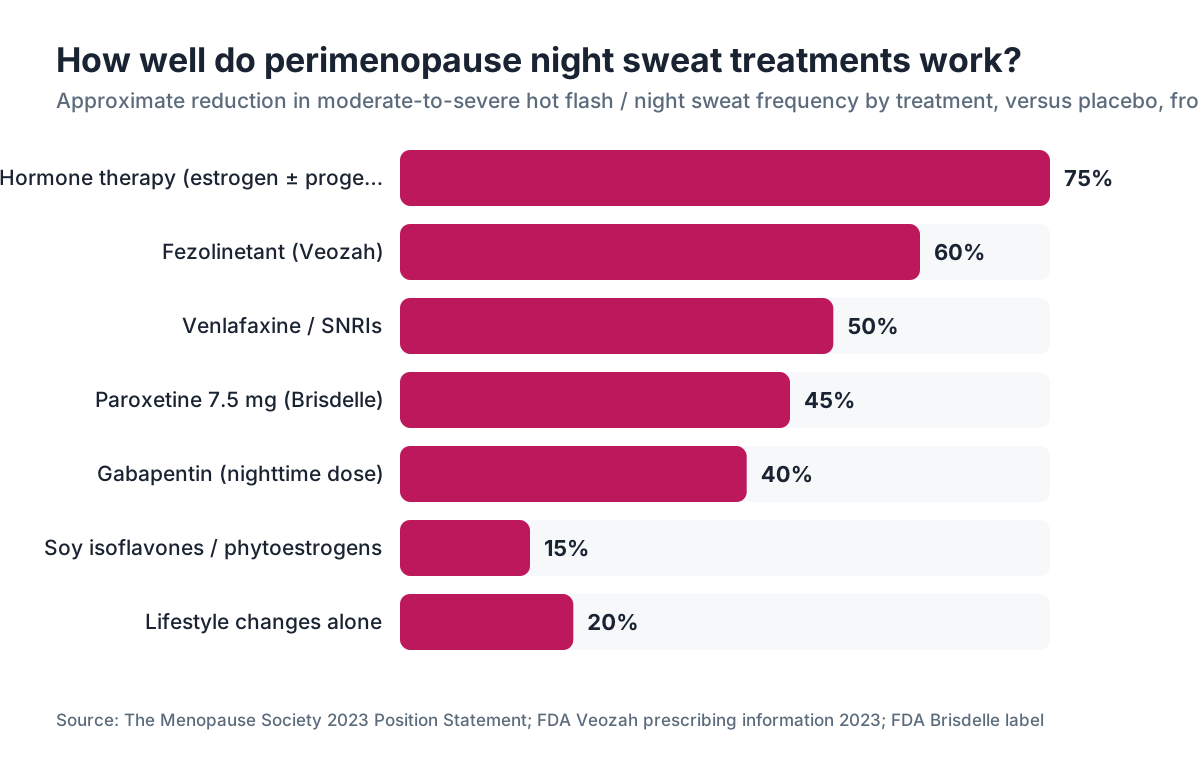
For vasomotor symptoms, hormone replacement therapy is the most effective option available. Full stop. Multiple meta-analyses confirm it cuts hot flash frequency by roughly 75% and severity by more. The Menopause Society (formerly NAMS) states that "hormone therapy remains the most effective treatment for vasomotor symptoms" [3].
Estrogen alone (if you've had a hysterectomy) or estrogen plus progestogen (if you have a uterus) works. Delivery options include patches, gels, sprays, and pills. Many clinicians prefer transdermal delivery because it avoids first-pass liver metabolism and carries a lower clot risk than oral estrogen [8]. You can read more about one common delivery method in our estrogen patch overview.
Progesterone is required with estrogen if you still have a uterus, to protect the uterine lining. Micronized progesterone (Prometrium) has some evidence suggesting it may cause fewer adverse metabolic effects than synthetic progestins.
The Women's Health Initiative scared a generation of women and doctors away from HT. That study had real limitations: participants averaged 63 years old, many years past menopause. The current consensus from the Menopause Society, the Endocrine Society, and the British Menopause Society is that for healthy women under 60 or within 10 years of menopause onset, the benefits of HT for symptom relief generally outweigh the risks. That's not universal, there are individual contraindications, but fear of HT based on WHI data alone is outdated [3].
Non-hormonal prescription options
Fezolinetant (brand name Veozah) is the first FDA-approved non-hormonal drug designed specifically for vasomotor symptoms. It blocks the NK3 receptor, interrupting the KNDy neuron pathway described above. In the SKYLIGHT 1 and 2 trials, fezolinetant cut moderate-to-severe hot flash frequency by about 60% versus 40% for placebo at 12 weeks [2]. It's a real option for women who can't or won't use hormones.
SNRIs, particularly venlafaxine (37.5-75 mg) and desvenlafaxine, reduce hot flash frequency by roughly 40-60% in clinical trials. Paroxetine 7.5 mg (Brisdelle) is the only SSRI with an FDA indication for vasomotor symptoms [9]. These are useful, especially if depression or anxiety co-exist, but they don't match hormones.
Gabapentin reduces night sweats and can help nighttime-predominant symptoms because of its sedating effect. Doses studied range from 300 to 900 mg at night. Side effects (dizziness, sedation) limit daytime use.
Clonidine has modest evidence and more side effects than the options above. Most specialists put it last among non-hormonal choices.
Lifestyle approaches
Keep your bedroom cool: 65 to 68 degrees F is the target most often cited. Layered, breathable bedding (cotton or moisture-wicking fabrics) helps. Skip alcohol, spicy food, and caffeine in the three to four hours before bed. Cognitive behavioral therapy (CBT) adapted for hot flashes has real randomized trial evidence showing it reduces how much symptoms bother you, even when it doesn't fully eliminate the physical events [12]. Paced respiration (slow, deep breathing at onset) is low-evidence but harmless.
Phytoestrogens (soy isoflavones, black cohosh) get a lot of attention. The evidence is inconsistent and generally shows modest effects at best. The Menopause Society notes that some soy isoflavone supplements may reduce hot flash frequency modestly, but effects are small and variable [3]. Black cohosh has mixed trial results and rare but real reports of liver toxicity. Neither replaces hormone therapy.
What does the evidence say about hormone therapy safety for night sweats?
This is where the nuance matters most, because "is HT safe" isn't a yes or no question. It's a "safe compared to what, for whom, and for how long" question.
Breast cancer risk is the central concern. Estrogen-only HT (for women without a uterus) has not been shown to increase breast cancer risk in the WHI data and may even reduce it slightly. Combined estrogen-progestogen therapy carries a small increase in breast cancer risk with longer use (five or more years), with the magnitude roughly comparable to drinking one alcoholic drink a day, according to a large 2019 Lancet meta-analysis [6]. Absolute risk matters more than relative risk: the excess risk is small in women who are young and healthy when they start.
Clot and stroke risk is higher with oral estrogen. Transdermal estrogen does not appear to increase clot risk in most studies, which is a real reason to prefer patches, gels, or sprays over pills, particularly for women with borderline risk factors [8].
Cardiovascular effects depend on timing. The "timing hypothesis" (also called the window of opportunity) holds that starting HT close to menopause may protect the heart, while starting it a decade or more later may raise cardiovascular risk. This isn't fully proven, but it has substantial observational and some mechanistic support.
Here's the bottom line for most perimenopausal women. If you're under 60, within 10 years of menopause, with no personal history of breast cancer, clotting disorders, or active cardiovascular disease, the current evidence supports discussing HT as a legitimate first-line option for severe night sweats. Have that conversation with a clinician who knows your history, not with a general article, including this one.
A service like WomenRx can connect you with clinicians who specialize in these conversations if your primary care provider isn't comfortable with them.
Can weight gain during perimenopause make night sweats worse?
Yes, and the relationship runs both ways. Fat tissue generates heat and insulates the body, which raises baseline core temperature and makes it easier to cross the threshold that triggers a sweat. Multiple studies find higher BMI tracks with more frequent and severe vasomotor symptoms [3].
Perimenopause itself tends to push fat toward the middle even without changes in total calories, largely driven by declining estrogen. This can set up a loop where rising body fat worsens night sweats, which disrupt sleep, which raises cortisol and drives more fat storage.
Weight loss helps. A 2010 trial in the Archives of Internal Medicine found that women who lost weight through a behavioral program reported significantly fewer vasomotor symptoms than controls [10]. The effect was modest but consistent.
This intersection matters more now that GLP-1 receptor agonists like semaglutide have moved into perimenopause-age women. These drugs produce significant weight loss (the STEP 1 trial found mean body weight reduction of 14.9% with semaglutide 2.4 mg over 68 weeks [7]), and there's growing interest in whether that weight reduction secondarily eases vasomotor symptoms. No large trial has tested this directly yet, but the mechanistic case is reasonable. If you're exploring GLP-1 options, our semaglutide for weight loss guide covers the evidence in more detail.
How do I talk to my doctor about perimenopause night sweats?
Come with specifics. Doctors respond better to "I'm waking 3 to 4 times a night, completely drenched, every night for three months, and I'm exhausted" than to "I've been having hot flashes." The severity and frequency of your symptoms directly shape treatment decisions.
Bring a one-week symptom diary if you can. Note how many times you wake, how bad each episode feels (mild, moderate, severe), and what seems to trigger it. This gives the clinician something concrete to assess and documents that symptoms are actually interrupting your sleep.
Ask directly: is hormone therapy an option for me? If the answer is "no" without any discussion of your individual risk factors, push for specifics. Ask which contraindication applies to you personally.
Ask about non-hormonal options if HT isn't right for you. Fezolinetant, venlafaxine, paroxetine, and gabapentin are all FDA-cleared or evidence-supported routes.
If your doctor dismisses severe night sweats as "just part of menopause" and won't engage with treatment options, that's a signal to seek a second opinion, ideally from a clinician with menopause specialty training. The Menopause Society maintains a list of certified menopause practitioners at menopause.org [3].
Telehealth has genuinely widened access here. Plenty of women in their 40s don't have a gynecologist, or their primary care doctor is uncomfortable prescribing HT. Specialist telehealth platforms focused on hormonal health can fill that gap.
Are there any new or emerging treatments for perimenopause night sweats?
Fezolinetant is the newest FDA approval (approved May 2023), and it's a genuine conceptual advance because it targets the specific neurological pathway behind hot flashes rather than broadly replacing hormones [2]. It's still relatively new in practice and costs around $550 a month without insurance, which is a real barrier.
Other NK3 receptor antagonists are in trials. ESN364 and MLE4901 showed promise in early studies but had liver safety signals that paused development. The field is active.
Researchers are also testing whether CGRP antagonists (used in migraine) might reduce hot flashes, since CGRP drives peripheral vasodilation. This is preclinical and early-stage.
On the hormone side, there's growing interest in lower-dose transdermal regimens that may control symptoms with less systemic exposure, particularly for women approaching menopause age who want shorter-term treatment.
For the sleep disruption that night sweats cause, low-dose doxepin 3-6 mg has FDA approval for insomnia, and some clinicians use it as an add-on in perimenopausal women whose main complaint is waking. It doesn't treat the sweats themselves, but it can improve sleep.
Nobody has good data yet on whether testosterone supplementation reduces vasomotor symptoms in perimenopausal women, despite some clinician enthusiasm. The closest evidence comes from studies in postmenopausal women where testosterone added to HT may cut the number of hot flashes, but this isn't an established indication.
What's the difference between perimenopause and menopause night sweats?
Mechanically, they're the same. The distinction is timing. Perimenopause is the transition phase leading up to the final period, often lasting four to eight years. Menopause is defined as 12 consecutive months without a period. Post-menopause is everything after.
Night sweats during perimenopause often track with the hormonal chaos of the transition. Estrogen swings produce unpredictable patterns. Symptoms may worsen in the week before a period (when estrogen drops) and ease temporarily mid-cycle.
After the final period, estrogen settles at a low level rather than swinging. Some women find their sweats actually worsen in the first year or two after menopause because estrogen is now consistently low, not sometimes high. Others find the unpredictability resolves and symptoms become more manageable.
Treatment is the same across both phases. The main clinical difference: a perimenopausal woman who still wants contraception has to think about that alongside any HT regimen, because perimenopause is not reliably infertile. Low-dose combined oral contraceptives can manage symptoms and provide contraception at once in appropriate candidates.
What should I track to understand my own night sweat patterns?
A simple diary is more useful than most women expect. For two to four weeks, note each morning: how many times you woke from sweating, how drenched you were (damp versus soaked), how long it took to fall back asleep, and any obvious triggers the night before (alcohol, spicy food, unusual stress).
This does two things. It gives you a baseline to measure treatment against. Many women are surprised when they revisit their diary after starting treatment and see the frequency drop from 4 events a night to 1, because each night on its own feels miserable either way. It also gives your clinician real data.
Some wearables (Oura Ring, Fitbit) track skin temperature and sweat-related sleep disturbances. These aren't validated diagnostic tools for perimenopause, but the data helps with pattern recognition. The Oura Ring's "skin temperature deviation" graph can show the spike during a night sweat pretty clearly.
Hormone testing (FSH, estradiol) can confirm perimenopause is likely underway, though levels fluctuate so much that a single draw isn't definitive. A high FSH (generally above 25-30 IU/L on day 2 or 3 of the cycle, or any time without a period) suggests the transition is happening, but normal levels don't rule it out [5].
Frequently asked questions
Why are my perimenopause night sweats worse before my period?
Estrogen drops in the late luteal phase (the week before your period), and that drop is the direct trigger for vasomotor symptoms. Many perimenopausal women notice night sweats clustering in days 21 to 28 of their cycle. This pattern is a useful diagnostic clue. It tends to ease mid-cycle when estrogen rises again, which confirms the hormonal connection.
Can perimenopause night sweats start in your 30s?
Yes, though it's less common. Early perimenopause can begin in the late 30s, particularly in women with a family history of early menopause, those who smoke, or those with certain autoimmune conditions. If severe night sweats begin before 40, an evaluation for premature ovarian insufficiency (POI) is warranted alongside the standard perimenopause workup.
Do night sweats always mean I'm in perimenopause?
Not automatically. Perimenopause is the most common cause in women aged 40-55, but night sweats also occur with lymphoma, infections (especially tuberculosis and HIV), certain medications, thyroid disorders, and anxiety. If you have other unexplained symptoms like significant unintentional weight loss, persistent fever, or swollen lymph nodes, those sweats need a broader evaluation.
What is the fastest way to stop a night sweat once it starts?
A cool pack or a cold damp cloth on your nightstand helps end the event faster by speeding up the cooling your body is already trying to do. Sitting up, slipping off covers, and slow deep breathing (paced respiration at 6 to 8 breaths per minute) can shorten it. Long-term, treating the underlying cause with hormone therapy or an NK3 antagonist is the only real fix.
Does alcohol really make perimenopause night sweats worse?
Yes. Alcohol causes peripheral vasodilation and raises core body temperature, exactly the conditions that trigger the thermoregulatory response behind night sweats. Even one drink, particularly wine, can noticeably worsen symptoms in susceptible women. Cutting alcohol is one of the higher-yield lifestyle changes, especially if symptoms are already borderline severe.
Can I use melatonin or sleep aids to manage night sweats?
Sleep aids can help you get back to sleep after a night sweat wakes you, but they don't prevent the sweat itself. Melatonin has a modest sleep-onset benefit with little evidence for reducing vasomotor symptoms. Low-dose doxepin 3-6 mg has FDA approval for sleep maintenance insomnia and some clinicians use it as an add-on, but treating the root cause beats managing the sleep disruption downstream.
Is it safe to start hormone therapy for night sweats if I'm still having periods?
Yes, in appropriate candidates. Perimenopausal women with intact uteruses who start hormone therapy still need progestogen to protect the uterine lining. Lower-dose preparations are often used during perimenopause. Some clinicians prefer low-dose oral contraceptives since they also provide contraception. The conversation should include your personal risk factors, family history, and contraceptive needs.
How long does it take for hormone therapy to stop night sweats?
Many women notice improvement within 1 to 4 weeks of starting hormone therapy, with full effect typically reached by 8 to 12 weeks. If there's no improvement after three months, the dose may need adjustment or a different formulation. Night sweats that persist on adequate HT should prompt a look at other contributing causes or a review of the delivery method and dose.
What non-hormonal prescription works best for night sweats?
Fezolinetant (Veozah) is the only non-hormonal drug with FDA approval specifically for moderate-to-severe vasomotor symptoms. It cut hot flash frequency by roughly 60% in its main trials. Venlafaxine 75 mg is the best-studied SNRI alternative, with roughly 40-60% frequency reduction. Paroxetine 7.5 mg (Brisdelle) is the only SSRI with a formal FDA indication for vasomotor symptoms.
Will losing weight reduce my perimenopause night sweats?
There's evidence it can. Higher body weight raises baseline core temperature and worsens vasomotor symptom frequency and severity. A 2010 behavioral weight loss trial showed significant symptom reduction with weight loss versus controls. The effect is real but modest compared to hormone therapy or medication. GLP-1-driven weight loss is being studied here, but no large trial has confirmed the specific benefit yet.
Can CBT (cognitive behavioral therapy) help with night sweats?
CBT adapted for menopause (CBT-M) doesn't eliminate the physical sweating, but it reduces how distressing and disruptive the events feel, which matters for quality of life and sleep. Multiple randomized trials, including work from Hunter and colleagues in the UK, show it significantly lowers the problem rating of hot flashes even when frequency barely changes. It's a legitimate option, especially as an add-on to other treatments.
Does black cohosh really work for perimenopause night sweats?
The evidence is genuinely inconsistent. Some small trials show modest reductions in hot flash frequency; others show no difference from placebo. A Cochrane review found insufficient evidence to recommend it. The Menopause Society notes some possible modest benefit from certain isoflavone supplements but does not endorse black cohosh as a reliable treatment. There are also rare reports of liver toxicity. It's not a substitute for treatments with solid evidence.
How do I know if my night sweats are perimenopause or a thyroid problem?
Hyperthyroidism can cause sweating, heat intolerance, and sleep disruption that mimics perimenopause. A simple TSH blood test rules it in or out. It's worth requesting alongside FSH and estradiol if your night sweats are new. Other hyperthyroid signs (weight loss despite good appetite, rapid heartbeat, tremor) make thyroid evaluation more urgent. Both conditions can coexist, which is another reason to test rather than assume.
Are perimenopause night sweats covered by insurance for treatment?
Hormone therapy for vasomotor symptoms is generally covered by insurance when prescribed by a clinician, though formularies vary by plan and brand-name products may require prior authorization or higher copays. Fezolinetant (Veozah) is relatively new, and some plans require step therapy through cheaper alternatives first. SNRIs used off-label for vasomotor symptoms are typically inexpensive generics and usually covered.
Sources
- The Menopause Society (formerly NAMS): thermoregulatory mechanism of hot flashes
- FDA Drug Approval: Veozah (fezolinetant) prescribing information, 2023
- The Menopause Society: 2023 Position Statement on Hormone Therapy
- SWAN (Study of Women's Health Across the Nation): Avis et al., JAMA Internal Medicine 2015
- NIH National Institute on Aging: Menopause overview
- Collaborative Group on Hormonal Factors in Breast Cancer, Lancet 2019
- Wilding et al., STEP 1 trial, New England Journal of Medicine 2021
- Endocrine Society Clinical Practice Guideline: Menopause, 2015 (updated)
- FDA Drug Label: Brisdelle (paroxetine 7.5 mg) for vasomotor symptoms
- Thurston et al. / Archives of Internal Medicine 2010: Weight loss and vasomotor symptoms trial
- NIH MedlinePlus: Night sweats differential diagnosis
- Hunter & Liao / subsequent CBT-M randomized trials: cognitive behavioral therapy for hot flashes