Perimenopause meaning: what it is, when it starts, and what to expect
TL;DR: Perimenopause is the transition before menopause, when estrogen and progesterone swing up and down without warning. It usually starts in the mid-to-late 40s, sometimes in the late 30s, and lasts an average of 4 to 8 years. Irregular periods, hot flashes, broken sleep, and mood shifts are the usual signs. It ends after 12 straight months with no period.
What does perimenopause actually mean?
Perimenopause means "around menopause." The prefix "peri" comes from Greek and means around or near. It is the biological transition your body moves through in the years before your final menstrual period.
Menopause itself is a single point in time: the moment you have gone exactly 12 consecutive months with no period. Everything before that, once your hormones start shifting, is perimenopause. Everything after is postmenopause. Most people say "menopause" to mean the whole stretch, but clinically the word marks only that 12-month milestone [1].
Perimenopause is not a disease. It is a normal reproductive transition, as expected as puberty. Normal does not mean painless. The hormone swings during this phase can produce real, sometimes disabling symptoms across sleep, thinking, mood, metabolism, and daily function. Knowing what is happening inside your body is the first step to handling it well.
For a fuller look at what happens once you cross that 12-month line, see menopause.
When does perimenopause start and how long does it last?
Most women enter perimenopause between ages 45 and 55, with average onset around 47 to 48 [1]. The range is genuinely wide. Some women notice changes in their late 30s. A few do not feel much until their early 50s.
The North American Menopause Society (NAMS) puts the average length at 4 to 8 years. Some women move through it in 1 to 2 years. Others stay in it for 10 years or more [1]. You cannot know your own timeline in advance. Family history offers a rough hint, not a promise. If your mother had early menopause, your odds tilt that way, but the pattern breaks often enough that it is not something to bank on.
The Stages of Reproductive Aging Workshop (STRAW+10) criteria are the international standard for classifying where a woman sits in her reproductive transition. They split perimenopause into two stages [2]:
| STRAW+10 Stage | Label | Main Characteristic | |---|---|---| | -2 | Early menopausal transition | Cycles still mostly regular but changing in length by 7+ days | | -1 | Late menopausal transition | Two or more skipped cycles, at least one gap of 60+ days between periods |
The late stage is usually when symptoms hit hardest. That stage alone lasts an average of 1 to 3 years before the final period.
For more on timing, see perimenopause age and when does menopause start.
What hormone changes cause perimenopause?
The engine behind all of it is ovarian aging. Your ovaries hold a finite supply of egg follicles. As that supply falls, the follicles left behind respond less to the brain's hormonal signals, specifically follicle-stimulating hormone (FSH) and luteinizing hormone (LH).
The pituitary reacts by pushing out more FSH to recruit follicles. Estrogen turns erratic. Some months it surges higher than it ever did in your 20s. Other months it drops off a cliff. That volatility, not a smooth decline, is what makes perimenopause so hard to predict [2].
Progesterone falls earlier and more steadily than estrogen. Your body only makes progesterone after ovulation, and ovulation gets patchy first, so you can land in cycles that are estrogen-rich but progesterone-poor. That mismatch drives heavy or irregular bleeding, broken sleep, and mood changes [3]. See progesterone for a full breakdown of what that hormone does and why losing it matters.
Testosterone declines too, more slowly. Lower testosterone links to reduced libido, fatigue, and in some women a flattening of drive or motivation. The research on testosterone therapy in perimenopausal women is still behind what clinicians see in practice.
By menopause, estradiol (the most potent estrogen) has fallen to roughly 10 to 20 picograms per milliliter, down from 100 to 400 pg/mL during peak reproductive years [4]. FSH usually climbs above 30 IU/L, often past 40 IU/L, in confirmed menopause.
What are the most common symptoms of perimenopause?
Symptoms vary enormously from one woman to the next. Some sail through with almost nothing. Others find perimenopause one of the hardest stretches of their lives, physically and psychologically. Both are real, and neither is doing it wrong.
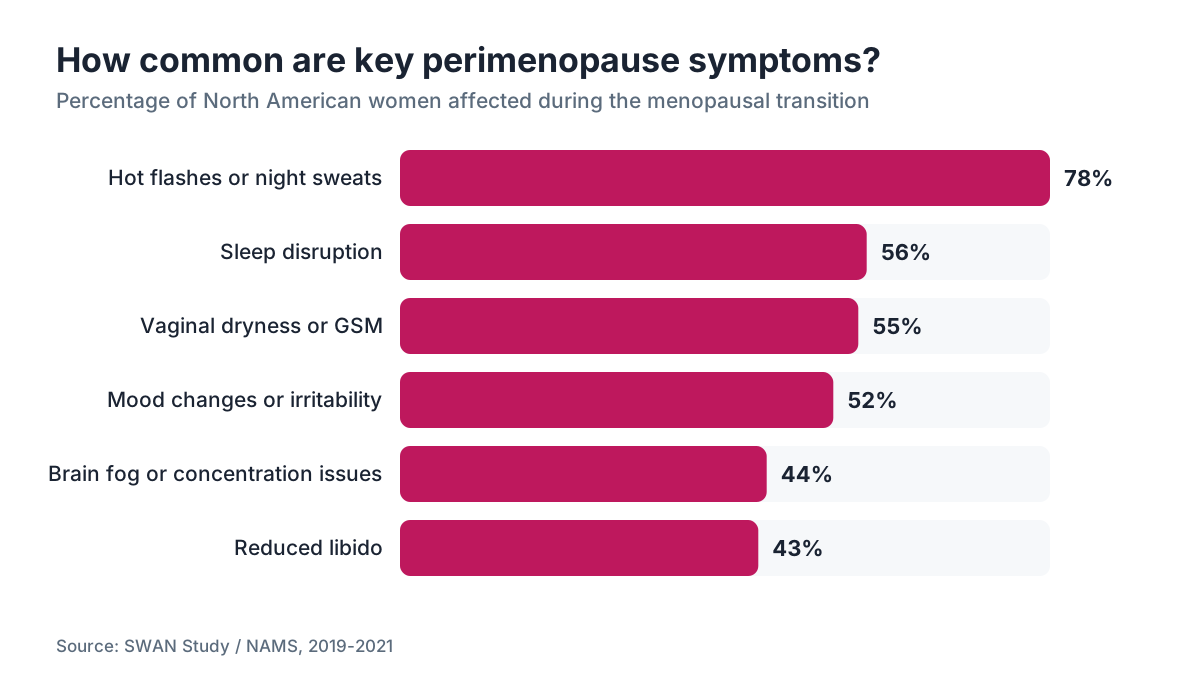
The symptoms reported most often in large population studies, including the Study of Women's Health Across the Nation (SWAN), are [5]:
- Hot flashes and night sweats (vasomotor symptoms): affect roughly 75 to 80 percent of women in North America, with rates that vary by ethnicity and BMI
- Irregular periods: often the first noticeable change; cycles may shorten, lengthen, get heavier, get lighter, or turn plain unpredictable
- Sleep disruption: trouble falling asleep, staying asleep, or waking too early; often tied to night sweats but can stand alone
- Mood changes: irritability, anxiety, low mood, and a shorter fuse
- Brain fog: word-finding trouble, weaker concentration, patchy short-term memory
- Vaginal dryness and discomfort during sex
- Joint aches and muscle stiffness
- Weight gain, especially around the middle
- Reduced libido
Hot flashes need a specific note. SWAN, which followed more than 3,000 women over time, found hot flashes peak in frequency and bother during late perimenopause and early postmenopause [5]. For many women they crest around the final period and then ease off, but about 30 percent keep having them a decade or more into postmenopause.
Brain fog gets underreported. The Penn Ovarian Aging Study found that verbal memory and processing speed measurably drop during the transition and partly recover in postmenopause for many women [6]. This is not Alzheimer's. It is a documented, hormone-driven change that tends to improve once hormones settle.
How is perimenopause diagnosed?
There is no single test that nails it. Perimenopause is mainly a clinical diagnosis, built from symptoms and menstrual history in a woman who is the right age [1].
Blood tests can help but are slippery here. Because estrogen swings so wide week to week, a single estradiol reading can look normal one month and low the next. An elevated FSH (generally above 10 IU/L in early transition, above 25 to 30 IU/L in late transition) supports the diagnosis, but FSH bounces too, so one normal result does not rule perimenopause out [4].
What clinicians typically look at:
- Menstrual cycle history: a change in cycle length of 7 or more days from your normal pattern is the STRAW+10 marker of early transition [2]
- Symptom pattern: especially hot flashes, sleep changes, and mood shifts in a woman in her 40s or early 50s
- FSH and estradiol: supporting data, never a standalone verdict
- Thyroid function: many perimenopause symptoms mimic thyroid disorders, so ruling out thyroid disease is standard
- AMH (anti-Mullerian hormone): a marker of remaining ovarian reserve; low AMH in a symptomatic woman can round out the picture, though it is not always ordered
If you are under 40 with these symptoms, your doctor should evaluate for primary ovarian insufficiency (POI), a different and more serious condition that needs its own approach.
One more thing. Because cycles are still happening, pregnancy has to be ruled out. Women in perimenopause can still get pregnant, and irregular cycles are not birth control.
How does perimenopause affect weight?
Weight gain in perimenopause is common and rarely has one cause. It is not simply eating more or moving less, though those still count.
Falling estrogen changes where fat lands. Estrogen tends to send fat to the hips and thighs. As it drops, the body parks fat in the abdomen instead. That visceral fat is more metabolically active and tied more tightly to heart risk than the fat elsewhere on your body [7].
Broken sleep makes it worse. Poor sleep raises ghrelin (the hunger hormone), lowers leptin (the fullness signal), and pushes up cortisol. That mix cranks appetite up and fat burning down. Plenty of women eat exactly what they always ate and watch the scale climb anyway.
Muscle mass also slips with age and with lower estrogen. Muscle burns more calories at rest than fat, so even modest muscle loss drags resting metabolic rate down over time.
Some women in perimenopause find that GLP-1 receptor agonists like semaglutide or tirzepatide help with the metabolic side of this. These drugs act on appetite and insulin sensitivity, and they produced large weight loss in major trials. Semaglutide 2.4 mg cut body weight by 14.9 percent on average versus 2.4 percent on placebo over 68 weeks in the STEP 1 trial [8]. If you are weighing that option, the WomenRx clinical team focuses on hormone-related metabolic changes in women and can assess whether a GLP-1 fits your situation. For a comparison of the two main drugs, see semaglutide vs tirzepatide.
Bone density sits next door to weight. Estrogen protects bone, and the years of declining estrogen through perimenopause and early postmenopause are when bone loss runs fastest. If you carry risk factors for osteoporosis, a bone density test around menopause gives you a baseline worth having.
What treatments actually help with perimenopause symptoms?
Effective, well-studied treatments exist. The catch is that the right choice is genuinely personal, and a lot of women stay undertreated because their symptoms get waved off or they never learn what to ask for.
Hormone replacement therapy (HRT), more accurately called menopausal hormone therapy (MHT), is the most effective treatment for hot flashes, night sweats, vaginal symptoms, sleep disruption, and mood changes tied to estrogen loss. NAMS states that for healthy women under 60, or within 10 years of their final period, the benefits of hormone therapy for treating menopausal symptoms generally outweigh the risks [1]. That matters because many women still carry the 2002 fear around breast cancer and heart disease from the Women's Health Initiative, which studied older women on specific oral formulations and never justified a blanket verdict against hormone therapy.
Modern HRT comes as estrogen patches, gels, sprays, and vaginal preparations. Transdermal estrogen skips the liver and carries a lower clot risk than oral estrogen [9]. Women with a uterus need progesterone alongside estrogen to protect the uterine lining. See hormone replacement therapy for the full breakdown and estrogen patch for specifics on transdermal delivery.
Non-hormonal options have grown. The FDA approved fezolinetant (brand name Veozah) in 2023 for vasomotor symptoms, the first non-hormonal prescription aimed squarely at the mechanism of hot flashes through the neurokinin B pathway [10]. It is a real choice for women who cannot or would rather not use hormones.
Some antidepressants (paroxetine, venlafaxine, escitalopram) cut hot flash frequency and are reasonable for women with contraindications to estrogen. Gabapentin and clonidine come up less often but help in specific cases.
Lifestyle steps matter, though they rarely erase symptoms on their own. Regular aerobic exercise, especially vigorous exercise, lowers hot flash frequency in some studies. A cool bedroom, layered bedding, less alcohol, and steady stress management all help at the edges.
Cognitive behavioral therapy (CBT) has solid evidence for reducing the distress and sleep hit of hot flashes, even when it does not stop the flashes themselves [11].
How is perimenopause different from menopause?
This distinction trips up almost everyone, including some clinicians who swap the words freely.
Menopause is a diagnosis you can only make looking backward. You know you have reached it after 12 straight period-free months. Before that, you are in perimenopause, even if you have not bled in 10 months. A single period in month 11 resets the clock to zero.
Perimenopause is the active transition. It is when hormones swing hardest and when most of the disruptive symptoms show up. Postmenopause is what follows, once estrogen settles at a persistently low level. Oddly, vasomotor symptoms for many women run worst in late perimenopause and early postmenopause, then ease, though that is not universal.
The practical takeaway. If you are still having periods, even irregular ones, you are perimenopausal. The treatments that fit you may differ from those in postmenopause, and contraception still matters. For the full picture on timing and what comes next, see menopause age.
Can perimenopause start in your 30s?
Yes, though it is less common. Early perimenopause, meaning onset before age 45, occurs in roughly 5 to 10 percent of women [12]. Onset before 40 is classified as primary ovarian insufficiency (POI), which affects about 1 percent of women and calls for dedicated evaluation. The long-term stakes for bone and heart health are higher when estrogen loss starts this early.
Women with early perimenopause or POI are generally advised to use hormone therapy until at least the average age of natural menopause (around 51 to 52), to protect bone density, cardiovascular health, and cognition, whether or not they have symptoms. That is a different risk calculation than the one for women in their 50s.
Things that can pull the transition earlier: a family history of early menopause, smoking (which can advance menopause by 1 to 2 years), some autoimmune conditions, cancer treatments including chemotherapy and pelvic radiation, and genetic factors such as the Fragile X premutation.
If you are in your late 30s or early 40s with irregular cycles, hot flashes, or sleep disruption, talk to a clinician instead of chalking it all up to stress.
What should you tell your doctor at a perimenopause appointment?
Too many women find their symptoms brushed aside, or the visit ends before the thing that matters most comes up. Walking in with specific language and specific questions changes the whole dynamic.
Track your cycles for at least 2 to 3 months before the appointment. Note each cycle's start date, length, and flow, and write down when night sweats, sleep trouble, or mood changes hit. A written record beats a vague description of "irregular periods" every time.
Ask directly: Has my FSH been measured? What do my estradiol levels look like? Any reason I should not try hormone therapy? What are my cardiovascular and bone risk factors?
If your doctor dismisses your symptoms as normal aging or tells you to wait it out, you are entitled to a second opinion or a different provider. Perimenopause symptoms are real, measurable, and in most cases treatable. The NAMS provider locator at menopause.org is a good place to find a clinician trained in menopausal medicine.
If telehealth suits you better, WomenRx offers hormone consultations for women in perimenopause and menopause, with licensed clinicians who focus on this transition.
What long-term health risks are linked to the perimenopause transition?
Past the day-to-day symptoms, the hormone shift of perimenopause carries long-term health consequences worth understanding and, in many cases, acting on.
Cardiovascular disease is the leading cause of death in women, and estrogen loss is a big reason women's risk catches up to men's after midlife. The decade around menopause, roughly ages 47 to 57, is when LDL cholesterol tends to rise, HDL may fall, blood pressure climbs, and arteries stiffen faster [7]. These shifts happen regardless of diet and weight, though both change how severe they get.
Bone loss accelerates sharply in late perimenopause and rolls on through the first few years of postmenopause. The fastest loss, roughly 1 to 2 percent per year, hits in the 3 to 5 years around the final period [13]. Over a decade, that can add up to a 10 to 15 percent drop in bone density if nothing is done. Weight-bearing exercise plus adequate calcium (1,200 mg daily from food and supplements combined for women over 50) and vitamin D (at least 800 to 1,000 IU daily) matters here.
Genitourinary syndrome of menopause (GSM), once called vaginal atrophy, affects roughly 50 to 60 percent of postmenopausal women and can begin in perimenopause [1]. Symptoms include vaginal dryness, burning, pain with sex, and recurrent urinary tract infections. Unlike hot flashes, GSM does not fade on its own. It usually needs treatment, typically low-dose vaginal estrogen, which is considered safe even for most women with a history of hormone-sensitive cancer.
Depression risk rises during perimenopause, especially for women with a prior history of depression or serious premenstrual syndrome. The hormonal volatility appears to sensitize certain brain circuits. This is biological, not simply psychological, and in many cases it responds to hormone therapy as well as to standard antidepressants.
Frequently asked questions
What is the simplest definition of perimenopause?
Perimenopause is the years-long transition before your last menstrual period, when ovarian hormone production turns irregular and unpredictable. It ends once you have gone 12 consecutive months without a period, which is the clinical definition of menopause. Most women are in perimenopause for 4 to 8 years, though the range runs from 1 year to over 10.
What are the first signs that perimenopause is starting?
The most common early sign is a change in your cycle: periods that arrive earlier or later than usual, a shorter cycle, or heavier flow. Some women notice broken sleep or a shorter temper before any cycle changes. Night sweats and hot flashes tend to intensify as the transition moves along, but they can start early too.
At what age does perimenopause start for most women?
Most women notice changes between 45 and 55, with typical onset in the late 40s. About 5 to 10 percent enter perimenopause before age 45. Onset before 40 is classified as primary ovarian insufficiency and warrants a separate clinical evaluation. Family history gives a rough guide to your own likely timing, but it is not a guarantee.
Can you get pregnant during perimenopause?
Yes. Ovulation still happens in perimenopause, just unpredictably. Pregnancy rates are lower than in younger years but far from zero. Clinicians generally recommend contraception until you have had 12 consecutive period-free months if you want to avoid pregnancy. Irregular cycles are not a reliable form of birth control.
Does perimenopause cause weight gain?
Many women gain weight during perimenopause, especially around the abdomen. Falling estrogen shifts fat storage from the hips toward the middle. Poor sleep raises appetite hormones. Muscle mass drops with age and lower estrogen, cutting resting metabolic rate. These changes happen even without eating more, though diet and exercise still shape how severe they get.
How long do hot flashes last during perimenopause?
SWAN found hot flashes peak in frequency during late perimenopause and the early postmenopause years. The median total duration across the whole transition runs about 7 to 10 years. About 30 percent of women keep having them more than a decade after their final period. Effective treatments exist, including hormone therapy and non-hormonal options like fezolinetant.
Is perimenopause the same as menopause?
No. Menopause is a single backward-looking milestone: 12 consecutive months without a period. Perimenopause is the transition leading up to it, which can last years. Most symptoms people pin on menopause, including hot flashes, sleep problems, and mood changes, actually begin and peak during perimenopause. Postmenopause is everything after the 12-month mark.
Can a blood test diagnose perimenopause?
Blood tests can support the diagnosis but cannot confirm it alone. FSH and estradiol swing too much during perimenopause to be definitive on one draw. An elevated FSH above 25 to 30 IU/L combined with symptoms in a woman the right age is consistent with late perimenopause. Thyroid function should also be checked, since the symptoms overlap heavily.
What is the best treatment for perimenopause symptoms?
For most healthy women under 60, menopausal hormone therapy is the most effective treatment for hot flashes, sleep disruption, vaginal symptoms, and mood changes. Transdermal estrogen carries a lower clot risk than oral forms. For women who cannot use hormones, FDA-approved fezolinetant and certain antidepressants are evidence-based alternatives. Lifestyle approaches help at the edges but rarely erase symptoms.
How does perimenopause affect mood and mental health?
Hormonal swings during perimenopause affect brain chemistry directly. Irritability, anxiety, low mood, and tearfulness are common. Women with a prior history of depression or significant PMS face higher risk of a depressive episode during this phase. Both hormone therapy and standard antidepressants can help, and the two are sometimes used together. This is a biological change, not a personal failing.
What is the difference between perimenopause and premature menopause?
Perimenopause is the natural transition that typically begins in the mid-to-late 40s. Premature menopause, or primary ovarian insufficiency, occurs before age 40 and affects about 1 percent of women. POI carries more serious long-term stakes for bone and heart health and generally warrants hormone therapy until at least the average age of natural menopause around 51 to 52, even without symptoms.
Can perimenopause cause brain fog?
Yes, and it is well documented. The Penn Ovarian Aging Study found measurable declines in verbal memory and processing speed during the transition that partly improve in postmenopause for many women. Estrogen has direct effects on brain function, particularly in regions handling memory and executive function. Sleep loss from night sweats makes the cognitive hit worse.
When should I see a doctor about perimenopause symptoms?
If symptoms are wrecking your sleep, affecting your mood or relationships, causing pain during sex, or changing your day-to-day function, that is worth a conversation with a clinician sooner rather than later. You do not need to wait until things are unbearable. If you are under 40 with these symptoms, see a doctor promptly, since POI needs specific evaluation.
Does everyone go through perimenopause the same way?
No. The range of experiences is striking. Some women have minimal symptoms and barely notice. Others face severe daily hot flashes, heavy sleep loss, and real mood changes for years. Ethnicity, BMI, smoking history, stress, and general health all shape the ride. Black women on average report more frequent and more severe vasomotor symptoms than white women, based on SWAN data.
Sources
- North American Menopause Society (NAMS), Menopause Practice: A Clinician's Guide
- Harlow SD et al., Menopause 2012, STRAW+10 staging system for reproductive aging
- Prior JC, Climacteric 2011, Progesterone for prevention and treatment of adverse effects of estrogen
- Endocrine Society, Endocrinology of Menopause Patient Guide
- Study of Women's Health Across the Nation (SWAN), NIH-funded longitudinal cohort
- Greendale GA et al., Menopause 2010, Penn Ovarian Aging Study cognitive findings
- El Khoudary SR et al., Menopause 2019, cardiovascular disease risk during menopause transition (NAMS position statement)
- Wilding JPH et al., NEJM 2021, STEP 1 trial of semaglutide 2.4 mg for weight management
- Canonico M et al., Circulation 2007, thrombosis risk and hormone therapy route (E3N cohort)
- FDA Drug Approval Letter, Veozah (fezolinetant), May 2023
- Hunter MS, Maturitas 2021, cognitive behavioral therapy for menopausal symptoms
- Mishra GD et al., Human Reproduction Update 2017, early menopause prevalence and risk factors
- National Osteoporosis Foundation / Bone Health and Osteoporosis Foundation