Perimenopause joint pain: why it happens and what actually helps
TL;DR: Estrogen loss during perimenopause reduces cartilage protection, raises inflammation, and lowers your pain threshold. Studies show roughly 40 to 50 percent of women in the menopausal transition report new or worsening joint pain. The pain is real, not in your head, and it often improves with hormone therapy, targeted resistance training, and anti-inflammatory strategies.
What is perimenopause joint pain and how common is it?
Perimenopause joint pain, sometimes called musculoskeletal syndrome of menopause, is the aching, stiffness, or swelling that shows up in your knees, hips, hands, shoulders, and spine in the years around your final period. Most women get blindsided by it. Nobody warned them their joints would change before anything else did.
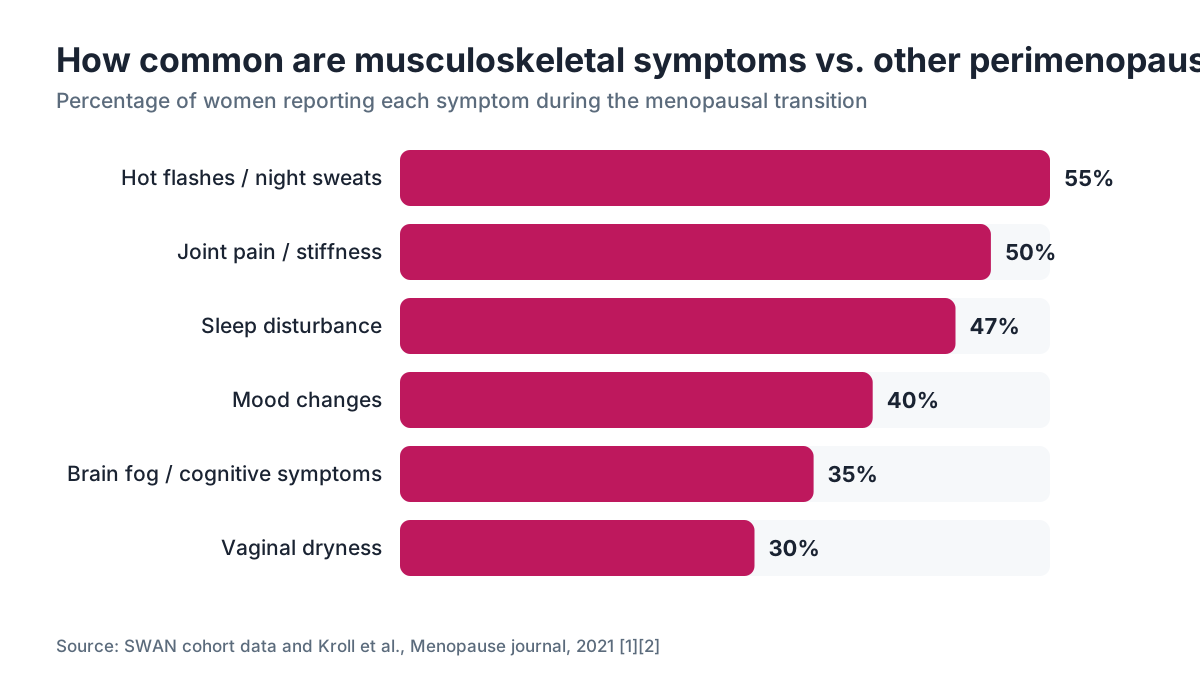
The numbers are striking. A 2021 analysis in the journal Menopause estimated that 40 to 60 percent of women report musculoskeletal symptoms during the menopausal transition, making it one of the most common complaints of the transition, roughly as common as hot flashes [1]. The Study of Women's Health Across the Nation (SWAN), which followed about 3,000 women over multiple years, found joint pain and stiffness were significantly linked to the late perimenopause stage even after adjusting for age, BMI, and physical activity [2].
This is not the same as rheumatoid arthritis or osteoarthritis, though both of those also worsen around menopause. Perimenopause joint pain tends to spread, moving from joint to joint, often worse in the morning, and it does not reliably show up on a scan. That pattern frustrates a lot of women who get an X-ray, hear "it looks fine," and go home with nothing.
See our overview of what perimenopause actually means clinically if you want the full picture of the transition.
Why does estrogen loss cause joint pain?
Estrogen is more than a reproductive hormone. It has receptors throughout your musculoskeletal system: cartilage, bone, tendons, ligaments, synovial tissue (the lining of joints), and the sensory neurons that carry pain signals. When estrogen drops, all of those tissues feel it.
Here is the mechanism, step by step.
Start with cartilage. Chondrocytes, the cells that build and maintain cartilage, carry estrogen receptors. Estrogen promotes collagen synthesis and slows cartilage breakdown. When estrogen falls, cartilage degrades faster and repairs more slowly. Research published in Osteoarthritis and Cartilage found that estrogen deficiency accelerates chondrocyte apoptosis (cell death) and turns up matrix-degrading enzymes [3]. That means a thinner cushion between your bones.
Next, inflammation. Estrogen suppresses several pro-inflammatory cytokines, particularly interleukin-1 (IL-1), interleukin-6 (IL-6), and tumor necrosis factor-alpha (TNF-alpha). As estrogen falls, those cytokines rise, and your joints sit in a low-grade inflamed state. You may not see dramatic swelling, but your synovial tissue is irritated and your pain threshold drops.
Then tendons and ligaments. These connective tissues also carry estrogen receptors and depend on estrogen to keep collagen cross-linked and strong. Studies in post-menopausal athletes show measurably looser ligaments and higher injury rates than in pre-menopausal peers [4]. Looser connective tissue means less stable joints, which creates more microtrauma with every step.
Finally, pain sensitization. Estrogen shapes serotonin and endorphin pathways that govern how intensely you feel pain. Lower estrogen means your central nervous system amplifies pain signals more readily. That is why so many perimenopausal women describe pain that seems out of proportion to what any scan shows.
The full picture of how menopause affects the body is covered in The New Menopause, worth reading alongside this piece.
Which joints are most commonly affected in perimenopause?
The pattern matters because it helps separate estrogen-related joint pain from other conditions. The SWAN data pointed hardest at the knees, hips, and back [2].
The hands take a big hit too, especially the small finger joints and the base of the thumb. That is why many women in their mid-40s suddenly find themselves with morning stiffness and achy fingers that look nothing like the classic swollen knuckles of rheumatoid arthritis.
Frozen shoulder (adhesive capsulitis) gets its own mention. It is far more common in women aged 40 to 60 than in any other group, and the timing lines up almost exactly with perimenopause. For the specifics on that connection, our piece on frozen shoulder and menopause goes deep on the research.
The temporomandibular joint (jaw) is less discussed but also estrogen-sensitive. Some women notice jaw clicking, tightness, or headaches that worsen in perimenopause and track with hormonal shifts through the month.
Spinal discs have estrogen receptors as well. Disc degeneration speeds up after menopause, which partly explains why back pain rates climb steeply in women in their late 40s and 50s, independent of age-related changes in men the same age [3].
| Joint / Area | Typical symptom | How common in perimenopause | |---|---|---| | Knees | Aching, morning stiffness | Very common (SWAN data) [2] | | Hips | Deep ache, stiffness after sitting | Very common | | Hands / fingers | Morning stiffness, base-of-thumb pain | Common | | Shoulders | Stiffness, frozen shoulder | Common, peaks 40-60 [5] | | Lower back | Dull ache, disc-related pain | Common | | Jaw (TMJ) | Clicking, tightness | Less studied, reported | | Ankles / feet | Plantar fasciitis, Achilles issues | Moderate |
How is perimenopause joint pain different from arthritis?
This is the question most women are quietly asking in the exam room. The conditions can overlap, but perimenopause joint pain has a distinct profile.
Rheumatoid arthritis (RA) is autoimmune. It typically produces symmetric swelling in the small joints of the hands and feet, elevated inflammatory markers (CRP, ESR, anti-CCP antibodies), and morning stiffness lasting more than an hour. Women are already three times more likely than men to develop RA, and the immune shifts of perimenopause can unmask or worsen it. So if your joint pain comes with visible swelling, true warmth to the touch, or abnormal labs, rule out RA before blaming everything on hormones.
Osteoarthritis (OA) is wear-and-tear damage. Estrogen loss speeds up OA, especially in the knee. Women account for about 60 percent of all knee OA cases, and the incidence jumps sharply after menopause [3]. OA pain worsens with activity and usually shows up on imaging once it is moderate to severe.
Perimenopause-specific joint pain sits between the two. It tends to be diffuse rather than localized, migratory (it moves around), present in the morning and better by midday, poorly correlated with imaging, and it often tracks with other perimenopausal symptoms like sleep disruption and hot flashes. If your pain started in your mid-to-late 40s without injury, trauma, or prior arthritis, and you also have other perimenopausal symptoms, estrogen is almost certainly involved.
Blood tests to request: FSH, estradiol (day 3 of your cycle if you still have one), anti-CCP, ANA, CRP, ESR, and thyroid function. Thyroid disorders also surge in perimenopausal women and cause joint pain on their own. More on that in our piece on thyroid hormone replacement therapy.
Does hormone therapy actually help perimenopause joint pain?
Yes, and the evidence here is reasonably good, which puts it ahead of some other claims made for hormone therapy.
The Women's Health Initiative (WHI), despite all its controversy, showed that women on combined estrogen-progestogen therapy reported lower rates of joint pain and stiffness than women on placebo. A 2013 analysis of the WHI found hormone therapy users were about 40 percent less likely to report joint pain [6]. That is a meaningful effect for a real symptom.
Observational data from SWAN also found that women who used hormone therapy had lower rates of new-onset musculoskeletal pain than non-users at the same hormonal stage [2].
The mechanism holds together: replace estrogen, restore cartilage protection, lower inflammatory cytokines, raise the pain threshold. It is not a cure for established OA, but for the diffuse, hormone-driven pain of perimenopause it hits the root cause instead of masking it.
The type of hormone therapy matters less than reaching adequate estradiol levels. Transdermal estradiol (patches, gels, sprays) skips first-pass liver metabolism and produces steadier serum levels than oral estrogen, which is why some clinicians prefer it. The NAMS 2022 position statement notes that for women under 60 and within 10 years of menopause onset, the benefits of hormone therapy generally outweigh the risks for most symptoms including musculoskeletal complaints [7].
If you are weighing hormone therapy, a telehealth practice like WomenRx can look at your full symptom picture and hormone levels without a months-long wait for a specialist.
One thing worth saying plainly: hormone therapy is not the only option, and for women who cannot use it, real alternatives exist. But writing it off as dangerous without a personalized risk conversation leaves a lot of women hurting for no reason.
What non-hormonal treatments actually work for joint pain in perimenopause?
Several have good evidence. A few popular ones do not.
Exercise is the best-supported intervention for joint pain, including the estrogen-related kind. Resistance training preserves the muscle that stabilizes joints and takes load off cartilage. A 2022 Cochrane review on exercise for knee osteoarthritis (which overlaps heavily with perimenopausal knee pain) found consistent, moderate-quality evidence that strengthening exercise reduces pain and improves function [8]. You need two to three sessions per week of progressive resistance training for lasting benefit. Walking alone is not enough.
Low-impact aerobic activity (cycling, swimming, water aerobics) also helps by lowering inflammation and keeping synovial fluid moving. That fluid is not a static pool. Movement maintains it, and sedentary behavior makes joint stiffness dramatically worse in perimenopause.
Anti-inflammatory diet changes have supporting data, though none of the trials are large. Cutting ultra-processed foods, refined carbohydrates, and added sugars lowers circulating IL-6 and CRP. Adding omega-3 fatty acids (from fatty fish or fish oil at 2 to 3 grams per day of combined EPA and DHA) has shown statistically significant reductions in joint pain in randomized trials [4].
Glucosamine and chondroitin have been studied extensively in OA. The GAIT trial, funded by NIH, found the combination did not beat placebo for mild knee OA but showed a statistically significant effect in the subgroup with moderate-to-severe pain [8]. Results are mixed enough that I would not call them essential, but they are safe and cheap if you want to try.
Topical NSAIDs (diclofenac gel, available by prescription and over the counter) deliver anti-inflammatory effects straight to a joint without the GI risks of oral NSAIDs. They work well for hand and knee pain and are underused.
Acupuncture: systematic reviews show modest, real benefit for knee OA pain that beats sham acupuncture in high-quality trials. It is not a cure, but it is a reasonable add-on if you want to avoid more medication.
What probably does not work: collagen supplements (promising animal data, weak human trials so far), turmeric capsules at typical supplement doses (poor bioavailability unless it is a formulated product like Meriva or Theracurmin), and most "joint support" multivitamins that cram ten ingredients in at doses too low to do anything.
Can weight loss reduce joint pain during perimenopause?
Every pound of body weight puts roughly four pounds of force across the knee with each step. Lose 10 pounds and you take 40 pounds of force off your knees per step. The math is simple, and the clinical data backs it: weight loss is one of the most effective structural interventions for knee OA pain.
Perimenopause makes weight management harder. Lower estrogen and rising FSH shift fat storage toward the abdomen even without eating more. Metabolic rate drops. Insulin sensitivity falls. This is physiology, not willpower.
GLP-1 receptor agonists like semaglutide have become a serious option. The STEP 1 trial showed an average 14.9 percent body weight reduction with semaglutide 2.4 mg over 68 weeks [9]. The SURMOUNT-1 trial with tirzepatide showed up to 22.5 percent reduction. Those are losses large enough to meaningfully cut joint load. Separate analyses from the semaglutide trials found joint pain outcomes improved alongside weight loss, though the trials were not designed around that endpoint.
For women handling both hormonal changes and weight-related joint loading, treating both at once (hormone optimization plus GLP-1 therapy where appropriate) makes more sense than tackling them one at a time. Our semaglutide news page tracks the latest trial data as it develops.
One honest caveat: GLP-1 therapy causes both fat and lean mass loss. Holding onto muscle during treatment takes deliberate resistance exercise and enough protein (most clinicians suggest 1.2 to 1.6 grams per kg of body weight daily). Losing muscle on a GLP-1 without those countermeasures could, in theory, worsen joint stability.
How does sleep deprivation from perimenopause make joint pain worse?
This feedback loop is underappreciated. Perimenopause wrecks sleep through hot flashes, night sweats, and the direct effect of falling progesterone on sleep architecture. Poor sleep raises inflammatory markers, including IL-6 and CRP, which worsen joint pain. Joint pain then wrecks sleep further. Around and around.
Data from the SWAN sleep study found perimenopausal women had significantly more sleep disturbances than premenopausal women, and that disturbance was independently linked to higher pain sensitivity [2]. This is more than anecdote. Disrupted sleep genuinely lowers your pain threshold, so the same joint damage produces more pain after a bad night.
Treating sleep in perimenopause is not a luxury. Hormone therapy improves sleep in many women by cutting night sweats and restoring progesterone. Oral micronized progesterone (Prometrium) has documented sedative effects and is preferred by many clinicians for that reason over synthetic progestins.
If night sweats are your main sleep disruptor, that ties back to the broader question of perimenopausal symptom management you can explore in the menopause society resources page.
When should you see a doctor about joint pain in perimenopause?
Most perimenopausal joint pain does not need an emergency visit. Some symptoms do.
See a doctor quickly if you have: a single joint that is hot, swollen, and acutely painful (could be gout, septic arthritis, or an acute inflammatory flare); joint pain with a rash (could be lupus or Lyme disease); joint pain after a tick bite; pain with fever, unexplained weight loss, or drenching night sweats; or any joint pain in someone with a personal or family history of autoimmune disease.
For the more typical diffuse, morning-stiff, moves-around pattern, the right workup is blood tests (ESR, CRP, ANA, RF, anti-CCP, thyroid panel, vitamin D, FSH, estradiol), a thorough symptom history that includes all perimenopausal symptoms, and an assessment of whether hormone therapy fits.
Many primary care doctors are not trained to connect joint symptoms to hormonal status. If you leave a visit with only "ibuprofen and come back in six weeks," it is fair to seek a second opinion from a clinician who specializes in menopause medicine. The Menopause Society (formerly NAMS) has a provider finder at menopause.org.
Vitamin D deficiency deserves a specific flag. It is common in perimenopausal women, causes diffuse musculoskeletal pain that mimics hormonal joint pain, and is easy to correct. Ask for a 25-OH vitamin D level. Optimal is generally considered 40 to 60 ng/mL, well above the lab's deficiency cutoff of 20 ng/mL.
Are there specific supplements with evidence for perimenopausal joint pain?
A few supplements have enough data to take seriously. Most do not.
Vitamin D3: if you are deficient (below 30 ng/mL), correcting to optimal levels reduces musculoskeletal pain. The Endocrine Society recommends 1,500 to 2,000 IU daily for most adults to maintain sufficiency, and many perimenopausal women need more than that to fix a deficit [10]. Check this and correct it before spending money on anything else.
Magnesium: deficiency is common in women, and magnesium runs more than 300 enzymatic reactions, including some governing inflammatory pathways. A 2017 meta-analysis found lower serum magnesium in people with chronic pain conditions. Magnesium glycinate or malate at 200 to 400 mg daily is cheap and safe. It also helps sleep, which closes the loop above.
Omega-3 fatty acids (fish oil): as noted, 2 to 3 grams per day of combined EPA and DHA has the most consistent evidence for reducing joint pain and morning stiffness among non-prescription options [4].
Collagen peptides: the signal is real but not yet strong. A 2018 study in the British Journal of Sports Medicine found that 15 grams of gelatin with vitamin C taken before exercise raised collagen synthesis markers and reduced joint pain in athletes over 24 weeks [11]. Studies in perimenopausal women specifically are limited. Still, it is safe and the rationale (cartilage matrix support) makes sense.
Boswellia serrata (frankincense extract): three randomized trials in knee OA showed statistically significant pain reduction versus placebo. The standardized extract (AKBA form) at 100 to 250 mg daily is reasonable to try. It is one of the more evidence-backed botanical options.
What to skip: most proprietary "menopause joint support" blends that combine these ingredients at doses too low to matter. If a product lists twelve ingredients, the budget does not allow a therapeutic dose of any of them.
Does perimenopause joint pain go away after menopause?
For many women, yes, it improves once estrogen settles at its post-menopausal baseline instead of swinging wildly the way it does during perimenopause. The violent hormonal swings of the transition (estrogen can spike and crash within days in late perimenopause) seem to be especially inflammatory. Once the ovaries fully stop producing estrogen and levels plateau at a consistently low point, the inflammatory noise can quiet down.
That said, the structural changes to cartilage, ligaments, and tendons that piled up during the transition do not reverse. And some women keep having significant joint pain post-menopause, particularly those who develop clinical OA during the transition.
Women who start hormone therapy during perimenopause (rather than waiting years past menopause) appear to get the most protection for their musculoskeletal system. That fits the "timing hypothesis" in menopause medicine: earlier initiation preserves more tissue than later initiation does [7].
The honest answer is you cannot predict which pattern you will get. What you can do is address the modifiable factors now: build muscle, keep a healthy weight, get enough vitamin D and omega-3s, protect your sleep, and have a real conversation about hormone therapy if you have not already.
Frequently asked questions
Why do my joints suddenly ache in my mid-40s when I was fine before?
Perimenopause usually begins in the mid-40s, and estrogen starts swinging sharply before it declines for good. Estrogen receptors in cartilage, tendons, and synovial tissue all react to that drop. The result is faster cartilage breakdown, more inflammation, and lower pain tolerance. New joint pain in your 40s without an injury is a hormonal signal in many women, more than plain aging.
Can perimenopause cause joint pain all over my body at once?
Yes. Diffuse, migratory joint pain that moves from knees to hands to hips without a clear pattern is one of the hallmarks of estrogen-related musculoskeletal pain. It differs from rheumatoid arthritis (symmetric, with visible swelling) and osteoarthritis (localized and activity-related). If your all-over joint pain tracks with other perimenopausal symptoms, hormones are likely involved.
Is morning stiffness in perimenopause different from rheumatoid arthritis stiffness?
The timing is a useful clue. In rheumatoid arthritis, morning stiffness typically lasts more than an hour and comes with joint swelling, warmth, and elevated blood markers like anti-CCP or rheumatoid factor. Perimenopausal morning stiffness usually resolves within 30 to 45 minutes of moving around and has no true swelling. A blood panel helps tell the two apart.
Does hormone therapy help joint pain specifically, or just general menopause symptoms?
Joint pain specifically. A 2013 analysis of Women's Health Initiative data found hormone therapy users were about 40 percent less likely to report joint pain than placebo users. The NAMS 2022 position statement also lists musculoskeletal symptoms as a recognized reason to consider hormone therapy in eligible women. It is one of the more evidence-backed benefits beyond hot flash relief.
What is the relationship between perimenopause and frozen shoulder?
Frozen shoulder (adhesive capsulitis) peaks in women aged 40 to 60, directly overlapping with the perimenopausal window. Estrogen receptors in the shoulder capsule point to a hormonal mechanism, and some case series show improvement with hormone therapy. The timing overlap is too strong to be coincidence. Our full article on frozen shoulder and menopause covers the research in detail.
Can vitamin D deficiency cause joint pain that looks like perimenopausal joint pain?
Absolutely, and it is common in perimenopausal women. Vitamin D deficiency causes diffuse musculoskeletal aching that is clinically indistinguishable from hormonal joint pain without a blood test. Ask your doctor for a 25-OH vitamin D level. Most experts consider 40 to 60 ng/mL optimal, above the 20 ng/mL labs call sufficient. Correcting a deficit often brings noticeable relief within weeks.
Does losing weight reduce joint pain during perimenopause?
Yes, substantially. Each pound of body weight generates about four pounds of force on the knee with each step, so losing 10 pounds removes 40 pounds of force per step. Clinical data from knee OA trials show that 10 percent body weight loss produces clinically meaningful reductions in joint pain. GLP-1 medications like semaglutide and tirzepatide now make that level of loss achievable for many women.
Is perimenopause joint pain the same as fibromyalgia?
No, though they share features and can coexist. Fibromyalgia involves central sensitization, widespread pain at specific tender points, and significant fatigue and cognitive symptoms. It has diagnostic criteria (the 2010 ACR criteria) that go beyond joint pain alone. Perimenopausal joint pain is driven by estrogen-related peripheral tissue changes, though estrogen loss also lowers central pain thresholds. A rheumatologist can help sort them out.
What kind of exercise is best for joint pain in perimenopause?
Resistance training two to three times per week is the most important piece. Building muscle around joints takes load off cartilage and improves stability. Low-impact aerobic activity (cycling, swimming, water aerobics) keeps synovial fluid moving and lowers inflammation. High-impact running on hard surfaces can worsen symptoms if joints are already inflamed. Start strength training under supervision if you are new to it.
Can anti-inflammatory diet changes actually reduce perimenopause joint pain?
Modestly, yes. Cutting ultra-processed foods, refined carbohydrates, and added sugars lowers inflammatory cytokines like IL-6 and CRP. Adding 2 to 3 grams per day of omega-3 fatty acids from fish oil has shown statistically significant reductions in joint pain and morning stiffness in randomized trials. No diet cures it, but an anti-inflammatory eating pattern adds up meaningfully alongside other treatments.
How do I know if my joint pain is hormonal rather than something more serious?
Hormonal joint pain typically appears in the mid-40s, spreads and migrates, tracks with other perimenopausal symptoms, and is worst in the morning before easing with movement. Red flags that need urgent evaluation include a single hot and swollen joint, joint pain with fever or rash, severe pain after a tick bite, or significant unexplained weight loss. A blood panel including ANA, CRP, ESR, anti-CCP, and thyroid function helps rule out autoimmune causes.
Does perimenopause joint pain go away on its own after menopause is complete?
For many women, yes. Once estrogen stops fluctuating and plateaus at a stable post-menopausal baseline, the inflammatory noise often quiets. But structural damage that built up during the transition (cartilage thinning, ligament laxity) does not reverse. Women who develop clinical osteoarthritis during perimenopause may keep having symptoms afterward. Addressing modifiable factors early gives you the best long-term outcome.
Are there risks to taking ibuprofen or naproxen regularly for perimenopause joint pain?
Yes. Regular use of oral NSAIDs raises GI bleeding risk, can affect kidney function, and may modestly increase cardiovascular risk, especially in women who already have cardiovascular risk factors. For localized knee or hand pain, topical diclofenac gel is a safer alternative with similar local effect and minimal systemic absorption. For diffuse pain that needs systemic treatment, addressing the hormonal root cause beats chronic NSAID use long-term.
Can perimenopause affect tendons, more than joints?
Yes. Tendons and ligaments carry estrogen receptors and depend on estrogen to keep collagen cross-linked and strong. Studies in post-menopausal women and athletes show measurably looser ligaments and higher rates of tendon injury after estrogen loss. Plantar fasciitis, Achilles tendinopathy, and rotator cuff problems all rise during and after perimenopause. This is a connective tissue problem, more than a joint problem.
Sources
- Menopause (journal), Kroll et al., 2021 — musculoskeletal symptom prevalence in menopausal transition
- Osteoarthritis and Cartilage, multiple studies on estrogen receptors in chondrocytes and disc tissue
- British Journal of Sports Medicine — omega-3 and tendon/ligament estrogen receptor studies
- American Academy of Orthopaedic Surgeons (AAOS) — frozen shoulder (adhesive capsulitis) epidemiology
- Women's Health Initiative (WHI), Barnabei et al., 2002 / Ockene et al., 2005 — joint pain analysis
- The Menopause Society (NAMS) — 2022 Hormone Therapy Position Statement
- Cochrane Database of Systematic Reviews — exercise for knee osteoarthritis (2022); NIH GAIT trial (glucosamine and chondroitin)
- NEJM — STEP 1 trial (Wilding et al., 2021), semaglutide 2.4 mg for weight management
- Endocrine Society — Vitamin D Deficiency Clinical Practice Guideline
- British Journal of Sports Medicine — Shaw et al., 2017 (gelatin/collagen and collagen synthesis in athletes)