Perimenopause joint pain: why it happens and what actually helps
TL;DR: Joint pain is a recognized perimenopause symptom, affecting an estimated 50 to 70% of women in midlife transition. Falling estrogen reduces cartilage protection and drives low-grade inflammation, hitting knees, hips, hands, and spine hardest. Hormone therapy, anti-inflammatory lifestyle changes, and targeted physical therapy are the best-supported treatments. The pain usually improves after menopause stabilizes if you address it.
Is joint pain a real symptom of perimenopause?
Yes. Joint pain during perimenopause is not in your head and it is more than aging.
Estrogen receptors sit on cartilage cells, synovial cells, and bone. When estrogen levels start fluctuating wildly in perimenopause, those tissues feel it. The North American Menopause Society (NAMS) lists musculoskeletal symptoms, including joint pain and muscle aches, as common features of the menopausal transition, alongside hot flashes and sleep disruption [1].
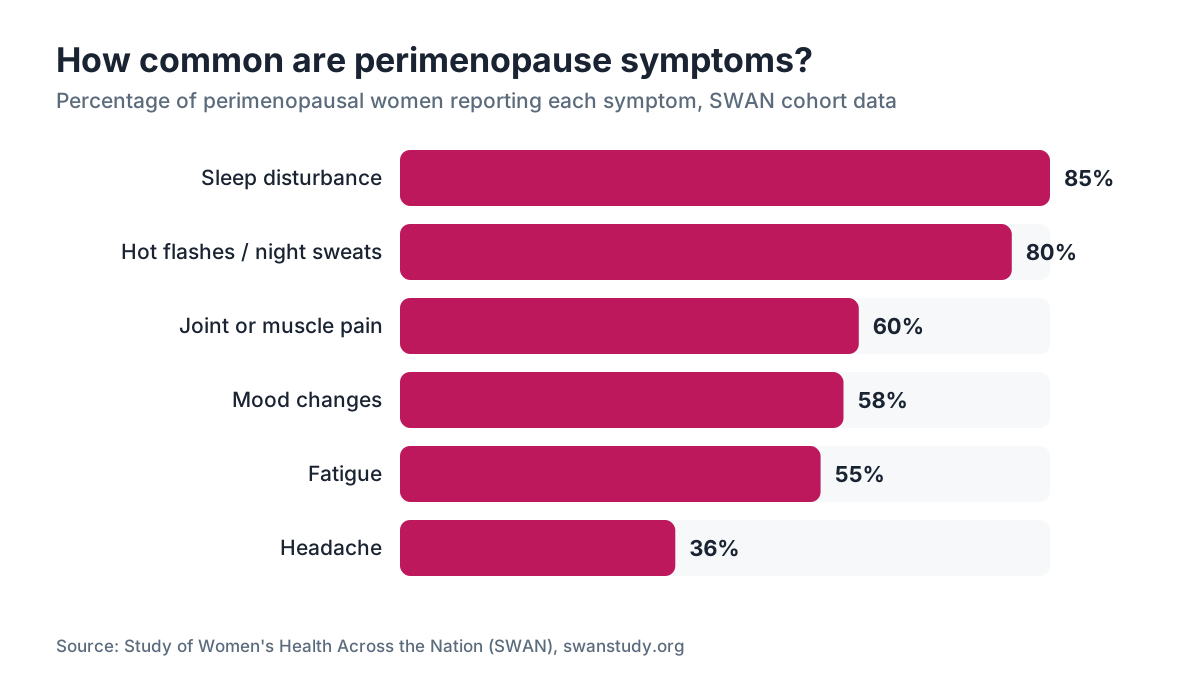
Population studies put the prevalence somewhere between 50% and 70% of perimenopausal women reporting new or worsening joint symptoms [2]. That range is wide because studies define perimenopause differently and because joint pain is hard to separate from age-related wear. But the signal is consistent: women going through the hormonal shift report more joint pain than women of the same age who are not.
The medical term you may see in research is "menopausal arthralgia," meaning joint pain tied to the menopause transition rather than to a specific structural diagnosis like osteoarthritis or rheumatoid arthritis. It tends to feel achy, stiff in the morning, and occasionally swollen, particularly in the hands and knees. Most women describe it as arriving out of nowhere in their early-to-mid 40s, before their periods have even changed much.
So: yes, perimenopause and joint pain are linked, the mechanism is biological, and the symptom deserves the same clinical attention as hot flashes.
Why does falling estrogen cause joint pain?
Estrogen does several things in your joints at once, and its loss disrupts all of them.
First, estrogen is anti-inflammatory. It suppresses pro-inflammatory cytokines, particularly interleukin-1 (IL-1) and tumor necrosis factor-alpha (TNF-alpha). When estrogen drops, those cytokines rise, and your synovial lining, the membrane that lubricates the joint, responds with inflammation [3]. That is why perimenopausal joint pain often has a warm, puffy quality that mimics early arthritis.
Second, estrogen helps maintain cartilage. Chondrocytes, the cells that build and maintain cartilage matrix, have estrogen receptors. Studies in animal models showed cartilage degradation sped up after oophorectomy, and human studies find that cartilage loss in the knee tracks with the menopausal transition rather than simply with age [3].
Third, estrogen supports tendons and ligaments. Collagen synthesis in connective tissue is partly estrogen-dependent. Perimenopausal women run a higher risk of tendon injury and tendinopathy, which can present as joint-adjacent pain that gets misattributed to the joint itself [4].
Fourth, estrogen shapes how you perceive pain. The brain's pain-modulating systems use estrogen. Lower levels drop your threshold for musculoskeletal pain, so stimuli you would have ignored before perimenopause now register as uncomfortable [2].
Perimenopause is rough because estrogen does not fall smoothly. It spikes and crashes unpredictably for years before finally declining for good. That volatility, more than the eventual low level itself, seems to drive symptom severity. Women in full surgical menopause (oophorectomy) often describe joint symptoms that are more constant but sometimes less erratic than the experience during natural perimenopause.
One more factor worth naming: weight. Many women gain visceral fat in perimenopause because shifting hormone ratios alter how the body partitions energy. Visceral fat is metabolically active and secretes additional inflammatory cytokines. It also loads weight-bearing joints. So perimenopause sets off a biological cascade in the joints from several directions at once.
Which joints are most affected by perimenopause?
The pattern matters because it helps distinguish hormonal joint pain from other diagnoses.
Knees top the list. The knee joint has a high concentration of estrogen receptors, and epidemiological data consistently shows that symptomatic knee osteoarthritis rises sharply in women at the time of menopause transition compared to men of the same age [5]. If your knees started aching in your early 40s without a history of injury, perimenopause deserves a spot on the differential.
Hands are the next most common site, and this is the detail that surprises women most. Small joint pain and morning stiffness in the fingers, particularly the proximal interphalangeal joints (the middle knuckles) and the base of the thumb, can appear in perimenopause and mimic early rheumatoid arthritis closely enough to warrant a workup [2]. If rheumatoid factor and anti-CCP antibodies come back negative, menopausal arthralgia is a strong candidate.
Hips ache frequently, though hip pain from perimenopause can be hard to separate from bursitis or early osteoarthritis because the same risk factors overlap.
The spine, particularly the lumbar region, and shoulders also get complaints. Low back pain that worsens in perimenopause and improves with hormone therapy has been reported in several observational studies.
Generalized diffuse aching, what some women describe as feeling like flu-related body pain without the flu, can occur too. This is sometimes called fibromyalgia-like and is thought to reflect the central pain sensitization that lower estrogen allows.
How is perimenopause joint pain different from rheumatoid arthritis or osteoarthritis?
Getting this right matters because the treatment paths split hard.
| Feature | Perimenopause arthralgia | Rheumatoid arthritis | Osteoarthritis | |---|---|---|---| | Onset pattern | Sudden, often mid-40s | Any age, often gradual | Gradual, usually after 50 | | Joints affected | Knees, hands, hips, spine | Hands, wrists, feet symmetrically | Weight-bearing joints, hands | | Morning stiffness | Usually under 30 minutes | Often over 1 hour | Usually under 30 minutes | | Blood markers | Normal ESR, CRP, RF, anti-CCP | Elevated RF and/or anti-CCP | Normal blood markers | | X-ray findings | Usually normal early on | Erosions in moderate-severe disease | Joint space narrowing, osteophytes | | Response to HRT | Often improves significantly | Not directly affected by HRT | Some benefit possible |
Rheumatoid arthritis (RA) peaks in women during their 40s and 50s, the same window as perimenopause, which creates real diagnostic confusion [6]. A full rheumatological workup including anti-CCP antibody, RF, ESR, CRP, and a careful joint exam is reasonable before pinning new polyarticular pain entirely on hormones. Catching RA early matters because disease-modifying drugs work best when started promptly.
Osteoarthritis and menopausal arthralgia can coexist, and estrogen loss speeds up cartilage loss, so separating them completely may not be possible. What you can look for clinically is whether the pain responds to hormone therapy. A meaningful improvement on HRT within two to three months is strong evidence that hormones are driving the picture.
Fibromyalgia overlaps too. New fibromyalgia diagnoses cluster around the menopausal transition in women, and some researchers argue that estrogen-withdrawal-driven central sensitization is part of the mechanism [2].
Does hormone replacement therapy help perimenopause joint pain?
This is the question most women actually want answered, and the honest answer is: yes, for many women, and the evidence is real if not enormous.
The Women's Health Initiative (WHI) data, collected for cardiovascular and breast cancer endpoints, incidentally found that women randomized to conjugated equine estrogen plus medroxyprogesterone acetate reported significantly less joint pain than those on placebo. Among the 16,608 women in the trial, joint pain and stiffness were lower in the hormone therapy group [7].
A Menopause journal analysis of WHI data confirmed it directly: "Hormone therapy use was associated with lower odds of self-reported joint pain" across multiple follow-up timepoints [7]. That is a verbatim quote from the analysis.
Observational data from the Study of Women's Health Across the Nation (SWAN) also found that women who used hormone therapy had less musculoskeletal pain across the transition [2].
In practice, estradiol-based HRT (not the older synthetic conjugated estrogens) is what most hormone-specialized clinicians use now. Transdermal estradiol by patch or gel carries a lower clot risk than oral estrogens, and there is no reason to think the joint benefit differs [see hormone replacement therapy for a fuller discussion]. Adding progesterone or a progestogen depends on whether you still have a uterus.
WomenRx offers telehealth evaluation for HRT including transdermal estradiol options if you want a clinical assessment without waiting months for a specialist appointment.
For women who cannot or prefer not to use HRT, the joint benefits do not vanish as a goal. They just have to come through other mechanisms, which the next sections cover.
One timing note: HRT started in perimenopause, rather than years into postmenopause, appears to produce better musculoskeletal and bone outcomes. The "timing hypothesis" in menopause research suggests that earlier initiation, while tissue receptors are still responsive, produces larger benefits [1].
What non-hormonal treatments actually work for perimenopause joint pain?
Several approaches have real evidence behind them, and a few popular ones are basically placebo.
Physical therapy and strength training carry the most consistent benefit for joint pain regardless of cause. Quadriceps strengthening reduces knee pain significantly in osteoarthritis trials, and the same muscles protect the joint in menopausal arthralgia [5]. Resistance training two to three times per week lowers systemic inflammation markers and improves joint stability. This is probably the single most evidence-supported thing you can do if you cannot or choose not to take hormones.
Anti-inflammatory diet patterns, particularly the Mediterranean diet, reduce circulating IL-6 and CRP, the same inflammatory markers that perimenopause pushes up [8]. A 2021 meta-analysis in the British Journal of Nutrition found Mediterranean diet adherence was associated with lower musculoskeletal pain and better physical function in midlife women [8]. You do not have to be rigid about it. More vegetables, fatty fish twice a week, olive oil, less processed food. That is the core.
Omega-3 fatty acids (EPA and DHA) at 2 to 4 grams daily have modest but real anti-inflammatory effects in joint pain trials [8]. This is one of the few supplements where I would say the evidence justifies the cost of a decent fish oil capsule.
NSAIDs (ibuprofen, naproxen) work for acute flares but are a bad long-term strategy. Regular NSAID use raises cardiovascular risk, impairs kidney function, and damages the gut lining, all concerns that compound in midlife as estrogen's protective effects on those systems fade.
Collagen supplements have drawn a lot of attention. The evidence is improving but still modest. A 2021 trial in the British Journal of Sports Medicine found 15 grams of hydrolyzed collagen daily plus vitamin C improved activity-related joint pain in athletes [4]. Whether that translates to perimenopausal women specifically has not been tested rigorously. It is not a waste of money, but it is not a replacement for the interventions above.
Glucosamine and chondroitin: the GAIT trial (sponsored by NIH) found they did not outperform placebo for most participants [5]. I would not spend money on them.
Acupuncture has reasonable evidence for knee osteoarthritis pain specifically and is worth trying if conventional options are not working or you want an adjunct [2].
Weight management: every kilogram of body weight you lose removes roughly four kilograms of force from the knee joint during walking. Women who achieve modest weight loss during perimenopause report meaningful reductions in joint pain. If weight is a factor, semaglutide for weight loss and related GLP-1 medications have also shown direct anti-inflammatory effects independent of weight loss in early research, though data specific to menopausal joint pain remains limited.
How does perimenopause joint pain affect bone density?
Joint pain and bone loss are different problems, but they share the same root cause and the same window of risk.
Bone density drops sharply in the two to three years right before and after the final menstrual period. The rate of loss during this window can reach 2 to 3% per year in the spine, compared to less than 1% per year before perimenopause [9]. Estrogen is the primary brake on osteoclast activity (the cells that break down bone), so when it falls, bone resorption speeds up.
Women with significant joint pain in perimenopause are often also losing bone in parallel, because both reflect estrogen withdrawal. This is one reason a bone density test (DEXA scan) is worth discussing with your provider during perimenopause if you have musculoskeletal symptoms. The U.S. Preventive Services Task Force recommends screening for women 65 and older, but NAMS guidelines suggest considering earlier screening for women with significant risk factors, which include early perimenopause and significant estrogen deficiency symptoms [9].
Vitamin D and calcium matter here. Many women are deficient in vitamin D, which impairs both calcium absorption and muscle function around joints. The Institute of Medicine recommends 600 IU of vitamin D daily for adults under 70 and 800 IU for those over 70, but many menopause clinicians suggest that keeping a serum 25-OH vitamin D level of 40 to 60 ng/mL takes 1,500 to 2,000 IU daily for most women, particularly those in northern latitudes or who avoid sun [9]. Check your level before megadosing.
Weight-bearing exercise, the same resistance training that helps joints, also preserves bone density. Swimming and cycling, while excellent for cardiovascular health, do not load bone enough to prevent loss. You need walking, hiking, lifting, or impact exercise to hold onto bone.
When should you see a doctor about joint pain in perimenopause?
Not every aching knee needs an urgent appointment, but some patterns do.
See a provider promptly if you have: joint swelling that persists more than a few days, significant redness or warmth over a joint, joint pain with a rash (which can signal lupus or psoriatic arthritis), morning stiffness lasting more than an hour, or fever alongside joint pain.
See a provider within a few weeks if you have: new polyarticular pain (multiple joints at once), pain interfering with sleep or daily function, or pain that appeared suddenly without injury and is not improving.
A reasonable baseline workup for new perimenopausal joint pain includes: complete blood count, metabolic panel, ESR and CRP (inflammation markers), rheumatoid factor, anti-CCP antibody, ANA (antinuclear antibody to screen for lupus), uric acid, thyroid function (hypothyroidism mimics joint pain exactly), and vitamin D level. If those come back normal, you have good evidence that the pain is hormonal rather than a separate rheumatological disease.
Hormone level testing (FSH, estradiol) can help confirm you are in perimenopause but is not required. FSH above 10 to 12 IU/L with irregular cycles is consistent with perimenopause, though levels swing considerably during the transition [see perimenopause age for what to expect by decade].
A telehealth visit with a hormone-specialized provider is often the fastest path to a treatment plan that addresses the hormonal root of the problem, rather than leaving you with a referral queue that stretches six months out.
Can GLP-1 medications like semaglutide help with perimenopause joint pain?
This is an emerging area, and the honest answer is: probably yes, through at least two mechanisms, but the data specific to perimenopausal women is still thin.
GLP-1 receptor agonists like semaglutide reduce joint pain mainly through weight loss. The STEP 1 trial found that semaglutide produced an average 14.9% body weight reduction in adults with obesity [10]. That much weight loss sharply cuts mechanical load on the knees and hips. Women in the STEP trials reported significant improvements in physical function scores.
Beyond mechanics, a growing body of animal and early human data suggests GLP-1 receptors exist in synovial tissue and that GLP-1 agonists have direct anti-inflammatory effects on joints independent of weight loss [10]. The SURMOUNT-1 trial of tirzepatide showed similar functional improvements [11]. Whether these medications will produce clinically meaningful joint-specific benefits in perimenopausal women in a dedicated trial is not yet established.
For women carrying significant excess weight who also have perimenopause-related joint pain, a GLP-1 medication plus hormone therapy is a rational combination worth discussing with a clinician. Losing 10 to 15% of body weight while restoring estrogen activity hits both the mechanical and the inflammatory drivers at once. The comparison of semaglutide vs tirzepatide matters here because the two differ in how much weight they typically produce and what side effects to expect.
What does the timeline look like: does perimenopause joint pain go away?
For most women, the answer is yes, at least partially, once hormone levels stabilize in postmenopause. The erratic fluctuations of perimenopause are often worse for symptoms than the low-but-stable estrogen of established menopause.
The SWAN study followed women across the menopausal transition and found that musculoskeletal pain peaked around the final menstrual period, then gradually declined over two to five years into postmenopause for most participants [2]. Not all women reach complete resolution. Women who developed early osteoarthritis changes during perimenopause may carry some of that damage forward. Women who never addressed the inflammatory state may find it has permanently altered the joint environment.
Perimenopause itself lasts an average of four to seven years, though it can range from one year to over a decade [see when does menopause start]. That is a long time to white-knuckle through joint pain without treatment.
Women who start hormone therapy during perimenopause and stay on it into the early postmenopause years tend to have better joint and bone outcomes in longitudinal data than women who wait or who never treat [7]. The window matters.
Practically: if you are three years into perimenopause with worsening joint pain and no treatment, that is not an argument for patience. It is an argument for a clinical evaluation soon.
Women using WomenRx for hormone therapy evaluation often report that joint symptoms were one of the first things to improve after starting transdermal estradiol, sometimes before hot flashes resolve. That anecdotal pattern matches the WHI data showing joint pain responds to HRT.
What lifestyle habits make perimenopause joint pain worse?
A few specific behaviors reliably amplify joint pain during perimenopause, and cutting them matters as much as adding interventions.
Sedentary behavior is the biggest one. Joints need movement to circulate synovial fluid, which carries nutrients into cartilage (cartilage has no blood supply of its own). Sitting for long stretches, common for desk workers in their 40s and 50s, lets inflammatory cytokines pool and stiffness set in. The fix is not dramatic: five minutes of gentle movement every hour makes a measurable difference in stiffness.
Poor sleep worsens pain through several pathways. Sleep deprivation raises IL-6 and TNF-alpha, the same inflammatory cytokines that estrogen withdrawal raises. Perimenopause already wrecks sleep through night sweats and insomnia, and the resulting sleep debt then amplifies joint pain [2]. Addressing sleep, whether through HRT, cognitive behavioral therapy for insomnia, or judicious use of low-dose sleep aids, is pain management, more than comfort.
High-impact exercise without adequate recovery: running on concrete every day with perimenopausal joint inflammation is a reliable way to convert functional joint pain into structural damage. Rotating modalities, running, swimming, cycling, strength training, cuts repetitive impact while keeping fitness.
Sugar and refined carbohydrate excess raises insulin and promotes the kind of low-grade inflammatory state that worsens any joint condition. This is separate from overall caloric intake. A woman at a healthy weight who eats a high-glycemic diet can still have meaningfully elevated inflammatory markers.
Alcohol: more than moderate consumption (more than one drink daily for women) increases systemic inflammation and disrupts sleep, both of which worsen joint pain. Perimenopause is also a time when alcohol tolerance often drops, so this is a natural moment to reassess consumption.
Frequently asked questions
Is joint pain a symptom of perimenopause or something else?
Joint pain is a recognized perimenopause symptom, listed by NAMS alongside hot flashes and sleep disruption. But new joint pain in your 40s also warrants a workup for rheumatoid arthritis, hypothyroidism, lupus, and early osteoarthritis, all of which can debut at this age. A basic blood panel including anti-CCP, rheumatoid factor, ANA, TSH, and CRP helps rule those out before attributing pain to hormones.
What does perimenopause joint pain feel like?
Most women describe a diffuse aching stiffness, worse in the morning and after sitting for long periods, that eases with movement. The knees, hands, hips, and lower back are the most common sites. It can also feel like flu-body-aches without the flu. Swelling and warmth can occur but are less common than in rheumatoid arthritis. The pain often fluctuates with hormone cycles in early perimenopause.
At what age does perimenopause joint pain typically start?
Joint symptoms most commonly emerge in the early-to-mid 40s, often before periods become irregular enough for women to recognize they are in perimenopause. Perimenopause itself typically begins between ages 44 and 51, with the average woman reaching menopause at 51. Earlier onset, before 40, is less common and warrants evaluation for premature ovarian insufficiency.
Does HRT help joint pain from perimenopause?
Yes, for many women. The Women's Health Initiative found hormone therapy users reported significantly less joint pain and stiffness than placebo users. Most clinicians now use transdermal estradiol rather than oral conjugated estrogens because it has a lower clot risk. Improvement in joint symptoms often appears within six to twelve weeks of starting HRT. Women who cannot take estrogen may benefit more from lifestyle and physical therapy approaches.
How do I know if my joint pain is from perimenopause or osteoarthritis?
The two can coexist because estrogen loss speeds up cartilage breakdown. Key distinguishing clues: perimenopause arthralgia often appears before significant X-ray changes, affects multiple joints at once, fluctuates with hormone cycles, and improves with HRT. Osteoarthritis is usually localized to a single joint with prior mechanical wear, progresses slowly, shows X-ray changes, and does not respond to HRT the same way. A rheumatologist can help clarify a mixed picture.
Which supplements help perimenopause joint pain?
Omega-3 fatty acids at 2 to 4 grams of EPA/DHA daily have the best evidence, with modest but real anti-inflammatory effects. Vitamin D matters if you are deficient, which many perimenopausal women are. Magnesium helps with sleep and muscle function. Collagen peptides (15g daily) have emerging evidence for activity-related joint pain. Glucosamine and chondroitin did not outperform placebo in the NIH-funded GAIT trial, so I would skip those.
Can perimenopause cause knee pain specifically?
Yes. The knee is one of the most estrogen-sensitive joints and one of the most commonly affected sites in perimenopause. Symptomatic knee osteoarthritis rises sharply in women at the menopausal transition compared to men of the same age, pointing to a hormonal rather than purely age-related driver. Quadriceps strengthening, weight management, and hormone therapy all have evidence specifically for perimenopausal knee pain.
Does perimenopause joint pain affect fingers and hands?
Yes, and this surprises many women. Small joint pain and morning stiffness in the fingers, especially the middle knuckles and thumb base, is a known perimenopause pattern. It can look enough like early rheumatoid arthritis that rheumatoid factor and anti-CCP testing is warranted. If those are negative and pain responds to estrogen therapy, the diagnosis of menopausal arthralgia is supported. Hand exercises and warm soaks help with symptom management.
How long does perimenopause joint pain last?
Perimenopause itself averages four to seven years. Joint pain typically peaks around the final menstrual period, then gradually improves over two to five years into postmenopause as hormone levels stabilize at a new lower baseline. Women who address the pain with HRT, anti-inflammatory lifestyle changes, and strength training generally see better long-term joint outcomes than those who wait it out. Some change in joint feel may persist permanently, especially if cartilage loss occurred.
Can losing weight help perimenopause joint pain?
Significantly. Each kilogram lost removes about four kilograms of force from the knee during walking. Even a 5 to 10% reduction in body weight produces measurable reductions in joint pain and inflammatory markers. Weight management matters especially during perimenopause because visceral fat secretes pro-inflammatory cytokines that compound the effect of low estrogen. GLP-1 medications like semaglutide can accelerate this, with the STEP 1 trial showing average 14.9% weight loss.
What exercises are best for perimenopause joint pain?
Resistance training two to three times per week is the highest-priority intervention, both for joint stability and for lowering systemic inflammation. Low-impact cardio like cycling, swimming, and elliptical keeps fitness up without repetitive joint loading. Walking on softer surfaces works well. Yoga and tai chi improve flexibility and balance. Avoid daily high-impact running on hard surfaces during active flares. Five minutes of gentle movement every hour prevents stiffness from sedentary pooling of inflammatory mediators.
Is joint pain worse in early or late perimenopause?
For most women, joint pain is worse in the early-to-middle stages of perimenopause when estrogen fluctuates most erratically. The unpredictable spikes and drops appear harder on joint tissue than the consistently low estrogen of established postmenopause. Women who track symptoms often notice joint pain correlates with low-estrogen phases of their irregular cycles. Once the transition completes and levels stabilize, many report gradual improvement over two to four years.
Can perimenopause cause back pain?
Yes. Low back pain and lumbar stiffness are reported perimenopausal symptoms, thought to reflect estrogen withdrawal affecting the vertebral joints and surrounding connective tissue. Bone loss in the vertebrae during the transition can also cause subtle structural changes. Observational studies have found women on hormone therapy have lower rates of new back pain than non-users. Core strengthening and maintaining spinal bone density through weight-bearing exercise are the main lifestyle interventions.
What is the connection between perimenopause joint pain and bone loss?
Both stem from the same cause: estrogen withdrawal. Bone density drops at 2 to 3% per year in the spine in the years around the final menstrual period. Joint cartilage and connective tissue also degrade faster. NAMS recommends considering DEXA bone density scanning earlier than age 65 for women with significant estrogen deficiency symptoms. Hormone therapy addresses both problems. Vitamin D, calcium, and weight-bearing exercise support bone while also helping muscle and joint health.
Sources
- North American Menopause Society (NAMS), Menopause Practice: A Clinician's Guide
- Study of Women's Health Across the Nation (SWAN), NIH-funded longitudinal cohort
- Arthritis Research and Therapy, Estrogen and cartilage/synovial tissue review
- British Journal of Sports Medicine, collagen supplementation trial 2021
- National Institutes of Health, Glucosamine/Chondroitin Arthritis Intervention Trial (GAIT)
- American College of Rheumatology, Rheumatoid Arthritis overview
- Women's Health Initiative (WHI), published in Menopause journal, HRT and joint pain analysis
- British Journal of Nutrition, Mediterranean diet and musculoskeletal pain meta-analysis 2021
- National Osteoporosis Foundation / Bone Health and Osteoporosis Foundation, Clinician's Guide
- NEJM, STEP 1 trial: Wilding et al. 2021, semaglutide 2.4mg in adults with obesity
- NEJM, SURMOUNT-1 trial: Jastreboff et al. 2022, tirzepatide in adults with obesity
- FDA, Hormone therapy drug labels and safety communications