Perimenopause itchy skin: why it happens and what actually helps
TL;DR: Itchy skin is a real perimenopause symptom, driven mostly by falling estrogen that thins skin, dries it out, and slows collagen. Up to half of women report skin changes during the transition. Moisturizers help within days. Topical or systemic estrogen treats the cause. Most cases aren't serious, but persistent or severe itch, or any visible rash, warrants a dermatology visit.
What causes itchy skin during perimenopause?
Estrogen does a lot of quiet work in your skin. When it drops, skin function falls apart faster than most women expect.
Estrogen receptors sit throughout the skin, including in keratinocytes (the outer barrier cells), fibroblasts (which make collagen), sebaceous glands (oil producers), and mast cells. When estrogen falls during perimenopause, all of those cell types respond. The barrier thins. Oil production drops. Collagen synthesis slows, and research estimates skin loses roughly 30% of its collagen in the first five years after menopause [1]. What's left is a drier, thinner, more reactive surface that itches.
Several mechanisms drive it. Reduced hyaluronic acid comes first: estrogen normally stimulates hyaluronic acid production, which holds water in the dermis. Less estrogen means less hyaluronic acid, less moisture retention, and more water lost through the skin. Then mast cell activation: mast cells release histamine in response to dryness and irritation, and histamine is the molecule that fires the itch signal directly. Nerve fiber changes matter too. Some small-fiber nerve endings become more sensitized as estrogen drops, so ordinary friction or a temperature swing starts to feel itchy.
Dermatology literature sometimes calls estrogen-related itch "pruritus of menopause," though most clinicians file it under the broader heading of menopausal skin changes [2].
Progesterone falls during perimenopause too, and it has its own anti-inflammatory effects on skin. Whether progesterone loss directly drives itch is less studied, but it may contribute, especially in women who notice itch worsening in the luteal phase of cycles that are still happening. Our article on progesterone covers its wider effects.
How common is itchy skin in perimenopause?
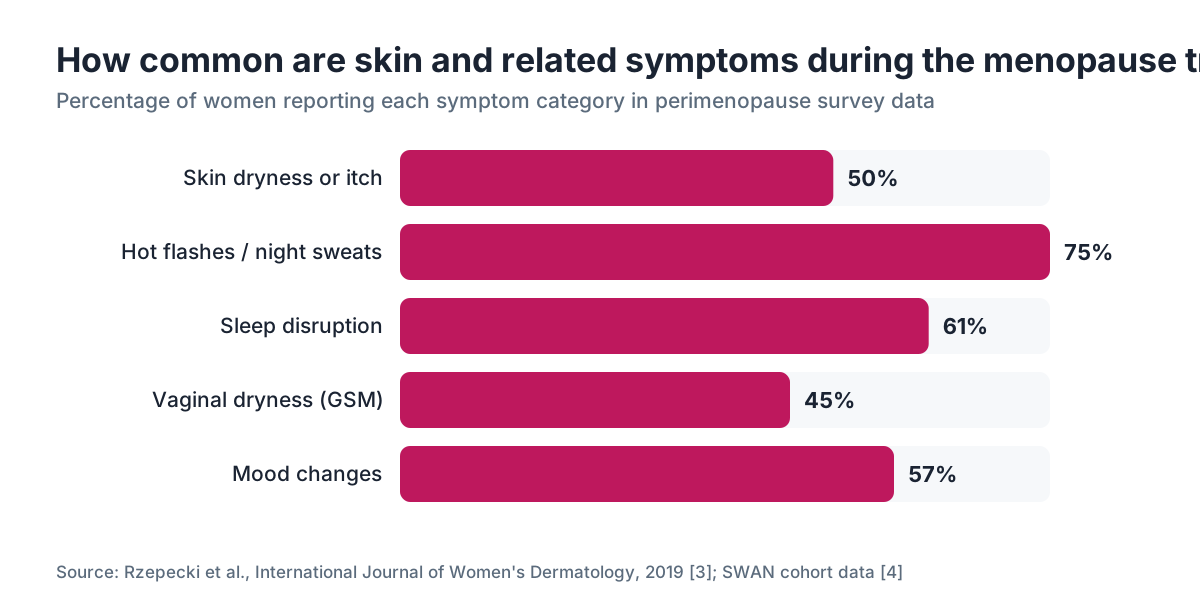
This symptom is underreported, mostly because women don't connect it to hormones. The numbers say it's common. A 2019 review in the International Journal of Women's Dermatology found roughly 50% of women report skin changes, including itch and dryness, during the menopausal transition [3]. The Study of Women's Health Across the Nation (SWAN), a prospective cohort that followed over 3,000 women, tracked skin and hair changes as a measurable symptom cluster alongside hot flashes and sleep disturbance [4].
Itch tends to peak in two windows. The first is perimenopause itself, the roughly 4 to 10 year stretch before the final period, when estrogen swings hard. The second is the first few years after menopause, when estrogen settles low and skin has already lost baseline moisture and thickness. Our piece on perimenopause age maps out the timing.
Women with a history of eczema, psoriasis, or allergic skin conditions usually see those conditions worsen during perimenopause. Women with no prior skin issues can develop new dryness and itch for the first time. Neither group should count on it clearing up on its own without addressing the hormonal driver underneath.
Where does perimenopause itch usually appear?
Location helps with diagnosis. Estrogen-related itch has a few patterns.
The most common sites are the arms, legs, and torso, especially the abdomen. The skin dries uniformly and itches without a rash, which dermatologists call "pruritus sine materia" (itch without visible cause). The scalp is another frequent site, often with more hair shedding that tracks with the estrogen drop. The genitourinary area, meaning the vulva and vaginal opening, gets a distinct estrogen-driven itch known as vulvovaginal atrophy, now grouped under the umbrella term genitourinary syndrome of menopause (GSM). The North American Menopause Society (NAMS) defines GSM as the full complex of changes to the vulva, vagina, and lower urinary tract caused by declining estrogen and androgen levels [5].
Face itch, particularly around the nose and chin, is less typical for estrogen deficiency. It's more often rosacea or seborrheic dermatitis, both of which hormonal shifts can trigger or worsen.
Anywhere you scratch, you create secondary damage (excoriations, thickened patches) that starts its own itch-scratch cycle. So the map can shift over months.
How is perimenopause itch different from a rash or skin disease?
This is the question with real medical stakes, and it deserves a straight answer.
Estrogen-related itch usually comes with no primary rash. The skin may look dry and a little dull, but hormonal itch alone won't produce blisters, plaques, well-defined red patches, or weeping areas. If any of those show up, something else is going on alongside or instead of hormonal change.
Conditions that can mimic or coexist with perimenopause itch include:
- Atopic dermatitis (eczema): Itchy, inflamed plaques, often in skin folds. Can worsen in perimenopause.
- Contact dermatitis: A reaction to a new product, laundry detergent, or fabric. Sudden onset, localized, improves once the trigger is gone.
- Lichen sclerosus: An autoimmune condition that causes white, thinning patches on the vulva and sometimes perianal skin. Severe itch, easy tearing, and scarring can occur. It needs a biopsy for diagnosis and is treated with high-potency topical steroids, not estrogen alone [6].
- Psoriasis: Thick, silvery-scaled plaques, usually on elbows, knees, or scalp.
- Cholestatic pruritus or systemic causes: Whole-body itch without a rash can sometimes signal liver, kidney, thyroid, or blood disorders. If itch is generalized, severe, and worse at night, your doctor should check a basic metabolic panel, liver function tests, TSH, and CBC.
- Drug reactions: Plenty of medications, including some blood pressure drugs and statins women often start in their 40s and 50s, can cause itch.
A board-certified dermatologist is the right specialist if the itch is severe, has a visible rash, or hasn't responded to four to six weeks of basic moisturizer and low-potency topical treatment.
Which treatments actually work for perimenopause itchy skin?
There are three tiers of evidence here, and being honest about them matters more than sounding confident.
Tier 1: Strong evidence
Systemic estrogen therapy (HRT) treats the root cause. Multiple randomized controlled trials show hormone therapy improves skin hydration, collagen density, and barrier function in postmenopausal women [1][7]. Women on estradiol patches or oral estradiol in these trials showed measurable gains in skin thickness and moisture over placebo. If the itch is part of a bigger perimenopause picture (hot flashes, poor sleep, mood changes), systemic HRT hits all of them at once. Our articles on hormone replacement therapy and the estrogen patch cover the evidence and the risks.
For vulvovaginal itch specifically, low-dose vaginal estrogen (cream, ring, or tablet) works well and barely reaches the bloodstream. NAMS guidelines classify vaginal estrogen as appropriate even for many breast cancer survivors, given how local its action is [5].
Tier 2: Good evidence for symptom management
Emollient moisturizers applied right after bathing (within three minutes, while skin is still slightly damp) cut water loss through the skin substantially. Regular emollient use is the most evidence-supported non-prescription step for a damaged skin barrier. Look for ceramides, glycerin, or urea, all of which rebuild the barrier instead of sitting on top of it.
Topical antihistamines have weak evidence and can cause contact sensitization with repeated use. Skip them. Oral antihistamines (cetirizine, loratadine) can dial down histamine-driven itch and help with sleep lost to nighttime scratching, though they do nothing about the cause.
Tier 3: Low or no rigorous evidence (but used in practice)
Topical progesterone creams are marketed hard for perimenopause symptoms, skin included. The evidence that transdermal progesterone reliably reaches systemic levels high enough to affect skin is thin. A few small studies hint at local benefit, but nothing has been tested in a large trial for itch.
Collagen supplements have mechanistic plausibility, and some small studies show better skin elasticity, but the evidence isn't at the level that would change clinical guidelines. Nobody has good data on how much they reduce itch specifically.
Omega-3 supplementation is anti-inflammatory and borrows indirect support from eczema research, but direct evidence for perimenopause itch is limited.
Does hormone replacement therapy really help itchy skin, and is it safe?
Yes, with the usual safety nuances any honest HRT conversation requires.
On effectiveness: a randomized trial in the British Journal of Dermatology found postmenopausal women assigned to estradiol therapy showed a statistically significant increase in skin collagen content and thickness versus placebo after six months [7]. Hydration improved too. Those are exactly the properties that ease chronic dryness-driven itch.
On safety: the risks depend heavily on age, time since menopause, formulation, and personal health history. The Women's Health Initiative (WHI) trials, which first raised alarms about breast cancer and cardiovascular risk, used conjugated equine estrogens plus medroxyprogesterone acetate in women who were on average 63 at enrollment, more than a decade past menopause for most [8]. Later reanalysis and data from other trials, including the Danish Osteoporosis Prevention Study, show a more favorable risk profile for women who start HRT in their 40s or early 50s, close to the onset of perimenopause. The Endocrine Society's 2022 position statement supports hormone therapy for symptomatic menopausal women under age 60 or within 10 years of menopause onset who have no contraindications [9].
The decision is individual. A clinician who knows your history, cardiovascular risk, family history of hormone-sensitive cancers, and current medications is the right person to work through it with you. Telehealth platforms focused on women's hormones, including WomenRx, can make that conversation easier to get to if you don't have a local provider who takes menopause seriously.
What daily habits and skincare changes help the most?
Daily changes make a real difference while you sort out the hormonal picture.
Water temperature. Hot showers strip what little oil perimenopausal skin has left. Lukewarm water, kept to five or ten minutes, does less damage.
Moisturizer timing. Follow the three-minute rule from the American Academy of Dermatology: apply a thick cream or ointment within three minutes of getting out of the shower to trap moisture before it evaporates. Lotions with high water content evaporate and can leave skin drier than before if used alone [10].
Ingredient checklist. Ceramides (rebuild the barrier). Glycerin and hyaluronic acid (pull in moisture). Urea 5 to 10% (softens and loosens dead skin). Niacinamide (anti-inflammatory, cuts redness). Colloidal oatmeal in a cream base (an FDA-recognized skin protectant for itch) [11]. Avoid fragrances, alcohol as a base ingredient, and formaldehyde-releasing preservatives. All three irritate thin, estrogen-depleted skin more than they would healthy skin.
Laundry and fabric. Detergent residue on fabric is a hidden trigger. Fragrance-free detergents and a second rinse cycle cut contact irritation. Loose cotton, linen, or moisture-wicking fabrics against the skin reduce friction and sweat-triggered itch.
Humidity. Indoor heating drops relative humidity below 30%, which speeds up moisture loss. A bedroom humidifier set to hold 40 to 50% is a low-effort way to reduce overnight itch.
Scratch management. Scratching releases more histamine and feeds the itch-scratch cycle. Keep nails short. A cool damp cloth pressed on the spot breaks the cycle while other treatments catch up.
Can perimenopause itch affect sleep, and does the treatment differ?
Yes, and this is where the symptom snowballs. Itch reliably worsens at night for physiological reasons: skin temperature rises, the distraction of daytime activity is gone, and cortisol (a natural anti-inflammatory) sits at its daily low. Perimenopausal women are already sleeping badly from hot flashes, night sweats, and anxiety. Add nighttime itch and sleep architecture takes a real hit.
For nighttime-dominant itch, an oral sedating antihistamine (hydroxyzine 10 to 25 mg, which is prescription, or diphenhydramine 25 mg over the counter) can give short-term relief. Neither is a long-term fix, because tolerance builds. Menopause-focused clinicians sometimes use hydroxyzine off-label for the combined itch relief and sleep, though that's not an FDA-approved indication for menopause.
The cleanest fix is still closing the estrogen gap. Women who start HRT usually report better sleep, fewer hot flashes, and calmer skin together, which is the whole point of treating the cause instead of stacking symptom patches.
For women who can't or won't use systemic HRT, a cognitive behavioral therapy protocol for chronic itch exists (think CBT-I for insomnia, applied to itch) with reasonable support in dermatology literature. It's easier to find at academic medical centers than in primary care.
When should you see a doctor about perimenopause itchy skin?
See a doctor promptly if any of these apply.
Visible rash. Blistering, plaques, defined red patches, or skin that's weeping or crusting needs evaluation. Estrogen-related itch shouldn't produce any of that.
Vulvar symptoms. Itch with whitening, thinning, or structural changes to the vulva could be lichen sclerosus, which progresses and scars without treatment. Catching it early makes management far easier.
Whole-body itch at night without a rash (pruritus sine materia). This calls for a blood panel: liver function tests, kidney function, TSH, complete blood count, and possibly iron studies. Systemic causes of itch are rare but serious.
No improvement after four to six weeks. If diligent moisturizing and the basics haven't dented the itch, a clinician can add prescription options: topical calcineurin inhibitors (tacrolimus, pimecrolimus), which are non-steroidal anti-inflammatory creams approved for eczema, low-potency topical steroids for short-term use, or the HRT conversation if it fits.
New medications. If itch started soon after a new prescription, tell your prescriber. Drug-induced itch is more common than most patients realize.
Your primary care provider, OB-GYN, or a menopause specialist can handle most of this. A dermatology referral makes sense when the diagnosis is uncertain or the skin findings are unusual.
Does itchy skin get worse after menopause, or does it improve?
For most women, estrogen-related itch and dryness don't fix themselves after the final period. Estrogen settles at a low postmenopausal level instead of swinging, which removes some of the erratic triggering, but the deficit in skin oil, collagen, and hydration keeps progressing with age.
Longitudinal data from SWAN and similar cohorts show skin and vulvovaginal symptoms tend to worsen year over year after the final period unless they're actively treated [4][12]. That's the opposite of hot flashes, which fade for most women over five to seven years post-menopause.
Here's the encouraging part: skin responds to estrogen at any age. Women who start topical or systemic estrogen years after menopause still show measurable gains in skin thickness, hydration, and barrier function. Someone who kept treatment going continuously from perimenopause will have better baseline skin, but starting late is still worth it.
Our articles on menopause and when does menopause start lay out the full timeline of the transition.
Are there other perimenopause symptoms that go with skin changes?
Itchy skin rarely travels alone. The same estrogen drop that hits the skin drives a predictable cluster, and spotting the pattern matters both for diagnosis and for deciding whether hormonal treatment makes sense.
The classic grouping: vasomotor symptoms (hot flashes, night sweats), sleep disruption, mood changes (anxiety, irritability, low mood), brain fog, joint aches, genitourinary changes (vaginal dryness, more frequent UTIs, urinary urgency), and hair thinning. Skin changes, meaning itch, dryness, and rising sensitivity, sit in the same cluster and share the same root cause.
When a woman in her mid-40s or 50s reports new itchy skin plus poor sleep, night sweats, and a memory that feels foggier, the hormonal picture is clear. Treatment aimed at estrogen deficiency can improve all of it at once, which is a strong argument for considering systemic therapy rather than chasing each symptom separately.
For women who aren't candidates for, or aren't interested in, systemic HRT, the non-hormonal options are fragmented: moisturizers for skin, CBT-I for sleep, SNRIs or gabapentin for hot flashes. That fragmentation is itself a reason many women and their clinicians keep circling back to the HRT conversation over time.
What is the role of collagen loss in perimenopause skin itch?
Collagen is the structural scaffold of the dermis. It keeps skin plump, resilient, and thick enough to buffer the nerve endings that detect itch and pain. When collagen drops, the dermis thins and those nerve fibers sit closer to the surface, where small insults (dryness, temperature shifts, fabric friction) fire off itch signals that thicker skin would never register.
The 30% collagen loss figure for the first five years after menopause traces to work by Brincat and colleagues, based on skin biopsy and later backed by ultrasound skin-thickness measurements [1]. That's a large, fast structural change. Nothing in ordinary aging strips collagen this quickly outside the menopause transition.
Estrogen therapy partly reverses it. Studies show women on estradiol for 12 to 24 months gain statistically significant dermal collagen density compared to untreated controls. Skin doesn't return to premenopausal thickness, but the decline slows and some lost thickness comes back [7].
That's why wrinkles, skin laxity, and itch tend to move together in perimenopause. They share the same tissue-level cause.
Frequently asked questions
Can perimenopause cause itchy skin with no rash?
Yes. Itch without a visible rash, called pruritus sine materia, is a recognized presentation of estrogen deficiency. The skin may look dry or dull but won't show blisters, plaques, or defined red patches from hormonal itch alone. If you have significant itch and no rash, hormonal skin changes are a common cause, though whole-body itch without a rash also warrants a blood panel to rule out liver, kidney, or thyroid issues.
Why does my skin itch more at night during perimenopause?
Skin temperature rises slightly at night, which intensifies itch. Cortisol, a natural anti-inflammatory, hits its daily low in the evening and overnight, so histamine activity goes relatively unchecked. Daytime distraction disappears too, making itch more noticeable. Perimenopausal women often layer hot flash sweating on top, which irritates already-compromised skin. A cool bedroom and an emollient applied before bed cut nighttime itch noticeably.
What creams or moisturizers actually help perimenopause itch?
Ceramide creams (CeraVe, Vanicream) rebuild the skin barrier. Glycerin and hyaluronic acid hold moisture in the outer layer. Urea 5 to 10% softens and reduces scaling. Colloidal oatmeal creams are an FDA-recognized skin protectant for itch. Avoid fragranced lotions and alcohol-based products, which worsen dryness on estrogen-depleted skin. Apply within three minutes of bathing to trap moisture. A thick cream or ointment beats a light lotion.
Does HRT (hormone replacement therapy) stop perimenopause itchy skin?
For most women, yes. Randomized trials show systemic estradiol increases skin collagen, thickness, and hydration, all of which reduce the structural causes of itch. For vulvovaginal itch, low-dose vaginal estrogen works well and is barely absorbed systemically. The improvement isn't instant: most women notice skin changes after 8 to 12 weeks of consistent HRT. The decision involves a broader risk-benefit discussion with a clinician who knows your history.
Is itchy skin an early sign of perimenopause?
It can be, though it's rarely the first symptom. Irregular periods, sleep changes, and hot flashes usually show up earlier. Skin changes, meaning more dryness, sensitivity, and itch, tend to appear in mid-to-late perimenopause as estrogen drops more. If you're in your mid-to-late 40s, have noticed cycle changes, and developed new dryness or itch without another explanation, perimenopause is a reasonable possibility to raise with your provider.
What is vulvar itch in perimenopause, and is it the same thing?
Vulvar itch in perimenopause is related but distinct. It falls under genitourinary syndrome of menopause (GSM), defined by NAMS as estrogen-driven changes to the vulva, vagina, and lower urinary tract. The itch comes from thinning and drying of vulvovaginal tissue, more than general skin dryness. GSM responds well to low-dose vaginal estrogen. Persistent vulvar itch with whitening or structural changes may point to lichen sclerosus, which needs a biopsy and separate treatment.
Can antihistamines help with perimenopause itchy skin?
Oral antihistamines can reduce histamine-driven itch and help with nighttime scratching that wrecks sleep. Cetirizine or loratadine are non-sedating options for daytime. Hydroxyzine or diphenhydramine work better for nighttime itch but cause drowsiness. Antihistamines manage the symptom without touching the estrogen deficiency behind it. They're useful as a bridge or add-on while other treatments take hold, not a long-term standalone fix.
Can diet or supplements reduce perimenopause skin itch?
The evidence is modest but not zero. Omega-3 fatty acids reduce systemic inflammation and have indirect support from eczema research. Collagen peptide supplements have small trials suggesting better skin elasticity and hydration, though direct evidence for itch is thin. Staying well hydrated and cutting back on alcohol and caffeine (both dehydrating) supports skin moisture. No supplement replaces addressing estrogen deficiency if that's the root cause.
How long does perimenopause skin itch last?
Without treatment, estrogen-related itch can run through perimenopause and worsen after menopause, since skin keeps losing collagen and moisture while estrogen stays low. It doesn't usually resolve on its own the way hot flashes fade over the years post-menopause. With consistent moisturizing and, where appropriate, estrogen therapy, most women see real improvement within two to three months. The timeline depends on how much skin damage built up before treatment started.
Can perimenopause cause scalp itch and hair loss together?
Yes, both can track with estrogen and androgen changes in perimenopause. Scalp itch can come from dryness, seborrheic dermatitis triggered by hormonal shifts, or reduced scalp oil. Hair shedding in perimenopause is common and multifactorial, involving estrogen, androgens, thyroid function, and iron status. If scalp itch comes with significant hair loss, a dermatologist can evaluate for androgenetic alopecia, alopecia areata, or other causes.
Is there a connection between perimenopause itch and eczema?
Yes. Women with pre-existing atopic dermatitis (eczema) frequently report flares during perimenopause. Estrogen modulates the immune response behind eczema, so as levels drop and swing, flares get more common. The barrier impairment estrogen deficiency causes overlaps mechanistically with eczema's own barrier dysfunction. Clinicians may use topical calcineurin inhibitors (tacrolimus, pimecrolimus) for perimenopausal women whose itch pattern looks like eczema but doesn't respond to basic moisturizers.
Does perimenopause skin itch affect the face differently?
Facial itch in perimenopause can come from rising skin sensitivity, but the face is also prone to rosacea and seborrheic dermatitis, both worsened by hormonal swings. Rosacea flares track closely with hot flashes and vasomotor instability. Seborrheic dermatitis (flaky, itchy skin around the nose, eyebrows, and hairline) can worsen as hormonal changes shift the skin's yeast microbiome. Facial itch with redness or scaling is worth evaluating separately from general body itch.
Can stress make perimenopause itchy skin worse?
Yes. Psychological stress spikes cortisol acutely then depletes it chronically, and cortisol directly regulates skin barrier function. Stress also drives mast cell degranulation, which releases histamine and worsens itch. Perimenopausal women under heavy life stress (career, caregiving, relationship changes) often report itch peaks during high-stress stretches. Stress management, better sleep, exercise, and where needed psychological support, has indirect but real benefits for skin.
Sources
- Brincat MP et al., skin collagen and estrogen research, Journal of the American Academy of Dermatology
- DermNet, Pruritus of menopause
- Rzepecki AK et al., International Journal of Women's Dermatology (2019), Estrogen-deficient skin
- Study of Women's Health Across the Nation (SWAN), University of Michigan / NIH
- North American Menopause Society (NAMS), Genitourinary Syndrome of Menopause position statement
- National Institute of Arthritis and Musculoskeletal and Skin Diseases (NIAMS), Lichen Sclerosus
- Sauerbronn AVD et al., British Journal of Dermatology (2000), estradiol and skin collagen RCT
- Women's Health Initiative (WHI), National Heart, Lung, and Blood Institute (NHLBI/NIH)
- Endocrine Society, Menopause Hormone Therapy Position Statement 2022
- American Academy of Dermatology (AAD), dry skin management recommendations
- U.S. Food and Drug Administration (FDA), OTC skin protectant monograph
- Calleja-Agius J, Brincat MP, Climacteric (2012), skin aging and menopause review