Perimenopause insomnia: why sleep falls apart and what actually helps
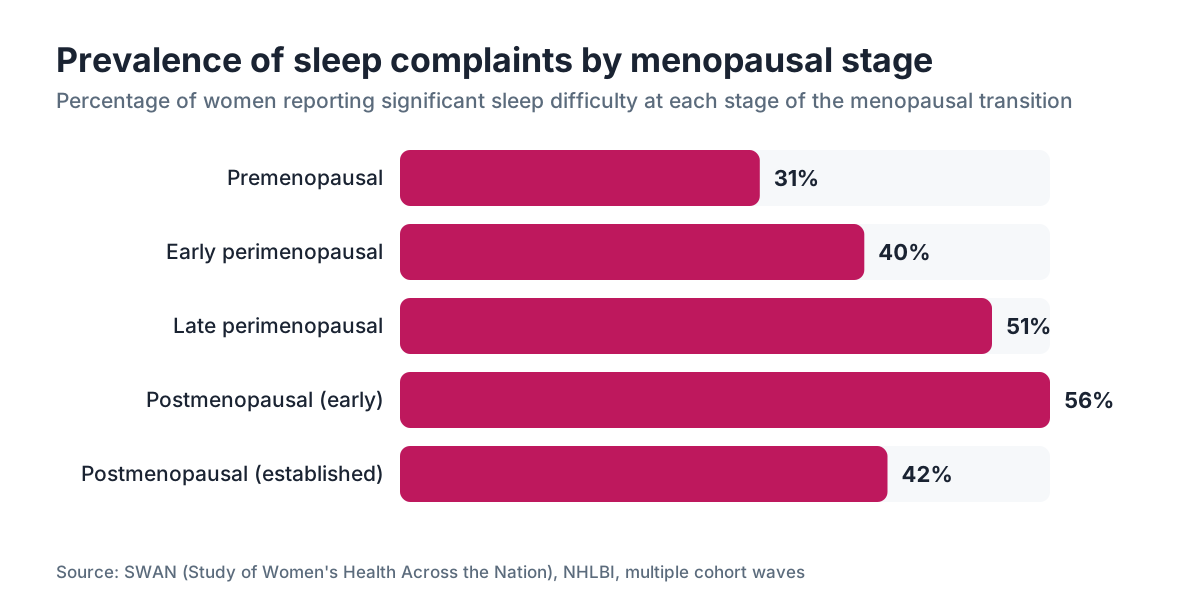
TL;DR: Insomnia is a direct symptom of perimenopause, not bad luck. Falling progesterone and swinging estrogen fragment sleep, trigger night sweats, and push nighttime cortisol up. Research puts sleep complaints at 40 to 60% of perimenopausal women. Hormone therapy, CBT-I, and a few targeted supplements all have real evidence. For most women, it does not fix itself.
Is insomnia a symptom of perimenopause, or just a coincidence?
Insomnia is a documented, direct symptom of perimenopause. The Study of Women's Health Across the Nation (SWAN), which tracked over 3,000 women across several ethnic groups, found sleep difficulty rose sharply during the menopausal transition compared to premenopausal years, with roughly 40 to 60% of perimenopausal women reporting poor sleep [1]. The range is wide because studies define insomnia differently. The direction never changes.
Perimenopause usually starts in a woman's mid-to-late 40s. It can begin as early as 38 or as late as the early 50s. During this stretch, estrogen and progesterone swing erratically before they decline for good. Those hormones do far more than run reproduction. They act directly on the brain's sleep-wake systems, and when they get unstable, sleep gets unstable too.
Some women notice the sleep problem before anything else. They wake at 2 or 3 a.m. and cannot get back down. Others fall asleep fine, then wake soaked. Others just stop getting deep sleep and can't say why. All three are perimenopause. The mechanism differs, but the root is the same hormonal shift.
If you're in your 40s and your sleep changed with no obvious cause, put perimenopause at the top of your list. See perimenopause age and when does menopause start for the timeline.
What hormones cause perimenopause insomnia?
Three hormones do most of the damage: progesterone, estrogen, and cortisol. All three can fire at once in the same woman, which is why one intervention rarely fixes everything.
Progesterone is the one most women never hear about first, and it may be the most direct sleep disruptor of the three. Progesterone calms the brain through its metabolite allopregnanolone, which binds GABA-A receptors the way a mild sedative would. When progesterone starts dropping in perimenopause, often before estrogen falls noticeably, that built-in off-switch fades [2]. Women describe the brain refusing to go quiet at night.
Estrogen's link to sleep is messier. It helps regulate serotonin and norepinephrine, both tied to the sleep-wake cycle, and it nudges core body temperature, which feeds the cooling process that starts sleep. When estrogen swings, that thermostat misfires. The result is hot flashes and night sweats [3]. A severe hot flash raises your core temperature mid-cycle. You may not wake fully, but you get pulled out of deep sleep and your sleep architecture fragments even if you remember nothing by morning.
Cortisol finishes the picture. Perimenopausal shifts alter HPA axis regulation, often raising nighttime cortisol. Cortisol wakes you up. Elevated levels at 2 or 3 a.m. are a physiological signal to arouse. This is why the classic perimenopause pattern is early-morning waking, mind racing, no return to sleep, even without an obvious hot flash.
How is perimenopause sleep disruption different from regular insomnia?
Regular insomnia has a stressor underneath it. Perimenopause insomnia has a hormone shift underneath it. That single difference changes everything about treatment. Stress-driven insomnia often responds fully to cognitive behavioral therapy for insomnia (CBT-I) and clears when the stressor clears. Perimenopause insomnia responds to CBT-I too, but usually not completely until the hormonal driver gets addressed.
The sleep architecture is specific. Polysomnography studies in perimenopausal women show less slow-wave (deep) sleep and more nighttime awakenings than premenopausal women the same age [4]. Trouble staying asleep (waking during the night or too early) is more common than trouble falling asleep. Reliable 3 a.m. waking is a more perimenopause-typical pattern than lying awake for hours at bedtime, though both happen.
Progression is the other tell. Ordinary stress insomnia tends to lift on its own. Perimenopause insomnia can grind on for years and get worse as menopause nears. The 2023 Menopause Society (formerly NAMS) position statement notes that sleep disturbances often peak in late perimenopause and the early postmenopausal years [5].
This is why a melatonin gummy and a sleep hygiene checklist won't fix insomnia that started at 46 alongside irregular periods. Those things help at the margins. They do not touch the hormonal engine driving it.
How bad does perimenopause insomnia get, and how long does it last?
It varies a lot, and the research mostly tracks average women, not the worst cases. So the honest headline is: your mileage may differ, but here is what predicts a rougher ride.
In SWAN, women who entered perimenopause with existing anxiety or depression had significantly worse sleep [1]. Women with more severe hot flashes and night sweats had worse sleep continuity. Women who went through surgical menopause (ovaries removed) hit a more abrupt, often more severe onset than women who transitioned naturally.
Perimenopause itself lasts 4 to 8 years on average, sometimes shorter, sometimes longer. Sleep problems follow that arc, so they can stay bad for years. About a third of women say their sleep never fully returns to its pre-perimenopause quality even after menopause is done, especially if they had severe night sweats or built up anxiety about sleep during the transition [5].
Sleep loss at this scale carries real cost. Chronic poor sleep tracks with higher cardiovascular risk, worse insulin resistance, mood disorders, and cognitive decline. This is a health risk that earns real treatment. Chamomile tea and an earlier bedtime are not the answer.
Does hormone replacement therapy actually fix perimenopause insomnia?
For many women, hormone therapy is the single most effective treatment for perimenopause insomnia, especially when night sweats drive the waking. The evidence is reasonably good, though not as clean as we'd like, because most menopause sleep studies are short and use different formulations.
A 2021 meta-analysis in Menopause reviewed 16 randomized trials of hormone therapy and sleep in perimenopausal and postmenopausal women. Hormone therapy significantly improved sleep quality scores, mostly by cutting nighttime awakenings and raising sleep efficiency [6]. The effect was strongest when insomnia was clearly tied to hot flashes, which makes mechanistic sense.
Progesterone earns its own paragraph. Oral micronized progesterone (Prometrium in the U.S.) has a real sedating effect that the synthetic progestin medroxyprogesterone acetate does not match. Trials show oral micronized progesterone at 300mg taken at night improves both subjective and objective sleep in perimenopausal women [2]. If your clinician reaches for a synthetic progestogen, ask specifically about oral micronized progesterone for the sleep benefit. More on how it works at progesterone.
Estrogen's sleep benefit is mostly indirect. It reduces hot flashes and night sweats, which removes the thermal trigger for waking. Many clinicians prefer the estrogen patch and other transdermal forms because skin delivery skips first-pass liver metabolism and carries a friendlier clotting profile.
The Menopause Society's 2022 hormone therapy position statement calls hormone therapy "the most effective treatment" for vasomotor symptoms and related sleep disturbance in appropriate candidates [5]. Appropriate candidates is the qualifier that matters. Women with a history of hormone-sensitive cancers, uncontrolled cardiovascular disease, or active clotting disorders need an individual risk-benefit talk first. For a healthy woman in her late 40s or early 50s, the risk math has shifted a lot since the early Women's Health Initiative results were wrongly applied to younger women.
For the full treatment picture, see hormone replacement therapy.
What non-hormonal treatments actually work for perimenopause insomnia?
CBT-I is the best-evidenced non-hormonal treatment for insomnia in any group, perimenopausal women included. The American College of Physicians names it first-line for chronic insomnia, and a 2019 Cochrane review confirmed its effect on sleep efficiency, sleep onset latency, and wake after sleep onset [7]. It uses sleep restriction, stimulus control, cognitive work on sleep anxiety, and relaxation. It's not intuitive, and the sleep restriction part feels backward at first, but the long-term results beat most sleep drugs.
Access is the catch. A trained CBT-I therapist is hard to find in many places, and the full protocol runs 6 to 8 weeks. Digital programs (apps like Sleepio, which holds FDA Breakthrough Device designation) are a fair substitute with similar data [7].
To cut hot flashes without hormones, low-dose paroxetine 7.5mg (Brisdelle) is the only FDA-approved non-hormonal drug specifically for menopausal hot flashes, and fewer hot flashes means better sleep [3]. Venlafaxine and gabapentin also reduce hot flashes, though neither is FDA-approved for it. Fezolinetant (Veozah), approved by the FDA in May 2023, is a neurokinin 3 receptor antagonist that cuts hot flash frequency and severity with no hormonal activity, so it fits women who can't use hormone therapy [8].
Melatonin has weak evidence in perimenopause. It may help sleep onset if your circadian clock has drifted, but it does nothing for night sweats or the progesterone gap. Doses above 0.5 to 1mg are probably no better and may leave you groggy. Most U.S. melatonin products are wildly overdosed against what the research supports.
Magnesium glycinate (200 to 400mg at night) has small-trial support for sleep quality and almost no downside, though the perimenopause-specific data is thin. Ashwagandha has one placebo-controlled trial showing better sleep in middle-aged adults; nobody has run a rigorous perimenopause-only trial. Straight talk: most supplements are worth a try given the low risk, but the effect sizes are modest next to CBT-I or hormone therapy.
What sleep medications are safe to use during perimenopause?
This question comes up constantly, and the answer has more nuance than most prescribers offer. The short version: match the drug to the mechanism keeping you up, and avoid the ones that suppress deep sleep over the years you may need help.
Benzodiazepines and Z-drugs (zolpidem, eszopiclone, zaleplon) work for short-term sleep onset and maintenance, but they carry real dependency risk and blunt deep sleep over time. For insomnia that may run years, they are a poor primary treatment. The American Geriatrics Society Beers Criteria flags both classes in older adults for fall and cognitive risk. Perimenopausal women aren't in that age bracket yet, but the same mechanisms apply.
Low-dose doxepin (Silenor, 3 to 6mg) is FDA-approved for sleep maintenance insomnia. It blocks histamine, has a cleaner profile for ongoing use, and doesn't carry the dependency worry of Z-drugs [3].
Suvorexant (Belsomra) and lemborexant (Dayvigo) are orexin receptor antagonists. They promote sleep by switching off wakefulness signaling rather than sedating you, and they have decent evidence for sleep maintenance insomnia, which is the dominant perimenopause pattern.
For the woman waking at 3 a.m. with an activated mind, ask one question first: is a hot flash you barely remember doing this, or is it cortisol-driven arousal? Those need different fixes. Treat a hot flash problem with a sedative and you'll end up sedated and still flashing.
Can weight gain during perimenopause make insomnia worse?
Yes, and it runs both ways. Sleep loss raises ghrelin (appetite up) and lowers leptin (fullness down), nudging perimenopausal women toward weight gain even with nothing else changing. Perimenopause itself pushes fat toward the belly. More central fat raises the risk of obstructive sleep apnea, a separate but overlapping cause of bad sleep at this age.
Sleep apnea is badly underdiagnosed in perimenopausal and postmenopausal women. The stock patient picture (an overweight middle-aged man who snores) has skewed both clinician recognition and women's own suspicion. But progesterone is a respiratory stimulant, and as it drops in perimenopause the upper airway gets less stable during sleep. A 2020 review in Sleep Medicine Reviews found postmenopausal women had significantly higher sleep apnea rates than premenopausal women even after adjusting for body mass index [4].
If your perimenopause insomnia isn't responding to hormone therapy or CBT-I, get a sleep study to rule out apnea. Untreated apnea defeats every other fix you try.
GLP-1 medications (semaglutide, tirzepatide) are increasingly used by perimenopausal women for weight management, and early data suggests the weight loss improves apnea severity. The SURMOUNT-OSA trial for tirzepatide, published in 2024, showed significant reductions in the apnea-hypopnea index in patients with obesity and sleep apnea [9]. Whether those gains hold or translate to better sleep quality in perimenopausal women specifically isn't studied yet, but the physiology lines up. See semaglutide for weight loss and semaglutide vs tirzepatide for more.
What does perimenopause insomnia feel like, and how do you know it's hormonal?
The telltale pattern: you wake between 2 and 4 a.m. with your mind already running, often warm or sweating, and you can't get back down for 30 to 90 minutes or more. Women describe it as the brain flipping on like a switch. Many notice it's worse in the days before their period, when progesterone drops sharply after ovulation, and easier in the follicular phase.
Cycle-linked variation is one of the clearest signs the insomnia is hormonal. If your worst sleep clusters in the 5 to 7 days before your period, progesterone withdrawal is likely a primary mechanism. If night sweats are waking you, estrogen swings are more directly involved. Have both patterns, and you almost certainly have both mechanisms live at once.
Other hormonal fingerprints: it started in your 40s with no clear psychological trigger, your cycles have shifted (longer, shorter, or skipped), you have other perimenopause symptoms (brain fog, mood swings, joint pain, libido changes), and standard sleep hygiene barely moved the needle.
A clinician can pull an FSH and estradiol level for a snapshot, but perimenopause hormones swing so widely that a single test tells you little. The clinical picture beats any one number. For when perimenopause typically starts, see perimenopause age.
What sleep hygiene changes actually matter in perimenopause, and which are overhyped?
The basics work, so don't skip them: a consistent wake time (more important than a consistent bedtime), a cool bedroom (65 to 68 degrees Fahrenheit), darkness, and no screens in the hour before bed. None of this fixes hormonal insomnia alone. All of it lowers your overall arousal load and makes real treatments work better.
Cool bedroom temperature deserves the spotlight. A hot flash is a sudden, inappropriate narrowing of the thermoneutral zone: the brain decides you're overheating at a temperature that wouldn't trigger that in a non-perimenopausal woman. A cooler room gives your body more margin before it hits that trigger. Cooling mattress pads and a fan aimed at the body (not the face) are more than comfort. They have a mechanistic reason to cut awakenings from night sweats.
Alcohol needs its own mention, because plenty of women don't connect it to broken sleep. A drink or two helps you fall asleep, then fragments the back half of the night as your body clears it. For fragile perimenopausal sleep, even one drink can measurably worsen quality. This isn't a lifetime ban. But if you're deep in insomnia, a 2 to 3 week alcohol elimination trial tells you fast how much it's costing you.
Exercise genuinely helps, with one caveat: hard exercise within 3 to 4 hours of bed can delay sleep onset in heat-sensitive women by raising core temperature. Morning or early afternoon is the better slot here.
Overhyped: elaborate hour-long wind-down rituals. Evidence for fancy pre-sleep routines beyond killing screens and holding a steady schedule is thin. Sleep efficiency improves far more from the behavioral parts of CBT-I (stimulus control, sleep restriction) than from aromatherapy or journaling, though if those lower your stress they may help indirectly.
When should you see a doctor about perimenopause insomnia?
Now, if it's run more than four weeks and it's dragging your days down. Perimenopause insomnia is both extremely common and badly undertreated. Too many women get told to just deal with it, or handed a generic sleep aid while nobody touches the hormonal cause.
Get evaluated specifically if your sleep trouble started alongside other perimenopause symptoms, you wake with sweating or heat even in a cool room, you have daytime brain fog, your mood shifted with the sleep change, or behavioral fixes and sleep aids haven't helped after 6 to 8 weeks of honest effort.
Get evaluated for sleep apnea if you snore, wake with headaches, or your partner has seen you stop breathing. Apnea is underdiagnosed in women and grows more common as progesterone's respiratory-stimulant effect fades.
A reproductive endocrinologist, a gynecologist with menopause training, or an internist who knows the transition can work you up. The Menopause Society (formerly NAMS) keeps a directory of certified menopause practitioners at menopause.org. Telehealth platforms like WomenRx can be a practical route if you don't have a menopause-literate provider nearby, especially for an initial hormone evaluation and a first prescription.
If you're already on hormone therapy and still sleeping badly, revisit dose and type. Many women start too low to touch sleep symptoms, and the progesterone form (oral micronized versus synthetic) makes a real difference. A provider who knows the oral micronized progesterone sleep data will ask about it. One who doesn't may not.
For a wider view of menopause care, see menopause and hormone replacement therapy.
Perimenopause insomnia treatment comparison: what the evidence says
Here's the shortlist of real options, what each one does, how strong the evidence is for perimenopause insomnia specifically, and the catch that decides whether it fits you.
| Treatment | Mechanism | Evidence Strength | Key Consideration | |---|---|---|---| | Oral micronized progesterone (300mg at bedtime) | GABA-A agonist via allopregnanolone | Moderate-strong (RCT data) | Needs uterus-intact or appropriate clinical use; the sedating effect is the point | | Combined estrogen + progesterone HRT | Reduces night sweats; progesterone sedation | Strong for vasomotor-driven insomnia | Risk-benefit by individual; many clinicians prefer transdermal estrogen | | CBT-I | Corrects learned arousal and bad sleep behavior | Strong (Cochrane-level evidence) | Takes 6-8 weeks; access is the barrier | | Fezolinetant (Veozah) | NK3 receptor antagonist; reduces hot flashes | Moderate (FDA-approved for hot flashes, sleep benefit secondary) | No hormonal activity; needs liver enzyme monitoring | | Low-dose doxepin (Silenor 3-6mg) | Histamine blocker; reduces nighttime awakenings | Moderate (FDA-approved for sleep maintenance insomnia) | Better long-term profile than Z-drugs | | Paroxetine 7.5mg (Brisdelle) | SSRI; reduces hot flash frequency | Moderate; sleep benefit secondary | Can suppress libido; drug interactions | | Suvorexant / lemborexant | Orexin receptor antagonist | Moderate-strong for sleep maintenance | Expensive; no perimenopause-specific trials | | Melatonin (0.5-1mg) | Circadian phase shift | Weak for perimenopause specifically | Low risk; most OTC doses are too high | | Magnesium glycinate (200-400mg) | Unclear; possibly GABA modulation | Weak but low risk | Safe to trial; effect size modest |
Sources: [2][5][6][7][8][10]
Frequently asked questions
Is insomnia one of the first signs of perimenopause?
It can be. Some women notice sleep changes before irregular periods. Progesterone tends to drop earlier in the transition than estrogen, and because progesterone directly sedates the brain, its loss can cause insomnia while cycles still look fairly normal. If you're in your 40s and your sleep changed without explanation, perimenopause belongs on the list.
Why do I wake up at 3 a.m. every night during perimenopause?
Early-morning waking is the most typical perimenopause pattern, and it usually reflects two forces converging: elevated nighttime cortisol, which peaks in the early morning and promotes arousal, plus a hot flash or temperature shift that pulls you out of deep sleep. You may not fully remember the flash. A cool bedroom, treating hot flashes with hormone therapy or fezolinetant, and CBT-I sleep restriction all help.
Can perimenopause insomnia go away on its own?
For some women it improves after menopause is complete and hormone levels settle at their lower baseline. But about a third report sleep never fully returns to pre-perimenopause quality without treatment, especially after severe hot flashes or secondary anxiety about sleep. Betting on a spontaneous fix means years of health impact from chronic sleep loss while you wait.
Does progesterone help with sleep during perimenopause?
Yes. Oral micronized progesterone is one of the better-evidenced specific treatments for perimenopause insomnia. Its metabolite allopregnanolone activates GABA-A receptors, producing a calming, sleep-promoting effect. At 300mg taken at bedtime, it has improved both subjective and objective sleep measures in perimenopausal women. The synthetic progestins in some HRT formulations do not share this benefit to the same degree.
Will hormone therapy help me sleep better during perimenopause?
For most appropriate candidates, yes. A 2021 meta-analysis of 16 randomized trials found hormone therapy significantly improved sleep quality and reduced nighttime awakenings in perimenopausal and postmenopausal women. The effect is strongest when night sweats drive the awakenings. Progesterone also helps independently of estrogen through its GABA mechanism. Whether it's right for you depends on your history and risk factors.
What is the best natural remedy for perimenopause insomnia?
CBT-I (cognitive behavioral therapy for insomnia) is the best-evidenced non-hormonal, non-drug option, and it beats sleep medications on long-term outcomes. Beyond that, a bedroom at 65 to 68 degrees Fahrenheit, cutting alcohol, morning exercise, and a consistent wake time all have mechanistic support here. Magnesium glycinate at 200 to 400mg nightly is low-risk with modest trial support. Most other supplement claims run ahead of the evidence.
Can perimenopause insomnia cause anxiety or depression?
Yes, and it runs both ways. Poor sleep worsens mood regulation and amplifies anxiety. Meanwhile perimenopause itself shifts serotonin and GABA signaling, raising vulnerability to anxiety and depression independent of sleep loss. The two problems feed each other. Women with existing anxiety or depression tend to have significantly worse perimenopause insomnia, per the SWAN data.
Does sleep apnea get worse during perimenopause?
Yes. Progesterone is a respiratory stimulant that helps keep the upper airway open during sleep. As progesterone drops in perimenopause, obstructive sleep apnea risk climbs, even in women without obesity or classic risk factors. A 2020 review in Sleep Medicine Reviews found significantly higher apnea rates in postmenopausal versus premenopausal women after adjusting for BMI. If insomnia isn't responding to treatment, get a sleep study.
Is melatonin safe to take for perimenopause insomnia?
Melatonin is low-risk for most perimenopausal women, but its evidence for this specific insomnia is weak. It helps circadian phase shifts (trouble falling asleep at the right clock time) more than the 3 a.m. waking that dominates perimenopause. If you try it, use 0.5 to 1mg, not the 5 to 10mg in most commercial products. Higher doses aren't more effective and may cause morning grogginess.
How long does perimenopause insomnia last?
Perimenopause itself averages 4 to 8 years, and sleep problems track the transition. They often peak in late perimenopause and early postmenopause. With effective treatment (hormone therapy, CBT-I, or both), sleep can improve a lot. Without it, many women stay poor sleepers for years. That's why early, real treatment usually beats watchful waiting.
What is fezolinetant and does it help perimenopause insomnia?
Fezolinetant (Veozah) was FDA-approved in May 2023 as a non-hormonal treatment for moderate to severe hot flashes in menopause. It blocks neurokinin 3 receptors in the hypothalamus, cutting hot flash frequency and severity. Because hot flashes drive many perimenopause awakenings, reducing them improves sleep as a secondary benefit. It's an option for women who can't or don't want hormone therapy.
Can weight loss improve perimenopause insomnia?
Potentially, especially if sleep apnea is contributing. Excess central fat worsens upper airway collapse during sleep, and the SURMOUNT-OSA trial showed tirzepatide significantly reduced the apnea-hypopnea index in patients with obesity and sleep apnea. Weight loss also trims the thermal mass that amplifies hot flashes. It won't correct progesterone or estrogen deficiency, but it removes variables that compound the problem.
Should I try CBT-I before hormone therapy for perimenopause insomnia?
You don't have to pick one first. CBT-I and hormone therapy hit different mechanisms and run fine together. If your insomnia is clearly tied to night sweats, hormone therapy usually brings faster, more direct relief. If sleep anxiety has stacked on top of the hormonal disruption, CBT-I addresses that layer in a way hormones don't. A clinician who knows perimenopause insomnia often recommends both in parallel.
What lab tests should I ask for if I think perimenopause is causing my insomnia?
FSH and estradiol can hint at where you are in the transition, but perimenopause hormones swing so widely that one result isn't diagnostic. A better picture comes from tracking symptoms across your cycle and noting which phases worsen sleep. Check thyroid function (TSH, free T4), since hypothyroidism mimics perimenopause and disrupts sleep on its own. A sleep study is warranted if apnea is suspected.
Sources
- Study of Women's Health Across the Nation (SWAN), NHLBI cohort research on sleep across the menopausal transition
- PubMed: research on oral micronized progesterone, allopregnanolone, and sleep in perimenopausal women
- FDA drug label database (Drugs@FDA): Brisdelle (paroxetine 7.5mg) and Silenor (doxepin 3-6mg)
- Sleep Medicine Reviews: research on obstructive sleep apnea in postmenopausal versus premenopausal women
- The Menopause Society (NAMS): 2022 Hormone Therapy Position Statement and 2023 sleep guidance
- Menopause (journal), 2021 meta-analysis of 16 RCTs on hormone therapy and sleep quality in peri/postmenopausal women
- Cochrane Database of Systematic Reviews, 2019: behavioral interventions for insomnia (CBT-I)
- FDA: Veozah (fezolinetant) approval, May 2023
- New England Journal of Medicine, 2024: SURMOUNT-OSA trial, tirzepatide in obesity and obstructive sleep apnea
- NIH MedlinePlus: suvorexant (Belsomra) and lemborexant (Dayvigo) drug information
- NIH Office on Women's Health: menopause and sleep overview
- Endocrine Society Clinical Practice Guideline: Treatment of Symptoms of the Menopause