Perimenopause hormone levels: what the numbers actually mean
TL;DR: Perimenopause is defined by erratic hormone swings, not one threshold. FSH starts rising (often above 10 IU/L), estradiol spikes then collapses, progesterone drops as ovulation gets irregular, and AMH falls toward zero. No single blood test diagnoses perimenopause. The pattern across months, read alongside your symptoms, is what tells the story.
What hormones change during perimenopause, and why?
Perimenopause is the transition leading up to your final period, and the story starts in your ovaries, not your brain. As you age, your ovarian reserve (the pool of follicles that can mature each cycle) shrinks. Fewer follicles means less inhibin B, a hormone follicles make that normally tells the pituitary to ease off on FSH (follicle-stimulating hormone). Take away that brake and FSH climbs. [1]
The pituitary answers by pumping out more FSH, trying to force the remaining follicles to respond. Some cycles still work and ovulation happens. Others don't. Those anovulatory cycles produce little or no progesterone. That's the defining hormonal feature of early perimenopause: progesterone drops first, often years before estrogen follows. [2]
Estradiol, the main estrogen your ovaries make, behaves in a way most women don't expect. It can surge higher than premenopausal levels during early perimenopause before it eventually collapses. This is why some women feel worse in their early 40s even though their periods look unchanged. The erratic swings, not a smooth decline, drive the classic symptoms: hot flashes, breast tenderness, mood shifts, broken sleep. [3]
Anti-Müllerian hormone (AMH), made by small growing follicles, drops steadily through your 30s and 40s. It predicts where you are in the transition better than a single FSH or estradiol draw. By late perimenopause, AMH is often undetectable.
What are normal perimenopause hormone level ranges?
There is no tidy "perimenopause range" the way there's a range for thyroid TSH. Hormones move day to day and cycle to cycle, so any single number is a snapshot, not a verdict. Labs still publish reference ranges, and reading them well helps you make sense of your own results.
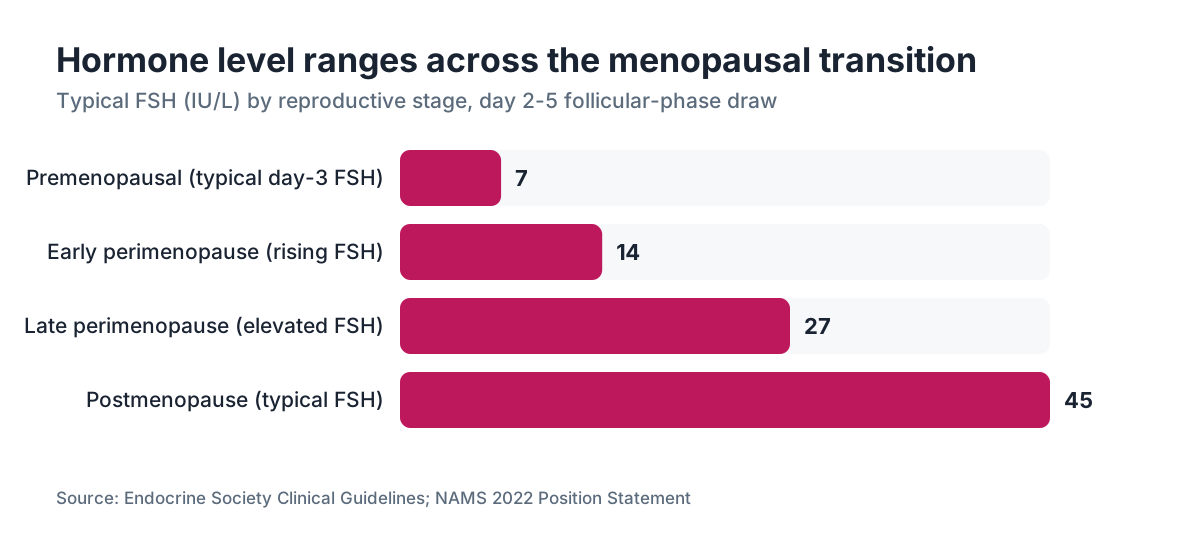
| Hormone | Premenopausal typical range | Perimenopause pattern | Postmenopause typical range | |---|---|---|---| | FSH | 3-10 IU/L (follicular phase) | Rises, often >10; can spike >25 IU/L | >25-30 IU/L, often >40 | | Estradiol (E2) | 30-400 pg/mL (cycle-dependent) | Erratic: may surge then drop | <30 pg/mL, often <20 | | Progesterone (luteal phase) | 5-20 ng/mL | Low or absent in anovulatory cycles | <1 ng/mL | | LH | 2-15 IU/L (follicular) | Rising, surges become irregular | >20 IU/L | | AMH | Age-dependent; ~1-3 ng/mL at 40 | Progressively falling | <0.1 ng/mL or undetectable | | SHBG | 40-120 nmol/L | May rise or fall | Often lower | | Total testosterone | 15-70 ng/dL (varies by lab) | Gradual decline through 40s | Lower, but not zero |
These ranges come from Endocrine Society and NAMS guidance and shift by assay, so compare your result to your own lab's reference interval, not a number from a blog. [1][4]
FSH above 25 IU/L on two separate tests, drawn at least one month apart, is the threshold most clinicians read as significant ovarian decline. NAMS states plainly that FSH alone cannot diagnose menopause or perimenopause because it swings too much in the transition. [4] One high FSH today can be followed by a normal FSH and a full ovulation next month. That's perimenopause, not a bad lab.
Which hormone tests should you actually get, and when?
The most common panel a clinician orders is FSH, estradiol (E2), and sometimes LH. A morning draw in the early follicular phase (days 2-5 of your cycle, if you're still cycling) gives the most readable snapshot, because estradiol sits at its baseline and FSH reflects true ovarian response. [1]
AMH is cycle-independent. You can draw it any day. It's increasingly used as a marker of ovarian reserve and tracks time to menopause in studies like SWAN (the Study of Women's Health Across the Nation). A 2017 analysis in the journal Menopause found AMH below 0.10 ng/mL predicted menopause within about 5 years with reasonable accuracy, though the prediction intervals were wide. [5]
Progesterone only means something if it's drawn in the luteal phase, roughly days 18-22 of a 28-day cycle. A level below 3 ng/mL in what should be the luteal phase points to an anovulatory cycle. Drawn in the follicular phase, it tells you nothing about ovulation.
Check thyroid function (TSH, free T4) alongside your hormone panel. Hypothyroidism is common in women over 40 and mimics perimenopause almost exactly: fatigue, weight gain, mood changes, irregular periods. Running both panels at once saves you months of chasing the wrong diagnosis.
Some tests get over-ordered and add little to a routine perimenopause workup. Saliva hormone testing has not been validated for tracking perimenopause status in clinical guidelines. Dried urine testing (DUTCH) is popular in functional medicine circles but lacks the outcome data serum assays have. NAMS does not recommend either as a substitute for serum testing. [4]
If you're under 45 with symptoms and cycle changes, your doctor might also check prolactin and consider a pelvic ultrasound to rule out other causes before pinning everything on perimenopause.
How do estradiol levels change through perimenopause?
Estradiol's path through perimenopause runs opposite to what most women expect. Instead of a smooth, gradual decline starting at 40, estradiol often rises and turns wildly variable in early perimenopause, then crashes in the 12 to 24 months before the final period. [3]
SWAN, which followed more than 3,000 women across seven sites for over 20 years, documented mean estradiol in the late reproductive stage around 60-70 pg/mL, with individual cycles spiking over 200 pg/mL in early perimenopause. [3] The brain is pushing harder (more FSH) to stimulate the remaining follicles, and once in a while a follicle answers with a burst of estrogen.
Those surges explain breast tenderness, bloating, heavier periods, and the kind of anxiety that feels like three espressos too many. Then the follicle fails to ovulate, progesterone never rises, and estrogen drops fast. You're in withdrawal. That withdrawal drives the mood crash, the night sweats, the 3 a.m. wakeups.
By late perimenopause (roughly the 1 to 2 years before the final period), estradiol begins a steadier decline, usually falling under 30 pg/mL. Vasomotor symptoms peak here because the estrogen receptor in the hypothalamus reacts to the rate of change more than the absolute level. [2]
This is why some women with estradiol still in the "normal" range on paper feel terrible. Their estradiol fell 40% in three weeks. The number looks fine against a reference chart built around a stable premenopausal average.
What does a high FSH level mean in perimenopause?
FSH is the pituitary's distress signal to aging ovaries. When follicles stop responding, FSH climbs. A single FSH above 10 IU/L on a day-3 draw is mildly elevated and worth tracking. Above 25 IU/L is consistent with perimenopause or early menopause. Above 40 IU/L is postmenopausal range. [1][4]
The problem with using FSH alone is that it bounces. A woman in perimenopause can have an FSH of 45 in March, get pregnant in April (it happens), and show an FSH of 8 in June. The Endocrine Society's clinical guidelines state that FSH cannot be used as the sole criterion for diagnosing menopause in women who are still menstruating, no matter how high it gets. [1]
For women who've had a hysterectomy but kept their ovaries, FSH is more useful because there's no cycle to track. Two readings above 25-30 IU/L, drawn at least 4-6 weeks apart, give a reasonable signal that ovarian function is dropping.
One practical point: FSH on hormonal birth control is suppressed. On combined oral contraceptives or a progestin-only method, your FSH looks artificially low and your estradiol artificially stable. Labs drawn on hormonal contraception don't reflect your true ovarian status. To get a meaningful result you'd need to be off combined hormonal contraception for at least 4-6 weeks, which isn't always safe or practical. That's a real bind for women in their mid-to-late 40s using OCs to manage perimenopausal bleeding who also want to know where they stand.
Why does progesterone matter so much in perimenopause?
Progesterone is often the first hormone to meaningfully decline in perimenopause, and it's the one mainstream health media talks about least. As ovulation gets irregular, the luteal phase shortens or vanishes in some cycles. No ovulation means no corpus luteum, and no corpus luteum means no progesterone. [2]
Progesterone does several things you'd miss. It counters estrogen's proliferative effect on the uterine lining, which matters for bleeding patterns and endometrial health. It calms the nervous system through its conversion to allopregnanolone, a GABA-receptor modulator. Low progesterone is strongly linked to the anxiety, poor sleep, and mood instability many women feel in perimenopause, often before any hot flash shows up. [2]
A luteal-phase progesterone below 3 ng/mL (some labs say below 5 ng/mL) suggests the cycle was anovulatory. Repeating this test over 3-6 months can reveal a pattern that's clinically useful even when FSH and estradiol look normal.
For women who are candidates for hormone therapy, progesterone is a key part of the picture. Micronized progesterone (bioidentical, oral) is the form studied in major trials and recommended by NAMS for uterine protection in women on estrogen. [4][12] If you're weighing options, progesterone breaks down the forms, doses, and evidence behind each.
There's an ongoing fight over compounded progesterone creams. Most clinicians and NAMS hold that topical progesterone doesn't reliably produce measurable serum levels and shouldn't be used as uterine protection for women on systemic estrogen. Serum progesterone after topical cream is typically very low even when the cream contains a substantial dose.
What role does testosterone play in perimenopause?
Testosterone gets skipped in perimenopause conversations, partly because it declines more gradually and partly because the FDA has never approved a testosterone product specifically for women in the US. The physiology is real anyway.
Women make testosterone in both the ovaries and the adrenal glands. Ovarian production starts falling in the late 30s and keeps dropping through perimenopause. The adrenal contribution (via DHEA-S) also declines with age, independent of ovarian status. By the mid-40s, many women have testosterone levels roughly half of what they had at 25 to 30. [1]
Low testosterone in women is linked to reduced libido, lower energy, loss of drive, and trouble building or holding muscle. It's genuinely hard to separate testosterone's contribution from low estradiol's, because they often fall together. But some women with adequate estradiol still feel flat and test with low-to-undetectable free testosterone.
Testing is imperfect. Total testosterone is easy to measure. Free testosterone (the active fraction) needs either a calculated free T (using SHBG and albumin) or equilibrium dialysis, which most commercial labs don't run routinely. SHBG, which binds testosterone and lowers its free fraction, often rises with oral estrogen, so it can further suppress free testosterone even when total looks fine.
If you're asking your doctor to test testosterone, request total testosterone AND SHBG so free testosterone can be calculated. A total testosterone below about 20 ng/dL in a woman with symptoms is worth a conversation about whether testosterone therapy makes sense, though the evidence base for female testosterone therapy, while growing, is still narrower than for estrogen.
Can a blood test diagnose perimenopause, or is it a clinical diagnosis?
Perimenopause is mostly a clinical diagnosis. The two most-used definitions come from the Stages of Reproductive Aging Workshop (STRAW+10), a consensus framework that stages the transition by menstrual cycle changes, not by hormone levels alone. [6]
Under STRAW+10, early perimenopause begins when cycles vary in length by 7 or more days from your normal, and late perimenopause begins when you have at least one gap of 60 or more days between periods. FSH elevation (above 25 IU/L) supports the diagnosis but isn't required for staging. [6]
Labs can't diagnose perimenopause on their own because of the variability problem running through this whole article. A woman can post a postmenopausal FSH one month and ovulate normally the next. Hormone levels capture a moment; the transition is a process that unfolds over 4 to 10 years on average. [4]
Blood tests are most useful for ruling out other causes of cycle changes and symptoms (thyroid disease, hyperprolactinemia, premature ovarian insufficiency in women under 40) and for guiding treatment decisions about whether and what hormone therapy to consider. They also help with monitoring once you start treatment.
If you want help reading your labs against your actual symptoms, telehealth platforms like WomenRx connect you with clinicians who work in this transition and can put your numbers in context instead of just laying them next to a reference range.
What is premature ovarian insufficiency, and how are its hormone levels different?
Premature ovarian insufficiency (POI) is not the same as perimenopause, though the hormone pattern overlaps. POI is diagnosed when a woman under 40 has elevated FSH (typically two readings above 25 IU/L at least 4 weeks apart) and fewer than three periods in a four-month stretch, or no periods for more than four months. [1][7]
POI affects about 1 in 100 women under 40. Unlike typical perimenopause, it can have identifiable causes: autoimmune disease (particularly autoimmune oophoritis, sometimes tied to Addison's disease or thyroid autoimmunity), Turner syndrome, Fragile X premutation carrier status, or prior chemotherapy or radiation. Most cases have no identifiable cause. [7]
The hormone profile in POI looks like late perimenopause or menopause: FSH persistently above 25 IU/L, estradiol below 30-50 pg/mL, AMH undetectable or very low. What makes POI clinically distinct is intermittent ovulation. Up to 5-10% of women with POI have a spontaneous pregnancy after diagnosis, which is why contraception is still recommended if pregnancy isn't wanted.
Women with POI carry meaningfully higher cardiovascular and bone health risk than women who reach natural menopause at 51, because they spend many more years without adequate estrogen. Hormone therapy is generally recommended through at least the average age of natural menopause (around 51 to 52) in women with POI, less for symptom control than for long-term protection. [7] Getting an early bone density test makes sense in this group.
How do hormone levels affect bone density during perimenopause?
Bone loss in women speeds up sharply during the perimenopause-to-menopause transition and in the years right after. The mechanism is direct: estradiol normally suppresses osteoclasts, the cells that break down bone. When estradiol falls, osteoclast activity rises and resorption outpaces formation. [8]
The fastest phase of bone loss runs from the 1 to 2 years before the final period through the 1 to 3 years after, when estradiol is dropping quickest. Studies suggest women can lose 1-3% of bone density per year in this window, against 0.5% or less per year in earlier adulthood. Across the full transition, total loss can reach 10-20% in the lumbar spine. [8]
Bone density testing (DEXA scan) is recommended starting at 65 for average-risk women, and earlier for women with POI, early menopause, low BMI, a strong family history of fracture, or other significant risk factors. The Bone Health and Osteoporosis Foundation and NAMS both support this earlier-screening approach. [4][8]
Hormone levels don't map directly to a DEXA score, but low estradiol in perimenopause is one reason to get a baseline DEXA earlier rather than waiting for 65. Progesterone has some bone-protective effects too, though the size of that effect is smaller and less established than estrogen's. Testosterone contributes through both direct androgen-receptor action and aromatization to estradiol in bone tissue.
For the full rundown on testing, see bone density test.
How does perimenopause hormone change affect weight, and where do GLP-1s fit in?
Many women gain weight in perimenopause without eating more or moving less, and hormones are part of the reason. Falling estradiol shifts fat toward the abdomen and visceral stores, the metabolically active, inflammatory kind. Declining muscle mass (partly from lower testosterone and estrogen) drops resting metabolic rate. Disrupted sleep from night sweats raises cortisol and ghrelin, the hunger hormone. [9]
Insulin sensitivity also declines in perimenopause, independent of weight gain. The same diet that was fine at 38 can push higher blood sugar and more fat storage at 48. That's a physiological change, not a willpower failure.
Hormone therapy, particularly estradiol, has reduced visceral fat and improved insulin sensitivity in multiple trials of perimenopausal and early-menopausal women. SWAN data and smaller randomized trials suggest estradiol can partly offset the metabolic shift, though it doesn't cause dramatic weight loss in most women. [9]
For women with significant weight to lose, GLP-1 receptor agonists (semaglutide, tirzepatide) have shown meaningful efficacy in trials that included midlife women. The STEP 1 trial found semaglutide 2.4 mg cut body weight by an average of 14.9% over 68 weeks in adults with obesity or overweight. [10] Tirzepatide produced even larger average losses (up to 22.5% in SURMOUNT-1) in a similar population. [11] These drugs don't fix the underlying hormone changes, but they act on appetite signaling in ways that can push past some of the perimenopausal metabolic resistance.
If you're weighing options, see semaglutide vs tirzepatide for a side-by-side breakdown. The short version: GLP-1s and hormone therapy work on different mechanisms and aren't mutually exclusive.
When should you consider hormone replacement therapy based on your hormone levels?
Hormone levels are one input into the HRT decision, not the whole thing. NAMS's 2022 position statement is clear: for most women under 60 or within 10 years of menopause onset, hormone therapy is safe and appropriate for bothersome vasomotor symptoms, and the decision should be individualized around symptoms, personal health history, and preferences, not around hitting a specific FSH or estradiol number. [4]
The Endocrine Society takes the same view: hormone therapy helps most when started in the perimenopause or early postmenopause window, the "timing hypothesis" supported by the Women's Health Initiative re-analyses. Women who started estrogen-containing HRT within 10 years of menopause had better cardiovascular outcomes than those who started later, even though the original 2002 WHI headline scared a generation off hormone therapy. [4]
In practice: if your symptoms are hurting your quality of life, your hormone levels don't have to reach a set number before treatment is reasonable. A woman with an FSH of 15, irregular cycles, wrecked sleep, and mood instability is a fair candidate for an HRT discussion even if her estradiol hasn't cratered yet.
For women with a uterus, estrogen is always paired with a progestogen. For women without a uterus, estrogen alone is an option. Route matters. Transdermal estrogen (patches, gels, sprays) doesn't carry the small increased clotting risk that oral estrogen does, which is relevant for women with migraine with aura, hypertension, or obesity. [4]
See hormone replacement therapy and estrogen patch for delivery-specific detail. For the full landscape of what happens and what your options are, menopause covers it.
How often should you recheck hormone levels during perimenopause?
There's no universal schedule. For most women not on hormone therapy, repeating labs every 6 to 12 months makes sense if you're tracking the transition or if symptoms are shifting. A single baseline panel is a starting point. Trends over time tell you more than any one result.
For women on hormone therapy, follow-up labs confirm adequate absorption (especially with patches or gels, where skin uptake varies) and guide dose changes. A common approach is to recheck estradiol 6 to 8 weeks after starting or changing a transdermal dose, then annually once stable. The target estradiol range for symptom control on HRT is generally 40-100 pg/mL, though some women need more and others feel fine on less.
AMH isn't worth rechecking often, because it declines slowly and doesn't change treatment decisions the way estradiol or FSH can. Testosterone, if being treated, is typically rechecked 6 to 8 weeks after starting and then every 6 months.
If you're still cycling and using FSH to gauge where you are, draw it the same phase each time (ideally day 2-5) so results compare. An FSH drawn at different cycle phases can vary by 2 to 3 times within a single cycle, which makes trend comparisons meaningless.
One practical note: many insurance plans cover hormone panels under well-woman or annual blood work. If you're ordering outside a routine visit, check what your plan covers first, because AMH in particular is sometimes not covered and runs $50-150 out of pocket depending on the lab.
Frequently asked questions
What FSH level indicates perimenopause?
An FSH above 10 IU/L on a day-2 to day-5 draw is mildly elevated and worth tracking. Most clinicians use two readings above 25 IU/L, at least one month apart, as a signal of significant ovarian decline. But NAMS states FSH alone cannot diagnose perimenopause because it fluctuates too much during the transition. Symptoms and cycle changes matter just as much.
What is a normal estradiol level during perimenopause?
There is no single normal estradiol level in perimenopause. Levels swing hard, from under 20 pg/mL to over 300 pg/mL across different cycles. Early perimenopause can produce higher estradiol spikes than premenopausal baseline. Late perimenopause brings a sustained decline toward under 30 pg/mL. This variability is the defining hormonal feature of the transition, not a sign your lab is wrong.
Can you still get pregnant in perimenopause if your FSH is high?
Yes, pregnancy is possible throughout perimenopause, including with elevated FSH. Ovulation still happens in many perimenopausal cycles, even when FSH is above 25 IU/L. Women with FSH levels consistent with menopause have become pregnant without fertility treatment. Contraception stays necessary until you've had 12 consecutive months without a period, the clinical definition of menopause.
What does low progesterone in perimenopause feel like?
Low progesterone is linked to anxiety, poor sleep (particularly trouble staying asleep), mood instability, and heavier or irregular periods. These symptoms often show up years before hot flashes, because progesterone declines earlier than estradiol in most women. A luteal-phase progesterone below 3 ng/mL suggests an anovulatory cycle. Many women describe this phase as feeling wired and tired, or emotionally fragile without an obvious cause.
Is the DUTCH test better than blood tests for perimenopause hormone levels?
NAMS and the Endocrine Society do not recommend DUTCH (dried urine) or saliva testing as substitutes for serum hormone testing in perimenopause. These methods haven't been validated against clinical outcomes the way serum assays have. They can give useful metabolite information, but for FSH, estradiol, and progesterone used in clinical decisions, blood draws remain the standard.
How do I know if my symptoms are perimenopause or thyroid disease?
Thyroid disease and perimenopause overlap heavily: fatigue, weight change, mood shifts, irregular periods, and brain fog appear in both. The only reliable way to tell them apart is blood testing. A TSH and free T4 panel alongside a hormone panel (FSH, estradiol, progesterone) at the same visit will separate them. Hypothyroidism is common in women over 40, and both conditions can coexist.
What is AMH and should I test it in perimenopause?
AMH (anti-Müllerian hormone) is made by small ovarian follicles and reflects your ovarian reserve. It declines steadily with age and tracks time to menopause better than a single FSH or estradiol draw. It's cycle-independent, so you can test it any day. A level below 0.10 ng/mL is linked to menopause within roughly 5 years, though the prediction range is wide. It's most useful for gauging timeline, not for treatment decisions.
Can hormone levels explain weight gain in perimenopause?
Yes, though it's not the whole story. Falling estradiol shifts fat toward the abdomen. Declining testosterone lowers muscle mass and resting metabolic rate. Disrupted sleep from hormonal symptoms raises cortisol and ghrelin. Insulin sensitivity drops in perimenopause independent of weight. Estrogen therapy can partly offset visceral fat gain. GLP-1 medications like semaglutide act on appetite signaling and can be used alongside hormone therapy for women who need more support.
What hormone levels are considered premature ovarian insufficiency (POI)?
POI is diagnosed in women under 40 with two FSH readings above 25 IU/L taken at least 4 weeks apart, combined with menstrual irregularity or loss of periods. AMH is typically undetectable and estradiol sits below 30-50 pg/mL. POI is not early perimenopause and often has identifiable causes like autoimmune disease or Fragile X carrier status. Hormone therapy is strongly recommended through at least the average age of natural menopause.
How should I time hormone blood tests during perimenopause?
If you're still cycling, draw FSH and estradiol on days 2-5 of your period (day 1 is the first day of full flow). Progesterone is only meaningful in the luteal phase, around days 18-22 of a typical 28-day cycle. AMH can be drawn any day. If you're on hormonal contraception, levels will be suppressed and won't reflect your true ovarian status. Consistent timing matters if you're tracking trends across draws.
Does hormone replacement therapy affect my lab results going forward?
Yes. Once you're on estrogen therapy, your serum estradiol reflects both your own production and the dose you take. FSH is suppressed by exogenous estrogen. So labs drawn on HRT aren't useful for staging where you are in the transition. They're useful for monitoring your therapeutic estradiol level (target usually 40-100 pg/mL for symptom control) and adjusting dose. Progesterone on oral micronized progesterone peaks a few hours after dosing.
At what age do perimenopause hormone changes typically start?
Hormonal changes begin on average in the early-to-mid 40s, though AMH starts declining as early as the mid-30s. Cycle irregularity and the first perimenopausal symptoms usually show up around ages 43 to 47. Perimenopause lasts an average of 4 to 8 years. See perimenopause age for more on the timeline and what shifts when it starts.
Can I use hormone levels to time when I'll reach menopause?
Roughly, but with wide error bars. A 2017 Menopause journal study found AMH below 0.10 ng/mL predicted menopause within about 5 years with meaningful but imperfect accuracy. FSH consistently above 25 IU/L suggests the transition is well underway. The strongest clinical predictor is still cycle pattern: when gaps between periods pass 60 days consistently, menopause is typically 1 to 3 years away. For broader context, see when does menopause start.
Sources
- Endocrine Society, Female Hypogonadism Clinical Practice Guidelines
- Prior JC, Perimenopause: The Complex Endocrinology of the Menopausal Transition, Endocrine Reviews 1998
- Study of Women's Health Across the Nation (SWAN), University of Michigan / NIH
- North American Menopause Society (NAMS), 2022 Hormone Therapy Position Statement
- Sowers MR et al., Anti-Müllerian Hormone and Time to Menopause, Menopause Journal 2017
- Harlow SD et al., STRAW+10: Addressing the Unfinished Agenda of Staging Reproductive Aging, Menopause 2012
- European Society of Human Reproduction and Embryology (ESHRE) Guideline on Premature Ovarian Insufficiency
- Bone Health and Osteoporosis Foundation, Clinician's Guide to Prevention and Treatment of Osteoporosis
- Carr MC, The Emergence of the Metabolic Syndrome with Menopause, Journal of Clinical Endocrinology and Metabolism 2003
- Wilding JPH et al., STEP 1 Trial, New England Journal of Medicine 2021
- Jastreboff AM et al., SURMOUNT-1 Trial, New England Journal of Medicine 2022
- FDA, Drug Label for Prometrium (micronized progesterone capsules)