Perimenopause heart flutter: what's causing it and when to worry
TL;DR: Heart flutters during perimenopause are common, affecting roughly 40-54% of women in the menopause transition. They're usually caused by estrogen's direct effect on the heart's electrical system. Most are harmless. But palpitations that come with chest pain, fainting, or an irregular pulse lasting more than a few minutes need a same-day medical evaluation.
What is a perimenopause heart flutter, exactly?
A heart flutter, or palpitation, is the sudden awareness of your own heartbeat. It can feel like a flip, a thud, a racing sensation, or a skipped beat. During perimenopause, many women describe it as a fish flopping in the chest, usually lasting a few seconds to a minute before resolving on its own.
Most of the time this is completely normal physiology. Your heart didn't actually skip a beat. What you felt was a premature contraction (usually a premature atrial or ventricular beat) followed by a slightly longer pause, then a stronger-than-usual beat. That strong beat is what registers as the "thump."
The medical term is palpitation. When an ECG shows a specific rhythm disturbance, doctors will name it more precisely: premature atrial contractions (PACs), premature ventricular contractions (PVCs), or occasionally atrial fibrillation (AFib). Perimenopause-related flutters are overwhelmingly PACs and PVCs, which are benign in a structurally normal heart. AFib is less common but worth ruling out, especially if the irregular rhythm lasts longer than a few minutes. [1]
The transition into menopause typically spans 4 to 10 years, and heart symptoms can appear at any point in that window. [2] If you've been noticing flutters and you're anywhere from your late 30s to early 50s, perimenopause is one of the first things to consider.
How common are heart palpitations during perimenopause?
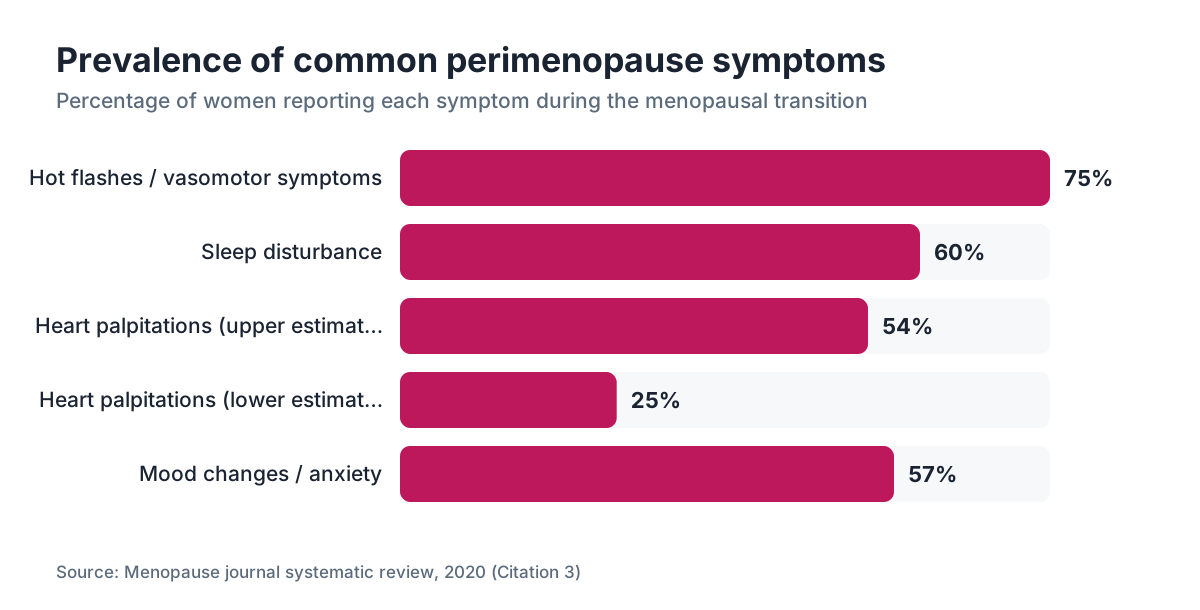
More common than most women expect, and more common than their doctors often acknowledge. A 2020 systematic review published in Menopause found that palpitations affect somewhere between 25% and 54% of women during the menopausal transition, depending on the population studied and how palpitations were defined. [3] For comparison, hot flashes affect about 75% of women. Palpitations rank as the second most reported cardiovascular-type symptom of perimenopause, right after hot flashes.
The Study of Women's Health Across the Nation (SWAN), which followed over 3,000 women longitudinally, found that cardiovascular symptoms including palpitations peaked during the late perimenopause and early postmenopause phases. [4] So if your flutters are getting more frequent as your cycles turn irregular, that tracks with the research.
Women in surgical menopause (both ovaries removed) often report palpitations more acutely and earlier, because the estrogen drop is abrupt rather than gradual. [1]
Why does estrogen cause heart palpitations?
Estrogen has direct effects on the heart that go well beyond its reproductive role. The heart muscle and the electrical conduction system both carry estrogen receptors. When estrogen levels fall, and especially when they swing wildly as they do in perimenopause, the electrical stability of the heart changes. [1]
Estrogen normally helps regulate calcium channels and potassium channels in cardiac cells. These channels control how the electrical impulse travels through your heart. Lower, erratic estrogen disrupts that regulation, making the heart more prone to the ectopic beats (beats that fire from somewhere other than the usual pacemaker) that cause the flutter sensation. [5]
Estrogen also affects the autonomic nervous system, the network that controls heart rate. During a hot flash, your sympathetic nervous system fires, adrenaline surges, and your heart rate can jump 20-30 beats per minute in seconds. Many women notice that hot flashes and heart flutters arrive together, and that's exactly why: they share the same hormonal trigger. [3]
Progesterone adds another layer. Early perimenopause often runs on anovulatory cycles, meaning you don't ovulate and therefore don't produce much progesterone that cycle. Progesterone has a mild calming effect on the nervous system, so losing it can increase heart rate sensitivity. You can read more about how progesterone levels shift during this transition and what that means for your symptoms.
Estrogen also protects arterial walls and helps maintain blood pressure variability. Its decline raises cardiovascular risk, which is part of why the years around menopause deserve more cardiac attention than most women get.
What does a perimenopause heart flutter feel like vs. a real arrhythmia?
This is the question that keeps women up at night, and it deserves a direct answer.
Benign perimenopause-related flutters tend to:
- Last seconds, not minutes
- Feel like a flip, skip, or single thud
- Resolve on their own without any intervention
- Happen at rest, often when you're lying down or sitting quietly
- Occur alongside hot flashes or at predictable hormonal times (mid-cycle, premenstrually, at night)
- Come and go without other symptoms
Arrhythmias that need prompt evaluation tend to:
- Produce a sustained irregular rhythm you can feel for more than 2-3 minutes
- Come with lightheadedness, near-fainting, or actual fainting
- Come with chest pressure, pain, or shortness of breath disproportionate to activity
- Make your pulse feel rapid AND irregular at the same time
- Wake you from sleep with breathlessness
Atrial fibrillation specifically feels like a chaotic, fluttering, irregularly irregular rhythm that can last minutes to hours. It does not feel like the occasional single "thump" of a PAC or PVC. The North American Menopause Society notes that AFib risk does rise after menopause, largely because of cardiovascular aging, and some data suggest hot flash frequency correlates with higher AFib risk. [1] But the majority of palpitations in perimenopausal women are not AFib.
Want to know what your heart is actually doing during a flutter? A consumer-grade smartwatch with an ECG feature (like Apple Watch Series 4 and later, or Kardia Mobile) can record a single-lead rhythm strip during an episode. A single-lead strip won't catch everything, but it can tell a normal sinus rhythm with ectopic beats apart from AFib with reasonable accuracy. [6] That's worth knowing if your flutters are frequent and your worry about them is wearing on your quality of life.
What triggers heart flutters during perimenopause?
Estrogen instability sets the stage, but several common triggers pull the trigger on individual episodes.
Caffeine is the most obvious. Even women who've tolerated coffee for decades sometimes find perimenopause lowers their threshold. Two cups that were fine at 38 can cause noticeable palpitations at 46.
Alcohol is underappreciated as a trigger. It disrupts the autonomic nervous system and directly irritates cardiac tissue. "Holiday heart" (palpitations and AFib after heavy drinking) is well-documented, and perimenopausal women often react to alcohol's cardiac effects at lower doses than before. [7]
Sleep deprivation compounds everything. Poor sleep, which is itself extremely common in perimenopause, raises cortisol and adrenaline, both of which increase ectopic beat frequency.
Thyroid imbalance is critical to rule out. Hyperthyroidism causes palpitations, anxiety, heat intolerance, and irregular periods, which overlaps almost perfectly with perimenopause symptoms. Every woman with significant palpitations in her 40s should have TSH checked. [8]
Anemia is another underdiagnosed culprit. Heavy perimenopausal periods can cause iron-deficiency anemia, and the heart compensates by beating faster and sometimes more erratically. If your periods have gotten heavier and you're feeling the flutter more, a CBC is warranted.
Dehydration, large meals, and lying on your left side at night all increase awareness of ectopic beats. They don't cause the beats, exactly, but they make you more likely to notice beats that are happening anyway.
| Trigger | Mechanism | Easy fix? | |---|---|---| | Caffeine | Increases sympathetic tone | Reduce or cut before noon | | Alcohol | Autonomic disruption, cardiac irritant | Reduce or eliminate | | Sleep deprivation | Elevated cortisol/adrenaline | Address sleep hygiene, consider HRT | | Thyroid disorder | Hyperthyroidism mimics perimenopausal symptoms | TSH blood test | | Anemia | Heart compensates for low oxygen delivery | CBC, treat underlying heavy bleeding | | Dehydration | Electrolyte imbalance affects cardiac conduction | 8+ cups water daily | | Hot flash event | Sympathetic surge during vasomotor episode | Treat hot flashes directly |
When should you see a doctor about perimenopausal heart flutters?
See someone the same day or go to urgent care if:
- A palpitation lasts more than 5 minutes and doesn't resolve on its own
- You feel lightheaded, faint, or actually lose consciousness
- Your pulse is fast AND feels completely chaotic or irregular
- You have chest pain, pressure, or jaw pain with the flutter
- You have shortness of breath at rest or with minimal activity alongside the flutter
Schedule a routine appointment within a week or two if:
- Palpitations are new and happening more than a few times per week
- They're affecting your sleep or quality of life
- You haven't had a recent ECG, CBC, TSH, or metabolic panel
- You have risk factors for heart disease (high blood pressure, diabetes, family history of early cardiac events, smoking)
A basic cardiac workup for new palpitations usually includes a 12-lead ECG, TSH, CBC, a metabolic panel, and sometimes a 24-hour or 2-week Holter monitor to catch episodes that don't happen in the office. This is a completely reasonable thing to ask for, and any clinician should order it without argument when you report new palpitations. [9]
Does hormone replacement therapy help with heart palpitations?
For many women, yes, and the mechanism makes sense: if estrogen instability is causing the flutters, restoring steadier estrogen levels often reduces them.
The SWAN data and several smaller studies show that women who use hormone replacement therapy report lower rates of palpitations than those who don't. [4] This isn't a primary reason to start HRT the way hot flashes are, but it's a real benefit that often surprises women who begin treatment for other symptoms and notice their flutters go quiet.
Timing matters a lot for cardiac outcomes. The "timing hypothesis," supported by the WHI Memory Study reanalysis and the Nurses' Health Study, suggests that starting HRT within 10 years of menopause (and before age 60) carries a favorable cardiac risk profile for most women. Starting later, in women with established cardiovascular disease, carries different considerations. [10] The North American Menopause Society's 2022 position statement affirms that for healthy women under 60 or within 10 years of menopause, the benefits of HRT generally outweigh the risks. [1]
If you're weighing HRT and want to understand the delivery options, the estrogen patch page covers transdermal estrogen, which some cardiologists prefer because it skips the first-pass liver effect of oral estrogen and has a gentler effect on clotting factors.
WomenRx offers telehealth evaluation for HRT with clinicians who understand the perimenopausal cardiovascular picture. If you've been brushed off with "just anxiety" when you raised heart flutters, a provider who actually knows this literature can be the difference.
One caution. HRT is not a treatment for arrhythmias, and it should never delay evaluation of palpitations that meet the urgent criteria above. The two conversations (HRT and cardiac evaluation) should happen in parallel, not one after the other.
What else can you do right now to reduce heart flutters?
Beyond HRT, several strategies are worth trying, with the caveat that most research is in general palpitation populations rather than perimenopause-specific trials.
Magnesium is worth a serious look. Magnesium is involved in cardiac electrical conduction, and deficiency is associated with more ectopic beats. Many perimenopausal women run mildly magnesium-deficient, partly from diet and partly because estrogen helps with magnesium absorption. Magnesium glycinate or magnesium taurate at 200-400 mg per day is low-risk and often helps with both palpitations and sleep. [11] Nobody has a large RCT on this specifically in perimenopause, so call it informed supplementation rather than proven treatment.
Regular aerobic exercise, counterintuitively, cuts palpitation frequency over time even if it triggers them acutely at first. Exercise improves vagal tone, which suppresses ectopic activity. Aim for 150 minutes per week of moderate activity. [9]
Cut back on stimulants strategically. You don't have to give up coffee entirely. Try cutting your last cup before noon and see if nighttime flutters improve. Same with alcohol: even one drink in the evening can worsen nocturnal palpitations in susceptible women.
Address sleep directly. Night sweats and insomnia keep palpitations going through the cortisol-adrenaline pathway. Treating the hot flashes that break up your sleep (with HRT or other options) often reduces the palpitations that wake you.
Breathing exercises and vagal maneuvers (bearing down gently as if having a bowel movement, or splashing cold water on your face) can interrupt a palpitation in the moment by stimulating the vagus nerve and slowing the heart. These work better for sustained episodes than for the single-thump type.
Drop the energy drinks. They stack caffeine, taurine, and sometimes herbs like guarana that sharply increase cardiac irritability. They're a bad idea for anyone with palpitations, whatever the source.
Can perimenopause heart flutters lead to something more serious?
For most women, no. Isolated PACs and PVCs in a structurally normal heart do not progress to dangerous arrhythmias and do not raise mortality risk. Decades of cardiology research back this up. [9]
The bigger long-term story is background cardiovascular risk. The menopause transition is a genuine inflection point for heart disease. Before menopause, estrogen gives women relative cardiovascular protection. After menopause, women's heart disease risk accelerates and eventually equals men's. The American Heart Association notes that heart disease is the leading cause of death in women, responsible for 1 in 5 female deaths. [12]
That's why palpitations in perimenopause deserve real evaluation rather than a shrug. Not because the palpitations themselves are dangerous, but because the workup often turns up blood pressure changes, lipid shifts, or glucose abnormalities that are the actual long-term risks. A woman who gets evaluated for palpitations and gets a full metabolic picture at 47 is in a much better position at 57.
AFib is the exception to the "benign" rule. AFib raises stroke risk roughly fivefold, and menopause is a time of rising AFib incidence. [13] If Holter monitoring or a wearable ECG catches AFib, that needs cardiology follow-up no matter how mild it feels.
If you're curious about menopause broadly and what changes to expect across all body systems, that overview gives useful context for why the heart is just one of several systems adjusting during this transition.
How do doctors diagnose the cause of perimenopause heart palpitations?
The diagnostic path is straightforward and shouldn't feel intimidating to request.
First stop: basic labs. TSH (to rule out thyroid disease), CBC (to rule out anemia), a metabolic panel (electrolytes, kidney and liver function, glucose), and a fasting lipid panel. These take one blood draw and address several of the most common reversible causes. [8]
Second: a resting 12-lead ECG in the office. This takes about five minutes and rules out structural problems in the heart's baseline conduction, like a prolonged QT interval, bundle branch block, or Wolff-Parkinson-White pattern, that would change the safety profile of the palpitations.
Third, if symptoms are frequent: ambulatory monitoring. A 24-hour or 48-hour Holter monitor records your heart continuously. If your palpitations happen only occasionally, a 2-week patch monitor (like the ZIO Patch) or a 30-day event monitor gives a much longer window. [6] The goal is to capture an ECG during an actual symptom episode so the doctor can see exactly what the heart is doing at that moment.
Fourth, if anything above is abnormal or your risk factors are elevated: an echocardiogram (ultrasound of the heart) to check structure and function.
For most perimenopausal women, the workup ends at labs and a normal ECG, with a reassuring conversation. But do not let anyone skip the workup and tell you it's "just anxiety" or "just hormones" without at least checking a TSH and running a baseline ECG. You are entitled to data.
What's the connection between hot flashes and heart palpitations in perimenopause?
The connection is close and mechanistically real. Hot flashes are more than a comfort issue. They're a sign of significant autonomic nervous system activity.
During a hot flash, the thermoregulatory center in the hypothalamus fires inappropriately (because falling estrogen has recalibrated it), triggering a sympathetic surge. Skin blood vessels dilate, you sweat, and your heart rate climbs, sometimes sharply. This adrenaline-like state is exactly the environment in which ectopic beats thrive. Many women notice their palpitation arrives during or right after a hot flash, which is the cardiac nervous system responding to the same hormonal disturbance. [3]
Research published in Circulation found that women with frequent hot flashes, defined as 14 or more per week, had a significantly higher incidence of AFib over a 10-year follow-up than women with fewer or no hot flashes. [13] This does not mean hot flashes cause AFib directly, but it points to shared underlying cardiovascular instability. Treating hot flashes aggressively, particularly with HRT when appropriate, may therefore help the heart in more ways than one.
Night sweats (nocturnal hot flashes) matter a lot for palpitations because they often jolt women awake with a pounding heart. What you're feeling is the sympathetic surge of the hot flash, amplified by the sudden jump out of sleep. It feels alarming and is genuinely unpleasant, but for most women it's the hot flash mechanism, not a cardiac event.
Are perimenopausal heart flutters different from anxiety palpitations?
Clinically, the palpitation itself can feel identical. The distinction matters more for treatment than for diagnosing the flutter.
Anxiety drives palpitations through the sympathetic nervous system, the same pathway hot flashes use. It's entirely possible, and very common, to have both: perimenopausal hormone shifts trigger anxiety and sleep disruption, which then amplify the heart's electrical sensitivity, creating a feedback loop.
The problem is that "it's anxiety" has been used for decades to dismiss real cardiac symptoms in women. The research is clear that women are more likely than men to have cardiac symptoms attributed to anxiety or stress without adequate workup. [12] Accepting an anxiety diagnosis before ruling out thyroid disease, anemia, and an actual cardiac rhythm issue is not acceptable medicine.
If your workup is clean (normal labs, normal ECG, normal Holter) and anxiety is genuinely contributing, then treating the anxiety with evidence-based approaches (therapy, sometimes medication) does reduce palpitation frequency. But that conclusion comes after the workup, not instead of it.
Perimenopause-specific anxiety, the kind driven by estrogen and progesterone swings rather than a pre-existing anxiety disorder, often responds well to HRT. This is different from primary generalized anxiety disorder, which needs its own treatment. hormone replacement therapy that steadies the hormonal substrate often quiets both the anxiety and the palpitations together.
Frequently asked questions
How long do perimenopause heart palpitations last?
Individual episodes usually last seconds to a minute and resolve on their own. The phase when palpitations are frequent typically spans the late perimenopause and early postmenopause years, roughly 2 to 5 years for most women, though some experience them across the entire 4-10 year transition. Treating underlying hot flashes, often with HRT, shortens the duration for many women.
Can perimenopause cause heart palpitations every day?
Yes. Daily or near-daily palpitations are reported by a meaningful subset of perimenopausal women, particularly those with frequent hot flashes or significant sleep disruption. Daily palpitations should be evaluated rather than simply tolerated. A Holter monitor and basic labs will help determine whether they're benign ectopic beats or something needing more attention.
Do perimenopause palpitations go away after menopause?
For most women, yes. Palpitations tend to peak in late perimenopause and early postmenopause, then diminish as hormone levels stabilize at a lower set point. That said, background cardiovascular aging means some women keep having occasional palpitations. Women who use HRT often report faster resolution of the flutter phase.
Is a heart flutter the same as atrial fibrillation?
No, usually not. Most perimenopausal heart flutters are premature atrial or ventricular contractions (PACs or PVCs), which are benign in a structurally normal heart. AFib is a sustained, chaotic rhythm that typically lasts minutes to hours and feels persistently irregular rather than like an occasional thump or skip. AFib needs a cardiology evaluation; PACs and PVCs usually just need reassurance after a clean workup.
What vitamins or supplements help with perimenopause heart palpitations?
Magnesium (glycinate or taurate, 200-400 mg daily) is the most commonly used and lowest-risk option; magnesium is involved in cardiac conduction and deficiency increases ectopic beats. Correcting iron deficiency, if present from heavy periods, also helps significantly. There's no strong RCT evidence for other supplements specifically in perimenopausal palpitations, so be skeptical of any product making specific claims.
Can anxiety cause heart palpitations during perimenopause, or is it always hormonal?
Both. Hormonal swings drive palpitations directly through estrogen's effect on cardiac electrical channels, and they also trigger anxiety, which compounds the problem through sympathetic nervous system activation. The two are often intertwined in perimenopause. Treating the hormonal root cause with HRT frequently reduces both the anxiety and the palpitations, but anxiety can also be an independent contributor that needs its own management.
Should I get an ECG if I'm having heart flutters in perimenopause?
Yes. A baseline 12-lead ECG is a reasonable, inexpensive, five-minute test that rules out structural conduction problems. If your palpitations are frequent, a 24-hour Holter or 2-week patch monitor is worth requesting so a doctor can see exactly what your heart is doing during an episode. An ECG in the office rarely catches a palpitation in real time.
Does alcohol make perimenopause heart palpitations worse?
Yes, consistently. Alcohol disrupts the autonomic nervous system and directly irritates cardiac tissue. Even moderate consumption, one to two drinks in the evening, is a known trigger for nocturnal palpitations. Perimenopausal women often find their alcohol tolerance drops, including for cardiac side effects. Eliminating or sharply reducing alcohol is one of the highest-yield behavioral changes for reducing palpitations.
Can low estrogen cause an irregular heartbeat?
Low, fluctuating estrogen disrupts the calcium and potassium channels that control how electrical impulses travel through the heart, raising the odds of ectopic (out-of-place) beats. This produces the irregular sensation women describe as fluttering or skipping. Whether low estrogen independently causes sustained arrhythmias like AFib is still under study, but data from SWAN and other cohorts suggest a correlation between hot flash frequency and later AFib risk.
What is the difference between perimenopause and menopause heart palpitations?
Perimenopause palpitations tend to be more variable and frequent because estrogen is fluctuating unpredictably rather than simply declining. Postmenopause palpitations often decrease once hormone levels stabilize at a lower baseline. However, cardiovascular aging after menopause raises the actual risk of sustained arrhythmias like AFib over time, so any new or worsening palpitations after menopause still warrant evaluation.
Will HRT stop my heart palpitations?
For many women, yes, or at least it reduces them significantly. Steadying estrogen levels with HRT addresses the root hormonal mechanism. SWAN data shows lower self-reported palpitation rates in HRT users. The effect isn't guaranteed and depends on the HRT formulation, dose, and how much of your palpitations are hormone-driven versus from other causes like thyroid issues or caffeine. HRT is not a treatment for structural arrhythmias.
How do I track my perimenopause palpitations to help my doctor?
Note the time, duration, what you were doing, whether it felt like a flutter or a sustained irregular beat, and any accompanying symptoms like dizziness or shortness of breath. If you have a smartwatch with ECG capability (Apple Watch Series 4 or later, or Kardia Mobile), record a rhythm strip during the episode. Bring this log and any recordings to your appointment. Pattern data gives your doctor far more to work with than a general description.
Can dehydration cause heart palpitations during perimenopause?
Yes. Dehydration causes electrolyte imbalances, particularly in sodium and potassium, that affect cardiac electrical conduction and increase ectopic beat frequency. Perimenopausal women losing fluid through frequent night sweats face higher risk of mild dehydration. Steady hydration through the day (aim for at least 64 oz of water) is a simple but often overlooked step in managing palpitations.
What does a perimenopause heart flutter feel like at night?
Nocturnal flutters often feel more intense because you're lying still and your awareness of your heartbeat is higher. Many women describe being jolted awake by a pounding or racing sensation that coincides with a hot flash or night sweat. Lying on the left side compresses the chest and makes normal ectopic beats easier to feel. Elevating the head of the bed slightly or switching to your right side can reduce the perception during an episode.
Sources
- North American Menopause Society (NAMS), 2022 Hormone Therapy Position Statement
- National Institute on Aging, NIH – Menopause overview
- Menopause (journal of NAMS) – 2020 systematic review on palpitations in the menopause transition
- SWAN (Study of Women's Health Across the Nation) – NIH longitudinal cohort
- American College of Cardiology – Estrogen and cardiac electrophysiology review
- Heart Rhythm Society – Ambulatory cardiac monitoring clinical guidance
- JAMA Internal Medicine – Alcohol and cardiac arrhythmia (holiday heart) research
- American Thyroid Association – Hyperthyroidism clinical guidelines
- American Heart Association – Palpitations evaluation and management
- National Heart, Lung, and Blood Institute (NHLBI) – Women's Health Initiative and HRT timing hypothesis
- National Institutes of Health Office of Dietary Supplements – Magnesium fact sheet
- American Heart Association – Heart disease in women
- Circulation (AHA journal) – Hot flashes and atrial fibrillation incidence study