Perimenopause headaches: why they happen and how to get relief
TL;DR: Headaches are a recognized perimenopause symptom. Swinging and falling estrogen is the main driver, and it can worsen existing migraines or spark new ones. Up to 64% of women with a migraine history report worsening frequency during perimenopause. Steadying estrogen with a transdermal patch, fixing sleep, and targeted medications all have real evidence behind them.
Are headaches a symptom of perimenopause?
Yes. Headaches, including migraine-pattern ones, are a well-documented perimenopause symptom. The North American Menopause Society lists headache among the physical symptoms tied to the hormonal shifts of perimenopause, and population studies back the link [1].
The mechanism is not mysterious. Estrogen acts directly on serotonin receptors and on the trigeminal pain pathway, the nerve circuit behind most headache and migraine pain. When estrogen swings up and down without warning, as it does in perimenopause, that pathway gets twitchy. The brain's threshold for firing off a headache drops.
What sets perimenopause apart from the rest of reproductive life is the chaos of the fluctuations. In your 20s and 30s, estrogen follows a fairly predictable monthly curve. In perimenopause, which can start as early as your mid-30s and usually runs from your early 40s to your final period (see perimenopause age), the rises and falls turn dramatic and erratic. That instability is the problem, more than low estrogen itself.
So if your headaches got worse, more frequent, or simply different since your early-to-mid 40s, hormones are a reasonable suspect.
How common are headaches in perimenopause?
Common enough that you are in the majority, not the exception. A study in the journal Headache found that women with a history of menstrual migraine had a 64% chance of reporting worsening migraines during perimenopause [2]. That is not a small minority.
Women who never had bad headaches before can still meet their first ones here. The American Migraine Prevalence and Prevention study found that migraine prevalence peaks in women between ages 35 and 55, which lines up almost exactly with the perimenopausal window [3].
Tension-type headaches climb during this stretch too, though they get far less research attention than migraine. The mechanism overlaps: estrogen influences how tightly the muscles around your neck and scalp hold tension, and poor sleep (a classic perimenopause complaint) is one of the strongest tension-headache triggers there is.
The short version: if you are in perimenopause and your head hurts more than it used to, you are not imagining it and you are not unusual.
Why does estrogen cause headaches when it drops?
Estrogen and headache is a story about change, not absolute level. Low estrogen alone does not cause the pain. Rapid shifts, especially drops, pull the trigger.
Here is what happens physiologically. Estrogen modulates serotonin (5-HT), a neurotransmitter that constricts blood vessels and dials pain sensitivity up or down. When estrogen falls sharply, serotonin activity falls with it, blood vessels in the brain dilate, the trigeminal nerve fires, and you get the throbbing pain, nausea, and light sensitivity of migraine [4]. It is the same mechanism behind menstrual migraine, which hits in the days before a period when estrogen drops after ovulation.
Perimenopause amplifies all of it because the drops are bigger and less predictable. In a normal cycle, estrogen falls by a set amount at a set time. In perimenopause you might get a week of very high estrogen, then a crash, then another surge, then another crash, several times in a single month.
Progesterone matters here too, though it is less studied. Some research suggests progesterone withdrawal can lower the seizure threshold in ways that overlap with migraine susceptibility. Progesterone often falls earlier and more steeply than estrogen in perimenopause, leaving women in relative progesterone deficiency for years before estrogen follows. Read more about what progesterone does in this transition.
Magnesium is the last piece. Estrogen helps hold magnesium inside cells. When estrogen drops, neuronal magnesium can fall with it, and magnesium deficiency is one of the best-replicated migraine risk factors we have [4].
What do perimenopause headaches feel like, and how are they different from other headaches?
There is no single presentation. Perimenopause headaches show up as:
- Classic migraine: one-sided, throbbing, moderate to severe, with nausea and sensitivity to light and sound, often lasting 4 to 72 hours
- Menstrual-pattern migraine that gets more frequent or drifts off the expected cycle days
- New daily or near-daily headache that was not there before your 40s
- Tension-type: both sides, pressing or tightening, usually mild to moderate, no nausea
- A mixed pattern where some attacks look like migraine and others feel like tension
The feature most specific to perimenopause is timing. If your headaches track with hormone shifts, worsening in the week before a period (or what used to be a period), during spotting, or after a skipped cycle, that pattern points hard at an estrogen-drop trigger.
A new or changed headache pattern in your 40s or 50s always deserves a conversation with a clinician. Get seen sooner rather than later for the worst headache of your life, a headache that wakes you from sleep every night, a headache with neurological symptoms (vision loss, weakness, speech trouble), or any headache after head trauma. None of those are explained by perimenopause, and they need to be ruled out on their own.
Does perimenopause make migraines worse?
For most women with existing migraine, yes, it gets worse before it gets better. That phrase is accurate and worth sitting with.
The published data is fairly consistent. A prospective study in the journal Neurology followed women with migraine through the menopausal transition and found perimenopause was tied to a significant rise in headache frequency, while postmenopause (12 months past the final period) brought improvement for many [5]. The catch is how menopause arrives. Surgical menopause (removal of the ovaries) often causes acute worsening, because estrogen drops suddenly and all the way, while natural menopause tends to ease off more gradually.
For women whose migraines are tied specifically to the pre-period estrogen drop, the perimenopausal years are brutal because cycles turn irregular. The drop can happen more than once in a cycle at unpredictable times, which makes pre-treating nearly impossible.
The good news: for most women with hormonal migraine, postmenopause brings real relief. Getting there is the hard part.
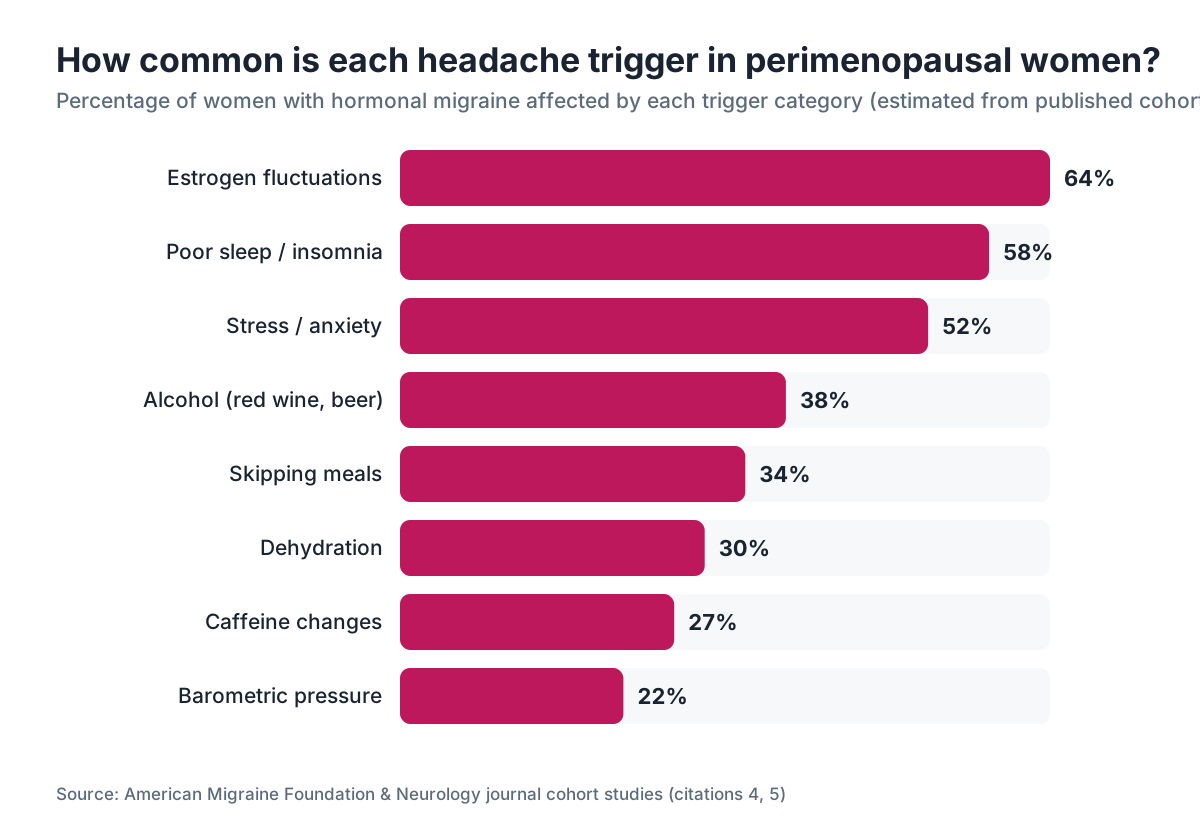
What triggers perimenopause headaches, and which ones can you control?
The hormonal trigger is the root cause, but a stack of secondary triggers piles on top and drives frequency and severity up. Several of them you can actually do something about.
| Trigger | Modifiable? | Notes | |---|---|---| | Estrogen fluctuations | Partially, with HRT | The main driver | | Poor sleep / insomnia | Yes | Sleep disruption from night sweats or anxiety raises headache risk sharply | | Dehydration | Yes | Easy to underestimate; aim for at least 2L water daily | | Alcohol, especially red wine | Yes | Histamine and tyramine are direct migraine triggers; sensitivity often rises in perimenopause | | Caffeine overuse or withdrawal | Yes | Steady daily intake matters more than quitting for many women | | Stress | Partially | Cortisol swings interact with estrogen; sleep, exercise, and support help | | Skipping meals / blood sugar drops | Yes | Especially relevant for women on GLP-1 medications | | Barometric pressure changes | No | A real trigger, but you cannot control the weather | | Bright or flickering light | Partially | Sunglasses and screen filters help | | Strong smells | Partially | Avoidance where you can |
Keep a headache diary for four to six weeks. Not as busywork. The patterns it turns up tend to surprise people. Women discover their worst days cluster around a specific hormonal moment, or line up with wine on weeknights, or match almost perfectly with nights when hot flashes wrecked their sleep. That data changes how a clinician treats you.
Can hormone therapy help perimenopause headaches?
For many women, yes, and it is probably the most underused tool on the shelf. The catch is that how you take estrogen matters as much as whether you take it.
Oral estrogen pills produce peaks and troughs in blood estrogen that can trigger migraine on their own. That is why clinicians who work in both headache and menopause generally prefer transdermal estrogen (patches, gels, sprays) for women with hormonal headache [1][6]. Transdermal delivery holds a steadier level, which flattens the drop-and-spike pattern that sets off attacks. An estrogen patch is often the first pick precisely because it keeps blood levels the most consistent.
The NAMS 2022 Hormone Therapy Position Statement notes that "transdermal estrogen avoids first-pass hepatic metabolism" and produces more stable serum levels than oral preparations, which matters for headache susceptibility [1].
Continuous (not cyclical) hormone therapy is also preferred for women with menstrual migraine, because cyclical therapy deliberately builds in a hormone-free week that recreates the estrogen-drop trigger. A continuous regimen erases that drop.
Progesterone choice matters too. Micronized progesterone (Prometrium in the US) seems better tolerated for headache than synthetic progestins, though the data is thin. Some women find even micronized progesterone worsens headache for the first few months before it settles.
If you have a contraindication to estrogen (current or recent hormone-sensitive breast cancer, for instance) or you would rather not use it, the non-hormonal options below are the path forward.
If you want to talk through whether you are a candidate, telehealth services like WomenRx connect you with clinicians who focus on women's hormone health and can prescribe and monitor transdermal options. See also our overview of hormone replacement therapy.
What medications actually work for perimenopause headaches?
Two categories: acute treatments (taken when a headache is already going) and preventive treatments (taken daily or near-daily to cut frequency). If you are getting more than four migraine days a month, preventive treatment is worth a serious conversation with a clinician.
Acute treatments with real evidence:
- Triptans (sumatriptan, rizatriptan, eletriptan, others): the most effective acute migraine drugs available. They bind serotonin receptors and constrict dilated blood vessels. Over-the-counter ibuprofen and naproxen sodium work for mild to moderate attacks and make a good first step. Acetaminophen alone is generally weaker for migraine.
- Gepants (ubrogepant, rimegepant): a newer class of CGRP-receptor blockers that work differently from triptans. A solid option if triptans cause side effects or are off the table. Rimegepant (Nurtec) also has FDA approval for prevention, taken every other day [7].
- Anti-nausea medications (promethazine, metoclopramide): useful add-ons when nausea is significant.
Preventive treatments with evidence for hormonal migraine:
- Beta-blockers (propranolol, metoprolol): first-line preventives with decades of data. Propranolol carries FDA approval for migraine prevention.
- Topiramate: also FDA-approved for prevention; needs monitoring for cognitive side effects.
- Amitriptyline: low-dose tricyclic with good evidence for both migraine and tension headache, and it helps sleep.
- Monoclonal antibodies targeting CGRP (erenumab/Aimovig, fremanezumab/Ajovy, galcanezumab/Emgality): newer injectable preventives with strong trial data and FDA approvals. Especially useful for women who have failed older preventives [7].
- Magnesium glycinate 400 to 600 mg daily: the American Migraine Foundation lists magnesium as a first-line prevention supplement, and the evidence is good enough to try it before adding a prescription preventive [4].
For women in perimenopause specifically, transdermal estrogen plus a preventive medication often works better than either one alone.
What non-medication strategies help with perimenopause headaches?
Medications are not the whole answer, and for women who want to keep their pill count down, behavioral and lifestyle approaches have real data behind them.
Sleep: The single highest-leverage non-drug move. Poor sleep is both a headache trigger and a casualty of hot flashes and night sweats. Fix sleep quality, whether through HRT, cooling strategies, or CBT for insomnia (CBT-I), and headache frequency drops in population studies. CBT-I has Level A evidence from the American Academy of Sleep Medicine and matches sleep medication for chronic insomnia [8].
Regular aerobic exercise: Three to five sessions a week of moderate cardio (30 minutes, enough to raise your heart rate) cut migraine frequency by roughly 40% versus placebo in controlled trials, on par with some preventive drugs [9]. Endorphin release, better sleep, and direct serotonin effects all feed into it.
Biofeedback and relaxation training: Both carry Level A evidence from the American Headache Society for migraine prevention. Biofeedback works especially well for tension-type headache. Worth asking a neurologist or pain psychologist about.
Dietary consistency: Eat at regular intervals, go easy on alcohol (red wine and beer especially), and keep caffeine steady day to day. All of it lowers headache frequency for women with hormonal migraine. There is no single "migraine diet" that works for everyone, but tracking food against headache days often exposes personal patterns.
Magnesium supplementation: Mentioned above, but worth repeating here because it sits between medication and lifestyle. 400 to 600 mg of magnesium glycinate or oxide daily for three months is a low-risk, moderate-evidence move the American Migraine Foundation flatly recommends [4].
Acupuncture: A Cochrane review of acupuncture for migraine prevention (22 trials, nearly 5,000 participants) found it cut headache frequency about as well as preventive drug treatment [10]. A legitimate option, not theater.
When do perimenopause headaches go away?
For most women, they do ease up eventually. The prospective studies that followed women through the transition consistently show headache frequency peaking in late perimenopause, then dropping in the two to three years after the final period, once estrogen settles at its new, lower, stable postmenopausal baseline [5].
The timeline varies. Perimenopause itself typically runs four to eight years, with the most hormonally volatile stretch in the last one to two years before the final period. Which means some women fight worsening headaches for the better part of a decade before things level out.
Women who have surgical menopause (oophorectomy) often skip the gradual improvement, because sudden, complete estrogen loss is a powerful trigger. For them, starting hormone therapy at the time of surgery is generally recommended to head off the acute worsening, unless there is a specific contraindication.
If you want to place yourself on the transition timeline, our related articles on when does menopause start and menopause age break down what to expect and when.
The honest answer: no precise prediction is possible for any one woman. But the population-level trend is real, and it is reassuring.
When should you see a doctor about perimenopause headaches?
Most perimenopausal headaches are benign and hormonally driven. But some situations call for prompt evaluation rather than DIY management.
See a clinician soon if:
- The headache is the worst of your life, or a thunderclap (peak pain within 60 seconds)
- New neurological symptoms come with it: vision loss, double vision, one-sided weakness, slurred speech, confusion
- Headache consistently wakes you from sleep every night
- The pattern changes a lot (your mild monthly tension headache becomes a severe daily migraine)
- You are getting headaches four or more days a month, because that volume warrants preventive treatment
- Over-the-counter meds stop working, or you are using them more than 10 days a month (risk of medication-overuse headache, sometimes called rebound headache)
A primary care physician, gynecologist, or headache-specialist neurologist can all diagnose and manage this. If the headaches clearly track with hormone changes, a menopause-focused clinician, or a telehealth platform built around women's hormones, can address the root cause more directly than a general practitioner who may not think to raise HRT in a headache visit.
To keep an eye on your broader perimenopausal health, see our guide to the bone density test, since the same estrogen changes driving your headaches also affect bone, and that risk is worth tracking.
What about GLP-1 medications and headaches in perimenopause?
This comes up constantly now that GLP-1 receptor agonists (semaglutide, tirzepatide) are widely used for weight management in perimenopausal women, so here is the direct answer.
Headache is listed as a common side effect in the FDA labeling for both semaglutide (Ozempic, Wegovy) and tirzepatide (Mounjaro, Zepbound) [11]. In the STEP 1 trial of semaglutide for weight loss, headache turned up in about 14% of participants on semaglutide versus 10% on placebo, a statistically significant gap [12]. Most were mild and short-lived, and they mostly showed up during dose escalation.
For a perimenopausal woman already fighting hormonally driven headaches, adding a GLP-1 can temporarily bump up the frequency, particularly in the first two to three months. The mechanism is probably several things at once: lower caloric intake (low blood sugar can trigger migraine), slower gastric emptying throwing off meal timing, and possible direct effects on the gut-brain axis.
Practical steps if you are on a GLP-1 and getting more headaches: eat at consistent times even when your appetite is gone, hydrate on purpose, and track whether headaches cluster around injection days or dose increases. Most women find the side effect fades once the titration phase ends.
If you are weighing GLP-1s for weight management during perimenopause, our articles on semaglutide for weight loss and semaglutide vs tirzepatide cover the evidence and tradeoffs. WomenRx prescribes and monitors both, with clinicians who understand the hormonal context.
Frequently asked questions
Can perimenopause cause daily headaches?
Yes. New daily or near-daily headache is a recognized perimenopause pattern, driven by the erratic estrogen fluctuations of the transition. If you are getting headaches 15 or more days a month, that meets the clinical definition of chronic daily headache and warrants evaluation. Preventive treatment, which might include transdermal estrogen, a daily medication, or both, is appropriate at that frequency.
Why are my migraines suddenly worse in my 40s?
Almost certainly because you are in perimenopause. Estrogen fluctuations grow larger and less predictable in the early-to-mid 40s, and they directly lower the brain's migraine threshold. Studies show up to 64% of women with pre-existing migraine report worsening during perimenopause. This is the most common time in a woman's life for migraine frequency to peak.
Does low estrogen cause headaches?
More accurate to say rapid drops in estrogen cause headaches than low estrogen itself. The brain's trigeminal pain pathway is sensitive to the rate of estrogen change. A sustained low level, as in postmenopause, is actually linked to fewer migraines for most women. The unpredictable swings of perimenopause are the real problem, not any single estrogen number.
Can progesterone cream or supplements help with perimenopause headaches?
The evidence is limited and mixed. Micronized progesterone (oral, prescription) seems better tolerated for headache than synthetic progestins. Over-the-counter progesterone creams contain variable and usually low concentrations that are unlikely to produce consistent blood levels, so their effect on headache is unpredictable. If you want to try progesterone, working with a clinician on a regulated, measured dose beats OTC cream.
Is it safe to take triptans if I am also on estrogen?
Generally yes, though review the combination with your prescriber. Triptans cause mild vasoconstriction, which is why they are avoided in women with cardiovascular disease or uncontrolled hypertension. Estrogen at typical HRT doses does not meaningfully raise cardiovascular risk for most healthy women in their 40s and 50s. Your clinician will look at your overall cardiovascular risk before clearing both medications.
Can perimenopause headaches cause nausea?
Yes, especially with a migraine character. Nausea and vomiting are core migraine symptoms, not side effects. If your headaches reliably come with nausea, that pattern strengthens the case for a migraine diagnosis over tension headache, and it changes the treatment options, since triptans and gepants target migraine specifically and beat basic pain relievers for this pattern.
What is a perimenopause headache at the back of the head?
Pain at the back of the head can mean tension headache (neck and scalp muscles) or, less often, occipital neuralgia (irritation of the nerves at the base of the skull). Tension-type headaches in perimenopause often start at the neck and radiate up, and they worsen with poor sleep and stress, both of which climb in perimenopause. A clinician can tell these apart on exam.
Do headaches get better after menopause?
For most women with hormonal migraine, yes. Population studies and prospective cohort data consistently show headache frequency dropping in postmenopause once estrogen stabilizes at its new low baseline. The improvement usually becomes noticeable one to two years after the final period. Women who reach menopause surgically (ovary removal) often miss that natural improvement and may need HRT to prevent worsening.
How do I know if my headache is from hormones or something else?
Timing is the strongest clue. If headaches track with your cycle, worsen in the week before a period or spotting episode, or started or worsened in your early-to-mid 40s alongside hot flashes or irregular periods, hormones are the likely explanation. A headache diary for four to six weeks, logging headache days against cycle days, sleep, and diet, is the most practical tool before you see a clinician.
Can dehydration from perimenopause symptoms cause headaches?
Yes, indirectly. Hot flashes and night sweats increase fluid loss, and many women in perimenopause run mildly, chronically dehydrated without realizing it. Dehydration is a well-established headache trigger. Aiming for two liters of water daily, more with heavy night sweats or exercise, is a simple, zero-risk first step worth taking before you blame every headache on hormones.
Is hormone therapy for headaches safe if I have a family history of breast cancer?
Family history is a relative concern, not an absolute contraindication to HRT, though specifics matter enormously. A first-degree relative (mother, sister) with premenopausal breast cancer warrants a careful risk-benefit talk with a clinician. A personal history of hormone-receptor-positive breast cancer is a stronger contraindication. NAMS recommends individualized risk assessment over blanket avoidance. Do not make this call without a clinician who knows your full history.
Does magnesium actually help perimenopause headaches?
The evidence is good enough to recommend it as a first-line supplement. Estrogen helps regulate intracellular magnesium, so perimenopausal estrogen changes can lower magnesium in neurons and raise migraine susceptibility. The American Migraine Foundation recommends 400 to 600 mg of magnesium oxide or glycinate daily for prevention. Multiple placebo-controlled trials support this. Diarrhea is the main dose-limiting side effect; glycinate is easier on the gut than oxide for many women.
Can anxiety from perimenopause make headaches worse?
Yes. Anxiety raises muscle tension (worsening tension headache), disrupts sleep (a major trigger), and raises cortisol, which interacts with estrogen fluctuations. Perimenopause is tied to increased anxiety in many women, partly because estrogen modulates GABA receptors and serotonin signaling. Treating the anxiety directly, through therapy, medication, or HRT, often cuts headache frequency as a downstream effect.
What blood tests should I ask for if I think my headaches are hormonal?
FSH (follicle-stimulating hormone) and estradiol are the most relevant. An elevated FSH (above 25 to 30 IU/L, depending on the lab) in the right clinical context suggests the ovaries are working harder to make estrogen, consistent with perimenopause. Estradiol is often variable or low. A thyroid panel (TSH) is also worth requesting, since hypothyroidism causes headaches and is common in perimenopausal women. These tests do not diagnose perimenopause definitively, but they fill in the picture.
Sources
- North American Menopause Society, 2022 Hormone Therapy Position Statement
- Headache journal, Neri et al. study on migraine worsening in perimenopause
- American Migraine Prevalence and Prevention Study, Lipton et al., Cephalalgia 2007
- American Migraine Foundation, Magnesium for Migraine
- Neurology journal, Scher et al., Hormonal influences on migraine through the reproductive lifecycle
- The Lancet Neurology, MacGregor EA, Migraine, the menopause and hormone replacement therapy
- FDA Drug Approval Database, Nurtec ODT (rimegepant) label
- American Academy of Sleep Medicine, Clinical Practice Guideline for CBT-I
- Cephalalgia, Varkey et al., Exercise as migraine prophylaxis RCT
- Cochrane Database of Systematic Reviews, Linde et al., Acupuncture for the prevention of episodic migraine
- FDA, Wegovy (semaglutide) prescribing information
- New England Journal of Medicine, Wilding et al., STEP 1 trial, semaglutide for obesity