Perimenopause headaches: why they spike and how to stop them
TL;DR: Perimenopause causes headaches mainly because estrogen swings wildly instead of falling in a straight line. Women with a history of menstrual migraine get hit hardest. The fix depends on the pattern: steady low-dose estrogen (patch or gel) tends to help more than cyclic hormone therapy, and tracking your cycle next to your headache days is the fastest way to know what you're dealing with.
Why does perimenopause cause headaches?
Estrogen does not simply drop in perimenopause. It surges, crashes, surges again, sometimes hitting levels higher than your reproductive prime before eventually falling for good. That volatility is the problem. Estrogen receptors sit on trigeminal nerve cells and on the blood vessels that feed the brain, so every sharp dip triggers a cascade that looks a lot like the neurological kindling behind a migraine attack. [1]
Progesterone fluctuates too, and its withdrawal has its own effect on GABA receptors, the brain's main inhibitory system. When GABA signaling weakens, the brain becomes easier to excite and harder to calm down, which is exactly the wrong environment if you're headache-prone. [2]
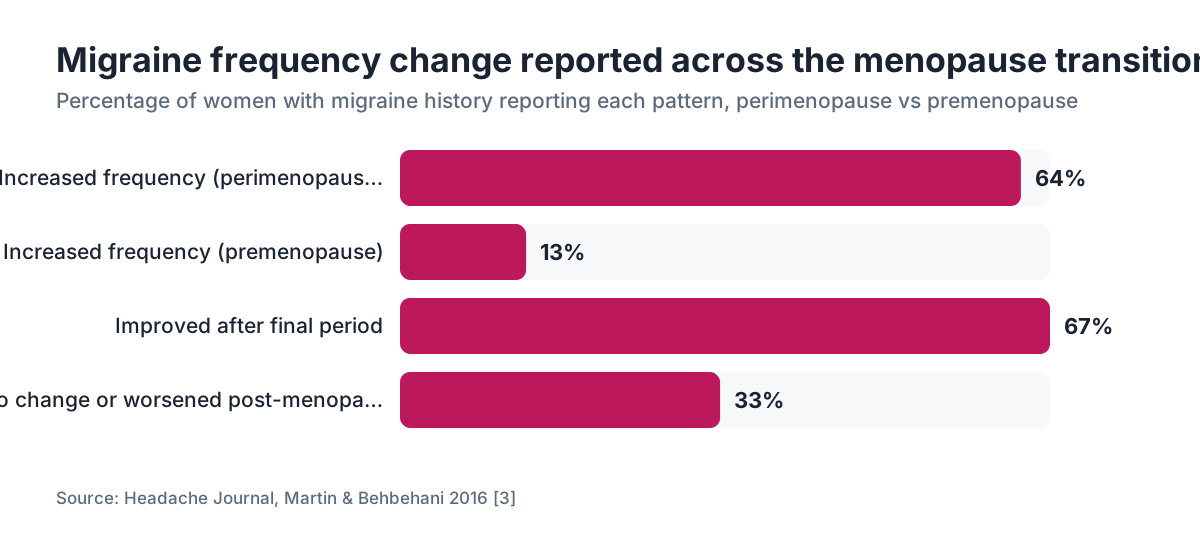
For women who never had significant headaches before, perimenopause can introduce them. For women who had menstrual migraines, things often get considerably worse. A 2016 study in Headache found that about 64% of women with migraines reported an increase in attack frequency during perimenopause, compared with 13% in premenopause. [3]
The rough translation: your nervous system has been quietly regulated by relatively stable estrogen for decades. Perimenopause yanks that regulation away, inconsistently and unpredictably, for an average of four to eight years before the final menstrual period. [4]
What types of headaches are most common in perimenopause?
Migraine is by far the most common type that worsens during this transition. Migraine with aura, the kind that includes visual disturbances, tingling, or speech changes before the headache, is worth separate attention because it carries a small but real increased risk of ischemic stroke, particularly in women who smoke or use combined estrogen-progestin pills. [5]
Tension-type headaches also increase. These feel like a band of pressure around the head, less throbbing than a migraine, and they respond more predictably to over-the-counter analgesics. The problem is that many perimenopausal women take OTC pain relievers so frequently that they develop medication-overuse headache (also called rebound headache), a separate condition that makes every day or near-every-day headache the new normal. If you're reaching for ibuprofen, acetaminophen, or triptans more than ten to fifteen days per month, rebound is likely part of your picture. [6]
A less discussed pattern is the "hormone withdrawal headache" that mirrors what used to happen just before or during your period. You may notice headaches clustering in the days when your estrogen is crashing between cycles. Tracking that pattern, even with a simple period app that lets you log headache severity alongside cycle day, often reveals a clear rhythm within two or three cycles.
Rare but worth knowing: new-onset severe headache in midlife should always be evaluated. A sudden "worst headache of your life" is a medical emergency. Perimenopause does not explain it.
How is a perimenopause headache different from a regular migraine?
Mechanistically they are not entirely different. Both involve trigeminovascular activation and cortical spreading depression. What distinguishes a hormonal migraine is timing and context.
The International Headache Society defines "menstrually related migraine" as attacks occurring on day minus two through plus three of menstruation in at least two out of three cycles, often without aura and typically harder to treat with standard triptans than non-menstrual attacks. [7] In perimenopause, cycles become irregular so that neat window blurs, but the underlying hormonal trigger is the same.
A perimenopause headache that is truly hormone-driven tends to:
- Cluster around the time of menstruation, skipped cycles, or heavily anovulatory months
- Last longer than typical migraines (48 to 72 hours rather than 4 to 24)
- Be more nausea-dominant and more resistant to the first triptan dose
- Improve somewhat after the final period in roughly 67% of women [3]
Women who do not see improvement after menopause, or who develop new migraines after menopause, are often on cyclic hormone therapy that creates artificial estrogen swings. That is a clue the therapy itself needs adjusting.
What is the estrogen-headache connection, exactly?
Estradiol (the main circulating estrogen) modulates serotonin synthesis, serotonin receptor density, and the sensitivity of pain-processing pathways in the brainstem. Higher estrogen generally raises pain thresholds. A sharp drop lowers them. [1]
The trigeminal nucleus caudalis, the brainstem region that processes head and face pain, has dense estrogen receptors. When estradiol falls rapidly, this region becomes hyperexcitable. Calcitonin gene-related peptide (CGRP), the molecule that most modern migraine preventives now target, is released in larger amounts when estrogen drops. [1]
This is why steady estrogen, not cycling estrogen, tends to help. A transdermal estradiol patch delivering 0.05 to 0.1 mg per day maintains relatively flat serum levels and avoids the peaks and troughs of oral estrogens (which are metabolized more variably by the liver). Several small trials and one Cochrane review support transdermal estradiol for menstrual migraine prevention, though large randomized controlled trials in perimenopausal populations specifically are still sparse. [8]
Progesterone's relationship is more complicated. Natural progesterone (micronized, like Prometrium) appears to be better tolerated headache-wise than synthetic progestins, though the evidence is mostly observational. Some women find that any progestogen worsens their headaches regardless of form. If that's you, it's worth documenting carefully for your prescriber, because uterine protection with the lowest effective progestogen dose is still necessary if you have a uterus and you're taking estrogen. [2]
Does hormone therapy help or hurt perimenopause headaches?
It depends on the formulation and the delivery method, not on HRT as a category.
Cyclic HRT, where progestogen is added for 10 to 14 days each month to mimic a cycle, produces exactly the kind of estrogen and progestogen fluctuations that trigger hormonal headaches. Many women feel significantly worse on this regimen. Continuous combined therapy (steady-state estrogen plus daily low-dose progestogen) removes those swings and tends to be better tolerated by headache-prone women. [8]
Delivery route matters enormously. Oral estrogens undergo first-pass liver metabolism, which means blood levels fluctuate more than with transdermal or vaginal routes. Patches, gels, and sprays produce more stable serum estradiol. For women with migraine with aura, transdermal is preferred over oral for an additional reason: combined oral contraceptives (estrogen-progestin pills) carry a higher stroke risk in women with aura, and while the evidence for menopausal-dose transdermal estrogen is less clear-cut, most headache specialists default to the transdermal route as the safer bet. [5]
You can read more about the specifics of hormone replacement therapy and estrogen patches on their dedicated pages.
Here's the practical takeaway. If your headaches got worse after starting HRT, the formulation probably needs changing, not stopping entirely. That conversation belongs with a prescriber who understands both migraine neurology and menopause medicine, which is still a rarer combination than it should be. Telehealth practices like WomenRx that specialize in perimenopausal hormone care can be a reasonable starting point if your primary care doctor isn't comfortable managing both.
What non-hormonal treatments work for perimenopause headaches?
Triptans remain the most effective acute treatment for migraine attacks regardless of hormonal cause. Sumatriptan, rizatriptan, eletriptan, and the newer lasmiditan and gepants (ubrogepant, rimegepant) all have solid evidence for acute migraine. Gepants have an additional advantage: they can be taken more than ten days per month without causing rebound headache, which makes them useful for women with frequent attacks during perimenopause. [6]
For prevention, the evidence-based options include:
- Beta-blockers (propranolol, metoprolol): well-studied, modestly effective, may worsen fatigue which is already common in perimenopause
- Topiramate: effective but causes cognitive side effects ("word-finding trouble") that many perimenopausal women report and dislike intensely
- Amitriptyline: low doses, especially helpful when headache and sleep disruption are both present
- CGRP-targeted monoclonal antibodies (erenumab, fremanezumab, galcanezumab): injected monthly or quarterly, now FDA-approved and reasonably well tolerated; erenumab reduced monthly migraine days by about 3.2 days versus 1.8 for placebo in the trial that got it approved [9]
- Magnesium glycinate 400-600 mg daily: modest evidence, extremely low risk, worth trying for three months before concluding it doesn't help [10]
Lifestyle factors with actual supporting data include maintaining consistent sleep-wake times (circadian disruption is a known migraine trigger), avoiding skipped meals, and moderating alcohol, especially red wine and anything with sulfites, which drops far more reliably as a trigger in perimenopause than in younger years.
Biofeedback and cognitive behavioral therapy have Level A evidence from the American Headache Society for migraine prevention and are especially worth considering for women who want to minimize medications.
Can perimenopause cause daily headaches?
Yes. Chronic daily headache, defined as headache on 15 or more days per month for at least three months, is more common in women generally and spikes during perimenopause. [6]
The most common culprit in perimenopausal women with daily headaches is medication-overuse headache layered on top of hormonally driven migraine. The cycle works like this: estrogen swings cause more frequent migraines, more frequent migraines lead to more frequent analgesic or triptan use, that overuse sensitizes central pain pathways, and suddenly you have a headache more days than not regardless of estrogen levels.
Breaking the overuse cycle usually requires a supervised withdrawal from the offending medication, which is genuinely difficult and temporarily painful. A neurologist or headache specialist should manage this. Bridging with a short course of prednisone or naproxen sodium (sodium, not regular naproxen, which absorbs faster) is common practice, though the evidence base is modest.
Chronic tension-type headache is a separate entity that also increases in midlife women, often tied to sleep disruption, increased muscle tension around the neck and shoulders, and anxiety, all of which are common perimenopausal complaints. Addressing the sleep problem, with or without melatonin, low-dose trazodone, or appropriate HRT if hot flashes are the reason for waking, often reduces this type substantially.
When should you see a doctor about perimenopause headaches?
Go to the emergency room immediately for: sudden severe headache that peaks within seconds (thunderclap headache), headache with fever and stiff neck, headache with one-sided weakness or speech changes, or headache after head injury.
See your doctor within a week or two for:
- Headaches that are clearly new or dramatically changed in character after age 40
- Headaches occurring more than 8 days per month consistently
- Any headache that wakes you from sleep regularly
- Vision changes accompanying headaches
- Headaches that don't respond at all to two different acute treatments
For perimenopausal women who already have a migraine diagnosis and are simply experiencing worsening, the conversation you need is about whether your current treatment plan accounts for hormonal triggers. Most general internists and OBs are not deeply familiar with the migraine-hormone interface. A headache specialist, a menopause specialist (look for NAMS Certified Menopause Practitioners at menopause.org), or a reproductive endocrinologist with menopause focus are better resources.
Document everything before that appointment: headache days per month, severity (1-10), duration, any aura, where you are in your cycle, and what you took and whether it worked. That log will shorten your diagnostic process considerably.
How do I track my headaches to identify hormonal triggers?
A headache diary linked to your cycle is the most useful diagnostic tool you have, and it costs nothing.
Track daily for at least two to three cycles:
- Day of cycle (or calendar date if cycles are irregular)
- Headache: yes or no, and severity 1-10
- Headache character: throbbing/pressure/stabbing, location
- Associated symptoms: nausea, light sensitivity, aura
- Medications taken and response
- Sleep hours the night before
- Any obvious dietary triggers (alcohol, fasting, caffeine changes)
- Any hormonal notes (cycle day, spotting, hot flash frequency)
Apps like Migraine Buddy, N1-Headache, or even a basic spreadsheet work. The goal is to see whether your worst headaches cluster in a predictable hormonal window. If they do, that pattern is strong evidence for a hormonal mechanism and changes your treatment options significantly.
Women who are not certain where they are in the perimenopause transition may also benefit from FSH and estradiol testing timed to the first three days of a cycle, though these levels are notoriously variable and a single draw is rarely definitive. For more on where you might be in the timeline, the when does menopause start page has useful context.
Does menopause make headaches better or worse in the long run?
For most women with hormonally driven migraines, menopause (the full 12-month cessation of periods) does eventually bring relief. The 2016 Headache study referenced above found that about 67% of women with menstrual migraine reported improvement after their final period. [3] The key word is eventually. The transition through perimenopause itself is often the worst period for headaches.
Surgical menopause (from oophorectomy) is a significant exception. The abrupt estrogen withdrawal from surgical removal of both ovaries typically worsens migraines dramatically, and women in this situation almost universally need immediate hormone replacement to manage the symptom burden, including headaches. [4]
Women who continue to have frequent migraines well past menopause, or who start HRT and find their headaches persist or worsen, should revisit both their headache treatment plan and their hormone formulation. A continuous combined regimen at the lowest effective dose, delivered transdermally, is typically the starting point.
For a broader picture of what changes after the final period, the menopause and menopause age pages fill in the context.
Are there any supplements or lifestyle changes with real evidence for hormonal headaches?
A few have enough evidence to be worth trying.
Magnesium deficiency is common in women with migraine, and serum magnesium drops around menstruation. A 2012 randomized controlled trial published in Cephalalgia found that magnesium 600 mg daily reduced migraine attack frequency by 41.6% versus 15.8% for placebo. [10] It's inexpensive and safe. The main side effect at higher doses is loose stools; glycinate and taurate forms tend to be easier on the gut than oxide.
Riboflavin (vitamin B2) at 400 mg daily has modest evidence for migraine prevention, with one small RCT showing roughly a 50% reduction in attack days. [10] It turns urine bright yellow, which surprises people but is harmless.
CoQ10 at 100-300 mg daily has a small randomized trial showing benefit. Worth three months.
Feverfew and butterbur: feverfew has inconsistent trial results. Butterbur (Petasites hybridus) showed real efficacy in older trials but the safest commercial preparations were discontinued over liver toxicity concerns; it's hard to recommend now.
Diet: a low-estrogen-metabolizing diet, emphasizing cruciferous vegetables, flaxseed, and limiting alcohol, is often recommended in menopause circles but has essentially no solid trial data specifically for headaches. It won't hurt, but don't count on it as treatment.
Regular aerobic exercise 3-5 days per week has Level B evidence for migraine prevention and helps every other perimenopausal symptom, which makes it arguably the single most cost-effective intervention available. One 2011 study in Cephalalgia found that 40 minutes of cycling three times per week was as effective as topiramate for migraine prevention. [10]
For women also managing perimenopausal weight changes, the question of whether GLP-1 medications interact with headache patterns sometimes comes up. Current evidence doesn't show a meaningful migraine-specific effect of GLP-1s, though the weight loss itself may reduce headache frequency, since obesity is an independent migraine risk factor. WomenRx has clinical information on semaglutide for weight loss if that's a separate concern.
What should I tell my doctor to get the right treatment?
Doctors see a lot of perimenopausal women who mention headaches in passing. If you want useful help, be specific and lead with numbers.
Bring your headache diary. Say the number of days per month. Say what you've already tried and for how long. Mention whether headaches track with your cycle. Tell them if you're taking OTC pain relievers more than twice a week, because that's rebound territory and changes everything.
If you're already on HRT and your headaches got worse, say which formulation and dose and when the worsening started relative to starting therapy. That information matters.
Ask specifically about transdermal versus oral estrogen and continuous versus cyclic progestogen if HRT is being considered. Ask whether your headache type (especially if you have aura) changes the safety calculation. Ask about CGRP-targeted therapies if you've failed two preventives.
If your current provider doesn't seem to have these conversations readily, asking for a referral to a neurologist with headache focus or a NAMS-certified menopause practitioner is reasonable. You don't need to wait years to find the right combination.
Frequently asked questions
Can perimenopause cause headaches every day?
Yes. Chronic daily headache, meaning 15 or more headache days per month, does spike during perimenopause. The most common cause in this group is medication-overuse headache layered on top of hormonally triggered migraine. If you're using any pain reliever or triptan more than 10-15 days per month, rebound headache is likely contributing and needs to be addressed separately from the underlying hormonal pattern.
What does a perimenopause headache feel like?
Hormonal migraines in perimenopause tend to be throbbing, often one-sided, lasting 48-72 hours, and frequently accompanied by nausea and light sensitivity. They're typically worse than the migraines you may have had in your twenties and more resistant to a single dose of a triptan. Tension-type headaches feel more like a tight band around the head and respond better to OTC analgesics, though they also increase in frequency during this transition.
Does low estrogen cause headaches?
It's not low estrogen itself but the rapid drop in estrogen that triggers headaches. Women with stable low estrogen after menopause often have fewer migraines than they did during the volatile perimenopause years. The trigeminal pain system responds to the rate of change in estrogen, more than the absolute level, which is why fluctuating cycles in perimenopause cause more headaches than the steadily low estrogen of post-menopause.
Will HRT help or make my perimenopause headaches worse?
It depends entirely on the formulation. Cyclic HRT that creates artificial hormone swings typically worsens headaches. Continuous combined transdermal therapy, which keeps estrogen levels stable, tends to help. Oral estrogen is more variable and generally less preferred for headache-prone women. If you started HRT and your headaches got worse, the regimen likely needs changing, not stopping.
What is the best migraine treatment for perimenopausal women?
For acute attacks, triptans remain first-line. Newer gepants (ubrogepant, rimegepant) are useful because they don't cause rebound headache with frequent use. For prevention, CGRP monoclonal antibodies (erenumab, fremanezumab, galcanezumab) have the strongest modern evidence with fewer side effects than older options like topiramate. Steady-dose transdermal estrogen helps many women with clear hormonal patterns. Magnesium 400-600 mg daily is low-risk and worth three months.
Can perimenopause cause ocular migraines or migraine with aura?
Perimenopause can worsen pre-existing migraine with aura and occasionally trigger aura in women who never had it. This matters clinically because migraine with aura combined with exogenous estrogen (especially oral combined contraceptives) increases stroke risk. Most headache and menopause specialists recommend transdermal estrogen rather than oral in women with aura, and careful monitoring. If you develop new neurological symptoms with headache after 40, see a doctor promptly.
How long do perimenopause headaches last?
The perimenopausal transition averages four to eight years, and hormonal headaches tend to track with that timeline. Most women with menstrual migraine report improvement after their final period, roughly 67% in one study. For the minority whose headaches persist into postmenopause, the cause is often cyclic HRT or an underlying migraine tendency that needs ongoing preventive therapy independent of hormones.
Is magnesium good for perimenopause headaches?
Magnesium has real evidence for migraine prevention. A randomized controlled trial found magnesium 600 mg daily reduced migraine frequency by 41.6% versus 15.8% for placebo. Magnesium deficiency is common in women with migraine and tends to worsen around menstrual drops in estrogen. Glycinate or taurate forms are easier on the gut than oxide. Give it at least three months before judging whether it's working.
What triggers headaches most often in perimenopause?
Estrogen drops around the period or during anovulatory cycles are the most common trigger. Secondary triggers that become more potent during perimenopause include alcohol (especially red wine), skipped meals, poor or disrupted sleep, dehydration, and caffeine changes. Women who never noticed these triggers in their thirties often find them reliable headache triggers in their forties. Tracking your headache diary for two to three cycles usually reveals which ones dominate.
Can progesterone make perimenopause headaches worse?
Yes, for some women. Synthetic progestins in particular can worsen headaches more than natural micronized progesterone (like Prometrium). Some women are sensitive to any progestogen in any form. If your headaches clearly worsen during the progestogen phase of cyclic HRT, document this for your prescriber. Switching to continuous low-dose progestogen or a progesterone-releasing IUD (which delivers minimal systemic progestogen) is sometimes the solution.
Do perimenopause headaches go away after menopause?
For most women, yes. About 67% of women with hormonally driven migraines report improvement after their final period, when estrogen stabilizes at a new lower baseline. The transition through perimenopause itself tends to be the worst phase. Women who undergo surgical menopause (both ovaries removed) are an important exception: the abrupt estrogen drop typically worsens migraines significantly and usually requires prompt hormone therapy.
What kind of doctor treats perimenopause headaches?
Ideally someone who understands both migraine neurology and menopause medicine, which is still an uncommon combination. A NAMS Certified Menopause Practitioner (searchable at menopause.org) handles the hormonal side well. A neurologist with headache or migraine focus handles acute and preventive treatment. If you can only see one, go where your dominant problem is: if headaches are the main issue, start with neurology and bring your hormone history with you.
Can I take triptans while on HRT?
Yes, there is no known drug-drug interaction between triptans and estrogen or progestogen. The caution with triptans is cardiovascular: they cause mild vasoconstriction and are not recommended if you have established heart disease, uncontrolled hypertension, or a history of stroke. Migraine with aura itself is an independent cardiovascular risk factor, so your overall risk profile matters. Your prescriber should know both your migraine history and your HRT regimen.
Is there a blood test to confirm my headaches are hormonal?
No single test confirms hormonal headache causation. FSH and estradiol levels can confirm you're in the perimenopausal range, but they're highly variable and a single draw tells you little. The most useful diagnostic tool is a headache diary linked to your cycle for two to three months. If your worst headaches reliably cluster around your period or the days before it, that pattern is more informative than any blood test.
Sources
- Headache Journal: Estrogen and the Trigeminal System (Rami Burstein et al.)
- NAMS (North American Menopause Society) – Menopause hormone therapy position statement
- Headache (Wiley journal) – Migraine and the menopause transition, Aegidius et al. / Martin & Behbehani 2016
- NAMS – Menopause Practice: A Clinician's Guide (perimenopause duration data)
- American Headache Society – Position Statement on migraine with aura and stroke risk
- International Headache Society – ICHD-3 classification, medication-overuse headache definition
- International Headache Society – ICHD-3 menstrually related migraine definition
- Cochrane Database of Systematic Reviews – Oestrogens and progestogens for preventing and treating headache in menopausal women
- New England Journal of Medicine – Erenumab for episodic migraine (Goadsby et al. 2017)
- Cephalalgia (SAGE journals) – Magnesium, riboflavin, CoQ10, and exercise trials for migraine prevention
- FDA – Drug label for erenumab (Aimovig), fremanezumab (Ajovy), galcanezumab (Emgality)
- Endocrine Society Clinical Practice Guideline – Menopausal Hormone Therapy