Perimenopause hair loss: why it happens and what actually helps
TL;DR: Perimenopause hair loss affects roughly 40 to 50% of women, and falling estrogen and progesterone drive it by shortening the hair growth cycle. Androgenic sensitivity, thyroid shifts, and stress make it worse. Minoxidil, hormone therapy, and correcting low ferritin have the best evidence. Caught early, most of this hair loss reverses.
What does perimenopause hair loss actually look like?
The usual pattern is diffuse thinning across the top of the scalp. Not the receding hairline men get. You see more hair in the shower drain, more strands on the pillow, and a part that keeps getting wider. The density loss is real. Because it creeps in over months to years, many women blame stress or aging long before they connect it to hormones.
Clinically this is female pattern hair loss (FPHL), graded on the Ludwig Scale. Grade I is mild widening of the central part. Grade II is obvious thinning at the crown. Grade III is diffuse loss with near-complete absence of hair over the top of the scalp. Most perimenopausal women land in Grade I or II, which is also where treatment has the best shot at real reversal [1].
Some women also get temple recession, shedding all over the scalp, or thinning brows and lashes. Eyebrow thinning, especially the outer third, often points to a thyroid problem stacked on top of the hormonal shift. Those two causes need different fixes.
Why does perimenopause cause hair loss?
Hair follicles carry estrogen and androgen receptors. When estrogen is high, it stretches out the anagen (growth) phase, keeping follicles producing hair for years at a stretch. As estrogen drops in perimenopause, anagen shortens and the telogen (resting or shedding) phase gets longer. More follicles sit in rest mode at any given moment, so hair visibly thins [2].
Progesterone matters too. It competes with androgens like dihydrotestosterone (DHT) at the follicle receptor. Less progesterone means DHT acts more freely, shrinking follicles over time. Same mechanism that drives male pattern baldness, just spread out more evenly in women. Our guide to progesterone covers how its role changes across the transition.
Androgen levels do not necessarily rise during perimenopause. Their relative effect grows because the hormones that used to counterbalance them are falling. That distinction is subtle and it matters. Your testosterone on a lab slip may read the same or even lower than it did at 35, yet your follicles are getting more androgenic stimulus than before.
Telogen effluvium is a separate problem that often overlaps. Any big physiological stress, surgery, crash dieting, illness, or the hormonal upheaval of perimenopause itself, can shove a large share of follicles into telogen at once. Shedding surges, usually 2 to 3 months after the trigger. It is usually temporary. In perimenopause it can pile on top of the slower FPHL process and make everything feel sudden and acute.
How common is hair loss during perimenopause and menopause?
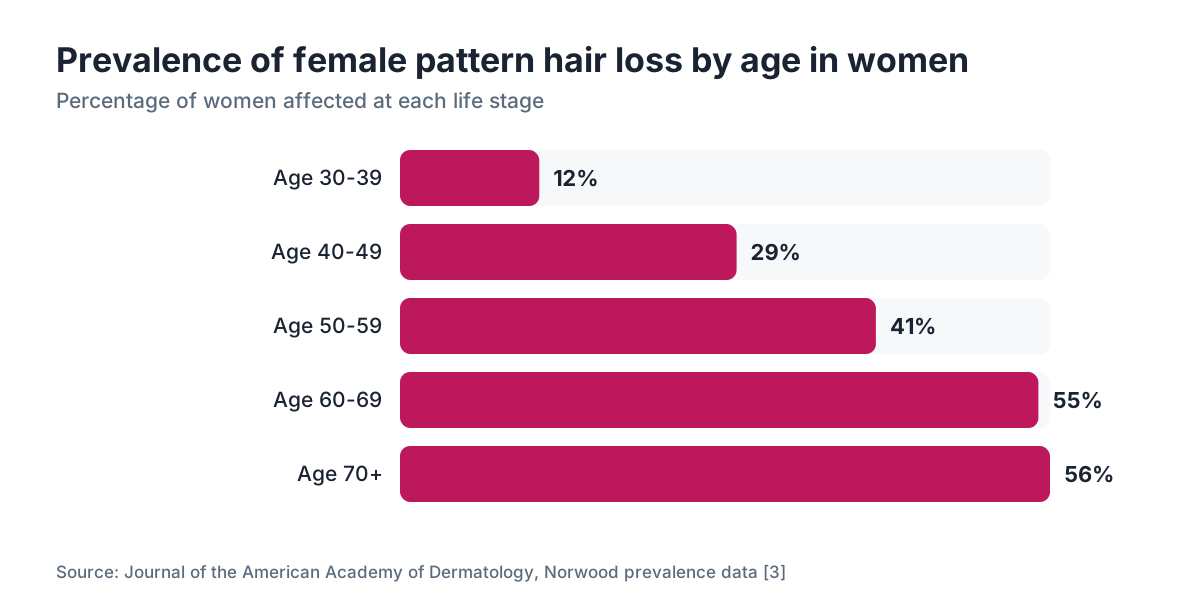
Female pattern hair loss reaches roughly 40% of women by age 50 and climbs to about 55% by age 70 [3]. The sharpest jump happens in the perimenopausal decade, roughly ages 45 to 55, which lines up tightly with the hormonal transition. The North American Menopause Society lists hair changes as a recognized perimenopausal symptom alongside hot flashes and sleep disruption [4].
For context, the perimenopause age window when these symptoms cluster runs from 40 to 51, though the transition can start earlier. Hair loss often begins before the last period, so it can show up while cycles are still irregular rather than waiting for menopause to be confirmed.
The numbers below show how prevalence rises through midlife, drawn from epidemiological survey data.
What other causes of hair loss overlap with perimenopause?
Thyroid disease is the first thing to rule out. Both hypothyroidism and hyperthyroidism cause diffuse shedding, and thyroid dysfunction gets more common in women in their 40s and 50s. A TSH test plus free T4 is the standard opening screen. Untreated thyroid disease will swamp any cosmetic or hormonal hair treatment you try.
Iron deficiency is another common accomplice. Ferritin below about 30 to 40 ng/mL has been linked to hair shedding even without overt anemia. Many perimenopausal women with still-irregular periods bleed more per cycle than they did in their 30s, which quietly drains iron stores [5].
Genetic androgenetic alopecia runs in families. If your mother or grandmother thinned significantly, your follicles are probably more sensitive to DHT, and perimenopause speeds up what was already written into your biology [13].
Alopecia areata, an autoimmune condition that makes patchy round bald spots, can flare during immune-active windows including pregnancy, postpartum, and menopause. It looks nothing like FPHL and needs different treatment.
Medication side effects finish the list. Antidepressants (especially SSRIs and SNRIs), beta-blockers, statins, and blood thinners all show up on FDA prescribing information as causes of hair loss. If thinning started around the time you added a new drug, raise that connection with your prescriber.
How is perimenopause hair loss diagnosed?
A dermatologist or a gynecologist who takes hair seriously starts with a visual exam using the Ludwig grading scale, a pull test (gentle traction on 40 to 60 hairs to count how many release), and sometimes dermoscopy, a magnified look at the scalp to check for follicle miniaturization.
Blood work should cover TSH and free T4, ferritin and iron saturation, a complete blood count, total and free testosterone, DHEA-S, prolactin, and vitamin D. Some clinicians add zinc and B12. The point is to find treatable contributors hiding behind the hormonal picture.
A scalp biopsy is rarely needed for FPHL. It earns its place when the pattern is unclear or scarring alopecia is suspected. Scarring alopecia is irreversible and needs fast diagnosis, because destroyed follicles do not come back.
The pull test result carries weight. Fewer than 6 hairs released from 60 is generally normal. More than 10 suggests active shedding (telogen effluvium). Write down what you see at home: how much extra hair in the drain, how the part looks in photos taken months apart. Documentation beats memory at a clinic visit.
Does hormone replacement therapy help with hair loss during perimenopause?
The evidence is genuinely mixed, and anyone who gives you a clean yes or no is oversimplifying. Estrogen therapy keeps up or partially restores the anagen phase and appears to blunt DHT's effect on follicles, so the biological logic holds. Some observational studies and case series report better hair density with systemic estrogen, and the American Academy of Dermatology names hormone therapy as a consideration in managing FPHL in menopausal women [6].
Randomized trial data with hair loss as the primary endpoint in perimenopausal HRT are thin, though. Most HRT trials measured hot flashes, bone density, and cardiovascular markers. Hair was not a tracked outcome. Here is the honest position: HRT likely helps hair in women whose FPHL is mostly driven by estrogen loss, and it is a reasonable choice if you also have hot flashes, sleep trouble, or bone concerns. Using HRT purely for hair, with no other reason, is harder to defend on the evidence we have.
Progesterone type matters more than most clinicians admit. Synthetic progestins with androgenic activity, like norethindrone, can actually make hair loss worse. Micronized progesterone (Prometrium and its generics) is structurally identical to the body's own progesterone, competes with DHT at the follicle receptor, and is the preferred choice for women with hair concerns. This is one reason formulation choice at a menopause-knowledgeable practice matters. You can look at your options for hormone replacement therapy and the estrogen patch to see what delivery methods exist.
If you are already on HRT through a platform like WomenRx and have hair loss concerns, that conversation belongs in your prescriber visit, not as a separate add-on, because the form and dose of your regimen directly affect follicle health.
What topical and oral treatments work for perimenopause hair loss?
Minoxidil is the best-evidenced non-hormonal treatment you can buy without a prescription. The FDA cleared 2% topical minoxidil for women in 1991 [7]. A 5% foam gets used off-label in women too, and low-dose oral minoxidil (0.25 to 1.25 mg daily) has taken off in dermatology practice since 2020, with several published trials showing real regrowth at doses far below the blood-pressure doses originally studied.
Oral minoxidil at 1 mg/day, in a 2021 trial published in the Journal of the American Academy of Dermatology, produced a 12-week response comparable to topical 5% in women with FPHL, with less scalp irritation [8]. The main side effects are unwanted fine body hair (hypertrichosis) and, at higher doses, fluid retention and blood pressure effects. At 0.25 to 1 mg, serious cardiovascular effects are rare but not zero in women with underlying heart conditions.
Spironolactone is an androgen blocker used widely off-label for FPHL in premenopausal and perimenopausal women. Doses of 50 to 200 mg/day cut DHT activity at the follicle. It needs monitoring of potassium and blood pressure, especially in women on other medications. It is not FDA-approved specifically for hair loss, but the prescribing information notes anti-androgenic activity and its use in FPHL is well-described in dermatology literature [9].
Finasteride and dutasteride are 5-alpha reductase inhibitors that block DHT conversion. They are FDA-approved for male pattern baldness and used off-label in postmenopausal women. They are wrong for any woman who could become pregnant because of teratogenicity risk. For a postmenopausal woman with significant androgenetic alopecia, dutasteride 0.5 mg has shown real results in small trials.
Platelet-rich plasma (PRP) injections to the scalp have a growing evidence base for FPHL. A 2019 meta-analysis found statistically significant gains in hair density, though trials vary in method and the effect is moderate, not dramatic [10].
Ketoconazole 2% shampoo is not a standalone treatment, but it cuts scalp DHT and inflammation at the follicle. Used 2 to 3 times a week, it is a cheap adjunct that some studies show adds modest benefit on top of minoxidil.
Do supplements help with hair loss in perimenopause?
The supplement aisle is packed with products aimed at perimenopausal hair loss, and most of them rest on thin evidence. Here is the honest version.
Biotin is marketed hard. If your biotin level is normal, taking more will not grow hair. Biotin deficiency is rare. There is one documented hazard: high-dose biotin (10 mg or more) interferes with several lab assays, including thyroid tests, and can throw falsely abnormal results. The FDA issued a safety communication about this in 2019 [11]. If you take high-dose biotin, stop it at least a week before thyroid or cardiac labs.
Iron supplementation makes sense if your ferritin is low (below 30 to 40 ng/mL) and can produce real hair improvement over 3 to 6 months. Do not supplement iron without a blood test confirming deficiency. Iron excess causes its own problems.
Vitamin D at 1000 to 2000 IU/day is reasonable for most perimenopausal women anyway, for bone and immune health. Follicles have vitamin D receptors, and deficiency (below 20 ng/mL) is associated with alopecia areata and general hair loss, though the causal link is not clean.
Nutraceutical blends like Nutrafol and Viviscal have industry-funded trial data showing modest but real gains in hair density and thickness over 6 months. The studies are small and not independent, so read the results with caution. They are not harmful at recommended doses and some women find them useful. At $70 to $90 a month, they are not where I would start. Fix ferritin and thyroid first.
Zinc, selenium, and omega-3s round out the evidence-light-but-plausible list. All three help follicle function, all three run low in women on restricted diets, and none carry strong randomized data for FPHL specifically.
Can GLP-1 medications like semaglutide cause or worsen hair loss?
Yes. Hair shedding is a reported side effect of GLP-1 receptor agonists including semaglutide and tirzepatide, and it appears in the FDA prescribing information for both. The phase 3 STEP 1 trial reported alopecia in about 3% of semaglutide participants versus under 1% on placebo [12]. Perimenopausal women on weight loss meds deserve that straight answer.
The mechanism is almost certainly telogen effluvium from rapid caloric restriction and big weight loss, not a direct hit on the follicle from the drug. Any time the body drops weight fast, some share of follicles get the signal to enter resting phase. Shedding usually starts 2 to 4 months into treatment, peaks around months 4 to 6, and clears in most users by 9 to 12 months as weight loss slows.
For a perimenopausal woman already fighting hormonal thinning, stacking GLP-1-induced telogen effluvium on top is a real worry. Practical management: keep protein up (at least 1.2 g/kg of body weight per day), keep iron and ferritin in range, and do not panic if shedding climbs in the first few months. It almost always self-limits. If you are weighing options, the comparison of semaglutide vs tirzepatide notes both drugs carry this risk.
Women using semaglutide for weight loss through a telehealth provider should raise hair concerns at a routine check-in rather than manage them alone. A ferritin check before starting is a reasonable precaution.
What lifestyle changes actually make a difference for hair loss during perimenopause?
Scalp health counts more than most people realize. Chronic scalp inflammation, from seborrheic dermatitis, psoriasis, or product buildup, can speed up follicle miniaturization. A clean, non-irritating routine with occasional zinc pyrithione or ketoconazole shampoo is worth the minimal effort.
Protein intake is the floor everything else stands on. Hair is keratin, a protein. Women who cut calories hard or eat very low-protein diets shed regardless of hormones. Aim for at least 1.2 to 1.6 g of protein per kilogram of body weight per day.
Stress management is not a soft suggestion. Cortisol directly interferes with the hair follicle cycle, pushing the shift from anagen to telogen. Women in perimenopause already run a more reactive stress-cortisol axis than they did in their 30s, because they have lost estrogen's buffering effect on the HPA axis. Sleep deprivation, which is rampant in perimenopause, drives cortisol higher still. This is a real physiological loop, not a wellness platitude.
Heat styling and chemical processing cause mechanical and chemical damage that makes existing thinning more obvious, though they do not cause androgenetic alopecia itself. Tight hairstyles (ponytails, braids, extensions) over years cause traction alopecia, a separate and potentially permanent problem at the hairline and temples.
Exercise improves scalp microcirculation and helps regulate cortisol and insulin, both of which affect follicle health. None of this replaces treating the hormonal root cause, but getting these basics right adds up.
How long does it take to see results from treatment?
Six months, minimum. The hair cycle runs on its own clock. Anagen lasts 2 to 6 years. Telogen lasts 2 to 3 months. Any treatment needs at least one full telogen cycle to show whether it is working. Most dermatologists set expectations at 6 months for early evidence of effect and 12 months for full assessment.
Minoxidil takes 4 to 6 months to show visible regrowth. Stop it and shedding returns within 3 to 6 months, because the drug prolongs anagen pharmacologically rather than fixing the underlying cause. That is the catch with minoxidil: it manages the problem while you use it. Addressing the hormonal or nutritional drivers is what produces more durable results.
HRT, if it helps hair at all, usually shows effect over 6 to 12 months. Some women see no hair benefit despite HRT, usually because androgenetic alopecia with a strong genetic component is not fully estrogen-responsive.
If you see no improvement after 12 months of consistent treatment, revisit the diagnosis. Scarring alopecia, undertreated thyroid disease, or a missed autoimmune cause deserve another look.
When should you see a doctor about perimenopause hair loss?
Sooner rather than later. Follicles that have been miniaturized for years are harder to recover than ones caught early. The window for reversal is real.
Go promptly if hair loss is patchy rather than diffuse (could be alopecia areata or tinea capitis, both needing specific treatment); if there is scalp pain, burning, or visible redness; if shedding is sudden and severe rather than gradual; if you have other thyroid symptoms (fatigue, weight change, temperature intolerance, palpitations); or if the part width has changed noticeably in the past year.
A dermatologist focused on hair is the most specialized resource, but a gynecologist or internist who orders the right labs is a reasonable first step. The lab panel from the diagnosis section will catch most common contributors.
WomenRx clinicians who manage perimenopausal hormone care can assess whether your current regimen (or lack of one) is contributing to hair loss and adjust it. For women not yet on hormones who have multiple perimenopausal symptoms, menopause care that treats the full hormonal picture often does more for hair than treating hair in isolation.
Frequently asked questions
Is perimenopause hair loss permanent?
It does not have to be. Female pattern hair loss from perimenopause is usually reversible if treated before follicles scar or permanently miniaturize. Minoxidil, hormone therapy, and nutritional correction can regrow visible density in many women. Scarring alopecia is permanent, but it accounts for only a small fraction of cases. The earlier you intervene, the better the outcome.
At what age does perimenopausal hair loss typically start?
Hair thinning often begins in the early to mid-40s, tracking the first hormonal shifts of perimenopause, even while periods are still regular. The average age of menopause in the US is 51, and the transition averages 4 to 8 years, so some women notice hair changes as early as 38 to 40. Genetics, stress load, and nutritional status all influence when it first shows up.
What blood tests should I ask for if I suspect perimenopause is causing my hair loss?
Ask for TSH and free T4, ferritin and serum iron, complete blood count, total and free testosterone, DHEA-S, prolactin, vitamin D (25-OH), and zinc. Together these cover the most common reversible causes that layer on top of hormonal hair loss. Your clinician may add others based on symptoms, but this panel is a solid starting point.
Does minoxidil work for women with hormone-related hair loss?
Yes. Minoxidil is the best-evidenced topical treatment for female pattern hair loss regardless of the hormonal trigger. The FDA cleared 2% topical minoxidil for women in 1991, and low-dose oral minoxidil (0.25 to 1 mg/day) has shown comparable or better results in recent trials. It works by prolonging the anagen growth phase. Most women need to use it continuously to keep results.
Can stopping birth control pills cause hair loss during perimenopause?
Yes, this is a well-recognized trigger. Many combined oral contraceptives contain estrogen that partly sustains hair density. When a perimenopausal woman stops the pill, she can get both telogen effluvium (a shedding surge 2 to 3 months later) and the underlying hormonal hair loss the pill was masking. The shedding from stopping usually resolves, but the underlying FPHL continues.
Does a high-protein diet help with hair loss in perimenopause?
It helps a lot if protein intake has been low, because hair is mostly keratin protein. Women eating under 1.0 to 1.2 g of protein per kilogram of body weight often see better hair quality and less shedding when they correct intake over 3 to 6 months. It will not overcome a strong androgenetic or hormonal driver on its own, but it is a foundational step that costs nothing and has no downside.
Will my hair grow back after perimenopause ends?
For some women, hair loss stabilizes after the acute transition, but it rarely reverses fully on its own without treatment. Estrogen levels do not recover after menopause, so the hormonal driver persists. Women who start HRT around menopause and keep iron and thyroid optimized often report stabilization or modest improvement. Significant regrowth after years of untreated loss is uncommon.
Is there a connection between hair loss and low estrogen specifically?
Yes, directly. Estrogen prolongs the anagen (growth) phase of the follicle cycle. Follicles have estrogen receptors, and when estrogen falls, those receptors stop getting the signals that keep hair growing. This is why hair loss tracks closely with the perimenopausal estrogen decline. It is also why estrogen-containing HRT can improve or stabilize FPHL in some women.
Can semaglutide or other GLP-1 drugs cause hair loss in perimenopausal women?
Yes. Alopecia showed up in about 3% of participants in semaglutide trials versus under 1% on placebo, per the STEP 1 results. The cause is almost certainly telogen effluvium from rapid weight loss, not a direct drug effect. It typically peaks at months 4 to 6 and resolves by 9 to 12 months. Keeping protein and ferritin levels up during treatment reduces severity.
What is the difference between telogen effluvium and female pattern hair loss during perimenopause?
Telogen effluvium is diffuse, sudden, and usually temporary. It happens when a stressor (illness, surgery, crash dieting, hormonal upheaval) pushes many follicles into resting phase at once, so you see a surge of shedding 2 to 3 months after the trigger. Female pattern hair loss is slower, chronic, and driven by genetics and androgens. Both can occur at once in perimenopause, which muddies the picture.
Does stress make perimenopause hair loss worse?
Yes, through a direct biological mechanism. High cortisol from chronic stress speeds the shift from anagen to telogen in follicles. Perimenopause already disrupts cortisol regulation because estrogen normally buffers the HPA stress axis. Sleep deprivation, which peaks during perimenopause, raises cortisol further. Managing stress is not optional self-care for perimenopausal hair. It is a physiological intervention.
What type of progesterone is best for hair loss during perimenopause?
Micronized progesterone (Prometrium) is preferred over synthetic progestins for women with hair concerns. It is structurally identical to the body's own progesterone and competes with DHT at the follicle receptor without adding androgenic activity. Synthetic progestins like norethindrone and levonorgestrel have androgenic properties that can worsen thinning. If you are on HRT and worried about hair, ask specifically what progestogen your regimen uses.
How is perimenopause hair loss different from alopecia areata?
Perimenopause-related hair loss is diffuse, showing up as overall thinning or a wider part across the crown, and it follows a hormonal timeline. Alopecia areata is autoimmune and creates distinct round or oval patches of complete hair loss anywhere on the scalp, sometimes with nail pitting. It can flare during hormonal transitions but needs different treatment, usually corticosteroid injections or newer JAK inhibitors. A scalp exam tells them apart clearly.
Are hair loss shampoos and serums worth buying during perimenopause?
Most are not worth the cost as standalone treatments. Ketoconazole 2% shampoo (prescription or OTC) has modest evidence as an adjunct to minoxidil by cutting scalp DHT and inflammation. Caffeine-based serums have small pilot trial data but nothing definitive. Products claiming to block DHT topically have very limited absorption data. On a tight budget, prioritize ferritin, thyroid, and minoxidil before specialty hair products.
Sources
- American Academy of Dermatology, Hair Loss in Women (clinical overview)
- Endocrine Society, Endocrine Reviews: Estrogen receptors in hair follicles and hormonal regulation of hair cycle
- Journal of the American Academy of Dermatology, Prevalence of female pattern hair loss (Norwood 2001 review)
- North American Menopause Society (NAMS), Menopause Practice: A Clinician's Guide
- Dermatology Practical & Conceptual, Iron and hair loss (Rasheed & Mahgoub 2013)
- American Academy of Dermatology, Clinical guidelines for female pattern hair loss management
- FDA, Drug approval database: minoxidil topical 2% for women (NDA 019501)
- Journal of the American Academy of Dermatology, Oral minoxidil 1 mg vs topical 5% in women with FPHL (2021)
- FDA, Spironolactone prescribing information (Aldactone label)
- Aesthetic Plastic Surgery, Meta-analysis of PRP for female pattern hair loss (2019)
- FDA, Safety Communication: Biotin interference with lab tests (2019 update)
- New England Journal of Medicine, STEP 1 trial: semaglutide 2.4 mg for obesity (Wilding et al. 2021)
- National Institutes of Health, MedlinePlus: Androgenetic alopecia overview