Perimenopause fatigue: why it happens and what actually helps
TL;DR: Perimenopause causes fatigue, and it's one of the most common complaints of the transition. Falling estrogen disrupts sleep, destabilizes blood sugar, and blunts thyroid and adrenal function. Studies find 40 to 85% of perimenopausal women report significant tiredness. Hormone therapy, treating sleep problems, and targeted exercise have the best evidence for relieving it.
Does perimenopause cause fatigue, or is something else going on?
Yes, and the reason goes deeper than bad sleep. The ovaries start producing estrogen and progesterone erratically years before your final period, and those two hormones touch nearly every energy system in the body. When they swing hard, you feel it as a bone-deep tiredness that coffee doesn't fix.
Here's the complication. Perimenopause is also the window when several other conditions peak in women: thyroid disorders, anemia, depression, sleep apnea, and type 2 diabetes. Any of them can cause fatigue that looks identical to the hormonal kind. A study in Menopause: The Journal of the North American Menopause Society found that perimenopausal women reporting severe fatigue were significantly more likely to have sleep disturbance, psychological distress, and hot flashes occurring together, rather than any single cause acting alone [1]. So the honest answer: perimenopause probably is driving your fatigue, but it may have company.
Get a basic workup before you assume hormones explain everything. That means TSH, CBC, ferritin, fasting glucose, and a sleep screen. One blood draw rules out the fixable co-culprits fast.
What exactly happens hormonally that makes you so tired?
Perimenopausal fatigue runs on several separate hormonal engines, and knowing which one is firing helps you match the treatment to the problem.
Estrogen regulates serotonin and norepinephrine, the two neurotransmitters that govern mood and alertness. When estrogen drops or fluctuates, serotonin signaling gets choppy. You feel flat, foggy, unmotivated. Estrogen also affects how efficiently your mitochondria convert glucose to ATP. Lower estrogen means your cells make energy less efficiently [2].
Progesterone is the next lever. When it's adequate, it calms and promotes sleep through its conversion to allopregnanolone, a neurosteroid that acts on GABA receptors. Progesterone often drops before estrogen does, which is why so many women in their late 30s and early 40s suddenly can't sleep even though hot flashes haven't started [3]. No progesterone, no GABA boost, no deep sleep. You wake at 3 a.m. with a racing mind and lie there.
Cortisol adds another layer. The adrenal glands run cortisol on a daily rhythm that estrogen helps calibrate. As estrogen falls, that rhythm can flatten, leaving cortisol too high at night (wired but exhausted) and too low in the morning (can't get going). Clinicians call this HPA axis dysregulation. It's a real physiological pattern, not a wellness-influencer invention.
Then there are hot flashes and night sweats, which affect roughly 75% of perimenopausal women according to the North American Menopause Society [4]. They fragment sleep architecture even when they don't fully wake you. Micro-arousals during stage 3 slow-wave sleep cut your restorative rest, night after night.
How common is fatigue during perimenopause?
Very. Estimates run from 40% to 85% of women reporting significant fatigue during the menopausal transition, depending on how the study defines fatigue and which stage it captured [1]. That wide range reflects real differences in study methods, not doubt about whether the symptom is real.
The Study of Women's Health Across the Nation (SWAN) followed more than 3,300 women over time and found sleep problems and fatigue climbing as women moved from premenopause into perimenopause, with the sharpest jump in late perimenopause [5]. SWAN also found Black women reporting more severe fatigue than white women at the same hormonal stage, a signal that biological and social stressors compound each other.
In some survey cohorts, fatigue gets reported more often than hot flashes. It stays underdiagnosed for two reasons: it's invisible, and both patients and clinicians tend to blame a busy life instead of recognizing a hormonally driven symptom that has treatments.
To see where you sit in the transition and how long this phase usually runs, the perimenopause age article covers the staging timeline in detail.
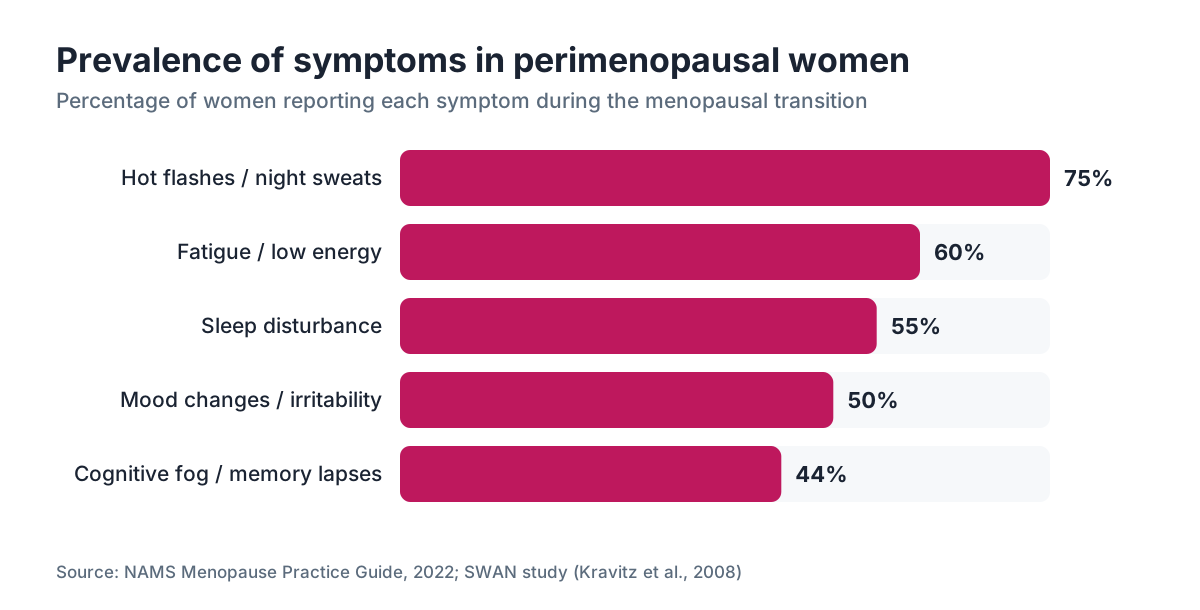
What does perimenopause fatigue actually feel like?
Women describe it in specific ways that separate it from ordinary tiredness. The most consistent features: waking between 2 and 4 a.m. unable to fall back asleep, feeling unrefreshed after a full night, afternoon crashes way out of proportion to what you did that day, and a mental fog that makes word retrieval and concentration harder than they used to be.
Early on, the fatigue is intermittent and tracks the menstrual cycle. Many women notice it's worst in the week before their period, when estrogen and progesterone both bottom out. As cycles turn irregular, the pattern blurs and the fatigue starts to feel constant.
Physical and cognitive fatigue tend to travel together. The concentration lapses and word-finding blanks have their own name in the literature: perimenopausal cognitive impairment. A 2023 review in Nature Reviews Neuroscience noted that estrogen directly modulates synaptic plasticity and cerebral glucose metabolism, which explains why the mental fog and the physical exhaustion move as a pair [2].
This reads differently from other causes. Iron deficiency fatigue tends to be physical without the fog. Thyroid fatigue usually shows up with cold intolerance and weight gain. The pattern matters for diagnosis.
What are the best treatments for perimenopause fatigue?
Menopausal hormone therapy (MHT, also called HRT) has the strongest evidence for reducing fatigue as part of the whole perimenopause symptom load. A 2022 systematic review in Climacteric analyzed 12 trials and found combined estrogen-progestogen therapy significantly improved self-reported energy and sleep quality versus placebo [6]. Estrogen alone (for women without a uterus) showed similar sleep benefits.
Here's how to think about the options.
Hormone therapy (MHT/HRT). If hot flashes are shredding your sleep, or the estrogen loss itself is driving the neurochemical crash, hormone therapy goes at the root. Transdermal estrogen (patch, gel, spray) carries a lower clot risk than oral estrogen on current evidence, which matters for how you weigh the decision [7]. Progesterone counts too. Body-identical oral micronized progesterone (Prometrium) is often preferred over synthetic progestins because it keeps the sleep-promoting neurosteroid conversion that synthetic progestins mostly lack [3]. The estrogen patch and progesterone pages cover the delivery methods.
Sleep-specific treatment. If sleep apnea is part of the picture, CPAP improves fatigue dramatically no matter what your hormones do. Cognitive behavioral therapy for insomnia (CBT-I) has strong evidence and the American Academy of Sleep Medicine recommends it before or alongside sleep medications.
Thyroid and iron. A TSH at the high end of normal (above 3.0 in a symptomatic patient) may justify a levothyroxine trial, though guidelines disagree here. Ferritin below 30 ng/mL correlates with fatigue even when hemoglobin looks normal, and supplementing in that range has helped in randomized trials.
Exercise. It sounds backward when you're exhausted, but it works: 150 minutes a week of moderate aerobic exercise reduces fatigue in perimenopausal women [8]. It also cuts hot flash frequency and severity moderately. The mechanism runs through better sleep architecture, steadier HPA axis regulation, and improved insulin sensitivity.
GLP-1 receptor agonists. Some women carry a metabolic fatigue driven by insulin resistance, which worsens as estrogen declines. If weight gain and blood sugar swings are part of your picture, medications like semaglutide address that metabolic driver. WomenRx evaluates women for GLP-1 therapy inside a broader hormone and metabolism workup. For how semaglutide compares to other options, semaglutide for weight loss lays out the evidence.
Can sleep problems alone explain perimenopause fatigue?
Sleep disruption is the biggest single contributor, but it's not the whole story. SWAN tracked objective sleep with polysomnography and found perimenopausal women had more stage 1 light sleep and less slow-wave sleep than premenopausal women of similar age, independent of whether they had hot flashes [5]. Hormonal change alters sleep architecture directly, not only through symptom interruption.
Night sweats, when they come, trigger full arousals or micro-arousals the sleeper often doesn't remember but that fragment sleep enough to wipe out restorative REM and deep sleep. One rough night is manageable. Months of them build a chronic sleep debt that shows up as fatigue you can't tell apart from any other cause.
Then there's the 3 a.m. cortisol spike some women describe. Falling estrogen lets nocturnal cortisol rise earlier in the night, and that alone can wake you. This is a circadian rhythm problem more than classic insomnia, and it responds better to hormone therapy than to sleep hygiene by itself.
If sleep is your main driver, the hormone replacement therapy article walks through how different regimens affect sleep quality specifically.
Which lab tests should you get if you have perimenopause fatigue?
A good clinician doesn't just say "it's perimenopause" and wave you out the door. This panel rules out or identifies the co-contributors that change your treatment.
| Test | What it screens | Relevant threshold | |---|---|---| | FSH + estradiol | Confirms menopausal transition | FSH >10 IU/L rising; estradiol variable | | TSH | Thyroid dysfunction | Above 2.5 with symptoms worth discussing | | Free T4, TPO antibodies | Autoimmune thyroiditis | Any positive TPO with symptoms | | CBC | Anemia | Hemoglobin <12 g/dL in women | | Ferritin | Iron stores | Below 30 ng/mL associated with fatigue | | Fasting glucose + HbA1c | Insulin resistance / pre-diabetes | FG >100 mg/dL or HbA1c >5.7% | | Vitamin D (25-OH) | Deficiency | Below 30 ng/mL common, below 20 ng/mL deficient | | CMP (basic metabolic panel) | Kidney, liver, electrolytes | Any abnormality | | Cortisol AM | Adrenal insufficiency (if suspected) | Below 3 mcg/dL is low |
FSH alone doesn't diagnose perimenopause because the levels fluctuate. The Endocrine Society describes perimenopause as primarily a clinical diagnosis based on symptoms and menstrual irregularity in the right age range, with labs offering supporting context rather than a yes-or-no answer [9].
If you're in your early 40s and fatigued, your perimenopause age context helps frame what you're looking at.
Does perimenopause fatigue get better on its own?
For many women it does, but the timeline is longer than anyone wants to hear. The menopause transition averages seven years from first irregular cycles to the final period, according to NAMS [4]. Fatigue usually peaks in late perimenopause and eases once estrogen settles at its postmenopausal baseline, which happens in the first one to two years after your last period.
Still, "getting better on its own" often means years of impaired function before the hormonal chaos quiets down. For a woman in her late 40s at the peak of her career and parenting load, waiting it out costs something real. And women who develop chronic insomnia during perimenopause often keep the insomnia after hormones stabilize, because insomnia builds behavioral and cognitive maintenance factors that outlive the original trigger.
My practical take: treat it, don't wait. The evidence for hormone therapy's safety in women under 60 who are within 10 years of menopause onset is stronger than it was 20 years ago [7]. The risk-benefit math for most healthy perimenopausal women has shifted a lot since the original Women's Health Initiative results got misapplied to younger, healthier populations.
To see the full arc of when menopause starts and ends, when does menopause start gives you the timing framework.
What lifestyle changes actually reduce perimenopause fatigue?
Not all of them work equally well, and some popular advice rests on weak evidence. Here's the honest breakdown.
Exercise: strong evidence. A 2021 Cochrane review found exercise interventions, aerobic ones in particular, reduced fatigue and improved sleep quality in menopausal women, with moderate-certainty evidence [8]. Walking, cycling, swimming, and dance all showed benefit. Resistance training adds the bonus of pushing back against the bone and muscle loss of perimenopause. Aim for 150 minutes of moderate activity a week plus two strength sessions.
Sleep hygiene: moderate evidence. Consistent sleep and wake times, a cool room (68 to 70 degrees F is often cited for hot flash management), less alcohol, and no screens an hour before bed all help. Alcohol deserves a callout: it may feel like it helps you fall asleep, but it suppresses REM and often worsens night sweats and 3 a.m. waking.
Diet: limited direct evidence, but plausible. A lower glycemic diet flattens the blood sugar swings that disrupt sleep and drive afternoon crashes. Some evidence links higher soy isoflavone intake to modest reductions in hot flashes, though the effect on fatigue itself is small [4]. Enough protein (at least 1.2 g/kg body weight) preserves muscle and supports neurotransmitter production.
Caffeine management: context-dependent. Caffeine after noon impairs sleep in most people. If you're leaning on caffeine to paper over bad sleep, you're feeding the cycle that keeps you tired.
Supplements: mostly weak evidence. Magnesium glycinate at 300 to 400 mg before bed has some support for sleep and is low risk. Ashwagandha has one small RCT suggesting lower cortisol and better fatigue. Black cohosh has inconsistent evidence for fatigue, and modest evidence for hot flashes [4]. Melatonin helps with falling asleep but does nothing for the early-morning waking that defines perimenopausal insomnia.
Is perimenopause fatigue different from depression and burnout?
Yes, though they overlap enough to be hard to pull apart, even for clinicians. The distinction matters because the treatments differ.
Perimenopausal depression is its own clinical entity. The DSM-5-TR identifies the perimenopausal transition as a period of increased vulnerability to major depressive disorder, even in women with no prior history [10]. Estrogen's effect on serotonin is part of the mechanism. Fatigue is a core symptom of depression, so when hormonal and mood dysregulation overlap, fatigue becomes the shared feature.
The practical test: does the fatigue track with disrupted sleep and hot flashes, or does it show up even after nights when you slept fine? Is there anhedonia (losing interest in things you normally enjoy) or just tiredness? Depression brings pervasive low mood most days. Perimenopausal fatigue without depression stays more physical.
Burnout, a term from occupational psychology, is emotional exhaustion from chronic workplace stress. It overlaps physically with perimenopausal fatigue but won't respond to hormone therapy and won't show up on labs. Plenty of women in their mid-40s have both at once: perimenopause as the biological substrate, a demanding life as the accelerant.
Hormone therapy can sometimes lift perimenopausal depression along with the fatigue. SSRIs and SNRIs also work for perimenopausal depression, and for hot flashes when hormone therapy isn't an option [7]. Both can be right at the same time. The Endocrine Society and NAMS support non-hormonal options as alternatives when hormones are contraindicated [4][9].
WomenRx clinicians assess all three when a patient shows up with fatigue, because treating one when all three are present rarely gets anyone all the way to feeling well.
When should you see a doctor for perimenopause fatigue?
See someone if fatigue is affecting your work, your relationships, or your safety (drowsy driving counts), which for most women with significant perimenopause fatigue means now, not in six months.
Get evaluated promptly if the fatigue is severe and came on suddenly rather than gradually, if you have new shortness of breath or heart palpitations with it, if you're sleeping more than nine hours and still exhausted (which can point to a thyroid or mood disorder), or if you're losing weight without trying.
The more common story is a woman who's been managing subpar energy for one to three years, calling it normal, and then reads something that makes her realize it's treatable. If that's you, a telehealth evaluation is a reasonable start. A primary care physician, gynecologist, or hormone-focused telehealth provider can order the workup above. You don't need a specialist first unless the labs point somewhere unusual.
For the broader hormonal picture before your appointment, the menopause overview is a good place to see your options laid out.
Frequently asked questions
Can perimenopause cause extreme fatigue, more than normal tiredness?
Yes. Some women get fatigue severe enough to interfere with work and daily function. How bad it is depends on how disrupted your sleep is, whether depression or thyroid dysfunction sits on top of it, and your individual sensitivity to estrogen swings. Extreme fatigue that persists despite adequate sleep is a signal to get a full workup, not something to write off as normal aging.
What is the best supplement for perimenopause fatigue?
The evidence is honestly thin for most of them. Magnesium glycinate (300 to 400 mg at bedtime) has the best risk-to-benefit ratio for sleep, which addresses fatigue indirectly. Vitamin D helps if you're deficient, which is common. Iron helps if ferritin is below 30 ng/mL. Ashwagandha has one small RCT supporting lower cortisol. None of these replace treating the hormonal root cause.
How long does perimenopause fatigue last?
It usually peaks in late perimenopause and eases in the one to two years after your final period. The full transition averages seven years according to NAMS, so untreated fatigue can drag on for years. Women who develop chronic insomnia during perimenopause may keep some sleep trouble even after hormones stabilize, because insomnia builds its own behavioral maintenance cycle.
Does HRT help with fatigue in perimenopause?
Yes, in most cases where the fatigue comes from hormonal disruption, sleep fragmentation, or hot flashes. A 2022 systematic review in Climacteric found combined estrogen-progestogen therapy significantly improved self-reported energy and sleep quality versus placebo. The benefit is strongest for women whose fatigue tracks with night sweats, or whose sleep trouble started around the time their cycles turned irregular.
What does perimenopause fatigue feel like, and how is it different from regular tiredness?
It shows up as waking between 2 and 4 a.m. and lying there unable to get back to sleep, feeling unrefreshed after enough hours in bed, afternoon crashes out of proportion to your activity, and a mental fog that hits word retrieval and concentration. Regular tiredness improves with rest. Perimenopausal fatigue often doesn't, because the hormonal disruption underneath keeps going even when you sleep.
Can low progesterone cause fatigue in perimenopause?
Yes, and it's often the first hormonal shift women feel, sometimes years before estrogen declines much. Progesterone converts to allopregnanolone, which promotes deep sleep through GABA receptors. When progesterone drops in early perimenopause, deep sleep decreases and middle-of-the-night waking increases. Oral micronized progesterone (like Prometrium) keeps this sleep-promoting conversion better than synthetic progestins do.
Is fatigue a sign of perimenopause starting?
It can be. Progesterone often declines before estrogen, and one of the earliest things women notice is disrupted sleep and fatigue, even while cycles are still regular. If you're in your late 30s or early 40s with new unexplained fatigue, worsening PMS, and the occasional irregular cycle, that picture fits early perimenopause. Labs alone won't confirm it at that stage.
Does perimenopause cause fatigue and weight gain together?
Often, yes. Declining estrogen worsens insulin resistance and shifts fat toward the abdomen. Insulin resistance itself causes energy crashes, especially after carb-heavy meals. Poor sleep raises cortisol and ghrelin, which drives hunger and further slows metabolism. The two symptoms share hormonal roots and usually respond to the same interventions: hormone therapy, resistance exercise, and lower glycemic eating.
Can anxiety from perimenopause make fatigue worse?
Yes, directly. Perimenopausal anxiety runs on the same estrogen-serotonin disruption as the fatigue. It activates the stress response and raises cortisol, and high nighttime cortisol blocks deep sleep. Anxious rumination at 3 a.m. stretches the awake period longer. Treating the hormonal root often improves both together. CBT-I and SSRIs or SNRIs are useful additions when anxiety is prominent.
Does exercise help perimenopause fatigue or make it worse?
It helps, at the right intensity. A 2021 Cochrane review found exercise improved fatigue and sleep quality in menopausal women with moderate certainty. The catch is not overdoing it: very high-intensity training when you're already sleep-deprived can spike cortisol and worsen fatigue for a while. Moderate aerobic activity (brisk walking, cycling) plus resistance training two to three times a week is the sweet spot for most women.
Is there a connection between perimenopause fatigue and thyroid problems?
Yes, and it's worth taking seriously. Hashimoto's thyroiditis, the most common autoimmune thyroid disease, peaks in women in their 40s and 50s, the same window as perimenopause. Both cause fatigue, and the symptoms overlap enough that each can mask the other. Testing TSH, free T4, and TPO antibodies alongside your hormones gives you the full picture. If both are present, treating the thyroid first often clarifies how much fatigue is left from hormones.
Can GLP-1 medications help with perimenopause fatigue?
Indirectly, in women whose fatigue has a strong metabolic component. GLP-1 receptor agonists like semaglutide improve insulin sensitivity, reduce fat tissue, and improve sleep quality in some studies of women with obesity. They don't touch the hormonal root of perimenopausal fatigue directly. But for women with insulin resistance or notable weight gain during perimenopause, the metabolic improvement can meaningfully cut fatigue alongside other treatments.
What should I tell my doctor about perimenopause fatigue to get taken seriously?
Be specific. Describe when you wake at night, how you feel in the morning, whether the fatigue tracks with your cycle, and how it's hitting your function at work or home. Bring a one-week sleep log. Ask for the full lab panel above, more than TSH. Ask directly whether hormone therapy has been considered for your case, and the reasoning if it hasn't. Vague complaints get vague responses; specific symptom data gets action.
Sources
- Menopause: The Journal of NAMS, Harlow et al., 2012, SWAN study fatigue findings
- Nature Reviews Neuroscience, Brinton et al., 2023, estrogen and brain metabolism
- Menopause (NAMS journal), Schüssler et al., 2018, progesterone and sleep
- North American Menopause Society (NAMS), Menopause Practice: A Clinician's Guide, 2022 edition
- Sleep, Kravitz et al., 2008, SWAN polysomnography data on perimenopausal sleep architecture
- Climacteric, Ameratunga et al., 2022, systematic review of MHT and fatigue/sleep
- North American Menopause Society, 2022 Hormone Therapy Position Statement
- Cochrane Database of Systematic Reviews, Daley et al., 2021, exercise for menopausal symptoms
- Endocrine Society Clinical Practice Guideline, Treatment of Menopause, 2015 (updated guidance)
- American Psychiatric Association, DSM-5-TR, perimenopause and depression risk
- NIH Office of Women's Health, Menopause overview
- National Sleep Foundation, Sleep and menopause