Perimenopause exhaustion: why you're so tired and what actually helps
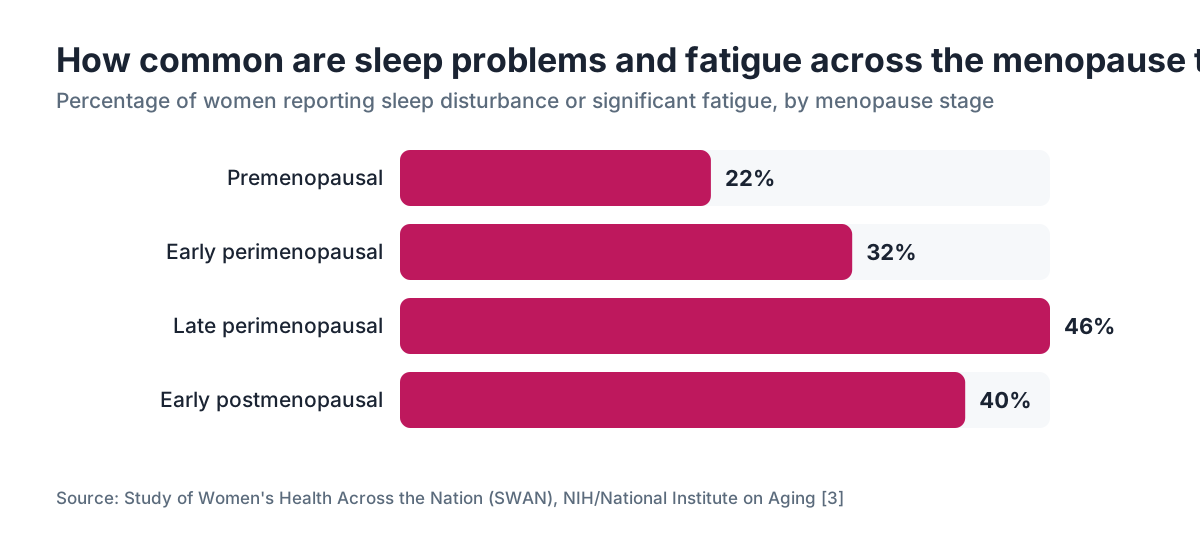
TL;DR: Perimenopause exhaustion is real, common, and rarely has a single cause. Falling estrogen and progesterone disrupt sleep, keep cortisol elevated, and slow cellular energy production. Up to 46% of perimenopausal women report significant fatigue. Most causes are treatable once identified. Hormone therapy, targeted sleep support, thyroid and iron optimization, and specific lifestyle changes all move the needle.
What is perimenopause exhaustion and is it different from normal tiredness?
Perimenopause exhaustion is not ordinary tiredness that a weekend of rest fixes. It sits somewhere between fatigue and a shift in how your body makes and uses energy. Women describe it as bone-deep, as waking up already empty, as a fog that makes simple decisions feel hard. That description matches what the physiology shows.
Normal tiredness has a clear cause and resolves with rest. Perimenopause exhaustion often does not. It ties to hormonal swings that unfold over years, usually starting in the early-to-mid 40s, sometimes as early as the late 30s. [1] The transition is not one event. Estrogen and progesterone oscillate wildly before they finally decline for good, and each swing can disrupt sleep, mood, metabolism, and the autonomic nervous system at once.
The North American Menopause Society (NAMS) lists fatigue among the most commonly reported perimenopause symptoms, and separates it from ordinary post-exertion tiredness by its persistence and its tight link to sleep disruption and hot flashes. [2] That distinction matters clinically. The treatment path for hormone-driven fatigue looks different from the path for anemia or hypothyroidism, even though all three can show up in the same woman at once.
How common is fatigue during perimenopause?
Very common. The Study of Women's Health Across the Nation (SWAN) followed over 3,000 women through the menopause transition and found fatigue and sleep disturbance among the top reported symptoms, with sleep problems affecting roughly 40 to 46% of perimenopausal women. [3] The number climbs higher when researchers count women who report fatigue without naming it a sleep problem.
A 2015 analysis in Menopause found that perimenopausal and early postmenopausal women reported worse sleep quality and more daytime fatigue than premenopausal women of similar age, even after controlling for depression and life stress. [4] That points to the hormonal transition itself driving the problem, more than the general strain of midlife.
Race matters here too. SWAN found that Black and Hispanic women reported higher rates of sleep disturbance and fatigue during perimenopause than white women, a gap that socioeconomic factors do not fully explain. [3] Any honest conversation about perimenopause exhaustion has to acknowledge the experience is not uniform.
What causes exhaustion during perimenopause?
There is no single cause. That is part of why perimenopause exhaustion resists treatment when a clinician hunts for one thing. The real picture is a cascade of factors feeding each other.
Estrogen and the sleep architecture problem. Estrogen acts directly on REM sleep and on temperature control. As it falls and fluctuates, women get more nighttime awakenings, less slow-wave sleep (the most restorative stage), and hot flashes that jolt them awake several times a night. Even women who never consciously wake during a hot flash show microarousals on polysomnography. [4] Years of fragmented sleep build a chronic debt that no amount of willpower repays.
Progesterone and its lost sedative effect. Progesterone works on GABA receptors in the brain, producing a mild sedative, anti-anxiety effect. [5] As it drops in perimenopause (often before estrogen does), many women notice more anxiety at night, racing thoughts, and trouble falling or staying asleep. This is why some clinicians find that low-dose oral micronized progesterone helps sleep even before estrogen has dropped much. Read more about progesterone and its role in perimenopause.
HPA axis dysregulation. The hypothalamic-pituitary-adrenal axis, your stress response system, gets less well-regulated as estrogen declines. Estrogen normally buffers cortisol. Without that buffer, cortisol stays elevated longer after a stressor, which suppresses melatonin, delays sleep onset, and feeds the wired-but-tired feeling so many perimenopausal women describe.
Thyroid dysfunction. This is the most commonly missed concurrent diagnosis. Autoimmune hypothyroidism (Hashimoto's) peaks in women in their 40s and 50s, the same window as perimenopause, and its symptoms (fatigue, brain fog, weight gain, cold intolerance) overlap almost perfectly with perimenopause. The American Thyroid Association estimates 1 in 8 women will develop a thyroid disorder in her lifetime. [6] A TSH alone is not always enough. Free T4 and thyroid antibodies often add real information.
Iron deficiency. Perimenopausal cycles are often irregular and heavy, which drives iron stores down fast. Ferritin below 30 ng/mL can cause significant fatigue even when hemoglobin reads normal, a point many standard reference ranges miss. Ask for ferritin specifically, more than a CBC.
Mitochondrial and metabolic shifts. Estrogen supports mitochondrial function at the cellular level. Research summarized by the National Institute on Aging shows estrogen receptors sit on mitochondria and that estrogen helps regulate ATP production. [7] As estrogen falls, energy metabolism inside the cell runs less efficiently. This may explain why perimenopause fatigue feels so unlike ordinary tiredness.
What do perimenopause exhaustion symptoms actually feel like?
Women use remarkably consistent language across studies and clinics. The most common descriptors:
- Waking up tired after 7 to 8 hours of sleep
- Hitting a wall in the early afternoon that feels impossible to push through
- Brain fog so thick that reading one paragraph takes three tries
- A body that feels heavy, like moving through water
- Loss of motivation that reads as physical, not psychological
- Needing more recovery after exercise than before
Many women report a specific pattern. Wired at night, so falling asleep is hard. Groggy and unrested in the morning. Briefly okay by late morning. Crashing by 2 or 3 pm. That maps onto a disrupted cortisol rhythm stacked on poor sleep quality, which is the signature of perimenopause.
The cognitive side (brain fog, word-finding trouble, short-term memory lapses) can distress women as much as the physical fatigue. NAMS notes cognitive symptoms are common during the transition and usually track with sleep disruption rather than permanent decline. [2]
Which lab tests should you ask for if you're exhausted in perimenopause?
A standard annual panel misses most of the relevant causes. Here is what to request, and why.
| Test | Why it matters in perimenopause | What to look for | |---|---|---| | FSH and Estradiol | Confirms perimenopause stage | FSH rising; estradiol fluctuating or falling | | TSH, Free T4, TPO antibodies | Rules out Hashimoto's/hypothyroidism | TSH above 2.5 with symptoms warrants discussion | | Ferritin | Iron deficiency even without anemia | Aim for 50-100 ng/mL for energy | | CBC | Checks for overt anemia | Hemoglobin below 12 g/dL in women | | Fasting glucose and insulin | Insulin resistance rises in perimenopause | Fasting insulin above 10 uU/mL is worth addressing | | Vitamin D (25-OH) | Deficiency worsens fatigue and mood | Optimal 40-60 ng/mL | | Cortisol (morning) | Screens for adrenal issues | Below 10 mcg/dL in the morning is notable | | Sleep study (if indicated) | Rules out sleep apnea | Often missed in women |
Sleep apnea is genuinely underdiagnosed in perimenopausal and postmenopausal women. It presents differently in women (fatigue and insomnia rather than snoring and witnessed apneas), and weight gain around the menopause transition raises risk. A home sleep test is reasonable if fatigue persists despite hormone optimization. [8]
Progesterone drawn mid-cycle (day 19-21 of a regular cycle, or any time in an irregular one) can tell you whether ovulation is happening and whether progesterone production is adequate. An FSH in the early follicular phase (day 2-5) is the most useful window for staging the transition.
Does hormone therapy actually help with perimenopause fatigue?
For most women, yes, though the evidence is cleaner for sleep improvement than for fatigue as a standalone outcome.
A 2021 Cochrane review of hormone therapy for menopausal symptoms found that estrogen-based therapy reduced vasomotor symptoms, which in turn improved sleep quality and daytime energy. [9] The effect on fatigue is partly direct (estrogen's role in sleep architecture and mitochondrial function) and partly indirect (fewer night sweats means fewer disruptions).
Oral micronized progesterone (Prometrium in the US) has a specific sleep benefit that synthetic progestins like medroxyprogesterone acetate do not match. A randomized controlled trial in Menopause in 2012 found that oral micronized progesterone 300 mg at bedtime improved sleep in postmenopausal women compared to placebo, with better sleep quality and fewer nighttime awakenings. [5] This is why clinicians who care about sleep tend to prefer micronized progesterone over synthetic progestins when progesterone is needed.
The hormone replacement therapy decision is individual. For women under 60 within 10 years of their final period, NAMS states the benefits of hormone therapy for bothersome symptoms generally outweigh the risks for most women. [2] Women with a history of estrogen-sensitive cancers, certain clotting disorders, or active liver disease need individual assessment.
Transdermal estrogen (patch, gel, or spray) is worth discussing if you have cardiovascular risk factors, because it skips first-pass liver metabolism and carries a lower thrombosis risk than oral estradiol. The estrogen patch has decades of real-world data behind it.
At WomenRx, clinicians assess fatigue as part of a perimenopause evaluation, since it is one of the most undertreated symptoms in the transition. Getting the hormone picture right often makes everything else more manageable.
What lifestyle changes genuinely help perimenopause exhaustion?
Not everything needs a prescription. But let's be honest about what the evidence shows, rather than recycling generic wellness advice.
Sleep hygiene aimed at perimenopause specifically. Standard sleep hygiene (consistent bedtime, dark room, no screens) is a starting point, not a solution. For perimenopause, keeping the bedroom cold (65-67F, about 18-19C) cuts hot flash-triggered awakenings substantially. A cooling mattress pad helps. So can a weighted blanket, where the pressure calms the nervous system without raising temperature.
Exercise timing matters. Moderate aerobic exercise consistently links to better sleep and less fatigue in perimenopausal women. But intense exercise within 3 hours of bed can worsen insomnia for women with already-elevated evening cortisol. Morning or early afternoon is the better window for most.
Alcohol is a bigger problem than most women realize. Even one drink at night suppresses REM sleep and increases nighttime awakenings, stacking on top of the sleep disruption estrogen loss already causes. Many women who cut alcohol report a clear jump in sleep quality within two weeks.
Blood sugar stability. Perimenopausal insulin resistance (partly estrogen-driven) can trigger reactive hypoglycemia at night, spiking cortisol and waking you up. A small protein-containing snack before bed (not carbs alone) and fewer refined carbs overall can meaningfully steady sleep.
Caffeine cutoff earlier than you think. Caffeine's half-life runs 5 to 7 hours. Coffee at 2 pm leaves a quarter of that caffeine circulating at 10 pm. Many perimenopausal women need to move the cutoff to noon or earlier.
Resistance training. Beyond aerobic work, lifting two to three times a week improves insulin sensitivity, supports mitochondrial biogenesis, and in several small trials reduced perceived fatigue in midlife women. It also protects bone density, which is falling now. See our piece on bone density tests if you have not had a baseline DEXA.
Can supplements help with fatigue in perimenopause?
Some yes, some no, and for some the research is genuinely thin.
Iron. If your ferritin sits below 30 ng/mL and you're fatigued, iron supplementation has good evidence. Ferrous bisglycinate is better tolerated than ferrous sulfate (less constipation, similar absorption). Do not supplement without testing. Excess iron carries its own problems.
Vitamin D. Deficiency is common, with an estimated 40% of US adults deficient or insufficient, [10] and it links to fatigue, muscle weakness, and low mood. Getting levels to 40-60 ng/mL is reasonable, usually with 2,000 to 5,000 IU/day depending on where you start.
Magnesium glycinate. Magnesium supports sleep, muscle relaxation, and cellular energy production. Deficiency is common in women eating a processed diet. 200 to 400 mg at night is reasonable and low-risk. It is not a hormone fix, but it can take the edge off nighttime restlessness.
Ashwagandha (KSM-66 extract). A few randomized controlled trials show modest drops in cortisol and self-reported stress and fatigue. A 2019 trial in Medicine (Baltimore) found 240 mg/day of ashwagandha extract lowered morning cortisol and stress scores over 60 days. [11] The effect is real but not large. It does not replace addressing the underlying hormonal drivers.
B12. Worth checking if you eat limited animal products or have GI absorption issues. B12 deficiency causes fatigue and neurological symptoms that mimic perimenopause.
Skip the rest of the supplement shelf for fatigue. There is no meaningful clinical trial evidence for most adaptogen blends, adrenal supplements, or hormone-balancing herbal formulas sold for menopause fatigue.
Is there a connection between GLP-1 medications and perimenopause fatigue?
This is an emerging area with real clinical relevance. Many perimenopausal women are managing weight gain driven by the same hormonal shift that causes fatigue, and GLP-1 receptor agonists (semaglutide, tirzepatide) are increasingly part of that conversation.
Here is where it gets interesting. Semaglutide and tirzepatide both cause significant weight loss, which improves sleep apnea, lowers inflammatory burden, and improves insulin sensitivity, all of which can reduce fatigue. The SURMOUNT-1 trial of tirzepatide found that on top of weight loss, participants reported improvements in patient-reported outcomes including energy and physical function. [12]
On the other hand, GLP-1 medications commonly cause fatigue as a side effect, especially during dose escalation. That tends to ease after the first 4 to 8 weeks. If you're on a GLP-1 and feel wiped out, sorting medication side effect from perimenopause-driven fatigue takes some clinical judgment.
If you're curious whether a GLP-1 makes sense alongside hormone therapy, that is a conversation worth having with a clinician who manages both. The short version: they address different root causes and can be used together. Semaglutide for weight loss has more nuance than most online summaries cover. See also our comparison of semaglutide vs tirzepatide.
WomenRx evaluates perimenopause and metabolic health together, because in women in their 40s and 50s they are rarely separate problems.
When should you see a doctor for perimenopause exhaustion?
Most women with perimenopause exhaustion will do better with a proper clinical evaluation than with self-diagnosis through supplements and lifestyle tweaks. Some presentations genuinely cannot wait.
See a clinician promptly if:
- Fatigue is severe enough to interfere with work, driving, or daily safety
- You have symptoms that could mean anemia (pallor, shortness of breath, heart pounding)
- Weight is dropping unexpectedly alongside fatigue (thyroid, diabetes, or other causes need ruling out)
- Depression or anxiety is significant (PHQ-9 and GAD-7 are good self-screeners)
- Fatigue came on suddenly rather than gradually
A gradual, worsening pattern tied to sleep disruption, irregular periods, and other perimenopause symptoms is the typical presentation. Worth addressing promptly, rarely a medical emergency. But not something to white-knuckle through for years while waiting for menopause to be "official."
Many women reach menopause (12 consecutive months without a period) [see our overview of menopause] having spent 5 to 10 years in perimenopause with undertreated symptoms. That is an unnecessary decade of exhaustion. The perimenopause age range varies, but most women enter the transition between 45 and 55, with symptoms often starting in the early-to-mid 40s. [1]
How long does perimenopause exhaustion last?
The honest answer is that it depends on how long your transition lasts, which varies a lot. The average perimenopause transition runs 4 to 8 years, though the full range in the SWAN cohort stretched from 2 to more than 10 years. [3] Sleep disturbance and fatigue often begin in the early transition and can persist into the first years after menopause.
For most women, the worst fatigue tracks with the most hormonal volatility: the stretch of erratic estrogen swings, not the post-menopause plateau. Some women find fatigue actually improves once estrogen stops fluctuating, even at lower postmenopausal levels. Others keep struggling until hormone therapy brings their levels to a steadier range.
With treatment (hormone therapy, sleep optimization, or treating concurrent conditions like hypothyroidism), most women see meaningful improvement in 4 to 12 weeks. Untreated, the fatigue can drag on for years. That is not inevitable, and it is a reason to get evaluated rather than wait it out.
Knowing when menopause starts for your body is part of reading the timeline.
What is the relationship between perimenopause exhaustion and depression?
This matters clinically because the two conditions mimic each other, can coexist, and have different (though sometimes overlapping) treatments.
Perimenopause carries a two-to-fourfold higher risk of a major depressive episode, even in women with no prior history of depression. [2] The mechanism involves falling estrogen's effect on serotonin and dopamine systems, compounded by sleep loss, which is itself a major risk factor for depression.
Fatigue is a core symptom of both perimenopause and depression. Brain fog shows up in both. Loss of energy and motivation shows up in both. That makes self-diagnosis unreliable. A validated screen like the PHQ-9 takes under 2 minutes and gives a clinician useful data. A score of 10 or higher warrants a fuller depression assessment.
Here is the part that matters. Hormone therapy is not an antidepressant, and antidepressants do not fix hormone-driven fatigue. But SSRIs, and especially SNRIs like venlafaxine, do reduce hot flash frequency, which improves sleep, which indirectly reduces fatigue. And estrogen can carry genuine mood benefits in perimenopausal women, an effect that fades in postmenopausal women. The two treatments can complement each other, and sometimes one resolves the other. Getting the diagnosis right matters.
Frequently asked questions
Can perimenopause cause extreme fatigue?
Yes. Some women get fatigue severe enough to interfere with work, driving, and daily function. Extreme fatigue in perimenopause usually comes from several factors compounding: severe sleep disruption from hot flashes, significant progesterone decline hitting GABA receptors, and often a concurrent condition like iron deficiency or hypothyroidism. When fatigue is extreme, get a full workup including ferritin, thyroid panel, and blood sugar before pinning everything on hormones.
Why am I so tired but can't sleep during perimenopause?
This wired-but-tired pattern is one of the most characteristic perimenopause symptoms. Falling progesterone reduces the brain's GABA-mediated calming signal, making it harder to fall asleep. Meanwhile a disrupted cortisol rhythm (less well-buffered without estrogen) keeps you alert in the evening. Then hot flashes or night sweats fragment sleep even when you drift off. The result is chronic fatigue without rest. Addressing progesterone first, plus cooling the room, often breaks the cycle.
What is the best treatment for perimenopause fatigue?
There is no single best treatment because the cause varies. For most women, treating the underlying sleep disruption is the highest-leverage move: hormone therapy (especially transdermal estradiol and oral micronized progesterone) addresses the hormonal drivers. If hypothyroidism or iron deficiency is present, treating those specifically can resolve fatigue entirely. Lifestyle changes (cutting alcohol, steadying blood sugar, morning exercise) address the HPA axis piece. Most women need a combination, not one fix.
Does perimenopause fatigue get better after menopause?
For many women, yes. The worst fatigue often tracks with the volatile estrogen fluctuations of perimenopause rather than the lower but steadier postmenopausal baseline. Once estrogen stops swinging, sleep can settle. But women who enter menopause with undertreated fatigue do not automatically improve. Those on hormone therapy typically see sustained benefit. Those without treatment may find early postmenopause is actually worse before it improves in later years.
How do I know if my fatigue is perimenopause or something else?
You need labs. Perimenopause fatigue is a diagnosis of context (rising or fluctuating FSH, irregular cycles, other perimenopause symptoms) and of exclusion (ruling out hypothyroidism, iron deficiency anemia, sleep apnea, vitamin D deficiency, diabetes, and depression). Many women have perimenopause plus one concurrent condition. Testing TSH with Free T4, ferritin, fasting glucose, vitamin D, and a morning cortisol is a reasonable starting panel alongside reproductive hormone levels.
Can low progesterone cause extreme tiredness?
Yes, though the mechanism is specific. Progesterone and its metabolite allopregnanolone act on GABA-A receptors, producing a calming, mildly sedative effect. When progesterone drops in early perimenopause (often before estrogen drops much), many women lose that signal and get anxiety, racing thoughts, and disrupted sleep. The fatigue follows from lost sleep rather than from low progesterone directly causing tiredness. Oral micronized progesterone at bedtime has the best evidence for sleep benefit.
Is perimenopause fatigue a sign of adrenal fatigue?
"Adrenal fatigue" as sold in wellness spaces is not a recognized medical diagnosis. What is real is HPA axis dysregulation during perimenopause, where the loss of estrogen's cortisol-buffering effect flattens or scrambles the cortisol curve. That can drive the wired-at-night, sluggish-in-the-morning pattern. A morning serum cortisol or 4-point salivary cortisol test gives actual data. True primary adrenal insufficiency (Addison's disease) is serious but rare and shows distinctive findings on lab work.
How much sleep do perimenopausal women need?
The National Sleep Foundation recommends 7 to 9 hours for adults, and that does not change in perimenopause. What changes is that the sleep architecture is disrupted, so 8 hours in bed may deliver only 6 hours of quality sleep. Aiming for 8 to 8.5 hours in bed can be a practical compensation. The goal is enough slow-wave and REM sleep, which means fixing the underlying hormonal and temperature disruptions, more than logging more time in bed.
Can perimenopause cause fatigue even with normal thyroid levels?
Yes. Many women are told their thyroid is "normal" at a TSH of 3.5 while they feel exhausted, because the standard reference range runs up to 4.5 or 5.0. A TSH above 2.5 with symptoms warrants a conversation. Beyond thyroid, perimenopause fatigue driven by sleep disruption, progesterone decline, iron deficiency, or cellular energy changes is entirely independent of thyroid function. Normal thyroid does not rule out perimenopause as the cause, and it does not mean nothing is treatable.
Does coffee make perimenopause fatigue worse?
It can, in a counterproductive loop. Afternoon caffeine (half-life 5-7 hours) delays sleep onset and reduces slow-wave sleep, adding to the next day's fatigue, which drives more caffeine. Many perimenopausal women also find caffeine worsens hot flashes, adding to nighttime disruption. Moving the cutoff to noon, or switching to half-caff, is worth trying for 2 weeks to see the effect. The withdrawal fatigue in the first week is temporary.
What vitamins help with perimenopause fatigue?
Iron (measured as ferritin, more than hemoglobin) and vitamin D are the two deficiencies most consistently linked to fatigue in perimenopausal women, and both are correctable. Magnesium glycinate supports sleep quality and gets depleted by stress and a processed diet. B12 matters if dietary intake is low. Beyond these, the evidence for other supplements is thin. No supplement blend replaces correcting actual hormone levels or treating thyroid dysfunction.
Is perimenopause exhaustion a recognized medical condition?
Fatigue is recognized as a core perimenopause symptom by NAMS, the Endocrine Society, and the British Menopause Society. It appears in clinical practice guidelines as a symptom to screen for and treat. But "perimenopause exhaustion" is not a standalone diagnostic code; clinicians code the underlying causes (menopausal or perimenopausal disorder, sleep disturbance, hormonal imbalance). This distinction matters because it shapes how you advocate for testing and treatment with your provider.
Can weight gain in perimenopause make fatigue worse?
Yes, in several ways. The visceral fat that accumulates in perimenopause is metabolically active, producing inflammatory cytokines that worsen fatigue. Weight gain around the airway raises sleep apnea risk, directly degrading sleep. Insulin resistance, which climbs with both weight gain and estrogen loss, impairs cellular energy use. Addressing weight through diet, resistance training, or GLP-1 therapy can improve fatigue through all these pathways, independent of hormone status.
Sources
- NAMS (North American Menopause Society) - Perimenopause overview
- NAMS 2022 Hormone Therapy Position Statement
- Study of Women's Health Across the Nation (SWAN) - NIH/National Institute on Aging
- Menopause journal - Sleep disturbance in perimenopausal and postmenopausal women (2015 analysis)
- Menopause journal - Oral micronized progesterone and sleep (RCT, 2012)
- American Thyroid Association - General information on thyroid disease
- NIH National Institute on Aging - Estrogen, mitochondria, and energy metabolism
- American Academy of Sleep Medicine - Women and sleep apnea
- Cochrane Library - Hormone therapy for menopausal symptoms (2021 review)
- NIH Office of Dietary Supplements - Vitamin D fact sheet
- Medicine (Baltimore) - Ashwagandha extract and cortisol RCT (2019)
- SURMOUNT-1 trial - Tirzepatide for obesity (NEJM, 2022)