Perimenopause discharge: what's normal, what's not, and when to call your doctor
TL;DR: Perimenopause discharge changes because estrogen is falling. Clear or white watery discharge is usually normal. Yellow, green, gray, or blood-tinged discharge, or anything with a strong odor, needs a provider evaluation. Bacterial vaginosis, atrophic vaginitis, and occasionally endometrial changes can all look similar. Most causes are treatable, and some respond well to local estrogen.
What does normal discharge look like during perimenopause?
Most women in perimenopause notice their discharge changes before they notice anything else. That makes sense because the vaginal walls, cervix, and vulvar tissue are all estrogen-sensitive, and estrogen starts fluctuating years before your last period.
Normal perimenopausal discharge is typically clear to white, thin or slightly creamy, and mild-smelling or odorless. The amount can swing wildly from cycle to cycle. Some months you might have noticeably more discharge around ovulation (estrogen spikes can still produce cervical mucus even in perimenopause), and other months almost nothing. That variability is the new normal, not a sign something is wrong.
As perimenopause progresses and estrogen levels trend lower, the discharge often becomes scantier and thinner because the vaginal mucosa loses some of its ability to produce lubrication. This can feel dry rather than wet, and some women mistake reduced discharge for a good sign when it is actually early genitourinary syndrome of menopause (GSM). [1]
Watery discharge that is not itchy, not foul-smelling, and not discolored is generally fine. If it is heavy enough to wet your underwear daily, that can occasionally signal a cervical polyp or ectropion, both of which are benign but worth a quick exam.
Why does discharge change during perimenopause?
The short answer is estrogen. The mechanism is worth understanding, because it explains almost every discharge complaint you will have during this decade of your life.
Estrogen keeps the vaginal epithelium thick, well-glycogenated, and acidic (normal vaginal pH is 3.8 to 4.5). That glycogen feeds Lactobacillus species, which produce lactic acid, which keeps pH low, which keeps pathogens out. When estrogen falls, glycogen drops, Lactobacilli thin out, pH rises above 4.5, and opportunistic bacteria move in. [2] The entire ecosystem of the vagina shifts, sometimes dramatically.
Hormone fluctuations in perimenopause are erratic rather than simply low. You can have a high-estrogen week followed by a crash, which means the vaginal environment is constantly destabilized. That instability is why bacterial vaginosis (BV) turns up in perimenopause more often than most women expect. It is more than a younger woman's problem.
The cervix also changes. Cervical ectropion (when the softer inner cervical cells migrate outward) is common in reproductive years and can produce mucus-heavy discharge. Perimenopausal hormonal shifts can cause ectropion to resolve or, less often, become more symptomatic. Cervical polyps, which are more common in the 40s and 50s, produce a watery or blood-tinged discharge that is worth investigating. [3]
Ovarian function also explains the cycle-to-cycle variability. Perimenopause is defined by irregular ovulation. Some cycles are anovulatory (no ovulation, no LH surge, no midcycle cervical mucus). Other cycles ovulate normally and produce the classic egg-white discharge at midcycle. Skipping between these states every month is confusing but physiologically expected. [4]
What does the discharge look like across the stages of perimenopause?
The pattern shifts as perimenopause progresses. Early perimenopause (cycles still mostly regular, just variable in length) looks different from late perimenopause (cycles 60+ days apart, estrogen trending firmly down).
| Stage | Typical discharge | Common cause | |---|---|---| | Early perimenopause | Variable: watery, milky, or egg-white; heavier some months | Irregular ovulation, estrogen fluctuation | | Mid perimenopause | Less predictable; BV episodes more common; occasional spotting with discharge | Vaginal pH shift, anovulatory cycles | | Late perimenopause | Scant; thin; sometimes watery-yellow | Early GSM, low Lactobacilli | | Post-menopause (for context) | Minimal; dry or thin watery; any bleeding is abnormal | GSM, atrophic vaginitis |
This table reflects the general trajectory most clinicians describe, with the caveat that individual variation is enormous. Some women sail through perimenopause with no discharge complaints at all. Others have years of BV and GSM symptoms. Genetics, body weight, smoking history, and whether someone uses local estrogen all affect the picture.
What types of discharge during perimenopause are not normal?
Read this section carefully, because a few patterns warrant prompt evaluation.
Yellow or green discharge with odor almost always means infection. BV produces a thin, gray-white or off-white discharge with a fishy smell, especially after sex (when semen raises vaginal pH and volatilizes amines). Trichomoniasis produces a frothy, yellow-green discharge with a strong odor and often significant itching and vulvar redness. Gonorrhea or chlamydia can cause a purulent discharge, though many women have minimal symptoms. Any of these need testing and treatment, not watchful waiting. [5]
Blood-tinged or brown discharge outside of a period is a red flag that deserves a call to your provider. In perimenopause, spotting with discharge is often benign (a cervical polyp, breakthrough ovulation, or an anovulatory cycle with an unscheduled estrogen drop). But endometrial cancer risk rises with age, and abnormal uterine bleeding is its most common symptom. The American College of Obstetricians and Gynecologists recommends evaluation of any postmenopausal bleeding and any perimenopausal bleeding that is unusually heavy, prolonged, or accompanied by discharge. [6]
Gray discharge with a fishy odor is textbook BV. This one catches women off guard because they associate BV with younger sexually active women. Perimenopausal BV happens even in women who are not sexually active, because the cause is vaginal pH dysbiosis, not necessarily a new partner.
Watery, clear discharge in large volumes can occasionally signal a fistula (an abnormal connection between the vagina and bladder or rectum) or, rarely, a fluid-producing ovarian cyst or tumor. These are uncommon, but persistent heavy watery discharge that does not fit the normal cycle pattern should be evaluated.
Any discharge accompanied by pelvic pain, fever, or pain with sex needs same-day or next-day evaluation to rule out pelvic inflammatory disease or another acute process.
Is bacterial vaginosis more common in perimenopause?
Yes, meaningfully so. BV is the most common vaginal infection in reproductive-age women, but the perimenopausal years carry a specific extra risk: the estrogen-related drop in Lactobacilli and rise in vaginal pH creates ideal conditions for the overgrowth of Gardnerella, Prevotella, and other anaerobes that define BV. [2]
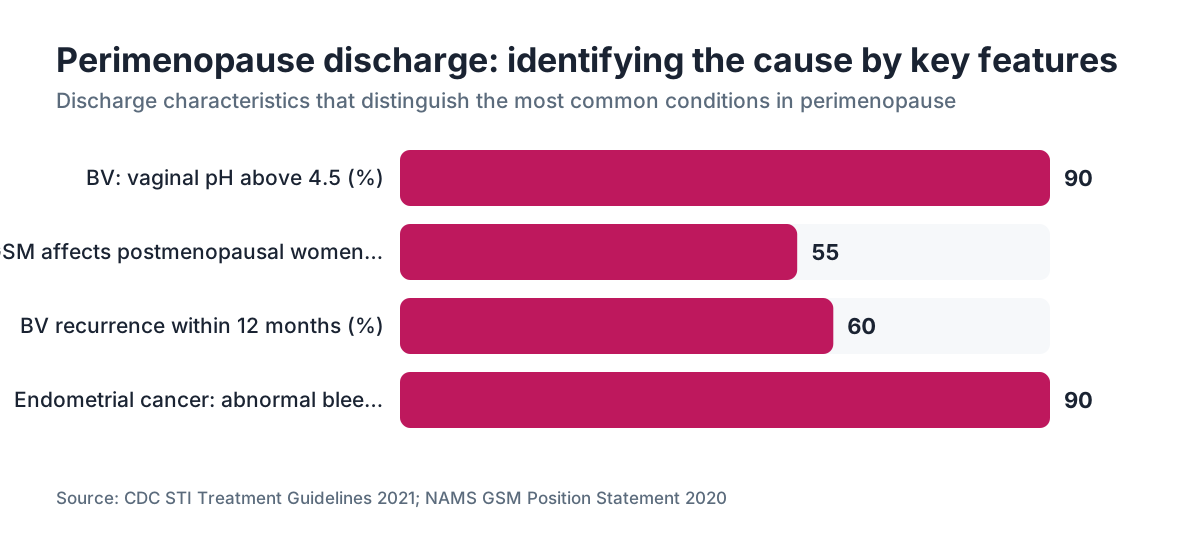
The Amsel criteria used to diagnose BV are: thin homogeneous discharge, pH above 4.5, positive whiff test (fishy odor with KOH), and clue cells on wet prep. You need three of four for a clinical diagnosis. A provider can also use a validated molecular test (like the BD Affirm or Hologic Aptima) or a home pH kit as a starting screen.
Treatment is metronidazole (oral or vaginal gel) or clindamycin vaginal cream. Both work well for the acute episode. The harder problem is recurrence. BV recurs in about 50 to 70 percent of women within 12 months of treatment [5], and the recurrence rate may be higher in perimenopause because the underlying pH problem (low estrogen) does not go away with antibiotics.
Local estrogen (vaginal estradiol cream, ring, or tablet) can raise vaginal Lactobacilli and lower pH, which is why some gynecologists use it as adjunctive therapy for recurrent BV in perimenopausal women. It is an off-label use but mechanistically sound and increasingly described in the literature. [2]
What is atrophic vaginitis and how does it affect discharge?
Atrophic vaginitis, now more accurately called genitourinary syndrome of menopause (GSM), is the thinning and drying of vaginal tissue from estrogen loss. It affects an estimated 27 to 84 percent of postmenopausal women, and symptoms often begin in perimenopause before the final period. [1]
The discharge pattern with GSM is typically thin, watery, and sometimes pale yellow. The color comes from increased desquamation of vaginal epithelial cells and the changed bacterial milieu. Women with GSM often describe a constant low-level wetness that is not arousal-related, accompanied by burning and irritation.
GSM also raises the risk of aerobic vaginitis (a distinct condition from BV, driven by skin bacteria like Streptococcus agalactiae and E. coli entering a compromised vaginal environment) which produces a more purulent, yellow discharge.
The NAMS 2020 position statement on GSM notes that "symptoms of GSM are chronic and progressive in the absence of treatment." [1] That matters because many women wait years before mentioning discharge changes or vaginal dryness to a provider, assuming it is simply aging. It is aging, yes, but it is treatable aging.
Local vaginal estrogen is the first-line treatment for GSM-related discharge and dryness. It is available as cream (Estrace, generic estradiol), a low-dose tablet or suppository (Vagifem, Yuvafem), a ring (Estring), or a newer insert (Imvexxy). Systemic estrogen also treats GSM but is chosen when women have other menopausal symptoms. For women who cannot or prefer not to use estrogen, ospemifene (an oral SERM, FDA-approved for dyspareunia from GSM) and intravaginal DHEA (prasterone/Intrarosa) are alternatives. [7]
Can perimenopause discharge signal something more serious, like cancer?
It can. This is the question most women are quietly asking but feel awkward raising. The honest answer: rarely, but not never, and the only way to know is evaluation.
Endometrial cancer is the most common gynecologic cancer in the U.S., and its signature symptom is abnormal uterine bleeding, which can present as blood-tinged discharge rather than obvious bleeding. The average age at diagnosis is 60, but perimenopause (typically 40s to mid-50s) overlaps with early presentation in higher-risk women. Risk factors include obesity, diabetes, anovulatory cycles with unopposed estrogen, and tamoxifen use. [6]
Cervical cancer, while much rarer now thanks to Pap smear screening, can produce a watery, blood-tinged, or malodorous discharge. This is why cervical cancer screening (Pap smear plus HPV testing) matters through age 65 for most women, and through any age for women with inadequate prior screening. [8]
Vaginal and vulvar cancers are uncommon but can present with discharge, bleeding, or a visible lesion. Any persistent discharge accompanied by a new lump, ulceration, or visible change in the vulva or vaginal tissue needs prompt evaluation.
Here is the reassuring reality: most perimenopausal discharge is benign. But "it is probably just hormones" is not a diagnosis. If you have discharge that is blood-tinged, persistent, foul-smelling, or accompanied by pelvic pain, get examined. A transvaginal ultrasound and endometrial biopsy can rule out endometrial pathology in under an hour in a typical office visit.
How is abnormal discharge evaluated in perimenopause?
A good workup is not complicated, but it requires an actual pelvic exam, not a telehealth assessment alone for discharge with red flags.
The standard evaluation includes: vaginal pH testing (a simple strip, pH above 4.5 points toward BV, atrophic vaginitis, or trichomoniasis), wet mount microscopy (checks for clue cells, trichomonads, WBCs, and yeast pseudohyphae), and a whiff test. Many offices have replaced wet mount with validated molecular panels (like the NAAT-based Aptima BV or Vaginal Health Panel from various labs) that detect BV, trichomoniasis, and candidiasis simultaneously with higher sensitivity.
If the discharge is blood-tinged or if you have not had a Pap in the last 3 to 5 years, a Pap smear and HPV co-test is appropriate. If you have heavy or irregular bleeding alongside discharge, a transvaginal ultrasound to assess endometrial stripe thickness and an endometrial biopsy are standard next steps. The Society of Gynecologic Oncology recommends biopsy for postmenopausal women with an endometrial stripe above 4 to 5 mm on ultrasound, and for perimenopausal women with persistent unexplained abnormal bleeding regardless of stripe. [6]
For women managing their care through telehealth for hormone symptoms, the important rule is this. Discharge with red flags (blood-tinged outside periods, foul odor, pelvic pain) always needs in-person evaluation. Telehealth can reasonably manage confirmed recurrent BV with antibiotics or counsel on local estrogen for confirmed GSM, but it cannot perform a pelvic exam. If you are using a platform like WomenRx for perimenopausal hormone management, your provider should be routing you to in-person gynecologic care for any discharge symptoms that do not fit the straightforward pattern.
Does hormone replacement therapy change perimenopausal discharge?
Yes, in mostly beneficial ways, though the picture depends on whether you are using systemic or local hormones, and what type.
Systemic estrogen (oral, patch, or spray) raises circulating estrogen levels and can restore vaginal glycogen and Lactobacilli over time, reducing GSM-related discharge and the risk of BV recurrence. Women on hormone replacement therapy who also have a uterus take progestogen alongside estrogen. Combined therapy does not significantly worsen vaginal symptoms and in most cases improves them. [9]
Local vaginal estrogen (cream, ring, tablet, suppository) acts directly on the vaginal tissue with minimal systemic absorption and is the most targeted approach for discharge related to GSM or atrophic vaginitis. The estrogen patch delivers systemic estrogen transdermally and treats both systemic and vaginal symptoms, though some women still need topical vaginal therapy on top of their patch for adequate local effect.
Progesterone alone does not typically improve vaginal discharge or GSM. Vaginal progesterone (used in some hormone protocols) can occasionally cause a white, clumpy discharge that looks like a yeast infection but is actually the vehicle excipient. Worth knowing if you start progesterone suppositories and notice new discharge.
Here is a plain opinion. For perimenopausal women with bothersome GSM symptoms (discharge, dryness, burning, painful sex), local estrogen is cheap, effective, and has an excellent safety profile even for most women with a history of hormone-sensitive breast cancer, per NAMS guidance. [10] Most women wait far too long before trying it.
What home remedies and products actually help, and which ones make things worse?
Vaginal discharge management is an area saturated with products that range from harmless-but-useless to actively disruptive. Here is an honest breakdown.
Things that genuinely help: pH-balancing vaginal gels (RepHresh and similar boric acid or lactic acid gels) can temporarily lower vaginal pH and reduce BV symptoms between antibiotic courses. Boric acid suppositories (600 mg intravaginal, used 1 to 2 times per week) have decent trial evidence for recurrent BV maintenance after antibiotic treatment [5]. Moisturizers like Replens provide sustained vaginal hydration and can reduce the thin watery discharge of early GSM, though they do not treat the underlying atrophy. Silicone- or water-based lubricants for sex help with friction but do not affect baseline discharge.
Things that make discharge worse: Douching raises vaginal pH, disrupts Lactobacilli, and is directly associated with higher rates of BV and STIs. The American College of Obstetricians and Gynecologists is unambiguous on this: douching should be avoided. [3] Scented soaps, bubble baths, and vaginal deodorant sprays irritate the vulvar skin and can trigger reactive discharge. Tight synthetic underwear traps moisture and heat, promoting yeast.
Yeast overgrowth is worth its own note. Many perimenopausal women self-diagnose yeast when they actually have BV or GSM, and treat with OTC antifungals that do nothing for those conditions. The discharge of yeast infection is typically thick, white, and cottage-cheese textured with itching and vulvar redness. [11] BV discharge is thin, grayish, and fishy-smelling without much itch. GSM discharge is thin, watery, and sometimes pale yellow with burning. These are not the same condition, and treating the wrong one delays relief.
When should you see a doctor about perimenopause discharge?
Most discharge in perimenopause does not require an emergency visit. But some patterns need timely evaluation, and waiting months because "it is probably just menopause" is a real mistake some women make.
See your provider within a few days for: yellow, green, or gray discharge with odor; discharge accompanied by vulvar sores or lesions; heavy watery discharge that is new and persistent; discharge with fever or pelvic pain.
See your provider within a few weeks for: thin, watery discharge that has been present for months with dryness and burning (likely GSM); any new discharge pattern after you have been post-menopausal; discharge that recurs after you have already treated BV multiple times.
See your provider promptly (same week) for: any blood-tinged discharge that is not explained by a known period, even a late or irregular one; postmenopausal discharge that is bloody or brown; discharge with a visible abnormality in the vulva or vaginal opening.
One rule simplifies all of this. If discharge is new, different from your pattern, or accompanied by any other symptom (bleeding, pain, odor, itch, lesion), get it examined. The exam takes ten minutes and provides answers that no amount of internet research can give you. Perimenopause is a time of genuine biological change, and discharge is one of the clearest signals your body sends. Learning to read those signals accurately is worth the copay.
Frequently asked questions
Is watery discharge a sign of perimenopause?
Watery discharge can be a sign of perimenopause, particularly when it is thin, odorless, and accompanied by vaginal dryness or burning. As estrogen drops, vaginal cells shed differently and produce a thinner, more watery discharge than in younger years. That said, watery discharge with a foul odor, blood tinge, or large volume should be evaluated to rule out infection, a cervical polyp, or, rarely, an endometrial problem.
What does bacterial vaginosis discharge look like in perimenopause?
BV in perimenopause looks the same as at any age: thin, homogeneous, grayish-white discharge with a fishy odor that worsens after sex or at the end of a period. Itching is usually mild or absent, which helps distinguish it from a yeast infection. Vaginal pH above 4.5 and a positive whiff test on KOH confirm the diagnosis. BV is more frequent in perimenopause because falling estrogen raises vaginal pH and reduces protective Lactobacilli.
Can perimenopause cause brown discharge?
Yes. Brown discharge in perimenopause is usually old blood from an irregular, late, or anovulatory cycle. When blood sits in the uterus or vagina before shedding, it oxidizes and turns brown. That is common and generally benign. Brown discharge that is not tied to a period, occurs after sex, or happens after you have gone 12 months without a period needs evaluation to rule out endometrial pathology, even if the most likely explanation is benign.
Why do I have more discharge than usual during perimenopause?
Increased discharge in perimenopause is often caused by an estrogen spike during an irregular ovulatory cycle, which produces extra cervical mucus. It can also signal BV or early GSM changes in the vaginal microbiome. A cervical polyp, which is more common in the 40s and 50s, is another cause of increased watery discharge. If the increase is new, persistent, or accompanied by odor or color change, a pelvic exam is the right next step.
Does discharge stop after menopause?
Discharge typically decreases significantly after menopause because estrogen-driven cervical mucus production stops. Most postmenopausal women have minimal discharge. Any new discharge after 12 consecutive months without a period, especially if yellow, brown, or blood-tinged, is considered abnormal and needs evaluation. Thin, clear watery discharge from GSM-related tissue changes can persist postmenopausally but should still be assessed on first occurrence.
What is the difference between perimenopause discharge and pregnancy discharge?
Both can be milky white and increased in volume, which is genuinely confusing. Pregnancy discharge (leukorrhea) is typically thick, white, and odorless from elevated progesterone and estrogen early in pregnancy. Perimenopausal discharge is more variable, often thinner, and tied to irregular cycles. If there is any chance of pregnancy (perimenopause does not eliminate fertility until 12 months past the last period), a home pregnancy test is the fastest answer.
Can low estrogen cause discharge to smell bad?
Yes, indirectly. Low estrogen raises vaginal pH, which allows anaerobic bacteria to overgrow. Those bacteria produce amines that smell fishy or musty. The discharge itself from atrophic vaginitis can have a mild, unusual odor from cell turnover and changed bacterial populations. A strongly fishy odor almost always indicates BV, not simple atrophy. Both conditions are treatable: BV with antibiotics, atrophic vaginitis with local estrogen.
Is yellow discharge in perimenopause always a sign of infection?
Not always, but yellow discharge deserves evaluation. Pale yellow, thin discharge with no odor and no itching can be from mild GSM or aerobic vaginitis in low-estrogen tissue. Bright yellow or yellow-green discharge with odor, itching, or burning is more likely to be trichomoniasis, BV with secondary infection, or gonorrhea. The only way to tell the difference accurately is a pelvic exam with pH testing and a vaginal swab. Do not guess on this one.
Should I use OTC yeast infection treatments for perimenopausal discharge?
Only if your symptoms clearly match a yeast infection: thick, white, cottage-cheese-like discharge with intense itching and vulvar redness, and you have had confirmed yeast infections before and recognize the pattern. BV and yeast look different but are commonly confused. Treating BV with an antifungal accomplishes nothing and delays correct treatment. If you are unsure, see a provider for a quick pH test and wet prep before treating.
Does local vaginal estrogen help with perimenopause discharge problems?
Yes, for discharge caused by GSM or recurrent BV. Local vaginal estrogen (cream, tablet, suppository, or ring) restores vaginal glycogen, raises Lactobacilli, and lowers vaginal pH, addressing the underlying cause of GSM-related discharge and reducing BV recurrence risk. It has minimal systemic absorption and is considered safe for most women. It does not treat active infection, so BV or trichomoniasis needs antibiotics first, with estrogen used afterward to restore the vaginal environment.
How does perimenopause affect discharge during or after sex?
In perimenopause, natural lubrication during arousal can decrease because lower estrogen reduces vaginal wall transudate. This means less discharge during sex, which is often experienced as dryness and friction. After sex, you may notice a slight increase in discharge, particularly if BV is present (semen raises vaginal pH and triggers the fishy odor response). Lubricants help with dryness during sex; local estrogen addresses the longer-term tissue change.
At what age does perimenopause discharge typically start?
Most women enter perimenopause in their mid-40s, though it can start as early as the late 30s. Discharge changes often begin when cycle irregularity starts, typically 2 to 8 years before the final period. The average age of menopause in the U.S. is 51, which means discharge-related perimenopausal symptoms commonly begin anywhere from the early to mid 40s. See the related article on perimenopause age for more on timing.
Can spotting with discharge mean perimenopause is ending?
Not necessarily. Spotting mixed with discharge is common throughout perimenopause from irregular ovulation, anovulatory cycles, or thin endometrium shedding unpredictably. It does not reliably signal that you are approaching your final period. Clinically, menopause is confirmed only after 12 consecutive months without any period. Spotting with discharge in the final months before that 12-month mark is common and benign, but spotting after the 12-month mark always needs evaluation.
What tests diagnose the cause of abnormal perimenopause discharge?
The standard workup includes vaginal pH strip testing, wet mount microscopy or a molecular panel (NAAT-based tests for BV, trichomoniasis, and yeast), a whiff test, and cervical cultures if STI is possible. If discharge is blood-tinged or you have irregular heavy bleeding, a transvaginal ultrasound to measure endometrial thickness and possibly an endometrial biopsy are added. A Pap smear and HPV co-test screen for cervical abnormalities. Most results are available within a day or two.
Sources
- NAMS, The 2020 Genitourinary Syndrome of Menopause Position Statement
- National Institutes of Health / NCBI, Vaginal Microbiome Changes in Menopause (PMC)
- ACOG (American College of Obstetricians and Gynecologists), FAQ on Vaginitis
- ACOG, Menopause: Resource Overview
- CDC, Bacterial Vaginosis Treatment Guidelines 2021
- Society of Gynecologic Oncology, Uterine Cancer Clinical Practice Statement
- FDA, Drug Approval Summary: Intrarosa (prasterone) and Osphena (ospemifene)
- USPSTF, Cervical Cancer Screening Recommendation Statement (2018)
- Endocrine Society, Menopause Hormone Therapy Clinical Practice Guideline
- NAMS, Menopause Practice: A Clinician's Guide, 6th edition
- NIH Office on Women's Health, Vaginal Yeast Infections
- American Cancer Society, Endometrial Cancer Overview