Perimenopause depression: why it happens and what actually helps
TL;DR: Perimenopause raises depression risk by two to four times compared to premenopausal years, even in women with no prior history. Fluctuating estrogen disrupts serotonin, norepinephrine, and cortisol regulation. First-line options include hormone therapy, antidepressants, or both, depending on your symptom picture. Most women see real improvement within weeks of the right treatment.
What is perimenopause depression and how common is it?
Perimenopause depression is a clinically significant depressive episode that emerges during the hormonal transition leading up to menopause, typically starting in a woman's early-to-mid 40s and lasting anywhere from two to ten years. It is more than ordinary sadness or stress. It meets the same diagnostic criteria as major depressive disorder or dysthymia, but its timing and biology connect it directly to reproductive hormone change.
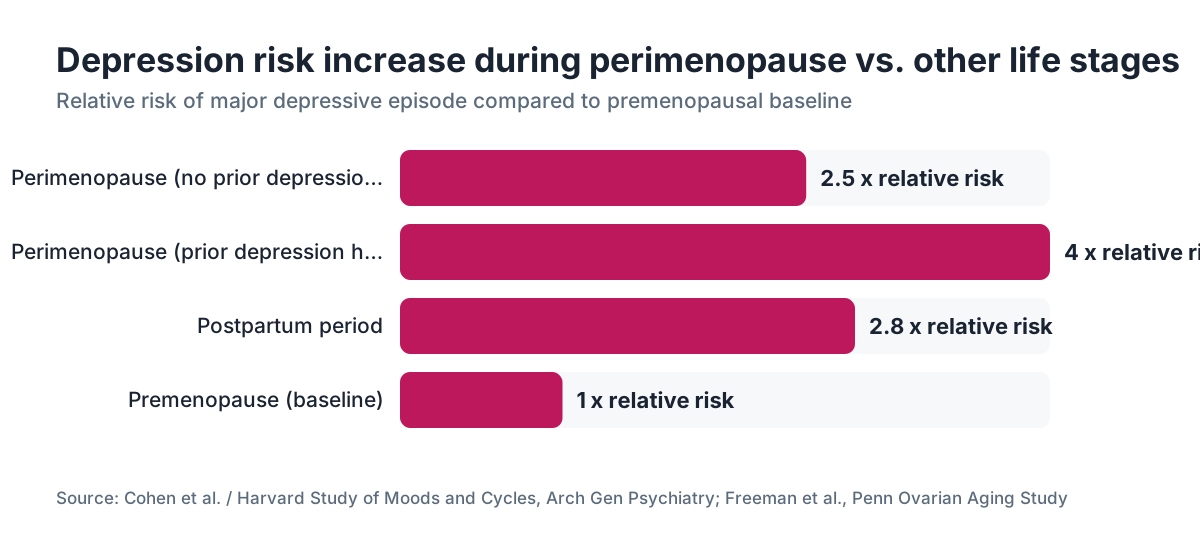
The numbers are striking. A prospective study published in the Archives of General Psychiatry found that women in perimenopause were 2.5 times more likely to develop a major depressive episode than women who remained premenopausal, even after controlling for prior depression history, life stress, and sleep [1]. A separate analysis from the Penn Ovarian Aging Study put the risk even higher for women whose transition involved longer or more erratic menstrual irregularity [2].
Think about that for a second. This is not a marginal increase. It is roughly the same jump in depression risk that follows childbirth or a major bereavement. Yet most women are never warned it is coming.
Estimates on prevalence vary because studies use different depression scales and different definitions of perimenopause. Broadly, somewhere between 20 and 40 percent of women report clinically meaningful depressive symptoms during the transition [1]. The North American Menopause Society (NAMS) acknowledges depression as one of the most common and most undertreated symptoms of the perimenopause period [3].
Why does perimenopause cause depression? The hormone-brain connection
Estrogen does far more than regulate your cycle. It modulates serotonin receptors, increases serotonin reuptake transporter density, supports norepinephrine signaling, and influences the hypothalamic-pituitary-adrenal axis that controls cortisol. When estrogen drops or swings erratically, all of those systems get destabilized at once [4].
Perimenopause is not a smooth decline. Estrogen in the early transition actually spikes higher than normal before it starts falling, and those swings happen unpredictably from cycle to cycle. The brain, which has spent decades calibrating mood chemistry to a relatively stable hormonal environment, gets whipsawed. That instability appears to be more depressogenic than the eventual low-estrogen state of postmenopause [2].
Progesterone adds another layer. It metabolizes into allopregnanolone, a neurosteroid that acts on GABA-A receptors much like a natural anxiolytic. As progesterone output becomes erratic and then falls, that calming effect disappears. Women who are sensitive to progesterone fluctuation, the same group who often had severe PMS or PMDD, tend to be hit hardest by perimenopause mood symptoms [4].
Sleep disruption amplifies everything. Hot flashes, even subclinical ones that do not fully wake you, fragment slow-wave sleep and suppress REM. Chronic sleep deprivation independently raises depression risk, and in perimenopause the two problems feed each other in a loop that can be very hard to break without addressing both.
Finally, there is the question of window of vulnerability. Research from Schmidt and colleagues at the NIH National Institute of Mental Health showed that women with a history of perimenopausal depression were more sensitive to mood changes triggered by hormonal fluctuations in a controlled crossover study, suggesting an underlying neurobiological susceptibility rather than purely a psychological response to midlife stress [4].
How is perimenopause depression different from regular clinical depression?
The symptom picture overlaps considerably, which is exactly why it gets missed or mislabeled. Low mood, fatigue, loss of interest, irritability, anxiety, poor concentration, and disrupted sleep are common to both. A few features do tend to cluster more heavily in hormone-driven depression.
Irritability is often the dominant mood, not sadness. Many women describe rage or a profoundly low frustration tolerance as the most disabling part, not crying spells. Anxiety frequently outpaces low mood. Brain fog, the sense that your memory and processing speed are unreliable, comes up constantly in perimenopausal women and is less typical of garden-variety depression. And the symptoms often track with the menstrual cycle in the early transition, getting worse in the week before a period and improving afterward.
Clinically, the key distinction is context and trajectory. If depressive symptoms appeared for the first time alongside menstrual irregularity, vasomotor symptoms, or other perimenopause markers, the hormonal transition is the most plausible explanation. If the same woman had recurrent major depression starting at age 22, her risk picture is different, though hormonal fluctuation will still worsen it.
Diagnosis requires a thorough workup because thyroid dysfunction, particularly subclinical hypothyroidism, is far more common in this age group and mimics depression almost perfectly. Iron deficiency anemia, vitamin D deficiency, and sleep apnea (which increases post-40 in women) all produce similar symptoms. A good clinician rules those out before landing on a diagnosis.
See perimenopause age for a fuller picture of what the transition timeline looks like and how to recognize where you are in it.
What are the main symptoms of perimenopause depression to watch for?
Perimenopause depression symptoms do not always announce themselves as depression. That is the trap. Many women spend months, sometimes years, cycling through explanations like burnout, relationship problems, or just aging before anyone connects the dots.
The core symptoms mirror major depressive disorder as defined in the DSM-5: depressed mood or loss of interest most of the day, nearly every day, for at least two weeks. But the perimenopause-specific presentation often looks like this:
Mood and emotional symptoms: Irritability that feels disproportionate. Sudden tearfulness with no clear trigger. Anxiety and worry that feel new or qualitatively different. Feeling emotionally numb or detached. Mood swings that track loosely with your cycle.
Cognitive symptoms: Forgetfulness, especially for words and names. Difficulty concentrating or finishing tasks. A sense that your mental sharpness has changed. This is sometimes called perimenopause brain fog and it is real, documented in objective cognitive testing during the transition [5].
Physical symptoms: Fatigue that is not explained by how much you sleep. Appetite changes. Physical slowing. These overlap with low estrogen symptoms, vasomotor symptoms like hot flashes and night sweats, and with normal midlife fatigue in ways that make teasing them apart genuinely difficult.
Sleep disruption: Either hypersomnia or insomnia, often driven by night sweats but sometimes present without obvious hot flashes.
The threshold for seeing a provider should be low. If any of these symptoms have been present most days for two weeks or more, that is enough to warrant an evaluation. You do not need the full constellation.
Does estrogen therapy actually treat perimenopause depression?
Yes, with important caveats about timing and severity.
Estrogen therapy has good evidence as a treatment for depression specifically during the perimenopausal transition. A randomized controlled trial published in JAMA Psychiatry in 2015 found that transdermal estradiol significantly reduced depressive symptoms in perimenopausal and early postmenopausal women compared to placebo, with a response rate of about 68 percent in the estrogen group versus 22 percent in placebo [6]. The effect was largest in women with more severe baseline symptoms and in those still in the perimenopausal (rather than postmenopausal) window.
The "window" matters. Estrogen's mood benefits appear strongest when started during perimenopause or within a few years of the final menstrual period. Starting estrogen a decade or more into postmenopause, as seen in the WHI data, does not confer the same mood benefit and introduces different risk considerations [12].
Transdermal delivery (patch, gel, or spray) is generally preferred over oral estradiol for mood effects because it avoids first-pass liver metabolism and delivers steadier blood levels. Erratic peaks and troughs may actually worsen mood sensitivity, so consistency of delivery matters.
Progesterone is added for women with a uterus to protect the uterine lining. Micronized progesterone (Prometrium) appears less likely to cause negative mood effects than synthetic progestins like medroxyprogesterone acetate. Some women even find micronized progesterone calming due to its allopregnanolone conversion. Read more about how progesterone fits into the hormonal picture.
Hormone therapy does not replace antidepressants in women with severe or recurrent major depression. For moderate depression with clear hormonal triggers, it is often tried first or alongside an antidepressant. For women who prefer to start with one treatment, clinical guidelines generally suggest trying estrogen first if the depression is new-onset and tied to the transition, then adding an antidepressant if the response is incomplete [3].
See hormone replacement therapy and estrogen patch for detailed coverage of formulations and dosing.
Do antidepressants work for perimenopause depression?
Yes. SSRIs and SNRIs work for perimenopause depression by the same mechanisms they work for any major depressive episode, and they carry additional benefits during this transition.
SNRIs like venlafaxine and desvenlafaxine have dual evidence: they treat depression and they reduce hot flash frequency and severity by 50 to 60 percent in clinical trials, which in turn improves sleep [3]. That dual action makes them a logical first choice for women whose depression comes packaged with significant vasomotor symptoms. Paroxetine (Brisdelle, 7.5 mg) is the only FDA-approved nonhormonal treatment for vasomotor symptoms, though its full antidepressant dose is higher [9].
SSRIs like escitalopram and sertraline have solid efficacy and tolerability data and are appropriate when mood is the primary concern without dominant hot flashes. Side effects to discuss honestly with your prescriber include reduced libido (already a problem in perimenopause), weight gain with some agents (paroxetine more than others), and discontinuation syndrome if you stop abruptly.
One real and underappreciated issue: some women find that antidepressants dull their emotional range in a way that feels worse than the original depression. That is not failure. It means the dose or agent needs adjustment. SSRIs and SNRIs are not identical and switching within the class sometimes makes a significant difference.
Bupropion is worth knowing about. It does not treat hot flashes, but it has a lower rate of sexual side effects and weight gain compared to SSRIs, and it can be useful when those are primary concerns.
Combining hormone therapy with an antidepressant is not double-dipping. Several studies have found additive benefit, particularly for women with moderate-to-severe symptoms.
What non-medication treatments help perimenopause depression?
Cognitive behavioral therapy (CBT) is the best-studied nonpharmacological option and it has decent evidence in perimenopausal populations specifically, more than general depression cohorts. A 2019 meta-analysis in Menopause journal found CBT reduced both depression and anxiety scores in menopausal women, with effects sustained at six-month follow-up [7]. It also has evidence for reducing hot flash bother, which matters because vasomotor symptoms drive a lot of the sleep disruption that worsens mood.
Exercise is not a consolation prize. A 2024 systematic review in JAMA Psychiatry found that exercise was comparable to antidepressants for mild to moderate depression across populations, with effect sizes that held up in subgroup analyses [8]. For perimenopausal women specifically, aerobic exercise has been shown to reduce hot flashes, improve sleep architecture, and lower cortisol. Resistance training adds bone density benefits, which is particularly relevant as estrogen declines. The dose that most studies use is 150 minutes per week of moderate aerobic activity, though even 30 minutes three times per week moves the needle.
Sleep is not optional. Treating sleep disruption directly, whether through melatonin, CBT-I (cognitive behavioral therapy for insomnia), or hormone therapy that addresses the underlying hot flashes, is a core part of treatment, not an afterthought.
Mindfulness-based stress reduction (MBSR) has emerging evidence in menopausal populations. It does not work as quickly as medication, and it requires consistent practice, but women who stick with it report meaningful improvements in mood, anxiety, and hot flash bother.
Acupuncture has mixed evidence for hot flashes and limited specific evidence for depression, but it is low-risk and some women find it helpful as an adjunct.
Things that are probably a waste of money: most single-supplement protocols marketed for menopause mood support (black cohosh, evening primrose, soy isoflavones). None of these have consistent evidence for depression specifically, though some may offer modest symptom relief for hot flashes.
How do doctors diagnose depression during perimenopause?
There is no blood test for perimenopause depression. FSH and estradiol levels are unreliable for staging the transition because they fluctuate so widely cycle-to-cycle. A single FSH draw tells you very little about where you are hormonally on a given Tuesday.
Diagnosis is clinical. A thorough evaluation should include a detailed menstrual and symptom history (when did cycles start changing, what symptoms appeared when), a structured depression screen using something like the PHQ-9 or the Edinburgh Postnatal Depression Scale adapted for perimenopausal use, and a review of concurrent symptoms like hot flashes, sleep disruption, and cognitive changes.
Lab workup should rule out mimics: TSH and free T4 for thyroid disease, complete blood count for anemia, serum ferritin (often low-normal in women with heavy perimenopausal bleeding), vitamin D level, and possibly a fasting glucose or HbA1c since insulin resistance worsens in the transition and contributes to mood and energy problems.
Women with new or worsening anxiety alongside depression should be screened for sleep apnea, particularly if they snore, wake unrefreshed, or have a bed partner who notices breathing pauses. Sleep apnea in women is dramatically underdiagnosed because it presents differently than in men: less overt snoring, more insomnia, more fatigue, more mood symptoms.
The NAMS recommends that clinicians use a validated screening tool and not dismiss mood symptoms as simply "stress" or "life circumstances" without a proper assessment [3]. Perimenopause is a biologically high-risk period for depression and should be treated as such.
Who is most at risk for depression during perimenopause?
Prior depression history is the single strongest risk factor. Women who had major depressive episodes earlier in life are significantly more likely to experience recurrence during perimenopause [1]. Women with a history of PMDD or premenstrual dysphoric disorder are also at elevated risk because their brains appear particularly sensitive to hormonal fluctuation.
A longer perimenopause transition increases risk. Women whose transition stretches beyond six years, often those with more erratic or prolonged menstrual irregularity, have higher cumulative exposure to hormonal instability and consequently higher depression rates in prospective data [2].
Vasomotor symptom burden matters independently of sleep disruption. The Penn Ovarian Aging Study found that women with more severe hot flashes had higher depression scores even after controlling for sleep quality, suggesting a direct mood effect rather than purely a sleep-mediated one [2].
Stressful life circumstances compound biological risk but do not cause perimenopausal depression on their own. Women going through significant stress (caregiving for aging parents, divorce, career transitions, which are common in the 40s and 50s) are more vulnerable when the hormonal backdrop is already destabilizing.
Race and ethnicity appear to influence both prevalence and presentation. The SWAN study (Study of Women's Health Across the Nation) found that Black women reported higher rates of depressive symptoms at early perimenopause compared to white women, while Chinese-American and Japanese-American women reported lower rates, patterns that held after adjusting for socioeconomic factors [5]. Clinicians should avoid assuming cultural stoicism or resilience as a reason not to screen.
Low-income women with limited access to mental health care have longer untreated episodes on average. That is a structural problem, but knowing it matters for self-advocacy: if your first provider dismisses symptoms, getting a second opinion is reasonable and sometimes necessary.
How is perimenopause depression treated differently than depression at other life stages?
The biggest difference is that hormone therapy is a legitimate first-line option in perimenopause in a way it simply is not at other life stages. For a 47-year-old woman with new-onset depression, irregular cycles, hot flashes, and no prior mental health history, starting a conversation about estradiol makes complete sense before defaulting to an antidepressant. That is not true for a 25-year-old or a 70-year-old presenting with depression.
The timing window matters for hormone therapy, as discussed above. Starting during perimenopause or early postmenopause offers mood benefits that diminish if treatment is delayed by a decade or more.
Vasomotor symptoms are a legitimate treatment target in their own right. Treating hot flashes often improves sleep, which improves mood, which makes the depression easier to manage. In some women, treating hot flashes alone produces enough downstream mood benefit that a dedicated antidepressant is not needed.
Cognitive symptoms deserve attention. Perimenopausal women report word-finding difficulty and memory lapses at high rates. There is evidence that estrogen therapy during the transition period supports verbal memory and processing speed, while the picture postmenopause is more complex [5]. This is distinct from dementia prevention, which remains an unresolved question, but for functional daily cognition during the transition, hormone therapy has plausible benefit.
WomenRx provides telehealth access to clinicians who specialize specifically in this intersection of hormonal and mental health care, which matters because most general practitioners receive very little training in perimenopausal depression and often miss it entirely.
Sexual dysfunction is connected to this picture. Low libido, pain with sex, and reduced arousal are common in perimenopause and often worsen depression (and vice versa). A treatment plan that does not address sexual health is incomplete for most women in this transition.
See menopause and when does menopause start for context on how the broader transition relates to what you experience.
When should you see a doctor for perimenopause depression symptoms?
The honest answer is: sooner than most women do. The average delay between symptom onset and treatment in perimenopausal depression is longer than it should be, partly because women normalize their symptoms and partly because some clinicians are not asking the right questions.
See a provider if depressive symptoms have been present most days for two or more weeks. Do not wait for it to hit rock bottom. Perimenopause depression can escalate to suicidal ideation; it is a medical condition with real severity, not a mindset to push through.
Emergency evaluation is warranted for any active thoughts of suicide or self-harm, inability to care for yourself or dependents, or psychosis (rare in perimenopausal depression but possible in bipolar disorder, which can also worsen at this stage).
If you have seen a provider and were told "this is just menopause" or "you just need to manage stress," without a structured depression screen or any discussion of treatment options, that is worth pushing back on or seeking a second opinion. NAMS guidelines explicitly call for assessment and treatment of depression as a medical symptom of the menopausal transition, not a lifestyle issue [3].
Primary care physicians, OBGYNs, psychiatrists, and menopause-specialized clinicians can all treat this. What varies is their comfort level and training. A menopause-credentialed clinician (NAMS offers a Menopause Practitioner designation) or a reproductive psychiatrist will have the most specific expertise in the hormonal-psychiatric interface.
WomenRx connects women to clinicians with this specific training through a telehealth model, which removes the geographic barrier that blocks many women from getting appropriate care.
Can perimenopause depression go away on its own?
Sometimes. A subset of women experience depressive symptoms that improve once they reach postmenopause and hormone levels stabilize at a new (lower) baseline. The erratic swings of the transition phase appear to be more depressogenic than the stable low-estrogen state that follows.
But waiting it out is not a reasonable strategy for most women. The average perimenopause lasts four to eight years, with some women experiencing a transition that stretches to ten years or more [1]. Spending most of your 40s or 50s in untreated depression has real consequences: impaired work performance, damaged relationships, increased cardiovascular risk (depression independently raises heart disease risk), reduced bone density (depression is associated with lower BMD, and inactivity during depressive episodes does not help), and substantially reduced quality of life.
For women with mild symptoms and strong preference to avoid medication, a structured trial of exercise, CBT, and sleep optimization is reasonable with close monitoring. If symptoms worsen or do not improve within six to eight weeks, that is a signal to add treatment.
For women with moderate to severe depression, waiting is not a good trade. Effective treatments exist. The risk-benefit calculation for hormone therapy or an antidepressant in a 45-year-old with significant depression is very favorable compared to years of untreated illness.
Postmenopausal women who did not get through the transition without depression should know that depression postmenopause is also treatable with similar tools, though hormone therapy started many years past the final period requires different risk discussions.
Frequently asked questions
Is it perimenopause depression or just stress?
Both can be true at once, but they are not the same thing. Perimenopause depression has a biological driver in hormonal fluctuation that makes it qualitatively different from situational stress. A key distinguishing feature: perimenopausal depression often appears or worsens alongside physical symptoms like hot flashes and irregular cycles, and it does not fully resolve even when the stressor does. A PHQ-9 screen and a thorough clinical history can help sort this out.
Can perimenopause cause anxiety as well as depression?
Yes. Anxiety is extremely common in perimenopause and often appears before or instead of classic low mood. Estrogen and progesterone both influence GABAergic and serotonergic circuits that regulate anxiety. Many women describe a new or worsened generalized anxiety, panic attacks, or a pervasive sense of dread that was not present before. Anxiety and depression co-occur at high rates during the transition and often respond to the same treatments.
How long does perimenopause depression last?
It varies. For women whose depression is driven primarily by hormonal instability, symptoms often improve after the final menstrual period when hormone levels stabilize. The transition itself averages four to eight years. Women with a prior depression history or untreated symptoms tend to have longer episodes. With treatment, most women see meaningful improvement within four to eight weeks, though finding the right treatment approach sometimes takes longer.
What antidepressant is best for perimenopause depression?
No single antidepressant is universally best. SNRIs like venlafaxine and desvenlafaxine treat both depression and hot flashes, making them a strong first choice when both are present. Escitalopram and sertraline have good tolerability profiles. Bupropion is preferable when weight gain or sexual side effects are primary concerns. Your prescriber should tailor the choice to your specific symptom cluster and medical history.
Can hormone therapy alone treat perimenopause depression?
For new-onset mild to moderate depression during the perimenopausal transition, transdermal estradiol alone has shown response rates around 68 percent in randomized trials. It works best when started during perimenopause rather than years postmenopause. For moderate to severe depression, or for women with prior recurrent major depression, combining hormone therapy with an antidepressant often produces better outcomes than either alone.
Does perimenopause depression affect younger women, like in early 40s?
Yes. Perimenopause can begin in the early 40s and occasionally in the late 30s. Depression risk rises with the onset of menstrual irregularity regardless of age. Women in their early 40s who experience new depressive symptoms alongside cycle changes, increased PMS, or hot flashes should not assume they are too young for a hormonal explanation. The SWAN study documented elevated depression rates in women entering perimenopause regardless of whether they were 40 or 50.
Will HRT (hormone replacement therapy) make perimenopause depression worse?
For most women it improves rather than worsens mood. The exception is synthetic progestins, particularly medroxyprogesterone acetate, which some women find negatively affects mood. Micronized progesterone (bioidentical, oral) is generally better tolerated and in some women has a calming effect. If you start hormone therapy and mood worsens, the first step is reviewing the progestogen component rather than stopping treatment entirely.
Is perimenopause brain fog the same as depression?
They overlap but are distinct. Perimenopause brain fog refers to cognitive symptoms like word-finding difficulty, forgetfulness, and slowed processing, documented in objective neuropsychological testing during the transition. Depression causes cognitive symptoms too, but also includes low mood, anhedonia, and changes in energy and appetite. Both respond to estrogen therapy. Both deserve assessment. A woman can have brain fog without depression and depression without prominent brain fog, though the two commonly coexist.
Can perimenopause depression cause thoughts of suicide?
Yes. Perimenopause depression is not a mild mood dip. It meets the same severity thresholds as major depressive disorder and can include suicidal ideation. Women in perimenopause are not at lower risk of serious depression because their symptoms have a hormonal cause. Any thoughts of self-harm warrant immediate contact with a mental health provider or crisis line (988 in the US). Treatment works, and the biological driver is addressable.
What lifestyle changes help perimenopause depression most?
Exercise has the strongest evidence, comparable to antidepressants for mild to moderate depression in a 2024 JAMA Psychiatry systematic review. Target 150 minutes per week of moderate aerobic activity plus resistance training. Treating sleep disruption directly, through CBT-I, hormone therapy for hot flashes, or both, is close behind. Reducing alcohol matters: alcohol worsens sleep architecture and is a CNS depressant. Cognitive behavioral therapy adds meaningful benefit, particularly for women who prefer non-medication approaches.
Does perimenopause depression increase risk of other health problems?
Yes. Untreated depression is associated with higher cardiovascular risk, lower bone mineral density, worsened insulin resistance, and reduced immune function. In perimenopause, when estrogen loss already increases cardiovascular and bone risk, layering untreated depression on top amplifies those trajectories. This is one practical reason to treat perimenopause depression as a medical priority rather than a quality-of-life concern that can wait.
How do I tell my doctor I think my depression is hormonal?
Be specific. Tell them when your cycles became irregular, what physical symptoms coincided with the mood change, and whether your symptoms track with your cycle. Bring a two-week symptom log if you can. Ask specifically whether a trial of transdermal estradiol makes sense given your history. If they are unfamiliar with hormone therapy for mood, asking for a referral to a NAMS-certified clinician or a reproductive psychiatrist is entirely appropriate.
Can perimenopause depression be mistaken for bipolar disorder?
It can complicate the picture. Bipolar II disorder (characterized by hypomania and depression rather than full mania) often first presents or worsens during perimenopause. If you are experiencing cycling mood states with periods of elevated energy, reduced need for sleep, impulsivity, or irritability that alternate with depression, that pattern warrants careful evaluation by a psychiatrist. Hormone therapy and standard antidepressants alone can trigger hypomania or rapid cycling in undiagnosed bipolar disorder.
What is the connection between perimenopause depression and weight gain?
They are bidirectionally connected. Estrogen decline shifts fat distribution toward the abdomen and raises insulin resistance, both of which are associated with depression. Depression itself reduces motivation for physical activity and disrupts appetite regulation. Some antidepressants (particularly paroxetine and mirtazapine) contribute to weight gain. For women managing both depression and significant weight gain during the transition, addressing hormone levels and considering metabolic support alongside mood treatment often produces better results than treating either in isolation.
Sources
- Archives of General Psychiatry, Cohen et al. 2006, Harvard Study of Moods and Cycles
- Penn Ovarian Aging Study, Freeman et al., Menopause journal
- North American Menopause Society (NAMS), Menopause Practice: A Clinician's Guide
- Schmidt PJ et al., NIH National Institute of Mental Health, JAMA Psychiatry 2015
- SWAN Study (Study of Women's Health Across the Nation), NIH-funded multicenter cohort
- Soares CN et al., JAMA Psychiatry 2015, randomized controlled trial of transdermal estradiol for perimenopause depression
- Cognitive behavioral therapy for menopausal symptoms, meta-analysis, Menopause journal 2019
- Noetel M et al., Exercise for depression, JAMA Psychiatry 2024 systematic review
- FDA, Brisdelle (paroxetine 7.5mg) label and prescribing information
- Endocrine Society Clinical Practice Guideline: Treatment of Menopause Symptoms
- NIH National Institute of Mental Health, Depression statistics and DSM-5 criteria overview
- WHI (Women's Health Initiative), NHLBI/NIH