Perimenopause cures: what actually works and what doesn't
TL;DR: There is no cure for perimenopause itself because it's a natural biological transition, not a disease. But the symptoms, hot flashes, sleep disruption, mood changes, irregular periods, and weight gain, are highly treatable. Hormone therapy remains the most effective option for most women. Several non-hormonal therapies have solid evidence too. This article breaks down what works, what's overhyped, and what to skip.
What is perimenopause, and can it actually be 'cured'?
Perimenopause is the transition phase leading up to menopause, when the ovaries gradually produce less estrogen and progesterone. It typically begins in a woman's mid-to-late 40s, though it can start as early as the late 30s, and it ends when you've gone 12 consecutive months without a period. That final point is menopause. The average duration of perimenopause is about 4 to 8 years, though some women experience it for a decade or more. [1]
So can it be cured? No, and that framing is actually counterproductive. Perimenopause is not a pathology. It's a hormonal shift that every woman who lives long enough will go through. The honest goal is symptom management, not elimination of the transition itself. The distinction matters because it shapes what you should realistically expect from any treatment.
What IS treatable, often very effectively, are the symptoms that perimenopause causes. Hot flashes affect roughly 75% of women during this period. [2] Sleep disruption, mood instability, brain fog, vaginal dryness, joint pain, and irregular bleeding are all documented and all addressable. The question isn't whether perimenopause can be cured. It's which symptoms bother you most, how severe they are, and which treatments carry acceptable risk for your specific health history.
If someone online is selling you a "cure" for perimenopause, that's a red flag. If a provider is offering you a treatment plan for your symptoms, that's medicine. See the difference? For a deeper look at how perimenopause fits into the broader timeline, read our overview of perimenopause age and when does menopause start.
What does perimenopause actually feel like? (the full symptom picture)
The symptom range is wider than most women expect, and that gap between expectation and experience is one reason so many women go undiagnosed or undertreated for years.
The classic symptoms are hot flashes and night sweats, which the medical literature groups as vasomotor symptoms (VMS). These affect approximately 75-80% of women in perimenopause and menopause. [2] A hot flash typically lasts 1 to 5 minutes and involves a sudden sensation of heat, sweating, and sometimes a rapid heartbeat, followed by chills. Night sweats are the nocturnal version and often cause significant sleep fragmentation even when the woman doesn't fully wake up.
Beyond VMS, the symptom list includes:
- Irregular periods, often the first noticeable sign
- Mood changes: irritability, anxiety, low mood
- Brain fog and short-term memory issues
- Vaginal dryness and discomfort during sex (genitourinary syndrome of menopause, or GSM)
- Decreased libido
- Joint and muscle aches
- Weight gain, especially around the abdomen
- Hair thinning
- Sleep disruption independent of night sweats
- Heart palpitations
Not every woman gets every symptom. Some women sail through with minimal disruption. Others describe perimenopause as one of the most destabilizing periods of their lives. Both experiences are valid, and both deserve clinical attention rather than dismissal. The symptom burden is the reason treatment exists.
Is hormone therapy the best treatment for perimenopause symptoms?
For most healthy women under 60 who are within 10 years of menopause onset, yes. Hormone therapy (HT) is the most effective treatment available for vasomotor symptoms, sleep disruption, GSM, and mood changes. The North American Menopause Society (NAMS) states in its 2022 position statement that "hormone therapy remains the most effective treatment for vasomotor symptoms and the genitourinary syndrome of menopause and has been shown to prevent bone loss and fracture." [3]
The fear around hormone therapy largely traces back to the 2002 Women's Health Initiative (WHI) study, which found increased risks of breast cancer, heart disease, stroke, and blood clots in postmenopausal women taking combined oral estrogen plus progestin. [4] That finding was real but widely misapplied. The WHI enrolled women with an average age of 63, many years past menopause, not perimenopausal women. The formulation used was oral conjugated equine estrogen plus medroxyprogesterone acetate, not the bioidentical estradiol and micronized progesterone that most clinicians prescribe today.
Current evidence supports a significantly better safety profile for transdermal estradiol (patches, gels, sprays) because it bypasses liver metabolism and doesn't raise the clotting risk that oral estrogen does. Micronized progesterone (like Prometrium) appears to carry lower breast cancer risk than synthetic progestins. [3] The estrogen patch and oral progesterone are among the most common starting points today.
For perimenopausal women specifically, a lower dose of estrogen combined with progesterone (to protect the uterus if it's intact) is the standard approach. Some providers start with progesterone alone during early perimenopause when cycles are still irregular, because low progesterone is often what drives the early symptoms. hormone replacement therapy covers the full decision framework in detail.
Who shouldn't use hormone therapy? Women with a personal history of hormone-receptor-positive breast cancer, unexplained vaginal bleeding, active liver disease, a prior DVT or PE, or a history of stroke generally shouldn't use systemic estrogen. Even in these groups, local vaginal estrogen for GSM is often considered safe, but that's a conversation for an individual provider.
What non-hormonal prescription options actually work for perimenopause?
Several non-hormonal prescription treatments have real evidence behind them, more than anecdote.
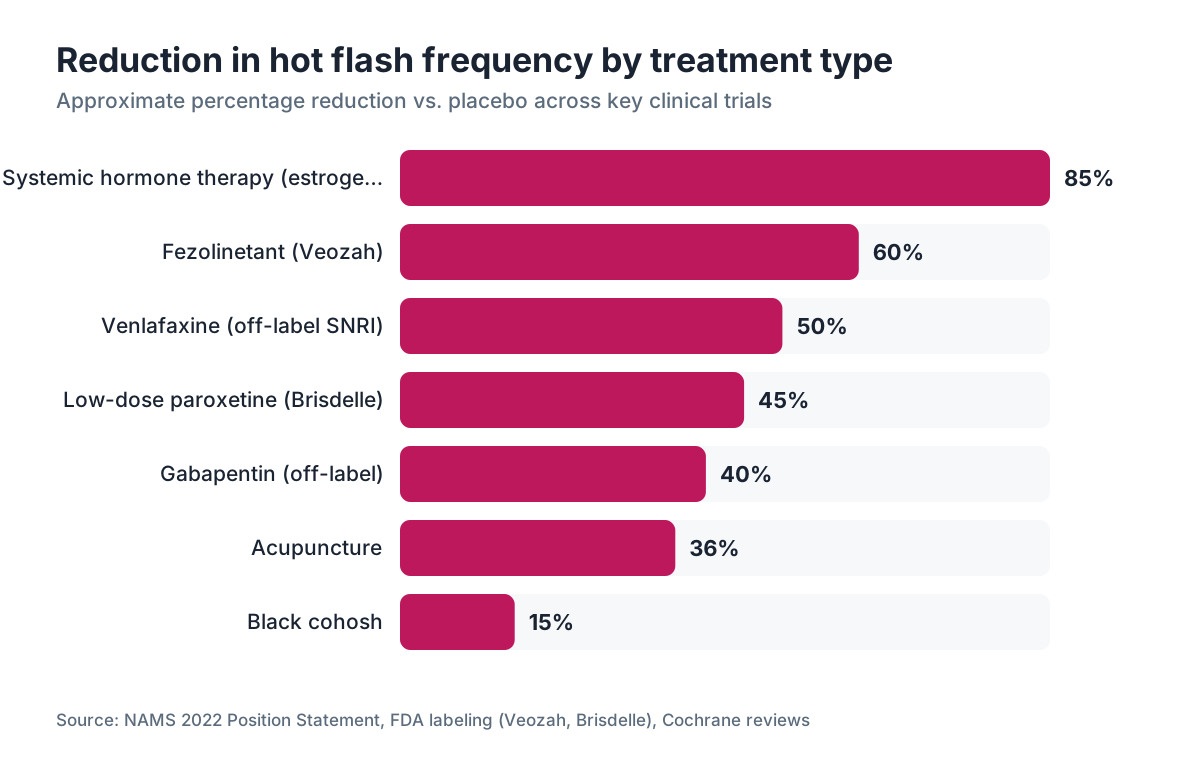
Fezolinetant (Veozah) is an FDA-approved non-hormonal pill made for moderate to severe vasomotor symptoms. It works by blocking neurokinin B (NKB) receptors in the brain's thermoregulation center, which become overactive when estrogen drops. In the registration trials, fezolinetant cut hot flash frequency by about 60% and reduced severity significantly compared to placebo. [5] The FDA approved it in May 2023, and it's the first in a new drug class made for this exact indication. It's an option for women who can't or won't use hormones.
Low-dose paroxetine (Brisdelle, 7.5 mg) is the only SSRI/SNRI with FDA approval specifically for VMS. It reduces hot flash frequency by roughly 33-65% depending on the study. The trade-off: SSRIs can blunt libido, which is already often compromised in perimenopause, so this is a real-world consideration. Other SSRIs and SNRIs like venlafaxine and escitalopram are used off-label for VMS with moderate evidence. [6]
Gabapentin (off-label) has decent evidence for hot flash reduction, particularly night sweats. Doses used in trials have ranged from 300 mg to 2,400 mg daily. Sedation is a common side effect, which some women view as a feature given the sleep disruption that comes with perimenopause.
Clonidine (off-label) has modest evidence for VMS. It's not a first-line choice but sometimes used when others aren't tolerated.
For GSM specifically, local vaginal estrogen (cream, ring, tablet, suppository) delivers estrogen directly to vaginal tissue with minimal systemic absorption. It's effective for dryness, pain with sex, and recurrent UTIs. Ospemifene (Osphena), an oral SERM, and DHEA suppositories (Intrarosa) are non-estrogen alternatives approved for dyspareunia related to GSM.
Do lifestyle changes really help with perimenopause symptoms?
Yes, and not in the vague "eat well and exercise" way that gets dismissed. Specific lifestyle interventions have documented, quantified effects on perimenopausal symptoms.
Exercise: A Cochrane review found that exercise interventions reduced psychological symptoms and improved sleep quality in menopausal women, though the evidence for hot flash reduction directly from exercise was mixed. [7] Resistance training specifically matters for the metabolic shift that happens in perimenopause, when muscle mass tends to drop and fat redistribution accelerates. Aim for at least 2-3 sessions of resistance training weekly.
Sleep hygiene and CBT-I: Cognitive behavioral therapy for insomnia (CBT-I) has strong evidence for perimenopausal sleep disruption, including when that disruption is driven by hot flashes. Randomized trials show CBT-I improves sleep efficiency significantly compared to controls. This is a first-line recommendation before adding sleep medication for most women.
Weight management: Body fat stores estrogen precursors, but excess adipose tissue also increases circulating inflammatory cytokines that worsen hot flashes. Losing even 10 lbs can meaningfully reduce hot flash frequency in women with obesity. [8] The metabolic context of perimenopause is why some women are now exploring GLP-1 medications; read more about semaglutide for weight loss and the comparison between semaglutide vs tirzepatide for that angle.
Dietary changes: A plant-rich diet with reduced alcohol and caffeine (both documented hot flash triggers) has practical support. The data on phytoestrogens (soy isoflavones) is genuinely mixed. Some women get modest relief; most don't see dramatic effects. Nobody has definitive data here, so the honest answer is: soy is safe to try, but don't count on it.
Stress reduction: Chronic stress elevates cortisol, which further disrupts hormonal balance and worsens sleep. Mind-body practices including yoga, mindfulness, and breath work have evidence for symptom reduction in small trials, though the evidence quality is generally low. They're low-risk and worth trying alongside other treatments.
What symptoms does hormone therapy NOT fix, even if it helps others?
This is an honest question that often gets glossed over.
Hormone therapy works very well for hot flashes, night sweats, vaginal dryness, sleep disruption related to VMS, and mood instability linked to hormonal fluctuation. It also helps protect against bone loss (significant, given that the 5-10 years around menopause are the highest-risk period for bone density loss) and may reduce cardiovascular risk if started within 10 years of menopause onset, the so-called "timing hypothesis." [3]
But HT is not a magic reset. Many women find that brain fog, joint pain, and low libido persist even on well-optimized hormone therapy. Low libido in particular often has multiple drivers: hormonal (low estrogen AND low testosterone), relational, psychological, and situational. Testosterone therapy for women (off-label in the US; no FDA-approved female testosterone product currently exists) has real evidence for hypoactive sexual desire disorder, but it's a separate conversation from standard HT.
Weight gain in perimenopause is also not fully reversed by HT. Estrogen helps shift fat distribution away from the visceral pattern, but the metabolic slowdown, reduced insulin sensitivity, and changes in appetite regulation require their own interventions. Platforms like WomenRx combine hormone management with GLP-1 evaluation precisely because these two issues often coexist and neither fully addresses the other.
Joint pain is inconsistently responsive to HT. Some women report substantial improvement; others see none. If joint pain is prominent, an assessment for other causes (thyroid dysfunction, inflammatory arthritis, vitamin D deficiency) is worthwhile independent of perimenopausal treatment.
Are 'natural' or alternative remedies for perimenopause worth trying?
Depends entirely on which remedy and what outcome you're measuring.
Black cohosh: The most studied herbal remedy for VMS. Results are mixed in clinical trials. A Cochrane review concluded the evidence was insufficient to recommend it, though some individual trials show modest benefit for hot flashes. It appears reasonably safe at standard doses for up to 6 months; longer-term safety data is sparse. There are rare reports of liver injury linked to black cohosh products, so women with liver disease should avoid it. [9]
Red clover isoflavones: Slightly better evidence than soy alone for hot flash reduction, with a few randomized controlled trials showing modest effects. Not a substitute for HT in women with significant symptoms.
St. John's Wort: Has some evidence for mood symptoms in perimenopause. Interacts with many medications including birth control pills, antidepressants, and some cardiac drugs. Not a casual recommendation.
Magnesium glycinate: Low-risk, genuinely helpful for sleep and muscle cramps in many women. Inexpensive. This is one I'd actually try without hesitation.
Melatonin: Sleep latency improves in some women; doesn't fix the core nocturnal awakening pattern driven by hot flashes. Still useful as a short-term tool.
Acupuncture: A 2019 BMJ Open trial found acupuncture reduced hot flash frequency by about 36% over 6 weeks. [10] Not dramatic, but real. Low-risk, and some women find the whole-body approach meaningful.
The honest summary: most "natural" remedies offer modest, inconsistent benefits. None come close to the efficacy of hormone therapy for significant symptom burden. They're reasonable adjuncts or starting points for women with mild symptoms or contraindications to medication. They're not replacements for medical care in women who are genuinely suffering.
How does weight gain during perimenopause connect to treatment options?
Perimenopause and weight gain are closely linked, and the mechanism is both hormonal and metabolic. As estrogen drops, fat redistribution shifts from the hips and thighs toward the abdomen (visceral fat). Muscle mass naturally decreases with age, lowering basal metabolic rate. Insulin sensitivity declines. Sleep deprivation, another perimenopause side effect, raises ghrelin (the hunger hormone) and lowers leptin (the satiety signal). These processes are mostly independent of caloric intake, which is why women who haven't changed their diet or exercise find themselves gaining weight anyway.
The average weight gain during the menopausal transition is modest in absolute terms, roughly 2 to 5 lbs across the perimenopause period, but the redistribution of fat toward visceral stores is metabolically significant even without large scale changes on the scale. [1]
HT helps somewhat with fat redistribution. Estrogen replacement attenuates the shift toward visceral fat, which is why women on hormone therapy tend to have a more favorable body composition than untreated women at the same weight.
For women with significant weight gain or metabolic concerns, GLP-1 receptor agonists (semaglutide, tirzepatide) have emerged as a meaningful option. The SURMOUNT-1 trial found tirzepatide produced an average weight loss of 20.9% of body weight in adults with obesity over 72 weeks. [11] These are not perimenopause-specific treatments, but the metabolic overlap is real. If you're exploring this, the semaglutide overview and information on compounded semaglutide are worth reading for context on access and cost. A bone density check via bone density test is also worth scheduling around this time, since weight loss (especially rapid) can accelerate bone loss already triggered by falling estrogen.
How do you know which perimenopause treatments are right for you specifically?
There's no universal protocol, and anyone telling you otherwise is selling something. The right treatment depends on:
-
Which symptoms dominate. Hot flashes and sleep disruption point toward systemic hormone therapy or fezolinetant. GSM alone might mean local vaginal estrogen only. Mood as the primary complaint might start with CBT or an SNRI. Weight as the primary issue might point toward metabolic intervention first.
-
Your health history. Hormone therapy is not appropriate for everyone. A history of DVT, certain clotting disorders, hormone-sensitive cancers, or active liver disease changes the calculus significantly.
-
Your personal risk tolerance. Some women hear "low absolute risk increase" and feel reassured. Others feel that any increased risk is unacceptable. Both positions are rational, and a good provider respects the difference.
-
How symptomatic you are. Mild, occasional hot flashes are a different clinical picture from 15 severe hot flashes a day that disrupt work and relationships. Severity drives urgency of treatment and how aggressive the approach should be.
-
Your current medications. Several common drugs interact with hormone therapy and herbal supplements. SSRIs affect tamoxifen metabolism. St. John's Wort affects half the pharmacopeia. A provider who reviews your full medication list before prescribing is doing their job.
The process is: establish a baseline (symptom diary, FSH/estradiol labs, thyroid function, lipids, blood pressure), discuss options with a provider who knows the current evidence (not one who reflexively dismisses HT based on the 2002 WHI or reflexively prescribes it without a history), start at the lowest effective dose, and follow up at 3 months. Platforms like WomenRx are designed for exactly this kind of ongoing, iterative care with providers who specialize in women's hormones.
There is also legitimate value in a continuous conversation, because perimenopause changes over time. What works at 44 may need adjustment at 48. Staying in active communication with a provider rather than getting a one-time prescription and disappearing is how you get the best outcome.
What does the evidence say about preventing long-term health risks from perimenopause?
Perimenopause isn't just about symptoms. The estrogen decline that starts in perimenopause has documented long-term effects on bone density, cardiovascular risk, and possibly cognitive function. Treating symptoms is one goal. Preventing downstream disease is another, and the two goals sometimes call for different decisions.
Bone: Estrogen is essential for bone maintenance. The fastest bone loss in a woman's life occurs in the 1 to 3 years around menopause. [1] Hormone therapy clearly reduces bone loss and fracture risk. It's FDA-approved for this indication. For women who stop HT, bone loss resumes at an accelerated rate. A bone density test (DEXA scan) is recommended at menopause for women with risk factors and universally by age 65. [12]
Cardiovascular: The relationship between estrogen and heart disease is timing-dependent. Women who start HT in their 40s or within 10 years of menopause appear to have reduced cardiovascular risk compared to untreated women. Women who start more than 10 years after menopause may see increased risk. This "timing hypothesis" or "window of opportunity" is well-supported by observational data and is reflected in current NAMS guidance. [3]
Cognitive function: The estrogen-cognition connection is genuinely complicated and the data is not clean. The Cache County study and other observational studies suggested early HT use was associated with lower dementia risk, but randomized trial data (particularly from WHI Memory Study, which again used older women) did not confirm this. The honest answer is: nobody knows for certain, the timing probably matters enormously, and this shouldn't be the primary driver of your HT decision right now.
Mood and mental health: Perimenopause is a documented window of increased vulnerability to depression, even in women with no prior psychiatric history. The hormonal fluctuations of perimenopause appear more destabilizing to mood than the stable low-estrogen state of postmenopause. This is a real clinical finding, not catastrophizing. Treating hormonal instability often resolves mood symptoms; some women also need temporary pharmacologic support.
For a deeper look at the full menopause health picture, the menopause article covers what comes after perimenopause ends.
What should you realistically expect from perimenopause treatment in the first 3 months?
Setting expectations right reduces both premature treatment abandonment and unrealistic hope.
Hormone therapy typically takes 4 to 12 weeks to show meaningful symptom relief. Hot flash frequency usually starts dropping within a few weeks at the right dose. Vaginal symptoms improve over 6 to 12 weeks. Mood and sleep often improve early but may fluctuate as the body adjusts. Many women feel worse in the first 2 to 4 weeks on HT before they feel better, particularly if estrogen levels are fluctuating before stabilizing on the new regimen.
Fezolinetant (Veozah) in clinical trials showed significant hot flash reduction at 4 weeks, with continued improvement through 12 weeks. [5]
Non-hormonal SSRIs/SNRIs typically show VMS effect within 1 to 4 weeks, similar to their antidepressant timeline.
Lifestyle changes take longer. Resistance training effects on body composition typically take 8 to 12 weeks to become noticeable. Dietary changes stabilize over months, not weeks. Sleep hygiene improvements via CBT-I show meaningful gains at 4 to 8 weeks.
What this means practically: give any treatment at least 8 to 12 weeks before deciding it's not working. But don't wait 8 to 12 weeks if you're having serious side effects or feel significantly worse. The first follow-up visit should be at 6 to 12 weeks to assess response, adjust dosing, and screen for side effects. This is not a set-and-forget prescription.
Dose adjustments are normal, not failures. Many women try two or three formulations or delivery methods (patch vs. gel vs. spray for estrogen, for example) before landing on what works best for their body and lifestyle.
Comparison of perimenopause treatment options: efficacy, safety, and best-fit profiles
The table below summarizes the main treatment categories, drawing on evidence from NAMS, published trials, and FDA labeling.
| Treatment | VMS Efficacy | Evidence Level | Hormonal | Best-Fit Profile | |---|---|---|---|---| | Systemic estrogen + progesterone (HT) | 80-90% reduction | Highest (RCTs, meta-analyses) | Yes | Healthy women under 60, within 10 yrs of menopause | | Fezolinetant (Veozah) | ~60% reduction | High (FDA approval, Phase 3 trials) | No | Women who can't or won't use HT | | Low-dose paroxetine (Brisdelle) | 33-65% reduction | Moderate (FDA-approved VMS) | No | Women with mood co-morbidity, can't use estrogen | | Venlafaxine (off-label) | 40-60% reduction | Moderate (multiple RCTs) | No | Breast cancer survivors, women on tamoxifen (check for interaction) | | Gabapentin (off-label) | 30-50% reduction | Moderate | No | Women with prominent night sweats, sleep disruption | | Local vaginal estrogen | High for GSM | High | Minimal systemic | GSM only; generally considered safe even in BC survivors | | CBT-I | Meaningful for sleep | High | No | All women with sleep disruption as primary complaint | | Black cohosh | Modest, inconsistent | Low | No | Mild symptoms, preference for herbal approach | | Acupuncture | ~36% reduction (1 trial) | Low-moderate | No | Women wanting non-pharmacologic adjunct | | Resistance exercise | Modest for VMS, strong for body composition | Moderate | No | All women; no downside |
Sources: NAMS 2022 Position Statement [3], FDA drug labels [5][6], Cochrane reviews [7][9], BMJ Open 2019 [10].
Frequently asked questions
Is there a pill that cures perimenopause completely?
No pill cures perimenopause because it's a biological transition, not a disease. But several medications, including hormone therapy, fezolinetant (Veozah), and certain antidepressants, significantly reduce the most disruptive symptoms. Hormone therapy is the most effective option for most healthy women, reducing hot flash frequency by 80-90% in clinical trials. The goal is symptom control, not elimination of the transition itself.
How long does perimenopause last, and does treatment shorten it?
Perimenopause typically lasts 4 to 8 years, though it can range from 1 to 10 years. Treatment does not shorten the transition or accelerate arrival at menopause. It manages symptoms during the transition. The endpoint, 12 consecutive months without a period, is determined by ovarian biology, not by whether you're on hormone therapy or any other treatment.
Can perimenopause symptoms go away on their own without treatment?
Yes, for many women. Hot flashes and night sweats peak around the time of the final menstrual period and typically decline over the following 2 to 5 years postmenopause. However, roughly 15-20% of women continue experiencing vasomotor symptoms for a decade or more. And symptoms like vaginal dryness and genitourinary syndrome of menopause tend to worsen over time without treatment rather than resolving spontaneously.
What is the newest FDA-approved treatment for perimenopause hot flashes?
Fezolinetant (brand name Veozah) received FDA approval in May 2023 for moderate to severe vasomotor symptoms in menopause and perimenopause. It's the first non-hormonal neurokinin B receptor blocker specifically approved for this indication. In Phase 3 trials it reduced hot flash frequency by approximately 60% compared to placebo. It's taken as a once-daily oral tablet.
Are bioidentical hormones safer than conventional hormone therapy?
The term 'bioidentical' describes hormones with an identical molecular structure to those the body makes. FDA-approved bioidentical options, like estradiol patches, gels, and micronized progesterone (Prometrium), have good safety data and are recommended by NAMS. Custom-compounded bioidentical hormones from compounding pharmacies are not FDA-approved, lack standardized dosing, and have no proven safety advantage. They're not the same thing, and the distinction matters.
Does perimenopause cause weight gain, and can it be reversed?
Perimenopause is associated with fat redistribution toward the abdomen and modest weight gain, driven by declining estrogen, muscle loss, and reduced insulin sensitivity. Hormone therapy attenuates visceral fat accumulation. Resistance training and dietary changes are the most evidence-backed approaches for the metabolic component. GLP-1 medications offer a newer option for women with significant metabolic concerns; the SURMOUNT-1 trial showed nearly 21% average weight loss with tirzepatide over 72 weeks.
Can I still get pregnant during perimenopause?
Yes. Perimenopause means irregular ovulation, not absent ovulation. Pregnancy is possible until you've confirmed 12 consecutive months without a period (the definition of menopause). Contraception is still necessary if pregnancy is undesired. FSH levels alone are not a reliable contraception guide. Hormonal contraception like low-dose pills or a hormonal IUD can also serve double duty by managing perimenopausal symptoms.
Do doctors test for perimenopause, and what labs should you get?
Perimenopause is primarily a clinical diagnosis based on symptoms and menstrual pattern changes in a woman typically 40 to 55. Labs can support the picture but aren't definitive on their own, since hormone levels fluctuate dramatically cycle to cycle. Useful tests include FSH, estradiol, thyroid function (TSH), complete metabolic panel, and a lipid panel. For women under 45 with symptoms, labs are more important to rule out other causes or confirm premature ovarian insufficiency.
How does perimenopause affect mental health?
Perimenopause is a documented period of increased vulnerability to depression, anxiety, and irritability, even in women with no prior mental health history. The hormonal volatility of perimenopause, specifically the fluctuating estrogen rather than just the low estrogen of postmenopause, appears to be the trigger. Hormone therapy often substantially improves mood. For women where mood symptoms persist or are severe, short-term antidepressant or anti-anxiety support is clinically appropriate and doesn't mean you'll need it forever.
Is it safe to use hormone therapy during perimenopause, more than after menopause?
Yes, with appropriate formulation. During perimenopause, if you still have a uterus, any estrogen must be paired with progesterone to protect the uterine lining. Low-dose oral contraceptives are often used in early perimenopause because they manage symptoms AND provide contraception. As the transition progresses, traditional HT doses are appropriate. The key is adjusting to where you are in the transition, which requires working with a provider rather than self-prescribing.
What supplements actually help perimenopause, if any?
Magnesium glycinate has decent evidence for sleep and muscle cramps and is low-risk. Vitamin D3 with K2 supports bone health and is often deficient in perimenopause. Omega-3 fatty acids have some evidence for mood and cardiovascular markers. Black cohosh shows modest, inconsistent effects on hot flashes in clinical trials. Soy isoflavones are safe to try for mild symptoms but effects are inconsistent. None of these replace medical treatment for moderate to severe symptoms.
How is perimenopause different from menopause?
Perimenopause is the transitional phase when hormone levels fluctuate and decline; menopause is the specific point in time after 12 consecutive months without a period. Perimenopause can last 4 to 8 years. After that endpoint, you're in postmenopause for the rest of your life. Symptoms are often most intense during perimenopause when hormones are volatile, not after they've stabilized at a new lower baseline. For more on the full timeline, read our articles on menopause age and when does menopause start.
What's the difference between perimenopause and premenstrual dysphoric disorder (PMDD)?
PMDD is a severe premenstrual condition tied to the luteal phase of a cycle that's still occurring. Perimenopause involves irregular cycles and declining estrogen across months to years. They can coexist and both involve hormonal sensitivity. PMDD typically has cyclical mood symptoms tied to the second half of each cycle. Perimenopausal mood changes are less predictably cyclical. Some women with a history of PMDD find perimenopausal mood symptoms particularly severe, possibly due to shared hormonal sensitivity.
Can a hysterectomy trigger or change perimenopause?
A hysterectomy (uterus removal) stops periods but doesn't cause menopause if the ovaries are kept. You'll have no cycles but your ovaries continue producing estrogen until natural menopause. If the ovaries are removed at the same time (bilateral oophorectomy), surgical menopause begins immediately, regardless of age, and it's typically more abrupt and severe than natural perimenopause. Women who undergo surgical menopause are generally advised to start HT promptly unless there's a specific contraindication.
Sources
- NIH National Institute on Aging, Menopause overview
- Office on Women's Health, U.S. Department of Health and Human Services, Menopause
- NIH National Heart, Lung, and Blood Institute, Women's Health Initiative study results
- FDA Drug Approval, Veozah (fezolinetant) Prescribing Information, May 2023
- FDA Drug Label, Brisdelle (paroxetine mesylate) 7.5 mg
- Cochrane Database of Systematic Reviews, Exercise for vasomotor and other menopausal symptoms, 2014
- Menopause journal, Obesity and hot flashes, published by The Menopause Society
- Cochrane Database of Systematic Reviews, Black cohosh for menopausal symptoms, 2012
- BMJ Open, Acupuncture for menopausal hot flushes randomized trial, 2019
- New England Journal of Medicine, SURMOUNT-1 trial, Jastreboff et al., 2022
- U.S. Preventive Services Task Force, Osteoporosis Screening recommendation, 2018