Perimenopause cramps: why they change and what actually helps
TL;DR: Perimenopause cramps change because fluctuating estrogen and progesterone alter how your uterine lining builds and sheds each month. Some women get worse cramps, some get relief, some get pelvic pain with no period at all. NSAIDs, hormonal therapy, and ruling out fibroids or adenomyosis are the treatments with real evidence behind them.
What is actually happening to your uterus during perimenopause?
Perimenopause is the transition leading up to your last menstrual period, and it usually lasts four to ten years [1]. During that window your ovaries make estrogen and progesterone in erratic amounts instead of the steady monthly rhythm you had in your 30s.
That erratic supply is what messes with your cramps. Uterine contractions are driven mostly by prostaglandins, hormone-like chemicals your lining releases when it sheds. How much prostaglandin gets released depends partly on how thick that lining grew during the cycle. In perimenopause, a stretch of unopposed estrogen (estrogen without enough progesterone to balance it) can build a thicker-than-normal lining. When that lining finally sheds, it sheds more. More tissue, more prostaglandins, more cramping [2].
The opposite happens too. Many perimenopausal cycles are anovulatory, meaning no egg is released and almost no progesterone is made. These cycles can produce light spotting with barely any cramps, or a delayed, heavy bleed after the estrogen-thickened lining eventually outgrows its blood supply.
So here's the honest answer. There is no single perimenopausal cramping pattern. What you feel depends on where you are in the transition, your uterine anatomy, and whether fibroids or adenomyosis are along for the ride.
Why do cramps during perimenopause sometimes get worse than they were at 25?
Because your lining can grow thicker and your pain sensitivity can rise at the same time. The cultural script says periods get easier with age. For some women that's true. Research tells a messier story.
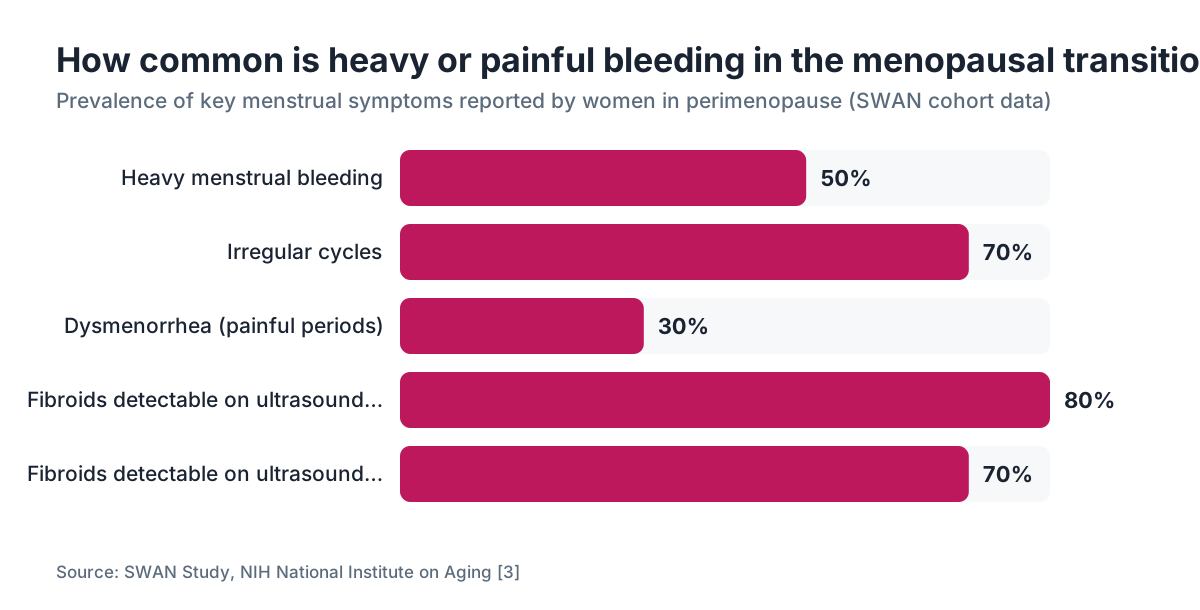
Data from the Study of Women's Health Across the Nation (SWAN), a long-running NIH cohort, shows that painful periods and heavy bleeding are among the most common menstrual complaints during the transition, reported by women well into their late 40s [3]. Heavy bleeding and painful cramping usually travel together, because bleeding volume and prostaglandin load are linked.
A few things drive worse cramps in perimenopause specifically:
Fibroids. Uterine fibroids are estrogen-sensitive benign tumors, most prevalent in the late reproductive years. By their late 40s, up to 70% of white women and more than 80% of Black women have fibroids visible on ultrasound [4]. Submucosal fibroids (the ones that push into the uterine cavity) cause the heaviest bleeding and the worst cramping because they distort how the lining sheds.
Adenomyosis. Here the endometrial glands grow into the muscular wall of the uterus itself. The uterus has to squeeze around that embedded tissue, which produces deep, diffuse, severe cramping. It's frequently missed on the first pass and tends to hit its worst in the 40s and early 50s.
Anovulatory cycles. Cycles without ovulation can stockpile a thick lining that produces a heavier, more painful bleed when it finally goes.
Lower pain tolerance. Estrogen influences pain pathways. When estrogen drops (intermittently in perimenopause, more steadily as you near menopause), some women notice pain feels sharper even when nothing physical has changed [5].
Can you have cramps with no period in perimenopause?
Yes, and this is one of the strangest parts of the transition. Cramping without an obvious bleed happens more often than most women expect.
The simplest explanation first. You can cramp before a very light bleed you barely notice, especially if you're used to heavier periods. The lining sheds, the cramps come, the bleed is just a few spots.
Second, anovulatory cycles can produce cramp-like pelvic discomfort without a full shed. The uterus contracts irregularly in response to swinging hormone levels, and that can feel exactly like menstrual cramps.
Third, and this is where you need a clinician: pelvic pain with no clear period source needs a workup. Causes include ovarian cysts (common in perimenopause, often functional and self-resolving), endometriosis, adenomyosis, fibroids, and less often, gynecologic cancers. The North American Menopause Society (NAMS) advises that any new or significantly changed pelvic pain in the transition be evaluated rather than waved off as a perimenopause symptom [1].
Get checked if your cramps feel different from your usual ones, keep getting worse, show up outside your expected cycle window, or come with bloating, urinary changes, or unexplained weight changes. Those are not classic perimenopause symptoms.
How do you know if cramps are perimenopause or something that needs a diagnosis?
The pattern matters more than the intensity. That's the single most useful thing to know here.
Cramps that track (even loosely) with your cycle, that have been around for years, and that are getting heavier or more frequent but otherwise feel like your normal cramps? That fits perimenopause-driven change, possibly worsened by fibroids or adenomyosis.
Cramps that are new, that don't line up with bleeding, that come with pain during sex, or that send you to the ER? Those need an ultrasound and a gynecologist before you blame perimenopause for anything.
A pelvic ultrasound is the first-line imaging for most causes of abnormal uterine bleeding and pelvic pain. It picks up fibroids, adenomyosis signs (a bulky uterus with uneven texture), ovarian cysts, and polyps. For adenomyosis, MRI gives sharper detail when suspicion is high and the ultrasound is inconclusive.
The American College of Obstetricians and Gynecologists (ACOG) recommends endometrial biopsy for women 45 and older with abnormal uterine bleeding, and for younger women with risk factors like obesity, polycystic ovary syndrome, or a family history of endometrial cancer [6]. It's a quick in-office procedure. Not comfortable, but it's the only way to rule out endometrial hyperplasia or cancer, both of which can show up as irregular, heavy, or painful bleeding in this age group.
The workup for new or worsening cramps is not box-checking. It's how you find out whether you're managing a hormonal transition or a condition that needs treatment of its own.
What actually relieves cramps during perimenopause?
Four approaches, and they stack. The right one depends on what's actually driving your cramps.
NSAIDs (ibuprofen, naproxen). These block prostaglandin synthesis, the direct chemical driver of uterine cramping. For ordinary painful periods, they work well. Timing is the trick: start a day before or at the very first twinge, and take a scheduled dose (not as-needed) through the first 48 hours. Ibuprofen 400 to 600mg every 6 to 8 hours, or naproxen sodium 500mg twice daily, are standard. Wait until you're already in real pain and they work far less [7].
Hormonal options. This is where it gets personal. Combined hormonal contraceptives (pill, patch, ring) suppress ovulation and thin the lining, which usually cuts both bleeding and cramping. Plenty of gynecologists use low-dose contraceptives in perimenopause for cycle control, symptom relief, and contraception (which still matters, because perimenopause is not the same as infertility). The levonorgestrel IUD (Mirena, Liletta) is another strong choice: it thins the lining locally, slashes bleeding and cramping for most users, and keeps systemic hormone exposure low.
Menopausal hormone therapy (MHT/HRT). If you're also fighting hot flashes, broken sleep, and other classic symptoms, systemic hormone therapy handles several problems at once. Cyclic or continuous progesterone (or a progestogen) is part of MHT for anyone with a uterus, and it stabilizes the lining, which usually calms heavy, crampy periods. More on the options is at our hormone replacement therapy and progesterone pages.
Treating the underlying cause. If fibroids or adenomyosis are driving the severity, hormones help but sometimes aren't enough. Options run from GnRH agonists (a temporary medication-induced menopause that shrinks fibroids) to uterine fibroid embolization, endometrial ablation, or hysterectomy, depending on severity, whether you still want children, and how close you are to natural menopause.
Heat (a pad on the low abdomen), magnesium, and omega-3 fatty acids have some support for period pain, though the trials are mostly in younger women and the effects are modest [8]. Worth trying. Not a replacement for a workup if your symptoms are severe.
Does hormone therapy actually help with perimenopause cramps?
For many women, yes. The mechanism depends on which hormone and how it's delivered.
Progesterone is the most directly relevant hormone for cramping, because it opposes estrogen's growth effect on the lining. When your own progesterone drops or turns erratic in perimenopause, adding it back (as oral micronized progesterone, a progestin like norethindrone, or the levonorgestrel IUD) can rein in lining thickness and reduce the heavy, crampy bleeds that come from too much buildup [2].
Estrogen on its own, without progesterone, would make cramping worse for most perimenopausal women who still have a uterus, because it feeds lining growth. That's exactly why combination therapy (estrogen plus progesterone) is standard for women with an intact uterus.
NAMS guidance on abnormal uterine bleeding in perimenopause lists progesterone-based options among the primary therapeutic strategies [1]. Oral micronized progesterone (brand name Prometrium) is the bioidentical form many clinicians and patients prefer, because it's chemically identical to the progesterone your body makes.
Telehealth platforms like WomenRx can prescribe and manage hormonal therapy for perimenopause, progesterone included, for women who don't want to wait months for an in-person slot. But if your cramps are new, severe, or unexplained, you need a physical exam and imaging first, ideally in person.
The estrogen patch is worth understanding if you're weighing HRT options, especially if you want to skip oral estrogen's effect on liver metabolism.
How does perimenopause cramping differ from endometriosis or fibroids?
The overlap is real and clinically maddening, because these conditions often coexist with perimenopause and with each other. Here's how to tell the patterns apart.
Cramping driven purely by hormonal swings tends to be crampy and cyclic, tied to the cycle (even an irregular one), and paired with heavier or lighter bleeding than your usual. It typically improves for good after menopause, once estrogen and lining cycling stop.
Endometriosis produces pain out of proportion to the visible tissue (tiny implants can hurt a lot), often with deep pain during sex, pain with bowel movements around the period, and sometimes chronic pelvic pain outside the period entirely. It doesn't reliably ease in perimenopause. Some women flare, because erratic hormone swings drive implant activity unpredictably.
Fibroid cramping usually comes with heavy bleeding and a feeling of pelvic pressure or fullness, plus a visibly distended lower abdomen if the fibroids are large. Fibroids typically shrink after menopause when estrogen drops, so women close to their last period are sometimes offered watchful waiting when symptoms are manageable.
Adenomyosis produces deep, achy, diffuse cramping that often feels worse than the bleeding volume would explain. The uterus is frequently enlarged and tender on exam. Unlike fibroids, adenomyosis can't be cut out without removing the whole uterus. Hysterectomy cures it; hormones manage it in the meantime.
The practical takeaway: don't let "it's probably perimenopause" stop you from getting imaging when your cramps are severe, newly different, or wrecking your life. These conditions are diagnosable, and knowing what you're treating changes the plan a lot.
What does a typical perimenopause cramp timeline look like?
Cycle changes and other perimenopause symptoms usually start in the mid-to-late 40s, though some women begin in their early 40s or even late 30s [9]. The average age of natural menopause in the United States is 51.4 years, according to NAMS [10].
In early perimenopause, cycles may still run fairly regular but a little longer or shorter than before, and cramps can start ramping up thanks to the hormonal shifts above. This phase often lasts two to five years.
In late perimenopause (within one to two years of your final period), cycles stretch further apart and turn more irregular. Some women find cramping eases here, because anovulatory cycles leave less lining to shed. Others find it gets worse, with very delayed, heavy bleeds.
After menopause (defined as 12 straight months without a period), cramping from hormonal cycling stops. If you're postmenopausal and having cramps or any bleeding, that's abnormal and needs evaluation, full stop.
The fuller picture of when perimenopause starts and how it moves is at the perimenopause age and when does menopause start pages if you want to map your own experience against the usual arc.
Are there lifestyle changes that genuinely reduce perimenopause cramps?
Some, yes. The evidence isn't as strong as it is for NSAIDs or hormonal management, but these have a good enough track record to run alongside medical treatment.
Regular aerobic exercise keeps showing up as helpful for period pain in meta-analyses. A 2018 systematic review in the Journal of Alternative and Complementary Medicine found exercise reduced menstrual pain intensity, though most trials were in younger women with primary dysmenorrhea [8]. The likely mechanisms are better pelvic blood flow, lower prostaglandin levels, and endorphin release. Thirty minutes of moderate activity most days of the week is a sensible target.
Magnesium has some evidence for easing cramps, probably by relaxing uterine smooth muscle. Studies have used 250 to 500mg of magnesium glycinate or oxide daily. The data isn't definitive, but magnesium is cheap, well tolerated, and useful for other perimenopause complaints too (sleep, mood, bone health).
Diet: cutting highly processed foods and dietary arachidonic acid (found in red meat and some animal fats) should, in theory, lower prostaglandin production, since arachidonic acid is a prostaglandin precursor. The trial evidence is thin, but an anti-inflammatory eating pattern is a reasonable call regardless.
Smoking and alcohol matter. Smoking is tied to worse period pain and speeds ovarian aging, nudging you toward menopause sooner. Alcohol disrupts hormone metabolism and can worsen estrogen dominance.
Stress management: cortisol competes with progesterone at shared receptor sites, so chronic stress can effectively blunt progesterone's activity even when blood levels look fine. Real stress reduction means actual hours of parasympathetic downtime, not good intentions.
Weight: excess fat tissue is metabolically active and makes estrogen, which in perimenopause can worsen estrogen dominance and thicken the lining. Women carrying significant excess weight often see menstrual symptoms improve with weight loss. If weight is also on your radar, GLP-1 medications like semaglutide have become a real option for perimenopausal and menopausal women, given how weight gain and hormonal change feed each other in this decade.
When should you see a doctor about cramps during perimenopause?
Most women can reasonably manage mild to moderate perimenopause cramps with NSAIDs and lifestyle changes while watching for shifts in the pattern. But some signals mean you book a visit sooner rather than later.
See a clinician if your cramps are suddenly worse than they've ever been, if you're soaking through more than one pad or tampon an hour for two or more hours in a row, if you're passing clots bigger than a quarter, if you have pelvic pain outside your expected cycle window, if pain during sex has become a regular thing, or if you're 45 or older with irregular or heavy bleeding and haven't had an endometrial biopsy [6].
Also go if your quality of life is genuinely hit. Missing work, skipping plans, or dreading your cycle every month is not something you have to grit your teeth through. There are good treatments and no reason to white-knuckle it.
A gynecologist or a menopause-focused clinician (often a NAMS Certified Menopause Practitioner) is the right provider. Your primary care doctor can run the initial workup and refer you on.
If bone health is on your mind alongside the hormonal changes, a bone density test is worth raising at this visit too, since the estrogen decline of perimenopause speeds up bone loss.
And if you've already been told "it's just perimenopause, wait it out" while your symptoms stay severe, get a second opinion. You deserve an actual diagnostic workup, not a brush-off.
What treatment options does a gynecologist typically offer for severe perimenopausal cramps?
If your cramps are bad enough to seek help, here's a realistic menu, roughly from least to most invasive.
First-line medical management usually means NSAIDs, combined hormonal contraceptives (pill, patch, ring), or the levonorgestrel IUD. The LNG-IUD deserves serious thought if you have a uterus: it cuts menstrual blood loss by 70 to 90% in most users, drops cramping sharply, keeps systemic hormone exposure very low, and doubles as contraception [11].
If there's a structural cause like fibroids or polyps, hysteroscopic removal (polypectomy or myomectomy) is an outpatient procedure under sedation that can turn symptoms around fast. For larger fibroids, options include uterine fibroid embolization (blocking the blood supply via interventional radiology, keeping the uterus) or laparoscopic myomectomy.
Endometrial ablation destroys the lining and dramatically reduces or ends periods. It's a good fit if you're done having children, don't want or can't tolerate hormonal therapy, and have no other uterine pathology. It isn't reversible, and it's off the table if there's any suspicion of endometrial disease.
GnRH agonists (like leuprolide) or the newer GnRH antagonists (like elagolix, FDA-approved for endometriosis and uterine fibroids) create a medically induced low-estrogen state that shrinks fibroids and quiets the endometrium. They're used short-term or with add-back hormone therapy because of their effect on bone density [12].
Hysterectomy is definitive for fibroids, adenomyosis, and stubborn abnormal bleeding. Plenty of women in their late 40s who are near natural menopause reasonably choose to manage symptoms medically until estrogen-driven conditions resolve on their own. Others choose surgery because waiting costs too much quality of life. Both are valid.
If you want the full hormonal picture and your menopause timeline before deciding, a hormone panel and a real conversation with a clinician is the right place to start.
Frequently asked questions
Is it normal to have worse cramps in perimenopause than you did in your 20s?
Yes, and it's more common than most women expect. Fluctuating hormones can build the uterine lining thicker than usual, which means more prostaglandins released during shedding and stronger contractions. Add fibroids or adenomyosis, both of which peak in symptom severity in the 40s, and cramps can be significantly worse than at any earlier point in your reproductive life.
Can perimenopause cause cramps with no bleeding?
Yes. Pelvic cramping without visible bleeding can happen when a bleed is very light and missed, when anovulatory cycles trigger uterine contractions without a full shed, or when an ovarian cyst forms or ruptures. Cramps with no period that are new, severe, or paired with other symptoms (bloating, pain with sex, urinary changes) warrant a clinical evaluation to rule out other causes.
How long do perimenopausal cramps last each month?
There's no single answer. Standard menstrual cramping usually peaks in the first 24 to 48 hours of bleeding and settles within 72 hours. In perimenopause, where cycles and bleeding turn irregular, cramping can run shorter or longer than your old norm. Cramps lasting more than five days, or ones that drag into the week after bleeding stops, are worth raising with a clinician.
What's the difference between perimenopause cramps and ovarian cyst pain?
Ovarian cysts cause a different kind of pain, usually on one side of the lower abdomen or pelvis, sometimes sharp or stabbing, and not necessarily tied to a menstrual bleed. Functional cysts are common in perimenopause and usually resolve on their own. A sudden sharp pain on one side with nausea or dizziness can signal a cyst rupture and needs prompt evaluation.
Does progesterone help with perimenopause cramps?
Often, yes. Progesterone opposes estrogen's effect on the uterine lining, preventing the excess buildup that leads to heavier, crampier periods. Oral micronized progesterone (Prometrium) or a progestin-releasing IUD can meaningfully thin the lining and improve cramping. The levonorgestrel IUD reduces menstrual blood loss by 70 to 90% in most users, which usually cuts cramping alongside it.
Should I get an endometrial biopsy if I have heavy, painful periods in perimenopause?
ACOG recommends endometrial biopsy for women 45 and older with abnormal uterine bleeding, and for younger women with risk factors like obesity or PCOS. It's a quick in-office procedure that rules out endometrial hyperplasia and cancer, both of which can present as irregular, heavy, or painful bleeding. If your clinician hasn't raised it and you're in this group with significant symptoms, ask directly.
Can fibroids cause worse cramps in perimenopause?
Yes. Fibroids are estrogen-sensitive, and the erratic estrogen surges of perimenopause can push them to grow or turn more symptomatic. Submucosal fibroids (inside the uterine cavity) cause the worst bleeding and cramping. Pelvic ultrasound detects fibroids; treatment ranges from hormonal management to the levonorgestrel IUD, uterine fibroid embolization, or myomectomy depending on size, location, and how far you are from natural menopause.
Does losing weight help with perimenopause cramps?
It can, especially if the cramps are driven by estrogen dominance. Fat tissue produces estrogen, and excess body fat in perimenopause can worsen the estrogen-progesterone imbalance that thickens the lining. Weight loss through caloric reduction, exercise, or GLP-1 medications can improve that hormonal picture. The effect varies a lot; weight loss is one tool, not a standalone cure for severe cramping.
What is the fastest way to get relief from perimenopause cramps at home?
A heating pad on the lower abdomen (heat improves blood flow and relaxes uterine muscle) plus a scheduled NSAID dose (ibuprofen 400 to 600mg every 6 to 8 hours, or naproxen 500mg twice daily) started at the first sign of cramping gives the fastest relief. Don't wait until the pain is severe to start NSAIDs; they work better taken early and regularly through the first 48 hours.
Will cramps stop when I reach menopause?
For most women, yes. Cramping driven by the hormonal cycle ends when the cycle ends. If you have fibroids, they usually shrink after menopause as estrogen falls. Adenomyosis symptoms also tend to resolve postmenopausally. Endometriosis can occasionally flare after menopause if you're on estrogen therapy, but most women with endo see significant pain reduction after their final period.
Is ibuprofen or naproxen better for perimenopausal cramps?
Both are effective COX inhibitors that cut prostaglandin synthesis, the chemical driver of uterine cramping. Naproxen (500mg twice daily) has a longer half-life and needs fewer doses a day, which some women find easier. Ibuprofen (400 to 600mg every 6 to 8 hours) acts slightly faster. Either works well taken early. Choose based on stomach tolerance, kidney function, and whether twice-daily dosing fits your schedule.
Can the levonorgestrel IUD help with perimenopause cramps?
Yes, and it's one of the most effective options available. The levonorgestrel IUD (Mirena, Liletta) releases a small amount of progestin locally, thinning the uterine lining without much systemic hormone exposure. Most users see a 70 to 90% drop in menstrual blood loss, and cramping usually eases with it. It also provides contraception, which matters because perimenopausal women can still get pregnant until 12 straight period-free months confirm menopause.
How do I know if my perimenopausal cramps are actually adenomyosis?
Adenomyosis produces deep, achy, diffuse cramping that often feels worse than your bleeding volume would suggest, sometimes with a heavy, draggy pelvic sensation. The uterus may feel enlarged and tender on exam. Pelvic ultrasound can show a bulky, uneven uterus; MRI gives more detail when suspicion is high. It's definitively diagnosed on pathology after hysterectomy, but increasingly recognized on imaging in clinical practice.
At what age do perimenopause cramps typically start getting better?
Most women reach menopause between 45 and 55, with the US average at 51.4 years. Once you've gone 12 straight months without a period, the hormonal cycling that drives cramping stops. So symptom improvement usually tracks with your final period, which you can only identify in hindsight. Women in their early 50s skipping cycles for months at a time are often close to that transition.
Sources
- North American Menopause Society (NAMS), Menopause Practice: A Clinician's Guide
- Endocrine Society, Clinical Practice Guideline: Treatment of Symptoms of the Menopause
- Study of Women's Health Across the Nation (SWAN), NIH National Institute on Aging
- Uterine Fibroids, NIH Office of Research on Women's Health
- Estrogen and Pain Modulation, Journal of Pain Research, NCBI PMC
- ACOG Practice Bulletin No. 128: Diagnosis of Abnormal Uterine Bleeding in Reproductive-Aged Women
- Primary Dysmenorrhea Consensus Guideline, Journal of Obstetrics and Gynaecology Canada
- Exercise and Dysmenorrhea, Journal of Alternative and Complementary Medicine (2018 systematic review)
- Menopause: Overview, Office on Women's Health, U.S. Department of Health and Human Services
- Average Age of Menopause in the United States, NAMS / cited in multiple SWAN publications
- Levonorgestrel IUD for Heavy Menstrual Bleeding, Cochrane Database of Systematic Reviews
- FDA Drug Approval: Elagolix (Orilissa) for Endometriosis and Uterine Fibroids