Perimenopause breast pain: why it happens and what actually helps
TL;DR: Breast pain is one of the most common perimenopause symptoms almost nobody warns you about. Swinging estrogen and progesterone make breast tissue swell, ache, and feel lumpy, first in a cycle-linked pattern, then more randomly as periods turn irregular. Most of it is benign. But new, one-sided, or changing breast pain always earns a clinical exam to rule out other causes.
How common is breast pain during perimenopause?
Very common. Studies put the figure somewhere between 50% and 70% of women who have breast pain (the medical term is mastalgia) at some point during the perimenopausal transition. [1] For a lot of women it's the symptom that blindsides them, because they braced for hot flashes and bad sleep and nobody mentioned their breasts would feel bruised and lumpy for two weeks out of every month.
Mastalgia shows up in two clinical forms. Cyclic mastalgia tracks the menstrual cycle and usually peaks in the week or two before a period. Non-cyclic mastalgia has no predictable pattern and tends to sit in one spot rather than fill the whole breast. Perimenopause usually opens with cyclic pain and slowly drifts toward non-cyclic as cycles turn erratic. [2]
The pain ranges from dull heaviness to sharp, burning, or stabbing. Some women describe a filled-up feeling, as if the breasts are swollen from the inside. Others get nipple tenderness bad enough that a bra becomes unbearable. Severity swings wildly, and the same woman can have mild discomfort one cycle and real pain the next. That inconsistency is itself a signature of perimenopause.
Why does perimenopause cause breast pain?
The short answer: fluctuating ovarian hormones, estrogen and progesterone specifically, acting on breast tissue that responds to both.
During a normal reproductive-age cycle, estrogen rises in the first half and progesterone rises after ovulation, then both fall before the period. Breast ducts and lobules answer those signals, swelling a little in the luteal phase and then settling back. Uncomfortable, but predictable.
In perimenopause, the ovaries start making estrogen erratically. A follicle pumps out a surge, then stalls. Progesterone depends on ovulation, which turns inconsistent. So breast tissue gets hit with unpredictable estrogen spikes without the usual progesterone counterweight, producing repeated rounds of stimulation and partial withdrawal. That drives swelling, fluid retention in the tissue, and pain. [1]
Progesterone tends to oppose some of estrogen's proliferative effects on breast tissue. When progesterone output drops while estrogen keeps swinging high, that imbalance can get loud. It's one reason some clinicians consider low-dose progesterone for perimenopausal breast pain. [3]
Fibrocystic changes matter here too. Estrogen stimulation can make benign cysts form or grow, and those cysts hurt. Fibrocystic breast tissue is present in roughly half of women of reproductive age and gets more symptomatic during hormonal flux. [9] The cysts are benign. They still amplify the pain.
What does perimenopause breast pain actually feel like?
It varies more than most descriptions admit. The textbook version is bilateral (both breasts), diffuse heaviness or aching that worsens in the two weeks before a period and eases once bleeding starts. The outer quadrants and the axillary tail (breast tissue that runs toward the armpit) are often the tenderest spots.
But perimenopause isn't textbook. Cycles go irregular, so the timing of pain stops being predictable. You might hurt for three weeks straight, get nothing for six, then have severe pain during an anovulatory cycle that never produces a period at all. That unpredictability is what rattles women most and what sends them looking for something serious.
Other sensations women report:
- Burning or stabbing pain localized to one spot (more often non-cyclic, and worth an exam)
- Nipple sensitivity bad enough that fabric contact hurts
- Fullness or engorgement, like early pregnancy
- Pain that radiates into the armpit or upper arm
- Lumpy texture that comes and goes with the cycle
Pain that stays constant, sits in one area, ignores your cycle, or comes with a palpable lump, skin changes, nipple discharge, or redness needs prompt evaluation. Those features don't automatically mean cancer. They separate breast pain that needs a workup from the diffuse cyclic ache typical of hormonal swings. [4]
When should you see a doctor about breast pain in perimenopause?
Most cyclic, bilateral breast pain in a perimenopausal woman with a recent normal mammogram and no palpable lump is benign. Still, some features earn a same-week appointment instead of watchful waiting.
See your provider promptly if:
- You feel a new lump, thickening, or asymmetry that lasts through a full cycle
- The skin over the breast dimples, looks like orange peel, or stays red
- You notice new nipple inversion, or any nipple discharge that is spontaneous (not squeezed out), bloody, or clear
- Pain sits in one spot and stays there no matter where you are in your cycle
- Pain is bad enough to wreck your daily life or sleep
- You've missed the screening mammogram interval recommended for your age
The American College of Radiology and the American Cancer Society both recommend annual mammograms starting at age 40 for average-risk women, though the major groups differ a little on age and interval. [4] If your last mammogram was more than a year ago and your symptoms are changing, booking that imaging is the single most useful first step.
Here's the reassuring part, stated plainly: breast cancer rarely shows up as pain alone. A retrospective review published in Archives of Surgery found breast pain as the only presenting complaint linked to malignancy in fewer than 3% of cases. [5] Reassuring, yes. Not a reason to skip an exam when other warning features are present.
Does hormone therapy make breast pain better or worse?
Both, depending on the type, the dose, and the woman.
Estrogen-only therapy, used in women without a uterus, can worsen breast tenderness, especially in the first three to six months. The body moves from an estrogen-fluctuating state to a steadier one, and during the adjustment some women find their breasts get more sensitive before they settle down. [7]
Combined estrogen-progesterone therapy (EPT) is messier. The Women's Health Initiative trial found women on combined conjugated equine estrogen plus medroxyprogesterone acetate (MPA) reported more breast tenderness than women on placebo. [6] The synthetic progestin MPA in particular has been tied to breast cell proliferation in some tissue studies. Micronized progesterone (the bioidentical form) looks like it has a friendlier breast profile in observational data, though the evidence isn't strong enough to promise anything.
Lower estrogen doses generally cause less breast pain than standard doses. Transdermal delivery (patches, gels, sprays) produces lower peak estrogen levels than oral, which may mean less breast stimulation. Many clinicians start perimenopausal women on the lowest effective transdermal dose and titrate from there. [7] Our article on the estrogen patch covers that option in more detail.
If you start hormone replacement therapy and the breast pain becomes intolerable, switching the progestogen, dropping the estrogen dose, or changing delivery route are all reasonable moves to discuss with your prescriber before you quit therapy entirely.
What non-hormonal treatments actually reduce perimenopause breast pain?
Several options have real evidence behind them, from lifestyle changes to drugstore supplements to prescriptions.
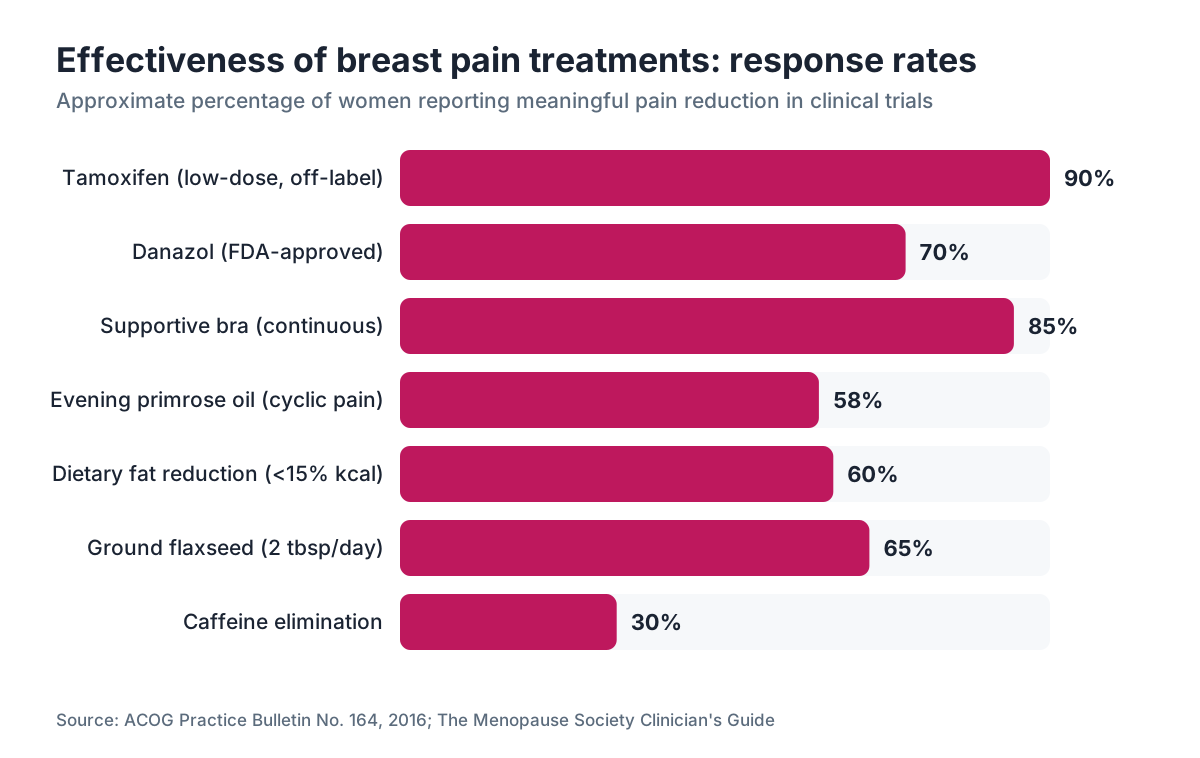
Supportive bras. A well-fitted, supportive bra, worn at night too during symptomatic stretches, shows up as first-line in clinical guidelines. Sounds too simple to work. But breast movement and poor support amplify pain by loading the Cooper's ligaments that suspend the tissue. A Cardiff University trial found wearing a sports bra 24 hours a day for three months reduced breast pain in 85% of participants. [8]
Evening primrose oil. The most-studied supplement for mastalgia. It supplies gamma-linolenic acid (GLA), thought to nudge the prostaglandin pathways involved in breast pain. Results are mixed. Some randomized trials show modest benefit for cyclic mastalgia; the effect for non-cyclic pain is weaker. Studied doses run around 3,000 mg per day, and it takes two to three months to show any effect if it's going to. [2] It's cheap and safe, so a trial makes sense before prescriptions.
NSAIDs. Topical diclofenac (a prescription NSAID gel in the US) rubbed on the breast helped in small trials with fewer systemic side effects than pills. Oral ibuprofen or naproxen helps acute flares but isn't a good daily long-term plan.
Caffeine reduction. Weaker evidence than the popular advice suggests. Two controlled trials found no significant benefit from cutting caffeine, though some women swear it helps. Cutting caffeine costs you nothing, so a two-month trial is fair if you drink a lot.
Dietary fat reduction. A very low-fat diet (under 15% of calories from fat) cut breast pain in one randomized trial in the 1990s, probably by lowering circulating estrogen. It's a big change to make for this reason alone. If you're heading lower-fat anyway, treat the relief as a bonus. [2]
Vitamin E. Some small studies hint 400-600 IU daily helps. The evidence is thin. Unlikely to hurt at those doses.
Flaxseed. Lignans in ground flaxseed have weak estrogenic and anti-estrogenic effects depending on the tissue. One Canadian trial found ground flaxseed cut cyclic mastalgia scores over three months. [11] Two tablespoons of ground flaxseed a day mixed into food is a cheap, low-risk trial.
Are there prescription medications for severe breast pain?
Yes, but most are held for cases where conservative measures failed and pain is genuinely wrecking quality of life, because the side effects are real.
Danazol is the only FDA-approved drug for mastalgia in the US. [10] It's a synthetic androgen that suppresses the hypothalamic-pituitary-ovarian axis. It works, cutting pain in roughly 70% of women in trials, but side effects like acne, weight gain, voice changes, and menstrual irregularity confine it to severe, stubborn cases. [2]
Tamoxifen. At low doses (10 mg per day) tamoxifen works well for mastalgia and gets used off-label in several countries. It reduces cyclic breast pain in up to 96% of patients in some trials. Side effects include hot flashes, vaginal dryness, and a small bump in venous thromboembolism risk. It's generally not used in perimenopausal women who aren't otherwise at elevated breast cancer risk, given those tradeoffs.
Bromocriptine. This dopamine agonist lowers prolactin and was once used for mastalgia. It works, but nausea is a prominent problem, and better-tolerated options have mostly replaced it.
For most perimenopausal women, reaching for danazol or tamoxifen is the wrong first move. These are last-resort tools for genuinely disabling pain that nothing else touches. The prescribing call weighs each woman's full hormonal picture, cancer risk, and how bad the symptoms really are.
Does breast pain predict breast cancer risk?
This is one of the most common fears women bring to the exam room, and the answer is mostly reassuring.
Cyclic breast pain, the hormone-linked kind, has not been established as an independent risk factor for breast cancer. The large majority of women with perimenopausal mastalgia will never develop breast cancer related to it. [5]
Non-cyclic pain in one fixed spot is a different conversation. Not because the pain causes cancer, but because it can flag an underlying structural change (a cyst, a fibroadenoma, rarely a malignancy) that needs a look. The pain is a signal to investigate, not a cause.
Fibrocystic breast changes, very common in perimenopausal women and a major driver of pain, raise breast cancer risk only slightly and only when a biopsy shows certain atypical features. Simple fibrocystic change without atypia doesn't meaningfully raise risk. [9]
So the practical takeaway: if you have cyclic breast pain during perimenopause and your mammogram and clinical exam are normal, the pain itself isn't raising your cancer risk. Stay current on screening, watch for new or changing symptoms, and don't let cancer fear stop you from treating pain that's degrading your quality of life.
How does breast pain change as you approach menopause?
For most women, breast pain improves after the final period and the crossing into menopause. Once ovarian estrogen drops to its postmenopausal baseline and cycles stop, the fluctuation driving breast stimulation goes quiet. The tissue gradually involutes (glandular tissue gives way to fat), which is far less hormonally reactive.
The timeline varies. Some women see relief six to twelve months after their last period. Others find it lingers, especially if they're on hormone therapy or still making meaningful endogenous estrogen (more common in women with higher body fat, because adipose tissue converts androgens to estrogen). [7]
New breast pain that starts after menopause is established, especially in a woman not on hormone therapy, warrants prompt evaluation, because the hormonal explanation is less likely to apply. Musculoskeletal sources get more common (costochondritis mimics breast pain well), along with non-cyclic causes like ductal ectasia.
If you're trying to place yourself in the transition, our articles on when does menopause start and menopause age walk through the timeline.
Can lifestyle changes like weight loss or diet improve perimenopausal breast pain?
Yes, and it's underrated.
Breast tissue is largely estrogen-sensitive, and circulating estrogen in perimenopausal and postmenopausal women depends meaningfully on body weight. Adipose tissue produces estrone by using the aromatase enzyme to convert adrenal androgens. Women with higher body fat can carry substantially higher circulating estrogen than leaner women the same age, even after menopause. [7] More estrogen exposure means more breast stimulation and more room for pain.
That's one way weight loss may cut breast pain. There's a mechanical piece too: bigger breasts hold more tissue under tension, put more strain on the Cooper's ligaments, and give more mass to support. Even modest weight loss (10 to 15 pounds) can shrink breast volume and ease mechanical pain.
A well-fitted bra matters more as size goes up. Getting a proper fitting from a trained fitter is worth doing before you spend a dollar on supplements.
Some women using GLP-1 receptor agonists for weight management during perimenopause report their breast pain easing as they lose weight. It fits the biology above, though no dedicated trials have tested GLP-1s against mastalgia. If weight management is on your radar, WomenRx offers clinician-guided access to these medications for women in this transition.
Regular aerobic exercise may help too, by shifting estrogen metabolism and lowering overall inflammatory tone, though the evidence aimed specifically at mastalgia is limited.
What tracking and self-care strategies help manage breast pain day to day?
Tracking matters more than most women expect, for two reasons: it turns anxiety-producing chaos into an identifiable pattern, and it hands your clinician useful data if you end up needing a prescription.
Keep a simple daily log for two to three months. Record:
- Pain level (1 to 10)
- Location (left, right, both, axilla)
- Cycle day or date of last period, if you're still cycling
- Anything relevant (caffeine, sleep, stress, new medications)
You'll almost certainly find patterns even with irregular cycles. Plenty of women discover their pain peaks around ovulation or two weeks after a period, even when those periods are arriving six to nine weeks apart.
Heat helps acutely. A heating pad or warm compress for 15 to 20 minutes gives most women real temporary relief. Cold compresses work better for some. Try both.
Loose, soft clothing on high-pain days isn't vanity, it's practical pain control. Same goes for sleeping on your back or tucking a pillow under your breasts to cut tissue tension.
Cut salt in the week before your period if you retain fluid noticeably. Breast swelling and pain often worsen when systemic fluid retention runs high, and trimming sodium helps the body clear it faster.
Stress and poor sleep both amplify how you perceive pain. That's not a hint that breast pain is in your head. It's how the central nervous system handles pain signals, and it means the standard sleep and stress advice pays off in a real way for women with significant mastalgia.
How is perimenopause breast pain different from breast pain in your 20s and 30s?
The hormonal mechanism is related, but the lived experience differs in a few ways worth naming.
In younger women, cyclic mastalgia is predictable because cycles are predictable. Pain arrives reliably before each period and clears reliably after. Perimenopause strips out the predictability. Cycles lengthen, shorten, go anovulatory (no egg, no progesterone surge), or vanish for months. Breast pain follows: erratic, sometimes severe, sometimes gone, occasionally persistent.
The character of the pain shifts too. Younger women more often describe heaviness and fullness. Perimenopausal women more often report burning, stinging, or sharp localized pain, partly because fibrocystic changes are more established by this age and cysts can grow big enough to press on one spot.
Breast density changes as well. Dense breast tissue is more glandular and more hormonally reactive. Many premenopausal and perimenopausal women have dense breasts, which correlate with more severe mastalgia. [4] Dense breasts also make mammography less sensitive, which is why some women with dense tissue get offered supplemental ultrasound screening.
Fear changes the experience last. A 28-year-old with breast pain usually assumes hormones. A 47-year-old with the same pain is more likely to fear cancer, and that fear amplifies the distress even when the physiology is nearly identical. It's an understandable fear and worth saying out loud with your provider.
Frequently asked questions
Is breast pain a sign that perimenopause is starting?
It can be. New or worsening breast pain that loses its tidy tie to your cycle is one of the early signs many women notice as perimenopause begins, usually in the mid-to-late 40s but sometimes earlier. Other signs include changes in cycle length, heavier or lighter periods, and occasional hot flashes or disrupted sleep. Breast pain alone isn't diagnostic; it needs the broader clinical picture.
Why does my breast pain feel worse some months and barely there others?
Because your hormone output is irregular. In perimenopause, each cycle differs from the last in how much estrogen your ovaries make and whether you ovulate at all. A high-estrogen, low-progesterone cycle with no ovulation can drive intense breast stimulation and real pain. A cycle where you ovulate and progesterone rises normally can feel nearly pain-free. The chaos is the hormones, not a sign something changed structurally in your breasts.
Can progesterone cream help with breast pain during perimenopause?
Possibly, though the evidence is limited. Over-the-counter progesterone cream holds much lower concentrations than prescription micronized progesterone, and absorption is inconsistent, so serum levels usually don't rise meaningfully. Prescription micronized progesterone has a more plausible mechanism: progesterone opposes some of estrogen's stimulating effects on breast tissue. Some clinicians use it specifically for perimenopausal breast pain. It should be prescribed and monitored by a clinician.
Does breast pain go away on its own after menopause?
For most women, yes. Once the ovaries stop making estrogen cyclically and the final period has passed, the fluctuations driving breast stimulation largely stop. Breast tissue gradually turns less glandular and less reactive. Many women notice improvement within the first year after their last period. Women on hormone therapy may keep some breast tenderness, especially in the first months after starting or adjusting a regimen.
Should I stop hormone therapy if it makes my breast pain worse?
Not necessarily, and not right away. Breast tenderness in the first one to three months of hormone therapy is common and often fades as the body adjusts to steadier hormone levels. If pain persists past three months, talk to your prescriber about dropping the estrogen dose, switching from oral to transdermal delivery, or changing the progestogen, for example from a synthetic progestin to micronized progesterone. Quitting abruptly loses every other benefit without giving adjustments a chance.
What is the fastest way to relieve breast pain during perimenopause?
Acute relief comes from heat or cold applied to the breast, a well-supporting bra worn even at night during flares, and over-the-counter NSAIDs like ibuprofen or naproxen taken as directed. For ongoing control, a properly fitted supportive bra plus cutting caffeine and sodium rank among the most effective low-risk moves. Evening primrose oil takes two to three months to work if it works at all. There's no instant fix, but a combination usually helps.
Can fibrocystic breast changes cause pain in perimenopause?
Yes, and they often do. Fibrocystic change is present in roughly half of women and involves benign cyst formation and fibrous tissue, both of which react to hormonal fluctuations. During perimenopause, when estrogen surges and drops unpredictably, existing cysts can enlarge and new ones form, producing focal tenderness, lumpiness, and diffuse aching. Fibrocystic change without atypical cells on biopsy doesn't meaningfully raise breast cancer risk.
Can weight loss reduce breast pain during perimenopause?
There's a plausible biological reason it can. Adipose tissue produces estrogen through aromatase conversion, so women with higher body fat may have more circulating estrogen stimulating breast tissue. Losing even 10 to 15 pounds can shrink breast volume, ease Cooper's ligament strain, and lower circulating estrogen somewhat. No dedicated trials have tested weight loss against mastalgia specifically, but the hormonal and mechanical mechanisms are well established.
How do I know if my breast pain is hormonal or something else?
Hormonal breast pain is typically bilateral, diffuse, and shifts with your cycle even when cycles are irregular. Something else is more likely when pain sits in one persistent spot, ignores your cycle, comes with a lump, skin changes, or nipple discharge, or is new in a woman who is clearly postmenopausal and off hormone therapy. Any of those features warrants clinical evaluation, including a physical exam and probably imaging.
Is evening primrose oil safe and does it actually work for breast pain?
Evening primrose oil is generally considered safe at typical doses of 3,000 mg per day, with mild gastrointestinal upset the most common complaint. Evidence for cyclic mastalgia is modest but positive in some randomized trials. Non-cyclic mastalgia responds less reliably. It needs two to three months of consistent use before you can judge it. It isn't strong enough for severe pain, but it's a reasonable first supplement to try given the safety profile.
Do mammograms show what is causing breast pain in perimenopause?
Sometimes. Mammography can pick up cysts, fibroadenomas, calcifications, or less often a mass that might be feeding the pain. But cyclic, diffuse hormonal breast pain usually has no specific mammographic finding, because the cause is hormonal stimulation of normal tissue rather than a discrete lesion. Mammography is most useful for ruling out concerning pathology, not for explaining the pain. Ultrasound often gets added to check a specific tender area or a palpable finding.
Can anti-inflammatory supplements like omega-3s help with perimenopausal breast pain?
The evidence is limited but mechanistically plausible. Omega-3 fatty acids reduce prostaglandin-mediated inflammation, one pathway involved in breast pain. Evening primrose oil works through a related mechanism via gamma-linolenic acid. No large randomized trials have tested omega-3s specifically for mastalgia. At standard doses (1,000 to 2,000 mg daily of combined EPA and DHA), omega-3s are safe and carry cardiovascular and other benefits in perimenopausal women, so a trial is reasonable.
What is danazol and is it worth trying for severe breast pain?
Danazol is the only FDA-approved prescription for mastalgia in the US. It's a synthetic androgen that suppresses ovarian hormone output. Studies show it cuts breast pain in about 70% of women. The downside is real: acne, weight gain, fluid retention, irregular periods, and sometimes voice deepening. It fits when pain is severe and hasn't responded to conservative or hormonal treatment, not as a first move. It's used at low doses (100 to 200 mg daily) to hold down side effects.
Sources
- National Library of Medicine, StatPearls: Mastalgia
- ACOG Practice Bulletin No. 164: Diagnosis and Management of Benign Breast Disorders
- Endocrine Society Clinical Practice Guideline: Treatment of Symptoms of the Menopause
- American College of Radiology: ACR Appropriateness Criteria
- Preece PE et al., Archives of Surgery: Mastalgia and Cancer (retrospective review)
- Women's Health Initiative Investigators, JAMA 2002: Risks and Benefits of Estrogen Plus Progestin
- The Menopause Society (NAMS): Menopause Practice, A Clinician's Guide
- NHS: Breast pain (mastalgia)
- National Cancer Institute: Breast Changes and Conditions
- FDA Drug Database (Danazol / Danocrine label)
- Horner NK & Lampe JW, Journal of Nutrition: Potential mechanisms of diet therapy for fibrocystic breast conditions