Perimenopause brain fog: how long does it last?
TL;DR: Perimenopause brain fog (forgetting words, losing your train of thought, feeling mentally slow) usually starts in early perimenopause and peaks during the late transition and the first 1 to 2 years after menopause. Most women see real improvement within 2 to 4 years after menopause as estrogen stabilizes, though full resolution varies. Hormone therapy, sleep, and a few evidence-based habits can shorten the worst of it.
What is perimenopause brain fog, exactly?
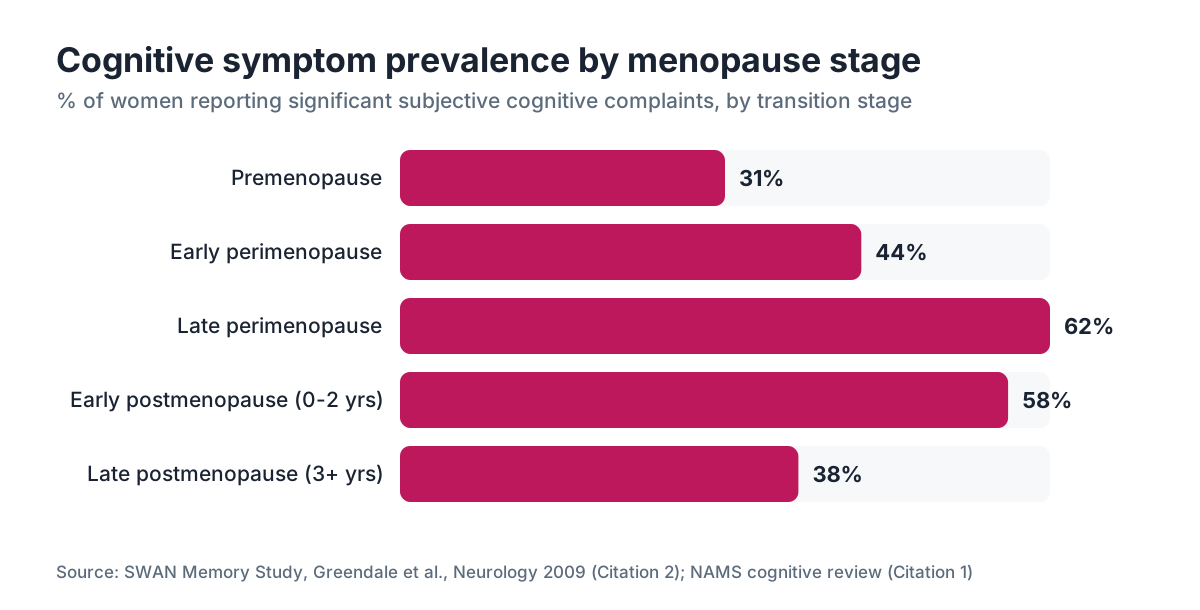
Brain fog is not a medical diagnosis, but the experience is real and well-documented. Women in perimenopause lose words mid-sentence, blank on the names of people they know well, walk into a room and forget why, and feel generally slower or less sharp than they used to. Researchers call this cluster of symptoms "subjective cognitive complaints," and they are among the most commonly reported symptoms of the menopause transition, affecting an estimated 44 to 62% of perimenopausal women [1].
Here is the part that matters most: these symptoms are not dementia. Longitudinal studies have measured objective cognitive performance in midlife women and found the deficits, while real, are modest, mostly verbal, and do not follow the progressive downward path of a neurodegenerative disease [2]. The brain is under hormonal stress. It is not falling apart.
The domains most affected are verbal memory (recalling words and names), working memory (holding information in mind while you use it), and processing speed. Spatial ability and most other skills stay relatively intact through the transition [2].
How long does perimenopause brain fog last?
Everyone wants a clean number, and the honest answer is that it varies but follows a predictable arc. Brain fog starts in early-to-mid perimenopause, peaks in the late transition, and improves for most women within 2 to 4 years after the final menstrual period.
Perimenopause itself lasts anywhere from 4 to 10 years, averaging around 7 [3]. The fog tends to start when estrogen begins its erratic decline, and it peaks in the final 1 to 2 years before your last period and the first couple of years after. The Study of Women's Health Across the Nation (SWAN), the largest longitudinal study of the menopause transition, found that objectively measured cognitive performance was worst in late perimenopause and early postmenopause compared to premenopause, then improved as women moved further into postmenopause [2].
For most women, meaningful improvement arrives within 2 to 4 years after the final menstrual period, as estrogen settles at its new, lower set point. The brain adapts. A subset of women (particularly those with heavy sleep disruption, depression, or surgical menopause) may have a harder or longer course.
Real numbers: the SWAN Memory Study found that women in late perimenopause scored significantly worse on standardized verbal memory and processing speed tests than they did before the transition, and those scores largely recovered in postmenopause [2]. Recovery, not permanence, is the typical pattern.
Why does estrogen loss cause brain fog?
Estrogen does far more than run the reproductive system. Estrogen receptors sit throughout the brain, including in the hippocampus (the region that forms and retrieves memories) and the prefrontal cortex (which runs working memory and executive function) [4].
Estrogen affects thinking through several channels. It drives production and activity of acetylcholine, a neurotransmitter your brain needs to form memories. It supports cerebral blood flow, the literal delivery of glucose and oxygen to brain tissue. It calms inflammation in the central nervous system. And it helps regulate serotonin and dopamine, which shape mood, motivation, and attention.
When estrogen enters its perimenopausal decline, the drop is not smooth. It swings wildly. The brain gets hit with unpredictable hormonal signals, and those fluctuations appear more cognitively disruptive than the eventual stable low-estrogen state of postmenopause. That may be exactly why brain fog often clears after the transition finishes [2].
Sleep is a big mediator. Estrogen loss triggers hot flashes and night sweats, which fragment sleep, and sleep loss alone causes measurable cognitive impairment. Separating how much of the fog is directly hormonal versus downstream of bad sleep is genuinely hard, and most researchers think it is both, feeding each other [1].
Depression and anxiety, which spike in perimenopause, cloud cognition on their own. The hormonal, sleep, and mood effects do not run in tidy separate lanes. They stack.
When does perimenopause brain fog peak?
The cognitive low point for most women lands in late perimenopause, roughly the 12 to 24 months before and after the final menstrual period [2]. That is when estrogen swings are largest and hot flashes and broken sleep hit hardest.
Women who reach menopause surgically (through removal of both ovaries) often get an abrupt, more severe dip because the gradual transition is skipped entirely. Research from a Mayo Clinic cohort found that surgical menopause before age 50 was associated with greater cognitive impairment and higher long-term dementia risk than natural menopause [5]. That finding is specific to removal of both ovaries before natural menopause, not to the usual gradual transition.
The practical read: if you are in late perimenopause and your brain feels like wet cement, you are probably near the worst of it. Cold comfort in the moment, but medically true.
Does perimenopause brain fog go away on its own?
For most women, yes. SWAN and several other longitudinal studies show that cognitive performance, verbal memory in particular, returns toward premenopausal baseline in the postmenopause years as hormone levels stabilize [2]. "Goes away on its own" is not quite right, though. What actually happens is that the brain adapts to its new hormonal environment.
Two things can block that recovery. First, chronic sleep loss you never address. If hot flashes still wake you 3 to 4 times a night, cognitive recovery stalls. Second, depression. Women who develop clinical depression in perimenopause (a real risk given how much estrogen fluctuation destabilizes mood) may see cognitive symptoms drag on, because depression itself impairs memory and concentration [1].
Women with a BRCA mutation or a strong family history of early Alzheimer's should have a more specific conversation with their doctor about cognitive monitoring and the risks and benefits of hormone therapy, since the window of best neuroprotective benefit from HRT appears to be early in the transition [4].
For most other women, the fog lifts. It just takes longer than anyone wants.
Does hormone therapy (HRT) help with brain fog?
This is one of the most argued-over questions in menopause medicine, and the answer has real edges. Observational data and mechanistic studies suggest that starting estrogen-containing hormone therapy early in the transition, what researchers call the "critical window" or "timing hypothesis," supports cognitive health and may cut the severity and length of brain fog [4]. The North American Menopause Society (NAMS) states that "the initiation of hormone therapy before 60 years of age or within 10 years of menopause is associated with a reduced risk of Alzheimer's disease dementia" [6].
The Women's Health Initiative Memory Study (WHIMS), which tested combined estrogen-progestin therapy in women over 65, found an increased dementia risk in that older group [5]. The difference is timing and age at start. Hormone therapy begun late, in women already years past menopause, does not appear to give the same cognitive benefit and may carry different risks.
For brain fog specifically, the HRT evidence is thinner than it is for hot flash relief. Small trials and observational studies suggest estrogen can modestly improve verbal memory in perimenopausal women, especially those also dealing with significant hot flashes, but results are inconsistent across studies [4].
If you are in perimenopause and eyeing hormone therapy mainly for cognitive symptoms, that alone is not the strongest indication. But if you are also fighting hot flashes, night sweats, or broken sleep (common companions to brain fog), hormone therapy may address the whole cluster and improve cognition indirectly by rescuing your sleep. That is a legitimate reason to raise it with a provider. Telehealth platforms like WomenRx can connect you with clinicians who specialize in perimenopause hormone management if you do not have a local specialist.
The type of progestogen paired with estrogen may matter too. Some clinicians prefer micronized progesterone (Prometrium) over synthetic progestins on theoretical neuroprotective grounds, though head-to-head cognitive trial data are thin.
What else actually helps perimenopause brain fog?
Beyond hormone therapy, several things have real evidence behind them.
Sleep is the single highest-yield target. Nothing outperforms enough consolidated sleep. If hot flashes are the culprit, treating them (with HRT, or with non-hormonal options like fezolinetant, which the FDA approved in 2023 for hot flashes) [7] fixes the root of the sleep disruption instead of papering over it.
Aerobic exercise has the strongest non-hormonal cognitive evidence. A 2023 Cochrane review on exercise and cognition in midlife women found moderate-quality evidence that regular aerobic exercise (at least 150 minutes per week of moderate intensity) improved memory and processing speed [8]. It works partly through more brain-derived neurotrophic factor (BDNF), which keeps neurons healthy.
CBT-I. Cognitive behavioral therapy for insomnia beats sleep medication for long-term insomnia and improves daytime cognition. If your sleep is fragmented and you cannot or would rather not use HRT, CBT-I is the evidence-based first-line recommendation from the American College of Physicians [10].
Stress and mood management. Anxiety and depression magnify cognitive symptoms. If your fog is heavily colored by anxious rumination or low mood, treating those with therapy, medication, or both often improves the cognitive experience a lot.
Diet. The Mediterranean pattern is linked to slower cognitive decline in aging populations, though perimenopause-specific randomized trials are limited. Cutting alcohol is meaningful. Alcohol is a central nervous system depressant that directly worsens memory and concentration, and many perimenopausal women are more sensitive to it than they were at 30.
Thyroid function. Hypothyroidism causes brain fog nearly identical to the hormonal kind, and it peaks in the same demographic. Worth ruling out. See thyroid hormone replacement therapy for how thyroid problems overlap with midlife cognitive symptoms.
What lacks solid evidence: most brain supplement stacks, most "menopause support" products, and social-media adaptogen protocols. That does not make them all useless, but the bar for spending money should sit higher than an influencer's testimonial.
How do you know if it's brain fog or something more serious?
This is a real, reasonable fear. Brain fog that shows up in your 40s or early 50s alongside other perimenopausal symptoms is almost certainly hormonal. But some features should send you to a doctor sooner rather than later.
Red flags that go past typical perimenopause brain fog: getting lost in familiar places, forgetting how to do tasks you have done hundreds of times, real personality changes or new behavioral problems, language trouble beyond word-finding (like not understanding what someone says to you), or cognitive symptoms that get worse steadily over months rather than fluctuating.
Typical perimenopause brain fog fluctuates. It is worse around bad sleep, stressful weeks, and certain hormonal phases. It is not relentlessly progressive. If you are worried, a baseline cognitive assessment with your primary care provider or a neuropsychologist gives you objective data to track over time, which beats worrying in the abstract.
Depression is routinely missed as a driver of cognitive symptoms in midlife women. If you have prominent low mood, loss of pleasure, or fatigue alongside the fog, treat the depression and see how much clears.
Thyroid disease, vitamin B12 deficiency, and iron deficiency anemia all mimic hormonal brain fog, and a basic blood panel rules them out fast.
Does brain fog mean you're at risk for dementia later?
The data here are reassuring for most women, with some nuance. Having brain fog during the menopause transition does not, by itself, predict Alzheimer's or other dementia. Perimenopausal cognitive symptoms are largely tied to the hormonal flux of the transition, and the evidence says they resolve as the brain adapts to postmenopause [2]. They are not thought to be neurodegeneration in progress.
What does carry some independent dementia risk signal: early surgical menopause (both ovaries removed before 45), severe untreated hot flashes over many years, long-term sleep deprivation, and midlife cardiovascular risk factors like hypertension, diabetes, and obesity [5]. Most of those are modifiable or manageable, which matters.
The NAMS 2022 hormone therapy position statement is clear about the complexity, emphasizing that timing of HRT, cardiovascular health, and genetics all interact in ways that make an individual risk-benefit assessment necessary rather than a one-size-fits-all rule [6].
If you have a first-degree relative with early-onset Alzheimer's or carry APOE4 variants, a conversation with a neurologist about your specific risk profile beats general guidance.
What can you do right now to function better through brain fog?
While you work on the longer-term fixes, a handful of practical moves cut the daily friction of perimenopause brain fog.
Externalize everything you used to keep in your head. Notes, calendar reminders, to-do apps. This is not giving up. It is using tools while your brain is under hormonal stress. Surgeons use checklists. Pilots use checklists. There is no shame in a grocery list.
Schedule demanding work during your best hours. Many women report mornings as sharpest, before fatigue piles up. Put the big presentation or the complicated analysis in the window where your brain historically performs.
Reduce alcohol. One or two evening drinks measurably worsens sleep architecture and next-day memory, and the effect is amplified in perimenopause. Many women who cut alcohol notice clearer thinking within 2 to 3 weeks.
Treat anxiety actively. Racing, looping thoughts eat working-memory capacity. If anxiety is a prominent part of your perimenopause, addressing it is a cognitive intervention.
Get your blood work checked. A 10-minute draw can rule out thyroid disease, B12 deficiency, and anemia. If one of those is the cause or a contributor, it is fixable with a prescription.
For a more structured look at the full menopause picture, The New Menopause covers the evolving evidence on hormone therapy and cognition in depth and pairs well with what your clinician tells you.
What the research says about brain fog duration: a summary
Pulling it together: perimenopause brain fog usually begins in the early-to-mid transition, peaks in late perimenopause and the first 1 to 2 years of postmenopause, and improves for most women within 2 to 4 years after the final menstrual period [2].
For women who go through natural menopause around the average age (51 to 52), total duration from onset to resolution often runs 4 to 8 years, with the worst concentrated in a narrower 2 to 4 year window around the final period. Women who reach menopause early, naturally or surgically, may face a longer or more severe course.
Hormone therapy, started during the transition or within 10 years of menopause, appears to support cognitive health and may shorten the duration or severity of brain fog, especially when it also fixes hot-flash-driven sleep disruption [4][6]. Aerobic exercise has the strongest non-hormonal supporting evidence [8].
No supplement shortens the timeline. Sleep, exercise, mood management, and selective use of hormone therapy are the real levers. The menopause society (formerly NAMS) publishes updated clinical guidance on all of these and is the most reliable non-commercial reference for evidence-based menopause care. Providers at WomenRx who specialize in hormones can walk through hormone therapy candidacy, including the cognitive angle, if you want a personalized assessment.
Frequently asked questions
How long does perimenopause brain fog typically last?
Most women have brain fog for 4 to 8 years total, from early perimenopause through the first couple of years of postmenopause. The worst phase is concentrated in the 1 to 2 years on either side of the final menstrual period. After that, as estrogen stabilizes, cognitive symptoms improve for the majority of women. SWAN study data confirm verbal memory largely recovers in postmenopause.
At what stage of perimenopause is brain fog worst?
Brain fog peaks in late perimenopause and early postmenopause, the roughly 2 to 3 year window around the final menstrual period. This is when estrogen swings are largest and hot-flash-related sleep disruption is most intense. Both factors compound the cognitive hit. Once hormones stabilize in postmenopause, most women notice gradual improvement.
Does perimenopause brain fog go away after menopause?
For most women, yes. Longitudinal data from the SWAN Memory Study show that objectively measured verbal memory, which declines during the transition, largely recovers in the postmenopause years. The brain adapts to lower, stable estrogen. Full resolution can take 2 to 4 years post-menopause. Sleep disruption and untreated depression can slow that recovery.
Can hormone therapy fix perimenopause brain fog?
Hormone therapy can help, particularly when brain fog is partly driven by hot-flash-related sleep disruption. Estrogen also directly supports brain regions involved in verbal memory. Evidence is strongest for HRT started during the transition or within 10 years of menopause. Starting late (over 65, many years post-menopause) does not carry the same benefit and may carry different risks.
Is perimenopause brain fog a sign of early Alzheimer's?
For the vast majority of women, no. Hormonal brain fog fluctuates, tracks with sleep and estrogen changes, and improves after the transition. Alzheimer's follows a different, progressive pattern. Red flags include getting lost in familiar places, forgetting how to do routine tasks, or personality changes. Those warrant prompt evaluation, but ordinary word-finding struggles and forgetfulness are not dementia.
What is the fastest way to clear perimenopause brain fog?
No single step works overnight, but the highest-yield moves are: treating hot flashes that disrupt sleep (with HRT or non-hormonal options like fezolinetant), starting regular aerobic exercise (at least 150 minutes per week), cutting or eliminating alcohol, and ruling out thyroid dysfunction, B12 deficiency, and anemia with basic blood work. Addressing depression and anxiety also makes a measurable difference.
Does perimenopause brain fog affect memory permanently?
Current evidence says no, for most women going through natural menopause. SWAN data show cognitive performance returns toward premenopausal baseline after the transition. The exception may be surgical menopause before 45 without hormone therapy, which some studies link to greater long-term cognitive risk. That is a specific situation, not the typical perimenopausal experience.
Why do I forget words so much during perimenopause?
Verbal memory is the cognitive domain most affected by estrogen fluctuation, because estrogen receptors are dense in the hippocampus, which handles word retrieval and memory formation. Declining, erratic estrogen disrupts acetylcholine activity and hippocampal function. Word-finding problems and name-blanking are the most common cognitive complaints in perimenopause and are generally the first to improve as hormones stabilize.
Can sleep deprivation alone cause the brain fog in perimenopause?
Sleep deprivation alone causes significant cognitive impairment, and perimenopausal hot flashes and night sweats are a major driver of poor sleep. Researchers cannot fully separate direct hormonal effects from sleep-mediated ones, but most evidence suggests it is both: estrogen directly affects brain function, and sleep disruption adds a second layer. Treating sleep problems often produces noticeable cognitive improvement.
Does brain fog happen in early perimenopause or only later?
It can start in early perimenopause, when estrogen begins its irregular fluctuations, even before your cycles become noticeably irregular. The most intense symptoms usually come later, in late perimenopause and early postmenopause. If you are noticing fog in your early-to-mid 40s alongside irregular periods or worsening PMS, early perimenopause is a plausible explanation worth discussing with a doctor.
Should I get tested for cognitive decline during perimenopause?
A baseline cognitive assessment is reasonable if you are concerned, mainly because it gives you objective data to compare against over time. It beats worrying about an undefined baseline. If symptoms are typical and you have no red flags, an extensive workup is not routinely recommended. Blood work to rule out thyroid disease, B12 deficiency, and anemia is a practical, low-cost starting point.
Does exercise really help perimenopause brain fog?
Yes, with real evidence behind it. A 2023 Cochrane review found moderate-quality evidence that regular aerobic exercise improves memory and processing speed in midlife women. The mechanism includes more brain-derived neurotrophic factor (BDNF), better cerebral blood flow, and improved sleep. The target is at least 150 minutes of moderate-intensity aerobic activity per week, the same recommendation as for heart health.
Are there non-hormonal medications that help perimenopause brain fog?
No drug is currently FDA-approved specifically for cognitive symptoms of perimenopause. Treating the underlying drivers helps: fezolinetant (Veozah) is FDA-approved for hot flashes and, by improving sleep, may improve cognition indirectly. CBT-I addresses insomnia without medication. Antidepressants help when depression or anxiety is prominent. Basic supplementation (B12 if deficient, iron if low) corrects modifiable contributors.
How is perimenopause brain fog different from ADHD?
Both involve working-memory problems, distractibility, and trouble concentrating. ADHD typically has childhood onset, though many women get diagnosed in midlife when old coping strategies break down as hormonal changes reduce cognitive reserve. If the trouble started in childhood and has always been there, an ADHD evaluation makes sense. If it began with hormonal changes in your 40s and tracks with other perimenopause symptoms, hormonal causes are more likely, though both can coexist.
Sources
- Menopause (journal), Weber & Mapstone, 2009 review of cognitive complaints in menopause transition
- SWAN Memory Study, Greendale et al., Neurology 2009
- NIH National Institute on Aging, Menopause overview
- Brinton RD, Endocrinology, 2009 - estrogen receptors and neuroprotection; timing hypothesis review
- Mayo Clinic Proceedings, Rocca et al. 2007 - surgical menopause and cognitive risk
- North American Menopause Society, 2022 Hormone Therapy Position Statement
- FDA Drug Approval, Veozah (fezolinetant), May 2023
- Cochrane Database of Systematic Reviews, exercise and cognition in midlife women, 2023
- Endocrine Society, Menopause Hormone Therapy Clinical Practice Guideline, 2015
- American College of Physicians, Clinical Guidelines for CBT-I, Annals of Internal Medicine 2016