Perimenopause brain fog: why it happens and what actually helps
TL;DR: Brain fog in perimenopause, meaning trouble concentrating, forgetting words, and feeling mentally slow, is real and common. Falling estrogen disrupts the brain's energy supply and sleep, which together account for most cognitive symptoms. Symptoms typically improve after menopause. Hormone therapy started early is the best-studied intervention; sleep and lifestyle changes help too.
What exactly is perimenopause brain fog?
Brain fog is not a medical diagnosis. It is the everyday label women use for a cluster of cognitive symptoms that often arrive alongside irregular periods: forgetting words mid-sentence, walking into a room with no idea why, losing a train of thought, reading the same paragraph three times. The experience is real even if the term is informal.
The scientific language is "subjective cognitive complaint" or "perceived cognitive difficulty," and researchers measure it alongside objective testing to see whether the complaint matches measurable performance. Sometimes it does, sometimes it does not, and that gap matters clinically because it tells doctors something about whether the problem is hormonal, sleep-driven, mood-related, or a combination.
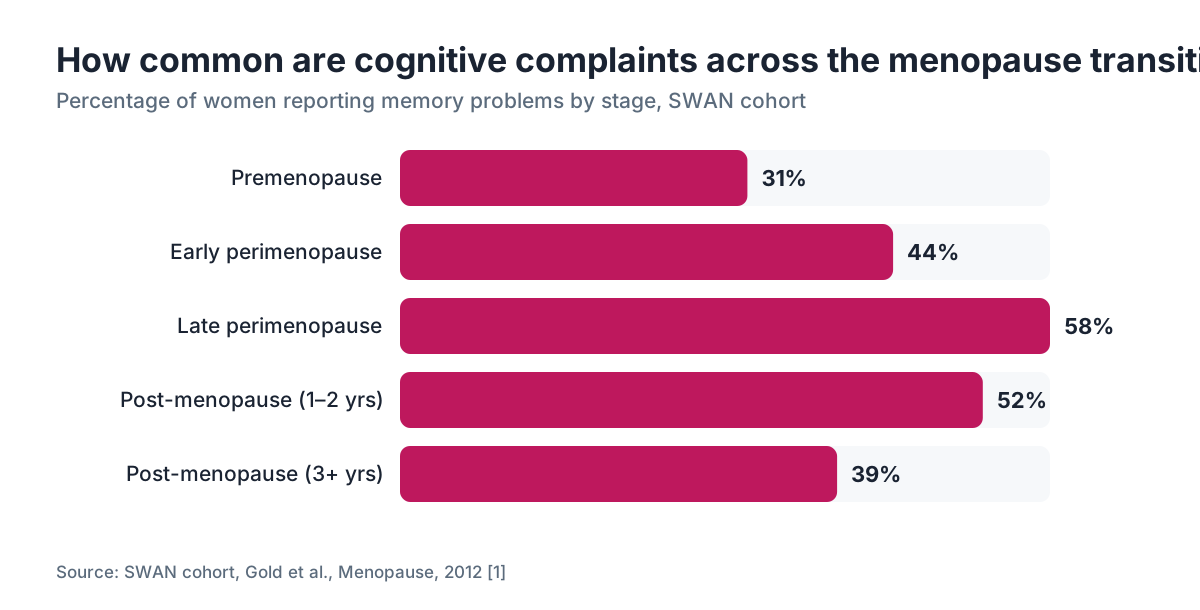
Perimenopause spans the years before the final menstrual period, typically starting in a woman's mid-to-late 40s and ending at menopause (12 consecutive months without a period). The fog tends to peak during late perimenopause, not after it. That timing is actually reassuring. Most women see improvement once estrogen levels settle at their post-menopausal baseline. See perimenopause age for a fuller picture of the transition timeline.
How common is cognitive difficulty during perimenopause?
The numbers are striking. The Study of Women's Health Across the Nation (SWAN), one of the largest and longest-running observational studies of midlife women in the United States, found that roughly 40 to 60 percent of women reported memory problems during the menopausal transition [1]. That figure moves depending on how questions are asked and which population is studied, but the range holds across multiple cohorts.
Objective cognitive testing tells a more nuanced story. The Penn Ovarian Aging Study tested women repeatedly over 14 years and found that processing speed and verbal memory scores dipped during late perimenopause and early post-menopause, then recovered [2]. The average dip was small but real. Women who also had significant hot flashes and night sweats scored worse, which points to sleep disruption as a major amplifier.
Women with surgical menopause (ovaries removed) tend to report sharper and more persistent cognitive symptoms than women who go through natural menopause, which further supports an estrogen-driven mechanism [3]. Losing ovarian hormones all at once is a much harder shock than the slow decline of natural perimenopause.
Why does falling estrogen cause brain fog?
Estrogen is more than a reproductive hormone. The brain is full of estrogen receptors, concentrated in the hippocampus (memory formation), the prefrontal cortex (attention and executive function), and the cholinergic neurons that support learning [4]. Estrogen acts on these areas in several ways that directly affect cognition.
First, it regulates glucose uptake. The brain runs almost entirely on glucose, and estrogen helps neurons use it efficiently. A PET imaging study by Mosconi and colleagues at Weill Cornell found that women in perimenopause showed reduced brain glucose metabolism compared to premenopausal controls, particularly in regions tied to memory and executive function [4]. The brain, in that window, is literally running on less fuel.
Second, estrogen supports the production of acetylcholine, a neurotransmitter central to memory and attention. Declining estrogen reduces cholinergic activity, which shows up as exactly the word-retrieval and attention problems women describe.
Third, and probably the biggest day-to-day culprit, is sleep. Fluctuating estrogen and progesterone drive hot flashes and night sweats that fragment sleep, often without the woman fully waking. Broken sleep wrecks working memory and concentration. When researchers control statistically for sleep quality, a meaningful chunk of the cognitive effect of perimenopause disappears [2]. That does not mean the direct brain effects are not real. It means both pathways run at once.
Progesterone matters here too. It has calming, sedating properties partly through GABA-receptor activity, and its decline in perimenopause removes that buffer. Lower progesterone means lighter, more broken sleep even before hot flashes arrive. Read more about how progesterone shifts during this period.
Is perimenopause brain fog the same as early dementia?
This is the fear that drives most women to their doctors. The answer is almost always no, but the concern deserves a direct answer rather than reassurance without reason.
Alzheimer's disease and other dementias involve progressive, cumulative loss of function. Perimenopause brain fog is typically stable or fluctuating, tied to where a woman is in her hormonal cycle, and improves after menopause for most women. The Penn Ovarian Aging Study specifically documented recovery of verbal memory in post-menopause [2].
That said, there is legitimate research on whether the estrogen-deprivation period itself raises long-term dementia risk, particularly for women who go through early or surgical menopause. The evidence on hormone therapy and dementia prevention is genuinely mixed and should not be simplified. The Women's Health Initiative Memory Study (WHIMS) found increased dementia risk in women who started oral conjugated equine estrogen plus medroxyprogesterone acetate at age 65 or older [5]. Observational data on women who start hormone therapy in their 40s or early 50s, closer to the onset of symptoms, show a different and more favorable picture. The "timing hypothesis" holds that starting hormones early in the transition may protect cognition while starting late may not, or could harm [5].
If your cognitive symptoms are getting worse month over month, hurting your ability to work or manage money, or coming with personality change, that warrants a formal evaluation. Perimenopause fog is frustrating. Dementia is a different clinical entity.
What other conditions mimic or worsen perimenopause brain fog?
Before you pin every cognitive symptom on hormones, a few other conditions deserve attention because they are common in this age group and treatable on their own terms.
Thyroid dysfunction is the first place most clinicians look. Hypothyroidism produces fatigue, brain fog, and mood changes that overlap perfectly with perimenopause symptoms, and subclinical hypothyroidism is common in women over 40. A simple TSH test rules it in or out.
Depression and anxiety run both directions with perimenopause. Hormonal fluctuation raises depression risk, and depression independently impairs memory and concentration. The cognitive symptoms of depression can be as loud as the mood symptoms, especially in women who have previously had perinatal or premenstrual mood disorders.
Sleep apnea is dramatically underdiagnosed in women, and its prevalence climbs in midlife. The classic picture is the snoring overweight man, but women with apnea more often show up with insomnia, fatigue, and cognitive complaints. A sleep study is worth considering if symptoms are severe.
Iron deficiency, vitamin B12 deficiency, and poorly controlled blood sugar can all contribute. These are easy to screen and treat. A reasonable baseline lab panel for a woman with significant brain fog includes: TSH, free T4, CBC, ferritin, B12, fasting glucose, and HbA1c alongside hormone levels (FSH, estradiol).
Does hormone therapy actually help with brain fog?
For women in early perimenopause or the first few years after the final period, hormone therapy is the most evidence-supported option for hormone-driven cognitive symptoms. The data is not perfectly clean, because cognition is hard to measure and trials vary in which formulations and doses they use, but the direction of evidence is fairly consistent for perimenopausal women.
Estrogen supports the brain mechanisms described above. Randomized trials of estrogen therapy in perimenopausal women have generally shown improvements in verbal memory and processing speed compared to placebo [5]. The Kronos Early Estrogen Prevention Study (KEEPS) found that women who started hormone therapy within three years of their final period showed modest but measurable cognitive benefits compared to placebo, particularly on verbal memory [5].
Formulation matters. Transdermal estradiol (a patch or gel delivering bioidentical estradiol through the skin) bypasses first-pass liver metabolism and avoids the clotting effects seen with oral estrogens. Most current guidelines from the Menopause Society (formerly NAMS) and the Endocrine Society favor transdermal routes for women who have cardiovascular risk factors [6][7]. The estrogen patch article covers formulation choices in more detail.
For women with a uterus, estrogen must be paired with progesterone to protect the uterine lining. Micronized progesterone (bioidentical progesterone, sold as Prometrium in the US) is preferred over synthetic progestins when cognitive and sleep outcomes are a priority, because it has the GABA-receptor calming effect that supports sleep quality.
The caveat that changes everything is timing. The evidence for cognitive benefit is in women who start HRT relatively early in the transition. For women over 60 or more than 10 years from their last period, the calculus changes. This is a conversation worth having with a clinician who knows the literature, not a decision to make from a generic checklist. Platforms like WomenRx can connect you to clinicians who specialize in this transition if your current provider is not comfortable with HRT.
See the fuller hormone replacement therapy guide for a breakdown of types, risks, and who qualifies.
What non-hormonal treatments have real evidence for brain fog?
Sleep is the highest-yield target that does not need a prescription. Fix the sleep fragmentation from hot flashes and night sweats and the cognitive improvement is often dramatic. Cognitive behavioral therapy for insomnia (CBT-I) is the first-line treatment for insomnia in virtually every sleep guideline, and it beats sleep medication on long-term outcomes. If hot flashes are wrecking sleep, treating the hot flashes (whether with HRT or non-hormonal options like fezolinetant or venlafaxine) often clears the cognitive symptoms downstream.
Aerobic exercise has the most consistent non-hormonal cognitive evidence. A 2023 meta-analysis in Maturitas reviewing exercise interventions in midlife women found significant improvements in episodic memory and executive function with regular moderate-intensity aerobic training [8]. Thirty to forty-five minutes most days is the dose that shows up in most positive trials. Resistance training adds to it but is not a substitute.
Sleep hygiene, stress reduction, and managing alcohol intake are the obvious lifestyle levers. Alcohol in particular disrupts sleep architecture in ways that worsen the next-day cognitive symptoms women already have from hormonal sleep disruption. Even moderate drinking (two glasses of wine) meaningfully suppresses REM sleep.
Cognitive engagement, meaning actually using the brain for hard tasks rather than passive screen time, maintains neural reserve. This is not a cure for hormonal brain fog, but it protects baseline function while the transition happens.
Nobody has good data on most supplements marketed for brain fog. The closest we have is a small but somewhat supportive literature on omega-3 fatty acids for mood and cognition in midlife women, and even there the effect sizes are modest. Magnesium glycinate can genuinely help sleep quality in women who are low on magnesium, which is common. Beyond those two, the evidence thins out fast.
Does brain fog worsen with hot flashes and night sweats?
Yes, and this connection is one of the better-documented findings in menopausal cognition research. The SWAN study found that women with frequent vasomotor symptoms (hot flashes and night sweats) scored worse on tests of learning and memory than women with fewer symptoms, even after adjusting for sleep duration [1]. That points to two overlapping pathways: the direct effect of sleep fragmentation from night sweats, and possibly a shared underlying mechanism in the hypothalamus and brainstem that drives both hot flashes and cognitive disruption.
The practical implication is that treating vasomotor symptoms hard is about more than comfort. It may be the most direct lever available for brain fog in women who have prominent hot flashes. HRT, fezolinetant (a non-hormonal FDA-approved option for hot flashes as of 2023), and serotonin-norepinephrine reuptake inhibitors like venlafaxine all reduce vasomotor symptoms and may, through that mechanism, improve cognitive function [11].
Women who have mostly nighttime hot flashes and feel fine during the day but foggy every morning are usually living classic sleep-fragmentation cognition. The fog lifts somewhat by afternoon as the brain recovers from the night. That pattern is a clinical clue.
How long does perimenopause brain fog last?
For most women, cognitive symptoms peak during late perimenopause and the first year or two after the final period. The Penn Ovarian Aging Study tracked verbal memory through the menopause transition and found that scores recovered to premenopausal baselines in the post-menopause period for most participants [2]. The recovery is not instant. It tends to happen gradually over one to three years post-menopause as the brain settles into its new, stable hormonal environment.
Women who go through severe or prolonged sleep disruption from vasomotor symptoms may have a longer recovery window, because chronic sleep loss has cumulative cognitive costs beyond the hormonal effects. Women who go through surgical menopause tend to have a harder, longer course than those with natural menopause.
If symptoms are not improving or are getting worse two to three years after the final period, that is worth investigating. Persistent post-menopausal cognitive decline is a different clinical picture than transitional brain fog, and it warrants a workup.
For context on timing, when does menopause start and menopause age both cover the typical age ranges and what drives earlier or later transitions.
What should you tell your doctor about brain fog?
Many women do not bring up cognitive symptoms because they feel embarrassed or assume nothing can be done. Some get told it is "just stress" or "anxiety" and sent home. Being specific and quantitative helps.
Before your appointment, write down: which specific symptoms you have (word retrieval, attention, working memory, processing speed), when they started relative to your cycle changes, how often they happen, whether they get worse after a bad night's sleep or after a hot flash, and how much they interfere with work or daily tasks. That history is far more useful than "I feel foggy."
Ask specifically for thyroid labs, iron studies, and B12 if they have not been checked recently. Ask whether your perimenopausal status has been considered in the context of your cognitive complaints. If your doctor is not familiar with the SWAN data or the timing hypothesis for HRT and cognition, asking for a referral to a menopause specialist (look for certified menopause practitioners at menopause.org) is entirely reasonable.
You are not being dramatic. The cognitive symptoms of perimenopause are real, measurable, and in most cases manageable. The research is there. The problem has often been that clinicians were not trained to connect the dots.
Can GLP-1 medications affect brain fog in perimenopausal women?
This is an emerging area without definitive trial data specifically in perimenopausal women, but the biology is interesting and worth understanding.
GLP-1 receptors exist in the brain, including in areas tied to cognition and mood. Early observational data and mechanistic studies suggest GLP-1 receptor agonists (semaglutide, tirzepatide) may have neuroprotective effects, partly through reducing neuroinflammation and improving insulin sensitivity in the brain. The SURMOUNT and STEP trials that established efficacy for weight loss were not designed to measure cognitive outcomes as primary endpoints, so specific claims about brain fog would be premature [9][10].
What is more established: significant weight loss tends to improve sleep (particularly in women with sleep apnea or obesity-related sleep disruption), and better sleep improves cognition. GLP-1 medications may also improve mood and reduce anxiety in some patients, though the mechanism is not fully worked out.
For perimenopausal women considering GLP-1 treatment mainly for weight, cognitive benefit is plausible but not proven. It should not be sold as a brain fog treatment. If you are curious about whether semaglutide or semaglutide for weight loss is appropriate for you, that is a separate conversation with a clinician based on metabolic, not cognitive, indications. WomenRx clinicians can evaluate both hormonal and metabolic needs together, which matters because the two often overlap in perimenopausal women.
What does the Menopause Society recommend for perimenopausal cognition?
The Menopause Society (NAMS) 2022 Hormone Therapy Position Statement addresses cognition directly. It says hormone therapy is not currently recommended solely to prevent cognitive decline or dementia, because the evidence is insufficient to make that claim [6]. For symptom relief, including mood and cognitive symptoms in perimenopausal women who also have bothersome vasomotor symptoms, hormone therapy is an appropriate treatment option when started in healthy women under 60 or within 10 years of menopause.
The statement also puts it plainly, in its own words: "The risk-benefit ratio for hormone therapy is favorable for most healthy women who are within 10 years of menopause onset or under age 60" [6]. That framing changes the calculus. It is not the one that dominated headlines after the 2002 WHI publication, which studied older women on oral combination hormone therapy.
The Endocrine Society's 2015 guidelines on menopausal hormone therapy similarly endorse transdermal estradiol with micronized progesterone for women with menopausal symptoms, noting that this regimen has a more favorable safety profile than oral synthetic options [7].
Both organizations recommend individualized decision-making, meaning your history, risk factors, and symptom burden all matter. There is no universal protocol.
Frequently asked questions
At what age does perimenopause brain fog usually start?
Most women begin noticing cognitive symptoms in their mid-to-late 40s, during late perimenopause when estrogen fluctuations are most erratic. Some report earlier changes in their early 40s, particularly those with premenstrual mood sensitivity or early perimenopause. The peak is typically the two to three years surrounding the final menstrual period.
Can you have brain fog without hot flashes?
Yes. While hot flashes and night sweats amplify cognitive symptoms through sleep disruption, brain fog can occur independently in women with few or no vasomotor symptoms. The direct neurological effects of falling estrogen on brain glucose metabolism and cholinergic function can drive cognitive symptoms even without significant hot flashes.
Does perimenopause brain fog affect every woman?
No. Roughly 40 to 60 percent of women report cognitive symptoms during the menopausal transition based on SWAN data. Many go through perimenopause with minimal cognitive complaints. Women with significant sleep disruption from hot flashes, a history of depression, or surgically induced menopause appear to have higher rates of noticeable cognitive symptoms.
Is perimenopause brain fog the same as ADHD?
They are different conditions but can look very similar. Perimenopause often unmasks or worsens pre-existing ADHD because estrogen supports dopamine signaling, which ADHD medications target. A woman who managed undiagnosed ADHD all her life may find it suddenly unmanageable in perimenopause. Formal neuropsychological evaluation can tell them apart, though treatment for one often helps the other.
Can birth control pills cause or worsen brain fog in perimenopause?
Some women report cognitive side effects with hormonal contraceptives, particularly low-dose pills used in perimenopause to manage irregular cycles. Synthetic progestins in some pill formulations may blunt the estrogen effect on cognition or worsen mood. Switching to a different formulation or to non-hormonal contraception (or hormone therapy once periods are irregular enough) sometimes resolves this.
How is perimenopause brain fog diagnosed?
There is no single diagnostic test. Clinicians typically use a mix of symptom history, hormone levels (FSH, estradiol), thyroid panel, and sometimes formal cognitive screening tools like the MoCA (Montreal Cognitive Assessment). Neuropsychological testing can identify specific cognitive domain weaknesses. The diagnosis is largely clinical, ruling out other causes while placing symptoms in the context of the hormonal transition.
Do antidepressants help with brain fog in perimenopause?
SNRIs like venlafaxine and SSRIs like escitalopram can help if depression or anxiety is driving cognitive symptoms, and they also reduce hot flash frequency (which improves sleep and downstream cognition). They are not direct cognitive enhancers. If mood symptoms are prominent, treating them often partially resolves brain fog. They are a reasonable option for women who cannot or prefer not to use hormone therapy.
Does caffeine make perimenopause brain fog worse?
High caffeine intake can worsen sleep quality and, in some women, trigger or intensify hot flashes. Since sleep fragmentation is a primary driver of cognitive symptoms, excessive caffeine, particularly after noon, can create a cycle: poor sleep leads to more brain fog, which leads to more coffee to compensate. Moderate morning caffeine is generally fine. Evening caffeine is worth cutting first as a simple intervention.
Are memory supplements worth taking for perimenopause brain fog?
Most are not supported by adequate evidence in this population. Omega-3 fatty acids have the most plausible mechanism and modest supporting data for mood and cognitive function in midlife women. Magnesium glycinate can improve sleep quality, which helps cognition indirectly. Phosphatidylserine, lion's mane, and most branded brain supplements have very limited peer-reviewed evidence and are not recommended by any major menopause guideline.
Can perimenopause brain fog be reversed with lifestyle changes alone?
For many women, yes. Prioritizing sleep, consistent aerobic exercise (30 to 45 minutes most days), reducing alcohol, and managing stress address multiple drivers at once. If sleep is fragmented by hot flashes, treating the hot flashes is part of the lifestyle strategy. Women with severe symptoms, especially those affecting work or safety, typically need medical evaluation and likely hormone therapy alongside lifestyle changes.
How does progesterone affect brain fog specifically?
Progesterone has GABA-receptor activity through its metabolite allopregnanolone, producing calming and sleep-promoting effects. As progesterone declines in early perimenopause (often before estrogen falls much), sleep quality deteriorates. This is one reason brain fog can appear even before hot flashes. Micronized progesterone prescribed as part of hormone therapy preserves some of this sedating effect better than synthetic progestins.
Does weight gain in perimenopause contribute to brain fog?
Indirectly, yes. Visceral fat accumulation in perimenopause is associated with insulin resistance, which impairs the brain's glucose metabolism. Obesity also raises the risk of obstructive sleep apnea. Both paths worsen cognitive function. Maintaining metabolic health through diet and exercise during the transition matters for the brain, more than for cardiovascular reasons.
When should I see a neurologist for perimenopause brain fog?
See a neurologist if symptoms are progressively worsening rather than fluctuating, if they include disorientation, getting lost in familiar places, or significant personality change, if they persist even after adequate sleep, or if formal cognitive screening (like the MoCA) shows objective decline. Most perimenopausal women with typical fog do not need neurology, but those who do should not delay evaluation out of embarrassment or the assumption it is hormonal.
Sources
- Study of Women's Health Across the Nation (SWAN), published in Menopause journal, 2012, Gold et al.
- Penn Ovarian Aging Study, Greendale et al., Neurology, 2011
- Surgical menopause and cognition: review in Climacteric, Rocca et al., 2014
- Mosconi L et al., Neurology, 2017, Weill Cornell; PET imaging of brain glucose metabolism in perimenopause
- Kronos Early Estrogen Prevention Study (KEEPS) cognition substudy, Gleason et al., PLOS ONE, 2015
- The Menopause Society (NAMS) 2022 Hormone Therapy Position Statement
- Endocrine Society Clinical Practice Guideline: Menopause Hormone Therapy, 2015
- Maturitas, meta-analysis of exercise interventions and cognition in midlife women, 2023
- STEP 1 Trial (semaglutide 2.4 mg for weight management), Wilding et al., NEJM, 2021
- SURMOUNT-1 Trial (tirzepatide for chronic weight management), Jastreboff et al., NEJM, 2022
- FDA approval of fezolinetant (Veozah) for vasomotor symptoms, 2023