Perimenopause body odor: why you smell different and what actually helps
TL;DR: Perimenopause body odor changes because falling estrogen and progesterone disrupt your sweat glands, vaginal pH, and skin microbiome. Hot flashes drench apocrine glands in protein-rich sweat that bacteria love. Most women notice sharper underarm odor, new vaginal odor, or both. Real fixes exist: prescription antiperspirants, diet tweaks, local estrogen, and systemic hormone therapy all have evidence behind them.
Why does perimenopause change how your body smells?
Estrogen and progesterone do far more than run your cycle. They regulate sweat gland activity, skin pH, and the microbial communities living on your skin and in your vagina. When those hormone levels start swinging in your late 30s or 40s, all of those systems get disrupted at once.
You have two kinds of sweat glands. Eccrine glands cover most of your skin and make the watery sweat that cools you down. Apocrine glands sit in your armpits, groin, and around your nipples, and they make a thicker secretion loaded with protein and lipids. Bacteria on your skin break those proteins and lipids into volatile fatty acids and thioalcohols. That is where the smell comes from. Estrogen keeps apocrine secretion in check. When estrogen drops, that brake loosens.
Hot flashes make it worse in a direct way. A hot flash is a sudden surge of norepinephrine that tricks your hypothalamus into thinking your core temperature is too high [1]. Your body responds by firing every eccrine gland you have. That flood of sweat mixes with the apocrine secretions in your armpits and groin, and bacteria get a warm, moist, protein-rich place to work. More odor, faster.
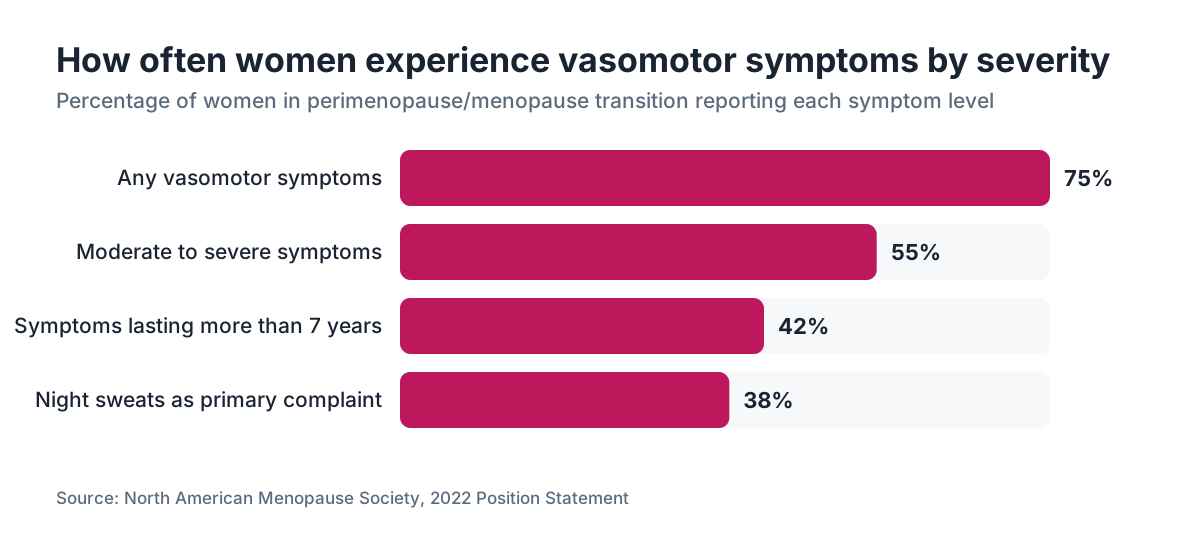
The North American Menopause Society says vasomotor symptoms, which include hot flashes and night sweats, affect roughly 75% of women during the menopause transition [2]. If three out of four women are sweating through frequent episodes, a large share of them are noticing odor changes too. That symptom just rarely makes it into the exam room conversation.
What does perimenopause body odor actually smell like?
Women describe it consistently once you read enough patient accounts: sharper, more sour, sometimes almost vinegary under the arms. Many say it smells "different" rather than just stronger. That tracks, because the composition of the sweat has changed as much as the volume.
Vaginal odor is its own category. Estrogen keeps vaginal cells loaded with glycogen, which feeds Lactobacillus bacteria. Those bacteria make lactic acid, holding vaginal pH around 3.8 to 4.5 and the environment mildly acidic at most [3]. When estrogen falls, glycogen drops, Lactobacillus loses its fuel, pH climbs toward 5 or 6, and other bacterial species move in. The result is a fishier or more pronounced odor that is distinct from bacterial vaginosis but easy to mistake for it.
Scalp and foot odor can worsen too. Sebaceous glands respond to androgens, and the relative androgen dominance that comes with falling estrogen can raise sebum output, which feeds Malassezia yeast on the scalp and bacteria on the feet.
Some women notice their usual perfume smells wrong on them now. That is not imagined. Skin pH shifts during perimenopause change how fragrance molecules volatilize, so a scent you have worn for years genuinely can smell off after your hormonal environment changes.
How do hot flashes and night sweats directly cause odor?
A standard hot flash can raise skin temperature by 1 to 7 degrees Celsius within seconds and trigger sweating that soaks through clothing [4]. Night sweats are the same process during sleep, when you lie still in bedding that traps moisture against your skin for hours.
The mechanism is plain: more sweat, plus warm enclosed spaces, plus time, equals more bacterial activity. There is a hormonal twist on top of that. Cortisol spikes during hot flash episodes, and cortisol changes the composition of apocrine secretions. Stress sweat from apocrine glands smells different from thermal sweat from eccrine glands, even in people who are nowhere near menopause. In perimenopause, you get stress-type apocrine secretion triggered by a hormonal event, over and over, sometimes dozens of times a day.
Frequency changes everything here. One or two hot flashes a day is a completely different odor load than ten or fifteen. Research in the journal Menopause found that women with moderate to severe vasomotor symptoms reported significantly more quality-of-life disruption across multiple domains, including personal hygiene, than women with mild symptoms [5]. If your hot flashes are frequent, fixing the odor means fixing the hot flashes.
Does vaginal odor change during perimenopause, and is it normal?
Yes, and it is one of the most underreported symptoms of the whole transition. Genitourinary syndrome of menopause (GSM), once called vaginal atrophy, is the umbrella term for what happens to vaginal and urinary tissues when estrogen drops. FDA-recognized symptoms include vaginal dryness, irritation, discharge changes, and pain with sex, and pH changes and odor are part of the same picture [6].
The microbiome shift is well documented. A 2017 study in Cell Host & Microbe mapped vaginal microbiome changes across reproductive stages and found that postmenopausal women, and to a lesser degree perimenopausal women, showed large reductions in Lactobacillus dominance and increases in more diverse, less acidophilic communities [7]. That shift tracks directly with higher vaginal pH and changes in discharge and smell.
A new or changed vaginal odor in perimenopause is not automatically an infection. But it can look identical to bacterial vaginosis on a symptom checklist, so one clinician swab is worth doing to set a baseline. If your pH is up and your Lactobacillus count is low but no pathogens show, the cause is hormonal. The fix is local estrogen or local DHEA (prasterone), not antibiotics.
Local vaginal estrogen (cream, ring, or tablet) rebuilds epithelial thickness and glycogen within weeks, which restores the Lactobacillus-friendly environment and normalizes pH. FDA-approved prasterone (Intrarosa) works through a different route, converting locally to estrogens and androgens in vaginal tissue, with minimal systemic absorption [6].
Which hormone changes specifically drive the odor shift?
Estrogen gets most of the attention, but three hormones are interacting here.
Estrogen (mainly estradiol) keeps apocrine secretion lower, maintains vaginal glycogen and Lactobacillus, and supports the slightly acidic skin pH that favors less odor-producing bacteria. When estradiol swings and then trends down, all three effects weaken.
Progesterone has a temperature effect. It raises basal body temperature by about 0.3 to 0.5 degrees Celsius in the luteal phase. As cycles turn irregular in perimenopause, progesterone surges and crashes unpredictably, which feeds the thermal instability behind erratic hot flashes. Some women notice their body odor is worse in the weeks when a progesterone surge does happen.
Androgens, meaning testosterone and DHEA, actually rise during early perimenopause relative to estrogen. Androgens stimulate apocrine glands directly, the same pathway behind the odor changes at puberty. A relative androgen excess, even with a technically normal testosterone level, means more apocrine stimulation and more fuel for odor-producing bacteria. This is why some women say their armpits smell almost adolescent again.
That three-way interaction is why perimenopause body odor is rarely solved by one product. You may need to handle the hot flashes, the skin microbiome, and the vaginal environment as separate problems.
What lifestyle changes actually reduce perimenopause body odor?
A few changes have real evidence. Plenty of popular advice does not.
Diet is the most underrated lever. Foods high in choline, carnitine, and trimethylamine precursors, which include red meat, eggs, and some fish, make volatile compounds that leave through sweat. Cruciferous vegetables like broccoli and Brussels sprouts carry sulfur compounds that do the same. This is no reason to quit eating nutrient-dense food, but it explains why some women see odor spike after certain meals. Alcohol becomes acetic acid and partly exits through sweat, which is why people smell sour after drinking hard.
Fabric choice matters more than most people expect. Synthetics trap apocrine secretions and give bacteria more time to work. Natural fibers, especially merino wool and cotton, wick moisture and dry faster. Several small textile studies show merino wool produces less odor after wear than polyester under identical conditions.
Shower timing is worth rethinking. Showering right after a hot flash, rather than at a set time of day, clears bacterial substrate before it turns to odor. Ten hot flashes a day makes that impractical, but an evening shower before bed can cut the overnight odor buildup from night sweats.
Magnesium has some evidence for reducing hot flash frequency, which may lower sweat-related odor indirectly. A small randomized trial found oral magnesium reduced hot flash frequency by about 50% in breast cancer survivors who could not use hormone therapy [8]. The mechanism is thought to involve serotonin pathway modulation. It is not a substitute for systemic hormone therapy, but it is a reasonable add-on.
Do antiperspirants and deodorants work differently in perimenopause?
Mechanically they work the same. Your baseline has changed, so an old product can feel useless even while it does exactly what it always did. You are making more sweat and more apocrine secretion, so a formula that was fine before may fall short now.
Antiperspirants use aluminum salts to temporarily plug eccrine pores and cut sweat output. They do not stop apocrine secretion directly, but drying out the armpit slows bacterial growth and therefore odor. Prescription-strength aluminum chloride products (usually 20% aluminum chloride hexahydrate) are meaningfully stronger than over-the-counter 12 to 18% formulas, and they are worth asking about once standard antiperspirants stop cutting it.
Deodorants without antiperspirant action mask odor or use bacteriostatic agents like zinc ricinoleate to slow bacteria. They do nothing to sweat volume. For women with hot flashes, deodorant alone usually is not enough. An antiperspirant applied at night to dry skin, which lets aluminum salts settle into the pores before morning sweat starts, tends to work better.
Natural deodorants built on baking soda neutralize the acidic volatile fatty acids that cause odor and can work for mild cases. The catch in perimenopause is that your skin pH is already shifting and baking soda is strongly alkaline. It can irritate skin that hormonal changes have already sensitized. Magnesium hydroxide formulas are gentler, with some bacteriostatic effect and none of the pH extreme.
Does hormone replacement therapy help with perimenopause body odor?
Yes, and for women with frequent hot flashes driving the odor, it is probably the single most effective thing you can do. Hormone replacement therapy treats the root cause of vasomotor symptoms instead of managing sweat at the surface.
Systemic estrogen therapy, especially estradiol by patch, gel, or spray, is the most effective treatment for hot flashes. NAMS guidelines rate systemic estrogen as the top option for moderate to severe vasomotor symptoms, with randomized trial data showing 75 to 90% reductions in hot flash frequency [2]. Fewer hot flashes means less sweating, less apocrine activation, and less bacterial substrate. The odor improvement is a downstream benefit trials rarely measure but patients report consistently.
For vaginal odor specifically, local estrogen therapy (cream, tablet, ring) or prasterone rebuilds the vaginal ecosystem with no meaningful systemic absorption, so it works even for women who want to avoid systemic hormones. The estrogen patch and other systemic options help vaginal tissue over time too, but local products act faster on vaginal symptoms.
A telehealth platform like WomenRx can assess whether you are a candidate for hormone therapy, the thing that addresses the hot flash frequency behind most of the odor problem, without a waiting room.
Non-hormonal options for hot flashes include SSRIs and SNRIs (especially paroxetine and venlafaxine), gabapentin, and fezolinetant (Veozah), an FDA-approved neurokinin-3 receptor antagonist cleared in 2023 specifically for vasomotor symptoms [9]. Fezolinetant does not carry the same contraindications as hormone therapy and may fit women with hormone-sensitive cancer histories.
How do you know if the odor is perimenopause or something that needs a doctor?
Most perimenopausal odor changes are benign and hormonally driven. Some are not. A few patterns should send you to a clinician rather than the drugstore.
Vaginal odor with thick gray or white discharge, especially with itching or burning, needs evaluation. Bacterial vaginosis and yeast infections both become more common in perimenopause as the vaginal ecosystem destabilizes. Trichomoniasis is possible at any age. These need real diagnosis. Treating BV with an antifungal, or the reverse, makes things worse.
A sudden change in urine odor with new urgency or frequency may mean a UTI, not a hormonal shift. Perimenopausal women get more UTIs because falling estrogen thins urethral and bladder tissue and changes the flora around the urethra.
Systemic odor that is sweet or fruity can point to high blood sugar. A fishy smell from skin (not vaginal) can rarely mean trimethylaminuria, a metabolic disorder. An ammonia smell from skin can signal kidney stress. These are uncommon, but worth ruling out when the odor is dramatic, sudden, or ignores every reasonable intervention.
If your only concern is armpit or general body odor with no discharge changes and no systemic symptoms, and you are in your 40s with irregular periods and hot flashes, the cause is almost certainly perimenopause. Even so, a visit to confirm you are actually in perimenopause (and not a thyroid or adrenal issue that mimics it) is reasonable. FSH above 25 IU/L on two tests 4 to 6 weeks apart in a symptomatic woman is consistent with perimenopause, though FSH alone is not diagnostic because it swings [10].
If you are not sure where you are in the transition, our perimenopause age guide walks through the full timeline.
Can the vaginal microbiome be restored during perimenopause?
To a real degree, yes, and it is an active research area. The most evidence-backed approach is local estrogen, which rebuilds epithelial glycogen and lets Lactobacillus repopulate on its own. Studies of local estrogen in postmenopausal women show vaginal pH returning toward premenopausal values within 8 to 12 weeks [3].
Vaginal probiotics with Lactobacillus crispatus or Lactobacillus rhamnosus have shown promise in small trials for holding lower vaginal pH and reducing odor symptoms. The problem is that without the estrogen environment to support them, probiotic strains struggle to colonize long-term. They tend to work better alongside local estrogen than on their own.
Oral probiotics are a bigger question mark for vaginal outcomes. The evidence that swallowed Lactobacillus strains meaningfully change vaginal microbiome composition in perimenopausal women is weak. Some women find them helpful, but nobody has good randomized data in this population. The closest work has been in reproductive-age women with recurrent bacterial vaginosis.
Boric acid vaginal suppositories (600 mg) are widely used to lower vaginal pH in women with recurrent BV or odor from elevated pH. They are not FDA-approved for this use, but clinical guidelines support them for recurrent BV. They are a reasonable short-term bridge for odor while longer-term hormonal approaches take hold. Do not use them if pregnancy is possible. Boric acid is toxic to a developing fetus.
What is the connection between perimenopause, weight changes, and body odor?
Weight gain in perimenopause is common. The shift toward central fat that comes with falling estrogen is well documented, and it creates odor problems beyond the hormonal ones.
Fat in skin folds makes warm, moist, low-airflow spaces where bacteria and yeast thrive. Intertrigo, a skin inflammation from friction and microbial overgrowth in folds, has a distinct smell and gets much more common at higher body weights. It can produce odor women blame on sweating in general when it is actually localized to specific folds.
Fat tissue is metabolically active too. It aromatizes androgens into estrone, a weaker estrogen, which partly explains why higher body weight can soften some hot flash severity without fixing the overall hormonal disruption. It also releases inflammatory cytokines that may sharpen hot flash perception.
GLP-1 receptor agonists are used more and more in perimenopausal women for weight management, and some report odor improvement alongside weight loss, likely because less central fat means fewer skin fold environments for bacteria. For the clinical data, the semaglutide for weight loss and semaglutide vs tirzepatide articles go into detail.
The relationship runs the other way too. Odor self-consciousness can cut physical activity, and less activity feeds weight gain. It is a loop worth breaking early.
A practical protocol: what to try, in what order
Here is an honest hierarchy, ranked by evidence and downside.
Start with the basics: prescription-strength antiperspirant applied at night, natural fiber clothing, and showering after major sweating episodes instead of on a fixed schedule. These cost almost nothing and carry no risk.
Work on diet next. Cut alcohol, pull back on red meat in the days before big social events if you notice a pattern, and consider whether high-sulfur foods are feeding the problem. This is about spotting patterns, not eating perfectly.
If vaginal odor is the issue, see a clinician for a pH test and swab. If it is hormonal (high pH, low Lactobacillus, no pathogens), local vaginal estrogen is the most direct fix. Vaginal probiotics are a fair add-on. Boric acid suppositories can bridge the gap while estrogen takes hold.
If hot flashes are the main driver of armpit odor, and they are frequent and disruptive, systemic hormone therapy becomes the most rational choice for most healthy perimenopausal women. The NAMS 2022 position statement concludes that for women under 60 or within 10 years of menopause onset without contraindications, the benefits of hormone therapy outweigh the risks [2]. A clinician at WomenRx can help you work out whether you qualify and which formulation fits.
Magnesium glycinate at 200 to 400 mg at night is a low-risk add-on worth trying. So is a vaginal probiotic if microbiome disruption is your problem.
If nothing works after six to eight weeks, go back to a clinician. That is the point to rule out BV, UTI, contact dermatitis, or a metabolic issue before you keep self-managing.
Frequently asked questions
Does perimenopause body odor go away after menopause?
For many women it improves after the transition. Once hormone levels settle at their lower postmenopausal baseline, the unpredictable hot flashes that drive heavy sweating often become less frequent. Vaginal odor can persist or worsen if genitourinary syndrome of menopause goes untreated, since estrogen keeps falling. Local estrogen therapy stays effective at any point after menopause.
Why do I smell different in my 40s even though my periods are still regular?
Perimenopause can start years before cycles turn irregular. Estrogen fluctuations begin in the mid-to-late 30s for some women, which is enough to change apocrine secretion and vaginal pH even with seemingly normal cycles. If new or different body odor shows up alongside sleep disruption, mood shifts, or shorter cycles, early perimenopause is a plausible explanation. Tracking symptoms against your cycle gives a clinician useful data.
Is the fishy smell during perimenopause always bacterial vaginosis?
Not always. Hormonal changes that lower Lactobacillus and raise vaginal pH can produce a similar smell with no true infection. The distinction matters: BV is treated with antibiotics (metronidazole or clindamycin), while hormonal vaginal odor is treated with local estrogen or prasterone. A vaginal swab and pH test tell you which one you have. Do not assume it is BV and self-treat without testing.
Can what I eat really change my body odor during perimenopause?
Yes, more than people expect. Choline-rich foods (eggs, red meat) and sulfur-rich vegetables (broccoli, garlic, onions) make volatile compounds that leave through sweat. Alcohol converts to acetic acid in sweat. Perimenopausal women may notice these effects more because they are already sweating from hot flashes, giving those compounds more chances to surface. A rough food-symptom log over two weeks usually pinpoints personal triggers.
Will hormone therapy really help with body odor, or is that a side effect claim?
It helps indirectly by cutting hot flash frequency and intensity, which cuts the sweating that feeds odor-producing bacteria. Estrogen also supports the vaginal Lactobacillus environment that keeps vaginal odor in the normal acidic range. These are not listed as primary indications for hormone therapy, but they follow mechanistically from the treatments that are, and women on HRT consistently report odor improvement as a secondary benefit.
How long does it take for vaginal odor to improve with local estrogen?
Most women notice vaginal pH and symptom improvement within 4 to 12 weeks of starting local estrogen. Epithelial cell maturation and Lactobacillus repopulation take several weeks. Improvement in dryness and irritation often comes first, with odor normalization following as the microbiome rebuilds. Ongoing use is usually needed, because the effects reverse if treatment stops while estrogen levels stay low.
Are natural deodorants effective for perimenopausal body odor?
For mild odor they can work. Baking soda products neutralize acidic odor compounds but can irritate hormonally sensitized skin. Magnesium hydroxide formulas are gentler with reasonable bacteriostatic evidence. None of the natural options reduce sweat volume, so if heavy sweating from hot flashes is the core problem, a prescription-strength antiperspirant will outperform any of them. Natural products work best as a complement to sweat reduction, not a replacement for it.
Can stress make perimenopause body odor worse?
Yes, through two pathways. First, psychological stress stimulates apocrine glands directly via adrenergic signaling, producing the richer, protein-dense secretion that smells worse. Second, cortisol and adrenaline can trigger or intensify hot flashes, stacking on more sweating. Perimenopausal women often carry heavy life stress (aging parents, career demands, family changes), which may partly explain why odor feels worse during high-stress stretches.
What is the best fabric to wear if perimenopause is making me sweat more?
Merino wool and 100% cotton perform best for odor. Merino wool in particular has natural antimicrobial properties from its lanolin and fiber structure, and multiple comparison studies show it produces less perceived odor than polyester after equivalent wear. Avoid synthetic blends worn close to the skin, especially during exercise or in warm rooms. Moisture-wicking synthetics may keep you feeling drier but can hold onto odor more than natural fibers.
Should I get an FSH test to confirm perimenopause if body odor is my main symptom?
FSH testing can help but has real limits. FSH swings a lot during perimenopause, so a single reading can mislead. NAMS and the Endocrine Society both note that perimenopause is mainly a clinical diagnosis based on symptoms and menstrual changes, not one lab value. If your symptoms include irregular cycles, hot flashes, or sleep disruption alongside odor changes, that clinical picture is more telling than an FSH number alone.
Is perimenopause body odor something doctors take seriously, or will I be dismissed?
Many clinicians do not ask about it, which can make women feel brushed off when they raise it. But it is a legitimate, physiologically grounded symptom of the transition. Framing it in terms of hot flash frequency and vaginal symptoms alongside the odor tends to get a more structured response. If your clinician dismisses it entirely, a menopause specialist or a telehealth provider focused on the transition will take it more seriously.
Can perimenopause cause underarm odor even without noticeable hot flashes?
Yes. Shifts in the androgen-to-estrogen ratio stimulate apocrine glands directly, with no hot flashes required. Some women in early perimenopause have no frequent hot flashes yet but notice armpit odor changes. Skin pH shifts also change the bacterial community on the skin under your arms. So the odor mechanism can run ahead of the vasomotor symptoms, which makes the cause less obvious before cycles turn irregular.
Does losing weight help with perimenopause body odor?
It can help a lot if skin fold odor (intertrigo) is part of it. Fewer and shallower folds mean less enclosed, warm, moist space for bacterial and yeast overgrowth. Weight loss does not directly address the hormonal mechanism behind hot-flash sweating or vaginal pH changes, but it removes one contributing factor. GLP-1 medications combined with hormone therapy, where appropriate, may address both pathways at once.
Sources
- NIH National Institute on Aging, Menopause page
- North American Menopause Society, 2022 Hormone Therapy Position Statement
- Obstetrics & Gynecology (ACOG journal), Genitourinary Syndrome of Menopause review
- Menopause (journal of NAMS), hot flash physiology review
- Menopause (NAMS journal), vasomotor symptom quality-of-life study
- FDA, Intrarosa (prasterone) prescribing information
- Cell Host & Microbe, vaginal microbiome across reproductive stages, 2017
- Menopause (NAMS journal), magnesium for hot flashes in breast cancer survivors
- FDA Drug Approvals and Databases, fezolinetant (Veozah) approval 2023
- Endocrine Society, Menopause Clinical Practice Guideline