Perimenopause anxiety: why it happens and what actually helps
TL;DR: Perimenopause anxiety is common, affecting roughly 40-51% of women in the menopause transition. Fluctuating estrogen and progesterone directly alter brain chemistry, producing new or worsened anxiety that often predates hot flashes by years. Hormone therapy, certain antidepressants, and targeted lifestyle changes all have evidence behind them. This is a neurological phenomenon, not a personality flaw.
What exactly is perimenopause anxiety, and why does it feel different from regular stress?
Perimenopause anxiety is anxiety that emerges or sharply worsens during the menopause transition, driven at least in part by reproductive hormone changes rather than purely by life circumstances. Women who have never had a diagnosable anxiety disorder describe it as a sudden, physical sense of dread, a racing heart in a quiet room, waking at 3 a.m. convinced something terrible is about to happen. It is not garden-variety worry about a busy week.
What makes it feel different is the physiology underneath it. Estrogen and progesterone are more than reproductive hormones. They modulate serotonin, GABA, and norepinephrine, the same neurotransmitter systems that regulate fear and threat perception. When those hormones fluctuate wildly, as they do in perimenopause, the brain's alarm system misfires. The threat feels real and urgent even when nothing external has changed. [1]
This matters because it shapes how you seek help. Women who frame their anxiety purely as a stress response often cycle through therapy and lifestyle adjustments for years before anyone connects it to their hormonal status. Perimenopause-related anxiety deserves to be named correctly because that changes the treatment path.
How common is anxiety during perimenopause?
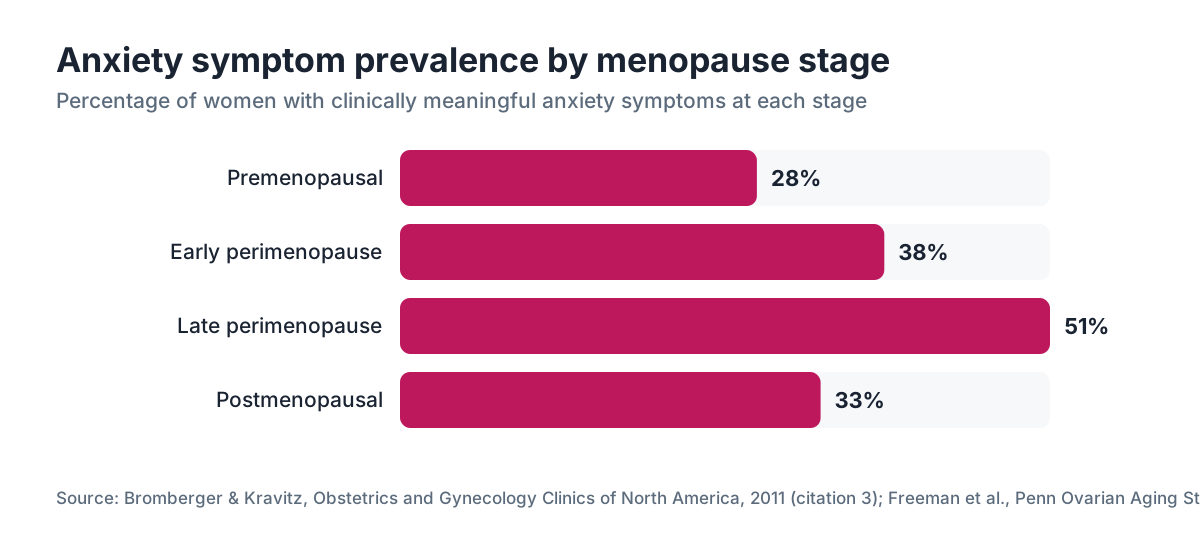
More common than most clinicians discuss openly. The Penn Ovarian Aging Study, one of the longest prospective studies of the menopause transition, found that the odds of experiencing high anxiety scores were roughly 3 times greater in late perimenopause than in premenopause, even after controlling for prior anxiety history and hot-flash status. [2]
Other population data puts the prevalence of clinically meaningful anxiety symptoms in perimenopausal women at 40 to 51%, compared with roughly 28% in premenopausal women of similar age. [3] These are not subclinical jitters. Many women in these cohorts met threshold criteria for generalized anxiety disorder (GAD), panic disorder, or both.
The timing catches people off guard. Anxiety often arrives before the hot flashes that most women and physicians associate with perimenopause. A woman in her early 40s with irregular cycles but no vasomotor symptoms can still be well into her hormonal transition, and anxiety may be the first flag she notices.
Women with a prior history of premenstrual dysphoric disorder (PMDD) or postpartum mood disorders are at meaningfully higher risk, because their nervous systems have already shown sensitivity to hormone fluctuation. [4]
What are the perimenopause anxiety symptoms to watch for?
Perimenopause anxiety symptoms can look a lot like generalized anxiety, but there are some patterns that clinicians find more specific to the hormonal transition.
Common presentations include:
- New or worsening panic attacks, sometimes nocturnal, often without an obvious trigger
- Intrusive, repetitive worry that feels different in quality from this person's baseline personality
- Heart palpitations (often caused by estrogen withdrawal effects on the autonomic nervous system)
- Hypervigilance and irritability that spikes in the week or two before a period, mirroring a PMDD-like pattern
- Insomnia with anxious waking, more than difficulty falling asleep but waking at 2-4 a.m. with a revved-up, can't-stop-thinking quality
- Derealization, a weird, detached, "am I really here?" sensation some women find more frightening than the anxiety itself
- Physical symptoms: chest tightness, shortness of breath, GI distress, all of which can trigger health anxiety spirals because they mimic cardiac and gastrointestinal disease [1]
The overlap with perimenopausal symptoms like palpitations and insomnia is exactly what makes this hard to sort out. One useful clinical clue: if the anxiety tracks your cycle, spiking perimenstrually and partially resolving at other times, hormones are almost certainly involved. [4]
A second clue is the presence of other perimenopause symptoms anxiety tends to travel with: brain fog, mood swings, decreased libido, joint aches, or cycle irregularity. A cluster of these in a woman aged 38 to 55 should prompt a conversation about the transition, even if bloodwork looks "normal." FSH levels are notoriously inconsistent in perimenopause and a single normal result does not rule it out. [5]
Why do estrogen and progesterone affect anxiety so directly?
The neuroscience here is genuinely interesting, and understanding it removes a lot of self-blame.
Estrogen increases serotonin receptor sensitivity and reduces monoamine oxidase activity, meaning it effectively keeps serotonin available in synapses longer. It also acts on the amygdala, the brain's fear-processing center, modulating how strongly it responds to perceived threats. High, stable estrogen is, in a real sense, an anxiolytic. When estrogen becomes erratic and eventually declines in perimenopause, that buffering disappears. [1]
Progesterone's mechanism is different but equally direct. The body converts progesterone into a neurosteroid called allopregnanolone. Allopregnanolone binds to GABA-A receptors, the same receptors targeted by benzodiazepines, producing a calming effect. In perimenopause, progesterone levels are often the first to drop significantly, particularly in cycles that become anovulatory. No ovulation means no corpus luteum, which means very little progesterone in the luteal phase. The result is a loss of the brain's natural benzodiazepine. [6]
This is precisely why many women report that the two weeks before their period feel increasingly unbearable in perimenopause: estrogen has risen and then fallen, progesterone never really showed up, and the nervous system is running without its usual chemical cushion.
For more on how progesterone deficiency ripples through mood and sleep, see progesterone.
How is perimenopause anxiety diagnosed? What tests actually matter?
There is no single blood test that confirms perimenopause-related anxiety. Diagnosis is clinical, meaning it relies on symptom history, timing, and ruling out other causes.
That said, reasonable workup when a clinician is sorting this out includes:
- FSH and estradiol: Useful for context but interpret with caution. In early perimenopause these can be in the "normal" range. The North American Menopause Society (NAMS) notes that no single lab value confirms perimenopause; the diagnosis is made clinically based on age, menstrual change, and symptoms. [5]
- TSH: Thyroid dysfunction produces anxiety, palpitations, and cycle changes that closely mimic perimenopause. It must be excluded.
- CBC and a full metabolic panel: To rule out anemia, glucose instability, and other contributors.
- An honest symptom timeline: When did this start? Does it track your cycle? Did it begin around the same time your periods changed? These questions carry more diagnostic weight than most lab values.
For formal anxiety assessment, validated tools like the GAD-7 are commonly used. A GAD-7 score of 10 or higher suggests moderate-to-severe generalized anxiety. [11] Many women present with scores in this range having never been flagged for anxiety before perimenopause.
The Menopause Rating Scale (MRS) and the Greene Climacteric Scale both include psychological subscales that capture anxiety and depression specifically in the context of menopausal symptoms. These are worth knowing about if you are evaluating your own symptoms or advocating for thorough care.
Age matters as a diagnostic anchor. See perimenopause age for a breakdown of when the transition typically starts and how wide the normal range actually is.
Does hormone therapy actually help perimenopause anxiety?
Yes, with some nuance.
For anxiety that is clearly driven by hormonal fluctuation, especially in women who also have vasomotor symptoms or other perimenopausal symptoms, hormone therapy (HT) is often the most direct intervention. Estrogen stabilizes the erratic fluctuations that trigger the amygdala reactivity described above. Adding micronized progesterone (Prometrium) rather than synthetic progestins matters here, because micronized progesterone preserves the conversion to allopregnanolone that synthetic progestins do not provide as reliably. [6]
The NAMS 2022 Hormone Therapy Position Statement supports the use of HT for bothersome menopausal symptoms in appropriate candidates, noting that for women under 60 or within 10 years of menopause onset, the benefits generally outweigh the risks for most women. [5] Anxiety is increasingly recognized as a legitimate symptom justifying treatment, more than a secondary complaint after hot flashes.
Transdermal estrogen (patch or gel) has a cleaner safety profile than oral estrogen for most women because it bypasses first-pass liver metabolism and does not raise clotting factor levels the way oral forms can. [7] For more on that delivery option, see estrogen patch.
For a broader overview of what hormone therapy involves, hormone replacement therapy covers the evidence, risks, and real-world decision-making in more depth.
What HT does not reliably do is treat a full-blown, independent anxiety disorder that happens to exist alongside perimenopause. If someone had untreated GAD before perimenopause, HT may reduce the hormonal amplification of that anxiety but will not resolve it on its own. That distinction shapes the treatment plan.
Telehealth platforms like WomenRx that specialize in women's hormones can evaluate whether HT is appropriate for you and prescribe transdermally if so, often without the months-long wait that in-person gynecology offices sometimes require.
What non-hormonal medications help with perimenopause and anxiety?
When HT is not appropriate or not preferred, several non-hormonal options have real evidence.
SSRIs and SNRIs are the most studied. Escitalopram, venlafaxine, and desvenlafaxine have all shown efficacy for menopausal anxiety and mood symptoms in randomized controlled trials. The 2023 Menopause Society clinical practice guidelines include these as first-line non-hormonal options for women with vasomotor symptoms and mood symptoms who cannot or prefer not to use hormones. [5] SSRIs typically take 4 to 6 weeks to reach full effect.
Buspirone is a non-benzodiazepine anxiolytic that works via serotonin and dopamine receptors. It has no sedation or dependence risk and is often useful for the persistent background anxiety that SSRIs do not fully address, though it also takes several weeks to work.
Gabapentin acts on voltage-gated calcium channels and has modest evidence for both hot flashes and anxiety in perimenopausal women. It tends to be better tolerated than benzodiazepines for long-term use. [5]
Fezolinetant (Veozah), FDA-approved in 2023 for vasomotor symptoms, targets the neurokinin B pathway rather than hormones. It does not directly treat anxiety, but in women whose anxiety is strongly triggered by hot flashes disrupting sleep, reducing the hot flashes often helps. [8]
Benzodiazepines are sometimes prescribed short-term for acute panic. They work quickly, which matters. But they are not appropriate for long-term management in this population because of dependence risk and the fact that they interact poorly with the alcohol use that can accompany stress in midlife. They should be a bridge, not a foundation.
A note of honest uncertainty: most clinical trials in this space were not designed specifically for perimenopause-related anxiety; they studied mixed symptomatic menopausal populations. The effect sizes for mood outcomes are real but generally moderate.
Which lifestyle interventions have actual evidence for anxiety in perimenopause?
The lifestyle advice women receive for perimenopause anxiety is often vague to the point of uselessness. "Exercise and reduce stress" tells you nothing. Here is what the data actually shows.
Aerobic exercise is the most consistently supported intervention. A meta-analysis in Menopause found that regular aerobic exercise reduced anxiety symptoms in menopausal women with a moderate effect size. The threshold that appeared to matter was at least 150 minutes per week of moderate-intensity activity, consistent with current physical activity guidelines. [9] This works partly through endorphins and BDNF upregulation, and partly because exercise is one of the most reliable ways to exhaust the autonomic arousal that fuels anxiety.
Sleep prioritization, more than sleep hygiene tips, and actually treating the insomnia medically if needed. Sleep deprivation and anxiety amplify each other in a vicious cycle that is particularly brutal in perimenopause when night sweats are also fragmenting sleep. Cognitive behavioral therapy for insomnia (CBT-I) has strong evidence and is now available digitally through apps like Sleepio.
Cognitive behavioral therapy (CBT) adapted for menopause has been tested in RCTs and shows significant benefit for anxiety, hot flash perception, and mood. The Menopause Society specifically names it as an evidence-based psychological intervention. [5] This is not generic talk therapy; the most effective protocols include psychoeducation about menopause physiology, which changes how women interpret and relate to their symptoms.
Alcohol reduction is underrated. Alcohol is a GABA-A modulator, and the rebound anxiety the morning after drinking is exactly the withdrawal of the same receptor system that allopregnanolone is supposed to occupy. For women who are already low on progesterone-derived neurosteroids, even moderate drinking meaningfully worsens anxiety the following day.
Magnesium glycinate, 200 to 400 mg at night, is not a prescription medication and the evidence is not gold-standard RCT-level, but it is low-risk, inexpensive, and has plausible mechanisms via NMDA receptor modulation and GABA support. Many clinicians suggest it as an adjunct. The honest caveat: nobody has a large well-controlled trial in perimenopausal women specifically.
Can perimenopause anxiety cause panic attacks?
Yes, and this is one of the most underdiagnosed aspects of the transition.
Panic attacks in perimenopause often arrive with no prior history of panic disorder. They are frequently nocturnal, waking a woman from sleep with heart racing, chest tightness, and a sense of absolute dread. Because they can look like cardiac events, many women end up in emergency departments with normal EKGs, told they are "just anxious," and sent home without anyone exploring why new-onset panic is appearing in a 46-year-old.
The hormonal mechanism is clear. Estrogen withdrawal lowers the panic threshold via the amygdala and locus coeruleus, the brainstem region that triggers the norepinephrine surge underlying panic. Progesterone loss reduces GABA-mediated calm. Together, these changes create a state of physiological hair-trigger. [6]
Nocturnal panic attacks in perimenopause can also be triggered by or confused with night sweats: the autonomic arousal of a hot flash can itself trigger a panic response in a nervous system that is already sensitized. Sorting out which is driving which, and whether they are happening together, is clinically important because the treatments overlap but are not identical.
If you are experiencing what feel like panic attacks, please have a cardiac workup first, not because panic is rare but because palpitations and chest symptoms in midlife women deserve to be taken seriously. Once cardiac causes are excluded, revisiting the hormonal picture with a clinician familiar with perimenopause is the right next step.
How long does perimenopause anxiety last? Does it go away after menopause?
For most women, the answer is yes, it gets better after menopause, but the timeline is not neat.
The most volatile period for mood and anxiety is late perimenopause, defined as the 1 to 3 years leading up to the final menstrual period, when hormone fluctuations are most erratic. Once a woman is postmenopausal and hormone levels stabilize at their new (lower) baseline, many find the acute anxiety improves significantly. The Penn Ovarian Aging Study found that anxiety symptoms declined in postmenopause compared with late perimenopause. [2]
But "getting better after menopause" does not mean women should simply wait it out for potentially 5 to 10 years without support. Perimenopause can last anywhere from 4 to 10 years. Untreated anxiety during that time carries real costs: cardiovascular risk, bone loss acceleration (cortisol from chronic stress is catabolic to bone), cognitive effects from chronic sleep disruption, and quality-of-life impact that affects work, relationships, and sense of self. [10]
Some women do find persistent anxiety after menopause, particularly if the menopause was surgical (bilateral oophorectomy), which produces an abrupt hormonal drop rather than a gradual one. Surgical menopause carries a significantly higher risk of mood disorders than natural menopause, and the anxiety is often more severe and longer-lasting. [5]
The takeaway: treat it now. Not as a side effect to endure, but as a medical condition with effective interventions. For context on the menopause timeline itself, see when does menopause start.
When should you see a doctor about perimenopause anxiety, and what should you say?
The right threshold is: when it is affecting your function, your sleep, your relationships, or your quality of life. That bar is lower than most women set for themselves, because women are socialized to minimize their suffering and because midlife anxiety can gradually become a new normal before it is recognized as a problem.
What to say to your doctor (and what you should not have to explain, but sometimes do):
"I have new or significantly worsened anxiety that started around the time my cycles became irregular. I want to discuss whether this is connected to perimenopause and what my treatment options are, including hormone therapy."
That framing matters. It signals that you know the connection is biologically plausible, you have a specific timeline, and you are asking about a specific class of treatment. Some clinicians, particularly those less familiar with the menopause transition, will default to recommending antidepressants without exploring the hormonal picture. That may be the right answer, but you deserve the full conversation first.
Bring documentation if you can: a symptom diary showing when anxiety is worst in your cycle, your GAD-7 score if you have filled one out, any other perimenopausal symptoms you are tracking. This shortens the diagnostic process considerably.
If you cannot get a timely appointment with a gynecologist who specializes in menopause, telehealth can be a legitimate path to evaluation. WomenRx offers hormonal consultations specifically for the menopause transition, with the ability to prescribe HT, including bioidentical progesterone, if clinically appropriate after a full intake.
If you are in acute distress or having thoughts of harming yourself, please contact the 988 Suicide and Crisis Lifeline (call or text 988) immediately. Anxiety at this severity level warrants urgent care, not a waiting list.
Does the anxiety improve if you treat the hot flashes and sleep problems first?
Often, yes, though not always enough on its own.
Night sweats disrupt sleep architecture, particularly REM sleep, and chronic REM deprivation is one of the most reliable ways to destabilize mood and amplify anxiety. A woman who treats her hot flashes and starts sleeping 6 to 7 uninterrupted hours again will frequently report significant improvement in anxiety without any direct anxiolytic treatment. [5]
This is a real phenomenon and worth acknowledging, because it validates a sequenced approach: address sleep first, reassess anxiety, then add targeted anxiety treatment if needed. But it also means that if the anxiety predates the vasomotor symptoms or persists despite treating them, a broader evaluation is necessary.
The relationship runs both ways. Anxiety itself raises core body temperature and triggers the autonomic arousal that makes hot flashes more frequent and more intense. Treatment that reduces anxiety can reduce hot-flash frequency. This is part of why CBT designed for menopause shows improvements in vasomotor symptoms even though it is not a hormonal intervention. [5]
In practical terms: if your main symptoms are hot flashes plus anxiety plus sleep disruption, treating them as a cluster tends to produce better outcomes than picking off one symptom at a time.
Frequently asked questions
Can perimenopause cause anxiety and depression at the same time?
Yes, and it is common. The same hormonal mechanisms that produce anxiety, estrogen and progesterone effects on serotonin and GABA, also contribute to low mood and anhedonia. Roughly 30 to 40% of perimenopausal women with anxiety also meet criteria for depression. Women with a prior history of depression are at higher risk. The two conditions often need to be treated together, and antidepressants that address both (like SSRIs or SNRIs) are frequently a first-line choice in this scenario.
Is perimenopause anxiety worse in the morning or at night?
Both patterns occur but for different reasons. Morning anxiety tends to reflect cortisol awakening response dysregulation, which is amplified when sleep was fragmented by night sweats. Nighttime or nocturnal anxiety and panic relate more directly to sleep-stage transitions and the autonomic hypersensitivity caused by low estrogen and progesterone. If you notice a consistent time pattern, that information helps your clinician distinguish between these mechanisms and target treatment more precisely.
How do I know if my anxiety is from perimenopause or something else?
The key signals are timing and context. If anxiety is new or significantly worsened in your late 30s to early 50s, tracks with cycle irregularity or perimenstrual timing, and comes with other transition symptoms like brain fog, irregular periods, or sleep disruption, perimenopause is the likely driver. But thyroid disease, anemia, glucose instability, and caffeine excess can all produce very similar symptoms. A basic blood panel and TSH level should be part of any evaluation before attributing anxiety to perimenopause alone.
Will progesterone supplements help with perimenopause anxiety?
Micronized progesterone (bioidentical, oral, brand name Prometrium) has the best evidence for this. It converts to allopregnanolone in the body, which acts on GABA-A receptors and produces a calming effect. Synthetic progestins like medroxyprogesterone acetate do not convert reliably and may actually worsen mood in some women. If you are adding progesterone for anxiety or sleep, micronized progesterone is the form worth asking about. See progesterone for a deeper look.
Can perimenopause anxiety cause heart palpitations?
Yes. Estrogen has direct effects on the autonomic nervous system and cardiovascular function. Estrogen withdrawal in perimenopause can cause palpitations independently of anxiety, but anxiety also raises heart rate and triggers palpitations through autonomic arousal. Many women experience both simultaneously. Palpitations in midlife should be evaluated medically, especially to rule out arrhythmia. Once cardiac causes are excluded, addressing the hormonal and anxiety components usually resolves the palpitations.
At what age does perimenopause anxiety typically start?
Most women enter perimenopause between ages 40 and 51, with the average onset around 47 to 48. However, some women notice hormonal mood and anxiety shifts in their late 30s, especially those with a history of PMDD or postpartum mood disorders. Perimenopause technically begins with the first changes in menstrual cycle regularity, but anxiety can precede obvious cycle changes. See perimenopause age for a full breakdown of normal onset ranges.
Is anxiety a recognized perimenopause symptom?
Yes, increasingly so. The North American Menopause Society and major menopause clinical guidelines now explicitly include anxiety, mood changes, and sleep disturbance as recognized menopause transition symptoms, alongside the better-known hot flashes and cycle changes. Anxiety is more than a psychological reaction to having menopausal symptoms; it has a direct neurobiological basis in hormone fluctuation. Framing it that way is important because it changes how aggressively clinicians treat it.
Does caffeine make perimenopause anxiety worse?
Almost certainly, though the evidence is observational rather than from large RCTs specifically in perimenopausal women. Caffeine raises cortisol, increases heart rate, and can trigger or worsen palpitations. In women whose nervous systems are already sensitized by hormone fluctuation, even moderate caffeine intake can tip anxiety over a threshold. Many clinicians recommend reducing caffeine to under 200 mg per day (roughly one 12-oz cup of coffee) and observing whether anxiety or hot-flash frequency improves over 2 to 4 weeks.
Can HRT make perimenopause anxiety worse before it gets better?
Some women notice a temporary increase in anxiety or mood fluctuation in the first 4 to 8 weeks after starting HT, usually related to the adjustment period as hormone levels stabilize. This is more common with oral estrogen, which produces higher and more variable peak levels, than with transdermal delivery. If symptoms worsen meaningfully after 6 to 8 weeks, the dose or delivery method should be reviewed. Starting with lower doses and titrating up tends to produce a smoother transition.
What is the difference between perimenopause anxiety and generalized anxiety disorder?
The distinction is clinical and sometimes blurry. GAD is a primary psychiatric diagnosis defined by excessive, persistent worry lasting at least 6 months across multiple domains. Perimenopause-related anxiety is hormonally triggered and may meet GAD diagnostic criteria but has a clear temporal relationship to the hormonal transition. In practice, the treatments overlap significantly. The key reason to distinguish them: if anxiety is driven by perimenopause, hormone therapy can be a primary rather than adjunctive intervention, rather than just adding an antidepressant.
Are there any supplements with evidence for perimenopause anxiety?
Magnesium glycinate (200 to 400 mg nightly) has plausible mechanisms and is widely recommended as low-risk adjunct support, though large RCTs specifically in perimenopausal women are lacking. Ashwagandha has some RCT data for general anxiety reduction but limited menopause-specific evidence. Black cohosh is studied primarily for hot flashes with weak anxiety data. L-theanine (200 mg) may reduce acute anxiety without sedation. None of these replace medical treatment for moderate-to-severe anxiety, but they can be reasonable additions.
Does therapy alone work for perimenopause anxiety without medication?
For mild-to-moderate anxiety, yes. Cognitive behavioral therapy specifically adapted for menopause has RCT evidence showing significant reductions in anxiety, hot-flash perception, and mood symptoms. CBT-I (for insomnia) compounds the benefit. For women with moderate-to-severe anxiety, particularly those with panic attacks or anxiety that severely impairs daily function, therapy alone is often insufficient and combining it with hormonal or pharmacological treatment produces better outcomes. The honest answer is that severity should drive the treatment intensity.
What should I track before my doctor's appointment to help diagnose perimenopause anxiety?
Keep a daily log for at least 4 to 6 weeks noting: anxiety severity on a 1-10 scale, sleep quality, menstrual cycle day, any hot flashes or night sweats, and any obvious triggers. Note the timing of worst anxiety in relation to your cycle. Fill out a GAD-7 questionnaire online (freely available) and bring the score. This kind of structured documentation dramatically shortens diagnostic conversations and helps your clinician see the hormonal pattern rather than treating each symptom in isolation.
Sources
- Gordon JL et al., "Estrogen fluctuation, sensitivity to stress, and depressive symptoms in the menopausal transition," Health Psychology, 2022
- Freeman EW et al., "Anxiety symptoms and the menopausal transition," Menopause, Penn Ovarian Aging Study, 2015
- Bromberger JT, Kravitz HM, "Mood and menopause: findings from the Study of Women's Health Across the Nation (SWAN)," Obstetrics and Gynecology Clinics of North America, 2011
- Soares CN, "Mood disorders in the menopausal transition: an update on epidemiology, clinical evaluation, and management strategies," CNS Drugs, 2020
- The Menopause Society (NAMS), 2022 Hormone Therapy Position Statement
- Brinton RD et al., "Progesterone receptors: form and function in brain," Frontiers in Neuroendocrinology, 2008
- Canonico M et al., "Hormone therapy and venous thromboembolism among postmenopausal women," Circulation, 2007
- FDA Drug Approval: Fezolinetant (Veozah), FDA Center for Drug Evaluation and Research, 2023
- Daley AJ et al., "Exercise participation, body mass index, and health-related quality of life in women of menopausal age," British Journal of General Practice, 2015
- U.S. Department of Health and Human Services, Office on Women's Health, Menopause Overview
- National Institute of Mental Health, Generalized Anxiety Disorder
- Stuenkel CA et al., "Treatment of symptoms of the menopause: an Endocrine Society clinical practice guideline," Journal of Clinical Endocrinology and Metabolism, 2015