Perimenopause and pimples: why your skin breaks out and what actually helps
TL;DR: Perimenopause acne is driven by falling estrogen and relatively higher androgen activity, which ramps up oil production. Up to 40% of adult women get acne, and the perimenopausal years are a peak stretch. Effective options run from topical retinoids and benzoyl peroxide to hormone replacement therapy, spironolactone, and low-androgen oral contraceptives. Most women need a combination.
Why does perimenopause cause pimples?
The short answer: your estrogen is dropping, and that shifts the hormonal balance toward androgens.
Estrogen keeps skin thick, moist, and relatively low in sebum. When estrogen begins its erratic decline in perimenopause, that protective effect weakens. Meanwhile, testosterone and its more potent derivative dihydrotestosterone (DHT) do not drop at the same rate, at least not right away. The result is a relative androgen excess, even if your total testosterone number looks normal on a lab panel [1].
Androgens tell the sebaceous glands to produce more sebum. More sebum feeds Cutibacterium acnes (formerly Propionibacterium acnes), the bacterium that triggers inflammation inside a clogged follicle. Add in slower skin cell turnover (also driven by lower estrogen) and you have the classic recipe: excess oil, dead skin cells clogging pores, bacterial overgrowth, and the deep, often painful cysts that make adult acne so different from teenage breakouts [2].
Progesterone adds a layer of complexity. In perimenopause, progesterone often drops before estrogen does, because anovulatory cycles (cycles where you don't ovulate) become common and ovulation is what triggers the corpus luteum to make progesterone. Lower progesterone removes one buffer against androgens, making the imbalance worse. This is one reason some clinicians prioritize progesterone support early in perimenopause. You can read more about how this hormone fits into the picture in our overview of progesterone.
The timing matters. Most women first notice the pattern in their early-to-mid 40s, which is right about when perimenopause typically begins. Perimenopause age varies, but the average onset is around 47, with the full transition lasting four to eight years.
How is perimenopausal acne different from teenage acne?
Teenage acne is mostly comedonal: blackheads and whiteheads concentrated on the forehead and nose. Perimenopausal acne tends to be inflammatory and nodular, clustering on the lower face, jawline, chin, and neck. That distribution is a dermatologic clue that androgens are the primary driver.
The skin behaves differently too. Perimenopausal skin is oily in the T-zone and dry or sensitized everywhere else, because estrogen loss reduces ceramide production and hydration. That combination makes many classic teenage acne treatments (think drying benzoyl peroxide washes used aggressively twice a day) too irritating. You have to balance oil control against moisture barrier repair.
Healing is slower. Cell turnover slows with age, so a cyst that a 17-year-old clears in a week can linger for three weeks on a 46-year-old, and post-inflammatory hyperpigmentation, those flat brown marks left behind, sticks around much longer on skin with declining estrogen [2].
Comorbidities differ, too. Perimenopausal women often have concurrent rosacea, melasma, or seborrheic dermatitis, all of which can mimic or coexist with acne and need separate management. A good dermatologist sorts these out before prescribing.
What do the numbers say about how common this is?
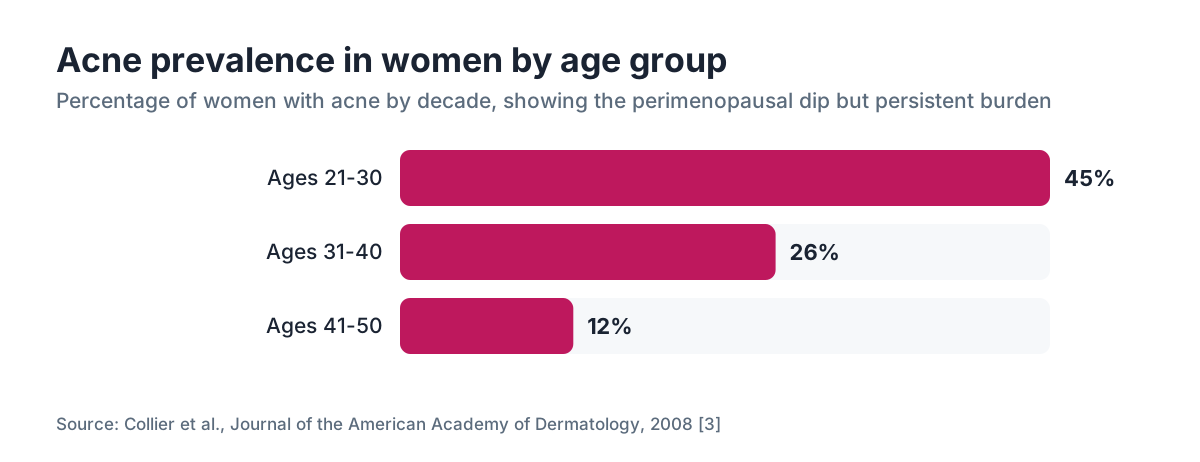
Adult female acne is common enough that it is now treated as its own clinical entity. A study in the Journal of the American Academy of Dermatology found that acne affects approximately 45% of women aged 21 to 30, 26% of women aged 31 to 40, and about 12% of women aged 41 to 50 [3]. Those prevalence numbers are widely cited, but they likely undercount the perimenopausal group, because many women in the 41-50 bracket are mid-perimenopause rather than post-menopausal.
A 2018 analysis in the Journal of Clinical and Aesthetic Dermatology noted that roughly one-third of women seeking acne treatment at dermatology offices are over 25, and the second peak in adult female acne shows up in the mid-40s [4].
About 20% of women develop acne for the first time as adults, having had clear skin as teenagers. For them, the perimenopause connection is often the explanation that finally makes sense of what's happening.
Which hormones actually trigger perimenopause acne?
Three hormones matter most, and understanding them helps you ask smarter questions of any clinician.
Estrogen (primarily estradiol): Estrogen suppresses sebaceous gland activity, supports skin barrier function, and promotes collagen production. As estradiol declines in perimenopause, all three effects weaken [1].
Androgens (testosterone, DHEA, DHT): These stimulate the sebaceous glands directly. In perimenopause, total testosterone may be falling, but free testosterone (the biologically active fraction) can actually rise if sex-hormone-binding globulin (SHBG) drops, which it does when estrogen falls. Higher free testosterone drives more sebum even when total testosterone looks normal on a standard lab panel [1].
Progesterone: Lower progesterone removes anti-androgenic protection. Progesterone, especially natural progesterone, competes at the androgen receptor and inhibits the enzyme 5-alpha reductase, which converts testosterone to the more potent DHT. When progesterone drops, DHT activity can climb in skin tissue [5].
Insulin and IGF-1 deserve a separate mention. High insulin and high insulin-like growth factor 1 (IGF-1) also stimulate sebaceous glands and promote comedone formation. This is one reason high glycemic diets consistently worsen acne in research, and why weight changes during perimenopause (often linked to insulin resistance) can make breakouts worse [6].
| Hormone | Direction in perimenopause | Effect on acne | |---|---|---| | Estradiol | Declining | Worsens: less sebum suppression, slower cell turnover | | Free testosterone | Often rising (if SHBG falls) | Worsens: more sebum production | | Progesterone | Declining (early) | Worsens: less anti-androgenic protection | | Insulin / IGF-1 | Often rising (insulin resistance) | Worsens: sebaceous stimulation |
What topical treatments work for perimenopause acne?
Most dermatologists start topically because it treats the skin directly with less systemic exposure. The options with real evidence behind them:
Tretinoin (topical retinoid): The most evidence-backed topical for adult female acne. Tretinoin speeds cell turnover, prevents comedone formation, and improves post-inflammatory hyperpigmentation. Studies support concentrations from 0.025% to 0.1%; older or drier perimenopausal skin often does better starting at 0.025% or with a gentler formulation like tretinoin microsphere or adapalene 0.1% [2]. Use it at night with a moisturizer. Give it 6 to 12 weeks.
Benzoyl peroxide: Kills C. acnes directly and has no resistance issue. Concentrations of 2.5% to 5% are as effective as 10% and far less drying. On perimenopausal skin, a leave-on gel at 2.5% overnight beats a wash that touches skin for 30 seconds [2].
Topical dapsone 5% or 7.5% gel (Aczone): This anti-inflammatory antimicrobial was studied specifically in adult women and is gentler than benzoyl peroxide. The Phase III trials showed meaningful reduction in inflammatory lesions in women over 35 [7].
Azelaic acid 15-20%: Anti-inflammatory, mildly antimicrobial, and one of the best-studied topicals for post-inflammatory hyperpigmentation. Safe in pregnancy too, which matters for women in earlier perimenopause who still need contraception.
Topical clindamycin + benzoyl peroxide (combination products): Clindamycin alone drives resistance; always pair it with benzoyl peroxide. The combination suits moderate inflammatory acne but is best used short-term [2].
One thing practitioners often miss: moisturizer is non-negotiable with perimenopausal acne. Stripping the moisture barrier makes every active ingredient more irritating and can worsen oil production through rebound. A fragrance-free, non-comedogenic moisturizer applied before or mixed with topicals is not optional.
Do oral medications help perimenopause acne?
Yes. For moderate-to-severe acne or acne that won't respond to topicals, systemic options often work faster and more reliably.
Spironolactone: The most commonly prescribed oral drug for hormonal acne in adult women, and it fits perimenopause particularly well. It is a potassium-sparing diuretic that blocks androgen receptors in skin, cutting sebum production. Doses from 50 mg to 150 mg daily reduce acne significantly, with benefits usually visible by 3 months. A 2017 cohort study in JAMA Dermatology found that 85% of women reported improvement and 67% reported clear or almost clear skin on spironolactone [8]. It requires potassium monitoring, especially in women on other medications. Note that spironolactone is a teratogen and requires reliable contraception in women who can still conceive.
Low-androgen oral contraceptives (OCPs): Four OCPs are FDA-approved for acne: norgestimate/ethinyl estradiol (Ortho Tri-Cyclen), norethindrone acetate/ethinyl estradiol (Estrostep Fe), drospirenone/ethinyl estradiol (Yaz), and drospirenone/ethinyl estradiol/levomefolate (Beyaz). They work by raising SHBG (which lowers free testosterone) and suppressing ovarian androgen production [9]. For women in perimenopause who also need contraception, they solve two problems at once. They are not appropriate for smokers over 35 or women with cardiovascular risk factors.
Oral antibiotics: Doxycycline and minocycline work short-term (3-4 months) to get inflammatory acne under control, always combined with benzoyl peroxide. They are not a long-term answer, because of antibiotic resistance and because they leave the hormonal root cause untouched [2].
Isotretinoin: Often thought of as a last resort, but guidelines now support its use for severe, scarring, or treatment-resistant adult female acne. The iPLEDGE program mandates pregnancy prevention. Typical adult doses (0.25-0.5 mg/kg/day) run lower than teen protocols and have a good safety profile in women over 40 [2].
Can hormone replacement therapy (HRT) clear up perimenopause acne?
This is probably the most under-asked question in dermatology offices, and the honest answer is: it can help, but it depends on what type of HRT you take and what your specific hormonal profile looks like.
Estrogen-containing HRT raises SHBG, which lowers free testosterone. It also restores some of the skin-level estrogen effects that suppress sebaceous activity. Observational data and clinical experience consistently show that women who start estrogen therapy in perimenopause often see less oiliness and fewer breakouts within three to six months [1].
The progestogen component matters enormously. Synthetic progestogens (progestins) vary widely in androgenicity. Levonorgestrel, norethindrone, and medroxyprogesterone acetate all carry some androgenic activity and can worsen acne. Lower-androgenicity options include micronized progesterone (Prometrium, or bioidentical progesterone), dydrogesterone, and drospirenone. Women with acne who need a progestogen in their HRT regimen are generally better served by micronized progesterone or a low-androgenic progestin [5].
If you've been diagnosed with perimenopause and are weighing HRT for hot flashes, sleep, or bone protection, name the skin benefit out loud with your prescribing clinician. For an overview of HRT options, our page on hormone replacement therapy covers the major formulation choices, including the estrogen patch route, which skips first-pass liver metabolism.
WomenRx provides telehealth access to hormone-literate clinicians who can review your labs and help decide whether estrogen, progesterone, or a combination makes sense for your full symptom picture, skin included.
One caveat worth stating plainly: HRT is not acne treatment per se. If acne is your only concern, spironolactone or topical retinoids are better starting points. HRT for acne alone is rarely indicated.
Does diet affect perimenopause acne?
More than most dermatologists used to believe. The evidence is now solid enough that the American Academy of Dermatology acknowledges diet as a contributing factor, even though it doesn't cause acne on its own [6].
The best-studied dietary driver is glycemic index. High glycemic foods (white bread, sugary drinks, refined carbohydrates) spike insulin and IGF-1, both of which stimulate sebaceous glands directly. A randomized controlled trial published in the American Journal of Clinical Nutrition found that a low-glycemic diet reduced total acne lesion counts significantly over 12 weeks compared to a high-glycemic control diet [6].
Dairy, particularly skim milk, is tied to acne in observational studies. The leading hypothesis is that milk carries IGF-1 precursors and hormone residues that stimulate sebaceous glands. The data isn't as strong as for glycemic index, but if your diet is heavy in dairy and your acne is stubborn, cutting back is a reasonable experiment.
Omega-3 fatty acids (from fatty fish, flaxseed, or fish oil supplements) have anti-inflammatory effects that may reduce acne severity, though the trial evidence is thin.
For perimenopausal women, diet quality matters for a second reason. Insulin resistance commonly worsens during perimenopause as estrogen's role in glucose metabolism fades. High insulin makes hormonal acne worse through the IGF-1 pathway, so the same eating patterns that hurt your metabolic health also hurt your skin.
Practically: a lower glycemic diet, less skim milk, enough protein, and omega-3s is a reasonable add-on. It won't replace topicals or hormonal treatment for moderate-to-severe acne, but it turns down the hormonal inputs that feed the problem.
What skincare routine works best for perimenopausal acne-prone skin?
Building a routine for skin that is breaking out and aging at the same time is a balancing act, and most commercial acne routines are built for teenage skin, so they strip too hard.
The framework that makes clinical sense for perimenopausal acne:
Cleanser: A gentle, low-pH, fragrance-free cleanser twice daily. Foaming cleansers with sulfates strip too much. CeraVe Hydrating Cleanser, La Roche-Posay Toleriane Hydrating Gentle Cleanser, or any equivalent non-stripping formula works. Washing more than twice a day backfires.
Actives (PM only, usually): Tretinoin or adapalene on dry skin 15 to 20 minutes after cleansing. If you also use benzoyl peroxide, apply it in the morning and the retinoid at night (they can degrade each other when layered). Azelaic acid works morning or night and pairs well with either.
Moisturizer: Non-comedogenic, fragrance-free, ceramide-containing formulas are ideal, because ceramide supports the barrier that estrogen used to maintain. Apply over actives to cut irritation, or mix a pea-sized amount of tretinoin into your moisturizer if you're very sensitive.
SPF: Non-negotiable. Sun exposure worsens post-inflammatory hyperpigmentation dramatically in estrogen-depleted skin. A mineral SPF 30-50 (zinc oxide, titanium dioxide) every morning. Mineral formulas are less likely to trigger contact sensitivity in reactive perimenopausal skin.
Things to skip: Alcohol-heavy toners, scrubs, aggressive physical exfoliants, and anything sold as a pore-minimizing astringent. They all damage the barrier that aging skin needs most.
Can stress make perimenopause acne worse?
Yes, through a direct hormonal mechanism. Psychological stress raises cortisol. Cortisol pushes the adrenal glands to make more DHEA-S, an androgen precursor that peripheral tissue, including skin, converts into active androgens. Higher adrenal androgens mean more sebum, independent of what your ovaries are doing.
Perimenopause itself is stressful, and many women in this life stage are also juggling peak career pressure, children, aging parents, and sleep wrecked by night sweats. The chronically elevated cortisol that follows is a real driver of skin worsening, separate from the ovarian hormone decline [1].
Sleep is the most underrated part of the equation. Poor sleep raises cortisol and impairs skin repair. Skin regenerates mostly at night (cell mitosis peaks around 2 a.m.). When night sweats interrupt sleep for weeks on end, skin recovery slows and inflammation rises. Treating the sleep disruption, whether through HRT, cognitive behavioral therapy for insomnia, or something else, often shows up on your skin within a few weeks.
Exercise moderates cortisol over time, though sweat left on skin can worsen acne if you don't rinse off promptly after a workout. Cleanse gently within 30 minutes of exercise. Small habit, real return.
When should you see a dermatologist versus your OB-GYN or a menopause specialist?
A dermatologist is the right first stop if:
- Your acne is leaving scars or hyperpigmentation
- You have moderate or severe breakouts (more than 20 active lesions, or any cysts)
- You have tried a consistent topical regimen for 12 weeks without improvement
- You are not sure whether it's acne or rosacea (which needs different treatment)
An OB-GYN or menopause specialist adds value if:
- Your acne shows up alongside other perimenopause symptoms (hot flashes, irregular periods, sleep disruption, mood changes)
- You want hormonal treatment and your clinician needs a full hormone picture before prescribing
- You are thinking about HRT and want skin improvement built into that conversation
- You are using or considering a low-androgen OCP for contraception and acne together
Ideal care is often collaborative. A dermatologist manages the topical and oral acne treatments while a hormone clinician manages the underlying estrogen-progesterone balance. The two conversations should stay transparent with each other, because some medications interact (spironolactone and estrogen both lower blood pressure, for example, and the combination deserves monitoring).
If you're trying to figure out where you are in the perimenopause-to-menopause timeline, our explainers on perimenopause age and when does menopause start may help frame those conversations.
WomenRx clinicians see the hormonal and dermatologic picture together, which is often where the most useful advice lives.
Are there any treatments to avoid for perimenopausal acne?
A few things are genuinely not worth trying, or actively backfire.
High-androgenicity progestins: If you are on hormonal therapy of any kind (HRT or contraception) and your acne got worse after you started it, check the progestogen. Levonorgestrel-dominant pills or MPA-containing HRT (medroxyprogesterone acetate, found in Prempro) can drive acne by stimulating androgen receptors in skin. Switching formulations can fix the problem without stopping hormonal therapy entirely [5].
Aggressive physical exfoliants: Walnut scrubs, brush devices used daily, and dermaplaning done too often all disrupt the barrier that perimenopausal skin already struggles to hold. The microinjuries raise inflammation instead of calming it.
Biotin supplements in high doses: High-dose biotin (above 1,000 mcg/day) can trigger or worsen acne in susceptible people. It's commonly taken for hair loss (which can also accompany perimenopause), and the skin-worsening effect is documented even if the mechanism isn't fully understood. If you take biotin and have stubborn acne, this is worth testing.
Over-the-counter acne systems with strong benzoyl peroxide washes: The Proactiv-style regimens with 10% benzoyl peroxide wash-off cleansers were built for teenagers with resilient, oily skin. On perimenopausal skin, they strip ceramides hard and trigger the kind of irritant dermatitis that looks like acne and gets mistaken for treatment failure.
Progesterone creams without clinical oversight: Over-the-counter progesterone creams contain very low doses and absorb erratically. They don't reliably raise serum progesterone to meaningful levels, so they're unlikely to deliver the anti-androgenic skin benefits you'd want. Oral micronized progesterone (prescription) is a different matter.
Frequently asked questions
Why am I suddenly getting pimples in my 40s when I never had acne as a teen?
About 20% of women develop acne for the first time in adulthood. In the 40s, the most common cause is the hormonal shift of perimenopause: estrogen drops and androgens become relatively dominant, which ramps up sebum production. If your breakouts sit on the lower face and jawline and started around the same time as irregular periods or other perimenopause symptoms, hormonal acne is the likely diagnosis.
How long does perimenopause acne last?
It can last the full length of perimenopause, which averages four to eight years. Many women find acne improves once they reach menopause and estrogen stops fluctuating. Some keep breaking out after menopause if androgen activity stays high relative to estrogen. Without treatment, waiting it out is often years of avoidable breakouts. Most women do better treating the root cause than riding it out.
Does HRT make acne better or worse?
It depends on the formulation. Estrogen-containing HRT typically improves acne by raising SHBG and lowering free testosterone. The progestogen component is where trouble starts: high-androgenicity progestins like levonorgestrel or medroxyprogesterone acetate can worsen acne. Micronized progesterone and drospirenone carry lower androgenic activity and are better choices for acne-prone women. Talk through formulation specifics with your prescribing clinician before assuming HRT will help.
Is spironolactone safe to take during perimenopause?
Generally yes, for healthy women without kidney disease or significant cardiovascular issues. Spironolactone at 50-150 mg daily is widely used for hormonal acne in perimenopausal women. It requires potassium monitoring and is a teratogen, so reliable contraception is needed for women who can still conceive. Because it can lower blood pressure, women on antihypertensives or estrogen (which also has mild BP effects) need baseline and follow-up monitoring.
Can perimenopause cause cystic acne on the chin and jawline?
Yes, and this location is a hallmark of hormonal acne. Deep, painful nodules or cysts on the chin, jawline, and neck that follow a cycle, or appear more randomly in perimenopause, strongly suggest androgen-driven sebaceous activity. Hormonal treatments like spironolactone or low-androgen OCPs tend to work better for this pattern than topical-only approaches, because the cause is internal.
Does diet really affect perimenopause acne?
Yes, meaningfully. High glycemic index foods raise insulin and IGF-1, both of which stimulate sebaceous glands directly. A randomized controlled trial found a low-glycemic diet reduced acne lesion counts significantly over 12 weeks. Skim milk is also tied to worsened acne in observational studies. For perimenopausal women, who already carry more insulin resistance, lowering dietary glycemic load is one of the most actionable non-prescription steps.
What is the best topical for adult hormonal acne?
Tretinoin is the best-evidenced single topical for adult female acne. It normalizes cell turnover, prevents comedone formation, and reduces post-inflammatory hyperpigmentation. Start at 0.025% if your skin is sensitive or dry. Pair it with a non-comedogenic moisturizer to cut irritation. Topical dapsone gel (Aczone 7.5%) is a strong second option, studied specifically in adult women and gentler for reactive skin.
Can stress and cortisol cause acne during perimenopause?
Yes, through adrenal androgen production. Cortisol drives the adrenal glands to release DHEA-S, which skin tissue converts to active androgens, increasing sebum. Perimenopause-related sleep disruption from night sweats also raises cortisol chronically. Addressing sleep quality and managing cortisol load through exercise and stress reduction has a real, if modest, effect on skin alongside topical and hormonal treatments.
Are birth control pills good for perimenopause acne?
Four oral contraceptive formulations are FDA-approved for acne and work well for perimenopausal women who also need contraception. They raise SHBG (reducing free testosterone) and suppress ovarian androgen production. They are not appropriate for smokers over 35 or women with hypertension, migraine with aura, or other cardiovascular risk factors. Drospirenone-containing pills carry the lowest androgenic profile and are often preferred for hormonal acne.
How is perimenopause acne different from rosacea?
Both peak during perimenopausal years and both involve facial redness and bumps. Key differences: rosacea causes persistent central facial flushing, visible blood vessels, and burning or stinging, and it flares with heat triggers like hot drinks, sun, and alcohol. Perimenopause acne produces comedones (blackheads, whiteheads), hits the lower face and jawline, and lacks the flushing. Many women have both at once, which is why a dermatologist's diagnosis is valuable.
Does losing weight help perimenopause acne?
It can, particularly if insulin resistance is a factor. Adipose tissue converts adrenal steroids to estrogens and androgens, and higher body fat raises circulating androgens in some women. Weight loss improves insulin sensitivity, lowers IGF-1, and can reduce the relative androgen burden. This isn't a primary acne treatment, but for women managing metabolic health during perimenopause, the skin benefit is a reasonable secondary payoff.
What labs should I ask for if I think hormones are causing my acne?
A useful baseline panel includes total and free testosterone, DHEA-S, sex-hormone-binding globulin (SHBG), estradiol, and FSH (to confirm perimenopause status). If you're also concerned about polycystic ovary syndrome, add LH and fasting insulin. Not all practitioners order free testosterone routinely, but it tells you more than total testosterone alone about androgen activity at the tissue level.
Can progesterone supplements help perimenopause acne?
Oral micronized progesterone (prescription-only Prometrium or compounded bioidentical progesterone) can help, because natural progesterone inhibits 5-alpha reductase, the enzyme that converts testosterone to the more potent DHT in skin. Over-the-counter progesterone creams deliver inconsistent serum levels and are unlikely to do much. The prescription form taken orally or vaginally is what has clinical relevance for perimenopausal hormone management.
Can I use retinol from a drugstore instead of prescription tretinoin?
Retinol works through the same pathway as tretinoin but is roughly 20 times less potent, because it needs two conversion steps in skin to become retinoic acid. Drugstore retinol (0.1-1%) produces some benefit over several months but is slower and less reliable than prescription tretinoin for moderate acne. It's a reasonable starting point if you can't get a prescription, or a maintenance option, but for active inflammatory acne, prescription tretinoin is meaningfully stronger.
Sources
- Journal of Clinical and Aesthetic Dermatology, Holzmann & Shakery 2014, 'Adult Female Acne'
- American Academy of Dermatology, Acne Clinical Guidelines 2016
- Journal of the American Academy of Dermatology, Collier et al. 2008, acne prevalence by age in women
- Journal of Clinical and Aesthetic Dermatology, Dréno et al. 2018, adult female acne
- Climacteric, Verdolini et al. 2002, 'Beneficial effects of oral micronized progesterone in the treatment of acne'
- American Journal of Clinical Nutrition, Smith et al. 2007, low glycemic diet RCT in acne
- Journal of Drugs in Dermatology, Del Rosso et al., dapsone gel in adult female acne
- JAMA Dermatology, Charny et al. 2017, spironolactone cohort study
- FDA, Approved Drug Products (Drugs@FDA)
- Endocrine Society Clinical Practice Guideline, Polycystic Ovary Syndrome 2013 (relevant for androgen testing)
- Journal of the Academy of Nutrition and Dietetics, Burris et al. 2014, diet and acne review