Perimenopause and heavy periods: why they happen and how to stop them
TL;DR: Heavy periods are one of the most common complaints of perimenopause. Fluctuating estrogen builds the uterine lining up unevenly, producing longer, heavier, or unpredictable bleeding. Treatments range from progesterone and low-dose hormonal contraception to the hormonal IUD and, in stubborn cases, endometrial ablation. Bleeding that soaks a pad per hour for two hours straight warrants same-day evaluation.
What actually causes heavy periods in perimenopause?
The short answer is estrogen without enough progesterone to balance it.
In the years leading up to your final period, your ovaries start skipping ovulations. No ovulation means no corpus luteum, which means almost no progesterone that cycle. Estrogen, meanwhile, can still surge to surprisingly high levels, sometimes higher than in your 30s, before crashing. That seesaw builds the uterine lining up thick and patchy, and when it finally sheds, the shed is heavy, prolonged, or both [1].
This is called estrogen dominance relative to progesterone, though the term is loose and not an official diagnosis. The biological reality is simpler: your endometrium (the lining) has been overstimulated without the progesterone-driven maturation that would make it shed cleanly. The result can be flooding, clotting, and periods that last 10 days when they used to last five.
Structural causes matter too. Fibroids grow in response to estrogen, so the erratic estrogen of perimenopause can enlarge existing fibroids and seed new ones. Endometrial polyps, adenomyosis, and even a thyroid out of range all amplify bleeding. A provider who waves off heavy perimenopausal bleeding as "just hormones" without ruling those out is cutting corners.
How heavy is too heavy? What counts as abnormal uterine bleeding?
The medical threshold for heavy menstrual bleeding (HMB) is losing more than 80 mL of blood per cycle, but nobody measures that at home. The clinical proxies that actually matter [2]:
- Soaking through a pad or tampon every hour for two or more consecutive hours
- Passing clots larger than a quarter
- Bleeding that lasts longer than 7 days
- Needing to double up protection (pad plus tampon) regularly
- Waking at night to change protection
- Symptoms of anemia: fatigue, shortness of breath, heart pounding, brain fog
The American College of Obstetricians and Gynecologists (ACOG) uses the phrase "abnormal uterine bleeding" (AUB) to capture bleeding that falls outside a normal pattern in timing, volume, or regularity [2]. Perimenopause is one of the leading causes of AUB in women 40 to 55.
One number worth keeping: a 2018 study in the journal Menopause found that roughly 25% of perimenopausal women report heavy menstrual bleeding bad enough to affect daily life [3]. So if you're drowning in it, you are very much not alone. "Common" does not mean "untreatable" or "safe to ignore."
How do you know if heavy bleeding is perimenopause or something more serious?
This is the question a quiz or symptom checker can't answer. Heavy perimenopausal bleeding is common and manageable, but some causes of heavy bleeding in this age group are serious, including endometrial hyperplasia and endometrial cancer. The risk of endometrial cancer rises with age and tracks directly with unopposed estrogen exposure [4].
The North American Menopause Society (NAMS) and ACOG both recommend that any woman with postmenopausal bleeding (bleeding more than 12 months after her last period) get an endometrial biopsy and/or transvaginal ultrasound promptly [1][4]. Even before that final period, bleeding that is unusually heavy, happens between cycles, or doesn't fit your known perimenopausal pattern should be checked.
A standard workup typically includes:
- Transvaginal ultrasound to measure endometrial thickness and look for polyps or fibroids
- Endometrial biopsy if thickness is over 4 to 5 mm in a postmenopausal woman or if other risk factors are present
- Complete blood count to check for iron-deficiency anemia
- Thyroid function tests
- Coagulation studies if there is a personal or family history of bleeding disorders
- Cervical cancer screening if not current
Don't let a provider skip this workup just because you're the right age for perimenopause. Most of the time, heavy perimenopausal bleeding is benign and hormonal. But you want to know you're in that majority, not assume it.
Which treatments actually work for heavy periods in perimenopause?
There are real, evidence-based options here, and the best one depends on whether you also need contraception, have contraindications to hormones, or want to keep your uterus.
Hormonal options
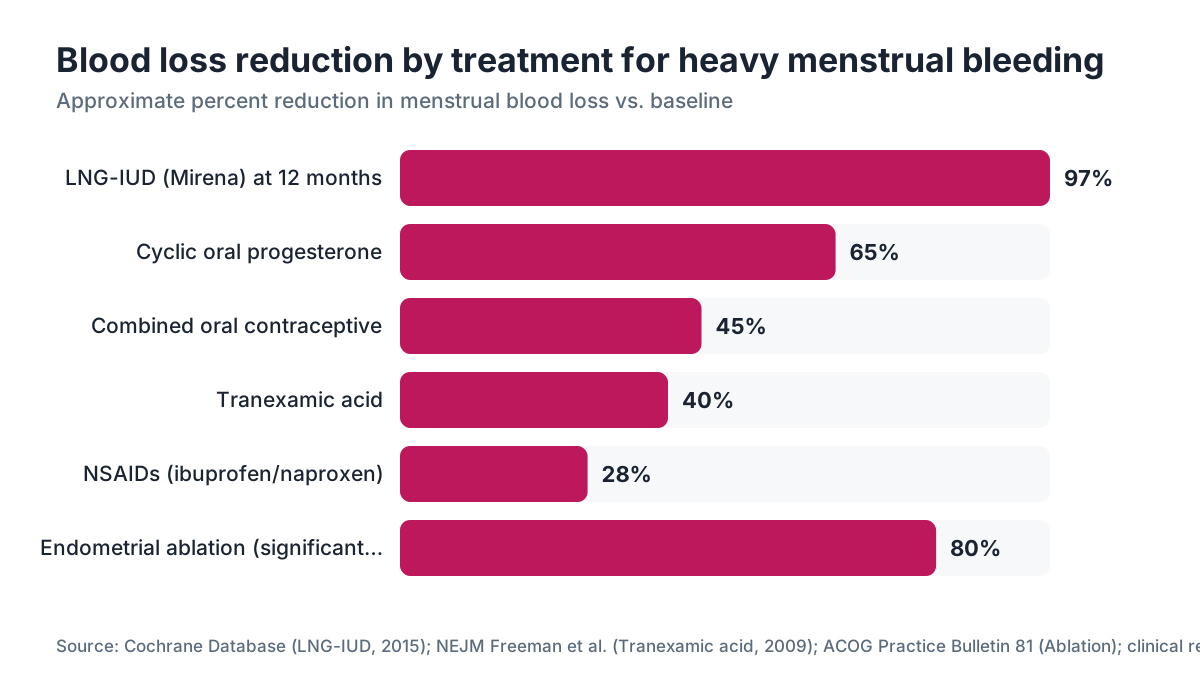
The levonorgestrel-releasing intrauterine device (LNG-IUD, sold as Mirena) is arguably the single most effective medical treatment for heavy menstrual bleeding. A Cochrane review found it cuts menstrual blood loss by about 97% at 12 months and outperforms oral norethisterone for HMB [5]. It also provides contraception, which matters because you can still get pregnant in perimenopause. At age 45 to 50 the spontaneous pregnancy rate is low but not zero.
Cyclic progesterone (oral micronized progesterone, brand name Prometrium, or synthetic progestins like norethindrone) taken in the second half of the cycle organizes the shedding and can sharply reduce volume. This is a first-line option for women who don't want an IUD and have no contraindications. You can read more about progesterone and how it works during perimenopause.
Combined oral contraceptives (low-dose estrogen plus progestin) work well for women under 50 who smoke fewer than 15 cigarettes a day and have no cardiovascular risk factors. They regulate cycles, reduce bleeding, and provide contraception. The combined oral contraceptive specifically indicated by the FDA for heavy menstrual bleeding is the 10 mcg EE/norethindrone acetate pill (Lo Loestrin, generics), though many formulations work.
Menopausal hormone therapy (MHT), combining estrogen and progesterone, is mainly used to treat hot flashes and other menopause symptoms, but adding cyclic or continuous progesterone to estrogen stabilizes the lining and can reduce heavy bleeding in perimenopause. If you're also dealing with night sweats, mood shifts, and joint pain alongside your flooding periods, hormone replacement therapy addresses the whole picture rather than one symptom at a time.
Non-hormonal options
Tranexamic acid (Lysteda) is an antifibrinolytic taken only during heavy bleeding days. It doesn't touch your hormones. A randomized trial showed it reduces menstrual blood loss by about 40% compared to placebo [6]. It's prescription-only in the US. Good option for women who cannot or will not use hormones.
NSAIDs (ibuprofen, naproxen) reduce blood loss by roughly 20 to 35% when taken regularly through heavy days, and they cut cramping. Not a dramatic fix, but genuinely useful as an add-on.
Procedural options
Endometrial ablation destroys the uterine lining and fits when medical management has failed and the woman doesn't want future pregnancy. About 80% of women bleed significantly less after ablation, and about 30% stop having periods entirely [7]. It does not prevent pregnancy, so reliable contraception is still needed. It is off the table if endometrial cancer or significant hyperplasia has been found.
Hysterectomy is definitive. For women with severe, refractory bleeding, adenomyosis, or large fibroids, it may end up being the best quality-of-life choice. It should not be the first move when medical treatment hasn't been tried.
Does iron deficiency anemia from heavy periods need its own treatment?
Yes, and it's more common than people realize. Losing 80 mL or more per cycle is about two-thirds of a cup of blood every month. Over time that drains iron stores even before hemoglobin drops, causing what's called iron deficiency without anemia, which still brings fatigue, brain fog, and less exercise tolerance.
A complete blood count plus a serum ferritin level (more telling than hemoglobin) is the right test. Ferritin below 30 ng/mL points to depleted iron stores even if you're not technically anemic. Below 15 ng/mL is frank iron deficiency.
Oral iron (ferrous sulfate 325 mg every other day, not daily, which improves absorption per a 2017 Lancet Haematology study [8]) is the standard starting point. Women with severe anemia, malabsorption, or intolerance to oral iron may need IV iron infusion, which refills stores much faster. Treating the bleeding source is the other half. Iron supplements while the bleeding continues is running the tap and mopping the floor at the same time.
Can perimenopause heavy periods cause flooding or sudden gushes?
Yes. Many women describe a sudden rush of blood, soaking through clothes without warning, often in the middle of a meeting or at the grocery store. This is not exaggeration. It happens because the lining builds up unevenly over a skipped-ovulation cycle and then sheds in large pieces all at once, rather than in the steady, organized way a normal ovulatory cycle produces.
Clots are also extremely common. Passing a clot the size of a golf ball during perimenopausal flooding is not rare, though it's alarming. The clots themselves aren't dangerous in the sense that they don't cause clotting elsewhere in the body. They're pieces of endometrial tissue and organized blood that didn't break down before being expelled.
What is actually dangerous: soaking more than one pad per hour for more than two hours. That is heavy enough to warrant urgent or emergency care. Prolonged heavy blood loss causes acute anemia and, in extreme cases, hemodynamic instability. Go to an urgent care or ER, not "call your doctor when you can."
How long do heavy periods in perimenopause last, and do they get better on their own?
Perimenopause typically lasts 4 to 10 years, averaging about 7 years before the final menstrual period [1]. Heavy, irregular bleeding tends to be worst in the 2 to 3 years right before menopause, when cycles turn chaotic and anovulation runs more frequent.
So yes, in the very long run, this resolves at menopause. But waiting it out is not a strategy most women should accept. Seven years of flooding periods, iron deficiency, and disrupted life is a long time. Treatment is available and effective. You don't have to just endure it.
Some women find that cycles get shorter and then stop, with no phase of heavy bleeding at all. Others have escalating flooding for years. There's no reliable way to predict which pattern you'll get from symptoms alone. Checking your cycle history against perimenopause age norms gives context, but individual variation is wide.
What does weight have to do with heavy perimenopausal bleeding?
More than most people think. Adipose (fat) tissue is a significant source of estrogen production, specifically estrone, through a process called aromatization. Women with higher body fat carry more circulating estrogen, which means more endometrial stimulation and greater risk of heavy, irregular bleeding [9].
This sets up a loop that feeds itself: perimenopausal hormonal shifts promote fat gain, especially abdominal fat, and that fat makes more estrogen, which worsens bleeding. Intentional weight reduction in the 5 to 10% range has been shown to lower estrogen levels measurably and, in some studies, to improve menstrual regularity.
GLP-1 receptor agonists like semaglutide have become a common tool for weight loss in midlife women, and some women report changes in cycle regularity as weight drops. The data specific to menstrual outcomes with GLP-1s is still early, but the mechanism connecting weight loss to lower estrogen is well established. If weight is a concern alongside your perimenopausal symptoms, platforms like WomenRx can connect you with providers who think about these issues together rather than in isolation.
Fibroids also grow faster in the presence of higher estrogen, so the same body fat that worsens bleeding can also feed fibroid growth. That's another reason weight management is genuinely relevant here, physiologically and more than cosmetically.
Are there any lifestyle changes that reduce heavy perimenopausal bleeding?
The honest answer: lifestyle changes alone are unlikely to stop truly heavy perimenopausal bleeding. They can trim severity at the margins.
What has real evidence behind it:
- Weight management lowers circulating estrogen, as covered above. Even modest loss matters.
- Regular aerobic exercise appears to modestly reduce menstrual blood loss in some studies, possibly through prostaglandin pathways, though the data isn't strong enough to call it a primary treatment.
- Anti-inflammatory diet is plausible biologically (prostaglandins drive heavy bleeding and are influenced by dietary fat composition), but clinical trial evidence in perimenopausal women specifically is thin.
- Reducing alcohol is worth doing. Alcohol raises estrogen levels acutely and chronically, and heavy drinkers show measurably higher circulating estrogen than non-drinkers [9].
- Checking your medications: anticoagulants like warfarin or apixaban genuinely increase menstrual blood loss. If you're on one and your periods have gotten heavier, that's part of the picture.
What doesn't work despite the internet's enthusiasm: vitex (chasteberry) has minimal evidence for heavy bleeding specifically. Evening primrose oil has almost none. These aren't harmful, but they aren't treatments.
When should you see a doctor, and what specialist do you need?
See a provider if:
- Your periods are heavier than they used to be and have been for two or more cycles
- You're soaking through protection hourly for two hours or more
- You're passing large clots
- You have bleeding between periods or after sex
- You feel fatigued, lightheaded, or short of breath in a way you weren't before
- Your periods keep running longer than 7 days
Your starting point is your OB-GYN or primary care provider. Often that's all you need. If there's a structural cause (fibroids, polyps, adenomyosis) your OB-GYN can manage it or refer you to a minimally invasive gynecologic surgeon. If the bleeding is primarily hormonal and you want a full-picture approach to perimenopause, a menopause specialist (look for NAMS-certified Menopause Practitioners at menopause.org) brings a deeper toolkit.
Telehealth is genuinely useful for the hormone management piece: getting progesterone prescribed, adjusting HRT, or getting an IUD referral. It is not a substitute for the ultrasound and biopsy workup that may be needed before treatment. The physical exam and imaging require in-person care.
For an overview of what the full transition looks like and when does menopause start, that context helps place your current symptoms on a timeline. WomenRx providers can help you think through the hormonal management layer and coordinate with your in-person gynecologist on next steps.
Comparison of treatments for heavy perimenopausal bleeding
The table below sums up the main treatment options, their evidence base, and key trade-offs.
| Treatment | Blood loss reduction | Contraception | Hormone-free | Best for | |---|---|---|---|---| | LNG-IUD (Mirena) | ~97% at 12 months [5] | Yes | No | Most women; first-line for HMB | | Cyclic progesterone | 50-80% in anovulatory cycles | No | No | Women also managing perimenopausal symptoms | | Combined OCP | 40-50% | Yes | No | Women under 50 needing contraception | | Tranexamic acid | ~40% [6] | No | Yes | Women avoiding all hormones | | NSAIDs | 20-35% | No | Yes | Mild-moderate HMB, adjunct use | | Endometrial ablation | 80% have significant reduction [7] | No (still need contraception) | Yes | Women done with childbearing, failed medical tx | | MHT (estrogen + progesterone) | Varies; stabilizes lining | No | No | Women with broader menopause symptoms | | Hysterectomy | 100% | N/A | Yes | Refractory bleeding, adenomyosis, large fibroids |
The NAMS 2023 position statement notes that "the levonorgestrel intrauterine system is particularly effective for managing heavy menstrual bleeding in the perimenopausal transition" [1].
Frequently asked questions
Is it normal to have extremely heavy periods in perimenopause?
Heavy periods are very common in perimenopause, affecting roughly 25% of women in this transition. Erratic estrogen without the balancing effect of progesterone builds the uterine lining up unevenly and lets it shed heavily. Common does not mean you have to endure it. Effective treatments exist. Still, heavy bleeding should always be evaluated to rule out structural causes like fibroids, polyps, or, rarely, endometrial cancer.
How do I know if my heavy period is perimenopause or something else like fibroids or cancer?
You cannot tell from symptoms alone. Perimenopausal hormonal bleeding, fibroids, endometrial polyps, adenomyosis, and endometrial cancer can all produce heavy bleeding. A transvaginal ultrasound and, if indicated, an endometrial biopsy are the standard workup. Any woman with bleeding after menopause (12 months without a period) should get this evaluation promptly. Heavy bleeding before menopause warrants it too if it's new, worsening, or paired with bleeding between cycles.
What is the best treatment for heavy periods during perimenopause?
The levonorgestrel IUD (Mirena) has the strongest evidence for heavy menstrual bleeding, cutting blood loss by about 97% at one year per Cochrane review data. For women who want a non-IUD option, cyclic oral progesterone is a solid first step. Tranexamic acid works well for women avoiding hormones. The right choice depends on whether you also need contraception, want broader perimenopausal symptom control, or have contraindications to specific treatments.
Can perimenopause cause periods every two weeks?
Yes. Anovulatory cycles in perimenopause can run very short, sometimes 14 to 18 days, so you seem to bleed every two weeks. What's actually happening is that without ovulation, cycle length turns unpredictable and can shorten sharply. This differs from intermenstrual bleeding (spotting between cycles), though telling them apart takes tracking. Either pattern warrants evaluation. Cyclic progesterone or the hormonal IUD typically corrects the timing.
Should I go to the ER for heavy perimenopausal bleeding?
Go to an ER or urgent care if you are soaking through one full pad or tampon per hour for two or more consecutive hours. That level of blood loss can cause acute iron-deficiency anemia and, in severe cases, hemodynamic instability. Dizziness, rapid heartbeat, or feeling faint during heavy bleeding are also reasons to go immediately rather than wait for a regular appointment.
Does progesterone stop heavy periods in perimenopause?
Often, yes. Cyclic progesterone taken in the second half of the cycle (days 14 to 28, or similar) matures the uterine lining and produces a more organized, lighter bleed. In anovulatory cycles, where the lining has built up without progesterone exposure, adding it can sharply reduce both volume and duration. The hormonal IUD delivers levonorgestrel (a synthetic progestin) straight to the lining and achieves even greater reductions.
Can heavy periods in perimenopause cause anemia?
Yes, and it's genuinely common. Losing more than 80 mL per cycle steadily drains iron stores even before hemoglobin falls. Women often feel fatigued, foggy, or short of breath long before they show frank anemia on a blood test. Ask your provider for serum ferritin alongside a CBC. Ferritin below 30 ng/mL points to depleted stores. Treating the bleeding source matters as much as taking iron supplements.
At what age do heavy perimenopausal periods typically start?
Perimenopause most commonly begins in the mid-to-late 40s, averaging around 47 to 48, though some women notice changes as early as their early 40s. Heavy, irregular bleeding tends to worsen in the two to three years right before the final period, when anovulatory cycles peak. The average age of menopause in the US is 51 to 52, so the most disruptive bleeding phase often falls between ages 48 and 52.
Can birth control pills help with heavy periods in perimenopause?
Yes, low-dose combined oral contraceptives are a first-line option for perimenopausal women with heavy bleeding who also want contraception and have no cardiovascular contraindications. They suppress ovulation, stabilize the uterine lining, and typically reduce blood loss by 40 to 50%. Many providers prefer the lowest effective estrogen dose (20 mcg EE or less) in this age group. Women over 35 who smoke heavily are not good candidates due to clot and stroke risk.
Does hormone replacement therapy make heavy periods worse or better?
It depends on the regimen. Estrogen alone can worsen or cause heavy bleeding by stimulating the lining. Estrogen combined with a progestogen (the standard approach for women with a uterus) stabilizes the lining and generally reduces bleeding when the progestogen dose and timing are right. The first few months of MHT can involve irregular spotting while the lining adjusts. Flooding that persists past three to four months on MHT warrants a regimen review and a repeat ultrasound.
Can weight loss reduce heavy periods in perimenopause?
It can help at the margins. Fat tissue produces estrogen via aromatization, so higher body fat means more circulating estrogen and greater endometrial stimulation. Even a 5 to 10% reduction in body weight measurably lowers circulating estrogen in several studies. Weight loss alone is unlikely to stop truly heavy bleeding but can improve your response to hormonal treatments and reduce fibroid-driving estrogen. It's a meaningful part of the overall picture, not a substitute for treatment.
Is endometrial ablation a good option for heavy perimenopausal bleeding?
For the right candidate, yes. Ablation works well when medical management has failed, the woman doesn't want future pregnancy, and structural causes have been ruled out. About 80% of women bleed significantly less afterward and about 30% stop bleeding entirely. It's off the table if there's endometrial hyperplasia or cancer. Reliable contraception is still needed afterward because pregnancy after ablation carries serious risks, including placenta accreta.
How do I track my periods during perimenopause to help my doctor?
Use a period-tracking app that lets you log both start and end dates and rate heaviness (number of pads/tampons per day, presence of clots). Note any bleeding between cycles. Bring at least three to six months of data to your appointment. This gives your provider a pattern rather than a snapshot, which matters for telling anovulatory cycles from intermenstrual bleeding and for choosing the right treatment. Photos of clots, though unglamorous, can also be genuinely useful clinical information.
What blood tests should I ask for if I have heavy periods in perimenopause?
At minimum: complete blood count (CBC) to check for anemia, serum ferritin for iron stores, TSH for thyroid function, and FSH and estradiol if confirming perimenopause is helpful. If you have a personal or family history of bleeding disorders, von Willebrand factor testing is appropriate. ACOG recommends considering coagulation screening in women with heavy menstrual bleeding since menarche, though perimenopause-onset HMB is less likely to be von Willebrand related than adolescent-onset HMB.
Sources
- North American Menopause Society (NAMS), Menopause Practice: A Clinician's Guide, 6th edition and NAMS position statements
- ACOG Practice Bulletin No. 128, Diagnosis of Abnormal Uterine Bleeding in Reproductive-Aged Women
- Menopause journal, Harlow et al., 2018, heavy menstrual bleeding in perimenopause prevalence
- National Cancer Institute, Endometrial Cancer Risk Factors
- Cochrane Database of Systematic Reviews, Lethaby et al., Intrauterine systems vs other medical treatments for heavy menstrual bleeding
- New England Journal of Medicine, Freeman et al., Tranexamic acid treatment of heavy menstrual bleeding randomized trial
- ACOG Practice Bulletin No. 81, Endometrial Ablation
- Lancet Haematology, Moretti et al., 2017, alternate-day iron dosing absorption study
- NIH National Institute on Alcohol Abuse and Alcoholism, Alcohol and Hormones
- FDA Drug Label, Mirena (levonorgestrel-releasing intrauterine system)
- Endocrine Society Clinical Practice Guideline, Management of Menopause
- CDC, Division of Reproductive Health, Abnormal Uterine Bleeding data