Perimenopause at 35: what's actually happening and what to do
TL;DR: Perimenopause can begin in the mid-30s for a small share of women, though the median onset sits closer to 47. Irregular cycles, 2 a.m. waking, mood shifts, and brain fog are early signs. Hormone testing helps but misses a lot because levels swing wildly, so diagnosis is mostly clinical. Real treatments exist, hormonal and not. Start the conversation early.
Can perimenopause really start at 35?
Yes. It can, and for a real minority of women it does.
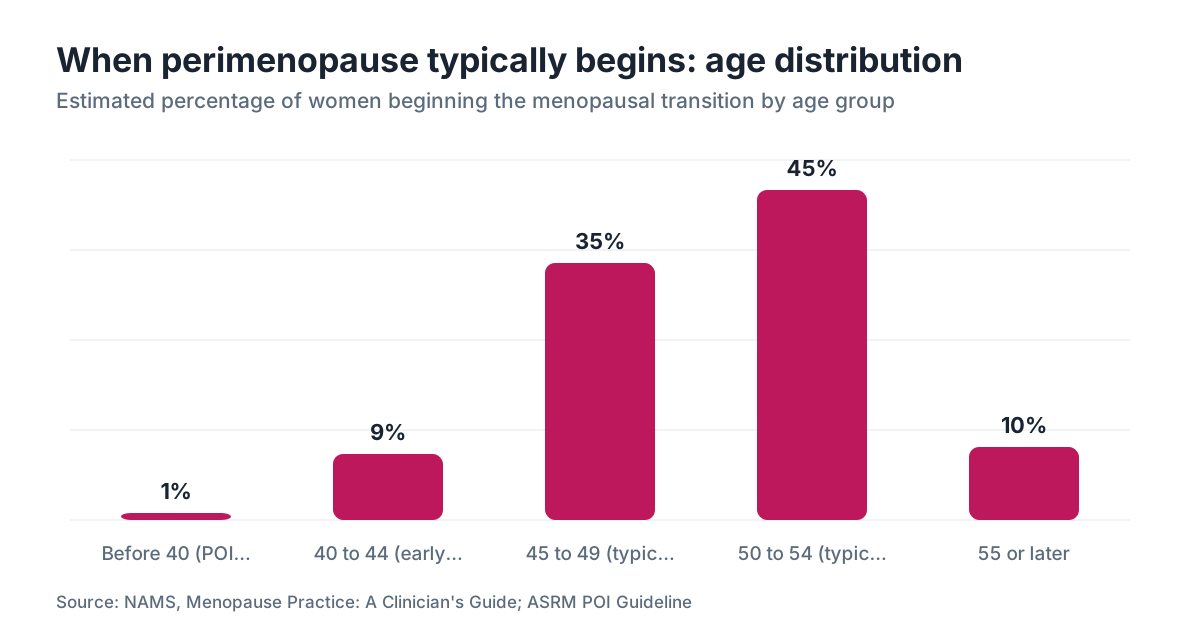
The North American Menopause Society (NAMS) defines perimenopause as the transition leading up to menopause, marked by irregular cycles and swinging hormone levels. Most women enter it in their mid-to-late 40s, but the range is wide. NAMS puts the start of the transition between ages 45 and 55, with a median around 47 [1]. The outer edge of that window reaches into the late 30s for some women.
About 1 in 100 women hit primary ovarian insufficiency (POI), sometimes called premature menopause, before age 40 [2]. That's a separate diagnosis from ordinary early perimenopause, but it proves the point: ovarian function can shift much earlier than most people assume. A 35-year-old noticing cycle changes, new sleep trouble, or mood swings isn't imagining it and isn't being dramatic. Her ovaries may be changing gears.
Early perimenopause looks the same under a microscope at 35 as it does at 46. Ovarian estrogen and progesterone production becomes erratic rather than simply low. FSH (follicle-stimulating hormone) may creep up as the pituitary works harder to recruit follicles. Cycles often shorten first, then lengthen, then turn unpredictable. The whole thing unfolds over years, sometimes a decade or more before the final period.
What are the symptoms of perimenopause at 35?
The symptom list is the same at any age. At 35, though, almost every one of them gets pinned on stress, anxiety, thyroid trouble, or plain exhaustion. That misread costs women years.
The common signs:
- Cycle changes: shorter cycles (under 25 days), longer ones (over 38 days), heavier or lighter flow, skipped periods
- Sleep disruption: waking between 2 and 4 a.m., trouble falling back asleep, night sweats that aren't quite hot flashes yet
- Mood changes: more anxiety, irritability, low mood, a sense that your emotional baseline moved
- Brain fog: word-finding trouble, poor concentration, memory lapses that feel new
- Vasomotor symptoms: hot flashes or night sweats (less common this early, but possible)
- Libido shifts: less interest in sex, or changes in arousal and lubrication
- Breast tenderness: often worse in the luteal phase, driven by progesterone swings
- Joint aches and headaches: estrogen affects inflammation pathways, and its swings can trigger both
Data from the Study of Women's Health Across the Nation (SWAN) shows women in the early transition report sleep disturbance and mood symptoms at rates close to those in the late transition, so these problems don't wait for dramatic hormone shifts to show up [3].
Here's the hard part at 35. Every one of those symptoms has a believable non-hormonal cause. Thyroid dysfunction, iron-deficiency anemia, low vitamin D, and clinical anxiety all overlap heavily with early perimenopause. A good clinician clears those first, then looks at the hormones.
What hormone levels indicate early perimenopause?
Hormone testing in perimenopause is useful and limited at the same time. Most women feel let down when their labs read "normal," and there's a clean reason for that.
Perimenopause is defined by variability, not steady low levels. Estradiol can read 300 pg/mL one month and 40 pg/mL the next. A single blood draw is one frame of a movie. FSH is the most commonly ordered test, but NAMS says FSH swings enough during perimenopause that a single measurement has limited diagnostic value [1].
What testing can tell you:
| Test | What it measures | Limitation in perimenopause | |---|---|---| | FSH (day 2-3) | Ovarian reserve signal | Highly variable; may read normal even with early transition | | Estradiol (day 2-3) | Baseline estrogen | Wide normal range; single draw misleading | | AMH (Anti-Müllerian hormone) | Ovarian reserve | More stable across the cycle; low AMH predicts earlier menopause | | Progesterone (day 21) | Confirms ovulation | Useful for spotting anovulatory cycles | | TSH, Free T4 | Thyroid function | Rules out a major confounder | | CBC, ferritin | Anemia | Rules out fatigue and cycle-change mimics |
AMH is the single most useful marker for where a woman sits on her ovarian timeline. Research in the Journal of Clinical Endocrinology and Metabolism found AMH declines steadily with age and predicts menopause timing more accurately than FSH or estradiol [4]. An AMH below 0.5 ng/mL in a 35-year-old is worth attention and follow-up, though it doesn't confirm perimenopause on its own.
The Endocrine Society's menopause guideline says the diagnosis is primarily clinical, built on age, symptoms, and menstrual history rather than any single lab number [5]. If you're 35 with irregular cycles and new sleep and mood symptoms, that picture beats one FSH result every time.
How does perimenopause at 35 differ from typical perimenopause?
The biology matches. The context does not.
At 35, you almost certainly aren't expecting this. You may be building a career, raising small kids, or still deciding whether you want kids at all. Fertility stakes land harder at 35 than at 47. Irregular cycles and shrinking ovarian reserve aren't academic if pregnancy is part of your plan. They're urgent.
An early start also means a longer stretch of low and fluctuating estrogen. Estrogen protects bone density, cardiovascular function, and the brain, so an earlier transition means those protections fade earlier too. Women who reach menopause before 45 (early menopause) carry higher risks of cardiovascular disease, osteoporosis, and cognitive decline than women who reach it at the median [6]. The Endocrine Society recommends hormone therapy for women with early menopause or POI at least until the average age of natural menopause, around 51, specifically to cut those long-term risks [5].
Then there's the isolation. A 35-year-old with these symptoms has no peer group living the same thing. Her friends aren't comparing hot flashes. Her doctors may wave her off. She can wait years for a diagnosis while being told she's "too young."
For the full age range and what counts as typical, see our guide on perimenopause age and the related piece on when does menopause start.
What causes perimenopause to start early?
Several things raise the odds of an earlier transition. None are your fault, and most sit outside your control.
Genetics is the strongest predictor. If your mother or older sister went through menopause early, your timeline tends to follow. Age at menopause is roughly 50% heritable [6].
Other documented risk factors:
- Smoking: smokers reach menopause 1 to 2 years earlier on average than non-smokers [6]
- Chemotherapy and pelvic radiation: can cause POI or speed ovarian aging, depending on the agents and doses
- Surgical removal of one or both ovaries
- Certain autoimmune conditions: thyroid disease, adrenal insufficiency, and type 1 diabetes carry higher rates of POI [2]
- Low body weight or a history of eating disorders: very low body fat disrupts the hypothalamic-pituitary-ovarian axis
- Fragile X premutation: carriers of the FMR1 premutation have much higher rates of POI [2]
In plenty of women with early perimenopause, no cause ever turns up. Idiopathic early ovarian aging is real. If you're under 40 and your periods are shifting, your clinician should test for the FMR1 premutation, thyroid antibodies, adrenal antibodies, and a karyotype when POI is suspected, per the American Society for Reproductive Medicine [2].
A healthy weight, regular exercise, and not smoking are the only lifestyle factors with solid evidence behind ovarian longevity. Their effect is modest. Nobody should sell you more than that.
Will I still be able to get pregnant if perimenopause starts at 35?
Probably. But fertility is reduced, and the window is narrower than you'd like.
Perimenopause doesn't mean you've stopped ovulating. It means ovulation is turning irregular. In the early transition, many women still ovulate most months, just off schedule. Pregnancy is possible. Unintended pregnancy rates among perimenopausal women run higher than people expect, because they assume the transition equals infertility.
If you want to conceive, the clock matters. Diminished ovarian reserve (low AMH, high FSH, or a low antral follicle count on ultrasound) lowers the odds of natural conception and the success rates of IVF. A reproductive endocrinologist (REI) can measure your reserve and lay out your options straight.
If you don't want to conceive, use contraception until you've gone 12 straight months without a period, the medical definition of menopause [1]. Many women in their late 30s and early 40s get caught off guard by a positive test because they trusted their irregular cycles to protect them.
Hormone therapy for symptom relief is not birth control. Low-dose hormonal contraceptives can do double duty for some women: they steady cycles, quiet symptoms, and prevent pregnancy. This is one case where the talk with your doctor has to cover both goals at once.
What treatments actually help perimenopause symptoms at 35?
There are real options, and the evidence is stronger than most women hear. The right choice depends on your symptom load, whether you need contraception, your cardiovascular and clotting risk, and how you feel about hormones.
Hormonal options
Low-dose combined oral contraceptives (COCs) are often the first pick for perimenopausal women who also need birth control. They steady cycles, cut heavy bleeding, suppress hot flashes, and settle mood. The estrogen dose in a modern low-dose pill is actually higher than in menopausal hormone therapy, which changes some of the risk math.
Menopausal hormone therapy (MHT, also called HRT) fits women with a heavy symptom load who don't need contraception. Estrogen plus progesterone (if you still have a uterus) is the standard pairing. Transdermal estrogen by patch or gel skips first-pass liver metabolism and carries a more favorable clotting and stroke profile than oral estrogen, per current NAMS guidance [1]. For how patches work, see our piece on the estrogen patch and the broader overview of hormone replacement therapy.
Progesterone carries real weight in perimenopause. Early on, erratic progesterone in the second half of the cycle drives a lot of the misery: broken sleep, heavy bleeding, anxiety, breast tenderness. Low-dose oral micronized progesterone at night, even without estrogen, can improve sleep and ease cycle-linked mood symptoms for some women. More in our progesterone article.
Non-hormonal options
For women who can't or won't use hormones:
- SSRIs and SNRIs: paroxetine (the only FDA-approved non-hormonal option for vasomotor symptoms, at 7.5 mg) and venlafaxine have the best evidence for hot flashes and mood [7]
- Fezolinetant (Veozah): FDA-approved in 2023, a neurokinin B receptor antagonist that reduces hot flashes without hormones [7]
- Cognitive behavioral therapy (CBT): strong evidence for hot flashes, sleep, and mood, much of it from UK trials
- Sleep hygiene and lifestyle changes: real but modest; useful as add-ons, not a primary fix for moderate to severe symptoms
Bone and heart health
If perimenopause starts early, get ahead of bone density. A bone density test (DEXA scan) gives you a baseline. Calcium (1,000 to 1,200 mg a day from food and supplements combined), vitamin D (1,500 to 2,000 IU a day for most adults), and weight-bearing exercise are the floor. When it's appropriate, hormone therapy is the most effective tool for holding onto bone density through the transition.
Does perimenopause at 35 affect mental health?
More than most people realize, and this is one of the most overlooked parts of the early transition.
Estrogen acts directly on the serotonin, dopamine, and GABA systems. When estrogen swings, mood regulation swings with it. Women in perimenopause carry roughly double the risk of depressive symptoms compared to premenopausal women, even after accounting for prior depression [8]. Longitudinal research tracking women through the transition found the perimenopausal period tied to a much higher chance of a high depressive symptom score, with an odds ratio of 1.71 (95% CI 1.2 to 2.4) compared to the premenopausal period [8].
At 35, new anxiety or depression almost always gets blamed on life stress, relationship trouble, or an anxiety disorder rather than a hormone shift. Sometimes that's right. But when anxiety or low mood is new, cyclical (worse the week before a period), and paired with poor sleep and cycle changes, hormones belong on the differential.
This changes treatment. Antidepressants treat the depressive symptoms but not the hormonal driver. Some women do better with hormone stabilization than with an SSRI alone. Others need both. A clinician fluent in psychiatric and hormonal care gives you the best shot.
Sleep is the other half. Chronic sleep loss from night sweats or 3 a.m. waking fuels anxiety, mood swings, and cognitive fog on its own, independent of the hormones. Treating the sleep problem directly, with hormones, progesterone, CBT-I (CBT for insomnia), or a short-term sedative while you sort out the hormonal picture, matters enormously.
Should you worry about long-term health risks when perimenopause starts early?
Yes. This is the part of the conversation most clinicians skip at 35 because it feels far off. It isn't.
Estrogen protects the cardiovascular system, bones, and brain. Women who reach natural menopause before 45 carry measurably higher risks of cardiovascular disease, hip fracture, and cognitive decline than women who reach menopause at the median age of 51 [6]. The Endocrine Society guideline recommends women with premature ovarian insufficiency use systemic hormone therapy until at least age 51, citing cardiovascular and bone protection as the reason [5].
For bone specifically, the peak bone mass you've built by your early 30s is mostly what you carry for life. An earlier estrogen decline speeds up bone loss. NAMS notes women lose an average of 10% of bone density in the first five years after menopause, and that process can start in the late perimenopausal period [1].
Cardiovascular risk is quieter but real. Before menopause, women have lower heart disease rates than men their age. After menopause, that gap closes fast. An earlier transition means an earlier shift in that risk profile.
Practically, if you're 35 and entering perimenopause:
- Get a baseline DEXA scan and repeat it every two years
- Track your lipid panel yearly, since LDL tends to rise as estrogen falls
- Ask your doctor whether hormone therapy fits you, for long-term protection and not only symptom relief
- Don't wait for severe symptoms to start the conversation
How is perimenopause at 35 diagnosed?
Diagnosis is mostly clinical. Your history, your symptoms, and your cycle patterns carry more weight than any single lab number.
A clinician should ask about:
- Changes in cycle length or regularity over the past 12 months
- New or worsening sleep disruption
- Mood changes, especially cyclical ones
- Vasomotor symptoms (hot flashes, night sweats)
- Changes in sexual function
- Family history of early menopause or POI
- Any history of chemotherapy, pelvic radiation, or ovarian surgery
Blood work should include TSH (thyroid), CBC and ferritin (anemia), and AMH and FSH (ovarian reserve and trajectory). Estradiol on day 2 or 3 adds context. A day 21 progesterone confirms whether you're ovulating. If POI is suspected, especially under 40, more testing including karyotype, FMR1 premutation, and autoimmune panels is recommended by the American Society for Reproductive Medicine [2].
If your first doctor waves you off or blames everything on stress with no workup, get a second opinion. Reproductive endocrinologists, gynecologists who specialize in menopause, and some internal medicine and integrative physicians are well positioned to evaluate this. Telehealth services that focus on women's hormones, including WomenRx, can be a practical first step for a thorough evaluation and lab orders without waiting months for a specialist.
For where perimenopause fits in the larger timeline, our piece on menopause and menopause age cover the full picture.
What lifestyle changes make a real difference in perimenopause at 35?
Lifestyle doesn't replace medical treatment for women with heavy symptoms. But it isn't nothing, and getting the basics right makes everything else work better.
Sleep Highest-yield target, full stop. Bad sleep amplifies every other symptom: mood, cognition, hot flash perception, weight gain, pain. Keep the room cool (65 to 68°F is a common range), cut alcohol (it fragments sleep and worsens night sweats), and use CBT-I techniques if you have chronic insomnia. Do all of that before reaching for medication.
Exercise Resistance training is the one that matters most. It preserves bone density, builds muscle (which drops with estrogen loss), improves insulin sensitivity, and eases depressive symptoms. Aim for at least two sessions a week hitting major muscle groups. Cardio helps the heart, but if you only have time for one, lift.
Nutrition Protein gets more important as muscle preservation gets harder. Adequate calcium (food first), fewer ultra-processed foods, and less alcohol are the evidence-backed moves. There's no magic perimenopause diet. A pattern that keeps blood sugar steady tends to reduce hot flash frequency and mood swings for many women.
Weight Many women gain weight during perimenopause without touching their diet or exercise, because falling estrogen shifts fat toward the abdomen and slows metabolic rate. If you're fighting weight gain tied to the transition, GLP-1 medications like semaglutide have shown strong weight loss in women; see our piece on semaglutide for weight loss for what the data actually shows. Hormone therapy interacts with weight too: restoring estrogen can reduce the abdominal fat that estrogen deficiency drives, though it's not a weight-loss drug on its own.
Alcohol Even modest drinking worsens hot flashes, disrupts sleep, and raises breast cancer risk. One drink a day is not harmless during this transition. Cutting back or quitting is one of the highest-yield changes women report in perimenopause.
When should you see a doctor about perimenopause symptoms at 35?
Sooner than you think. The instinct is to wait and see if symptoms fade. Sometimes they do. More often, the transition runs 4 to 10 years, and early treatment buys you a far better quality of life across that window.
See a doctor now if you have:
- Cycles shorter than 21 days or longer than 45 days, especially if it's new
- Bleeding between periods
- Three or more skipped periods (and you're not pregnant)
- Sleep disruption bad enough to hurt daily functioning
- Mood symptoms that feel out of proportion to your life
- Hot flashes or night sweats that wake you
- Any mix of the above with a family history of early menopause
Come to the appointment prepared. Bring a three-month log of cycle dates (a period tracking app works). Write down your symptoms and when they hit relative to your cycle. List relevant family history. Ask specifically about AMH testing if you want an ovarian reserve picture.
If you leave an appointment without your symptoms taken seriously, find a different provider. Menopause competency varies widely across OB/GYNs, internists, and family physicians. The Menopause Society runs a directory of clinicians who have passed the Menopause Society Certified Practitioner exam (MSCP), the clearest signal a provider has dedicated training here [9]. Reaching hormone-knowledgeable care through telehealth, including WomenRx, is another route to providers who take this seriously.
Here's the line worth keeping: 35 is not too young to be in perimenopause, not too young to be symptomatic, and not too young to deserve real treatment.
Frequently asked questions
Is it normal to have perimenopause symptoms at 35?
It's uncommon but real. Most women enter perimenopause in their mid-to-late 40s, but the transition can begin in the late 30s for a subset. If you have irregular cycles, new sleep disruption, mood changes, or early hot flashes at 35, hormonal evaluation is reasonable. Don't let anyone tell you you're "too young" without a workup.
What blood tests diagnose perimenopause at 35?
There's no single diagnostic test. The most useful panel includes AMH (a stable marker of ovarian reserve), FSH and estradiol on cycle day 2 or 3, a day 21 progesterone to check ovulation, TSH to rule out thyroid disease, and CBC with ferritin to rule out anemia. NAMS is clear that perimenopause is a clinical diagnosis; labs give context, not a verdict.
Can you get pregnant during perimenopause at 35?
Yes. Irregular cycles don't mean you've stopped ovulating. Ovulation is unpredictable but possible through most of the transition. If you don't want to conceive, use contraception until you've had 12 straight months without a period. If you do want to conceive, see a reproductive endocrinologist promptly, since ovarian reserve declines over the transition.
How long does perimenopause last if it starts at 35?
The transition usually runs 4 to 10 years, though it can be shorter or longer. If it begins at 35, menopause could arrive anywhere from the late 30s (which would count as premature menopause) to the mid-40s or later. Timelines vary a lot. AMH levels can help estimate remaining ovarian reserve and give a rough trajectory.
What's the difference between perimenopause and premature ovarian insufficiency (POI)?
POI means the ovaries stop working normally before age 40, with elevated FSH (above 25 IU/L on two tests at least a month apart) and irregular or absent periods for at least four months. Perimenopause is the natural transition toward menopause, which can happen early but isn't POI. POI carries higher risks of osteoporosis and cardiovascular disease and warrants hormone therapy until at least age 51.
Does perimenopause at 35 affect my bone health?
Yes, and it's one of the biggest reasons to take an early transition seriously. Estrogen regulates bone density. An earlier decline means a longer window of lower-estrogen bone loss. A baseline DEXA scan, adequate calcium and vitamin D, weight-bearing exercise, and a hormone therapy discussion are all appropriate if perimenopause begins in your mid-30s.
Can stress cause perimenopause-like symptoms at 35?
Stress can cause cycle irregularity, sleep disruption, and mood changes that mimic perimenopause. It can also speed ovarian aging in some research models. The two can coexist. The right move is to evaluate both: address stress directly with evidence-based methods, and get a hormonal workup so you aren't treating only one half of a two-part problem.
Is hormone therapy safe to start at 35?
For women with significant perimenopausal symptoms or early menopause, the Endocrine Society and NAMS support hormone therapy. The risk-benefit profile is generally favorable in healthy women under 60 who are within 10 years of menopause onset. Low-dose options exist, and transdermal delivery (patches, gels) carries a more favorable clotting profile than oral estrogen. The decision is individual and belongs with your clinician.
Will perimenopause at 35 get worse before menopause?
Symptom patterns vary. The late perimenopausal stage, when cycles turn very irregular or stop for months, tends to bring the most intense hot flashes for many women. Early perimenopause at 35 often starts with subtle cycle changes and sleep or mood symptoms. Things can plateau, worsen, or ease unpredictably. Tracking symptoms over time and working with a knowledgeable clinician makes it easier to adjust treatment.
Can perimenopause at 35 cause weight gain?
Yes. Declining and fluctuating estrogen shifts fat toward the abdomen, reduces lean muscle, and can lower resting metabolic rate. Many women gain 5 to 10 pounds during perimenopause with no lifestyle change. Resistance training, adequate protein, and less alcohol help. For women with significant metabolic changes, GLP-1 medications have strong evidence for weight loss and may fit; see our piece on semaglutide for weight loss for the clinical data.
What's the average age perimenopause starts?
NAMS puts the typical start of the transition between ages 45 and 55, with a median around 47. About 10% of women begin before 45, and a small share before 40. Genetics, smoking, and reproductive history are the strongest predictors of timing. If your mother had an early menopause, that's the single most useful piece of family history to share with your doctor.
Do antidepressants help perimenopause symptoms at 35?
For some symptoms, yes. Low-dose paroxetine (7.5 mg) is the only FDA-approved non-hormonal treatment for vasomotor symptoms. Venlafaxine also has good evidence for hot flashes. SSRIs and SNRIs help mood and anxiety. They don't address the hormonal driver, and some (paroxetine especially) interfere with tamoxifen metabolism, which matters if you take that drug. They work best inside a broader plan.
How do I find a doctor who takes perimenopause at 35 seriously?
Look for providers with Menopause Society Certified Practitioner (MSCP) certification, reproductive endocrinologists, or gynecologists who specifically list menopause care. Telehealth platforms focused on women's hormones are another option. Bring a symptom log and cycle data to appointments. If a provider dismisses your concerns with no evaluation, that's your cue to find someone else.
Sources
- North American Menopause Society (NAMS), Menopause Practice: A Clinician's Guide
- American Society for Reproductive Medicine (ASRM), Primary Ovarian Insufficiency
- National Institute on Aging (NIA), Menopause and sleep changes
- Journal of Clinical Endocrinology and Metabolism (Oxford Academic), AMH and menopause timing
- Endocrine Society, Clinical Practice Guidelines: Treatment of Symptoms of the Menopause
- Shuster LT et al., Mayo Clinic Proceedings, Premature Menopause or Early Menopause: Long-Term Health Consequences
- U.S. Food and Drug Administration (FDA), Drugs
- Freeman EW et al., Archives of General Psychiatry (JAMA Network), Associations of hormones and menopausal status with depressed mood in women with no history of depression
- The Menopause Society (formerly NAMS), Find a Menopause Practitioner directory