Perimenopause age: when it starts and what to expect
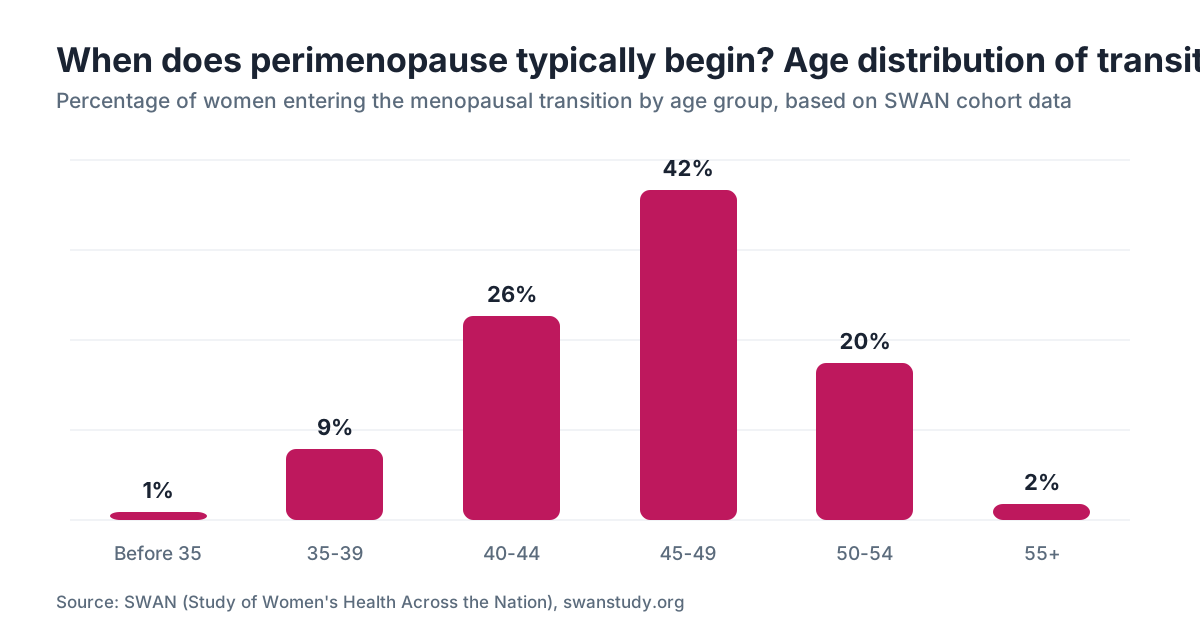
TL;DR: Perimenopause most often begins between ages 40 and 44, though the range runs from the mid-30s to the early 50s. The average age at the final period is 51 to 52, so the transition usually lasts 4 to 8 years. Genetics, smoking, and certain medical histories can move the start date earlier or later.
What age does perimenopause start?
Perimenopause usually starts between 40 and 44, but the honest answer is a range, not a single number. A meaningful share of women notice changes in their late 30s, and a smaller group sails through to their late 40s before anything registers. The Study of Women's Health Across the Nation (SWAN), which followed more than 3,300 women across multiple US sites for over two decades, put the median age at the start of the menopausal transition around 47 to 48 years, though irregular cycles and hormonal swings often showed up several years before that [1].
The North American Menopause Society (NAMS) says perimenopause "typically begins in a woman's 40s" and can last anywhere from a few months to 10 years before the final period [2]. Sit with how wide that window really is. A woman whose cycles get erratic at 38 is not an outlier. She's at the early end of a recognized normal range.
Perimenopause literally means "around menopause." It starts when reproductive hormones, mainly estrogen and progesterone, begin fluctuating in ways you can see on labs or feel as symptoms, and it ends 12 months after your last period. That 12-month mark is the official definition of menopause itself [2].
Can perimenopause start in your 30s?
Yes, and it happens more often than most clinicians tell their patients. Early perimenopause, meaning onset before age 40, affects roughly 10 percent of women [3]. Premature ovarian insufficiency (POI) is a separate condition where ovarian function drops off before 40. It hits about 1 in 100 women by age 40 and 1 in 1,000 by age 30 [3]. POI is not perimenopause, but the two share some hormonal features.
For women without POI, cycle irregularity in the mid-to-late 30s can be an early flag that the transition has begun. Follicle counts fall throughout your reproductive years, and by the late 30s, FSH (follicle-stimulating hormone) often starts creeping up as the pituitary works harder to recruit eggs. You might feel nothing yet. Or you might notice cycles shortening by a few days, heavier bleeding some months, or new PMS-like symptoms that arrive from nowhere.
Smoking is the most consistently documented lifestyle factor that moves perimenopause earlier. SWAN found that current smokers reached the transition roughly 1.5 to 2 years earlier than nonsmokers [1]. Body mass index, ethnicity, and whether a woman has had children also track with timing, though the size of each effect bounces around from study to study.
What is the average age for perimenopause and menopause?
These two numbers get confused constantly, and they mean different things. The average age at natural menopause (the final period) in the United States is roughly 51 to 52 years [2][4]. Perimenopause is the transition leading up to that point.
If the average final period lands around 51 and the transition averages 4 to 8 years, average perimenopause onset falls somewhere in the mid-to-late 40s. That squares with SWAN.
Here's a rough timeline to orient yourself:
| Stage | Typical age range | What's happening hormonally | |---|---|---| | Early reproductive | 20s-30s | Stable estrogen and progesterone cycles | | Late reproductive / early perimenopause | 38-45 | FSH starting to rise, cycle length may shorten | | Late perimenopause | 45-51 | Irregular cycles, estrogen swings, hot flashes common | | Menopause | Average age 51-52 | 12 months after last period | | Postmenopause | 51+ onward | Sustained low estrogen |
Ethnicity shifts timing in documented ways. SWAN showed Black women reached menopause about 8.5 months earlier than white women on average, while Japanese and Chinese American women tended to reach it slightly later [1]. Hispanic women had timing similar to white women. These are averages across large groups, not predictions for any one person.
See also: menopause age for the full breakdown of what the research says about the final period specifically.
What are the first signs of perimenopause, and how do they relate to age?
The first signs don't arrive in the order you'd expect, and they don't wait politely for your 47th birthday.
For many women, the earliest change is cycle length and flow. Cycles may shorten from 28 days to 24 or 25 in early perimenopause. Later, they can stretch out and turn unpredictable, with gaps of 60 days or more. Heavier bleeding is common, sometimes dramatically heavier, before things taper off.
New or worse premenstrual symptoms, including mood swings, breast tenderness, and bloating, can show up years before cycles become irregular. Part of the reason is that progesterone production often declines before estrogen does, tilting the estrogen-to-progesterone ratio even while absolute estrogen sits in a normal range [5]. That tilt alone can cause symptoms most people file under perimenopause.
Hot flashes and night sweats are the symptoms everyone pictures. They usually peak in late perimenopause and the first two years after the final period, but about 15 to 20 percent of women deal with significant vasomotor symptoms for more than a decade [2]. Sleep disruption, brain fog, and mood changes tend to travel with the hot flashes, partly from the wrecked sleep and partly from direct hormonal effects on neurotransmitter systems.
Vaginal dryness and libido changes tend to get louder later in the transition and into postmenopause. Unlike hot flashes, which often ease over time, genitourinary symptoms usually persist or worsen without treatment.
If you're in your late 30s and noticing any of this, it isn't automatically perimenopause. It is worth a conversation with a clinician who knows how to order and read hormonal labs against your symptoms, rather than relying on a single FSH draw.
How is perimenopause diagnosed, and does age matter for the diagnosis?
No single lab test diagnoses perimenopause. This surprises many women, and it's a real limit of current medicine. Estrogen, FSH, and LH swing so hard during the transition that a one-time blood draw can look completely normal in someone with significant symptoms [2].
Clinicians diagnose perimenopause from a combination of age, symptom pattern, and menstrual changes. The Stages of Reproductive Aging Workshop (STRAW+10) framework, updated in 2011, is the most widely used staging system. It sorts the transition into early and late stages based on cycle regularity and the gaps between periods rather than hormone levels alone [4].
Age matters because the same symptoms carry different weight at different ages. Irregular cycles at 42 with hot flashes are very likely perimenopause. Irregular cycles at 32 call for a workup for other causes, including thyroid dysfunction, hyperprolactinemia, polycystic ovary syndrome, and premature ovarian insufficiency, before you land on perimenopause.
AMH (anti-Müllerian hormone), which reflects ovarian reserve, can hint at where you are in your reproductive trajectory, but it's not a diagnostic test for perimenopause and isn't used that way in standard practice.
A clinician experienced in women's hormonal health will look at FSH, estradiol, TSH, and sometimes AMH across more than one cycle, alongside your symptom picture. Telehealth practices like WomenRx that focus on hormones can order and interpret these labs without a years-long wait for a specialist slot.
What factors make perimenopause start earlier or later?
Genetics is the biggest determinant. If your mother or older sisters went through menopause early, your risk runs meaningfully higher. Twin studies put heredity at roughly 50 to 85 percent of the variation in menopause timing [6].
Smoking is the strongest modifiable risk factor for earlier onset, with consistent evidence across large cohorts pointing to 1 to 2 years of earlier transition [1]. The mechanism is direct toxic damage from cigarette components to ovarian follicles.
Surgical history matters enormously. A hysterectomy that leaves the ovaries in place may speed ovarian decline by disrupting blood supply, though this is still debated in the literature. Bilateral oophorectomy (removing both ovaries) causes immediate surgical menopause, not perimenopause, and the hormonal drop is abrupt rather than gradual.
Chemotherapy and pelvic radiation can trigger premature ovarian insufficiency depending on the drugs and doses. Women treated for cancer in childhood or adolescence carry particular risk and deserve monitoring and honest conversations about fertility and hormonal health.
Body weight has a modest link to timing. Lower body fat ties to earlier menopause in some studies, possibly because fat tissue makes some estrogen that stretches out the perceptible transition. High BMI has been linked to later menopause in some cohorts, though the relationship isn't linear or reliable enough to predict anything.
Never having been pregnant is tied to slightly earlier menopause in some data, though the effect is small. Longer oral contraceptive use has been studied as a possible modifier, but the evidence stays inconsistent [6].
How long does perimenopause last at different ages?
The transition is not quick, and it tends to run longer for women who start it earlier. Median duration across studies is roughly 4 to 8 years, with a range of 1 to 14 years [2]. SWAN found that women who entered the transition younger tended to have longer transitions overall. Women still cycling regularly at 45 who then moved through fast had shorter windows.
Late perimenopause, marked by cycles skipped for 60 days or more, tends to last about 1 to 3 years on its own. Early perimenopause, when cycles still happen but shorten or turn heavier and more symptomatic, can drag on for years before reaching that late stage.
Here's the practical version: if you started noticing symptoms at 42, don't expect to be done by 45. Most women who enter perimenopause in their early 40s don't hit the 12-month-no-period mark until their late 40s or early 50s. Planning around a 5-to-7-year window is reasonable for many.
Duration has real clinical weight, especially for bone density and cardiovascular risk, both of which track with estrogen. The longer the transition, the more years of hormonal fluctuation and eventual decline stack up. A bone density test in early perimenopause can set your baseline before significant loss starts.
Does race or ethnicity affect the age perimenopause starts?
It does, and the differences are big enough to be clinically meaningful, not merely statistically significant. SWAN, the most rigorous US data source on this question, found Black women had more frequent and more severe vasomotor symptoms and an earlier median age at menopause than white women [1]. The gap ran about 8 to 9 months for menopause timing, with matching shifts in perimenopause onset.
Black women in SWAN also reported hot flashes that lasted longer into postmenopause. Socioeconomic factors and BMI don't explain this away, since both were controlled for in the analysis. The causes aren't fully understood but likely involve differences in stress physiology, environmental exposures, and possibly genetic variation in hormone metabolism.
Hispanic women showed symptom burdens close to white women on most measures. Japanese and Chinese American women tended to report fewer and milder hot flashes, though their hormonal trajectories looked similar. Whether that reflects cultural differences in reporting, genuine physiological differences, or both, isn't settled.
The practical upshot: menopause guidelines that treat all women as the same may not serve every patient equally. If you're a Black woman in your late 30s with symptoms your clinician is waving off as too early, the population data backs a closer look.
What symptoms are most common in early perimenopause versus late perimenopause?
Perimenopause is not one flat experience. The symptom landscape shifts as you move through it.
Early perimenopause is often defined by things that sound mundane on paper but feel alarming in practice: cycles that shift in length or flow, PMS that suddenly feels worse than it ever did in your 20s or 30s, and mood changes or anxiety that seem out of proportion to your actual life. Sleep may start to fray. Libido may change. These symptoms can precede hot flashes by years.
Late perimenopause, when cycles turn sporadic, is when vasomotor symptoms tend to take over. Hot flashes affect about 75 to 80 percent of women going through natural menopause [2]. They range from mild warmth to drenching sweats that break your sleep multiple times a night. Cognitive symptoms, often described as brain fog or trouble retrieving words, are common and real, even when they get dismissed. Research has documented measurable changes in cognitive processing speed and verbal memory during the transition, and these largely resolve in postmenopause for most women [7].
Genitourinary symptoms, including vaginal dryness, discomfort with sex, and urinary urgency, may begin in late perimenopause but usually peak after the final period. They don't tend to improve on their own without treatment.
For women whose symptoms are hurting quality of life, hormone replacement therapy is the most effective treatment for vasomotor symptoms, with a well-established evidence base when started in the perimenopausal window or within 10 years of menopause. The decision comes down to individual risk-benefit, but the current consensus from NAMS and the Endocrine Society is that benefits outweigh risks for most healthy women under 60 who are within 10 years of menopause onset [2][5].
How does perimenopause affect weight, and what can you do about it?
Weight gain during perimenopause is real, common, and poorly explained by calories alone. Average weight gain during the transition is roughly 1.5 kg (about 3 to 4 pounds) per year in the early 50s, with fat shifting toward the abdomen even in women whose total weight barely moves [8].
Estrogen decline changes where the body stores fat. Subcutaneous fat at the hips and thighs tends to drop while visceral fat, the metabolically active kind around your organs, climbs. Visceral fat carries higher cardiovascular and metabolic risk, so this shift matters well beyond how clothes fit.
Sleep disruption piles on. Poor sleep raises ghrelin (the appetite hormone) and lowers leptin (the satiety hormone), building biological pressure toward eating more, independent of willpower.
For women with significant perimenopausal weight gain, especially those developing insulin resistance or metabolic syndrome, GLP-1 receptor agonists like semaglutide and tirzepatide have shown large effects in trials. The SURMOUNT-1 trial found tirzepatide produced mean weight loss of up to 22.5 percent of body weight in adults with obesity over 72 weeks [9]. Those aren't trivial numbers. Semaglutide for weight loss works through a related but different mechanism and has its own strong trial evidence.
Hormone therapy can modestly blunt the perimenopausal fat-redistribution pattern, though it's not primarily a weight loss treatment. Pairing hormonal support with lifestyle or medical weight management makes physiological sense for women carrying both symptom burden and metabolic change. Clinicians at practices like WomenRx who work across both hormone therapy and GLP-1 prescribing can look at that intersection together instead of in siloed specialty visits.
See: semaglutide vs tirzepatide for a direct comparison of how these two medications stack up for women specifically.
Should you see a doctor about perimenopause symptoms before age 45?
Yes, and sooner rather than later if symptoms are hurting your daily life or you carry risk factors for early or premature menopause.
There's a persistent but outdated assumption that perimenopause symptoms in your late 30s or early 40s should be watched rather than treated. That logic made more sense when hormone therapy was viewed with far more fear than the current evidence supports. It makes less sense now that we have clear data that early hormonal changes carry real downstream consequences for bone density, cardiovascular health, and possibly cognitive aging.
Early perimenopause or premature ovarian insufficiency before 40 raises the risk of osteoporosis and cardiovascular disease, and hormone therapy is generally recommended for symptom management and health protection in these cases until at least the average age of natural menopause (51) [3][5]. That's a different calculation than for a woman starting hormone therapy at 55 or 60.
A clinician who brushes off perimenopausal symptoms in a 38 or 40-year-old as "too early" or "probably stress" is not giving you current, evidence-based care. You have every right to ask for a hormonal workup, a cycle history review, and a real conversation about what's going on.
For what the full transition looks like after perimenopause ends, see when does menopause start and our overview of menopause.
What hormone changes actually happen during perimenopause?
Understanding the hormonal mechanics makes the symptom picture much clearer. It isn't simply that estrogen drops. The entire feedback loop between the ovaries, pituitary, and hypothalamus starts working differently.
In early perimenopause, follicle counts fall and the remaining follicles are less sensitive to FSH. The pituitary compensates by pumping out more FSH. Estrogen can actually run higher than normal during this phase, cycling erratically instead of falling in a smooth curve. That's why some perimenopausal women get breast tenderness, heavy periods, and mood instability before hot flashes ever arrive: they're in a phase of estrogen excess relative to progesterone, not estrogen deficiency.
Progesterone production depends on ovulation. As ovulatory cycles get less frequent and eventually stop, progesterone output drops. Lower progesterone drives heavier and more unpredictable bleeding, sleep disruption, and anxiety [5]. The Endocrine Society's clinical practice guideline on menopause describes this progesterone deficit as a key early feature of the perimenopausal transition [5].
In late perimenopause, estradiol begins to fall more consistently. This is when vasomotor symptoms peak, when sleep architecture changes most, and when the effects on bone turnover become measurable.
For women weighing progesterone-specific support, understanding what micronized progesterone does and how it differs from synthetic progestins is useful background. See progesterone for the full explanation. And for the wider landscape of hormone therapy options including patches, gels, and pills, estrogen patch and what is HRT cover the practical choices in detail.
Frequently asked questions
What is the earliest age perimenopause can start?
Perimenopause can technically begin in the mid-to-late 30s, though onset before 40 is considered early. Premature ovarian insufficiency, a distinct but related condition, can occur before age 40 and affects roughly 1 in 100 women by that age. Any woman with irregular cycles, new hot flashes, or significant PMS changes in her late 30s deserves a proper hormonal evaluation, not dismissal.
At what age does perimenopause typically end?
Perimenopause ends once you've gone 12 consecutive months without a period. That marker, menopause, arrives at an average age of 51 to 52 in US women. Since perimenopause averages 4 to 8 years, most women finish the transition somewhere between their late 40s and early 50s, though some finish later and a meaningful minority finishes in their mid-40s.
Can you be in perimenopause at 35?
It's possible but uncommon. True perimenopause at 35 sits at the early edge of the recognized range. If you're 35 with irregular cycles, hot flashes, or significant hormonal symptoms, clinicians should also consider thyroid dysfunction, polycystic ovary syndrome, hyperprolactinemia, and premature ovarian insufficiency before diagnosing perimenopause. A thorough hormonal workup matters more at this age than waiting to see what happens.
How do I know if my irregular periods are perimenopause or something else?
Age is a key clue. In your 40s with other symptoms like hot flashes, worse PMS, and sleep changes, perimenopause is the leading explanation. Under 40, or without other symptoms, consider thyroid disease, PCOS, uterine fibroids, and pregnancy first. A clinician should check TSH, FSH, estradiol, and a pregnancy test as a starting point, plus AMH if ovarian reserve is a concern.
Does perimenopause start earlier if your mother had early menopause?
Yes. Genetics is the strongest predictor of menopause timing, accounting for an estimated 50 to 85 percent of the variation across women. If your mother or sisters reached menopause in their early or mid-40s, your risk of an earlier transition runs meaningfully higher than average. Factor this into decisions about fertility, contraception, bone health monitoring, and when to start tracking symptoms.
Can perimenopause symptoms start while you're still having regular periods?
Absolutely, and this is one of the most commonly missed realities of early perimenopause. Hormonal fluctuations, especially declining progesterone relative to estrogen, can cause mood changes, breast tenderness, heavier periods, and sleep disruption for years before cycles become irregular. Regular periods do not rule out perimenopause. Symptoms in the right age range and context warrant evaluation regardless of cycle regularity.
Is perimenopause at 40 considered normal?
Yes. Perimenopause beginning around age 40 falls within the normal range defined by NAMS and supported by population data from SWAN and other large cohorts. Median onset of the transition lands in the mid-to-late 40s, but onset at 40 to 42 is not uncommon and needs no label beyond 'early-normal.' Onset before 40 is considered early and warrants closer clinical attention.
Can stress or illness trigger perimenopause earlier?
Stress and illness don't directly trigger perimenopause, but they can cause cycle irregularity and hormonal changes that mimic it. Hypothalamic amenorrhea from extreme stress, eating disorders, or overexercise can suppress cycles at any age. Autoimmune conditions are a leading cause of premature ovarian insufficiency. Chemotherapy and radiation can permanently damage ovarian function. These need to be told apart from natural perimenopause because management differs significantly.
What lab tests diagnose perimenopause?
No single lab test diagnoses perimenopause. Clinicians look at FSH, estradiol, and TSH together, in the context of symptoms and cycle history. FSH above 10 to 12 IU/L in the early follicular phase is suggestive, and rising FSH over repeated tests tells you more than one reading. AMH can reflect ovarian reserve but isn't a diagnostic test. The STRAW+10 staging framework emphasizes symptom and cycle patterns over any single lab value.
Does perimenopause affect bone density, and when should I get tested?
Yes. Bone loss speeds up during the perimenopausal transition as estrogen falls, with the fastest loss in the 2 years before and 2 years after the final period. NAMS recommends baseline DEXA scans at menopause for average-risk women, or earlier with risk factors like early perimenopause, family history of osteoporosis, smoking, or low body weight. Earlier testing in perimenopause makes sense if you want a baseline before peak loss begins.
Can birth control pills mask perimenopause symptoms?
Yes. Oral contraceptives, especially combination pills, suppress natural hormone fluctuations and supply exogenous estrogen and progestin, which can mask classic perimenopausal symptoms like hot flashes and cycle changes. This makes it hard to tell where you are in the transition. Some clinicians check FSH during the pill-free week, but reliability is low. If you suspect perimenopause and want clarity, a hormone-knowledgeable clinician can design a monitoring strategy around your contraception.
How is perimenopause different from menopause?
Perimenopause is the transition leading up to menopause, marked by hormonal fluctuation, irregular cycles, and a range of symptoms. Menopause is a single point in time: the day that marks 12 consecutive months without a period. Everything before that final 12-month stretch is perimenopause; everything after is postmenopause. Most people use 'menopause' loosely for the whole transition, but clinically the distinction matters for treatment and health monitoring.
Can perimenopause cause anxiety and depression?
Yes, and this is an underrecognized part of the transition. The perimenopausal period carries a two-to-fourfold increased risk of clinically significant depressive symptoms compared to premenopause, even in women with no prior history of depression, according to SWAN data. Hormonal fluctuations affect serotonin, GABA, and other neurotransmitter systems. Both hormone therapy and antidepressants can help; the choice depends on symptom profile and individual factors.
What's the difference between early perimenopause and late perimenopause?
Early perimenopause features cycles that still happen but shift, often shortening and turning heavier or more symptomatic, while FSH starts to rise. Late perimenopause begins when cycles are clearly irregular, with gaps of 60 days or more between periods. Hot flashes typically peak in late perimenopause. The STRAW+10 staging system formalizes these stages and is the clinical standard for categorizing where a woman is in her reproductive aging.
Sources
- SWAN (Study of Women's Health Across the Nation), University of Michigan / NIH
- North American Menopause Society (NAMS), Menopause Practice: A Clinician's Guide
- National Institutes of Health (NIH), National Institute of Child Health and Human Development, Premature Ovarian Insufficiency fact page
- Harlow et al. (2012), Menopause journal, STRAW+10 staging system
- The Endocrine Society, Clinical Practice Guideline: Treatment of Menopause-Associated Vasomotor Symptoms
- Murabito et al. (2005), American Journal of Human Genetics, heritability of age at natural menopause
- Greendale et al. (2009), Neurology, cognitive changes across the menopausal transition (SWAN study)
- Lovejoy et al. (2008), International Journal of Obesity, fat distribution changes across the menopausal transition
- Jastreboff et al. (2022), NEJM, SURMOUNT-1 trial of tirzepatide
- National Library of Medicine, MedlinePlus, Menopause overview
- Bromberger et al. (2011), Psychological Medicine, SWAN data on depression and perimenopause