Perimenopause acne: why it happens and how to actually fix it
TL;DR: Perimenopause acne is driven by falling estrogen and rising androgen activity, which makes skin oilier and more inflamed. It tends to cluster along the jaw and chin. Topical retinoids, azelaic acid, and hormonal treatments like spironolactone or combination HRT can clear it. Teenage acne remedies often make perimenopausal skin worse because the skin barrier is already compromised.
What causes acne during perimenopause?
The short answer: your hormone ratio is shifting in a way that makes sebaceous glands overactive, and your skin's ability to recover from that inflammation has declined at the same time.
Estrogen keeps sebum production in check and maintains skin thickness, hydration, and barrier function. During perimenopause, estrogen levels fluctuate wildly and trend downward over months to years. Progesterone drops too, often earlier and more steeply than estrogen does [1]. What remains relatively constant, or even rises in relation to estrogen, is androgen activity. Androgens, particularly testosterone and its more potent metabolite dihydrotestosterone (DHT), directly stimulate sebaceous glands to produce more oil. More oil means a better environment for Cutibacterium acnes, the bacteria behind inflammatory acne.
There is a secondary issue that most articles skip: the skin barrier. Estrogen stimulates collagen synthesis and helps maintain ceramide levels in the outer skin layer. As estrogen falls, the skin barrier becomes more permeable, meaning it reacts more aggressively to irritants, bacteria, and even well-meaning skincare products. This is why a benzoyl peroxide wash that worked at 22 can leave a 45-year-old with red, peeling, reactive skin that is still breaking out.
One more wrinkle. Cortisol, the stress hormone, also stimulates sebum production and can trigger inflammatory cascades in the skin. Perimenopause is often one of the most psychologically and physically stressful periods in a woman's life: poor sleep, hot flashes, work pressure, family demands. Chronically elevated cortisol adds fuel to the acne fire independently of sex hormones [2].
So the cause is not a single hormone. It is a shifting ratio between estrogen, progesterone, and androgens, layered on top of a barrier that is less resilient than it used to be.
How is perimenopause acne different from teenage acne?
The pattern is genuinely different, and treating it the same way is a common mistake.
Teenage acne tends to be widespread across the forehead, nose, and cheeks. It is driven by a surge of androgens in skin that has plenty of estrogen and a healthy barrier. Perimenopausal acne clusters along the lower face: the jawline, chin, and neck. Dermatologists call this the hormonal distribution pattern, and it is the same pattern seen in women with polycystic ovary syndrome (PCOS) [3]. The lesions are often deeper, nodular, and slower to heal than the surface pustules common in teenage skin.
Perimenopausal skin is also drier overall. You can be breaking out and dealing with flaky patches at the same time, which sounds contradictory but makes complete physiological sense. The sebaceous glands in the lower face and jaw area are highly androgen-sensitive, so they overproduce oil in those spots, while the rest of the face is estrogen-deprived and parched.
This dual state matters enormously for treatment selection. Drying agents like high-percentage benzoyl peroxide, alcohol-based toners, and aggressive physical scrubs can worsen the overall condition even while appearing to address the oily zones. The goal is targeted treatment of androgen-driven follicles without stripping the barrier elsewhere.
Healing time is slower too. Skin cell turnover slows with age, and post-inflammatory hyperpigmentation (the dark spots left after a pimple heals) lasts much longer in women over 40, especially in medium and deeper skin tones [4].
What percentage of women get acne in perimenopause?
The prevalence data is genuinely imprecise, partly because large-scale studies on adult female acne have historically been underfunded, and partly because many women never report acne to a doctor, managing it themselves with over-the-counter products.
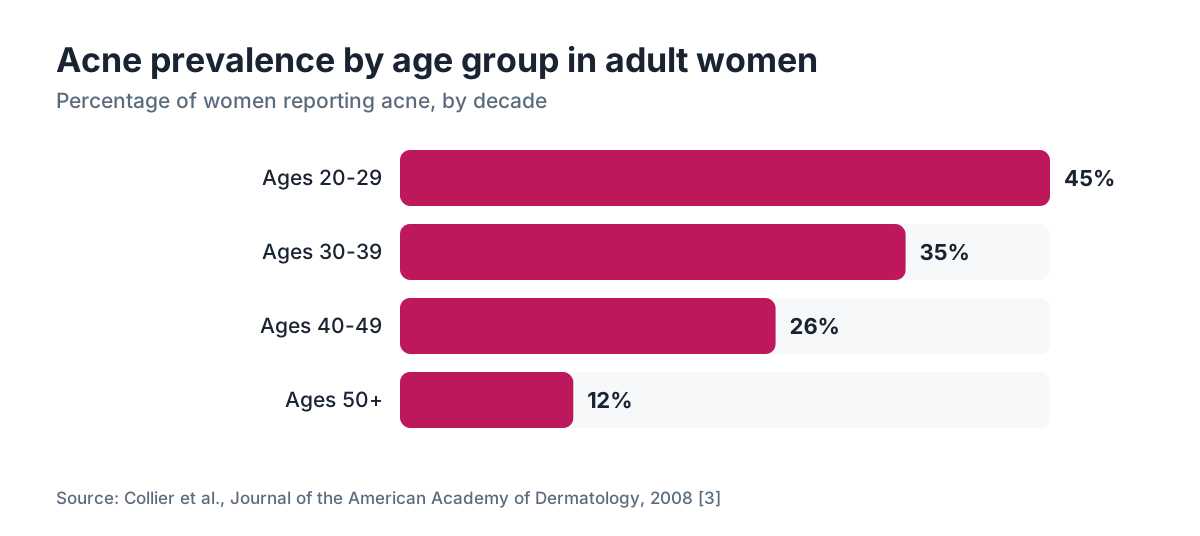
The best available estimates put somewhere between 25 and 40 percent of adult women dealing with acne, with perimenopausal women a large slice of that group [3]. A 2008 study published in the Journal of the American Academy of Dermatology found that acne prevalence in women aged 41 to 50 was approximately 26 percent, compared to roughly 45 percent in women aged 21 to 30 [3]. So it is less common than in early adulthood, but far too common to be considered rare or unusual.
Some clinicians think the number runs higher in perimenopause specifically than in stable postmenopause, because it is the hormonal volatility, the swings, more than the low levels, that drives acne most aggressively. Once estrogen settles at a consistently low level after menopause, some women actually find their acne improves.
Here is the takeaway. If you are in your 40s and breaking out for the first time since your 20s, or acne you thought was gone has come back, perimenopause is the most likely explanation. You are not imagining it, and it is not a hygiene problem.
Which skincare ingredients actually help perimenopause acne?
This is where specificity matters, because the market is full of products built for teenage skin that will do you no favors.
Retinoids are the single best-evidenced topical treatment for adult acne at any age. They speed up cell turnover, reduce follicular plugging, and calm inflammation. Prescription tretinoin is more effective than over-the-counter retinol, but it needs more careful introduction in perimenopausal skin: start at 0.025%, apply every other night, and use a good moisturizer to offset dryness. Adapalene 0.1% (now available OTC in the US) is a gentler alternative with solid clinical evidence [4].
Azelaic acid (15-20%) is underused and underrated for this demographic. It treats acne, reduces post-inflammatory hyperpigmentation, and is less irritating than retinoids. The FDA has approved prescription azelaic acid (Finacea, Azelex) for acne and rosacea. Because rosacea often emerges or worsens during perimenopause, azelaic acid does double duty [5].
Niacinamide (4-10%) reduces sebum production, strengthens the skin barrier, and fades hyperpigmentation. It is not a standalone treatment for significant acne, but it is an excellent supporting ingredient that pairs well with both retinoids and azelaic acid without adding irritation.
Benzoyl peroxide (2.5%) still has a place, particularly for inflammatory pustules, but use the lowest effective concentration and skip leaving it on overnight if your skin is sensitive. The jump from 2.5% to 10% does not meaningfully improve outcomes and dramatically increases irritation.
What to avoid. Alcohol-based toners, high-concentration physical scrubs, sulfate-heavy cleansers, and anything marketed as "deep pore cleansing" for oily teenage skin. These disrupt a barrier that perimenopausal skin is already struggling to hold together.
SPF 30 or higher every single morning is non-negotiable. Acne lesions and retinoid use both raise UV sensitivity, and UV exposure worsens post-inflammatory hyperpigmentation significantly [4].
Do hormonal treatments clear perimenopause acne?
Yes, and for many women with moderate to severe acne, hormonal treatment beats any topical alone.
Spironolactone is an aldosterone antagonist that also blocks androgen receptors in skin and sebaceous glands. At doses of 50 to 200 mg per day, it reduces sebum production and clears hormonal acne in the majority of women who tolerate it. It is not FDA-approved specifically for acne, but it has decades of off-label use backed by multiple clinical trials and is recommended by both the American Academy of Dermatology and the Endocrine Society for hormonal acne in adult women [6]. Common side effects include increased urination, breast tenderness, and menstrual irregularity. Blood pressure should be monitored at higher doses. It should not be used in women who are pregnant or trying to conceive.
Combined oral contraceptives (COCs) containing ethinyl estradiol plus a progestin with low androgenic activity (such as norgestimate or drospirenone) are FDA-approved for acne treatment. For perimenopausal women who also want contraception and have no contraindications, a COC handles several issues at once. But COCs are not appropriate for all perimenopausal women, particularly smokers over 35 or women with a history of blood clots or migraines with aura [7].
Hormone replacement therapy (HRT). This is where things get nuanced. Estrogen-containing hormone replacement therapy can improve perimenopausal acne by restoring the estrogen-to-androgen ratio. But the progestin component matters a lot. Progestins with androgenic activity, such as norethindrone acetate or levonorgestrel, can worsen acne. Progestins with low or anti-androgenic activity, such as drospirenone or natural micronized progesterone, are far better choices for women who are also fighting acne. If you are already on HRT and your acne is worsening, the progestin type is the first thing to review with your prescriber.
Oral isotretinoin (Accutane) is occasionally used for severe, treatment-resistant acne in perimenopausal women. It works, but it requires enrollment in the iPLEDGE program because of its teratogenicity, and it causes significant dryness that has to be managed carefully in already-compromised perimenopausal skin [5][11].
Can diet and lifestyle changes reduce perimenopause acne?
The evidence base here is thinner than the skincare industry would have you believe, but it is not zero.
High glycemic index foods appear to worsen acne by raising insulin and insulin-like growth factor 1 (IGF-1), which in turn stimulate sebum production and androgen activity. A randomized controlled trial published in the American Journal of Clinical Nutrition found that a low-glycemic diet significantly reduced acne lesion counts compared to a control diet [8]. The effect was moderate, not dramatic, but diet changes cost nothing and pay off elsewhere, so it is reasonable to cut refined carbohydrates, white bread, sugary drinks, and ultra-processed foods.
Dairy. The link between dairy and acne is real but modest. Skim milk in particular is associated with higher acne risk in observational studies, possibly because of the hormones and growth factors it contains, or because skim milk has a higher glycemic index than whole milk. The evidence does not support cutting all dairy, but testing a reduction for 6 to 8 weeks is reasonable if other factors are already dialed in [8].
Omega-3 fatty acids. Some small trials suggest omega-3 supplementation reduces inflammatory acne lesions, likely through systemic anti-inflammatory effects. Fatty fish (salmon, sardines), walnuts, and flaxseed are good dietary sources. Fish oil at 1-2 grams EPA+DHA daily is low-risk and worth trying [9].
Sleep and stress. Cortisol drives sebum production, as noted earlier. Chronic poor sleep, extremely common in perimenopause because of night sweats and insomnia, raises cortisol. Fixing sleep quality with behavioral changes or treatment of the underlying hot flashes can have a real downstream effect on skin.
Exercise reduces insulin resistance and systemic inflammation, both of which help acne-prone skin. Shower promptly after sweating. Prolonged sweat on the skin is not a big acne trigger for most adults, but it is worth keeping in mind.
How do you know if your acne is hormonal and not something else?
Most adult female acne that shows up or worsens in perimenopause is hormonal. But a few other causes deserve a look, especially if the acne is severe, sudden, or comes with other symptoms.
Medication-induced acne. Progestins (as discussed above), lithium, corticosteroids, some anticonvulsants, and certain B-vitamins (particularly B12 and B6 in high doses) can cause or worsen acne [5]. If your breakouts started when you began a new medication, mention it to your prescriber.
PCOS. Polycystic ovary syndrome can persist into perimenopause and beyond. If you also have irregular periods (beyond what perimenopause explains), excess hair growth on the face or body, or trouble with weight, ask your doctor whether a PCOS workup makes sense. Elevated DHEA-S, free testosterone, or LH/FSH ratio can point that way [6].
Rosacea. Rosacea subtypes can include papules and pustules that look like acne but are not. Rosacea tends to be triggered by heat, alcohol, spicy food, and sun exposure. It does not usually cause blackheads or whiteheads. It often worsens around menopause, and hot flashes themselves can trigger flushing that aggravates rosacea. A dermatologist can tell the two apart. The treatments overlap somewhat (azelaic acid, topical metronidazole, oral doxycycline) but are not identical [5].
When to get labs. If you have sudden-onset severe acne plus signs of androgen excess (hair loss on the scalp, new facial hair growth, deepening voice), your doctor should check free testosterone, DHEA-S, and possibly a 17-hydroxyprogesterone level to rule out late-onset congenital adrenal hyperplasia, a rare but treatable cause [6].
What does the research say about treating hormonal acne in women over 40?
The honest answer is that adult female acne has been underfunded in clinical research relative to how common it is, and most trials that do exist skew toward younger women. That said, the evidence we have is meaningful.
A 2017 review in the International Journal of Dermatology concluded that spironolactone at 100-200 mg/day produces significant reductions in inflammatory lesion counts in adult women with hormonal acne, with response rates in the range of 66 to 85 percent depending on the study [6].
Adapalene 0.3% gel, in head-to-head trials against placebo, cut inflammatory lesion counts by roughly 50 percent in adult women, and the effect held across all adult age groups studied [4].
For women who also have perimenopausal symptoms and are candidates for HRT, the choice of progestin has a documented effect on acne. A 2020 observational study found that women using drospirenone-containing HRT had significantly lower rates of acne complaints compared to women using norethindrone acetate-containing regimens [10].
The data on dietary interventions is summed up well in a 2020 systematic review in the Journal of the Academy of Nutrition and Dietetics, which found consistent associations between high glycemic load diets and acne severity, with some but less consistent evidence for dairy [8].
Nobody has a large randomized trial of acne treatment specifically in perimenopausal women. The clinical guidance is therefore extrapolated from adult women broadly, with judgment applied to the specific hormonal context of perimenopause.
When should you see a doctor for perimenopause acne?
See a doctor or a dermatologist if your acne includes deep, painful nodules or cysts, if it is leaving scars, if you have tried over-the-counter treatments for 8 to 12 weeks without improvement, or if you have signs of significant androgen excess beyond acne alone.
A primary care physician, gynecologist, or menopause specialist can prescribe spironolactone, evaluate whether your current or potential HRT regimen is worsening your skin, and order labs if androgen excess is suspected. A dermatologist adds expertise in topical prescription combinations (tretinoin plus clindamycin, for example), procedural options (chemical peels, laser, photodynamic therapy), and can manage isotretinoin if needed.
Telehealth platforms have widened access here. WomenRx, for example, offers hormonal consultations for women in perimenopause that can include skin-focused hormone evaluation alongside other menopausal concerns, which saves time compared to coordinating between a gynecologist and a dermatologist separately.
One practical point. If you see a new provider, bring a list of every topical and oral product you are currently using, including supplements. Interactions and duplications are common, and your provider cannot optimize a regimen they do not know about.
Does acne get better after menopause?
For many women, yes. Once estrogen and progesterone settle at their new post-menopausal baselines and stop fluctuating, the hormonal volatility that drives acne tends to ease. The androgen-to-estrogen ratio does not reverse, but the constant swings stop, and for some women that is enough for acne to become manageable or clear.
That said, skin after menopause is significantly drier, thinner, and slower to heal than perimenopausal skin. Post-inflammatory marks from acne lesions take even longer to fade. And some women keep having androgen-driven acne well into their 50s and beyond, particularly if they have higher baseline androgen levels or are using androgenic progestins.
If acne persists or worsens after menopause, the evaluation is similar: assess androgen levels, review all medications, and consider spironolactone or topical retinoids. The treatment approach does not fundamentally change with menopausal status, though skin sensitivity to actives tends to be higher and the barrier-support part of the regimen matters even more.
Women using postmenopausal HRT who choose an estradiol-plus-drospirenone formulation often report better skin outcomes than those using androgenic progestins, which is one of several reasons progestin selection matters beyond just bleeding profiles.
What is a realistic treatment timeline for perimenopause acne?
Expect slower results than you want. This is worth saying flat out because most people give up on effective treatments too early.
Topical retinoids take 8 to 12 weeks to show meaningful improvement, and the first 4 weeks often involve a purging phase where acne temporarily worsens as cell turnover accelerates. If you quit at week 3 because you think it is not working or making things worse, you are stopping right before the results would have appeared.
Azelaic acid takes 4 to 8 weeks for acne improvement and 8 to 12 weeks for visible fading of hyperpigmentation. It does not purge.
Spironolactone typically needs 3 to 6 months of consistent use at an adequate dose before you can judge its full effect on acne. Some women see partial improvement faster, but the full anti-androgenic effect at the sebaceous gland level takes time [6].
Oral antibiotics (doxycycline is the most common) work faster, often in 4 to 6 weeks, but they are meant as bridging treatments while longer-acting strategies kick in, not as long-term solutions, because of antibiotic resistance.
HRT changes affecting skin take 3 to 6 months as well, both for improvements when the right formulation is chosen and for worsening when an androgenic progestin is the culprit.
The most effective approach is usually a combination: a gentle, barrier-respecting skincare routine with a retinoid or azelaic acid as the active, plus a systemic hormonal treatment if acne is moderate to severe, evaluated at 3-month intervals and adjusted from there.
A realistic morning and evening skincare routine for perimenopausal acne
Keep it simple. More steps mean more chances to irritate the skin.
Morning: A gentle, non-stripping cleanser (look for pH around 5.5, no sulfates if your skin is reactive). A niacinamide serum or moisturizer. Broad-spectrum SPF 30 or higher, every day, rain or shine. If you need to spot-treat in the morning, azelaic acid is UV-stable and can go under sunscreen.
Evening: Same gentle cleanser. If using topical antibiotics (clindamycin), apply to acne-prone areas. Wait 20 to 30 minutes, then apply retinoid (tretinoin or adapalene) to acne-prone areas. Follow with a plain, fragrance-free moisturizer over the whole face to offset retinoid dryness. Do not layer retinoid and benzoyl peroxide unless your skin is very tolerant and your dermatologist has specifically recommended it.
Weekly: A low-percentage lactic acid or mandelic acid toner (not a peel) once or twice a week can support cell turnover without the irritation of more aggressive exfoliants. These alpha-hydroxy acids are gentler than glycolic acid on a compromised barrier and also help with hyperpigmentation.
What you likely do not need: jade rollers, microneedling at home, facial steaming over active acne, clay masks more than once every two weeks, or any product with 40-plus ingredients. Simplicity wins with perimenopausal skin because every extra ingredient is another potential irritant.
For women weighing whether hormonal support might help their skin as part of a broader perimenopause plan, talking to a clinician who understands the full hormonal picture, including how an estrogen patch or other HRT options interact with skin health, is often more useful than adding another serum.
Frequently asked questions
Can perimenopause cause cystic acne?
Yes. Deep, nodular, or cystic acne is actually more characteristic of hormonal acne in adult women than surface-level pustules. The androgen-driven sebum surge in androgen-sensitive follicles along the jaw and chin leads to clogging deep in the follicle, which produces the painful, slow-healing nodules and cysts that many perimenopausal women describe. Spironolactone or isotretinoin are the most effective treatments for truly cystic hormonal acne.
Does low estrogen cause acne?
Not exactly. Low estrogen alone does not cause acne, but low estrogen relative to androgen activity does. Estrogen suppresses sebum production and androgen activity at the skin level. When estrogen falls during perimenopause and androgens stay relatively elevated, the balance shifts toward overactive sebaceous glands. It is the ratio and the volatility that drive acne, more than any single hormone level in isolation.
Will going on birth control pills clear up my perimenopause acne?
Combined oral contraceptives with low-androgenic progestins (norgestimate, drospirenone) are FDA-approved for acne and can be very effective. They work by suppressing ovarian androgen production and raising sex hormone binding globulin, which reduces free testosterone. For perimenopausal women without contraindications (no smoking, no history of blood clots, no migraines with aura), this is a reasonable option that also provides contraception during the perimenopause years.
Is spironolactone safe for women in their 40s and 50s?
Generally yes, for women who are not pregnant or planning pregnancy. Spironolactone requires pregnancy prevention because it can feminize a male fetus. Blood pressure monitoring is appropriate, especially at doses above 100 mg. Potassium levels should be checked periodically. Most perimenopausal women tolerate 50 to 100 mg/day well. It has decades of safety data in adult women. Your prescriber should review your complete medication list for interactions.
Why is my acne worse around my period during perimenopause?
Perimenopausal cycles are irregular, but many women still have cyclical progesterone fluctuations. In the days before a period, progesterone peaks and then drops sharply. This shift in the estrogen-to-progesterone ratio creates a relative androgen dominance window. Progesterone also has some pro-inflammatory and sebum-stimulating effects in skin. Tracking your breakouts alongside your cycle (even if irregular) helps identify whether the pattern is truly cyclical.
Can HRT make perimenopause acne worse?
Yes, if the progestin component has androgenic activity. Progestins like norethindrone acetate and levonorgestrel can worsen or even trigger acne in women who were not previously acne-prone. If you started HRT and your skin got worse, ask your prescriber about switching to drospirenone or micronized progesterone as the progestin. Estrogen alone, in women who have had a hysterectomy, rarely worsens acne and often improves it.
What blood tests should I ask for if I suspect hormonal acne?
Ask your doctor to check free testosterone, DHEA-S, and sex hormone binding globulin (SHBG). FSH and estradiol help confirm perimenopausal status. If there are signs of androgen excess beyond acne (facial hair, scalp hair loss), add 17-hydroxyprogesterone to rule out late-onset congenital adrenal hyperplasia. These tests are most informative drawn in the early follicular phase of your cycle if you are still cycling regularly.
Does cutting out dairy really help with acne?
The evidence is modest but consistent enough to be worth trying. Observational studies link skim milk in particular to higher acne risk, possibly through IGF-1 and hormones present in dairy. A 6 to 8 week elimination trial is reasonable if your acne is not well-controlled. Full dairy elimination is not necessary; reducing milk intake specifically may be enough. Yogurt and cheese appear to have weaker associations with acne than liquid milk.
How is perimenopause acne different from rosacea?
Rosacea produces redness, flushing, visible blood vessels, and sometimes papules and pustules, but unlike acne, rosacea does not cause blackheads or whiteheads (comedones). Rosacea is triggered by heat, alcohol, spicy food, and sun. Both conditions worsen around menopause, and they can coexist. A dermatologist can tell them apart. Some treatments overlap (azelaic acid, low-dose doxycycline), but others differ, so getting the diagnosis right matters.
Can weight gain during perimenopause make acne worse?
Possibly, through two mechanisms. Adipose tissue, particularly visceral fat, produces estrogens and androgens and drives insulin resistance. Higher insulin and IGF-1 levels stimulate sebum production. Weight gain also raises systemic inflammation. On the other hand, for some women, weight gain in perimenopause includes more peripheral estrogen production from adipose tissue, which can sometimes partly offset the ovarian estrogen decline. The relationship is individual and not straightforward.
Is tretinoin safe to use on perimenopausal skin?
Yes, with careful introduction. Start at 0.025% every other night and use a good moisturizer. Tretinoin raises cell turnover, which causes initial purging and dryness. In perimenopausal skin, the dryness can be more significant than in younger skin, so barrier support is not optional. After 8 to 12 weeks of tolerance, you can increase frequency or concentration if needed. Tretinoin requires a prescription in the US.
How long does perimenopause acne usually last?
It often tracks with the duration of perimenopause itself, which averages 4 to 8 years but can range from 1 to 12 years. Some women see improvement as estrogen stabilizes at its post-menopausal level. Others keep having androgen-driven acne into their 50s and beyond. Without treatment, there is no reliable natural timeline. With appropriate treatment, most women with hormonal acne see significant improvement within 3 to 6 months.
Are there peptides or supplements that help perimenopause acne?
The evidence here is thin. Zinc (30 mg elemental zinc daily) has the most clinical support among supplements, with several trials showing modest reduction in inflammatory acne lesions. Omega-3 fatty acids have some supportive data. Nicotinamide (oral niacinamide) has early evidence. Spearmint tea has been studied for its mild anti-androgenic effects with mixed results. None of these approach the efficacy of spironolactone or topical retinoids, but they carry low risk and reasonable plausibility.
Can I use retinol and azelaic acid together?
Yes, and they complement each other well in perimenopausal skin. Azelaic acid is generally less irritating and can be used morning or evening. Retinoids are best used at night. Using azelaic acid in the morning and retinoid at night avoids potential interaction and spreads the actives across your routine. If your skin is reactive, introduce one at a time over 4 to 6 weeks before adding the other. Moisturizer between the retinoid and your skin reduces irritation.
Sources
- The Menopause Society (NAMS), Menopause Practice: A Clinician's Guide
- National Institute of Mental Health, Stress and Skin
- Collier CN et al., Journal of the American Academy of Dermatology, 2008; 58(1):56-59
- FDA, Prescribing Information for Adapalene 0.1% Gel (Differin)
- American Academy of Dermatology, Acne Clinical Guidelines
- Endocrine Society, Clinical Practice Guideline: Treatment of Polycystic Ovary Syndrome, Journal of Clinical Endocrinology and Metabolism
- FDA, Prescribing Information for Combined Oral Contraceptives (Ortho Tri-Cyclen, Yaz)
- Burris J et al., Journal of the Academy of Nutrition and Dietetics, 2020; Kwon HH et al., American Journal of Clinical Nutrition, 2012
- National Institutes of Health, Office of Dietary Supplements, Omega-3 Fatty Acids Fact Sheet
- Palacios S et al., Climacteric, 2020, Progestin effects on skin in postmenopausal HRT users
- FDA, iPLEDGE Program
- The Menopause Society (NAMS), Perimenopause FAQs