perimenopause: symptoms, timeline, and what actually helps
TL;DR: Perimenopause is the hormonal transition before menopause. It usually starts in your 40s (sometimes your late 30s), lasts an average of 4 years, and can run anywhere from 2 to 10-plus years. It ends 12 months after your last period. Symptoms range from irregular cycles and hot flashes to brain fog, anxiety, and joint pain, driven by erratic estrogen and progesterone rather than simply low estrogen.
what is perimenopause?
Perimenopause is the stretch of time when your ovaries start winding down hormone production but haven't stopped yet. It's the bridge between your reproductive years and menopause itself. Menopause is a single day, defined as 12 months after your final period. Everything leading up to that day, when your cycles and hormones are in flux, is perimenopause.
The word literally means "around menopause." The North American Menopause Society (NAMS) describes it as the transition when the ovaries gradually produce less estrogen and cycles become irregular, ending in menopause [1]. It's not a disease. It's a normal biological transition, and that doesn't make it easy. A lot of women get zero warning about what it actually involves.
The confusing part is that hormone levels don't decline in a smooth line. Estrogen can spike higher than your reproductive-years baseline, then crash, sometimes within the same month. That's why perimenopause often feels more chaotic than menopause itself. Once you're postmenopausal, estrogen is just low and stable. During perimenopause, it's unpredictable, and your body reacts to the swings more than the eventual drop.
when does perimenopause start, and how long does it last?
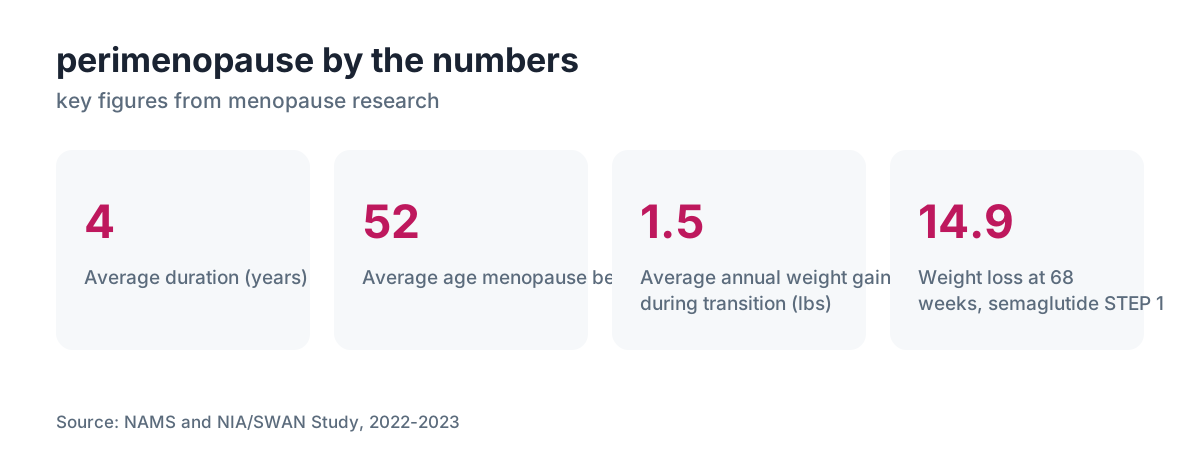
Perimenopause typically starts in a woman's mid-to-late 40s, though it can begin in the late 30s, and it lasts an average of about 4 years [2]. Some women pass through it in a year or two. Others are in it for a decade. The Study of Women's Health Across the Nation (SWAN), one of the largest long-term studies of this transition, found the total length varies widely by race and smoking status, with some women reporting symptoms for more than 10 years [3].
The average age of menopause in the US is 52 [4]. If perimenopause runs 4 to 8 years on average, that puts the typical start somewhere in the mid-40s, but plenty of women start earlier. If your periods begin changing in your late 30s, that's not automatically "early menopause." It may just be an earlier-than-average perimenopause. Premature ovarian insufficiency (menopause before 40) is a separate diagnosis and worth getting evaluated by a doctor rather than assumed.
For more on the age ranges and what counts as early versus average, see our breakdown on perimenopause age and when does menopause start.
what are the symptoms of perimenopause?
The most common perimenopause symptoms are irregular periods, hot flashes, night sweats, sleep problems, mood changes, vaginal dryness, and brain fog. The full list runs much longer, because estrogen and progesterone receptors sit throughout the body, far beyond the reproductive organs.
Here's a realistic list of what shows up during this transition:
- Irregular periods (shorter, longer, heavier, lighter, or skipped)
- Hot flashes and night sweats (vasomotor symptoms)
- Sleep disruption, independent of night sweats
- Mood swings, irritability, new anxiety or depression
- Brain fog, word-finding trouble, short-term memory lapses
- Vaginal dryness and pain with sex
- Low libido
- Joint aches and muscle pain
- Fatigue
- Headaches or new migraine patterns
- Heart palpitations
- Weight gain, especially around the midsection
- Hair thinning and skin changes
- Breast tenderness
This isn't the complete catalog. Perimenopause symptoms are often driven by fluctuating hormone levels more than declining ones, and the variability from cycle to cycle is part of what makes this phase hard to pin down [1]. If you're trying to figure out whether what you're feeling counts as signs of menopause or perimenopause specifically, the presence of periods (even irregular ones) is the marker: you're still perimenopausal until you hit 12 consecutive months without one.
what are the 34 symptoms of perimenopause?
The "34 symptoms of perimenopause" list is everywhere on social media and wellness blogs, but it isn't from a clinical guideline or a peer-reviewed study. It appears to have grown out of patient advocacy and menopause-support content rather than a formal medical source. That doesn't make the listed symptoms fake. Most are well documented individually. There's just no single validated list of exactly 34 with that number attached in the medical literature.
What NAMS and the Endocrine Society document, with real clinical evidence, includes vasomotor symptoms (hot flashes, night sweats), sleep disturbance, mood changes, genitourinary symptoms (dryness, urinary urgency, recurrent UTIs), musculoskeletal pain, and cognitive changes like brain fog [1][5]. Other items floating around the "34 symptoms" lists include tinnitus, burning mouth, electric shock sensations, itchy skin, and gum problems. Some women report these. The evidence tying each one directly to hormone fluctuation is thinner.
Here's the practical takeaway. If a viral list confirms that what you're feeling is real, use it as a reference. Don't treat the number 34 as a clinical fact. Talk to a clinician about your specific symptoms instead of trying to match a checklist.
why do perimenopause symptoms happen? (the hormone science)
Perimenopause symptoms happen because estrogen and progesterone stop being produced in the steady rhythm they had during your reproductive years. Instead of a gradual decline, estrogen swings, sometimes higher than baseline, then drops sharply, all within a single cycle or across a few months [1].
Progesterone tends to decline earlier and more consistently than estrogen, because it depends on regular ovulation, and ovulation becomes patchy first. That early progesterone drop, before estrogen even turns erratic, is a big driver of the sleep trouble, anxiety, and heavier or shorter cycles that show up in early perimenopause.
FSH (follicle-stimulating hormone) climbs as the ovaries become less responsive, because the pituitary gland is essentially shouting louder to get a response. That's why some clinicians use an FSH blood test as one data point. But NAMS and the Endocrine Society both note that a single FSH level is unreliable for diagnosing perimenopause, because it swings so much day to day [1][5]. Diagnosis is mostly clinical: your age, your symptoms, and your period pattern, not one lab value.
how is perimenopause diagnosed?
Perimenopause is diagnosed from age, symptoms, and menstrual cycle changes, not a single blood test. No lab gives you a clean "yes, this is perimenopause" the way a pregnancy test does.
A clinician will ask about your cycle pattern (are periods changing in length or flow), your symptom list, and your age, then rule out other explanations like thyroid disease. Hypothyroidism and hyperthyroidism mimic a lot of perimenopause symptoms: fatigue, mood changes, irregular cycles, weight changes. A TSH blood test is a common and reasonable first step for that reason.
Hormone testing (FSH, estradiol) can support a diagnosis but isn't required and isn't definitive on its own, given how much these levels swing week to week during the transition [5]. If you're under 40 and having these symptoms, that's a different conversation. Your doctor should evaluate for premature ovarian insufficiency, which has its own workup and its own implications for long-term bone and cardiovascular health.
what treatments actually help perimenopause symptoms?
Hormone therapy is the most effective treatment for hot flashes, night sweats, and vaginal dryness related to perimenopause, according to NAMS, and it can also ease sleep and mood symptoms tied to hormone fluctuation [1]. That's a categorical statement backed by decades of data, not a fringe opinion.
For women within 10 years of menopause onset or under 60, without contraindications like a history of certain cancers, blood clots, or liver disease, hormone therapy has a favorable benefit-risk profile per the 2022 NAMS Hormone Therapy Position Statement [1]. Options include estrogen (patch, gel, or pill), often combined with progesterone if you still have a uterus, plus low-dose vaginal estrogen for genitourinary symptoms. Our guide to hormone replacement therapy and our explainer on what is HRT go deeper.
Non-hormonal options matter too, especially if you can't or don't want to use hormones. The FDA approved fezolinetant (Veozah) in 2023 for moderate-to-severe hot flashes, working through a different mechanism (neurokinin B receptor blockade) than hormone therapy [6]. SSRIs and SNRIs, gabapentin, and cognitive behavioral therapy for insomnia (CBT-I) all have real evidence for specific symptoms. Lifestyle changes help too. Regular strength training, adequate protein, better sleep hygiene, and cutting late alcohol move the needle for some women and cost nothing beyond effort. They rarely resolve moderate-to-severe hot flashes on their own.
does perimenopause cause weight gain, and what actually works for it?
Perimenopause is linked to weight gain and a shift of fat toward the abdomen, but hormones alone aren't the whole story. Studies tracking women through the transition, including SWAN, show average weight gain of roughly 1.5 pounds per year, independent of aging, along with a measurable shift toward visceral (abdominal) fat as estrogen declines [3].
The mechanism is a mix. Declining estrogen changes fat distribution and probably appetite regulation. Sleep disruption from night sweats throws off hunger hormones. Age-related muscle loss slows metabolism. It's more than "eating more."
GLP-1 medications like semaglutide have real trial data in women, though the major STEP trials weren't perimenopause-specific. The STEP 1 trial showed 14.9% average body weight reduction at 68 weeks with semaglutide 2.4mg versus 2.4% with placebo [7]. Tirzepatide's SURMOUNT-1 trial showed larger average reductions, up to 20.9% at the highest dose over 72 weeks [8]. Neither study isolated a perimenopausal subgroup, but a large share of participants were women in the age range where perimenopause overlaps. If you're weighing this route, our guides on semaglutide for weight loss and semaglutide vs tirzepatide walk through the mechanism, side effects, and what the trials actually measured. Hormone therapy is not a weight-loss drug. The two are sometimes used together under medical supervision, though no large trial has tested that combination specifically in perimenopausal women.
how do you know if it's perimenopause or something else?
The biggest source of confusion is thyroid disease, because both conditions cause fatigue, mood changes, weight shifts, and irregular cycles. A TSH test is cheap, standard, and rules this in or out fast. Anxiety and depression unrelated to hormones can look identical to perimenopausal mood symptoms, which is part of why misdiagnosis happens, especially since perimenopause isn't always on a clinician's radar for a woman in her early-to-mid 40s who looks "fine" on paper.
Other conditions overlap too: PCOS (irregular cycles, weight change), iron deficiency anemia (fatigue, heavy periods), and sleep apnea, which becomes more common around this age and causes its own fatigue and mood problems.
Here's the practical filter. If your periods are changing (shorter cycles, skipped periods, heavier or lighter flow) and you're in your late 30s through late 40s, alongside any mix of hot flashes, sleep issues, or mood changes, perimenopause is a reasonable working diagnosis while your doctor rules out the mimics with basic bloodwork.
how do you know when perimenopause is ending and menopause has started?
Perimenopause ends and menopause begins on the day you hit 12 consecutive months without a period, with no other cause (not pregnancy, not a medication, not a condition suppressing your cycle) [4]. No test tells you this in advance. It's confirmed in reverse, by counting back a year from your last period once that year has passed.
In the final 1 to 2 years of perimenopause, called the "late menopausal transition," cycles turn much more sporadic, with gaps of 60 days or more between periods becoming common, per the STRAW+10 staging criteria used by reproductive researchers [9]. Hot flashes often peak in this late-transition window and in the first year or two after the final period, then ease over the following several years for most women. A meaningful minority have them for a decade or longer [3].
For a full breakdown of what's average versus outlier, see how long does menopause last and our main menopause guide.
can you get pregnant during perimenopause?
Yes. You can still get pregnant during perimenopause, because ovulation, though irregular, hasn't fully stopped. This surprises a lot of women who assume irregular periods mean infertility.
Contraception is still recommended if you don't want to become pregnant, until you reach full menopause (12 months without a period) or your doctor confirms otherwise. Fertility drops sharply through the late 30s and 40s, but "lower" isn't "zero." Unplanned perimenopausal pregnancies happen often enough that it's a standard counseling point in reproductive medicine.
what's the difference between perimenopause, menopause, and postmenopause?
These three terms mark different points on the same timeline, and people swap them in casual conversation, which causes confusion.
| Stage | What it means | Typical timing | |---|---|---| | Perimenopause | Transition phase with fluctuating hormones and irregular cycles | Starts mid-30s to mid-40s, lasts ~4-8 years on average [2][3] | | Menopause | The single point in time: 12 months after your last period | Average age 52 in the US [4] | | Postmenopause | Everything after that 12-month mark, for the rest of life | From menopause onward |
Menopause is a one-day marker, not a phase you're "in" for years, even though people say "going through menopause" to mean the whole transition. Clinically, once you cross that 12-month line, you're postmenopausal, and hormone levels settle at a low, steady state instead of the fluctuating pattern of perimenopause [1][4].
when should you see a doctor about perimenopause symptoms?
See a doctor if your symptoms are disrupting your daily life, work, sleep, or relationships, or if you have any bleeding pattern that's unusual even by perimenopause standards: bleeding after sex, new bleeding between periods, or very heavy bleeding that soaks through protection hourly. These warrant evaluation to rule out other causes, because not everything in your 40s is automatically hormonal.
It's also worth a visit just to get ahead of it. A clinician can rule out thyroid issues, check iron if your periods are heavy, and talk through whether hormone therapy, non-hormonal medication, or a wait-and-monitor approach fits your symptom pattern and health history. You don't have to be miserable before treatment is appropriate. NAMS guidance supports starting treatment based on symptom burden and patient preference, not a minimum severity threshold [1].
This is where telehealth options like WomenRx help a lot of women. Getting a same-week visit with a clinician who focuses on this transition is often faster than waiting months for an in-person OB-GYN appointment, especially if you're just trying to sort out first steps like bloodwork or whether hormone therapy makes sense for your history.
Frequently asked questions
What is perimenopause exactly?
Perimenopause is the transition before menopause when ovarian hormone production turns erratic, causing irregular periods and symptoms like hot flashes, mood changes, and sleep disruption. It ends once you've gone 12 full months without a period, at which point you're considered menopausal. NAMS describes it as the natural transition ending in menopause [1].
What age does perimenopause usually start?
Most women start perimenopause in their mid-to-late 40s, though it can begin in the late 30s. Average menopause age in the US is 52, and perimenopause typically runs 4 to 8 years before that point [2][4]. Menopause-like symptoms before age 40 should be evaluated separately as possible premature ovarian insufficiency.
How long does perimenopause last?
Perimenopause lasts an average of about 4 years, but the range is wide, from under a year to more than a decade for some women, according to the SWAN study, one of the largest long-term studies tracking this transition [2][3]. Length varies by individual factors including smoking status and race.
What are the first signs of perimenopause?
The earliest signs are usually subtle: shorter or slightly irregular cycles, new sleep disruption, stronger PMS-like mood symptoms, and occasional hot flashes or night sweats. Progesterone tends to decline before estrogen turns erratic, which is why sleep and mood symptoms often show up before hot flashes do.
What are the 34 symptoms of perimenopause?
The '34 symptoms' list circulating online isn't from a clinical guideline. It's a popular but non-official compilation from patient advocacy content. Well-documented symptoms include hot flashes, irregular periods, sleep problems, mood changes, brain fog, joint pain, and vaginal dryness. Not every item on viral lists has strong clinical evidence behind it.
Can perimenopause cause anxiety and depression?
Yes. Fluctuating estrogen and progesterone affect neurotransmitters like serotonin, and many women experience new anxiety, irritability, or depressive symptoms during perimenopause, even without a prior history. NAMS and the Endocrine Society both recognize mood changes as a core symptom of the transition, not a separate coincidental issue [1][5].
How is perimenopause diagnosed?
There's no single definitive test. Diagnosis rests on your age, symptom pattern, and menstrual cycle changes. A doctor may check TSH to rule out thyroid disease and can use FSH or estradiol testing as supporting data, but a single hormone level isn't reliable given how much these fluctuate during perimenopause [1][5].
Does perimenopause cause weight gain?
Yes, on average. Longitudinal data from the SWAN study shows roughly 1.5 pounds of weight gain per year during the menopause transition along with a shift toward abdominal fat, driven by hormonal changes, sleep disruption, and age-related muscle loss together, not diet alone [3].
Can you still get pregnant during perimenopause?
Yes. Ovulation becomes irregular but doesn't stop completely until menopause, so pregnancy is still possible. Contraception is recommended throughout perimenopause if pregnancy isn't wanted, until you reach 12 consecutive months without a period or your doctor advises otherwise.
What treatments help perimenopause symptoms?
Hormone therapy is the most effective option for hot flashes, night sweats, and vaginal dryness, per NAMS guidance [1]. Non-hormonal options include fezolinetant (FDA-approved in 2023 for hot flashes), SSRIs and SNRIs, gabapentin, and CBT-I for sleep. Treatment choice depends on symptoms, health history, and personal preference.
What's the difference between perimenopause and menopause?
Perimenopause is the multi-year transition with fluctuating hormones and irregular periods. Menopause is a single point in time, 12 months after your last period, averaging age 52 in the US [4]. After that day, you're postmenopausal, and hormone levels settle at a low, steady baseline.
Can perimenopause start in your 30s?
It can, though it's less common. Most perimenopause starts in the 40s, but some women notice cycle changes and symptoms in their late 30s. If menopause-like symptoms appear before age 40, ask your doctor about testing for premature ovarian insufficiency, which needs its own evaluation and management plan.
Do GLP-1 medications like semaglutide help with perimenopause weight gain?
GLP-1 medications aren't perimenopause-specific treatments, but trial data shows large average weight loss in adults broadly: 14.9% at 68 weeks with semaglutide in the STEP 1 trial [7] and up to 20.9% with tirzepatide in SURMOUNT-1 [8]. Many participants were women in the perimenopausal age range, though the studies didn't isolate that subgroup.
Sources
- The North American Menopause Society, 2022 Hormone Therapy Position Statement
- NAMS, Menopause practitioner resources
- NIH/NIA, Study of Women's Health Across the Nation (SWAN)
- Office on Women's Health, HHS, Menopause basics
- Endocrine Society, Clinical Practice Guidelines
- U.S. Food and Drug Administration, Veozah (fezolinetant) approval
- NEJM, STEP 1 Trial (Wilding et al.)
- NEJM, SURMOUNT-1 Trial (Jastreboff et al.)
- STRAW+10 Staging Criteria, published consensus workshop