Perimenopausal meaning: what it is, when it starts, and what to expect
TL;DR: Perimenopausal means you are in the transition before menopause, when your ovaries make less estrogen and progesterone and cycles turn irregular. It usually starts in the mid-40s, lasts 4 to 8 years, and ends 12 months after your last period. Hot flashes, changing cycles, broken sleep, and mood swings are the common signs. It is a normal life stage, not a disease.
What does perimenopausal mean, exactly?
Perimenopausal means you are in the years-long transition around menopause, when your ovaries are winding down. The prefix peri comes from Greek and means near or surrounding. So perimenopausal describes the state of being between regular reproductive cycling and the permanent end of periods.
Clinically, perimenopause is the stretch of time during which the ovaries gradually make less estrogen and progesterone, cycles turn increasingly irregular, and it runs until a woman has gone 12 consecutive months without a period. That 12-month mark is menopause itself. Everything before it, once symptoms or cycle changes begin, is perimenopause [1].
The North American Menopause Society (NAMS) describes the menopausal transition as "the period before the final menstrual period, characterized by changes in menstrual cycle regularity and increasing symptoms attributable to ovarian hormone changes" [1]. Sit with that definition for a second. A lot of women hear "perimenopause" from a doctor and assume something is broken. It is not a diagnosis in the disease sense. It is a life stage.
The word perimenopausal is just the adjective form. You are perimenopausal if you are currently in perimenopause. Your ovaries still work, you can still get pregnant (yes, right up to that 12-month mark), and your hormones swing instead of following a predictable monthly pattern.
When does perimenopause start and how long does it last?
Most women enter perimenopause between ages 45 and 55, with the average onset around 47 [2]. The range is genuinely wide. Some women notice changes in their late 30s. Others cruise through their mid-40s with textbook cycles, then hit an abrupt transition in their early 50s. Timing depends on genetics, smoking history, body weight, and factors nobody fully understands yet.
Smoking is the most modifiable risk factor for earlier onset. Smokers reach perimenopause and menopause about 1 to 2 years earlier than nonsmokers [3].
Duration averages 4 to 8 years. Some women move through it in 2 years, others spend a decade in it [2]. The Study of Women's Health Across the Nation (SWAN), the largest long-term study of midlife women in the US, found the median transition lasted about 5.8 years, measured from the first cycle irregularity to the final period [4].
We break down how timing varies by body and history in our pieces on perimenopause age and when does menopause start. The short version: if you are in your mid-40s and things feel different, you are almost certainly not imagining it.
Here is the point that trips women up. Perimenopause is not menopause, and the difference changes your treatment. If you are in perimenopause, you have not reached menopause yet. See menopause for what shifts after that 12-month threshold.
What are the signs and symptoms of perimenopause?
Perimenopause symptoms come from estrogen that fluctuates and eventually declines. They can start quietly, long before periods turn irregular, and they vary enormously from one woman to the next.
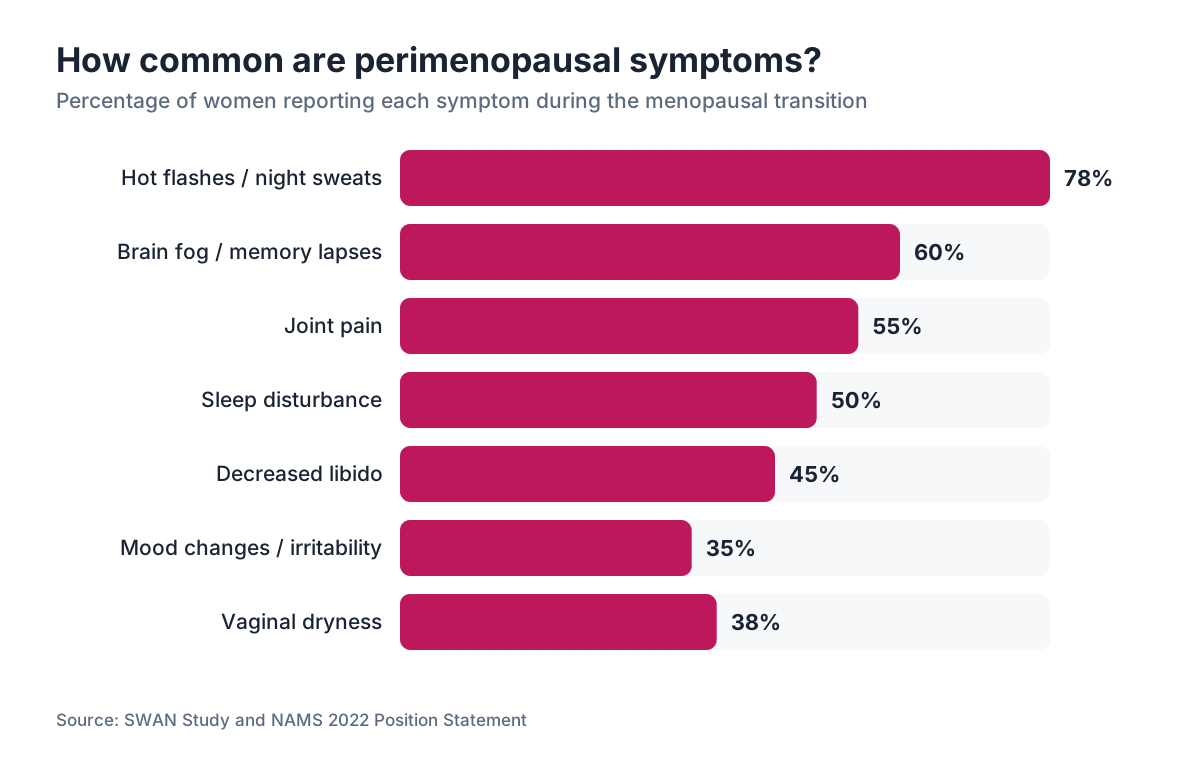
The most commonly reported symptoms, based on data from SWAN and NAMS clinical guidelines [1][4]:
| Symptom | Approximate prevalence in perimenopause | |---|---| | Hot flashes and night sweats | 75-80% of women | | Sleep disturbance | 40-60% | | Irregular or heavier periods | nearly universal by late perimenopause | | Mood changes, irritability, low mood | 30-40% | | Brain fog and memory lapses | reported by ~60% | | Vaginal dryness | 25-50% (rises after menopause) | | Decreased libido | 40-50% | | Joint pain | 50-60% |
Hot flashes are the hallmark, but they are rarely the first thing you notice. Many women feel their sleep fall apart or their anxiety climb before a single hot flash shows up. That erratic quality, one month normal and the next miserable, is itself a clue.
Heavier or longer periods are common in early perimenopause and catch a lot of women off guard. Estrogen does not drop smoothly. It surges and dips, and a high-estrogen surge with too little progesterone lets the uterine lining build up thick, which turns into a flood of a period. People call this estrogen dominance. The phrase is loose medically, but the phenomenon is real [5].
Brain fog deserves its own mention, because women blame it on stress and move on. The cognitive symptoms of perimenopause (losing words, dropping your train of thought, forgetting why you walked into a room) are documented and tied to estrogen fluctuations affecting the hippocampus [4]. They usually improve once estrogen settles after menopause. Not always.
What actually happens to your hormones during perimenopause?
Your cycle runs on a feedback loop between your brain (the hypothalamus and pituitary gland) and your ovaries. Each month, follicle-stimulating hormone (FSH) tells your ovaries to recruit an egg follicle and make estrogen. As the follicle matures, estrogen rises, which triggers an LH surge that causes ovulation. The leftover follicle becomes the corpus luteum and makes progesterone for the second half of the cycle.
In perimenopause, the ovaries stop listening as well. The follicles that remain are older and produce less estrogen, more erratically. The brain answers by pumping out more FSH, which is why high FSH is a common lab finding in perimenopause [2]. But a high FSH alone does not confirm anything. The Endocrine Society does not recommend leaning on a single FSH test to diagnose women who are still cycling [2]. Levels swing so far from day to day that one draw can point you the wrong direction.
When ovulation does not happen (an anovulatory cycle), no progesterone gets made that month. Estrogen goes relatively unopposed, and that drives the heavier periods, breast tenderness, and bloating so many perimenopausal women describe. Our piece on progesterone covers how it fits into this picture, including when low progesterone gets treated.
Testosterone drops too, more gradually than estrogen. Losing it lowers libido, drains energy, and shrinks muscle mass. It gets undertreated constantly.
How is perimenopause diagnosed?
Perimenopause is mostly a clinical diagnosis based on your age and symptoms. There is no definitive blood test.
The Endocrine Society's 2015 clinical practice guideline states: "In women older than 45 years of age who have typical symptoms of the menopause transition, measurement of serum FSH or estradiol is not needed to confirm the diagnosis" [2]. That is a direct quote from a primary guideline, and it matters, because plenty of women (and some clinicians) expect a blood test to confirm what a woman is already living.
What a clinician typically looks for:
- Age 40 or older (younger if there is reason to suspect premature ovarian insufficiency)
- Changes in menstrual cycle length or flow
- Vasomotor symptoms (hot flashes, night sweats)
- Sleep disruption, mood changes, or other characteristic symptoms
If you are under 40, labs carry more weight, because early onset means ruling out thyroid disease, high prolactin, or premature ovarian insufficiency (POI), which is a separate condition from natural perimenopause [2].
Tests a clinician might run: FSH, estradiol, TSH (to check the thyroid), AMH (anti-Müllerian hormone, a marker of ovarian reserve), and sometimes testosterone. No single one confirms perimenopause, but together with your history they build the picture. Tracking your cycles and symptoms for a few months before the appointment gives your clinician far more to work with than one blood draw.
Is perimenopause the same as menopause?
No, and the mix-up is everywhere. Menopause is a single point in time: exactly 12 months after your last period. Perimenopause is the years-long run-up to that point. Postmenopause is everything after.
Put plainly: if you are still having any periods, even irregular ones, you are in perimenopause, not menopause. Once you have gone 12 full months without one, you have reached menopause and you are postmenopausal.
The distinction changes care. In perimenopause, pregnancy is still possible, you may still need contraception, and the hormonal picture is messier than postmenopause. Treatment decisions differ. Some symptoms that are brutal in perimenopause, like heavy bleeding, settle down on their own after menopause. Others, like vaginal dryness, tend to get worse.
For how the timing of menopause gets pinned down and what changes after it, see menopause age.
Here is a scenario I see constantly. A woman in her late 40s has a period, then nothing for 11 months, celebrates being done, then bleeds again. That resets the clock. Until 12 straight months pass, she is still perimenopausal.
Can perimenopause start in your 30s?
It can, though it is less common, and the labels change. Ovarian function declining before 40 is generally not called perimenopause. It falls under premature ovarian insufficiency (POI), or early menopause if the final period lands before 45 [2][3].
Still, some women in their late 30s start noticing subtle shifts that, in hindsight, were the opening of the transition. Cycles shorten (28 days becomes 24, say), PMS gets worse, and sleep starts to fray. Those are early signals.
Genetics is the strongest predictor of timing. If your mother or older sisters went through menopause early, your odds of an earlier transition go up [3]. Some medical treatments, including chemotherapy, pelvic radiation, and surgical removal of the ovaries, can trigger abrupt menopause at any age.
If you are in your late 30s with real cycle changes, mood swings, or hot flashes, get evaluated. Early perimenopause has the same treatment options as the typical version, but the stakes for bone density and heart health make earlier action more time-sensitive [6].
What treatments actually help perimenopausal symptoms?
More works than women are told. Hormone therapy is the most effective treatment for hot flashes, night sweats, and the sleep disruption they cause, and its safety picture has been largely repaired since the 2002 WHI headlines scared a generation of clinicians and patients off it [7].
NAMS updated its position statement in 2022 to match the current evidence: hormone therapy fits healthy women under 60 who are within 10 years of menopause onset and who have bothersome symptoms. The risks look different for perimenopausal women than for older postmenopausal women, and for most women in the transition, the benefits outweigh the risks [1].
Options by symptom:
Hot flashes and night sweats: Systemic estrogen, plus progesterone if you have a uterus, is first-line and works well. An estrogen patch delivers steady estrogen through the skin and is often preferred over pills because it skips first-pass liver metabolism. Non-hormonal prescriptions include fezolinetant (Veozah), which the FDA approved in 2023 specifically for vasomotor symptoms, plus older choices like low-dose SSRIs, SNRIs, or gabapentin [8].
Heavy or irregular bleeding: Low-dose hormonal contraceptives are used often in perimenopause, both to steady cycles and to ease symptoms. A levonorgestrel IUD cuts bleeding a lot too.
Mood and anxiety: Hormone therapy helps when symptoms clearly track with hormonal swings. Antidepressants or therapy may fit better when mood problems predate the transition or run severe.
Vaginal dryness and urinary symptoms: Low-dose vaginal estrogen is safe and effective and does not carry the same systemic risk questions as oral or patch estrogen. Women who cannot take systemic therapy can usually still use it [1].
Sleep: Better sleep in perimenopause usually starts with controlling hot flashes. If those are handled and sleep is still wrecked, CBT for insomnia (CBT-I) has the strongest evidence of any behavioral fix [4].
For weight gain in perimenopause (a near-universal complaint, driven by shifting fat storage and a slower metabolism), GLP-1 medications have become a real option. Platforms like WomenRx connect perimenopausal women with providers who understand how hormonal change tangles with weight. The link between falling estrogen and metabolic shifts is real, and it deserves a clinician who takes it seriously.
See hormone replacement therapy for the full breakdown of options, risks, and how to have the conversation with a provider.
How does perimenopause affect weight and metabolism?
Fat moving to your midsection in perimenopause is not your imagination, and it is not plain aging. Falling estrogen changes where the body stores fat, shifting it from hips and thighs to the belly. Visceral fat (the deep fat around your organs) is metabolically active in a way that subcutaneous fat is not. It drives insulin resistance and raises heart risk [6].
The SWAN study found women gained an average of about 5 pounds across the menopausal transition, but the bigger change was a rise in body fat percentage even in women whose weight held steady [4]. Muscle mass drops, resting metabolic rate falls, and the body handles glucose less efficiently.
Bad sleep piles on. Poor sleep raises cortisol and ghrelin (the hunger hormone) while lowering leptin (the fullness hormone). A perimenopausal woman who is not sleeping is fighting her own hormones just to hold her weight.
When weight is a real concern, GLP-1 receptor agonists like semaglutide or tirzepatide have shown meaningful loss in trials. The SURMOUNT-1 trial found tirzepatide produced an average weight reduction of up to 22.5% of body weight in adults with obesity [9]. We compare the two in semaglutide vs tirzepatide. Neither drug fixes the hormonal root of the metabolic shift, but both can work well alongside it.
Bone density is a separate concern. Estrogen protects bone. The fast estrogen decline in perimenopause and early postmenopause is the main driver of osteoporosis risk in women. If you have not had a baseline bone density test, perimenopause is the right time to start tracking.
What is the difference between perimenopause and PMS, pregnancy, or thyroid disease?
This is where women get confused and where misdiagnosis creeps in. Perimenopause symptoms overlap heavily with PMS, hypothyroidism, and even early pregnancy. A few ways to sort it out:
PMS vs perimenopause: PMS lands in the luteal phase of a regular cycle and clears when your period starts. Perimenopausal symptoms are not pinned to cycle phase the same way and hang around across the month. If your PMS is getting dramatically worse in your 40s, that worsening is likely perimenopause itself. The erratic progesterone of perimenopause can crank premenstrual symptoms way up.
Thyroid disease vs perimenopause: Hypothyroidism causes fatigue, weight gain, brain fog, mood changes, and irregular cycles. That overlaps almost completely with perimenopause. A TSH test is cheap and should always run when perimenopause is suspected, because thyroid treatment is nothing like hormone therapy. The two conditions can and do co-occur, since thyroid disease is more common in women over 40 [2].
Pregnancy vs perimenopause: A skipped period or two in your mid-40s might be perimenopause. It might be pregnancy. Until you hit the 12-month mark for real, pregnancy stays possible. A urine pregnancy test costs a few dollars and clears that up.
Anxiety disorder vs perimenopause: New anxiety in your late 40s with no prior psychiatric history is frequently hormonal. Estrogen has documented calming effects, and its swings can set off anxiety, panic, and low mood. This is not imaginary, and it often responds to hormone therapy better than SSRIs.
When should you see a doctor about perimenopausal symptoms?
Not every perimenopausal symptom needs a visit. Mild hot flashes, slightly off cycles, and occasional mood dips are normal parts of the transition. Some situations, though, should not wait.
See a clinician promptly if:
- Bleeding is extremely heavy (soaking more than one pad or tampon per hour for several hours in a row)
- Your periods come more often than every 21 days
- You bleed after sex
- You have gone more than 3 months without a period and are under 45
- Symptoms are hitting your quality of life, sleep, or work
- You have a history of blood clots, breast cancer, or heart disease and are weighing hormone therapy
- Symptoms started before age 40 (this warrants evaluation for POI)
On heavy bleeding: anovulatory cycles are the usual cause in perimenopause, but uterine fibroids, polyps, and, rarely, endometrial changes need to be ruled out. An ultrasound or endometrial biopsy may be needed [5].
The bigger point is that perimenopausal symptoms are treatable. The old story that women should just white-knuckle through them is not supported by current evidence or by any reputable clinical guideline. If your symptoms bother you, that alone is a reason to seek care. WomenRx offers telehealth visits with clinicians who focus on hormonal transitions, and the conversation starts without a waiting room.
What lifestyle changes actually make a difference in perimenopause?
Some lifestyle advice has real evidence behind it. Some is wellness noise. Here is an honest accounting.
Strength training: This has the strongest evidence base of any lifestyle move in perimenopause. It holds onto muscle, improves insulin sensitivity, supports bone, and lowers heart risk. Two to three resistance sessions a week is specific enough to act on [6].
Sleep hygiene: Treat sleep as medical. Keep the bedroom cold (around 65 to 68 degrees Fahrenheit), skip alcohol within 3 hours of bed (it fragments sleep architecture), and hold a steady wake time. If hot flashes are wrecking your nights, treating the hot flashes does more for sleep than any bedtime routine.
Dietary pattern: More protein and fewer refined carbs supports metabolic health as insulin sensitivity slips. The Mediterranean diet has the best evidence for heart outcomes in midlife women [6].
Alcohol: Worth cutting back. It worsens hot flashes for most women and is a known breast cancer risk factor, which weighs more here, when women are deciding about hormone therapy.
Quitting smoking: If you smoke, this is the single biggest lever on the timing and severity of your transition, and on your heart and bone risk [3].
Supplements: The evidence for most supplements in perimenopause is weak. Black cohosh has inconsistent trial results. Magnesium may help sleep a little. Soy isoflavones show small effects in some studies. None of these replace treating a real hormone deficiency with evidence-based care.
Frequently asked questions
What does it mean when a doctor says you are perimenopausal?
It means your ovaries are starting the long wind-down toward menopause, making estrogen and progesterone more erratically. You are still cycling, maybe still ovulating some months, but the hormonal pattern has shifted. It is not a disease. It is a life-stage diagnosis based mostly on your age, symptoms, and cycle changes rather than a single blood test result.
What age is considered perimenopausal?
Most women enter perimenopause between ages 45 and 55, with the average around 47. A transition starting in the early to mid-40s is completely normal. Starting before 40 warrants evaluation for premature ovarian insufficiency, a separate condition. Genetics is the strongest predictor of your individual timing.
Can you be perimenopausal at 40?
Yes. Some women begin the transition in their late 30s or right at 40. If cycle changes, worsening PMS, sleep disruption, or hot flashes show up in the early 40s, perimenopause is a reasonable explanation. A clinician visit is worthwhile to rule out thyroid disease and, if you are under 40, to check for premature ovarian insufficiency.
How do you know if you are perimenopausal or just stressed?
The timing and pattern help. Stress-related symptoms track with your stressors. Perimenopausal symptoms often follow a hormonal rhythm, worse around your period, present even during calm stretches, and paired with cycle changes. Worsening symptoms that line up with your mid-40s, especially new hot flashes or night sweats, point to perimenopause. A TSH test to rule out thyroid disease is always worth running.
Is perimenopause the same as menopause?
No. Menopause is a single moment: exactly 12 consecutive months without a period. Perimenopause is the multi-year transition before that point. If you are still having any periods, even irregular ones, you are in perimenopause. Once 12 full months have passed since your last period, you have reached menopause and are then postmenopausal.
Can you get pregnant during perimenopause?
Yes. Until you complete 12 consecutive months without a period, pregnancy is possible, because ovulation can still happen unpredictably. Women in their late 40s are often surprised by this. If you do not want to get pregnant, you still need contraception throughout perimenopause. Hormonal options like low-dose combined pills or a hormonal IUD also help manage symptoms.
What is the difference between perimenopause and premenopause?
Premenopause technically means the whole reproductive stretch before any menopausal transition begins, so a woman cycling normally with no signs of transition is premenopausal. Perimenopause is the active transition phase. In practice, many women and even some clinicians use the terms loosely, but clinically they describe different stages.
How do you know perimenopause is ending?
The clearest sign is periods becoming increasingly infrequent and eventually stopping. When you have gone 12 consecutive months without one, perimenopause has ended and you have reached menopause. Some women find hot flashes peak in late perimenopause and early postmenopause before easing, though for roughly 10% of women hot flashes persist for a decade or more after menopause.
What blood tests diagnose perimenopause?
There is no single diagnostic blood test. The Endocrine Society states that FSH and estradiol testing is not needed to confirm perimenopause in women over 45 with typical symptoms. Clinicians may run FSH, estradiol, TSH, and sometimes AMH to support the clinical picture, but normal results do not rule perimenopause out, because hormone levels swing dramatically from day to day during the transition.
Does hormone therapy help perimenopausal symptoms?
Yes, and it is the most effective treatment for hot flashes, sleep disruption, and mood instability tied to hormonal swings. NAMS guidelines support hormone therapy for healthy women under 60 within 10 years of menopause onset with bothersome symptoms. Perimenopausal women with a uterus need progesterone alongside estrogen to protect the uterine lining. Non-hormonal prescriptions like fezolinetant (Veozah) are also available.
Does perimenopause cause weight gain?
It does not directly cause weight gain in every woman, but it does shift fat from hips and thighs to the belly and lowers resting metabolic rate. The SWAN study found the menopausal transition is linked to higher body fat percentage even when total weight stays steady. Sleep disruption worsens appetite regulation, which compounds the problem.
Can perimenopause cause anxiety or depression?
Yes. Estrogen acts on serotonin and GABA pathways. Its erratic decline during perimenopause can set off new anxiety, irritability, and low mood, even in women with no prior psychiatric history. New anxiety in the mid-40s with no clear external cause is frequently hormonal. It often responds to hormone therapy, though therapy and medication fit better when symptoms are severe.
How long does perimenopause last?
The average is 4 to 8 years, with a median of about 5.8 years in the SWAN study. The range is wide: some women transition in 2 years, others spend a decade in it. Women who start perimenopause earlier tend to have a longer transition. Race and ethnicity affect duration too, with Black and Latina women in SWAN generally having longer, more symptomatic transitions than white women.
What is perimenopausal rage and is it real?
It is a widely recognized phenomenon, though not a formal medical term. The irritability, short fuse, and disproportionate anger many women report in perimenopause are real symptoms, driven by estrogen and progesterone swings affecting the brain's limbic system. Women who had significant PMS earlier in life are more prone to mood symptoms now. Hormone therapy helps many women; therapy and lifestyle changes help others.
Sources
- North American Menopause Society (NAMS), 2022 Hormone Therapy Position Statement
- The Endocrine Society, Clinical Practice Guideline: Treatment of Symptoms of the Menopause, 2015
- Office on Women's Health, U.S. Department of Health and Human Services, Menopause
- Study of Women's Health Across the Nation (SWAN), NIH-funded longitudinal study, published findings
- American College of Obstetricians and Gynecologists (ACOG), Committee Opinion on Perimenopausal Bleeding
- National Institute on Aging, NIH, Menopause overview
- Women's Health Initiative (WHI), JAMA 2002 and subsequent reanalyses
- U.S. Food and Drug Administration, Veozah (fezolinetant) approval announcement, 2023
- SURMOUNT-1 trial, New England Journal of Medicine, 2022 (Jastreboff et al.)
- Centers for Disease Control and Prevention (CDC), Reproductive Health: Menopause