Perimenopausal age group: who it affects and what to expect
TL;DR: Most women enter perimenopause between ages 40 and 51, average onset around 47. The transition runs 4 to 10 years and officially ends 12 months after the last period. About 1 in 100 women hits menopause before 40. Symptoms span irregular cycles, hot flashes, and broken sleep. Effective treatments exist, including hormone therapy, and most women who need them never get offered them.
What age group is considered perimenopausal?
Perimenopause is the hormonal transition leading up to menopause, and it refuses to sit inside one tidy age bracket. Most women enter it between 40 and 51, with average onset around age 47 in the Study of Women's Health Across the Nation (SWAN) [1]. Menopause itself, defined as 12 consecutive months without a period, arrives at a median age of 51.4 in the United States [2]. So the classic "perimenopausal age group" runs roughly 40 to 52, with symptoms clustering hardest in the mid-to-late 40s.
That range is wider than most people expect. A woman of 41 with erratic cycles is just as likely to be in perimenopause as her 49-year-old neighbor. Same biological window, very different lived experience.
About 1 in 100 women reaches menopause before age 40, a condition called premature ovarian insufficiency (POI), which is a separate diagnosis with its own management [3]. Women with POI are not usually called "perimenopausal" in the everyday sense, but their ovarian hormone decline is real and it has consequences.
Race and ethnicity move the average too. SWAN data show Black women reach menopause about 8.5 months earlier than white women, while Chinese and Japanese women tend to reach it slightly later [1]. Those differences carry forward into when perimenopause begins. Any woman in her late 30s or 40s with new cycle irregularity, sleep trouble, or mood changes deserves a real conversation with her clinician, not a brush-off for seeming too young.
Can perimenopause start in your 30s?
Yes, and it happens more than the standard messaging admits. Early perimenopause, loosely defined as onset before age 45, affects roughly 5 to 10 percent of women [4]. Onset in the late 30s is uncommon but real, especially with a family history of early menopause, autoimmune disease, certain cancer treatments, or surgical removal of one or both ovaries.
The trap is that late-30s symptoms are easy to misread. Irregular periods get blamed on stress. Broken sleep gets pinned on parenting or work. New anxiety gets labeled a mood disorder without anyone checking FSH (follicle-stimulating hormone) or asking about cycle changes. Women this age are undertreated because the diagnosis simply is not on the clinician's radar.
If you are 37 or 38 and your periods have gone shorter, longer, heavier, or just unpredictable, and you are also getting night sweats or brain fog, say so plainly. Ask for an FSH level drawn on day 2 or 3 of your cycle. A single high FSH does not confirm perimenopause (it swings wildly during the transition), but the pattern over time, paired with symptoms, tells the story.
Women who reach menopause early or have POI carry higher cardiovascular risk and faster bone loss from years of low estrogen their peers never faced [3]. For them, hormone therapy is not the optional add-on it might be for a 52-year-old with mild flashes. It is generally recommended at least until the average age of natural menopause.
How long does perimenopause last?
The average is 4 to 8 years, with documented ranges from 2 to 10 [1][2]. Some women pass through a short transition. Others spend most of their 40s managing symptoms before their periods finally quit.
A few factors predict a longer run. Starting earlier is the strongest one: a woman who begins the transition at 41 tends to spend more years in it than one who begins at 48. Black women, on average, have longer perimenopausal transitions than white women, again from SWAN [1]. Smoking is tied to an earlier final period and a shorter but more symptomatic transition.
Researchers stage the transition with a system called STRAW+10 (Stages of Reproductive Aging Workshop). It splits perimenopause into early and late based on cycle-length variability. Early perimenopause starts when your cycles vary by 7 or more days from your usual pattern. Late perimenopause begins once you have had 60 or more days between periods [2]. The stage matters clinically, because symptoms, hormone levels, and fertility all shift between the two.
One thing nobody says loudly enough: you can still get pregnant in perimenopause. Ovulation is irregular, not gone. Contraception stays necessary until 12 full months after the last period if pregnancy is not the goal.
What are the most common symptoms by age?
Symptoms do not show up all at once, and they do not hit every woman the same way. There are recognizable patterns by decade, though.
Late 30s to early 40s (early perimenopause in some women): Cycle irregularity is often the first flag. Cycles that ran a reliable 28 days start showing up at 24 or 35. Premenstrual symptoms get louder. Some women notice anxiety or mood swings in the week before their period that feel nothing like their 20s. Sleep can start fracturing here, often waking between 2 and 4 a.m. for no clear reason.
Mid-to-late 40s (peak perimenopausal years for most women): Hot flashes and night sweats arrive for 75 to 80 percent of women at some point in this window [5]. Brain fog becomes a steady complaint, especially word-retrieval blanks and trouble concentrating. Vaginal dryness and changes in sexual function often begin here as estrogen drops. Joint aches, skin changes, and hair thinning are real and badly underreported.
Around age 50 to 52 (late perimenopause approaching menopause): Periods get sparse. Hot flashes often peak in severity around the final period and the year or two after. Genitourinary symptoms (urgency, recurrent UTIs, pain with sex) get more prominent as local estrogen falls further.
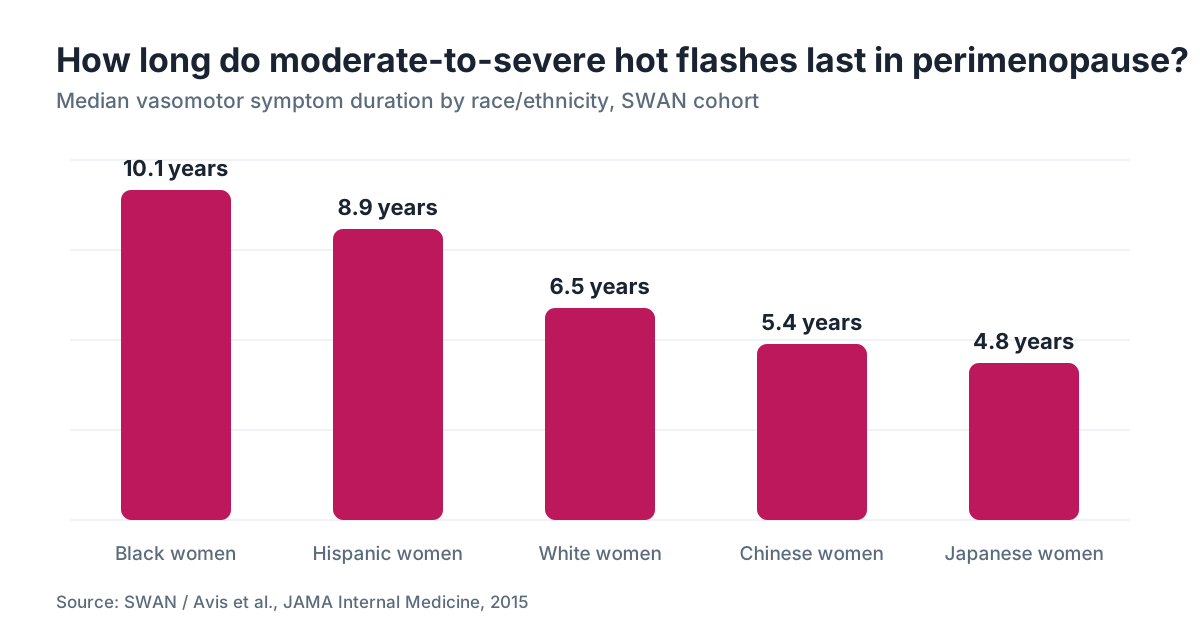
Here is a number worth keeping: SWAN found moderate to severe hot flashes lasted a median of 7.4 years, not the "few months" women are usually promised [5]. That figure alone should change how clinicians and patients weigh treatment.
| Symptom | Typical onset | Prevalence estimate | |---|---|---| | Cycle irregularity | Early perimenopause (avg. ~47) | Very common, nearly universal | | Hot flashes / night sweats | Mid-to-late perimenopause | 75-80% of women [5] | | Sleep disruption | Can begin early perimenopause | ~50-60% | | Mood changes / anxiety | Early-to-mid perimenopause | ~40-50% | | Brain fog | Mid perimenopause | ~60% report cognitive complaints | | Vaginal dryness | Mid-to-late perimenopause | ~40-55% | | Joint pain | Mid-to-late perimenopause | ~50-60% |
How do doctors diagnose perimenopause?
There is no single definitive test. Perimenopause is mostly a clinical diagnosis built on age, symptoms, and menstrual history. Lab work can sharpen the picture, though, especially in younger women or when symptoms are murky.
FSH is the hormone checked most often. As the ovaries lose responsiveness, the pituitary pumps out more FSH trying to wake them up. An FSH above 25 IU/L drawn in the early follicular phase (day 2 or 3, or any time if cycles are very irregular) suggests diminished ovarian reserve, though FSH swings a lot during perimenopause and one normal reading does not rule it out [6]. Estradiol runs lower and more variable. AMH (anti-Mullerian hormone) declines steadily and reads ovarian reserve well, but it is not standard for routine perimenopause diagnosis.
Thyroid disease, low iron, vitamin B12 deficiency, and sleep apnea all mimic perimenopausal symptoms convincingly. A good clinician clears these before settling on perimenopause as the whole answer. Women who had a hysterectomy but kept their ovaries can be in perimenopause with no menstrual signal at all, which leaves symptoms and labs as the only guide.
The North American Menopause Society (NAMS) does not recommend routine FSH testing to diagnose perimenopause in women over 45 with typical symptoms, because the clinical picture usually says enough [6]. Under 45, testing earns its place. The point is not a label. It is an honest conversation about what is driving the symptoms and what to do next.
What treatments actually work for perimenopausal symptoms?
Hormone therapy (HT), meaning estrogen with or without progesterone, is still the most effective treatment for hot flashes and night sweats. The 2023 NAMS position statement says that for women under 60 or within 10 years of menopause onset, "the benefits of hormone therapy outweigh the risks" for most healthy women [6]. That covers perimenopausal women too, and many of them go untreated because of fears rooted in a misread of the 2002 Women's Health Initiative data.
For women who still have a uterus, a progestogen is added to protect the uterine lining when systemic estrogen is used. Progesterone options include oral micronized progesterone (Prometrium) and synthetic progestins. The choice matters: micronized progesterone has a friendlier cardiovascular and breast safety profile in observational data than older synthetic progestins, though randomized trial data are still thin [7].
The estrogen patch delivers estrogen through the skin, skipping first-pass liver metabolism. That matters because oral estrogen slightly raises clotting risk while transdermal does not, based on observational data and pharmacokinetic reasoning [7]. For perimenopausal women with migraines or cardiovascular risk factors, the patch is often the smarter place to start.
Non-hormonal options with decent evidence include:
- Fezolinetant (Veoza), an FDA-approved neurokinin B antagonist cleared in 2023 specifically for moderate to severe vasomotor symptoms [8]
- SSRIs and SNRIs (paroxetine, venlafaxine) at low doses, which cut hot flash frequency by roughly 50 to 60 percent
- Gabapentin, useful for night sweats
- Cognitive behavioral therapy (CBT), rated evidence-based for hot flash perception and sleep by the British Menopause Society
Lifestyle steps (cooling the bedroom, avoiding triggers, weight management) help at the edges but rarely settle moderate or severe symptoms alone. If a woman is genuinely struggling, she deserves treatment, not a tip to dress in layers.
Weight is now part of the perimenopausal conversation. Many women gain 1 to 2 pounds a year through this transition, driven by hormonal shifts that push fat toward the abdomen and lower metabolic rate. GLP-1 receptor agonists like semaglutide and tirzepatide have produced large, sustained weight loss in trials, with semaglutide averaging a 15 percent body weight reduction in STEP 1 [9]. Some clinicians, including those at telehealth platforms like WomenRx, now pair GLP-1 therapy with hormone therapy for perimenopausal women carrying both symptom burden and weight gain. The evidence for the combination is early, but the reasoning holds.
Bone health is a perimenopause problem, not a postmenopause one. Estrogen actively maintains bone density, and as it falls, loss speeds up. A bone density test (DEXA scan) is recommended at menopause or earlier if risk factors are present. Women with meaningful perimenopausal bone loss may need to weigh HT sooner rather than later, since it is one of the few things that actually prevents bone loss instead of merely slowing it.
How is perimenopause different from menopause?
The difference is mostly timing, not symptoms. Menopause is a single point: the day you can say you have gone 12 full consecutive months without a period. Everything before that, from the moment hormonal fluctuation starts, is perimenopause. Everything after is postmenopause.
In practice, perimenopause is often the rougher stretch, not postmenopause. Hormones here are not steadily low. They are wildly erratic. Estrogen can spike hard before it crashes, which is part of why mood swings, migraines, and heavy bleeding can be worse in the early transition than a few years later, once periods stop and hormones settle at a consistently low level.
Management differs too. Perimenopausal women still cycling may use low-dose hormonal contraceptives (a low-dose pill, or a hormonal IUD paired with systemic estrogen) to cover both contraception and symptom relief. Postmenopausal women use menopause-specific HT formulations. The crossover is messier than textbooks let on, and a good clinician tunes the approach to where a woman actually is, not a rigid age cutoff.
For a closer look at where menopause sits on this timeline and what the menopause age range really means for your body, that context helps put perimenopause in perspective.
Does perimenopause affect weight and metabolism?
Yes, and heavily. The perimenopausal years bring some of the biggest metabolic shifts a woman's body goes through outside of pregnancy.
Estrogen regulates insulin sensitivity, fat distribution, and appetite signaling. As it turns erratic and then declines, fat moves off the hips and thighs (where estrogen had been steering it) and onto the abdomen. This is not cosmetic. Visceral abdominal fat is metabolically active and raises cardiovascular and metabolic disease risk. Women who were pear-shaped in their 30s often notice an apple shape creeping in through their 40s without touching their diet or exercise.
Resting metabolic rate drops with age no matter what, but the hormonal shift speeds it up. Studies suggest perimenopausal and postmenopausal women burn less at rest than premenopausal women of similar age and body composition [10].
Hormone therapy does not cause weight loss, but it appears to blunt the abdominal fat redistribution perimenopause drives. Women on HT tend to carry less visceral fat than untreated women of the same age and BMI, based on observational data.
For women facing real weight gain, GLP-1 receptor agonists are worth a serious conversation. Semaglutide for weight loss produces average losses of 15 to 17 percent of body weight in trials, a size lifestyle changes almost never reach in this age group [9]. The head-to-head matters too: semaglutide vs tirzepatide shows tirzepatide averaging somewhat more, about 20 to 22 percent in SURMOUNT-1 [11], though individual response varies. These are not quick fixes. They require ongoing use, and stopping reverses most of the loss within a year.
What about fertility in the perimenopausal age group?
This is one of the most misunderstood corners. Perimenopausal women are not infertile. Ovulation is unpredictable and less frequent, but it still happens. Unintended pregnancies in women in their 40s are real and, when they occur, more often end in termination than pregnancies in younger women, partly because they are unexpected.
Fertility does fall sharply with age, and egg quality drops considerably after 40. But "declining fertility" and "no fertility" are not the same thing. NAMS and reproductive endocrinologists consistently advise that perimenopausal women who do not want to conceive keep using contraception until menopause is confirmed (12 months of amenorrhea) [6].
For women who do want to conceive in their 40s, the transition makes it harder. Diminished ovarian reserve means fewer eggs and a higher rate of chromosomal abnormalities. Many pursue IVF with preimplantation genetic testing or, if egg supply is very low, donor eggs. A frank conversation with a reproductive endocrinologist is worth it if pregnancy is the goal at 40 or beyond.
Hormone therapy used for perimenopausal symptoms is not contraception. A woman on an estrogen patch and progesterone for hot flashes is not protected against pregnancy.
When should you see a doctor about perimenopausal symptoms?
Honestly, sooner than most women do. The gap between a woman first noticing perimenopausal symptoms and getting appropriate treatment is measured in years, not months. Part of that is patient hesitation. Part of it is that clinicians are not always trained to catch the transition early.
See someone if your periods have turned irregular (much shorter, longer, heavier, or more spread out); you are getting hot flashes or night sweats that wreck your sleep or your day; your mood has shifted noticeably with no clear psychological cause; you have new cognitive symptoms (memory lapses, word-finding trouble, poor concentration); or you are in your 30s and dealing with any of the above.
See someone urgently if you are bleeding very heavily (soaking more than one pad an hour for several hours), bleeding between periods in a new pattern, or have gone more than 90 days without a period and a pregnancy test is negative. These can point to perimenopause, but also to fibroids, polyps, or, rarely, endometrial disease. They need evaluation, not watchful waiting.
A clinician who specializes in menopause care genuinely changes outcomes. The NAMS certified practitioner database and telehealth options, including WomenRx for women who cannot reach an in-person specialist, are practical ways to find providers who stay current. The field has moved a lot in five years, and a generalist who has not updated may still be anchored to the 2002 WHI interpretation that scared a generation of women off HT that could have helped them.
For women mapping out what care looks like at different points in the transition, the articles on hormone replacement therapy and when does menopause start add useful context.
Does the perimenopausal transition affect heart and bone health long-term?
Yes, and this is the part of perimenopause medicine has long underplayed.
Estrogen is cardioprotective. It keeps blood vessels flexible, shapes the lipid profile favorably (raising HDL, lowering LDL), and tamps down inflammation. As estrogen falls during perimenopause, LDL cholesterol typically rises 10 to 15 percent and HDL may dip. Blood pressure often climbs. The perimenopausal years are when many women's cardiovascular risk shifts from "favorable" toward "similar to men the same age," and it moves faster than most women or their doctors expect [10].
Bone density follows the same arc. Peak bone mass lands in the late 20s. A slow decline runs through the 30s and early 40s. Then, in the 2 to 3 years around the final period, loss speeds up hard: women can lose 2 to 3 percent of bone density a year during late perimenopause and early postmenopause, against about 0.5 to 1 percent a year before [12]. This is the window where intervention counts most. A baseline bone density test and attention to risk factors (calcium, vitamin D, weight-bearing exercise, possibly HT) during perimenopause, more than after, saves the most bone.
Hormone therapy started in perimenopause or early postmenopause appears to lower cardiovascular events in healthy women, per the "timing hypothesis" supported by SWAN and WHI reanalysis data [7]. Starting HT more than 10 years after menopause, or after 60, does not carry the same benefit and may carry more risk. Which is exactly why the treatment conversation belongs early in the transition, not after years of suffering.
Frequently asked questions
What is the typical age range for perimenopause?
Most women begin perimenopause between ages 40 and 51, with average onset around 47. The transition ends at menopause, which arrives at a median age of 51.4 in the U.S. Some begin as early as their late 30s, especially with a family history of early menopause or autoimmune conditions. The full range, counting early and late outliers, runs from roughly 35 to 55.
Can you be in perimenopause at 35?
It is uncommon but possible. Perimenopause before age 40 affects roughly 1 to 5 percent of women and is more likely with a family history of early menopause, autoimmune thyroid disease, or prior cancer treatment. If you are 35 and noticing cycle irregularity, worsening PMS, new sleep disruption, or mood changes, ask your clinician to check FSH and rule out other causes. Early diagnosis matters because low estrogen at a young age raises cardiovascular and bone risks.
How do I know if I'm in perimenopause or just stressed?
Both can cause poor sleep, mood changes, and cycle disruption, which is what makes this hard to sort. The clues that point toward perimenopause: your cycles are measurably changing in length or flow, you are having hot flashes or night sweats, and symptoms cluster in the week before your period. Lab work (FSH, estradiol, thyroid panel) helps clarify. If stress alone were behind it, FSH would read normal for your age.
Is hormone therapy safe to start during perimenopause?
For most healthy women under 60 within 10 years of menopause onset, NAMS states the benefits of hormone therapy outweigh the risks. Starting during perimenopause rather than waiting until postmenopause may add cardiovascular and bone benefits under the timing hypothesis. Women with a history of certain cancers, blood clots, or unexplained vaginal bleeding need individualized evaluation first. This is not a decision to make from a website alone.
Do perimenopausal women still need birth control?
Yes. Ovulation is irregular during perimenopause but still occurs. Pregnancy, while less likely than in your 20s, is possible until menopause is confirmed by 12 consecutive months without a period. Unintended pregnancies in women in their 40s are not rare. Hormone therapy used for symptom relief does not prevent pregnancy. Contraceptive options that also manage perimenopausal symptoms include low-dose combined pills, the hormonal IUD, or a progestin-only pill.
What blood tests confirm perimenopause?
There is no single confirmatory test. FSH above 25 IU/L on day 2 to 3 of the cycle supports the diagnosis, but FSH swings widely during perimenopause, so one normal result does not rule it out. AMH (anti-Mullerian hormone) declines more steadily and reads ovarian reserve well. Estradiol, thyroid function, and a metabolic panel help exclude other causes. NAMS does not recommend routine FSH testing for women over 45 with typical symptoms.
Why do perimenopausal women gain weight, especially in the belly?
Estrogen steers fat storage toward the hips and thighs. As it turns erratic and declines, fat redistributes toward the abdomen. Resting metabolic rate also falls with age, and hormonal change compounds it. Insulin sensitivity drops. These shifts happen even without changes in diet or exercise, which is why standard advice frustrates so many women during this stretch. Hormone therapy blunts some of the visceral fat gain; GLP-1 medications can produce meaningful weight loss when lifestyle changes fall short.
How long do hot flashes last in perimenopause?
Longer than most women are told. SWAN found moderate to severe hot flashes lasted a median of 7.4 years in the women it followed. Hot flashes usually peak in severity around the final period. Women who start having them early in perimenopause tend to experience them longer overall. Effective treatments exist and are underused: hormone therapy works best, with non-hormonal options including fezolinetant, SSRIs, and SNRIs for women who cannot use hormones.
Can perimenopause cause anxiety and depression?
Yes, and it gets missed often. Fluctuating estrogen directly affects serotonin and GABA signaling in the brain, which is why mood instability, new-onset anxiety, and depressive symptoms are common in perimenopause. Women with a prior history of PMS, PMDD, or postpartum depression appear more sensitive to hormonal swings and carry higher risk. Treating the hormonal root cause, rather than only prescribing antidepressants, often produces better outcomes for perimenopausal mood symptoms.
What is the difference between early and late perimenopause?
The STRAW+10 staging system defines early perimenopause as when cycle length varies by 7 or more days from your usual pattern. Late perimenopause begins once you have had 60 or more days between periods. Symptoms tend to intensify in late perimenopause, and FSH reads more consistently elevated. Fertility drops more sharply in the late stage. The distinction shapes treatment planning, because hormone levels, symptoms, and contraceptive needs differ between the two phases.
Does perimenopause affect bone density?
Significantly. Bone loss speeds up in the 2 to 3 years around the final period, with women losing an estimated 2 to 3 percent of bone density a year during this window versus 0.5 to 1 percent a year in the premenopausal decade. This is the highest-impact period for bone-protective intervention. Estrogen therapy, when appropriate, prevents this accelerated loss. Calcium, vitamin D, and weight-bearing exercise are the base. A DEXA scan at or near menopause gives a useful baseline.
What is premature menopause and is it different from perimenopause?
Premature ovarian insufficiency (POI) is when ovarian function diminishes before age 40. It differs from typical perimenopause in cause, timing, and management. Women with POI face decades of estrogen deficiency their peers do not, raising cardiovascular, bone, and cognitive risks substantially. For them, hormone therapy is generally recommended until at least age 51 regardless of preference, because they are replacing hormones they should still have, not adding to normal levels.
Can losing weight help with perimenopausal symptoms?
For some symptoms, meaningfully. Hot flash frequency and severity run higher in women with obesity, and weight loss reduces them. Sleep quality, mood, joint pain, and metabolic markers all tend to improve with significant weight loss. Weight does not fix hormonal deficiency directly, so severe vasomotor or genitourinary symptoms usually still need hormonal treatment. But for women managing mild to moderate symptoms alongside real weight gain, weight loss is a genuine part of the picture.
Where can I find a clinician who specializes in perimenopause care?
The North American Menopause Society keeps a searchable database of certified menopause practitioners at menopause.org. Telehealth platforms that specialize in women's hormonal health can be a practical option for women in areas with few in-person specialists, or for those who want faster access to providers who stay current. When interviewing a clinician, ask directly about their approach to HT and whether they follow the NAMS 2023 guidelines. The answer tells you a lot.
Sources
- NIH / SWAN (Study of Women's Health Across the Nation) — overview of findings on menopausal transition timing by race and ethnicity
- NAMS — Menopause Practice: A Clinician's Guide, STRAW+10 staging criteria
- ACOG (American College of Obstetricians and Gynecologists) — Premature Ovarian Insufficiency
- NIH Office of Research on Women's Health — Menopause and Perimenopause fact sheet
- SWAN — Duration of menopausal vasomotor symptoms, published in JAMA Internal Medicine (Avis et al., 2015)
- North American Menopause Society — 2023 Menopause Hormone Therapy Position Statement
- Rossouw et al. / WHI reanalysis and E3N cohort data — transdermal estrogen and cardiovascular/thrombotic risk vs. oral estrogen
- FDA — Drug approval announcement for fezolinetant (Veoza) for moderate to severe vasomotor symptoms, 2023
- Wilding et al. — STEP 1 trial, New England Journal of Medicine, 2021 (semaglutide 2.4 mg for weight management)
- American Heart Association — Cardiovascular disease risk in women and the menopausal transition
- Jastreboff et al. — SURMOUNT-1 trial, New England Journal of Medicine, 2022 (tirzepatide for obesity)
- NIH National Institute of Arthritis and Musculoskeletal and Skin Diseases — Osteoporosis and menopause