Perimenopausal: what it means, symptoms, and how to treat them
TL;DR: Perimenopause is the hormonal transition leading up to menopause. It can start in your mid-30s and lasts 4 to 8 years on average. Estrogen and progesterone swing hard before they decline, driving irregular periods, hot flashes, broken sleep, and mood changes. Hormone therapy, targeted non-hormonal drugs, and lifestyle changes all have real evidence behind them.
What does perimenopausal mean exactly?
Perimenopause means 'around menopause.' It's the stretch of time when your ovaries make less estrogen and progesterone but you haven't yet gone 12 straight months without a period. That 12-month mark is the formal line that defines menopause itself [1].
The word gets thrown around loosely. Doctors sometimes call a woman 'perimenopausal' when she's clearly in hormonal flux, even before her cycles turn irregular. The transition actually splits into two stages. Early perimenopause is when cycles may still look regular but hormones are already shifting. Late perimenopause is when cycles turn noticeably irregular and symptoms usually get louder [2].
Here's what matters. Perimenopause is not a disease. It's a biological process, the same way puberty was.
But the hormonal volatility of this phase can wreck your sleep, your mood, and your workdays, and there are good treatments for it. You don't have to white-knuckle through it.
See also: when does menopause start and perimenopause age for more on timing.
What age does perimenopause usually start?
Most women enter perimenopause between 45 and 55, but the real range is wider. The average age of the final period in the United States is 51 to 52 [3]. Count backward through a transition that runs 4 to 8 years and a lot of women are already perimenopausal in their mid-to-late 40s.
Early is more common than most women expect. Some notice hormonal changes in their late 30s. If your periods turn irregular before 40, that's premature ovarian insufficiency (POI), a separate condition from natural perimenopause that deserves its own workup [1].
Genetics is the single strongest predictor of when you'll start. If your mother went early, you probably will too. Smoking speeds up the transition by roughly 1 to 2 years [4]. Body weight, race, and prior chemotherapy or pelvic surgery all shift the timing too.
For a full breakdown of how age, ethnicity, and lifestyle factors intersect, see perimenopause age and menopause age.
What are the most common perimenopausal symptoms?
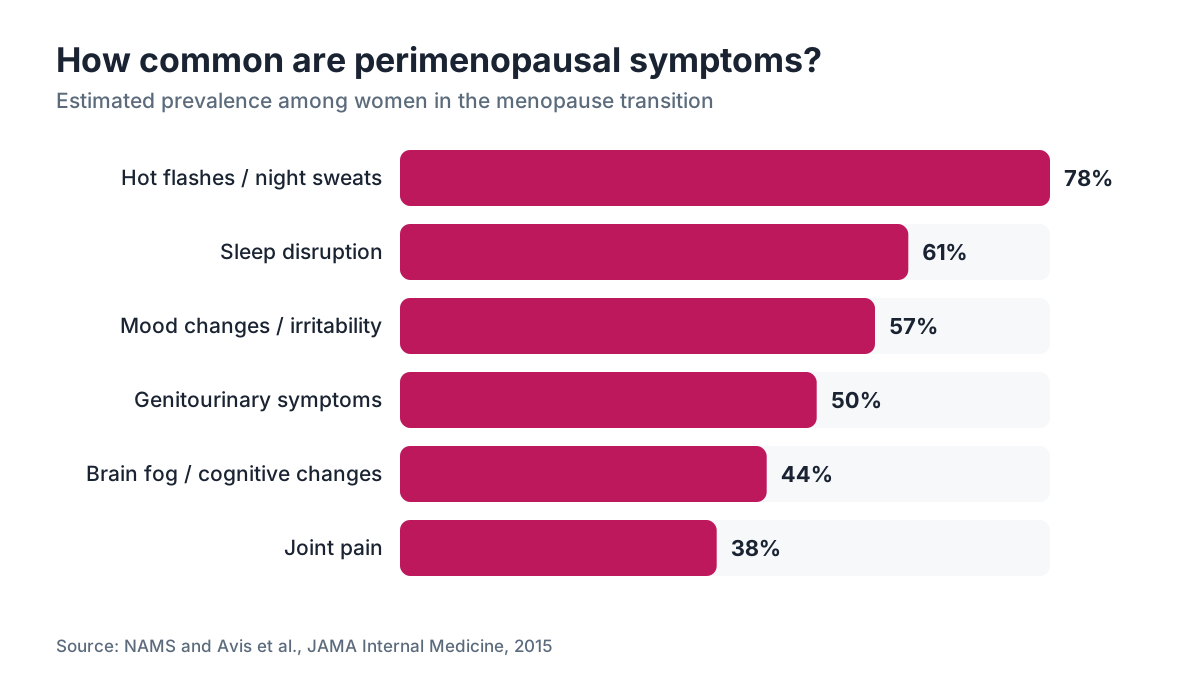
The North American Menopause Society (NAMS) links more than 30 symptoms to the menopause transition [1]. Nobody gets all of them. Some women barely notice the change. Others watch their quality of life fall off a cliff.
The symptoms sort into rough categories.
Menstrual changes are usually the first signal. Cycles shorten, lengthen, get heavier, get lighter, or go unpredictable. That chaos reflects the erratic ovulation of declining ovarian reserve.
Vasomotor symptoms (hot flashes and night sweats) hit roughly 75 to 80 percent of women during the transition [5]. A hot flash usually lasts 1 to 5 minutes. Night sweats are the same thing after dark, and they're often the reason sleep falls apart.
Sleep disruption snowballs fast. Bad sleep worsens mood, thinking, and pain sensitivity, so the woman fighting night sweats is usually fighting everything else too.
Mood and cognitive changes are real and underreported. Anxiety, irritability, low mood, and brain fog track closely with the hormonal swings of perimenopause, especially falling progesterone. This isn't the same as a primary mood disorder, though the transition can set one off in women who were already vulnerable [6].
Genitourinary symptoms (vaginal dryness, urinary urgency, recurrent UTIs, pain with sex) reach roughly 50 percent of women, and they're among the least-reported because women feel awkward raising them [1].
Other symptoms include joint pain, palpitations, headaches, skin changes, hair thinning, and weight shifting toward the belly. That fat redistribution is partly hormonal and partly age. It matters for your heart, more than your jeans.
How is perimenopause diagnosed?
No single test confirms perimenopause. The diagnosis is mostly clinical: a woman in the right age range, with the right symptom pattern, and changing menstrual cycles [2].
Blood tests help but only so much. FSH (follicle-stimulating hormone) climbs as the ovaries lose responsiveness, and a level above 25 to 30 IU/L drawn early in the cycle points toward the transition. But FSH bounces around wildly during perimenopause, so one normal result rules nothing out [7]. Estradiol is just as jumpy. Testing on more than one occasion, or reading results in context, beats a single snapshot.
AMH (anti-Mullerian hormone) tracks ovarian reserve more reliably, but it isn't standard in routine perimenopause evaluation. Thyroid function (TSH) is worth checking every time, because hypothyroidism copies half the symptom list.
A good clinician reads your menstrual history, symptom history, family history, and labs together. If your cycles have turned noticeably irregular and you're in your 40s or early 50s with classic symptoms, that's perimenopause until something else proves otherwise.
The Stages of Reproductive Aging Workshop (STRAW+10), published in 2011, is the framework clinicians use to place a woman in the transition [2].
What treatments actually work for perimenopausal symptoms?
Treatments fall into three buckets: hormonal, non-hormonal prescription, and lifestyle. The right pick depends on your symptom load, your health history, and what you're willing to take.
Hormone therapy (HT) is the most effective option for hot flashes, genitourinary symptoms, and the mood and sleep problems that ride along with hormonal flux. The evidence is not subtle. Systemic estrogen cuts hot flash frequency by 75 to 90 percent versus placebo [8]. Current NAMS guidance calls hormone therapy first-line for healthy women under 60 and within 10 years of their final period who have bothersome symptoms [1]. The fears from the 2002 WHI study have been heavily revised since. For most women in this age window, the benefit-risk math favors treatment.
If you still have a uterus, estrogen has to be paired with progesterone or a progestogen to protect the uterine lining. Progesterone (oral micronized progesterone, sold as Prometrium) has a bonus: it improves sleep directly. The estrogen patch delivers estrogen through the skin, which carries lower clot risk than the pill. See hormone replacement therapy for the full rundown of delivery options and risk profiles.
Non-hormonal prescriptions matter for women who can't or won't take hormones. Fezolinetant (Veozah), FDA-approved in 2023, is a neurokinin B receptor antagonist made specifically for moderate-to-severe hot flashes. It cut hot flash frequency by roughly 60 percent in trials [9]. SNRIs like venlafaxine, SSRIs like escitalopram, and gabapentin also have evidence for hot flashes, though none carry FDA approval for that specific use.
Lifestyle approaches are real but limited. Regular aerobic exercise, cognitive behavioral therapy (CBT), and mindfulness training show modest benefit for hot flashes and sleep [1]. They work best alongside medical treatment, not instead of it, in women with moderate-to-severe symptoms.
Are there natural treatments for perimenopausal symptoms?
Plenty of women want to start with something other than a prescription, and a few natural options have decent (if modest) evidence.
Phytoestrogens from soy (isoflavones) and red clover have been studied hard. The data is mixed. A meta-analysis in Menopause found soy isoflavones dropped hot flash frequency by about 20 to 25 percent versus placebo, a real effect but smaller than hormone therapy [10]. Supplement quality and dose vary enormously. Standardized extracts like S-equol tend to beat ordinary soy food intake.
Black cohosh (Actaea racemosa) is one of the most popular herbal remedies, and the evidence is all over the place. Some trials show a meaningful drop in hot flashes; others show nothing. NAMS says it 'may be helpful for some women' but notes the data doesn't back it as reliably effective [1]. Rare cases of liver injury have been reported, so it isn't risk-free.
Magnesium (glycinate or threonate) isn't proven for hot flashes, but many women say it helps sleep and anxiety. The evidence is weak. The downside is small.
Mind-body approaches including yoga, acupuncture, and CBT have been tested in randomized trials. CBT has the strongest evidence for cutting the distress hot flashes cause, even when it doesn't cut how often they happen [1].
Honest bottom line: natural treatments help at the margins, mostly for mild symptoms. For moderate-to-severe symptoms they usually aren't enough alone. If you'd rather not start hormones, trying lifestyle and herbal approaches first is fair, but set a deadline and track your symptoms so you'll actually know whether they worked.
Can perimenopause cause weight gain, and what helps?
Yes, and the picture is messy. The average woman gains about 1.5 pounds a year in midlife. Some of that is aging, but the hormonal shift of perimenopause specifically pushes fat toward the belly even when the scale barely moves [3]. Lower estrogen dents the body's ability to manage insulin sensitivity and appetite signals.
Diet and exercise still come first. Resistance training matters most, because it defends the muscle mass and metabolic rate that slide as estrogen drops. High-protein eating helps with fullness and holds onto muscle. Not flashy. They work, and they're free.
For women grinding away with reasonable effort and getting nowhere, GLP-1 receptor agonists like semaglutide and tirzepatide are the most effective weight-loss drugs available. The SURMOUNT-1 trial showed tirzepatide producing average weight loss of 20.9 percent over 72 weeks in adults with obesity [11]. The STEP 1 trial showed semaglutide producing 14.9 percent average body weight reduction over 68 weeks [12]. Those are big numbers.
GLP-1s don't touch the hormonal cause of belly fat, so for perimenopausal women the best results often come from pairing a metabolic drug with hormone therapy (when it's appropriate), hitting both pathways at once. If you're weighing GLP-1 therapy, semaglutide for weight loss and semaglutide vs tirzepatide are good starting points. Telehealth platforms like WomenRx handle both the hormonal and metabolic sides in the same visit, which counts when the two are this tangled together.
See also: semaglutide for a full mechanism breakdown.
How does perimenopause affect bone density and heart health?
These are the slow-burn concerns that get less airtime than hot flashes and matter more for how you age. Bone and heart trouble build quietly during the transition.
Bone loss speeds up sharply in the years around the final period. Women can lose 2 to 3 percent of bone density a year during late perimenopause and the first years after menopause [3]. Estrogen keeps osteoclasts (the cells that break down bone) in check. When estrogen falls, breakdown outpaces rebuilding. The result: a 50 percent lifetime fracture risk for white women, higher than the combined risk of breast cancer, heart attack, and stroke [3].
A bone density test (DEXA scan) is usually recommended starting at 65, but earlier screening makes sense if you carry extra risk: low body weight, a family history of hip fracture, a prior fragility fracture, smoking, or long-term steroid use. See bone density test for the screening criteria and what your T-score actually means.
Estrogen therapy protects bone well. If you're on hormone therapy for symptoms, the bone benefit comes along for free.
Cardiovascular risk changes after menopause. Premenopausal women have far lower heart disease rates than men their age, largely thanks to estrogen's friendly effects on lipids and blood vessels. After menopause that edge shrinks. LDL cholesterol tends to rise, HDL may slip, and belly fat worsens insulin resistance. Watching your lipids, blood pressure, and blood sugar through and after perimenopause is worth doing, and it's more than box-checking.
What's the difference between perimenopause and menopause?
Perimenopause is the trip. Menopause is the arrival.
Menopause is a backward-looking diagnosis. It's confirmed only after 12 straight months with no period, and the date of the final period becomes your official menopause date [1]. Everything before that 12-month mark, however brutal, is technically perimenopause. Everything after is postmenopause.
This distinction has a practical edge: you still need contraception during perimenopause. You can still ovulate now and then even when cycles are irregular, and pregnancy, while less likely, happens. The standard advice is to keep using contraception until you've hit the 12-month no-period mark [1].
Symptoms don't obediently stop at the menopause line. Hot flashes can hang on for 7 or more years on average after the final period, and some women get them for over a decade [5]. Genitourinary symptoms (the GSM cluster) often get worse over time without treatment, because the tissue keeps thinning in a low-estrogen environment.
For a deeper look at the full menopause transition and what happens in postmenopause, that article covers the long arc.
When should you see a doctor about perimenopausal symptoms?
See a clinician whenever your symptoms are wrecking your quality of life. That sounds obvious, but plenty of women wait, assuming this is just something to grit through. It isn't. Safe, effective treatment exists for most perimenopausal symptoms.
Specific reasons to get evaluated sooner:
Very heavy bleeding, or bleeding that runs longer than 7 days, which can point to fibroids, endometrial polyps, or, rarely, endometrial disease that needs ruling out.
Any bleeding after 12 months with no period. That's postmenopausal bleeding, and it always needs evaluation.
Symptoms starting before 40, which can signal premature ovarian insufficiency (POI), a condition with different long-term health stakes.
Severely broken sleep, heavy anxiety or depression, or thinking changes that are hurting your work or relationships.
Any symptom you're chalking up to menopause deserves a second look, because thyroid disease, autoimmune conditions, and other diagnoses can wear the menopause costume.
A good clinician takes a careful history, weighs your full risk profile, and lays out hormonal and non-hormonal options without herding you toward a preset answer. WomenRx is a telehealth platform built around exactly this kind of care for women in the transition, where you can get hormone evaluation and prescription treatment without waiting months for a specialist.
How long does perimenopause last?
The average run is 4 to 8 years, and the spread is genuinely wide. Some women move through in 2 years. Others stay in flux for a decade [2]. The Study of Women's Health Across the Nation (SWAN) found the median symptomatic transition lasts about 7.4 years, measured from the first hot flashes to the final period and beyond [5].
When you start shapes how long it drags on. Women who begin earlier (say, early 40s) tend to have longer transitions than women who start in their early 50s. Race and ethnicity matter too. Black women tend to have longer transitions than white or Asian women, on average [5].
There's no way to predict the exact finish line for any one person. But knowing the typical range sets your expectations straight. If you've had irregular cycles and hot flashes for 2 years and feel like it will never end, you're squarely inside the normal window, and the intensity won't necessarily hold steady the whole way through.
Frequently asked questions
What are the first signs you are perimenopausal?
The earliest signs are usually subtle cycle changes (shorter cycles, periods arriving a few days early), mild sleep disruption, and more premenstrual irritability or anxiety. Hot flashes can show up now but often come later. Many women first notice their cycle shortening from 28 days to 24 or 25, which reflects the shorter follicular phase that comes with declining ovarian reserve.
Can you be perimenopausal in your 30s?
Yes, though it's less common. Hormonal changes can start in the late 30s for some women, and that sits within the wide normal range. If cycles turn irregular or you get significant hot flashes before 40, that crosses into premature ovarian insufficiency (POI), a distinct diagnosis with its own management. A hormone panel and thyroid check are worth doing if you're symptomatic under 40.
What is the best hormone treatment for perimenopausal symptoms?
There's no single best option; it hinges on your main symptoms and health history. For hot flashes and night sweats, systemic estrogen (patch, gel, spray, or pill) plus progesterone if you have a uterus has the strongest evidence. For vaginal dryness and urinary symptoms only, low-dose local vaginal estrogen works well with little systemic absorption. NAMS recommends hormone therapy as first-line for most healthy symptomatic women under 60.
Is anxiety a perimenopausal symptom?
Yes, and it's one of the most missed. Progesterone has calming, GABA-boosting effects on the brain. As progesterone turns erratic and then falls in perimenopause, many women feel more anxiety, restlessness, and irritability, often in the luteal phase at first. This differs from a primary anxiety disorder but can be bad enough to need treatment. Hormone therapy, especially adding oral micronized progesterone, can help a lot.
What foods help with perimenopausal symptoms?
No food replaces medical treatment, but food choices help at the margins. Soy foods (edamame, tofu, miso) carry isoflavones with weak estrogenic activity that may cut hot flash frequency modestly. Getting enough protein (1.2 to 1.6 grams per kilogram of body weight) protects muscle. Cutting alcohol and caffeine can improve sleep and dial down hot flash triggers. A Mediterranean-style diet links to lower vasomotor symptom burden in observational data.
Does perimenopause cause depression?
It can. Research shows women face two to three times higher risk of a depressive episode during perimenopause than premenopause, even without any prior history of depression. Estrogen shapes serotonin and dopamine signaling. Add hormonal flux, poor sleep, and the usual midlife stressors, and you get real vulnerability. Hormone therapy can improve mood in perimenopausal women. Antidepressants are also appropriate when the clinical picture calls for them.
Can perimenopausal women still get pregnant?
Yes. Irregular ovulation isn't no ovulation. Pregnancy rates drop sharply in the perimenopausal years, but spontaneous pregnancies still happen. Women who don't want to conceive should keep using contraception until they've gone 12 straight months without a period (the menopause definition). Hormonal contraception (a low-dose pill or a hormonal IUD) can double as symptom management during perimenopause, which makes it a useful choice in this phase.
What is the difference between perimenopause and PMS?
They share some symptoms (mood changes, bloating, breast tenderness, sleep disruption) but run on different engines. PMS shows up specifically in the luteal phase and clears when your period arrives. Perimenopausal symptoms are more persistent, unpredictable, and not necessarily tied to cycle phase as the transition advances. Perimenopausal cycles also tend to get heavier and less regular. If your manageable PMS suddenly gets much worse in your 40s, that jump often signals early perimenopause.
How do I know if weight gain is from perimenopause or something else?
Perimenopausal weight change tends to mean belly redistribution, sometimes with little change on the scale. If total weight is climbing fast, check thyroid function (hypothyroidism causes weight gain and fatigue that mimic perimenopause), insulin resistance, and cortisol patterns. Holding a steady diet and exercise pattern and still gaining despite honest effort is a fair reason to ask for a fuller metabolic workup instead of assuming it's just perimenopause.
What does a perimenopausal hot flash feel like?
Most women describe a sudden wave of intense heat starting in the chest or face, often with flushing, sweating, and a racing heart. It usually peaks within a minute or two and fades over 1 to 5 minutes, sometimes trailed by a chill as the body overcorrects. Night sweats are hot flashes during sleep; many women wake soaked. Frequency ranges from a few a week to 20 or more a day in severe cases.
Is hormone therapy safe for perimenopausal women?
For most healthy women under 60 who are within 10 years of their final period, current evidence supports hormone therapy as safe and effective. The NAMS 2022 position statement concludes the benefits outweigh the risks for symptomatic women in this window. Risks vary by type, dose, delivery route, and personal history. Women with a history of hormone-sensitive cancers, unexplained vaginal bleeding, or active clotting disorders need individual evaluation. Transdermal estrogen carries lower clot risk than oral forms.
Can lifestyle changes alone manage perimenopausal symptoms?
For mild symptoms, sometimes yes. Regular aerobic and resistance exercise, good sleep habits, less alcohol, and stress management can meaningfully cut symptom burden. CBT has solid evidence for reducing hot flash distress. For moderate-to-severe symptoms, especially frequent hot flashes, heavy sleep disruption, or severe mood changes, lifestyle alone usually falls short. Treat them as the foundation that makes medical treatment work better, not a full replacement for it.
What blood tests check for perimenopause?
There's no single definitive test. FSH above 25 IU/L drawn early in the cycle is suggestive but swings too much to be conclusive. Estradiol is just as variable. TSH should always be checked because thyroid disease closely mimics perimenopause. AMH reflects ovarian reserve and drops well before cycles turn irregular, making it a useful early signal in some cases. Most clinicians diagnose perimenopause clinically and use labs to rule out other causes.
Sources
- North American Menopause Society (NAMS), Menopause Practice: A Clinician's Guide and position statements
- Harlow SD et al., Executive summary of the Stages of Reproductive Aging Workshop + 10 (STRAW+10), Menopause 2012
- National Institute on Aging, NIH, Menopause page
- Office on Women's Health, U.S. Department of Health and Human Services, Menopause
- Avis NE et al., Duration of menopausal vasomotor symptoms over the menopause transition, JAMA Internal Medicine, 2015
- Soares CN, Menopause and depression: understanding the association, Menopause, 2019
- Endocrine Society Clinical Practice Guideline, Menopause and Perimenopause, Journal of Clinical Endocrinology and Metabolism
- The NAMS 2022 Hormone Therapy Position Statement Advisory Panel, Menopause 2022;29(7):767-794
- FDA Drug Approval: Fezolinetant (Veozah), FDA label and approval 2023
- Taku K et al., Extracted or synthesized soybean isoflavones reduce menopausal hot flash frequency and severity, Menopause 2012
- Jastreboff AM et al., Tirzepatide Once Weekly for the Treatment of Obesity (SURMOUNT-1), NEJM 2022
- Wilding JPH et al., Once-Weekly Semaglutide in Adults with Overweight or Obesity (STEP 1), NEJM 2021