Perimenopause: symptoms, hormones, weight gain, and what actually helps
TL;DR: Perimenopause is the hormonal transition before menopause, lasting 4 to 10 years on average and usually starting in the mid-40s. Estrogen swings hard, progesterone drops, periods turn irregular, and hot flashes, poor sleep, and belly weight show up. Hormone therapy, resistance training, and GLP-1 medications are the best-studied ways to manage it.
What is perimenopause, exactly?
Perimenopause is the transition your body goes through before menopause, which is defined as 12 consecutive months without a menstrual period [1]. During perimenopause, ovarian function turns erratic. Your ovaries still release eggs, but not on a predictable schedule, and the hormones that run the whole process, mainly estrogen and progesterone, start swinging in ways they never did during your reproductive years.
The word itself just means "around menopause." That tidy definition undersells how long and disruptive the process gets. The average duration is somewhere between 4 and 10 years [1]. Some women sail through in two. Others are in it for a decade before their periods finally stop.
What makes perimenopause confusing is that it does not announce itself cleanly. You might have regular cycles for months and then skip two in a row. Your estrogen can spike higher than it ever did in your 30s, then crash. This is not a steady decline. It is chaos before a new equilibrium, and knowing that pattern is the first thing that keeps your own body from blindsiding you.
For a broader look at the full menopause transition, see our guide on menopause.
When does perimenopause start and how long does it last?
Most women enter perimenopause between their mid-40s and early 50s. The average age of onset is around 47, and population studies put the range from the late 30s to the early 50s [2]. If it starts before age 40, that is premature ovarian insufficiency, a separate condition that needs its own workup.
The end point is clearer than the start. You have reached menopause when you have gone 12 months without a period. In the United States, the median age of natural menopause is 51.4 years [1]. Everything before that 12-month clock finishes is technically perimenopause.
Duration varies enormously. The Stages of Reproductive Aging Workshop criteria (STRAW+10), the international standard for staging the transition, splits perimenopause into early and late phases based on cycle variability [3]. Early perimenopause means your cycle length has changed by 7 or more days from your baseline. Late perimenopause means you have had at least one gap of 60 or more days between periods. That late stage is usually the most symptomatic.
For more detail on age ranges, see perimenopause age and when does menopause start.
What are the most common perimenopause symptoms?
Hot flashes are the headline symptom, and for good reason. Roughly 75 to 80 percent of women in Western populations get vasomotor symptoms, the clinical term for hot flashes and night sweats, during the transition [1]. They happen because falling estrogen disrupts the hypothalamus, the brain region that runs body temperature. The result is a sudden wave of heat, flushing, and sweating that lasts from 30 seconds to several minutes.
But hot flashes are far from the whole picture. Here is what the evidence shows women actually live with:
Menstrual irregularity. This is the first and most reliable signal. Cycle length may shorten, lengthen, or turn completely unpredictable. Heavy bleeding is common and underreported.
Sleep disruption. Night sweats wake you up, but estrogen also affects sleep architecture on its own. Plenty of women develop insomnia in perimenopause with no drenching sweats at all.
Mood changes. Irritability, anxiety, and low mood cluster in the transition. The perimenopausal window carries elevated risk for depressive episodes, even in women with no prior history of depression [4].
Cognitive symptoms. Brain fog, word-finding trouble, and memory lapses are common. The research suggests these are real, not imagined, and tend to improve once the transition is complete [4].
Genitourinary symptoms. Vaginal dryness, painful sex, and urinary urgency fall under genitourinary syndrome of menopause (GSM). Unlike hot flashes, GSM does not fade on its own. It gets worse without treatment.
Joint pain. Estrogen has anti-inflammatory effects, and many women notice new or worsening joint aches as it falls.
Weight changes. This one gets its own section, which comes next.
Why does perimenopause cause weight gain?
Perimenopause weight gain is one of the most common complaints providers hear, and one of the most maddening, because it happens even when nothing about your diet or exercise has changed. The mechanisms are real, and there are several of them.
First, the hormonal shift changes where fat sits. Estrogen pushes fat storage toward the hips, thighs, and buttocks, the pear pattern. As estrogen falls, the distribution moves to the abdomen. This is visceral fat, the metabolically active kind that wraps around your organs and links strongly to insulin resistance, cardiovascular disease, and type 2 diabetes [5]. The scale may barely move while your body composition shifts in ways that matter for your health.
Second, muscle mass declines. Estrogen supports muscle protein synthesis, and losing it speeds up sarcopenia, the age-related loss of lean mass. Less muscle means a lower resting metabolic rate. You burn fewer calories at rest. The same intake that held your weight steady at 38 can drive slow gain at 48, through no fault of your behavior.
Third, bad sleep compounds everything. Poor sleep raises ghrelin (the hunger hormone), lowers leptin (the satiety hormone), and drives cortisol up, which parks fat on your belly.
The average weight gain across the menopausal transition is modest in population studies, roughly 1 to 2 kg over the perimenopause years [5], but that average hides a wide range. Some women gain 10 to 15 pounds. The gain tends to speed up in the first two years after the final period, which is why weight after menopause stays a live concern rather than something that resolves once periods stop.
For more on perimenopause weight gain and the evidence on GLP-1 options, see semaglutide for weight loss.
What hormone changes actually drive perimenopause?
The ovary sits at the center of it. From birth you carry a fixed number of follicles, the fluid-filled sacs that hold eggs. As you age, that pool drains. By the time perimenopause begins, fewer follicles remain, and the ones left respond less predictably to the signals your brain sends.
Follicle-stimulating hormone (FSH) rises as the brain tries to compensate for a lagging ovarian response. That is why FSH is sometimes used as a rough marker of where you are in the transition, though a single reading is unreliable because levels bounce so much cycle to cycle [1].
Estrogen, specifically estradiol, the most potent form, turns erratic. Early perimenopause can produce estrogen spikes above what you had in your 30s, which is why some women feel weirdly premenstrual or emotionally raw before the classic decline sets in. By late perimenopause, estradiol falls significantly.
Progesterone drops more quietly but often first. Because it is produced after ovulation, and ovulation gets less frequent in perimenopause, progesterone can run low even when estrogen is still high. This relative estrogen dominance matters. Progesterone balances many of estrogen's effects, in the uterus and the brain, so low progesterone without adequate estrogen opposition links to heavy, irregular periods and poor sleep. For a closer look at what progesterone does and how it is replaced, see our progesterone guide.
Testosterone also declines with age, though less abruptly than the estrogen drop. Low testosterone in perimenopausal women links to low libido, fatigue, and reduced motivation, though testosterone replacement for women is far less standardized than estrogen therapy [4].
How is perimenopause diagnosed?
There is no single blood test that diagnoses perimenopause. The diagnosis is clinical, based on your age, your symptom pattern, and your menstrual history [1]. This surprises a lot of women who expect a lab result to confirm what they feel.
FSH and estradiol can support the picture but have real limits. Because levels swing so much during the transition, a single FSH reading can be normal one month and elevated the next. The North American Menopause Society notes that for women over 45 with irregular periods and vasomotor symptoms, the clinical diagnosis holds up without routine hormonal testing [1].
Testing earns its place in a few spots: in younger women under 45 where premature ovarian insufficiency needs ruling out, when symptoms are ambiguous, or when contraception decisions are on the table (you can still conceive in perimenopause, though fertility drops sharply).
Thyroid disease mimics perimenopause almost perfectly. Irregular cycles, weight changes, mood swings, brain fog, fatigue. Every woman with classic perimenopausal symptoms should get a TSH checked to rule out thyroid dysfunction. Pregnancy has to be excluded too, in any woman with an irregular period who has not yet reached menopause.
A bone density test is worth considering in perimenopause, especially with osteoporosis risk factors. Bone loss picks up speed in the late perimenopause years. See bone density test for guidance on timing and interpretation.
What treatments work for perimenopause symptoms?
Hormone therapy (HT) is the most effective treatment for vasomotor symptoms and genitourinary symptoms, and the most effective way to prevent bone loss during the transition [1]. For women under 60 or within 10 years of menopause onset without contraindications, current evidence says the benefits of hormone therapy outweigh the risks for most women [1][6]. The 2002 Women's Health Initiative findings created lasting fear around HT, but the data have been reanalyzed and put back in context. The absolute risk increases, particularly for breast cancer with combined estrogen-progestogen therapy, were small, and the original trial population was older and farther from menopause than the women most likely to benefit.
Here is the practical breakdown of HT options:
Estrogen alone is for women who have had a hysterectomy. It is the simplest regimen and carries the most favorable risk profile of the HT options.
Combined estrogen plus progestogen is for women with an intact uterus, because estrogen alone raises the risk of endometrial cancer without progesterone opposition. Micronized progesterone (bioidentical) looks safer than synthetic progestins in observational data [6].
Transdermal delivery (patches, gels, sprays) skips the liver's first-pass metabolism and appears to carry lower clot risk than oral estrogen. The estrogen patch and other transdermal options are now generally preferred for women with clot risk factors.
Low-dose vaginal estrogen for GSM is a separate category. It acts locally, has minimal systemic absorption, and is considered safe even for women who choose not to take systemic HT [1].
Non-hormonal options with the best evidence include the SNRI/SSRI class (paroxetine 7.5 mg has FDA approval for vasomotor symptoms [7]), gabapentin, and the newer neurokinin receptor antagonist fezolinetant (Veozah), which the FDA approved in 2023 specifically for moderate-to-severe vasomotor symptoms [7].
For a full review of HT options, see hormone replacement therapy.
Can GLP-1 medications help with perimenopause weight gain?
GLP-1 receptor agonists, mainly semaglutide (Ozempic/Wegovy) and tirzepatide (Mounjaro/Zepbound), are the biggest advance in weight management in decades. For perimenopausal and postmenopausal women fighting weight gain after menopause, they are a realistic option worth understanding.
The STEP 1 trial of semaglutide 2.4 mg showed a mean weight reduction of 14.9 percent over 68 weeks in adults with obesity or overweight plus a weight-related condition [8]. The SURMOUNT-1 trial of tirzepatide showed even larger effects: up to 22.5 percent mean weight loss at the highest dose [9]. These trials included women across age groups, though neither was designed to study perimenopausal women specifically.
The mechanism: GLP-1 agonists cut appetite and food intake centrally, slow gastric emptying, and improve insulin sensitivity. For women whose perimenopausal insulin resistance and muscle loss are driving weight gain, both effects land. They do not fix the hormonal side of perimenopausal weight gain, but they address the energy balance side in ways diet and exercise alone often cannot match at this stage of life.
Hormone therapy and GLP-1 treatment are not mutually exclusive. Treating the hormonal environment while also supporting weight management is a reasonable dual-track approach. Clinics that take an integrated view, like WomenRx, can help sort out whether one or both make sense for a given woman.
For a comparison of the two main GLP-1 options, see semaglutide vs tirzepatide. For specifics on semaglutide, see semaglutide.
What lifestyle changes actually move the needle in perimenopause?
Lifestyle advice in perimenopause often gets dismissed as generic and thin, and that frustration is earned. Telling a woman with night sweats, broken sleep, and new belly fat to just eat less and move more is not a treatment plan.
Still, specific interventions have real, documented effects.
Resistance training. This is the single most evidence-supported lifestyle move for the transition. It preserves and rebuilds lean mass, which counters the metabolic slowdown, improves insulin sensitivity, and cuts falls risk. Two to three sessions per week of weight-bearing exercise is the recommendation in most clinical guidelines [5]. Cardio matters too, but if you have to pick, lift.
Protein intake. Most women do not eat enough protein to support muscle protein synthesis, especially as anabolic sensitivity drops with age. The evidence favors 1.2 to 1.6 grams of protein per kilogram of body weight per day for older adults trying to hold muscle, well above the RDA of 0.8 g/kg [5].
Sleep. Treating the cause of sleep disruption (often hot flashes and night sweats) with real therapy, hormonal or not, does more than sleep hygiene tips alone. But a cooler bedroom, a consistent schedule, and less alcohol (a well-documented hot flash trigger) all have supporting evidence.
Alcohol. Even moderate intake raises breast cancer risk and worsens hot flash frequency. It is not a popular message, but the data are consistent enough to say plainly.
Dietary pattern. A Mediterranean-style diet has the most consistent evidence for cardiovascular benefit and modest weight benefit in midlife women. Cutting ultra-processed food links to better weight outcomes. Specific fad diets have weak evidence in this population.
What are the long-term health risks that start in perimenopause?
Perimenopause is about more than today's symptoms. The hormonal shift during the transition raises long-term risks in ways worth planning around while you still have time to act.
Cardiovascular disease. Estrogen protects the cardiovascular system directly, with favorable effects on LDL and HDL cholesterol, vascular tone, and inflammation. The sharp rise in women's cardiovascular risk after menopause tracks closely with the loss of estrogen. Cardiovascular disease is the leading cause of death in women in the United States, and perimenopausal women who pick up risk factors like elevated LDL, hypertension, or insulin resistance during the transition face compounding risk over the following decades [4].
Osteoporosis. Bone density loss speeds up in the late perimenopausal and early postmenopausal years, with women losing roughly 1 to 2 percent of bone mass per year in the first 5 to 7 years after menopause [4]. Adequate calcium, vitamin D, resistance training, and for women at elevated fracture risk, HT or bisphosphonates, all have supporting evidence.
Type 2 diabetes. The shift toward visceral fat and worsening insulin sensitivity during perimenopause raises metabolic risk. Women who were insulin sensitive in their 30s can slide into prediabetes during the transition. Fasting glucose and HbA1c are worth watching from midlife on.
Cognitive health. The evidence on estrogen and the brain is still developing, but the "critical window" hypothesis, that estrogen therapy started early in the transition offers more neuroprotective benefit than therapy started years after menopause, has meaningful observational support, though no definitive randomized trial has tested it [4].
For context on menopause-specific timelines, see menopause age.
How does perimenopause compare to menopause and postmenopause?
These three terms trip up a lot of women, partly because the popular press uses them loosely.
| Stage | Definition | Typical Age Range | Key Hormone Pattern | |---|---|---|---| | Perimenopause | Transition leading up to the final period; begins with cycle variability | ~47 to 51 | Fluctuating, erratic estrogen; falling progesterone | | Menopause | One specific moment: 12 consecutive months without a period | ~51 (median 51.4 in the U.S.) | Estrogen low; FSH elevated | | Postmenopause | All time after that 12-month mark is reached | 51+ | Consistently low estrogen and progesterone |
In everyday talk, people say "menopause" to mean the whole midlife hormonal transition, which covers all three stages. That is fine in casual conversation but matters when you are talking to a clinician, because treatment decisions and risk math depend on where in the transition you actually are.
Weight after menopause follows a slightly different pattern than perimenopausal weight gain. The erratic hormonal swings quiet down, but estrogen deficiency is now sustained rather than fluctuating, so the metabolic effects (visceral fat accumulation, insulin resistance, muscle loss) keep going and sometimes speed up in the first years after menopause. Women in early postmenopause who did not gain weight during perimenopause are not necessarily off the hook.
For a focused look at the menopause stage itself, see our menopause article.
Who should consider seeing a specialist for perimenopause?
Most perimenopausal women can be managed by a well-informed primary care provider or OB-GYN. But some situations call for a menopause specialist, or a telehealth practice with deep menopause expertise.
If your symptoms are hitting your quality of life hard and your current provider is hesitant to prescribe hormone therapy, a second opinion is reasonable. Menopause education inside OB-GYN training has been notoriously thin, and many women get undertreated simply because their providers lack confidence in prescribing HT.
Other situations that warrant specialist attention:
- Perimenopause before age 40 (needs evaluation for premature ovarian insufficiency)
- Breast cancer history or BRCA mutation (HT decisions are nuanced and need careful shared decision-making)
- Severe, treatment-resistant vasomotor symptoms
- Significant mood disorder during the transition
- A complex metabolic picture: weight gain after menopause paired with insulin resistance or prediabetes, where a combined approach to hormones and weight may fit
A practice like WomenRx combines hormonal and metabolic care, which is the right model for the many women whose perimenopause symptoms and weight concerns overlap. For those exploring GLP-1 options, compounded semaglutide is worth understanding if cost is a barrier.
Frequently asked questions
What is the earliest sign of perimenopause?
The earliest reliable sign is a change in your menstrual cycle length, typically cycles shortening by 7 or more days from your usual pattern, or growing more variable from one cycle to the next. This can start in the early to mid-40s. Hot flashes sometimes come later. Many women also notice changes in PMS intensity, sleep quality, or mood before any formal cycle irregularity.
Can you get pregnant during perimenopause?
Yes. Ovulation still happens during perimenopause, just unpredictably. Pregnancy is possible until menopause is confirmed (12 consecutive months without a period). Fertility drops sharply in your 40s, but unintended pregnancies in perimenopausal women do occur. Contraception stays appropriate until confirmed menopause, though method choice may shift, since estrogen-containing hormonal contraceptives carry higher clot risk in women over 35 who smoke.
Does perimenopause cause anxiety and depression?
Yes, and this is one of the most underrecognized parts of the transition. The perimenopausal window carries elevated risk for new-onset depressive episodes, including in women with no prior psychiatric history. Fluctuating estrogen affects serotonin and GABA systems. Hormone therapy can improve mood for some women, and antidepressants are effective and FDA-studied here too. If mood symptoms are severe, evaluation and treatment should not wait.
How do I know if my weight gain is from perimenopause or just aging?
The honest answer is both, and they overlap. Age-related muscle loss and slowing metabolism hit everyone. But perimenopause adds an estrogen-mediated shift toward abdominal visceral fat that is distinct from general aging. If your waist is expanding even though the number on the scale has barely moved, that fat redistribution pattern points to the estrogen decline of perimenopause rather than simple age-related gain.
Is it safe to take hormone therapy during perimenopause?
For most healthy women under 60 who are within 10 years of menopause onset and have no history of breast cancer or unexplained vaginal bleeding, hormone therapy is considered safe and effective. NAMS and the Endocrine Society both support this position. The absolute risks are small for most women, and the benefits for symptom relief, bone protection, and quality of life are substantial. Individual risk factors need personalized evaluation with a clinician.
Can perimenopause cause heavy periods?
Yes, and this is common. Fluctuating estrogen without steady progesterone opposition (because ovulation turns irregular) can build the uterine lining up more than usual, leading to heavier or longer bleeding. Heavy bleeding in perimenopause should be evaluated, because while hormonal causes are the most common explanation, fibroids, polyps, and rarely endometrial disease have to be ruled out. Do not assume heavy bleeding is just "perimenopause" without a clinical assessment.
What is the difference between perimenopause symptoms and PMS?
They can feel similar, but PMS is tied to the luteal phase of a regular cycle and clears with menstruation. Perimenopausal mood and physical symptoms are more persistent, less predictably cyclic, and often come with changes in the period itself. If you are in your mid-40s and your longstanding PMS is getting worse and less predictable, that shift in pattern is often an early sign of the perimenopausal transition.
Do GLP-1 drugs like semaglutide work for menopausal weight gain?
Clinical trials do not yet have a dedicated perimenopausal subgroup analysis, but the STEP 1 trial showed 14.9 percent mean weight loss with semaglutide 2.4 mg over 68 weeks, and SURMOUNT-1 showed up to 22.5 percent with tirzepatide. Both included midlife women. GLP-1 medications target appetite and insulin resistance, two mechanisms tied to hormonal weight gain. They do not replace addressing the hormonal root cause, but the two approaches work together.
How long do hot flashes last in perimenopause?
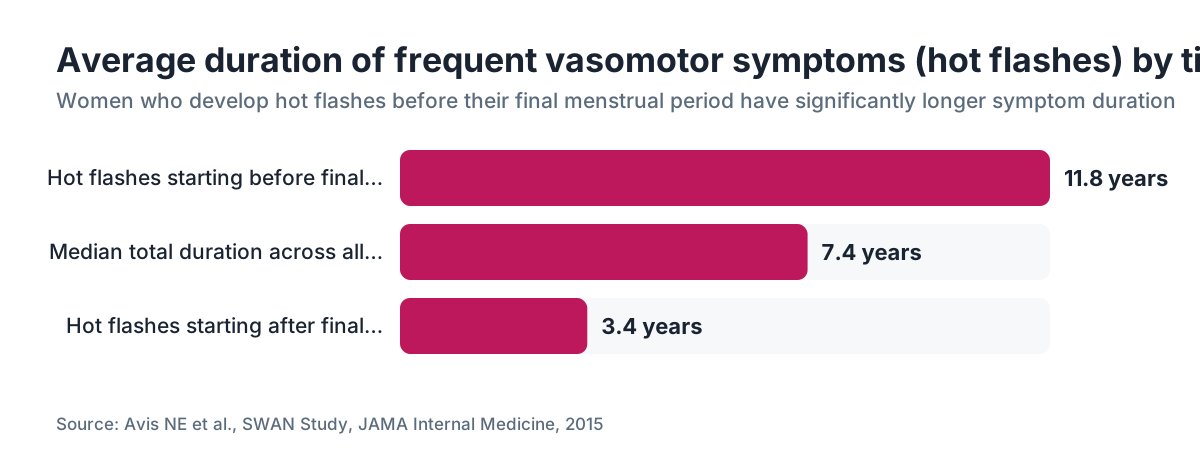
Longer than most women expect. The Study of Women's Health Across the Nation (SWAN) found the median total duration of frequent vasomotor symptoms is 7.4 years. Women who start hot flashes during perimenopause before their final period tend to have the longest duration, sometimes more than 10 years. The idea that hot flashes last a year or two and vanish is not accurate for most women. Effective treatment matters, for quality of life and for the downstream health effects of poor sleep.
What supplements help with perimenopause?
The evidence base is thin for most supplements marketed for perimenopause. Black cohosh has modest, inconsistent evidence for vasomotor symptoms. Magnesium may help with sleep. Calcium and vitamin D genuinely matter for bone health during the transition, ideally from food where possible. Phytoestrogens from food (soy) have weak but plausible benefits. Supplements sold as hormone support, adrenal support, or estrogen balance have essentially no rigorous trial data.
Can perimenopause start in your 30s?
Typical perimenopause begins in the mid-40s, but early perimenopausal changes can sometimes start in the late 30s in women headed for a relatively early natural menopause. Perimenopause starting before age 40 is classified as premature ovarian insufficiency, a distinct clinical condition affecting fertility, bone density, and cardiovascular health. It warrants evaluation beyond a standard midlife workup, including karyotype, autoimmune antibody testing, and genetics in some cases.
Is perimenopause worse if you had bad PMS or postpartum depression?
The evidence suggests yes. Women with a history of significant PMS or PMDD, postpartum depression, or mood sensitivity to hormonal contraceptives appear to be at higher risk for mood symptoms during perimenopause. This fits a model of heightened neurobiological sensitivity to hormone fluctuations rather than to stable hormone levels. These women may benefit most from early hormone therapy and close mood monitoring during the transition, rather than waiting for symptoms to become severe.
What blood tests should I get if I think I'm in perimenopause?
Routine FSH and estradiol are useful but not required for diagnosis in women over 45 with typical symptoms. More valuable: TSH to rule out thyroid disease, fasting glucose or HbA1c for a metabolic baseline, a complete blood count if you have heavy bleeding, and a lipid panel, since cardiovascular risk rises sharply during the transition. If you have a uterus and irregular bleeding, endometrial evaluation may be indicated. Bone density testing is worth discussing depending on your fracture risk factors.
Will weight gained during perimenopause come off after menopause?
Not automatically. The hormonal changes that drive weight gain during the transition continue into postmenopause, and the metabolic environment of sustained low estrogen keeps visceral fat piling on. Women who do not address the underlying hormonal and behavioral drivers usually keep seeing slow gain in the first years after menopause. With hormone therapy, GLP-1 medications, resistance training, and dietary attention, the trajectory can change, but it takes active effort rather than waiting for it to resolve.
Sources
- North American Menopause Society (NAMS) - Menopause Practice Guidelines
- National Institute on Aging (NIA), NIH - Menopause overview
- Harlow SD et al., STRAW+10 staging criteria, Menopause 2012 - PubMed abstract
- Endocrine Society - Clinical Practice Guideline on Menopause
- Office on Women's Health, U.S. Department of Health and Human Services - Menopause
- The North American Menopause Society 2022 Hormone Therapy Position Statement, Menopause Journal
- FDA - Drug approvals database
- Wilding JPH et al., STEP 1 trial, New England Journal of Medicine 2021
- Jastreboff AM et al., SURMOUNT-1 trial, New England Journal of Medicine 2022
- Avis NE et al., Duration of vasomotor symptoms (SWAN study), JAMA Internal Medicine 2015
- Office on Women's Health, U.S. Department of Health and Human Services - Menopause