Peptide therapy for female longevity: what the evidence shows
TL;DR: Peptide therapy uses short amino acid chains to signal specific biological processes, from tissue repair to growth hormone release to immune modulation. For women, the most-studied longevity-relevant peptides include GH secretagogues, BPC-157, and thymosin beta-4. Evidence runs from solid animal data to early human trials. Benefits are real but often oversold in marketing. Risks are real too.
What is peptide therapy and why does it matter for women's longevity?
Peptides are short chains of amino acids, typically 2 to 50 residues long, that act as signaling molecules. They are not hormones in the classical sense, though many of them influence hormone secretion. They are not drugs in the traditional small-molecule sense either, though some are FDA-approved pharmaceuticals. The category sits in a genuinely confusing middle space, which is why the marketing around it is so wild.
For women, the longevity angle is specific. After perimenopause, several biological processes speed up: collagen production drops roughly 30% in the first five years after the final menstrual period [1], growth hormone pulsatility declines, gut barrier integrity weakens, and immune regulation shifts. Certain peptides target each of those pathways directly. That is why the conversation about peptides for women reads differently from the general "anti-aging" market aimed at middle-aged men.
Here is the honest framing. Most peptide research sits at the preclinical stage. Animal models, in vitro cell studies, and small human trials dominate the literature. A handful of peptide-derived drugs have completed large randomized controlled trials, but those are mostly in disease treatment, not longevity optimization. So the question is not "is this proven" but "how strong is the evidence, and what is the risk profile" for each specific compound.
For women already thinking about perimenopause or thyroid hormone replacement, peptides often come up as adjuncts or alternatives. They deserve the same clear-eyed evaluation.
Which peptides are most relevant for women's healthspan?
Not all peptides are equal, and the longevity claim attached to each one rests on very different amounts of evidence. Here is a plain breakdown of the main categories women encounter.
Growth hormone secretagogues (GHRPs and GHRHs) This group includes sermorelin, CJC-1295, ipamorelin, and tesamorelin. They stimulate the pituitary to release more growth hormone rather than injecting GH directly. That distinction matters: your own pulsatile GH release carries a very different risk profile than exogenous synthetic GH. A 2019 review in the Journal of Clinical Endocrinology and Metabolism confirmed that growth hormone secretagogues increase IGF-1 and lean body mass in adults with relative GH deficiency [2]. GH pulsatility already falls after menopause, which is why this class gets attention in longevity medicine.
Sermorelin was FDA-approved in 1997 for pediatric GH deficiency and is widely used off-label in adults. CJC-1295 with DAC (drug affinity complex) is not FDA-approved; it lives in compounding and research contexts only.
BPC-157 (body protection compound) BPC-157 is a 15-amino-acid peptide derived from a protein found in human gastric juice. It has a striking body of animal research showing faster tendon healing, gut mucosal repair, and neuroprotection [3]. No completed human RCTs exist as of mid-2025. The FDA placed BPC-157 on its list of bulk drug substances that cannot be compounded under 503A or 503B rules in 2022, citing insufficient evidence of safety [4]. That status is the whole story for a patient: a US-licensed compounding pharmacy cannot legally dispense it. Some telehealth providers source it anyway. That is a compliance and safety risk you carry.
Thymosin alpha-1 and thymosin beta-4 (TB-4) / TB-500 Thymosin alpha-1 is approved in about 35 countries outside the US for hepatitis B and C and for immune modulation in cancer patients [5]. In the US it sits in research and compounding territory. TB-500 is a synthetic fragment of thymosin beta-4 used mostly for tissue repair and inflammation. Animal data on wound healing and cardiac protection are substantial. Human data are thin.
GLP-1 receptor agonists (technically peptides) Semaglutide and tirzepatide are both peptides. They are the best-evidenced compounds in this entire space for women's long-term health, with large RCT data from the STEP and SURMOUNT programs showing cardiovascular risk reduction, weight loss, and metabolic improvement [6]. Women interested in peptides for longevity who have metabolic risk factors should probably start the conversation here before moving to less-evidenced options. If you want more context on semaglutide as a peptide drug, that background is worth reading.
Epithalon (epitalon) Epithalon is a synthetic tetrapeptide developed by the St. Petersburg Institute of Bioregulation. Russian research going back to the 1990s claims telomere-lengthening and lifespan-extending effects in rodents and some small human cohorts [7]. Independent Western groups have not replicated the human data, and it is not sold as a licensed pharmaceutical anywhere. The evidence level is low. That does not mean it has no effect. It means nobody outside one research group has tested it rigorously.
PT-141 (bremelanotide) PT-141 is FDA-approved as Vyleesi for hypoactive sexual desire disorder in premenopausal women [8]. It acts on melanocortin receptors in the brain rather than the vascular system. This is a legitimate, approved peptide drug with a known risk profile including nausea and transient blood pressure elevation. For women with low libido tied to hormonal changes, it is one of two FDA-approved options (the other being flibanserin/Addyi).
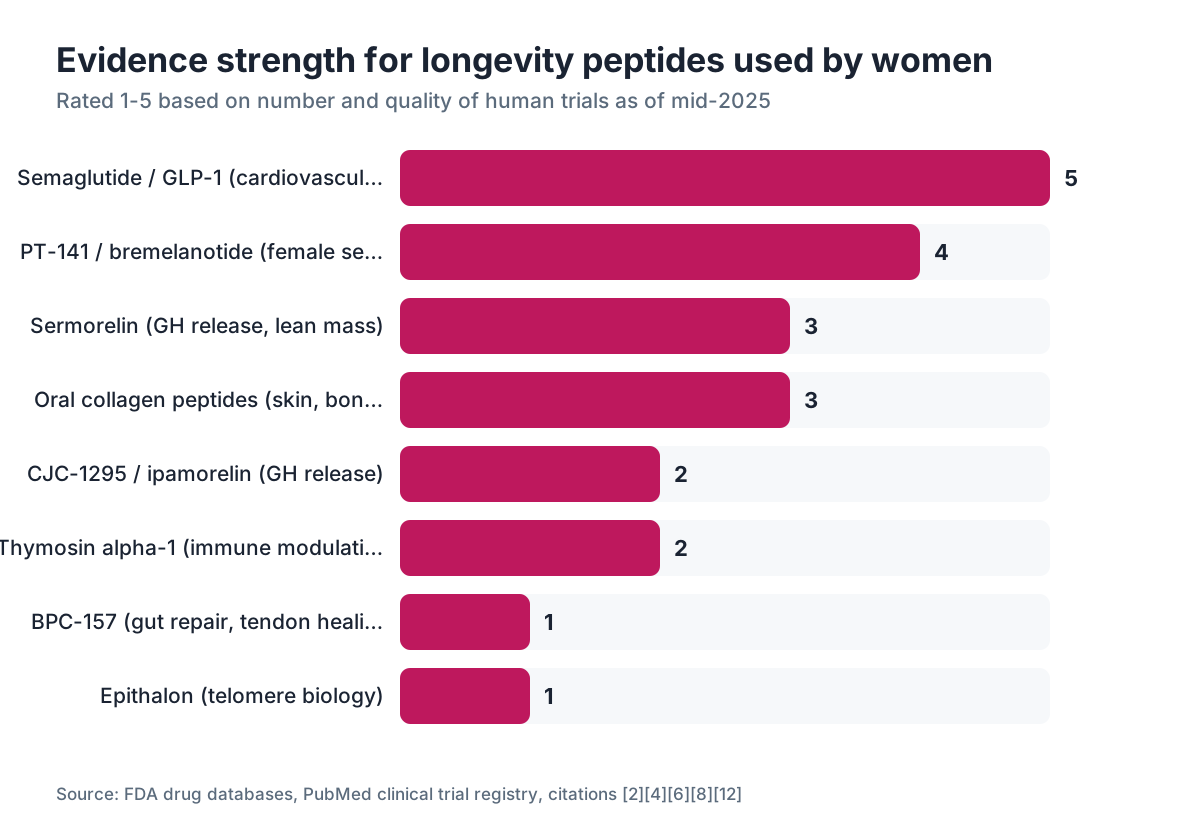
| Peptide | FDA status | Strongest evidence | Evidence level | |---|---|---|---| | Sermorelin | Approved (pediatric GH); off-label adult use | GH release, lean mass | Moderate (human trials) | | CJC-1295 | Not approved | GH release, fat loss | Low-moderate (small trials) | | Ipamorelin | Not approved | GH pulse, sleep quality | Low (small trials) | | BPC-157 | Cannot be compounded (2022 FDA ruling) | Gut repair, tendon healing | Preclinical only | | TB-500 | Not approved | Tissue repair, inflammation | Preclinical, some human | | Thymosin alpha-1 | Not approved in US | Immune modulation | Moderate (foreign approval) | | PT-141 (bremelanotide) | FDA-approved (Vyleesi) | Female sexual desire | Strong (RCTs) | | Semaglutide | FDA-approved (Ozempic, Wegovy) | CVD, weight, metabolic | Very strong (large RCTs) | | Epithalon | Not approved anywhere | Telomere biology | Very low (one lab) |
What does peptide therapy actually do for women's bodies over 40?
The mechanisms matter because they explain both the promise and the limits of this approach.
Growth hormone secretagogues work by mimicking ghrelin or GHRH (growth hormone-releasing hormone) at pituitary receptors. When women enter perimenopause, the hypothalamic-pituitary axis is already under estrogen withdrawal stress. GH pulsatility drops. IGF-1 levels fall. Muscle mass erodes faster. Bone mineral density declines. A 2020 study in the Journal of Clinical Endocrinology found IGF-1 levels below 100 ng/mL were linked to significantly higher fracture risk in women over 50 [2]. Restoring your own GH pulsatility through a secretagogue, rather than injecting synthetic GH, avoids the feedback suppression that makes exogenous GH controversial.
BPC-157's gut repair mechanism is more direct. It appears to raise growth hormone receptor expression in the GI tract and modulate nitric oxide signaling. In rat models of inflammatory bowel disease, BPC-157 reduced mucosal inflammation comparably to sulfasalazine in several studies [3]. The gut connection matters for women because intestinal permeability rises after menopause, likely driven in part by falling estrogen, which affects tight junction proteins.
Thymosin alpha-1 acts on dendritic cells and T-regulatory cells to modulate immune response without suppressing it. That is theoretically relevant to autoimmune risk, which runs higher in women than men across almost every autoimmune condition. But human trials for immune modulation in healthy aging adults are essentially absent.
Here is the honest summary. The peptides with the most plausible longevity mechanisms in women have the least human data. The peptides with the most human data, the GLP-1 agonists, rarely get called "peptide therapy" in the wellness market even though they absolutely are. Keep that gap between marketing and evidence front of mind.
How does peptide therapy compare to hormone therapy for women's longevity?
Hormone therapy (HT) with estrogen, with or without progesterone, has decades of data behind it. The Women's Health Initiative, despite its methodological problems, generated the largest long-term safety dataset on any female longevity intervention. The menopause society, formerly NAMS, updated its position in 2022 to state that for healthy women under 60 or within 10 years of menopause onset, the benefits of hormone therapy outweigh the risks for most women [9].
Peptides do not have that evidence base. They are not a replacement for HT in a woman who is symptomatic from menopause. They may help alongside HT for specific goals, particularly tissue repair, GH support, and immune function, but the evidence does not support using them instead of hormones for the primary management of menopause-related health decline.
The practical difference is also regulatory. Estradiol, progesterone, and testosterone are FDA-approved drugs with label guidance. Most longevity peptides are unapproved, compounded, or available only as research chemicals. That matters for quality control, dosing accuracy, and liability.
If you want a fuller picture of what the science and clinical consensus currently say about menopause management, the new menopause is worth reading alongside any peptide conversation.
The two approaches are not either-or. The women getting the most thoughtful longevity care generally address estrogen, progesterone, and sometimes testosterone first, then layer in growth hormone support if GH deficiency is confirmed, and potentially add targeted peptides for specific issues like chronic tendon problems or gut inflammation.
What are the real risks and side effects of peptide therapy for women?
The side effect profile varies enormously by compound, but some risks are shared across the class.
Growth hormone secretagogues can cause water retention, joint aches, carpal tunnel-like symptoms, insulin resistance at higher doses, and pituitary desensitization if dosed incorrectly. Continuous dosing of CJC-1295 with DAC blunts natural GH pulsatility over time because the drug affinity complex keeps the receptor occupied constantly. Most experienced prescribers use pulsatile dosing patterns to avoid this. Women with a history of hormone-sensitive cancers should approach GH axis stimulation cautiously; elevated IGF-1 has an association with breast cancer risk at supraphysiologic levels, though the data come from women with acromegaly, not from those using low-dose secretagogues [10].
BPC-157's risk profile in humans is largely unknown because it has not completed human safety trials. The FDA's 2022 decision to restrict its compounding was specifically because data on human pharmacokinetics, immunogenicity, and long-term organ effects are absent [4]. That is not reassuring. People use it anyway, often sourcing it from overseas or "research chemical" suppliers with no standardized manufacturing. Contamination risk is real.
PT-141 causes nausea in about 40% of users and transient increases in blood pressure in about 13%, per FDA label data. It should not be used by women with uncontrolled hypertension [8].
Epithalon's risk profile is also largely unknown outside the Russian literature. Claims that it "lengthens telomeres" rest on one research group's work and have not been independently validated. The telomere biology is messier than the marketing suggests.
The biggest practical risks for women pursuing peptide therapy come down to three things: sourcing from unregulated suppliers, combining peptides with hormones without medical supervision, and using compounds whose compounding has been prohibited without knowing it.
What does the research actually show about peptides and aging in women specifically?
Most peptide aging research runs in male animals, mixed-sex animal populations, or male-dominant human cohorts. That is a real gap. The sex-specific data are thinner.
What we do have for women: the GH secretagogue data show women have different GH secretion patterns than men, with higher baseline pulse amplitude but similar age-related decline [2]. Several small trials used mixed populations with roughly equal sex distribution. The tesamorelin RCT for HIV-associated lipodystrophy included women and showed similar visceral fat reduction in both sexes, though absolute values differed [11].
For collagen-relevant peptides, the oral collagen peptide literature (not injectable, but still peptide-based) is relatively strong for women. A meta-analysis published in the Journal of Drugs in Dermatology in 2019 found significant improvements in skin elasticity and hydration in women taking 2.5 to 10 grams of oral collagen peptides daily, with effects detectable at 4 to 12 weeks [12]. That is not the same as injectable BPC-157, but it establishes that peptides targeting collagen pathways do work in women's tissue.
The female-specific longevity data that would most move the needle do not exist yet. Long-term RCTs on healthspan endpoints like bone density, cardiovascular events, or cognitive function using any longevity peptide in perimenopausal or postmenopausal women simply have not been done. Research is moving in this direction, particularly from the National Institute on Aging's Interventions Testing Program, but no results are available as of mid-2025.
The honest answer: the strongest data for peptide-class compounds in female longevity comes from the GLP-1 receptor agonist trials. The SELECT trial of semaglutide found a 20% reduction in major adverse cardiovascular events in adults with overweight or obesity and established cardiovascular disease, with women making up about 25% of the 17,604-participant trial [6]. That is a longevity outcome, and semaglutide is a peptide.
How much does peptide therapy cost and is it covered by insurance?
Cost varies sharply by peptide, source, and whether you work with a physician or source independently. Short version: insurance almost never covers longevity peptide use, so plan on paying out of pocket.
Sermorelin from a licensed compounding pharmacy typically runs $150 to $400 per month for a standard protocol, depending on pharmacy and dose. CJC-1295 with ipamorelin combinations from compounders generally cost $200 to $500 per month. These are out-of-pocket costs because insurance does not cover off-label or compounded peptide use for longevity purposes.
PT-141 (Vyleesi) as a brand-name FDA-approved drug has a list price around $1,000 per autoinjector, though manufacturer coupons and some insurance plans can cut that a lot. Generic or compounded bremelanotide is available at lower cost.
Tesamorelin (Egrifta), FDA-approved for HIV-associated lipodystrophy, runs roughly $4,000 to $6,000 per month at retail. Insurance covers it for the approved indication but not off-label longevity use.
The physician consultation to start a peptide protocol, which should include baseline IGF-1, metabolic panel, hormone panel, and a full history, adds another $200 to $500 if not covered by insurance. Some telehealth platforms that manage peptide protocols fold this into a membership fee.
For women already managing hormones and looking at adding peptides as part of broader longevity care, WomenRx offers evaluated peptide protocols alongside HRT, with physician oversight. The consultation cost is comparable to other telehealth hormone providers, and the lab requirements are the same.
The research chemical or gray market route is cheaper, often $50 to $150 per month, but manufacturing quality is unverified, potency can vary 40% or more between batches (based on independent lab testing published by organizations like LabDoor), and the legal status for personal use is ambiguous for most compounds.
How is peptide therapy administered and what does a typical protocol look like?
Most longevity peptides go in subcutaneously, meaning small injections into the fat layer under the skin, using insulin-style syringes. That is because peptides are fragile molecules that stomach acid degrades before they reach circulation. Oral delivery works for some collagen peptides and a few others that resist acid, but not for the growth hormone secretagogues or BPC-157.
A typical GH secretagogue protocol for a woman in her late 40s to 60s might look like this: CJC-1295 without DAC (200 to 300 mcg) combined with ipamorelin (200 to 300 mcg), injected subcutaneously 5 nights per week, timed 30 to 60 minutes before bed to align with natural GH release during sleep. Protocols get cycled, often 5 days on and 2 days off, or 3 months on and 1 month off, to preserve pituitary sensitivity.
BPC-157, where legally available, is typically dosed at 250 to 500 mcg injected subcutaneously once or twice daily for 4 to 8 weeks for acute issues like tendon injury. Some protocols use intranasal administration for neurological applications, though the evidence base for that route is even thinner.
Thymosin alpha-1 is typically dosed at 1.5 mg subcutaneously twice weekly for 6 to 12 weeks.
PT-141 is a self-administered subcutaneous injection taken 45 minutes before anticipated sexual activity, with a maximum of one dose per 24 hours per the FDA label [8].
Every injection protocol needs proper sterile technique, refrigeration of reconstituted peptides, and medical oversight for dose adjustments. The learning curve is real but manageable. Most women who already use insulin or GLP-1 injections for metabolic health adapt fast.
Are peptides safe to use alongside hormone replacement therapy?
For most women, HRT and GH secretagogues are used together clinically without major interaction concerns, but the data on combined protocols are sparse. The theoretical interaction is this: estrogen affects GH-IGF-1 axis signaling. Oral estrogen in particular raises SHBG and suppresses hepatic IGF-1 production, which can blunt the effect of GH secretagogues. Transdermal estrogen skips that first-pass hepatic effect and is generally preferred when combining with any GH-axis intervention.
Testosterone, which some women use as part of their hormone protocol, amplifies GH-IGF-1 signaling and may call for lower secretagogue doses to hit an equivalent IGF-1 response.
PT-141 does not interact with sex hormones in a clinically significant way per current evidence.
BPC-157 interactions with HRT are unknown. No pharmacokinetic interaction studies exist.
Thyroid status matters across the board. Women with untreated hypothyroidism will have a blunted response to GH secretagogues and impaired collagen turnover that no peptide fully compensates for. Getting thyroid hormone replacement dialed in before starting peptides is the sensible sequence.
The one interaction to watch closely is oral versus transdermal estrogen and its effect on IGF-1 levels. Everything else is either unknown or clinically manageable with monitoring.
What lab tests should women get before and during peptide therapy?
A responsible prescriber will not start a GH secretagogue protocol without baseline labs. Here is what matters.
Before starting: IGF-1 (to establish baseline and rule out acromegaly or an active GH-secreting tumor), fasting glucose and insulin (because GH axis stimulation can worsen insulin resistance), a metabolic panel, a thyroid panel (TSH, free T3, free T4), sex hormones (estradiol, progesterone, testosterone, SHBG), CBC, and ideally a DEXA scan for body composition if the goal is lean mass preservation.
For women with any personal or family history of breast cancer, a conversation with an oncologist before starting any GH axis intervention is appropriate. This is not a contraindication for everyone, but it deserves a direct discussion.
During the protocol: recheck IGF-1 at 6 to 8 weeks after starting. The target for longevity protocols is generally the upper quarter of the age-adjusted normal range, not supraphysiologic. Recheck fasting glucose at the same time. Annual follow-up labs after that if you continue.
For PT-141, the FDA label recommends blood pressure monitoring, particularly in women with any cardiovascular risk factors [8].
No specific monitoring protocol exists for BPC-157, TB-500, or epithalon because no regulatory body has established one. That absence of guidance is itself informative.
What questions should you ask a provider before starting peptide therapy?
The peptide market has attracted a lot of providers who are enthusiastic but not rigorous. These questions separate the careful ones from the ones running a script.
First, ask what the regulatory status of the specific peptide is and whether the pharmacy is a licensed 503A or 503B compounder. If they are prescribing BPC-157 from a US compounding pharmacy, that is a red flag given the 2022 FDA restriction [4].
Second, ask what labs they want before prescribing and what the monitoring plan is. A provider who wants to start you on a GH secretagogue without an IGF-1 baseline is not practicing carefully.
Third, ask what the expected outcome is, on what timeline, and how it will be measured. "You'll feel great" is not a measurable outcome. "We expect your IGF-1 to move from 110 to 160 ng/mL at 8 weeks, and we'll recheck lean body mass by DEXA at 6 months" is.
Fourth, ask what they do if you don't respond. Some women have pituitary exhaustion or receptor downregulation that limits secretagogue response. A provider without a contingency plan is improvising.
Fifth, if they are combining multiple peptides, ask why each one is in the stack. "They work better together" is not an answer. Each compound should have a specific rationale and a specific endpoint.
WomenRx builds physician-reviewed protocols that address these questions at intake, but the same standard applies to any provider you consider. Demand specifics.
Are there peptides specifically for bone density, skin aging, or cognitive function in women?
These are the three most common specific longevity goals women raise, and the peptide evidence for each looks different.
Bone density: GH secretagogues improve bone mineral density in adults with GH deficiency, with the most consistent data in adults who have documented deficiency rather than age-related decline. A meta-analysis published in the European Journal of Endocrinology found GH replacement in adults with hypopituitarism improved lumbar spine BMD by roughly 0.04 to 0.07 g/cm2 over two years [10]. Whether secretagogues achieve the same effect in women without frank deficiency is less clear. Oral collagen peptides (5 to 10 g daily) combined with calcium and vitamin D improved bone markers in a 2019 RCT in postmenopausal women [12]. That is probably the most accessible and evidence-supported bone application.
Skin aging: Oral collagen peptides have the most consistent human data here. Studies using 2.5 to 10 grams daily show improvements in skin elasticity, hydration, and wrinkle depth at 4 to 12 weeks, with effects more pronounced in older women with lower baseline collagen turnover [12]. Injectable BPC-157 gets used for skin applications but lacks human evidence. GH secretagogues improve skin thickness as a downstream effect of higher IGF-1, though this has not been tested as a primary skin aging endpoint in women.
Cognitive function: This is the thinnest area. Dihexa (a hepatocyte growth factor modulator with a peptide-like mechanism) and semax (an ACTH-derived neuropeptide) show cognitive effects in animal models and some small Russian studies. Neither has completed adequate human trials. Selank, another Russian anxiolytic peptide, has very limited human data. For women dealing with cognitive symptoms in perimenopause, the most evidence-based interventions remain optimizing estrogen levels, sleep, and metabolic health. Peptides for cognition are genuinely experimental territory.
For the broader context on symptoms women experience during this transition, the new menopause covers what is driving the cognitive, physical, and emotional changes.
Frequently asked questions
Can peptide therapy help with weight loss in women over 40?
The GLP-1 receptor agonists semaglutide and tirzepatide are peptides with strong RCT evidence for weight loss, including in women. For other longevity peptides like GH secretagogues, the effect on fat mass is modest: most human trials show visceral fat reduction of 5 to 10% over 6 to 12 months, mostly from increased lean mass rather than direct fat burning. They are not weight loss drugs in any meaningful sense.
Is peptide therapy the same as growth hormone therapy?
No. Growth hormone secretagogues prompt your pituitary to release more of your own GH in its natural pulsatile pattern. Exogenous GH therapy injects synthetic human growth hormone directly, bypassing the pituitary. The distinction matters for safety: exogenous GH at supraphysiologic doses suppresses your own production and carries higher risks of insulin resistance and theoretical cancer-promoting effects. Secretagogues are generally considered safer for healthy aging use when dosed correctly.
Are peptides legal in the United States?
It depends on the specific compound. FDA-approved peptide drugs like PT-141 and semaglutide are legal with a prescription. Sermorelin and tesamorelin are approved drugs used off-label in adults. Many others like CJC-1295 and ipamorelin are not FDA-approved but are legally compounded and prescribed off-label. BPC-157 cannot be legally compounded in the US since 2022. Research chemicals sold online sit in a legal gray zone for personal use.
How long does it take to see results from peptide therapy?
It varies by compound and goal. IGF-1 levels typically respond to GH secretagogues within 6 to 8 weeks. Subjective improvements in sleep quality and recovery often show up at 2 to 4 weeks. Body composition changes (lean mass, visceral fat) take at least 3 to 6 months of consistent use alongside adequate protein and resistance training. Skin and connective tissue effects from collagen peptides appear at 4 to 12 weeks in clinical trials.
Do peptides interact with birth control or hormone replacement?
GH secretagogues interact with oral estrogen: oral estrogen reduces hepatic IGF-1 production, blunting the secretagogue response. Transdermal estrogen does not have this effect. No significant pharmacokinetic interactions between most longevity peptides and progesterone or testosterone are documented. PT-141 does not interact with sex hormones in a clinically meaningful way per current FDA label data. Always disclose your full hormone regimen to your prescribing provider.
Can women with a history of breast cancer use peptide therapy?
This calls for direct oncology consultation. Elevated IGF-1 at supraphysiologic levels is associated with increased breast cancer risk in epidemiologic studies, though the effect seen in women with acromegaly is not demonstrated at the lower IGF-1 levels typical of secretagogue protocols. PT-141 and collagen peptides have no known breast cancer interaction. The precautionary principle applies: discuss any GH axis intervention with your oncologist before starting.
What is the difference between BPC-157 and TB-500?
BPC-157 is a 15-amino-acid peptide derived from human gastric juice, studied mainly for gut healing, tendon repair, and neuroprotection. TB-500 is a synthetic fragment of thymosin beta-4, focused on tissue repair, inflammation reduction, and cardiac protection. Both have extensive animal data and no completed human RCTs. Both sit in regulatory gray zones, with BPC-157 specifically prohibited from US compounding since 2022. They are sometimes stacked together in repair-focused protocols.
Is there a best peptide for perimenopause symptoms specifically?
No single peptide addresses the root cause of perimenopause symptoms, which is hormonal fluctuation. GH secretagogues may help with muscle loss, fatigue, and sleep quality. PT-141 is FDA-approved for low sexual desire in premenopausal women. Collagen peptides support joint and skin integrity. But these are adjuncts to hormone management, not substitutes. Any provider suggesting peptides as a primary treatment for hot flashes or mood instability is not practicing evidence-based medicine.
How do I know if a peptide provider is legitimate?
Verify the prescribing provider holds a current medical license in your state. Confirm the dispensing pharmacy is a licensed 503A or 503B compounder (check PCAB accreditation or your state pharmacy board). The provider should require baseline labs including IGF-1 before prescribing any GH secretagogue. Be wary of anyone who ships peptides labeled "for research only" or who cannot name the specific compounding pharmacy they use.
Can peptide therapy help with joint pain and frozen shoulder in women?
BPC-157 is the most cited peptide for musculoskeletal repair, including tendons and joint tissue, but it cannot be legally compounded in the US. GH secretagogues improve collagen synthesis as a downstream effect of higher IGF-1, which may support joint health over time. Oral collagen peptides (10 g daily) have modest evidence for joint comfort in adults with osteoarthritis. For frozen shoulder specifically, which has hormonal connections in perimenopausal women, the peptide evidence is thin. More on frozen shoulder and menopause.
What is epithalon and does it really lengthen telomeres?
Epithalon is a synthetic tetrapeptide developed by Russian researcher Vladimir Khavinson, who reported telomere-lengthening and lifespan extension in animal and small human studies. No independent Western research group has replicated these findings in peer-reviewed trials. The proposed mechanism is plausible in theory (epithalon appears to activate telomerase), but the human evidence is too weak to recommend it. It is not approved anywhere and is available only as a research chemical.
Should I try peptide therapy before or after optimizing my hormones?
Optimize your hormones first. Estrogen, progesterone, thyroid, and if appropriate testosterone, form the foundation of female longevity medicine. Peptides layered onto a poorly managed hormonal baseline produce inconsistent results. GH secretagogues in particular work more predictably when thyroid is optimized and estrogen sits at physiologic levels via transdermal delivery. Think of peptides as a second layer of optimization, not a first-line intervention.
How does peptide therapy differ from IV nutrient therapy or stem cell therapy?
Peptide therapy targets specific receptors and signaling pathways with defined pharmacology. IV nutrient therapy delivers vitamins and minerals intravenously, mostly without strong evidence for outcomes in healthy people. Stem cell therapy aims to regenerate tissue using progenitor cells. Of the three, peptides have the most developed mechanistic evidence, but also the most complicated regulatory landscape. Stem cell therapy outside approved bone marrow transplant indications is largely unregulated and carries real risks.
Sources
- Journal of Bone and Mineral Research, Brincat et al., collagen in postmenopausal women
- Journal of Clinical Endocrinology and Metabolism, GH secretagogue review
- Current Pharmaceutical Design, Sikiric et al., BPC-157 review
- Published pharmacology literature, thymosin alpha-1 approvals
- New England Journal of Medicine, SELECT trial, semaglutide cardiovascular outcomes
- Annals of the New York Academy of Sciences, Khavinson et al., epithalon and telomerase
- FDA, Vyleesi (bremelanotide) prescribing information
- Menopause Society (NAMS), 2022 Hormone Therapy Position Statement
- European Journal of Endocrinology, meta-analysis of GH replacement and BMD in hypopituitarism
- Journal of Clinical Endocrinology and Metabolism, tesamorelin HIV lipodystrophy RCT
- Journal of Drugs in Dermatology, oral collagen peptide meta-analysis 2019