Pellet bioidentical hormone therapy: what women need to know
TL;DR: Bioidentical hormone pellets are rice-grain-sized implants placed under the skin that release estradiol or testosterone steadily for 3 to 6 months. They are not FDA-approved as a finished drug product. Evidence that they beat patches or pills is thin, and both the Endocrine Society and NAMS flag gaps in safety data. Costs run $300 to $600 per session, rarely covered by insurance.
What are bioidentical hormone pellets, exactly?
A hormone pellet is a small compressed cylinder, roughly the size of a grain of rice, made from plant-derived estradiol, testosterone, or both. A clinician makes a tiny incision, usually in the upper buttock or hip, and tucks the pellet into subcutaneous fat. It dissolves over 3 to 6 months, releasing a continuous low dose of hormone straight into the bloodstream. No daily pills, no weekly patches.
The word "bioidentical" means the hormone molecule is structurally identical to what your ovaries made before menopause. That is true of the estradiol in pellets. It is equally true of FDA-approved estradiol patches, gels, and sprays. Bioidentical does not mean compounded, natural, or safer than a regulated product.
Pellets are almost always custom-compounded by a compounding pharmacy. That puts them outside the FDA's standard approval process for finished dosage forms [1]. The FDA has cleared estradiol as an ingredient, but the specific pellet you receive has not gone through the same efficacy and safety review an estradiol patch has [2].
This matters. Compounded pellets can vary in potency batch to batch. A 2018 analysis in Menopause found significant variability in hormone release rates from pellet implants, which can push blood levels above the normal range and keep them there for weeks, even after symptoms resolve [3].
How do hormone pellets work inside the body?
Once inserted, a pellet relies on simple diffusion. Blood flow around the implant draws hormone out of the compressed powder at a rate that loosely tracks your activity level. More exercise means slightly faster absorption. That sounds elegant. It also means dosing is far less precise than a calibrated transdermal patch or an oral capsule.
Estradiol from a pellet enters circulation and behaves like your own estradiol. It binds estrogen receptors in the brain, bone, cardiovascular tissue, and urogenital tract. The advertised advantage is skipping first-pass liver metabolism, which is also true of patches, gels, and vaginal rings. Pills are the only common delivery method that hits the liver first.
Testosterone pellets are popular in women's clinics, often marketed for low libido, fatigue, and mood. The evidence is stronger for libido than for the rest [4]. The FDA has never approved a testosterone product for women in the United States. Every testosterone pellet a woman receives is compounded and off-label [2].
Blood levels after insertion often spike above the normal premenopausal range. Clinics that specialize in pellets argue higher levels improve outcomes. Critics argue that supraphysiologic estradiol or testosterone carries risks nobody has studied long-term in this population [5].
What does the evidence say about bioidentical hormone pellet therapy outcomes?
The honest answer: less than you would hope for, and less than the marketing implies.
Most pellet studies are small, short, retrospective, and run by practitioners with a financial stake in the therapy. A 2019 systematic review in Menopause found that while pellet therapy produced measurable improvements in vasomotor symptoms and sexual function, the trials were too heterogeneous and underpowered to draw firm conclusions about superiority over standard hormone therapy [3].
The Endocrine Society's clinical practice guideline on menopausal hormone therapy states that "compounded bioidentical hormones carry uncertain risks" and lack the quality control and evidence base of FDA-approved products [5]. NAMS, the North American Menopause Society, echoes this in its 2022 hormone therapy position statement, cautioning that "custom-compounded hormone therapy should be reserved for women who cannot take commercially available therapies" [6].
Nobody disputes that pellets raise hormone levels, and that rising hormone levels reduce hot flashes in women who are estrogen-deficient. The gaps sit in long-term safety data, particularly around breast tissue density, cardiovascular risk, and endometrial effects when estrogen runs without adequate progestogen cover.
For women who still have a uterus, estrogen alone raises endometrial cancer risk. Standard practice pairs estrogen with a progestogen. Many pellet protocols add oral or vaginal progesterone to cover this, but the combination is not standardized across clinics the way FDA-approved combined-hormone regimens are. See our deeper look at progesterone for how progestogen balance works.
How do pellets compare to patches, pills, and other hormone delivery methods?
| Delivery method | FDA-approved form available | Dose adjustable | Duration per use | First-pass liver metabolism | Typical cost per month | |---|---|---|---|---|---| | Pellet implant | No (compounded) | No, once inserted | 3 to 6 months | No | $50, $200 (amortized) | | Estradiol patch | Yes | Yes, change weekly or twice-weekly | 3.5 to 7 days | No | $30, $80 | | Estradiol gel/spray | Yes | Yes, daily | 1 day | No | $50, $120 | | Oral estradiol | Yes | Yes, daily | 1 day | Yes | $10, $40 | | Vaginal ring (Estring/Femring) | Yes | No | 90 days | Minimal | $200, $400 per ring |
Patches and gels give the same transdermal, non-first-pass delivery as pellets, plus the ability to adjust or stop the dose the moment side effects hit. That reversibility matters a lot. If a pellet delivers too much hormone and you develop breast tenderness, bloating, or mood changes, you cannot pull it out. You wait months for it to dissolve.
For most women, an estrogen patch or a well-titrated gel does the same hormonal job at lower cost, with more flexibility, and a longer safety track record. The pellet's real advantage is convenience. You do something once every few months instead of every day or twice a week.
Some women genuinely prefer pellets and do well on them. Preference is a legitimate clinical factor. The point is not that pellets are wrong. It is that they are not proven better, and the convenience comes with trade-offs.
What are the real risks of hormone pellet therapy?
Pellet risks split into two buckets: risks of exogenous hormone therapy in general, and risks specific to the pellet delivery method.
General hormone therapy risk depends on a woman's personal history, her age, how long since her last period, and which hormones she takes. Women's Health Initiative (WHI) data showed combined estrogen-progestogen therapy increased breast cancer risk after about 5 years of use, while estrogen-only therapy in women without a uterus showed a different, more nuanced profile [7]. NAMS and the Endocrine Society both hold that for healthy women under 60 or within 10 years of menopause, the benefits of hormone therapy generally outweigh the risks for symptom management [6].
Pellet-specific risks include:
Supraphysiologic hormone levels. Studies have documented testosterone levels in women after pellet insertion reaching 10 to 20 times the upper limit of the normal female range. Prolonged supraphysiologic testosterone can cause acne, hair loss, clitoral enlargement, voice changes, and polycythemia (dangerously high red blood cell counts) [8].
Insertion site complications. Minor bruising and discomfort are common. Pellet extrusion, when the pellet works its way back out, happens in roughly 1 to 10 percent of insertions depending on technique and site. Infection is rare but possible.
No way to stop quickly. This is the most clinically significant pellet-specific risk. A side effect tied to hormone levels cannot be fixed by stopping the drug. You treat the symptoms and wait.
Inconsistent quality. Compounding pharmacy quality control varies. The FDA has issued warning letters to compounding pharmacies for sterility failures and potency deviations [2].
How much do bioidentical hormone pellets cost, and does insurance cover them?
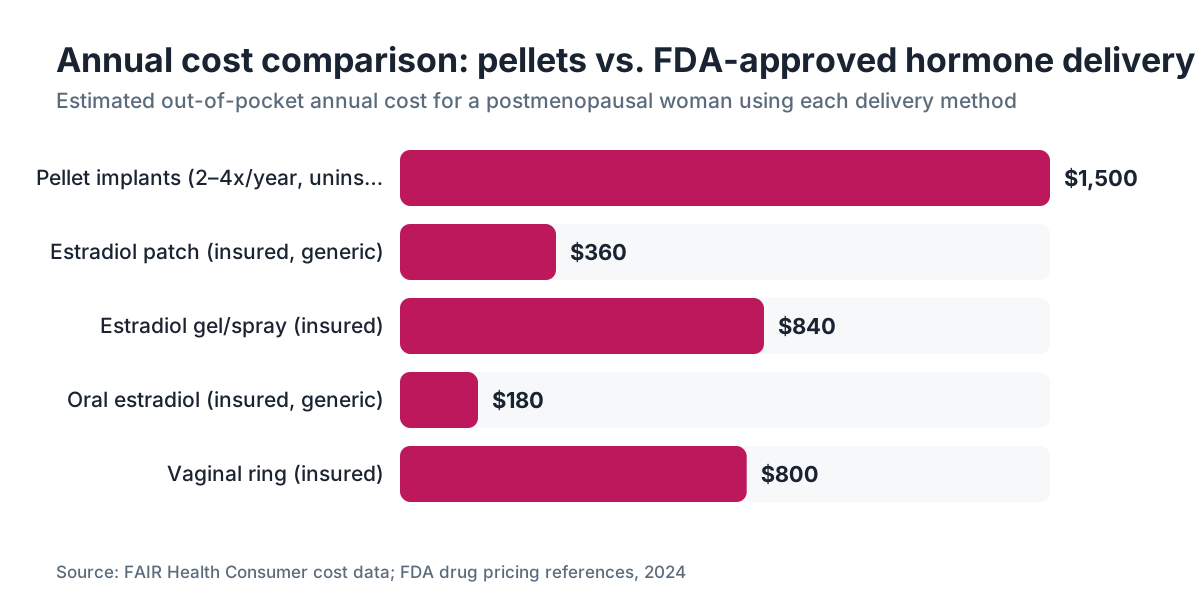
Pellet insertion runs $300 to $600 per procedure in most U.S. markets, higher in affluent metros. Because most women need two to four insertions a year, annual out-of-pocket spending commonly lands between $600 and $2,400 [9].
Insurance coverage is almost universally unavailable. Medicare Part D does not cover off-label compounded hormone therapy, and most commercial insurers follow the same logic: the specific product never received FDA approval as a finished drug, so it fails coverage criteria. A handful of plans cover the office visit but not the hormone.
The same hormone, delivered via an FDA-approved patch or gel, can cost $30 to $120 a month with insurance, or roughly $120 to $480 a year. That is a real difference for a therapy many women use for years or decades.
Some clinics advertising "bioidentical hormone replacement therapy Scottsdale" or other concierge markets charge membership fees on top of insertion fees. Read the full pricing structure before you commit. For a sense of what telehealth-based hormone care looks like without a membership model, WomenRx offers prescribing support for FDA-approved hormone options.
For a broader look at your options before picking a delivery method, our hormone replacement therapy overview covers the full landscape.
Who is a good candidate for pellet hormone therapy?
Pellets are not the right starting point for most women. The Endocrine Society explicitly recommends starting with the lowest effective dose of an FDA-approved product before considering compounded alternatives [5].
There are still clinical scenarios where pellets make sense as a second-line option. Women who have tried multiple patches, gels, and oral preparations and cannot tolerate any of them, or who have absorption problems that leave them persistently low and symptomatic despite adequate dosing, may be candidates. Women with a demanding schedule who keep failing at daily adherence sometimes do genuinely better with a set-and-forget insertion every few months.
Poor candidates include women with hormone-sensitive cancers (estrogen-receptor-positive breast cancer, for example), active liver disease, unexplained vaginal bleeding, a history of blood clots, or cardiovascular conditions that contraindicate estrogen. These contraindications apply to all hormone therapy, but the inability to stop a pellet quickly makes them more consequential here.
Age and time since menopause matter too. The "timing hypothesis" in hormone therapy research suggests that starting estrogen close to the final menstrual period, typically within 10 years, carries a more favorable risk-benefit ratio than starting late [6]. A woman at 52 who is two years past her last period has a different risk profile than a 68-year-old starting for the first time.
If you are still in the transition years and unsure where you fall, our perimenopause age guide covers when symptoms typically begin and what drives the timeline.
What should you ask a pellet provider before your first insertion?
The pellet market is largely unregulated on who can offer it. A physician, a naturopath, a nurse practitioner, or even a non-clinician working under loose oversight can run a pellet clinic in some states. That variability means the quality of the consultation matters enormously.
Before agreeing to an insertion, get clear answers to these questions:
What labs will you check before and after insertion, and what target ranges are you aiming for? A responsible provider checks estradiol, testosterone, and, for women with a uterus, discusses progestogen protection before inserting anything. Post-insertion labs at 4 to 6 weeks are standard to confirm levels are not supraphysiologic.
What is your protocol if my levels come out too high? You should hear a specific answer, not reassurance that it rarely happens.
Which compounding pharmacy do you use, and is it PCAB-accredited? The Pharmacy Compounding Accreditation Board (PCAB) sets quality standards above baseline state licensing. Accreditation does not guarantee perfection, but it is a meaningful quality signal [10].
What progestogen will you prescribe to protect my uterus if I still have one? If the provider dismisses this question or claims the pellet handles it, leave.
How many of these insertions have you personally performed, and what is your extrusion rate? Technique-dependent procedures reward experience.
Get the pricing in writing, in full, before you start. Pellet clinics sometimes bundle follow-up labs, supplements, and ancillary services into packages that hide the true cost.
What does the FDA actually say about compounded hormone pellets?
The FDA does not approve compounded products as finished drug formulations. Its position is that compounding should meet specific, individualized clinical needs that commercially available products cannot, not act as a general alternative to approved drugs [2].
In 2020 the FDA issued a statement on compounded bioidentical hormones, noting it had received reports of serious adverse events tied to these products and that "claims that compounded bioidentical hormones are safer or more effective than FDA-approved hormone therapy have not been substantiated" [2]. The statement is blunt: "bioidentical" is a marketing term, not a scientific or regulatory category.
The Federal Food, Drug, and Cosmetic Act governs compounding under Sections 503A and 503B, which set the conditions under which compounding is allowed. Pellets compounded and inserted in the same clinical visit sit in a gray zone the FDA has not fully resolved through enforcement, which is part of why the market has grown so much despite the absence of approval [11].
Some practitioners point to the FDA's approval of estradiol itself as proof of safety. Fair enough for the molecule. The open question is whether the specific compounded pellet, at the specific dose, in the specific patient, delivers a predictable and safe amount over the dissolution period. That question has no FDA-reviewed answer for any commercially available pellet product.
How do you monitor hormone levels after pellet insertion?
Monitoring is where pellet therapy varies most dramatically between good practices and poor ones.
A responsible protocol starts with baseline bloodwork before insertion: estradiol, total and free testosterone, SHBG (sex hormone-binding globulin), and hematocrit (red blood cell density). SHBG affects how much testosterone is biologically active. Hematocrit gets checked because supraphysiologic testosterone in women can cause polycythemia, which raises clotting risk [8].
At four to six weeks after insertion, levels should be rechecked. That is the window when pellets release at their highest rate. If estradiol runs above 200 to 300 pg/mL in a postmenopausal woman, or testosterone runs above the upper limit of the normal female range (roughly 70 ng/dL by most lab references), the provider needs to take it seriously, document it, and adjust the next insertion dose.
Women with a uterus receiving estrogen in any form need endometrial protection. The standard approach is concurrent progestogen therapy, usually oral micronized progesterone 100 to 200 mg daily or a levonorgestrel IUD. Annual or biennial transvaginal ultrasound to check endometrial thickness is reasonable for women on long-term estrogen, pellets or otherwise.
Bone density is a relevant secondary endpoint for postmenopausal women on hormone therapy. Estrogen does protect bone, and tracking it with a bone density test every one to two years gives you objective data on whether treatment is working beyond symptom relief.
Is there any bioidentical hormone therapy news worth paying attention to?
The last few years brought some genuinely useful data, though none of it pellet-specific. The biggest updates concern hormone timing, cardiovascular risk windows, and testosterone in women.
The KEEPS (Kronos Early Estrogen Prevention Study) and ELITE (Early vs. Late Intervention Trial with Estradiol) trials both added to evidence that starting estrogen early in the postmenopausal period, within a few years of the final period, appears to preserve a cardiovascular benefit that starting late does not [12]. Neither trial used pellets, but the timing window they defined applies regardless of delivery method.
For testosterone in women, a 2019 systematic review in The Lancet Diabetes & Endocrinology, covering 36 trials and over 8,000 women, found testosterone improved sexual function scores but called for more long-term safety data, particularly on breast outcomes [4]. The review explicitly noted that the evidence does not support testosterone for non-sexual symptoms like mood, cognition, or energy without clear, documented androgen deficiency.
FDA enforcement of compounding pharmacies has stepped up since 2020. Several pharmacy-level warning letters have gone out for sterility and potency failures in compounded hormone products. Checking whether a compounding pharmacy sits on the FDA's list of pharmacies that have received enforcement actions is worth doing before committing to a provider who uses a specific lab.
Broader menopause management keeps shifting. The framing has moved from "hormone therapy is risky" (the overreaction to WHI) back toward "hormone therapy is appropriate for most healthy women with symptoms who start near menopause." That shift matters for how you weigh every delivery method. Pellets belong inside that conversation, not outside it. Our menopause guide traces where the thinking stands now.
How WomenRx approaches hormone therapy decisions
WomenRx is a telehealth platform focused on hormones, GLP-1 medications, and peptides for women. Its clinical approach puts FDA-approved, adjustable hormone therapies first, because reversibility and dose precision matter more than convenience for most women.
That does not mean pellets are never the right answer. For women who have exhausted standard options and still need consistent hormone delivery, a conversation about compounded pellets with appropriate monitoring is legitimate medicine. The goal is informed choice, not reflexive rejection.
If you are exploring hormone replacement therapy for the first time, start with a clinician who can prescribe and adjust an FDA-approved option, monitor your labs, and walk through the full evidence picture. That is the right sequence. If you have already tried the standard options and want to look at pellets specifically, that conversation should include the risks laid out here and a clear monitoring plan before any insertion happens.
Frequently asked questions
Are bioidentical hormone pellets FDA-approved?
No. Pellets are compounded by pharmacies and not approved by the FDA as finished drug products. The FDA has stated that claims about compounded bioidentical hormones being safer or more effective than approved therapies have not been proven. The estradiol molecule itself is FDA-approved in other forms, but the specific pellet preparation is not reviewed for safety, potency, or efficacy under the standard drug approval process.
How long do hormone pellets last before they dissolve?
Most pellets dissolve over 3 to 6 months. The actual timeline varies with pellet size, the hormones used, your blood flow, and your activity level. More active women tend to absorb pellets faster. Your provider should check blood levels at 4 to 6 weeks after insertion and again before the next insertion to set the right timing for your physiology.
What hormones are typically in a bioidentical hormone pellet?
Pellets most commonly contain estradiol, testosterone, or a combination of both. Some protocols add DHEA. All are compounded from plant-derived sources, which is what makes the molecule structurally identical to human hormones. Progesterone is not typically delivered by pellet. Women with a uterus who receive estrogen pellets need a separate progestogen, usually oral micronized progesterone, to protect the endometrium.
Can hormone pellets cause side effects that won't go away quickly?
Yes, and this is the most clinically significant pellet-specific risk. Because you cannot remove a pellet after insertion, any hormone-related side effect, such as acne, mood swings, breast tenderness, or high red blood cell counts from testosterone excess, persists until the pellet dissolves. Managing those side effects means waiting them out or treating symptoms. Patches and gels can be removed or dose-adjusted the same day a problem appears.
How much do bioidentical hormone pellets cost out of pocket?
Each insertion typically costs $300 to $600. Most women need 2 to 4 insertions per year, putting annual costs at $600 to $2,400. Insurance rarely covers compounded pellets because they are not FDA-approved finished drug products. By comparison, FDA-approved estradiol patches or gels often cost $30 to $120 per month with insurance, making them significantly less expensive for most women over time.
Do pellets work better than patches or pills for menopause symptoms?
There is no strong evidence that pellets outperform patches, gels, or properly dosed oral therapies for symptom control. A 2019 systematic review in Menopause found pellets produced improvements in vasomotor symptoms and sexual function, but the trials were too small and inconsistent to support a superiority claim. Patches and gels offer the same non-oral, transdermal delivery as pellets, plus the ability to adjust or stop dosing quickly.
Are testosterone pellets safe for women?
Testosterone pellets are off-label for women in the U.S., since no testosterone product has FDA approval for women. A 2019 Lancet Diabetes & Endocrinology review of 36 trials found testosterone improved sexual function but called for more long-term safety data. Supraphysiologic testosterone levels, which pellets can cause, carry risks including acne, hair loss, voice changes, and polycythemia. Monitoring testosterone and hematocrit after insertion is essential.
What is the difference between bioidentical and synthetic hormones?
Bioidentical means the hormone molecule is structurally identical to what the human body produces. Synthetic describes a hormone with a modified structure, like medroxyprogesterone acetate (a progestin used in older HRT). Estradiol in pellets and estradiol in FDA-approved patches are both bioidentical. The word bioidentical is a molecular description, not a safety or regulatory category. FDA-approved bioidentical options exist and carry a reviewed safety record.
Will I still need progesterone if I get estrogen pellets?
Yes, if you have a uterus. Estrogen without progestogen opposition raises endometrial cancer risk by stimulating uterine lining growth. This applies regardless of delivery method, including pellets. Standard practice pairs estrogen pellets with oral micronized progesterone or a levonorgestrel IUD. Any provider who offers you estrogen-only pellets without discussing progestogen protection when you still have a uterus is not following accepted guidelines.
How do I find a reputable pellet hormone therapy provider?
Look for a board-certified physician, preferably with training in reproductive endocrinology, gynecology, or internal medicine, who orders baseline and follow-up labs, uses a PCAB-accredited compounding pharmacy, and has a clear protocol for managing high hormone levels. Ask specifically about their extrusion rate, their progestogen protocol for women with a uterus, and their post-insertion monitoring schedule. Avoid providers who cannot answer these questions concretely.
Can younger women in perimenopause use hormone pellets?
Pellets are used in perimenopausal women, but the evidence base and FDA guidance on hormone therapy is built mostly around postmenopausal women. Perimenopausal hormone levels fluctuate a lot, which makes it harder to set an appropriate pellet dose without causing excess at peak points. Adjustable options like patches or gels generally suit the hormonal variability of perimenopause better. See our perimenopause age guide for context on the transition timeline.
What blood tests should I get before starting pellet therapy?
At minimum: estradiol, total and free testosterone, SHBG, FSH (to confirm menopausal status if uncertain), and hematocrit. Women with cardiovascular risk factors may benefit from a lipid panel and blood pressure check. If you have a uterus and will receive estrogen, discuss whether a baseline transvaginal ultrasound to assess endometrial thickness makes sense. Post-insertion labs at 4 to 6 weeks are equally important to confirm levels sit in a safe range.
Is pellet hormone therapy covered by Medicare?
No. Medicare Part D does not cover compounded hormones for off-label use in the absence of FDA approval as a finished drug product. Medicare Part B may cover the office visit for the insertion procedure under some circumstances, but the hormone itself is typically not reimbursable. Most commercial insurance plans follow the same logic. Expect to pay fully out of pocket for both the pellets and the lab monitoring costs unless your plan has specific provisions.
What happens if the pellet site gets infected or the pellet extrudes?
Extrusion, where the pellet migrates and exits through the skin, happens in roughly 1 to 10 percent of insertions depending on technique. It usually means hormone delivery stops early, and you may need reinsertion. Infection at the site is rare but treated with antibiotics and, if severe, removal of the pellet. Both complications point to why choosing an experienced, technique-trained provider and following proper post-insertion wound care instructions matters.
Sources
- Menopause (journal), Testosterone pellet implants systematic review 2019
- The Lancet Diabetes & Endocrinology, Global Consensus Position Statement on testosterone for women, 2019
- Endocrine Society, Menopausal Hormone Therapy Clinical Practice Guideline, 2015
- NAMS, The 2022 Hormone Therapy Position Statement of The Menopause Society
- NIH, Women's Health Initiative study overview
- Journal of Sexual Medicine, Supraphysiologic testosterone levels after pellet insertion in women, 2014
- Pharmacy Compounding Accreditation Board (PCAB), Accreditation overview
- ELITE Trial, Hodis et al., New England Journal of Medicine, 2016