Ozempic and bone density: what the evidence actually shows
TL;DR: Semaglutide (Ozempic, Wegovy) causes significant weight loss, and some of that loss is lean mass and bone mineral density. The STEP trials show BMD declines of roughly 1-2% at the hip after 68 weeks. The risk is highest for postmenopausal women already near the osteoporosis threshold. Resistance training, adequate protein, and possibly hormone therapy can blunt most of the bone loss.
What does Ozempic actually do to bone density?
It probably does reduce bone mineral density (BMD). The magnitude is modest, and it tracks with how much weight you lose, how fast you lose it, and whether you're protecting bone with exercise and food.
Semaglutide works by mimicking GLP-1, a gut hormone that suppresses appetite and slows gastric emptying. People lose 10-15% of body weight on semaglutide alone, and up to 20% or more combined with lifestyle changes [1]. That's real weight loss, and weight loss of any kind, from surgery to calorie restriction to GLP-1s, takes some bone with it. The mechanism isn't mysterious. Bones respond to mechanical loading. Less body weight means less load on the skeleton, and the skeleton adapts by shedding bone mass.
The STEP 1 trial, the largest semaglutide weight-loss trial, enrolled 1,961 adults and ran for 68 weeks. Participants on 2.4 mg semaglutide lost an average of 14.9% of body weight [1]. A bone-specific substudy of the STEP program found that total hip BMD dropped about 1.8% in the semaglutide group versus roughly 0.9% in the placebo group over that same period [2]. Femoral neck and lumbar spine showed smaller but directionally consistent changes.
That 1.8% number sounds small. In isolation, it is. The clinical question is what it means for a woman who is already perimenopausal, already losing estrogen-driven bone protection, and whose baseline hip BMD sits at the low end of normal. For her, an extra 1-2% nudge in the wrong direction isn't trivial. Learn more about what perimenopause does to bone at this age.
How does GLP-1 weight loss compare to other types of weight loss for bone?
GLP-1 bone loss looks a lot like diet-driven bone loss, and much less than surgical bone loss. That's the comparison that matters for the decision in front of you, and the data are more nuanced than the headlines suggest.
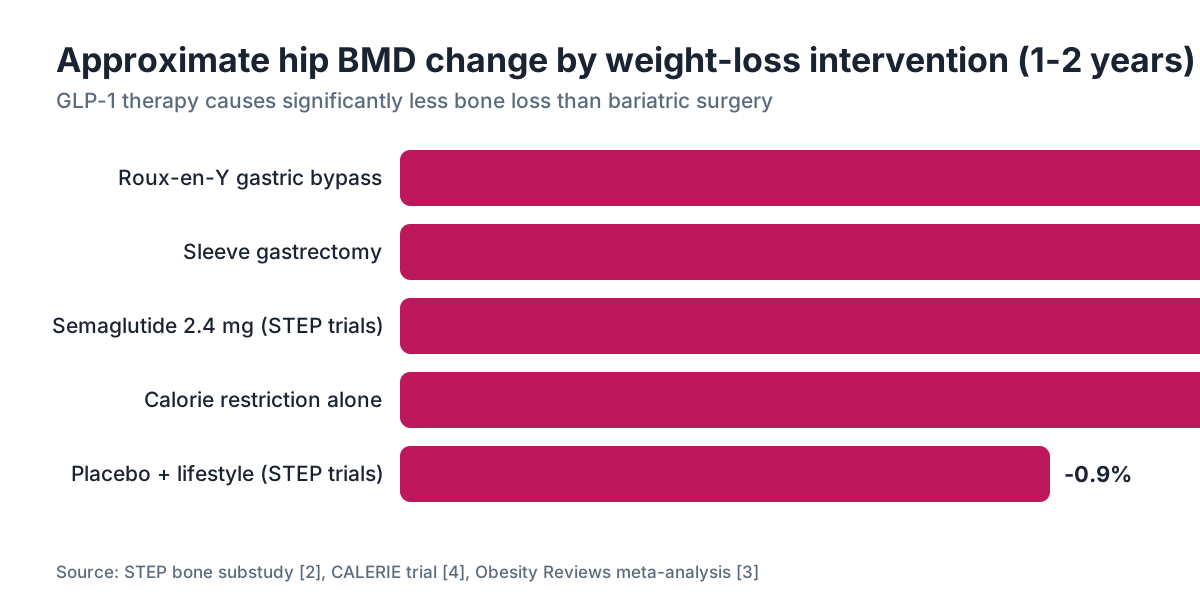
Bariatric surgery takes far more bone than GLP-1s. A 2023 meta-analysis published in Obesity Reviews found that Roux-en-Y gastric bypass patients lose 5-10% of hip BMD over two years, roughly three to five times the loss seen in semaglutide trials [3]. Sleeve gastrectomy causes less bone loss than bypass but still more than GLP-1 therapy. The mechanisms differ. Surgery adds malabsorption of calcium and vitamin D, hormonal disruption of parathyroid function, and often rapid refeeding problems. GLP-1 medications don't share those mechanisms.
Calorie restriction alone also costs bone, roughly proportional to the amount of weight lost. The Women's Health Initiative data and the CALERIE trial both show that intentional calorie-restriction weight loss reduces BMD, with hip losses in the 1-1.5% range per 5-10% body weight lost [4].
Here's the honest comparison:
| Intervention | Typical weight loss | Approximate hip BMD change (1-2 years) | |---|---|---| | GLP-1 therapy (semaglutide 2.4 mg) | 10-15% | -1.5 to -2.0% | | Calorie restriction alone | 5-10% | -1.0 to -1.5% | | Sleeve gastrectomy | 20-30% | -3 to -5% | | Roux-en-Y gastric bypass | 25-35% | -5 to -10% | | Tirzepatide (SURMOUNT-1) | up to 22.5% | not yet fully reported |
Sources: STEP trials [2], CALERIE trial [4], Obesity Reviews meta-analysis [3].
The takeaway: GLP-1-induced bone loss appears proportional to the amount of weight lost, similar to diet-induced weight loss, and is much milder than surgery. That doesn't make it zero, and it doesn't mean you get to ignore it. Semaglutide vs tirzepatide have different bone data and a higher weight-loss ceiling, which matters for this calculation.
Does Ozempic affect bone directly, or is it all from weight loss?
GLP-1 receptors exist in bone. That's been known since at least 2008 from receptor-mapping studies in rodent bone tissue [5]. Whether semaglutide has a direct effect on bone turnover, separate from the mechanical unloading that comes with weight loss, is still genuinely unsettled.
In vitro and animal data suggest GLP-1 receptor activation may slow bone resorption and modestly stimulate osteoblast activity. Some researchers guessed GLP-1 agonists would turn out to be bone-protective because of this direct receptor effect. The trial data haven't confirmed that hope. The BMD reductions in STEP trials happened even though semaglutide theoretically has this receptor pathway available.
One nuance is worth flagging. Bone turnover markers (like CTX and P1NP) in the STEP substudy didn't show dramatic jumps in resorption [2]. The BMD decline may reflect less bone formation rather than more breakdown, which has different long-term implications but is still a net negative for bone mass.
Nobody has good long-term fracture data on GLP-1 medications yet. The trials weren't powered for fracture as an endpoint and ran only 68-72 weeks. Fracture studies need years, sometimes decades. The closest we have is observational pharmacovigilance data from Denmark and the UK, which so far don't show a clear signal for increased fracture risk compared to other weight-loss approaches, but those studies have short follow-up and can't fully control for baseline differences [6]. This is an active research gap.
Who is most at risk for bone loss on semaglutide?
Not every woman on semaglutide faces the same bone risk. The women who should be paying closest attention are those stacking several risk factors at once.
Postmenopausal women sit at the top of that list. Estrogen is the main hormone protecting bone in women, and its sharp decline at menopause accelerates bone loss to 1-3% per year in the first several years after the final period [7]. A woman already in that window who starts a GLP-1 that drives additional bone loss is stacking risk on risk. What menopause does to bone is its own big conversation.
Women with a baseline BMD T-score in the osteopenia range (between -1.0 and -2.5) are at higher risk because they have less bone in reserve. A 2% hip BMD loss matters far more at a T-score of -2.0 than at -0.5.
Other compounding risk factors include:
- Low dietary calcium and vitamin D intake
- Sedentary lifestyle with little resistance exercise
- History of smoking
- Low body weight before starting (some women starting semaglutide are already lean and losing from a lower base)
- Long-term use of medications that affect bone: corticosteroids, proton pump inhibitors, some antidepressants
- Family history of osteoporosis or prior fragility fracture
If you're in menopause or perimenopause and starting a GLP-1, getting a bone density test (DEXA scan) before you begin gives you an actual baseline. Many women in their 40s and 50s have never had one. The National Osteoporosis Foundation recommends DEXA for all women 65 and older, and earlier if risk factors are present [7].
What does the STEP trial data actually show for bone?
The STEP program was the trial series that supported FDA approval of semaglutide 2.4 mg (Wegovy) for chronic weight management. STEP 1, 2, 3, and 4 enrolled different populations and each ran 68 weeks.
Bone was measured in a substudy using dual-energy X-ray absorptiometry (DEXA). The key findings [2]:
- Total hip BMD: dropped about 1.8% on semaglutide vs 0.9% on placebo
- Femoral neck BMD: dropped about 1.5% on semaglutide vs 0.8% on placebo
- Lumbar spine BMD: smaller changes, less consistent between groups
Context matters here. The STEP trials asked participants in both arms to run a modest calorie deficit and exercise program as part of the lifestyle intervention. So the placebo group also lost some weight and some bone. The semaglutide group lost considerably more of both.
The trial didn't enroll specifically postmenopausal women, and the bone substudy wasn't large enough to break out results by menopausal status reliably. That's a real limitation, given how differently pre- and postmenopausal women respond to bone loss triggers.
The STEP 5 trial extended follow-up to two years (104 weeks) and reported continued weight maintenance but didn't publish full bone data separately [1]. The 68-week data remain the primary reference for most clinical discussions.
For tirzepatide (Mounjaro, Zepbound), the SURMOUNT-1 trial showed up to 22.5% weight loss at the highest dose in people without diabetes [8]. Tirzepatide's bone data are even thinner than semaglutide's, and the higher weight-loss ceiling means the bone question may be more pressing there, not less.
Can you protect your bones while taking Ozempic?
Yes, and this is where the picture gets more encouraging. The bone loss seen in GLP-1 trials is real but not locked in at its full magnitude. Several interventions have solid evidence behind them.
Resistance training is the most effective tool. Mechanical loading from weight-bearing and resistance exercise is the clearest signal for bone formation. A meta-analysis in the Journal of Bone and Mineral Research found that progressive resistance training maintains or increases BMD at the hip and spine even during calorie restriction [9]. The target is two to three sessions per week focused on lower body and hip work: squats, deadlifts, hip thrusts, step-ups. Cardio alone won't do it.
Protein matters more than most people realize during weight loss. When calories drop, the body raids lean mass for fuel. Higher protein intake (at least 1.2 grams per kilogram of body weight per day, and some researchers argue for 1.6 g/kg during active weight loss) preserves lean mass and supports bone matrix [9]. The suppressed appetite from semaglutide makes hitting that target genuinely hard for some women. Prioritizing protein at every meal and tracking intake for the first few months helps.
Calcium and vitamin D are the baseline. The National Institutes of Health recommends 1,200 mg/day of calcium for women over 50, and 600-800 IU of vitamin D daily (many endocrinologists use higher targets if baseline 25-OH-D levels are low) [10]. Not exciting interventions, but the data behind them are consistent.
Hormone therapy deserves a real conversation for women in perimenopause or menopause. Estrogen is the most effective pharmacological bone-protective agent available to women in the menopausal transition, with decades of fracture data behind it. The North American Menopause Society notes that hormone therapy reduces hip fracture risk by about 33% [7]. If you're already weighing hormone replacement therapy, starting a GLP-1 at the same time is a reasonable approach for a perimenopausal woman who wants weight loss without compounding bone loss. The two don't interfere with each other mechanistically.
At telehealth platforms like WomenRx, the combination of GLP-1 and hormone therapy for perimenopausal weight management is increasingly a routine clinical conversation, not an unusual one.
If you have established osteoporosis (T-score below -2.5) or a prior fragility fracture, talk to your physician before starting a GLP-1. Some endocrinologists will recommend concurrent bisphosphonate therapy or denosumab in that setting, though there's no trial data yet on GLP-1 plus antiresorptive therapy specifically.
Should you get a DEXA scan before starting Ozempic?
If you're perimenopausal or postmenopausal, yes. It's genuinely useful, and it changes clinical decisions.
A baseline DEXA gives you a T-score at the hip and spine. If your T-score is above -1.0 (normal range), you have more buffer before bone loss becomes clinically significant. If you're already in osteopenia (-1.0 to -2.5), you and your prescriber should have an explicit bone-protection plan before you start a GLP-1. If you have osteoporosis (below -2.5), the risk-benefit math changes a lot.
DEXA scans are widely available, cost $100-300 without insurance (often covered for women 65+ and for younger women with risk factors), and take about 10-15 minutes. The radiation exposure is trivially low, roughly equal to a few hours of normal background radiation.
The U.S. Preventive Services Task Force (USPSTF) recommends screening for osteoporosis in women 65 and older and in postmenopausal women under 65 with increased risk [11]. If you're 45 and in perimenopause starting a GLP-1, the USPSTF hasn't formally extended its recommendation to you, but the clinical argument for a baseline scan is reasonable, and many physicians will order one.
A repeat DEXA at one to two years into GLP-1 therapy lets you see whether the bone-protection plan is working. That's more than a precaution. It's the data that lets you decide whether to continue, adjust dose, or add a bone-specific drug. See our bone density test explainer for the full picture on what DEXA measures and how to read your results.
Does stopping Ozempic help bone density recover?
Probably partially. The data here are thin.
In the STEP 4 trial, participants randomized to stop semaglutide after 20 weeks regained most of the lost weight within the following year [1]. Since bone loss on GLP-1 therapy appears tied to weight loss rather than direct drug toxicity, bone density should partially recover alongside weight regain. Whether it fully returns to baseline is unknown. Some bone research suggests that after rapid weight loss and regain cycles, complete BMD recovery doesn't always happen.
Here's the more practical point. Most women starting GLP-1 therapy aren't planning to quit after a year. These drugs are being positioned as chronic medications, like blood pressure or lipid treatments. That reframe matters for bone, because cumulative BMD loss over three to five years of continued weight maintenance (or ongoing slow loss) could add up to more than the 68-week STEP data suggest.
This is genuinely uncharted territory. The longest semaglutide trial data available as of 2025 are STEP 5 at two years and SELECT (cardiovascular outcomes) at roughly three years, but SELECT wasn't measuring bone density systematically [12]. The field needs five to ten year bone data and won't have it for a while. That uncertainty doesn't mean you should skip the drug if the weight-loss benefit is clinically significant for you. It means monitoring matters.
How does menopause change the bone risk on Ozempic?
Menopause is the single biggest modifier of bone risk in this whole conversation. Here's why.
In the years right around the final menstrual period, estrogen drops sharply. Estrogen normally suppresses osteoclast activity (bone breakdown) and supports osteoblast function (bone building). Without it, bone resorption speeds up. Women lose 1-3% of bone mass per year in the first five to seven years after menopause, then loss slows to about 0.5-1% per year [7]. This is why postmenopausal women account for 80% of the roughly 10 million Americans with osteoporosis [7].
A woman four years postmenopausal, who has already lost maybe 5-8% of her hip BMD from estrogen loss, then starts a GLP-1 that shaves off another 1.5-2% over 68 weeks, is now facing a compounded deficit that could tip her from osteopenia into osteoporosis range. That's a risk worth quantifying, not waving off.
A premenopausal woman in her late 30s starting semaglutide at relatively high BMD is in a very different spot. Her baseline bone reserve is larger, her bone turnover is better regulated by circulating estrogen, and even a 2% loss is less likely to push her across a clinical threshold.
For perimenopausal women, the timing of GLP-1 initiation relative to the menopausal transition matters. When does menopause start has a practical overview of the timeline, and knowing where you are in that window helps you read your bone risk. Adding estrogen therapy as bone protection during GLP-1 use is worth an explicit conversation with your clinician if you're in or near menopause. Progesterone plays a supporting part in bone too, though the evidence is less definitive than for estrogen.
What should you ask your doctor before starting Ozempic for weight loss?
A few questions worth raising directly, based on what the evidence actually supports.
First: what is my current bone density? If you haven't had a DEXA in the last two to three years and you're over 40 with any risk factors, ask for one before starting. Your prescriber can order it or refer you.
Second: am I getting enough calcium and vitamin D? Get your 25-OH vitamin D level checked if it hasn't been recently. Deficiency is common (some estimates put it near 40% of adults) and quietly worsens any drug- or menopause-related bone loss [10].
Third: what is my protein target on this medication? Work with a registered dietitian if you can. The appetite suppression from semaglutide is real, and hitting 100-120 grams of protein daily on 1,200-1,500 calories takes active planning.
Fourth: am I a candidate for hormone therapy? If you're perimenopausal or postmenopausal and not on HRT, this is a fair question. Hormone therapy is the only intervention that addresses both the menopause-specific bone loss and the GLP-1-related bone loss at once [7]. The Endocrine Society and NAMS both support HRT for bone protection in early menopause.
Fifth: how will we track my bone health over time? Ask for a plan, more than a one-time prescription. A repeat DEXA at 12-24 months into therapy is reasonable for women with any risk factors.
If you're working with a telehealth platform that prescribes GLP-1s, like WomenRx, a good one will raise these questions before you have to. The bone conversation should be part of a standard intake for any perimenopausal or postmenopausal woman starting semaglutide for weight loss.
Are compounded semaglutide products different for bone risk?
Compounded semaglutide, whether from a 503A or 503B pharmacy, contains the same active molecule as brand-name Wegovy or Ozempic when properly prepared. There's no pharmacological reason to expect a different bone-density effect from the compound versus the brand.
The practical difference is monitoring. Patients on compounded semaglutide often sit outside the formal follow-up structures of manufacturer-sponsored trials and may not get the same level of clinical oversight. If you're using compounded semaglutide, the bone monitoring advice doesn't change. If anything, the absence of automatic trial-visit check-ins makes self-advocacy more important: request your DEXA baseline, ask about calcium and vitamin D, schedule follow-up labs.
The FDA's position on compounded semaglutide shifted in 2024-2025 as Wegovy moved off and back onto shortage lists [13]. The regulatory picture keeps evolving, but from a bone-health standpoint, the mechanism and the risk profile are the same regardless of the source.
Frequently asked questions
Does Ozempic cause bone loss?
Yes. The STEP trial data show semaglutide users lose about 1.8% of hip bone mineral density over 68 weeks, compared to 0.9% in the placebo group. The loss appears tied to weight loss rather than direct drug toxicity. It's modest in absolute terms but meaningful for women who are already in the osteopenia range or postmenopausal.
How much bone density do you lose on semaglutide?
In the STEP program bone substudy, total hip BMD dropped about 1.8% over 68 weeks in the semaglutide group. Femoral neck showed roughly 1.5% decline. Lumbar spine changes were smaller and less consistent. These numbers are averages. Individual results vary a lot based on exercise, protein intake, menopausal status, and baseline BMD.
Is Ozempic safe if you have osteoporosis?
This needs an individual conversation with your prescriber. If you have established osteoporosis (T-score below -2.5) or a prior fragility fracture, starting a GLP-1 without a parallel bone-protective strategy isn't ideal. Options include concurrent bisphosphonate therapy, adequate calcium and vitamin D, and hard resistance training. The weight-loss benefits may still outweigh bone risks in some women, but the decision needs quantifying.
Does Wegovy affect bones differently than Ozempic?
No. Wegovy and Ozempic both contain semaglutide. Wegovy is dosed at 2.4 mg weekly for weight management; Ozempic is dosed at 0.5-2 mg weekly for diabetes. The higher Wegovy dose produces more weight loss, and because bone loss tracks with weight loss magnitude, Wegovy may carry slightly more bone risk than lower Ozempic doses. The molecule is identical.
Can you take estrogen to protect your bones while on Ozempic?
Yes, and this combination makes clinical sense for perimenopausal and postmenopausal women. Estrogen is the most evidence-backed bone-protective therapy for women in the menopausal transition, reducing hip fracture risk by roughly 33% according to NAMS. There's no known pharmacological interaction between semaglutide and estrogen therapy. Ask your clinician whether hormone therapy fits your situation.
Does resistance training prevent bone loss on Ozempic?
Strong evidence says resistance training substantially blunts weight-loss-related bone loss. Mechanical loading from progressive resistance exercise stimulates osteoblast activity and slows bone resorption. Two to three sessions per week focused on lower body and hip movements is the target. Pairing resistance training with adequate protein addresses both lean mass and bone mass loss during GLP-1 therapy.
How much vitamin D and calcium should you take on Ozempic?
The NIH recommends 1,200 mg of calcium per day for women over 50 and 600-800 IU of vitamin D daily, though many clinicians target higher vitamin D levels (40-60 ng/mL serum 25-OH-D) during active weight loss. Check your baseline 25-OH-D level before supplementing, since about 40% of adults are deficient. Food-first calcium beats heavy supplementation.
Does tirzepatide cause more bone loss than semaglutide?
Tirzepatide produces more weight loss than semaglutide (up to 22.5% in SURMOUNT-1 vs 15% in STEP 1), and bone loss appears proportional to weight loss. Detailed BMD data from tirzepatide trials are less published than semaglutide's, but the higher weight-loss ceiling suggests the bone question may be bigger with tirzepatide. Long-term bone data for both drugs remain incomplete.
What T-score should you have before starting Ozempic?
No formal T-score cutoff has been set as a contraindication to GLP-1 therapy. As a practical guide: T-score above -1.0 (normal) means low bone concern; -1.0 to -2.5 (osteopenia) warrants active bone-protection strategies; below -2.5 (osteoporosis) requires a full risk-benefit discussion and likely concurrent bone treatment before or alongside a GLP-1.
Will bone density come back after stopping Ozempic?
Probably partially. Since GLP-1-related bone loss tracks with weight loss, the weight regain that follows stopping semaglutide (documented in STEP 4) likely brings some BMD recovery. Whether recovery is complete is unknown; there's no long-term off-drug bone data yet. Keeping up resistance training and adequate nutrition after stopping matters regardless.
Should I get a DEXA scan before starting semaglutide?
If you're over 45 with any risk factors (postmenopausal, family history of osteoporosis, low body weight, smoker, on corticosteroids) or over 65 regardless, a baseline DEXA is genuinely useful. It tells you where you're starting and whether extra bone protection is needed before you lose weight. Scans cost $100-300 and take 10-15 minutes.
Does GLP-1 therapy affect fracture risk?
No reliable clinical trial data exist yet showing increased fracture incidence with GLP-1s. The STEP trials weren't powered for fracture outcomes and ran only 68 weeks. Observational pharmacovigilance data from Europe are reassuring so far but have short follow-up and confounding. Fracture risk data for semaglutide and tirzepatide will take years of longer study.
Is bone loss from Ozempic worse than from weight loss surgery?
No, it's substantially less. Bariatric surgery, especially Roux-en-Y gastric bypass, causes 5-10% hip BMD loss over two years, versus roughly 1.5-2% with semaglutide. Surgery adds malabsorption of calcium and vitamin D that GLP-1 drugs don't cause. GLP-1 bone loss looks comparable to diet-induced weight loss of the same magnitude.
Can postmenopausal women safely take Ozempic?
Yes, with appropriate monitoring. Postmenopausal women face the highest combined bone risk from estrogen loss plus GLP-1-related weight-loss bone changes, so bone protection matters more for them. A baseline DEXA, a calcium and vitamin D adequacy check, a resistance training program, and a conversation about hormone therapy are all reasonable before or alongside starting a GLP-1 in this group.
Sources
- New England Journal of Medicine, Wilding et al. 2021, STEP 1 trial
- Obesity, Lundgren et al. 2021, STEP bone substudy
- Obesity Reviews, meta-analysis of bariatric surgery and bone loss
- JAMA Internal Medicine, CALERIE trial investigators
- Endocrinology journal, Nuche-Berenguer et al. 2010, GLP-1 receptors in bone
- Diabetes, Obesity and Metabolism, pharmacovigilance review, GLP-1 and fracture risk
- North American Menopause Society (NAMS), Menopause Practice: A Clinician's Guide
- New England Journal of Medicine, Jastreboff et al. 2022, SURMOUNT-1 trial
- Journal of Bone and Mineral Research, meta-analysis, resistance training and BMD during calorie restriction
- National Institutes of Health, Office of Dietary Supplements, Calcium and Vitamin D Fact Sheets
- U.S. Preventive Services Task Force, Osteoporosis Screening Recommendation, 2018
- New England Journal of Medicine, SELECT trial, Lincoff et al. 2023
- FDA, Drug Shortages Database and semaglutide compounding guidance