Over the counter progesterone: what it can and can't do for you
TL;DR: Over-the-counter progesterone creams are legal in the US and widely sold, but FDA limits them to cosmetic-level amounts (400 mg progesterone per ounce or less). That dose absorbs inconsistently through skin and has never been proven to relieve menopause symptoms, protect the uterine lining, or match blood levels from prescription progesterone. They're not the same product as pharmaceutical-grade oral or topical progesterone prescribed by a clinician.
What is over the counter progesterone and how is it different from prescription progesterone?
Over-the-counter progesterone usually means a cream, lotion, or serum that contains USP progesterone (the same molecular structure as the hormone your body makes) but at concentrations the FDA has determined are safe to sell without a prescription. The FDA draws that line at 400 mg of progesterone per ounce of product [1]. Anything above that threshold must be dispensed by a licensed pharmacy under a valid prescription.
Prescription progesterone comes in several forms: oral micronized capsules (brand name Prometrium in the US), FDA-approved vaginal gels and inserts, and compounded topical preparations made by specialty pharmacies. The key word is "micronized," meaning the progesterone particles have been broken down to a size that actually absorbs when you swallow them. Oral micronized progesterone at 100-200 mg produces measurable serum levels and, when combined with estrogen in women with a uterus, has demonstrated endometrial protection in randomized controlled trials [2].
OTC creams occupy a different regulatory category. They're sold as cosmetics or as dietary supplements depending on how the label is worded. A cosmetic claim ("moisturizes skin") lets a manufacturer skip clinical proof. A drug claim ("relieves hot flashes") would require FDA approval, so most OTC products stay scrupulously vague on their labels even when they're clearly marketed to perimenopausal and menopausal women.
Here's the line to hold onto before we go further. OTC progesterone and prescription progesterone share a molecule but are not interchangeable products. Dose, absorption, and regulatory oversight are completely different.
Does OTC progesterone cream actually absorb through the skin?
Some does. Not enough to count on. That's the short version, and the science behind it is genuinely murky. Progesterone is fat-soluble, which is why cosmetic chemists have long assumed it would cross the skin barrier reasonably well. Some studies do show measurable serum progesterone after applying cream, but the numbers are inconsistent and clinically modest.
A study in the journal Menopause tested a cream delivering roughly 40 mg of progesterone daily and found that serum levels rose only slightly and did not suppress estrogen-driven endometrial proliferation in postmenopausal women who were also using estrogen [3]. That's the clinical test that matters: if progesterone isn't showing up in the uterus at sufficient concentrations, it isn't protecting the lining.
Skin absorbs progesterone into fat tissue first, and it can accumulate there over weeks. When you stop using the cream, levels drop slowly from that reservoir. This pattern makes it hard to know your actual circulating level at any given moment, and it makes monitoring with a standard serum progesterone test unreliable [8]. Saliva tests are sometimes marketed as a workaround, but neither the Endocrine Society nor NAMS endorses saliva testing as a reliable method for monitoring topical progesterone therapy [4].
Dose variation between products adds another layer of uncertainty. Skin-absorbed progesterone scatters into blood, fat, and target tissue at rates that vary by person, by cream base, and by application site [8]. Nobody regulates OTC hormone creams the way the FDA regulates drug manufacturing.
So: yes, some progesterone crosses skin. No, the absorbed amount is not consistent enough to count on for therapeutic purposes.
Can OTC progesterone relieve hot flashes, night sweats, or other menopause symptoms?
The honest answer is probably not, at least not reliably. The clinical trial data is thin and the results are not encouraging.
The best-designed trial on this question was a double-blind, placebo-controlled study published in 2005 that gave postmenopausal women either a progesterone cream (providing 20 mg/day) or a placebo for 12 weeks. Both groups reported improvement in hot flash frequency, but the progesterone cream group did not outperform placebo [5]. That's a problem. If a hormone cream can't beat an inert moisturizer, the active ingredient is not doing the work.
NAMS (the North American Menopause Society) states in its position statements that there is insufficient evidence to recommend progesterone creams for vasomotor symptom relief, and that they should not be used as a substitute for prescription hormone therapy in women who need endometrial protection [4].
Some women do report feeling better on OTC progesterone. That could be a genuine pharmacological effect from absorbed hormone, a placebo response, the benefit of a daily moisturizing ritual, or a natural ebb in symptom severity over time. Without a control group, you can't tell which one it is.
If your main goal is managing hot flashes, night sweats, mood swings, or sleep disruption, the treatments with the strongest evidence are prescription low-dose estrogen (with progesterone added if you have a uterus), and for women who can't or won't use estrogen, options like venlafaxine, gabapentin, or the newer FDA-approved neurokinin B receptor antagonist fezolinetant [10]. You can read more about the full hormone picture at our progesterone and menopause articles.
Is OTC progesterone safe, and what are the risks?
For most healthy women, applying an OTC progesterone cream is unlikely to cause serious acute harm. The amounts absorbed are low. But "unlikely to cause harm" is not the same as "safe" in a clinical sense, and there are real risks worth naming.
First, there's the risk of inadequate endometrial protection. If you're using estrogen therapy (patches, gels, pills) and have a uterus, you need enough progestogen to prevent the uterine lining from overgrowth that can progress to endometrial hyperplasia and, over years, endometrial cancer. OTC cream has not been proven to provide that protection. Using it instead of a prescribed progestogen while taking estrogen is not a theoretical risk. It's a documented pathway to harm [3].
Second, there's the issue of false reassurance. Women who use OTC progesterone and feel somewhat better may delay seeking care for symptoms that deserve a proper workup. Irregular bleeding in perimenopause, for example, always warrants evaluation, not self-treatment.
Third, accumulation in fat tissue means your actual hormone exposure is harder to predict over time. Women with more body fat may accumulate more progesterone, and the long-term effects of that reservoir are not well studied [8].
Fourth, supplement-category products aren't tested for purity, potency, or contaminants the way FDA-approved drugs are. Independent testing has found creams delivering less progesterone than their labels claim, with no manufacturing oversight to catch it.
Drug interactions are generally not a concern at OTC cream doses, but if you take medications metabolized by CYP3A4 (including some anticonvulsants and antifungals), higher progesterone exposure could theoretically matter [12].
Women who are pregnant, trying to conceive, or have a history of hormone-sensitive cancers should not use OTC progesterone without direct guidance from a physician.
How do OTC progesterone cream doses compare to prescription doses?
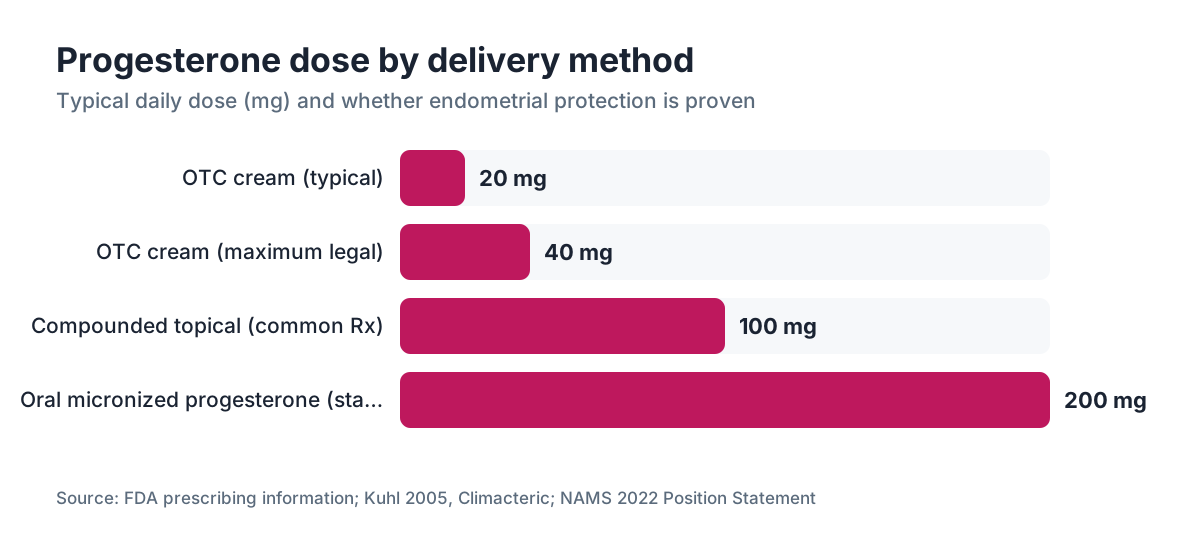
Seeing the numbers side by side helps. The dose gap between OTC and prescription is not subtle.
| Product type | Typical daily dose | Route | Proven endometrial protection? | Serum level achieved | |---|---|---|---|---| | OTC cream (e.g., 2% USP) | 20-40 mg/day | Transdermal | No | Low, variable | | Oral micronized progesterone (Prometrium) | 100-200 mg/day | Oral | Yes (at 200 mg) | Reliably therapeutic [2] | | Compounded topical progesterone | 40-200 mg/day | Transdermal | Uncertain; dose-dependent | Variable; lower than oral at same dose | | Vaginal progesterone gel (Crinone) | 45-90 mg/day | Vaginal | Used in fertility protocols | Local uterine concentration high |
Oral micronized progesterone at 200 mg produces serum levels in the range of 2-8 ng/mL in postmenopausal women taking estrogen, depending on timing of the blood draw [2]. OTC creams at 20-40 mg/day typically produce serum levels below 1 ng/mL, often indistinguishable from baseline.
Compounded topical progesterone sits in a complicated middle ground. A compounding pharmacy can make a cream at 100 mg or 200 mg per dose, far above the OTC legal limit. But the Endocrine Society has noted that even compounded topical progesterone at high doses does not reliably achieve the same serum or endometrial levels as oral micronized progesterone, partly because it bypasses first-pass liver metabolism [7]. This is why many clinicians default to oral micronized progesterone for women who need documented uterine protection.
If you want to understand all your prescription options, our article on hormone replacement therapy covers the full decision tree.
What does the FDA actually say about OTC progesterone?
The FDA has never approved any OTC progesterone product for treating menopause symptoms, hormone deficiency, or any other medical condition. That's a hard line.
In 2008, the FDA issued warning letters to manufacturers marketing progesterone creams with drug claims, taking the position that products claiming to treat menopause symptoms are unapproved new drugs that cannot be legally marketed [1]. The agency has held that position in later guidance on personal care products containing hormones.
The 400 mg per ounce threshold comes from the FDA's over-the-counter drug review framework. Products at or below that concentration are permitted as cosmetics (not drugs), which means the manufacturer does not need to prove efficacy. The FDA has said plainly that this exemption does not mean such products work for any hormonal purpose.
For prescription progesterone, the FDA has approved specific drug products: Prometrium (oral micronized progesterone 100 mg and 200 mg capsules), Crinone (vaginal gel), and Endometrin (vaginal insert). Each has an FDA-approved label listing its indications, dosing, and risks [2].
Compounded progesterone sits in a separate regulatory space. Registered compounding pharmacies can make customized preparations under a valid prescription, but those preparations do not carry FDA approval. The FDA has raised concern about the marketing of compounded hormone products with efficacy claims that haven't been proven [7].
The practical takeaway: no OTC progesterone product has cleared the bar of proving it works for hormonal symptoms. The FDA's silence on efficacy is not an endorsement.
Who might reasonably try an OTC progesterone cream, and who definitely shouldn't?
There are situations where a well-informed woman might decide a low-dose OTC progesterone cream is worth trying, and situations where it would be genuinely inadvisable.
Reasonable use cases are narrow. A perimenopausal woman not currently using any estrogen therapy, who has mild premenstrual-type symptoms, and who understands she's essentially running an uncontrolled self-experiment might try an OTC cream as a low-stakes option before pursuing a prescription. She's not putting an unopposed uterus at risk because she's not on estrogen. She's not replacing a proven therapy with an unproven one. The downside is mostly financial, plus the opportunity cost of not getting real care sooner.
Here are the clear situations where OTC progesterone is inadequate or potentially harmful:
-
You are using any form of estrogen therapy and have a uterus. Endometrial protection requires a proven dose of progestogen. OTC cream does not provide this [3].
-
You have a history of endometrial hyperplasia or endometrial cancer. This is a clinical situation requiring precise hormone management.
-
You are currently pregnant or actively trying to conceive. Progesterone supplementation in early pregnancy is a medical intervention requiring physician supervision.
-
You are experiencing significant menopause symptoms that are affecting your quality of life. OTC cream is unlikely to produce meaningful relief, and you deserve treatments that actually work [10].
-
You have a personal or family history of breast cancer or are in active treatment or surveillance. Hormone exposure in this context requires oncology input.
If any of these apply to you, the conversation you need is with a clinician, not a product aisle. Platforms like WomenRx let you have that conversation with a hormone-focused prescriber without a long in-person wait.
What do popular OTC progesterone cream brands actually contain?
The most widely recognized OTC progesterone cream brands include Emerita Pro-Gest, Now Foods Natural Progesterone Cream, Natpro, and Doctor's Best. Most use wild yam extract as a base and add USP progesterone, which is the bioidentical hormone, not a synthetic progestin.
Wild yam by itself does not convert to progesterone in the human body. This is a persistent myth. Wild yam contains diosgenin, a compound that chemists in a lab can convert to progesterone, but that conversion does not happen in your liver or bloodstream. Products labeled "wild yam progesterone" that do not list USP progesterone as a separate ingredient contain no bioavailable progesterone at all.
For products that do list USP progesterone, concentrations vary. A 2% cream typically delivers about 20 mg per 1/4 teaspoon application. A product at the legal maximum would deliver roughly 13 mg per gram, which means even applying a full gram daily stays at the low end of what any study has used.
Worth reading on the label beyond progesterone: parabens (some women prefer to avoid these), fragrance allergens, and penetration enhancers like propylene glycol that could change absorption in unpredictable ways. The cream's base affects how much progesterone actually crosses the skin, and that varies by brand and even by lot.
No independent organization routinely certifies OTC progesterone creams for potency or purity the way NSF or USP certifies dietary supplements. If you use one, you're accepting that uncertainty.
Can OTC progesterone affect hormone test results?
Yes, and this creates a clinical problem that's underappreciated.
If you use an OTC cream and then get a serum progesterone test, you may see a slightly elevated result that doesn't reflect your actual therapeutic status. More important, you may see a result that looks "normal" on paper while your endometrium is not adequately protected, because skin-absorbed progesterone distributes unevenly between blood, fat, and target tissues [8].
Saliva testing is aggressively marketed alongside OTC progesterone products, often by the same companies. The theory is that saliva reflects tissue levels better than serum. The evidence doesn't support this for clinical decisions. The Endocrine Society's 2023 clinical practice guideline on menopause hormone therapy states that salivary hormone testing is not validated for monitoring hormone therapy and should not be used to guide dosing [7].
If you're working with a clinician who wants to monitor your progesterone levels, the standard is a serum blood test, interpreted in the context of your specific form of therapy. Oral micronized progesterone produces a characteristic peak and trough pattern depending on when you test relative to when you took the dose. That timing matters.
The cleanest approach: tell any clinician you see exactly what OTC products you're using, including creams and supplements, before any hormone testing. It changes how the result should be read.
What's the right way to talk to a doctor about progesterone options?
The conversation is easier than most women expect, and you don't need to have done extensive research before you walk in (or log in).
Start with your symptoms: what they are, when they started, and how much they affect your daily life. Hot flashes disrupting sleep is a different clinical picture than mild mood changes in the luteal phase. Both matter, but they may point to different solutions.
Mention anything you're already using, including OTC creams, supplements, herbs, and over-the-counter sleep aids. This is not the time for omissions. It directly affects what your clinician recommends and how to read any lab work.
Ask specifically about the form of progesterone being recommended and why. Is it oral micronized progesterone or a synthetic progestin? What dose? How long will it take to notice an effect? What does monitoring look like? These are reasonable questions that a good clinician will be glad you're asking.
If you have a uterus and are being offered or are already using estrogen, make sure the progesterone component of your regimen is specifically confirmed to provide endometrial protection at the dose being prescribed. This is not a detail to leave vague.
For women who haven't found a menopause-literate clinician locally, telehealth has genuinely changed access. You can read about perimenopause timing at perimenopause age and the full menopause picture at when does menopause start to come to that conversation better prepared. If you're also curious about GLP-1 medications for weight changes that often come with menopause, our coverage of semaglutide for weight loss covers the evidence there.
How much does OTC progesterone cost compared to prescription progesterone?
Cost is one of the few genuine arguments for OTC cream, but it's worth running the numbers honestly.
A typical 2 oz jar of OTC progesterone cream costs between $15 and $40 at retail, lasting roughly one to two months depending on how much you apply. That works out to $90 to $240 per year out of pocket.
Oral micronized progesterone (generic) at 200 mg costs roughly $20 to $60 per month at most retail pharmacies with a GoodRx-type coupon, so about $240 to $720 per year. The brand-name Prometrium is substantially more expensive without insurance, often $100 or more per month.
Compounded topical progesterone from a specialty pharmacy typically costs $40 to $80 per month depending on the formulation and dose.
Insurance coverage changes the math a lot. Many plans cover generic oral micronized progesterone after a small copay, sometimes as low as $10 to $20 per month. OTC products are generally not covered.
If cost is a real barrier to prescription progesterone, that's a conversation worth having with your prescriber. Mark Cuban's Cost Plus Drugs (costplusdrugs.com) has listed generic progesterone 200 mg for under $20 for 30 capsules. GoodRx and similar platforms can also bring the price within reach at many pharmacies.
The math is unkind to the cream. Paying $15 a month for something that likely doesn't work therapeutically costs more than paying $20 a month for something that does, once you count the time spent not getting better.
Frequently asked questions
Is OTC progesterone cream the same as bioidentical progesterone?
The progesterone molecule in most OTC creams (labeled USP progesterone) is bioidentical, meaning it's chemically identical to the progesterone your ovaries produce. But "bioidentical" describes the molecule, not the dose or delivery. OTC creams deliver far lower doses than prescription bioidentical progesterone and have not been shown to achieve the same blood levels or clinical effects. Same molecule, very different product.
Can OTC progesterone cream help with sleep during perimenopause?
There's no published trial showing that OTC progesterone cream meaningfully improves sleep in perimenopausal women. Oral micronized progesterone does have sedating properties at prescription doses (100-200 mg), partly through its metabolite allopregnanolone acting on GABA receptors. That effect is dose-dependent and unlikely to occur at the low amounts absorbed from a skin cream. If sleep disruption is significant, it warrants real treatment.
Will OTC progesterone cream protect my uterine lining if I'm using an estrogen patch?
No. This is one of the most important things to understand about OTC progesterone. If you have a uterus and are using any form of estrogen therapy, you need a prescription-strength progestogen to prevent estrogen-driven endometrial overgrowth. OTC cream has not been proven to provide that protection. Using it instead of a prescribed progestogen while taking estrogen is a documented risk for endometrial hyperplasia.
How do I use OTC progesterone cream correctly?
Most products recommend applying 1/4 to 1/2 teaspoon (roughly 20-40 mg of progesterone) to thin-skinned areas like the inner wrist, inner arm, neck, or chest, rotating sites daily. Application is typically once or twice daily. Rotating sites is commonly recommended to prevent local saturation, though evidence that it meaningfully improves absorption is limited. Always follow the specific product's directions and keep realistic expectations about what this dose can accomplish.
Can I use OTC progesterone cream to treat PMS or PMDD?
Progesterone cream is frequently marketed for PMS relief, but clinical evidence is very thin. A Cochrane review found insufficient evidence to support progesterone supplementation for premenstrual syndrome. PMDD (the more severe form) responds to treatments with stronger evidence: SSRIs, particularly fluoxetine and sertraline used in the luteal phase, have multiple randomized trials behind them. Using OTC cream for PMDD specifically would delay access to effective care.
Is wild yam cream the same as progesterone cream?
No. Wild yam contains diosgenin, a plant compound that chemists can convert to progesterone in a lab, but your body cannot perform that conversion. Wild yam cream with no added USP progesterone contains no bioavailable progesterone and has no hormonal effect. If a product lists only wild yam extract and does not separately list USP progesterone as an ingredient, it does not contain progesterone regardless of how it is marketed.
Can men use OTC progesterone cream?
Men do produce small amounts of progesterone, and some practitioners have explored progesterone supplementation for men, but there are no FDA-approved OTC or prescription indications for progesterone in men. Some research suggests high progesterone may suppress testosterone in men. This article focuses on women's hormonal health; men curious about this should consult a urologist or endocrinologist rather than self-treating.
What's the difference between progesterone and progestin?
Progesterone is the natural hormone produced by the ovaries and adrenal glands. Progestins are synthetic compounds designed to mimic progesterone's effects on the uterus. They differ in molecular structure, receptor binding, and side effect profiles. Older synthetic progestins like medroxyprogesterone acetate (MPA) have been associated with different cardiovascular and breast tissue effects than oral micronized progesterone. Most OTC creams use bioidentical progesterone, not a synthetic progestin.
Can I test my progesterone levels at home to see if the cream is working?
Home saliva test kits for progesterone are sold widely but are not validated for monitoring hormone therapy. The Endocrine Society advises against using saliva testing to guide treatment decisions. Serum blood tests (drawn at a lab) are the standard, but interpreting the result depends heavily on the form and timing of your progesterone use. An OTC cream may produce an elevated saliva result that doesn't translate to meaningful therapeutic effect.
Does OTC progesterone cream cause weight gain?
At the doses absorbed from OTC cream, clinically meaningful weight gain is unlikely. Prescription-strength progesterone can cause fluid retention and appetite changes in some women, but these effects are dose-related. If you're concerned about weight changes during perimenopause or menopause, the bigger drivers are usually changes in estrogen, insulin sensitivity, sleep, and activity rather than progesterone supplementation at OTC levels.
How long does it take for OTC progesterone cream to start working?
Many women who report noticing an effect describe it within two to four weeks, which matches the fat-tissue accumulation and slow-release pattern of skin-absorbed progesterone. That same timeline also matches the placebo response arc seen in clinical trials. The only honest answer is that nobody has a clean trial establishing a therapeutic onset time for OTC progesterone cream, because no trial has established that it works therapeutically to begin with.
Are there any drug interactions with OTC progesterone cream?
At typical OTC doses, significant drug interactions are unlikely. Progesterone is metabolized by CYP3A4 liver enzymes. Drugs that strongly induce CYP3A4 (like rifampin or carbamazepine) could theoretically lower progesterone levels, and CYP3A4 inhibitors (like ketoconazole or certain antiretrovirals) could raise them. At absorbed OTC doses, these interactions are more theoretical than clinical. Still, tell your pharmacist or prescriber everything you're using.
Can I use OTC progesterone cream during pregnancy?
No, not without explicit physician guidance. Progesterone supplementation in pregnancy (specifically vaginal progesterone gel or suppositories) is used in certain high-risk situations under medical supervision. But self-administering OTC cream at home during pregnancy, particularly in the first trimester when hormone levels are critical and carefully timed, is not appropriate. Any hormonal supplementation during pregnancy should be directed by your OB or reproductive endocrinologist.
Sources
- FDA, Over-the-Counter Drug Products Containing Active Ingredients Offered or Promoted for Use in Treating Hormonal Conditions
- Simon JA et al., "Micronized Progesterone: Vaginal and Oral Uses", Clinical Obstetrics and Gynecology, 1995; and Prometrium prescribing information, FDA-approved label
- Wren BG et al., "Transdermal progesterone and its effect on vasomotor symptoms, blood lipid levels, bone metabolic markers, moods, and quality of life for postmenopausal women", Menopause, 2003
- North American Menopause Society (NAMS), Menopause Practice: A Clinician's Guide, and NAMS 2022 Hormone Therapy Position Statement
- Leonetti HB et al., "Transdermal progesterone cream as an alternative progestogen in hormone therapy", Alternative Therapies in Health and Medicine, 2005
- Endocrine Society, Clinical Practice Guideline: Treatment of Symptoms of the Menopause, 2023
- Stanczyk FZ et al., "Progesterone and progestins: a critical review of published data", Contraception, 2013
- Wyatt KM et al., "Progesterone for premenstrual syndrome (Cochrane Review)", Cochrane Database of Systematic Reviews, 2001
- NIH National Institute on Aging, Menopause: Medicines to Help You
- Office on Women's Health, U.S. Department of Health and Human Services, Menopause and Hormones
- Kuhl H, "Pharmacology of estrogens and progestogens: influence of different routes of administration", Climacteric, 2005