Oral semaglutide reviews: what women actually experience
TL;DR: Oral semaglutide (Rybelsus) works, but delivers roughly 60-70% of the weight loss seen with injectable semaglutide. The PIONEER trials show about 4.4 kg average weight loss at 14 mg vs 6.9 kg with weekly injections. GI side effects are common, the dosing window is strict, and cost runs $900-$1,000 per month without insurance. The pill fits a narrow profile, not everyone.
What is oral semaglutide and how does it differ from the injectable?
Semaglutide is the same GLP-1 receptor agonist molecule whether it arrives as a weekly injection (Ozempic, Wegovy) or a daily pill (Rybelsus). What changes is delivery and dose ceiling. Injectable semaglutide reaches your bloodstream with near-complete bioavailability. The pill has to survive stomach acid, and it gets absorbed through the gastric lining only when the stomach is empty and the pH is briefly raised by the sodium caprate carrier built into the tablet [1].
Bioavailability of oral semaglutide sits around 1% under ideal conditions. That number sounds alarming. But the PIONEER program, which ran across 10 trials and thousands of patients, showed 14 mg daily still moved both blood sugar and body weight in a way that mattered [2]. The FDA approved Rybelsus in September 2019 for type 2 diabetes, not weight loss. That single distinction drives insurance coverage and shapes what you should expect.
For women weighing the broader semaglutide picture, the oral form fills a specific slot. It suits people who cannot or will not inject, who have milder weight goals, or who are bridging while injectable supply is tight.
What do clinical trials actually show about oral semaglutide weight loss?
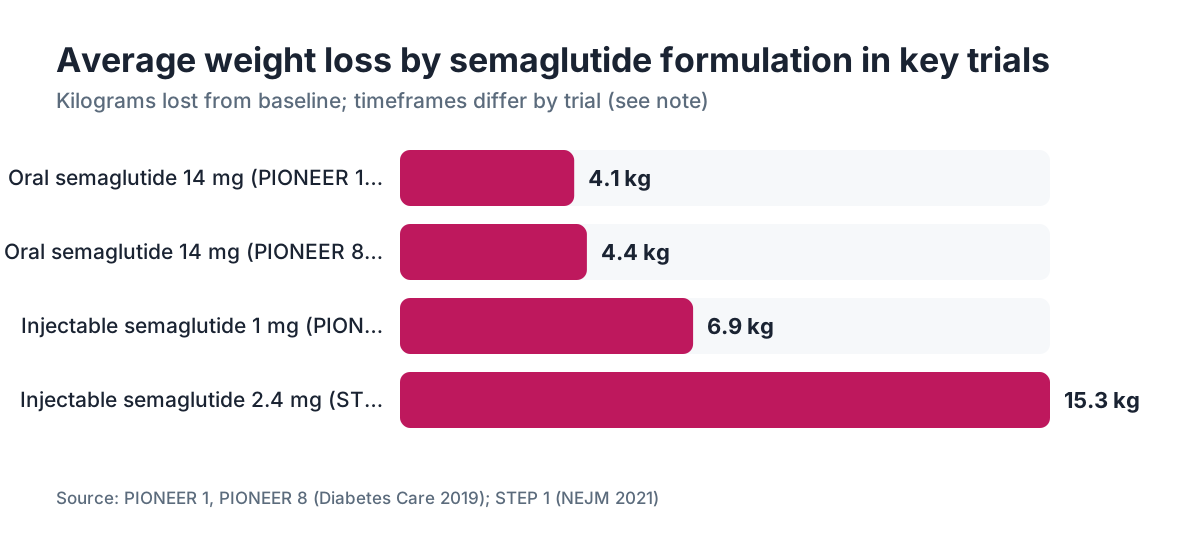
The PIONEER 1 through PIONEER 10 trials are the evidence base. PIONEER 1 tested oral semaglutide at 3 mg, 7 mg, and 14 mg against placebo in adults with type 2 diabetes. At 26 weeks, patients on 14 mg lost an average of 4.1 kg (about 9 lbs) versus 1.9 kg on placebo [2]. Real, but modest next to injectable numbers.
PIONEER 8 put oral semaglutide head to head with once-weekly injectable semaglutide 1.0 mg. Oral 14 mg produced a mean body weight reduction near 4.4 kg against 6.9 kg with the injection at 52 weeks [2]. The pill delivers. It just delivers less.
The STEP trials tested injectable semaglutide 2.4 mg, the Wegovy dose, and showed average weight loss of 14.9% of body weight at 68 weeks in adults without diabetes [3]. No oral semaglutide trial hits that magnitude. Novo Nordisk is developing an oral semaglutide 50 mg formulation that showed roughly 15% body weight reduction in early phase 2 data, but that product is not approved or available as of mid-2026.
Women comparing options can read the semaglutide for weight loss and semaglutide vs tirzepatide articles for fuller head-to-head context.
What side effects do women report most often with oral semaglutide?
GI symptoms dominate. In the PIONEER trials, nausea hit 20-24% of patients on 14 mg oral semaglutide, vomiting about 8-10%, and diarrhea roughly 8-9% [2]. Those rates track with injectable semaglutide at the 0.5-1 mg range, which catches people off guard because they assumed the pill would be gentler.
The reason makes sense once you sit with it. GLP-1 receptors slow gastric emptying no matter how the drug enters your body. A pill doesn't route around that.
Side effects run worst in the first 4-8 weeks and during each dose step (3 mg to 7 mg to 14 mg). Plenty of women stall at 7 mg rather than push to 14 mg because nausea gets unmanageable. That self-imposed ceiling likely explains a chunk of the real-world underperformance against trial results.
Other reported effects include constipation, burping, fatigue, and reduced appetite (that last one is the point). The FDA label for Rybelsus carries the same boxed warning about thyroid C-cell tumors seen on injectable semaglutide, based on rodent data. It also warns about pancreatitis and diabetic retinopathy complications [1]. Women with a personal or family history of medullary thyroid carcinoma or MEN 2 should not use any form of semaglutide.
One pattern is specific to the pill. Some women report that even small deviations from the dosing window, like taking it 45 minutes before breakfast instead of the required 30 minutes with plain water, seem to dull the effect or worsen GI symptoms. That consistency burden is real, and it sets the pill apart from the injectable.
How strict is the oral semaglutide dosing routine and why does it matter?
Strict enough that it separates honest reviews from the tidy trial picture. In trials, participants get coached on the protocol. In a real kitchen at 6 a.m., adherence is harder.
The FDA label spells out the requirement plainly. Take the tablet "on an empty stomach when you first wake up with a sip (no more than 4 ounces) of plain water," and wait at least 30 minutes before the first food, drink, or other oral medication of the day, per the Rybelsus prescribing information [1]. Coffee counts as food from an absorption standpoint. Even a small sip of anything other than plain water can cut absorption sharply because it shifts gastric pH.
For women taking thyroid medication (levothyroxine is common in the 40-60 group), this creates a scheduling knot. Levothyroxine also needs fasting absorption and is usually the first thing swallowed in the morning. Most prescribers say take semaglutide first, wait 30 minutes, take the thyroid pill, then wait another 30-60 minutes before eating. That's a 60-90 minute morning ritual, and many women find it unsustainable.
Real-world pharmacy claims data suggests persistence with oral semaglutide at 6 months runs lower than with injectable forms, though direct head-to-head persistence trials are limited. If you already know your mornings are chaos, weekly injectable dosing is simply more forgiving.
How does oral semaglutide compare to injectable semaglutide for women in perimenopause or menopause?
No dedicated trial has studied oral semaglutide in perimenopausal or postmenopausal women. That gap deserves a plain name. What we have is subgroup inference from broader trials plus mechanistic reasoning.
Women in perimenopause and after menopause tend to carry lower insulin sensitivity, more visceral fat, and higher cortisol reactivity, all of which respond to GLP-1 agonism [11]. The appetite suppression and slowed gastric emptying that semaglutide produces work the same regardless of hormonal status. Whether the lower dose ceiling of the pill is enough to fight the metabolic headwind that estrogen loss creates is genuinely unknown.
In practice, many clinicians treating this age group report the 14 mg oral dose delivers good glucose control but underwhelming weight results unless the diet is tight. The injectable Wegovy 2.4 mg dose, which has no oral equal on the market right now, produces the kind of weight loss that shifts cardiometabolic risk. If body weight is the main goal alongside hormonal health, the evidence leans toward injectable forms.
Still, oral semaglutide is a legitimate choice for women with mild weight goals (10-15 lbs), those who mainly need blood sugar control, or those who strongly prefer not to inject. On the hormonal side, hormone replacement therapy and semaglutide are sometimes used together, and estrogen itself improves insulin sensitivity in ways that can make GLP-1 therapy work better.
Platforms like WomenRx focus on exactly this pairing of hormonal and metabolic care for women 35-65, which is one reason the oral-versus-injectable call often gets made alongside HRT status rather than on its own.
What does oral semaglutide cost and is it covered by insurance?
Rybelsus list price runs about $935-$1,000 per month for the 14 mg dose as of mid-2026, based on GoodRx data and manufacturer pricing [4]. That's close to Ozempic's list price and well under Wegovy's, which sits nearer $1,300-$1,350 per month.
Coverage is the catch. Rybelsus is approved for type 2 diabetes, not weight loss. With a type 2 diabetes diagnosis, many commercial plans cover it much like Ozempic. Use it off-label for weight alone, and coverage gets thin fast.
Most Medicare Part D plans do not cover GLP-1s for weight loss as of 2026, though the regulatory and legislative picture keeps moving [10]. The Treat and Reduce Obesity Act has been reintroduced several times to secure Medicare coverage for obesity drugs. It has not passed as of this writing.
Novo Nordisk offers a savings card for commercially insured patients that can drop the cost to as little as $10-$99 per month depending on plan structure. Uninsured or underinsured patients face the full cash price. There's no FDA-approved generic oral semaglutide. Compounded injectable semaglutide exists (see compounded semaglutide), but compounded oral semaglutide is not established or widely available, and it carries extra absorption uncertainty.
Oral semaglutide vs injectable: a side-by-side comparison
The table below pulls from PIONEER 8 (oral vs injectable head to head at 52 weeks) and Wegovy STEP 1 (68 weeks), so the timeframes differ. Read the weight loss figures as directional, not a clean apples-to-apples match [2][3].
| Feature | Oral semaglutide 14 mg (Rybelsus) | Injectable semaglutide 1 mg (Ozempic) | Injectable semaglutide 2.4 mg (Wegovy) | |---|---|---|---| | FDA approval | Type 2 diabetes | Type 2 diabetes | Chronic weight management | | Dosing frequency | Daily | Weekly | Weekly | | Avg weight loss (trial) | ~4.4 kg at 52 wks | ~6.9 kg at 52 wks | ~15% body weight at 68 wks | | Bioavailability | ~1% | ~89% | ~89% | | GI nausea rate | ~20-24% | ~15-20% | ~44% (higher dose) | | List price/month | ~$935-$1,000 | ~$935-$1,000 | ~$1,300-$1,350 | | Dosing restrictions | Strict fasting window | None | None | | Available as compounded | No (not established) | Yes (FDA policy applies) | Yes (FDA policy applies) |
The 2.4 mg injectable is a different magnitude of therapy altogether. Oral 14 mg and injectable 1 mg sit closer, with the injectable ahead on both weight loss and convenience.
What do real women say in their oral semaglutide reviews?
Published patient experience data is thin. Most of what circulates online blends type 2 diabetes patients (the approved use) with off-label weight loss users, and their goals differ enough that pooling them misleads.
The honest pattern from PIONEER patient-reported outcomes: nausea was the loudest complaint, sharpest in the first 4 weeks at each new dose step. In PIONEER 1, 6.8% of patients on 14 mg quit over adverse events, mostly GI [2]. That's lower than most people expect, which tells you most people who feel nauseous push through it.
In online communities (Reddit threads on r/diabetes and r/GLP1, patient forums), oral semaglutide users repeatedly name the morning dosing ritual as the hardest part, not the medication. People on early shifts, with young kids, or who travel a lot find it genuinely disruptive. People with calm, predictable mornings report far better adherence and results.
Another recurring note: appetite suppression feels real but milder than what injectable users describe. Injectable users often report near-total silence of food noise. Oral users more often describe a quieter version, food feels less urgent rather than irrelevant.
Weight loss plateaus at 14 mg frustrate people who expected more. The drug is doing exactly what the trials said at that dose. The gap between hope and reality usually traces back to marketing that compares the pill to Wegovy results the oral form was never built to hit.
Who is oral semaglutide actually a good fit for?
Oral semaglutide works best for a narrow profile. You have type 2 diabetes or prediabetes with a moderate weight goal (10-20 lbs). You have real needle phobia that isn't going away. Your mornings are structured enough to hit the fasting dosing window reliably. You have commercial insurance with diabetes coverage. And you understand you're using a lower-dose tool than the injectables.
It's a poor fit if your main goal is significant weight loss (30+ lbs), if your morning schedule swings around, if you're already juggling complex medication timing (thyroid, some blood pressure drugs), or if cost is a hard barrier without coverage.
For women in the perimenopausal or postmenopausal window carrying significant metabolic weight gain, the evidence for injectable semaglutide or tirzepatide producing meaningful, lasting results is considerably stronger [9]. The oral form can work. The dose ceiling is real.
If bone health matters alongside weight loss, and it should, a bone density test at baseline is a sensible move regardless of which form you pick. Rapid weight loss of any kind can lower bone mineral density, and postmenopausal women have less bone reserve to spare.
How do you get a prescription for oral semaglutide?
Rybelsus needs a prescription from a licensed provider. The label indication is type 2 diabetes, so most clean prescriptions come with a confirmed diabetes diagnosis or, in some practices, prediabetes with clinical justification.
Primary care physicians, endocrinologists, and obesity medicine specialists all prescribe it routinely. Telehealth platforms built around metabolic health and hormones, including WomenRx, can assess whether oral or injectable semaglutide fits your clinical picture, especially against the backdrop of hormonal changes that shift weight and insulin sensitivity.
Expect the provider conversation to cover your HbA1c, BMI, thyroid function (given the morning dosing interaction), cardiac history, and any history of pancreatitis or thyroid cancer. A good prescriber also asks about your daily schedule, because the dosing ritual decides whether this drug will work for you.
Titration matters. You start at 3 mg for 30 days, move to 7 mg for 30 days, then reach 14 mg. Skipping steps to reach efficacy faster reliably worsens GI side effects and often pushes people to quit a medication that would have worked with a proper ramp.
Are there any long-term safety concerns specific to women?
The cardiovascular safety data for oral semaglutide holds up. PIONEER 6, a dedicated cardiovascular outcomes trial, found oral semaglutide 14 mg noninferior to placebo for major adverse cardiovascular events (MACE) in high-risk type 2 diabetes patients. The hazard ratio was 0.79 (95% CI 0.57-1.11), a hint of benefit that didn't reach statistical significance [5].
Reproductive considerations matter for women. Semaglutide is not recommended during pregnancy. The FDA label advises stopping it at least 2 months before a planned pregnancy [1]. Women of reproductive age should talk contraception, because GLP-1 agonists can alter absorption of oral contraceptives by slowing gastric emptying. Backup contraception for at least 4 weeks when starting or changing doses is a reasonable precaution.
Muscle loss during GLP-1-driven weight loss is a real concern. Trials show roughly 25-40% of weight lost on semaglutide is lean mass [3][7]. For older women already losing muscle to estrogen decline, that stings. Resistance training during therapy isn't optional here. It's the main lever you have to protect muscle through the weight loss phase.
Long-term data beyond 2-3 years on oral semaglutide isn't available yet in large populations. The injectable semaglutide cardiovascular benefit shown in SELECT (2023) does not automatically carry over to the oral form, because dosing, exposure levels, and populations differ.
Frequently asked questions
Does oral semaglutide actually cause weight loss, or is it only for blood sugar?
Oral semaglutide does cause weight loss. In PIONEER 1, 14 mg produced an average 4.1 kg loss at 26 weeks. It's only FDA-approved for type 2 diabetes, not weight management, so weight loss use is off-label. The results are real but meaningfully smaller than the injectable 2.4 mg Wegovy dose produces in dedicated weight management trials.
Can I drink coffee before taking oral semaglutide?
No. Coffee changes gastric pH and volume, which disrupts the pill's absorption. The FDA label requires plain water only, no more than 4 oz, at least 30 minutes before the first food or drink of the day. Even black coffee can cut bioavailability significantly. This is one of the most common adherence failures real-world users report.
Is oral semaglutide covered by Medicare?
Generally no, not for weight loss. Some Medicare Part D plans cover Rybelsus for type 2 diabetes, in the same tier as other non-insulin diabetes drugs. Medicare does not cover GLP-1 agonists for obesity or weight management as of mid-2026, though legislation to change that has been proposed repeatedly. Check your specific Part D formulary, because coverage varies by plan.
How long does it take oral semaglutide to start working?
Most people notice appetite suppression within the first 2-4 weeks at 3 mg, though it's subtle at that dose. Measurable weight loss usually starts in weeks 4-8. Meaningful weight change is typically visible by month 3, after reaching 14 mg. The titration schedule (3 mg for 30 days, 7 mg for 30 days, then 14 mg) is deliberately slow to manage GI side effects.
What happens if I miss a dose of oral semaglutide?
Skip the missed dose if it's been more than 2 hours since waking or if you've already eaten. Do not double up the next day. Unlike injectable semaglutide, where a missed weekly dose can be taken up to 5 days late, the daily oral form needs a consistent daily routine to hold stable blood levels. Frequent misses reduce efficacy noticeably over time.
Can oral semaglutide be taken with levothyroxine?
Yes, but the scheduling takes care. Both drugs need an empty stomach. Most prescribers recommend taking semaglutide first with plain water, waiting 30 minutes, then taking levothyroxine, then waiting another 30-60 minutes before eating. That's a 60-90 minute fasted window each morning. It's workable but demands planning. Tell your provider about the levothyroxine before you start.
Is oral semaglutide safe during perimenopause?
No dedicated trials exist in perimenopausal women. What we have is subgroup inference from PIONEER data plus mechanistic knowledge about GLP-1 receptors. The drug's core mechanisms work similarly regardless of hormonal status. Clinicians generally consider it safe in this population, though the modest dose ceiling may limit weight loss for women whose metabolic rate has shifted with estrogen decline.
Why do some people lose less weight on oral semaglutide than the trials suggest?
Three main reasons. First, real-world adherence runs lower than trial adherence, and dosing errors cut bioavailability. Second, many patients stall at 7 mg due to nausea instead of reaching the full 14 mg. Third, some confuse Rybelsus efficacy with Wegovy or STEP results, which use a higher injectable dose at a completely different exposure level. The trials accurately describe 14 mg daily. It's just less than GLP-1 marketing implies.
Does oral semaglutide work as well as Ozempic for weight loss?
No, not quite. In PIONEER 8, a direct head-to-head trial, oral semaglutide 14 mg produced 4.4 kg average weight loss at 52 weeks versus 6.9 kg with injectable semaglutide 1 mg. The oral form delivers roughly 60-65% of the weight loss seen with the 1 mg injectable, and far less than the 2.4 mg Wegovy dose used in the STEP program.
Can you take oral semaglutide if you do not have diabetes?
Rybelsus is FDA-approved for type 2 diabetes only. Prescribing it for weight loss without diabetes is off-label, which is legal for physicians but hits insurance coverage hard. Most payers won't cover it without a diabetes diagnosis. Some telehealth platforms and obesity medicine specialists do prescribe it off-label, but you'll likely pay full cash price, around $935-$1,000 per month.
Is there a compounded version of oral semaglutide available?
Not in any established, FDA-monitored form. Compounded injectable semaglutide has a defined regulatory framework under FDA compounding policy, but oral semaglutide's absorption depends on a specific sodium caprate (SNAC) carrier technology proprietary to Novo Nordisk and very hard to replicate in a standard compounding pharmacy. Treat claims of compounded oral semaglutide with heavy skepticism.
What is the maximum dose of oral semaglutide available?
The FDA-approved maximum dose of Rybelsus is 14 mg daily. Higher oral doses are in development (a 25 mg and 50 mg formulation showed promise in phase 2 weight loss trials), but none are approved or on the market as of mid-2026. This ceiling is a core difference from injectable semaglutide, which at the Wegovy 2.4 mg weekly dose produces dramatically larger weight loss.
Does oral semaglutide affect bone density?
GLP-1 receptors are present in bone, and GLP-1 agonists may have a modest favorable effect on bone turnover markers. But weight loss of any kind, including from semaglutide, can reduce bone mineral density, especially in older women. The net effect depends on how much weight is lost, how fast, and whether resistance exercise continues. Postmenopausal women should consider a baseline bone density test before starting any weight loss therapy.
How do I stop taking oral semaglutide, and what happens to my weight?
You can stop at any time without a taper, though some people reduce the dose first to ease GI rebound. The harder truth: most people regain substantial weight after stopping any GLP-1 agonist. The STEP 4 trial (injectable semaglutide) showed participants regained about two-thirds of lost weight within a year of stopping. Oral semaglutide follows the same pattern. The drug requires continued use to hold results.
Sources
- FDA, Rybelsus (semaglutide) prescribing information
- Aroda VR et al., PIONEER 1 trial, Diabetes Care 2019; and Rosenstock J et al., PIONEER 8, Diabetes Care 2019
- Wilding JPH et al., STEP 1 trial, New England Journal of Medicine, 2021
- GoodRx, Rybelsus price data
- Husain M et al., PIONEER 6 cardiovascular outcomes trial, New England Journal of Medicine, 2019
- Blundell J et al., Semaglutide and lean body mass, Obesity (Silver Spring), 2017
- Rubino DM et al., STEP 4 trial, JAMA 2021
- Endocrine Society, Clinical Practice Guideline on Pharmacological Management of Obesity, 2015 (updated positions 2023)
- CMS Medicare Drug Coverage, Medicare and Obesity Medications
- NAMS (North American Menopause Society), Menopause and Metabolic Health Position Statement