Oral semaglutide for weight loss: what women need to know
TL;DR: Oral semaglutide (brand name Rybelsus) is an FDA-approved GLP-1 pill. In type 2 diabetes trials it produced roughly 4 to 5% body weight loss at the 14 mg dose. A once-weekly 25 mg oral formulation showed 15.1% weight loss over 68 weeks in the OASIS 1 trial. It is not yet FDA-approved solely for obesity, but off-label use is climbing fast.
What is oral semaglutide and how does it work?
Oral semaglutide is a GLP-1 receptor agonist in pill form. GLP-1 is a hormone your gut releases after you eat. It tells the pancreas to release insulin, signals the brain to dial down appetite, and slows how fast food leaves your stomach. You feel full sooner, stay full longer, and eat less without white-knuckling it.
The molecule is identical to the semaglutide in the injectable semaglutide pen (Ozempic, Wegovy). The hard part was getting it through the stomach without acid destroying it. Novo Nordisk solved that by co-formulating semaglutide with sodium N-(8-(2-hydroxybenzoyl) aminocaprylate), known as SNAC. SNAC buffers the pH right around the tablet and helps the drug cross the stomach lining before it ever reaches the small intestine [1].
Bioavailability is low, around 1%, which is why oral doses run much higher in milligrams than injectable doses. Low bioavailability does not mean weak effect. The PIONEER trial program and, more recently, the OASIS 1 trial both showed real weight loss at doses that reach steady therapeutic blood levels when the pill is taken correctly.
FDA approved the 3 mg, 7 mg, and 14 mg versions under the brand name Rybelsus in September 2019, for type 2 diabetes [2]. The higher-dose 25 mg and 50 mg formulations are in late-stage development and regulatory review for obesity as a standalone indication.
How much weight can you lose with oral semaglutide?
It depends on the dose and your biology. That's the honest answer.
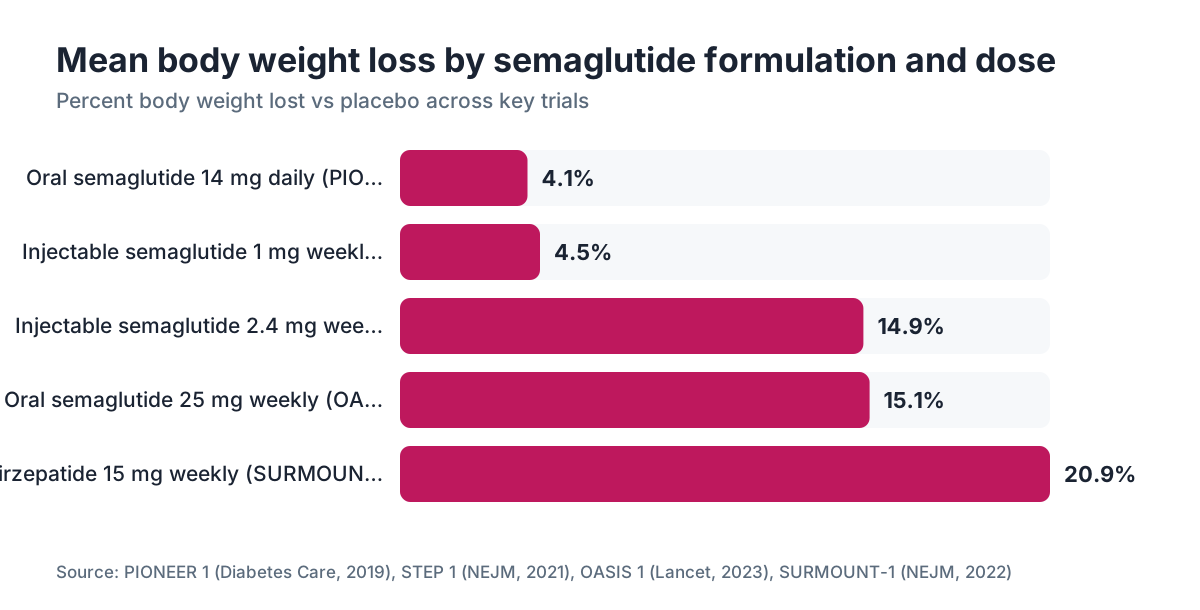
In the PIONEER 1 trial, people with type 2 diabetes taking 14 mg oral semaglutide lost about 4.1 kg (roughly 9 pounds) over 26 weeks, versus 0.5 kg on placebo [3]. Meaningful, but modest next to injectable semaglutide at 2.4 mg weekly (Wegovy), which produced 14.9% body weight loss over 68 weeks in STEP 1 [4].
The OASIS 1 trial changed the conversation. It tested a once-weekly 25 mg oral formulation in adults with obesity but without diabetes. Participants lost a mean of 15.1% of body weight over 68 weeks versus 2.4% on placebo [5]. That closes most of the gap between the pill and the injection.
So where does that leave you? At the Rybelsus doses you can actually get today (up to 14 mg daily), expect somewhere in the 4 to 7% range if you don't have diabetes, possibly more with real dietary change. The 25 mg weekly formulation is the one to watch. If it clears FDA approval for weight management, it would be the first high-efficacy oral GLP-1, which matters enormously for the large share of women who prefer pills over needles.
Semaglutide for weight loss covers the injection side of this comparison in detail if you want the full picture.
One benchmark worth holding onto: losing 5% of body weight lowers blood pressure, improves insulin sensitivity, and drops triglycerides. Ten percent or more starts to move metabolic disease risk in a real way. Those thresholds matter more than any single number on the scale.
How do oral semaglutide doses for weight loss work?
The approved Rybelsus titration starts low to hold down nausea and climbs slowly. The standard oral semaglutide dose for weight loss (or diabetes) runs: 3 mg once daily for 30 days, then 7 mg once daily for 30 days, then 14 mg once daily as maintenance [2].
The investigational 25 mg weekly formulation studied in OASIS 1 titrated differently, since it's weekly rather than daily. Those protocols escalated over roughly 16 weeks before hitting the target dose [5].
The administration rules are strict, and they genuinely matter for absorption. Take Rybelsus on an empty stomach with no more than 4 oz (120 mL) of plain water, then wait at least 30 minutes before eating, drinking anything else, or taking other medications [2]. That rule isn't arbitrary. Food and other liquids dilute SNAC and crater absorption. In pharmacokinetic testing, taking the pill with 240 mL of water instead of 120 mL cut bioavailability by roughly 30% [1].
Plenty of women find this window annoying, especially if they also take thyroid medication or blood pressure pills in the morning. It takes some rearranging but it's workable. What tends to help: set an alarm 45 minutes before you normally eat, take the pill the second it goes off, run your morning routine, then eat.
Miss a dose? Skip it and take the next one the following morning at the usual time. Never double up.
Oral semaglutide vs injectable semaglutide: which is better?
Neither one is universally better. They're different tools.
The injection (Ozempic at 0.5, 1, or 2 mg weekly; Wegovy at 2.4 mg weekly) has higher and more predictable bioavailability, and at its approved weight-loss dose of 2.4 mg it produced 14.9% weight loss in STEP 1 [4]. The oral form at currently approved doses (14 mg daily) produces less on average. At the investigational 25 mg weekly dose it pulls close.
| Form | Dose | Trial | Weight loss vs placebo | |---|---|---|---| | Oral (Rybelsus) | 14 mg daily | PIONEER 1 | ~4.1 kg (~9 lbs) in 26 wks [3] | | Injectable (Ozempic) | 1 mg weekly | SUSTAIN 6 | ~4.5 kg in 104 wks [6] | | Injectable (Wegovy) | 2.4 mg weekly | STEP 1 | 14.9% body weight in 68 wks [4] | | Oral 25 mg weekly (investigational) | 25 mg weekly | OASIS 1 | 15.1% body weight in 68 wks [5] |
Who should lean toward the pill? Women who hate needles, those with genuine needle phobia, anyone whose work or travel makes injection storage a hassle, and people who want to start with the least invasive option. The lower efficacy at current approved doses is a real trade-off, and plenty of women find it worth making.
Who should lean toward the injection? Anyone who needs maximum weight loss, who saw nothing on the oral form, or who has absorption problems (active GI disease, a history of bariatric surgery affecting the stomach) that would make even SNAC-assisted absorption unreliable.
See our full semaglutide vs tirzepatide comparison if you're also weighing Zepbound or Mounjaro.
What are the side effects of oral semaglutide?
The side effect profile tracks injectable semaglutide closely, because the active molecule is the same. Nausea leads the list, hitting roughly 20% of people at the 14 mg dose in PIONEER trials [3]. It's usually worst in the first 4 to 8 weeks and fades for most as the body adjusts. Vomiting, diarrhea, and constipation round out the GI complaints. They're the whole reason for the slow dose climb.
The rarer but more serious risks:
Pancreatitis. The FDA label for Rybelsus carries a warning. Severe, persistent abdominal pain that radiates to your back means stop the medication and call a doctor the same day [2].
Thyroid C-cell tumors. Semaglutide carries a boxed warning based on rodent studies. The relevance in humans is uncertain, but anyone with a personal or family history of medullary thyroid carcinoma or Multiple Endocrine Neoplasia syndrome type 2 should not take it [2].
Gallbladder disease. Rapid weight loss from any cause, GLP-1s included, raises gallstone risk. SUSTAIN 6 noted more gallbladder events in semaglutide users than placebo [6].
Muscle loss. This one doesn't get enough airtime. GLP-1 medications cut overall calorie intake, and without enough protein and resistance work, a meaningful chunk of the weight you lose can come from lean mass instead of fat. Nobody has clean data on the split for oral versus injectable specifically, but the closest evidence, from STEP compositional analyses, put roughly 38% of weight lost as lean mass [4]. Eating 1.2 to 1.6 grams of protein per kilogram of body weight daily and training against resistance both push that ratio in a better direction.
For women in perimenopause or menopause, muscle and bone protection matters even more. Estrogen loss already speeds up decline in both, and aggressive calorie restriction compounds it. A bone density test before or during a GLP-1 course is a reasonable move if you're postmenopausal.
Is oral semaglutide FDA-approved for weight loss?
Not yet as a standalone weight-loss indication. As of mid-2025, Rybelsus (3 mg, 7 mg, 14 mg) is FDA-approved only for type 2 diabetes in adults [2]. Off-label prescribing for weight loss in people without diabetes happens, and it's legal, but it isn't the labeled use.
Novo Nordisk submitted the 25 mg weekly oral formulation to the FDA for an obesity indication on the strength of the OASIS 1 data. As of early 2025, that review was ongoing. Approval would make it the first oral GLP-1 with a weight-loss label, a real shift in how GLP-1 weight management gets practiced.
Insurance coverage follows the label. Most commercial plans and Medicare don't cover Rybelsus for weight loss, because there's no obesity indication. If you're using it off-label for weight management, plan on paying out of pocket or through a discount program. Cash prices for Rybelsus run roughly $900 to $1,000 per month without insurance, though manufacturer coupons and GoodRx can bring that down for eligible patients [7].
Compounded versions of oral semaglutide also exist. The compounded semaglutide article covers what to know about quality and regulatory status there.
How does menopause affect oral semaglutide weight loss results?
Menopause does not make GLP-1 medications stop working, but it changes the terrain you're working on, and that matters for setting expectations.
Estrogen decline pushes fat toward the abdomen. Visceral fat is metabolically active and harder to shift than subcutaneous fat. Insulin resistance tends to worsen through the years around menopause, partly from estrogen loss and partly from the muscle decline that starts in the 40s. Both make weight management harder.
GLP-1 medications act on appetite and glucose signaling, which are relevant regardless of menopausal status. No trial data shows oral semaglutide is less effective in postmenopausal women as a subgroup. The STEP trials included women across a wide age band and did not find efficacy vanishing after menopause, though older age tracked with somewhat lower weight loss in some analyses [4].
What genuinely complicates things is the overlap between GLP-1 side effects and menopause symptoms. Nausea, bloating, and altered bowel habits from semaglutide can be hard to separate from the gut changes perimenopause brings. And menopausal fatigue can make it harder to do the resistance training that protects muscle during GLP-1-driven weight loss.
Hormone replacement therapy, estrogen in particular, has its own effects on body composition and insulin sensitivity. Some clinicians pair HRT with GLP-1s in perimenopausal and postmenopausal women, on the logic that treating estrogen deficiency alongside appetite regulation gives a better metabolic result than either alone. The evidence for that exact combination is thin. Nobody has run a large randomized trial on HRT plus oral semaglutide. Mechanistically it holds together, and practices like WomenRx that work in both hormones and GLP-1s for women increasingly treat them side by side.
If you're on an estrogen patch or other HRT, keep the 30-minute Rybelsus window in mind. A transdermal patch change is fine, since patches don't cross the gut and don't compete with oral absorption the way pills do.
Who is a good candidate for oral semaglutide?
The clearest candidates are adults with type 2 diabetes who also carry excess weight and prefer a pill. Past that labeled indication, off-label use makes clinical sense for:
Adults with a BMI of 30 or above (or 27 or above with at least one weight-related condition like hypertension, sleep apnea, or dyslipidemia) who meet the criteria for drug-based weight management but want to skip injections [2].
Women in perimenopause or postmenopause who are gaining weight despite reasonable diet and exercise habits, and whose weight trajectory is dragging on their metabolic markers.
People who tried injectable semaglutide but hit injection-site reactions, injection anxiety, or storage headaches.
Who should not take it? Anyone with a personal or family history of medullary thyroid carcinoma or MEN2 syndrome, active pancreatitis or a strong pancreatitis history, pregnant or breastfeeding women, and anyone with severe GI motility disorders where gastric absorption would be unreliable [2].
Think carefully too if you have a history of an eating disorder. GLP-1 medications suppress appetite, which sounds helpful but can backfire if it leads to inadequate nutrient intake in someone with a history of restriction. Raise it explicitly with your prescriber.
Age alone is not a disqualifier. The PIONEER and OASIS trials included participants across a wide age range, and GLP-1 receptor expression does not fall off meaningfully with age.
How does oral semaglutide compare to other weight loss medications?
Oral semaglutide at currently available doses sits in the middle of the pack. Here's how it lines up against the options women actually get prescribed:
| Medication | Type | Typical weight loss | Route | |---|---|---|---| | Rybelsus 14 mg | GLP-1 agonist | ~4 to 7% | Oral daily | | Oral semaglutide 25 mg (investigational) | GLP-1 agonist | ~15.1% | Oral weekly | | Wegovy 2.4 mg | GLP-1 agonist | ~14.9% | Injection weekly | | Zepbound/Tirzepatide 15 mg | GIP + GLP-1 agonist | ~20.9% | Injection weekly | | Phentermine/topiramate (Qsymia) | Stimulant + anticonvulsant | ~8 to 10% | Oral daily | | Naltrexone/bupropion (Contrave) | Opioid antagonist + antidepressant | ~4 to 6% | Oral daily |
Tirzepatide (Zepbound for obesity, Mounjaro for diabetes) sits at the top for weight loss, at about 20.9% at the highest dose in SURMOUNT-1 [8]. If efficacy is your first priority and you're fine with injections, that's the leader right now.
Oral semaglutide at approved doses lands closer to the older oral drugs on weight loss magnitude, but its mechanism is generally better tolerated than phentermine-based drugs, which act on the central nervous system and carry cardiovascular and addiction-risk concerns.
The oral GLP-1 space isn't standing still. Eli Lilly's oral tirzepatide and orforglipron (Eli Lilly's non-peptide oral GLP-1) are in late trials, so the next two to three years should bring genuine choices in the oral weight-loss category.
What does oral semaglutide cost and is it covered by insurance?
Rybelsus list price runs about $900 to $1,000 per month in the US without insurance [7]. That's the same for all three doses (3 mg, 7 mg, 14 mg), since the price is per month of supply, not per milligram.
Coverage for Rybelsus is reasonably good when it's used for its approved diabetes indication. Many commercial plans cover it with a prior authorization requiring a documented diabetes diagnosis and often a metformin trial first. Medicare Part D covers it for diabetes.
For off-label weight loss in people without diabetes, coverage is much harder to get. Most plans exclude GLP-1s for obesity unless the plan specifically buys weight management coverage, which is still rare. The Treat and Reduce Obesity Act (introduced in Congress, not yet passed as of early 2025) would let Medicare cover FDA-approved obesity medications, but it has not become law [9].
Novo Nordisk's savings card for Rybelsus can drop cost to around $10 to $99 per month for commercially insured patients who qualify. GoodRx and similar programs can bring the cash price down to roughly $800 to $850 per month at many pharmacies [7]. Neither option helps Medicare or Medicaid beneficiaries.
If cost is the sticking point, ask your prescriber about the 14 mg dose specifically. Since every Rybelsus dose costs the same per month, you want the highest dose your tolerability allows for the money.
What lifestyle changes work best alongside oral semaglutide?
GLP-1 medications don't replace behavior change. Every trial that showed strong results paired the drug with lifestyle counseling [3][4][5]. The medication does most of the appetite work, but what you eat during that reduced-appetite window still decides a lot.
Protein is probably the single most useful dietary lever. High protein intake holds onto lean muscle during calorie restriction and has a higher thermic effect than fat or carbohydrate, so your body burns more just processing it. A reasonable target is 1.2 to 1.6 grams per kilogram of current body weight per day. For a 180-pound (82 kg) woman, that's roughly 98 to 131 grams of protein daily. It takes intention to hit.
Resistance training two to three times a week matters for the same muscle-preservation reason. You don't need a gym. Bodyweight moves, resistance bands, and dumbbells all count. The STEP 5 trial (104 weeks of 2.4 mg semaglutide) did not require participants to lift, and the average weight lost was 15.2%, so the drug works without exercise. But the composition of that loss is the point. Training shifts the fat-to-muscle ratio in your favor.
Alcohol is worth a mention. Many people on semaglutide report weaker alcohol cravings, a known effect of GLP-1 receptor agonism in the brain's reward circuitry. That can be a bonus, but it also means some people drink much less and don't realize it changes their tolerance. Go slow if you drink.
Sleep and stress aren't fads here. Cortisol from chronic stress drives visceral fat and can blunt the weight loss response. Poor sleep raises ghrelin (the hunger hormone) and lowers leptin (the satiety hormone), working directly against what semaglutide is trying to do.
How long do you have to take oral semaglutide to keep the weight off?
This is the most important question in GLP-1 conversations, and the one most often glossed over.
Weight comes back. The STEP 4 trial (injectable semaglutide) showed people who stopped after 20 weeks regained about two-thirds of their lost weight within a year [10]. There's no reason to think oral semaglutide behaves differently. GLP-1 medications work by continuously adjusting appetite and glucose signaling. Stop taking them and those signals drift back toward baseline.
So oral semaglutide weight loss is a long-term, likely indefinite treatment for most people, not a short course. That has real consequences for cost, monitoring, and expectations. Framing it as a "course" that ends once you hit goal weight sets you up for disappointment.
The Endocrine Society's clinical practice guideline on obesity treatment supports long-term drug therapy when medications are effective and well-tolerated, treating obesity as the chronic condition it is rather than something to fix and walk away from [11].
Some people do hold onto meaningful loss after stopping, especially if they built durable eating and exercise habits during the medicated stretch. That's not the average outcome. Plan for long-term use and let that shape your decision.
WomenRx can help you think through combining GLP-1 therapy with hormone management if you're in perimenopause or postmenopause and want a fuller picture of what's driving your weight and metabolic changes.
Frequently asked questions
Can I take oral semaglutide if I don't have type 2 diabetes?
Yes, but it's off-label. Rybelsus (up to 14 mg) is only FDA-approved for type 2 diabetes, so prescribing it for weight loss in people without diabetes is legal but outside the label. A 25 mg weekly oral formulation is in regulatory review for obesity specifically. Off-label use is common, but insurance rarely covers it for obesity without a diabetes diagnosis.
How is oral semaglutide different from Ozempic or Wegovy?
Same molecule, different delivery. Ozempic and Wegovy are subcutaneous injections given weekly. Rybelsus is a daily pill. The injectable forms have higher, more predictable bioavailability. At currently approved doses the pill produces less weight loss on average, though the investigational 25 mg weekly oral form matched injectable Wegovy results in OASIS 1 at 15.1% body weight loss.
What happens if I eat before taking oral semaglutide?
Absorption drops sharply. The SNAC mechanism needs an empty stomach and only 4 oz of plain water. Food, drinks other than water, or a larger water volume reduce bioavailability by roughly 30% or more in pharmacokinetic testing. Take it the moment you wake up, wait at least 30 minutes before eating or drinking anything else, and keep that window consistent every day.
Will oral semaglutide cause muscle loss?
It can, if protein intake and resistance exercise fall short. Compositional analysis from injectable semaglutide trials put roughly 38% of weight lost as lean mass. The oral form likely carries similar risk. The practical fix is eating 1.2 to 1.6 grams of protein per kilogram of body weight daily and doing resistance training two to three times per week.
Can oral semaglutide and HRT be taken together?
Yes, and many clinicians combine them. There are no known pharmacokinetic interactions between semaglutide and estrogen or progesterone. Transdermal HRT (patches, gels, creams) doesn't cross the gut, so it doesn't compete with Rybelsus's 30-minute absorption window. Oral hormone pills do need to be spaced 30 minutes after Rybelsus, like any oral medication.
How long does it take for oral semaglutide to work?
Most people notice reduced appetite within one to two weeks of reaching the 7 mg or 14 mg dose. Measurable weight loss usually shows up by week four to eight. The full effect at a given dose takes about 10 to 14 weeks to settle. Trials ran 26 to 68 weeks to capture meaningful weight outcomes, so patience and consistency matter.
Is oral semaglutide safe for older women?
Age alone is not a contraindication. GLP-1 receptor expression doesn't fall off sharply with age, and trials included participants into their 60s and 70s. The main extra consideration for older women is losing muscle and bone during weight loss, which is a bigger risk at baseline after menopause. Pair the medication with adequate protein, resistance exercise, and bone density monitoring.
What is the maximum oral semaglutide dose approved by the FDA?
The highest FDA-approved Rybelsus dose is 14 mg once daily for type 2 diabetes. There is no FDA-approved oral semaglutide dose specifically for obesity as of mid-2025. The 25 mg and 50 mg weekly formulations are investigational and under review. Taking more than the labeled dose isn't recommended. More is not better with GLP-1s, and side effects climb.
Does oral semaglutide cause hair loss?
Hair shedding (telogen effluvium) has been reported with injectable semaglutide and is likely a consequence of rapid calorie restriction and weight loss rather than a direct drug effect. The same risk exists with the oral form. It typically starts two to four months after significant weight loss begins and usually resolves on its own within six months without stopping the medication.
Can oral semaglutide be compounded?
Compounded oral semaglutide exists but sits in a complicated regulatory position. The FDA has not authorized compounding of oral semaglutide the way it briefly allowed compounded injectable semaglutide during the shortage period. Quality control, SNAC co-formulation accuracy, and absorption consistency are real concerns with compounded oral versions. If cost is the driver, the manufacturer savings card is a safer route.
What should I do if I vomit after taking oral semaglutide?
Don't retake the dose that day. The drug has already touched your stomach lining and some portion likely absorbed. Retaking it raises nausea and vomiting risk. If vomiting consistently happens in the first 30 to 60 minutes after the pill, tell your prescriber. They may slow the titration, add an antiemetic for the first few weeks, or check your timing and food interactions.
How does oral semaglutide affect blood sugar in women without diabetes?
It lowers fasting glucose and post-meal spikes even in people without diabetes, through the same mechanism it uses in diabetics: stimulating insulin release in response to food and slowing gastric emptying. Dangerously low blood sugar is rare in people without diabetes because GLP-1 receptor agonists trigger insulin release in a glucose-dependent way, so when blood sugar is already low, the signal is minimal.
Is there a generic oral semaglutide available?
No generic exists as of mid-2025. Rybelsus's core patent protection runs through the late 2020s in the US. Novo Nordisk has filed additional patents on the SNAC formulation and administration method. Generic entry isn't likely before the early 2030s. Near-term cost relief comes from manufacturer savings programs, insurance coverage for diabetes, or future approval of competing oral GLP-1 molecules.
Can oral semaglutide interact with thyroid medication?
No direct pharmacokinetic interaction between semaglutide and levothyroxine is documented. The issue is timing. Both work best on an empty stomach. Standard guidance is Rybelsus first, wait 30 minutes, then levothyroxine, then wait another 30 to 60 minutes before eating. That stretches the fasting window to about 60 to 90 minutes total. Inconvenient, but workable with an early alarm.
Sources
- Buckley ST et al., 'Transcellular stomach absorption of a derivatized glucagon-like peptide-1 receptor agonist,' Science Translational Medicine 2018
- FDA, Rybelsus (semaglutide) Prescribing Information
- Aroda VR et al., PIONEER 1 trial, Diabetes Care 2019
- Wilding JPH et al., STEP 1 trial, New England Journal of Medicine 2021
- Knop FK et al., OASIS 1 trial, The Lancet 2023
- Marso SP et al., SUSTAIN 6 trial, New England Journal of Medicine 2016
- GoodRx, Rybelsus price information
- Jastreboff AM et al., SURMOUNT-1 trial, New England Journal of Medicine 2022
- US Congress, Treat and Reduce Obesity Act, congress.gov
- Rubino D et al., STEP 4 trial, JAMA 2021
- Endocrine Society, Clinical Practice Guideline: Pharmacological Management of Obesity