Normal testosterone levels for women: what the ranges actually mean
TL;DR: Most labs set the normal testosterone range for women at roughly 15 to 70 ng/dL total testosterone, though some references extend to 82 ng/dL. Levels drop about 50% between your 20s and menopause. Low testosterone is common and real, but no FDA-approved female testosterone product exists in the U.S., so treatment decisions require careful clinical judgment.
What is the normal range for testosterone in women?
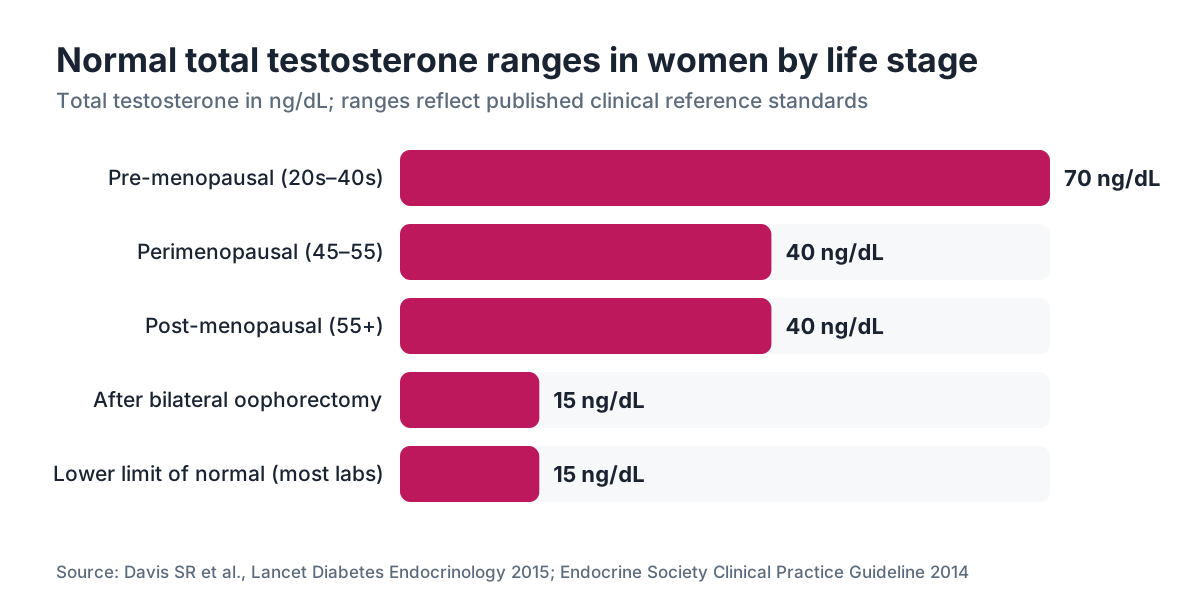
The short answer: total testosterone in adult women normally runs between 15 and 70 ng/dL, depending on the lab and the assay used [1]. Some reference ranges extend to 82 ng/dL. Free testosterone, the biologically active fraction not bound to sex hormone-binding globulin (SHBG), sits much lower, typically 0.3 to 1.9 pg/mL, though assay variation makes free T numbers hard to compare across labs [2].
Those numbers matter less than the context. A 42-year-old in the luteal phase of her cycle reads differently from a 58-year-old who is post-menopausal. Testosterone fluctuates across the menstrual cycle, peaking near ovulation. It also follows a 24-hour rhythm, highest in the morning, which is why labs almost always instruct women to draw blood before 10 a.m. A single number from a noon blood draw could look artificially low.
Nobody should treat a lab value in isolation. Symptoms plus labs together are what matter clinically.
How do testosterone levels change with age and menopause?
Testosterone in women peaks somewhere in the mid-20s and then declines gradually. By the time a woman reaches her 40s, her total testosterone is often 50% of what it was at peak [9]. This is not a menopause-specific drop the way estrogen is. Estrogen falls sharply at menopause; testosterone tracks a slower, more linear decline that starts well before perimenopause.
The ovaries make about 25% of circulating testosterone directly. The adrenal glands contribute another 25%. The remaining 50% comes from peripheral conversion of precursor hormones like DHEA and androstenedione in tissues such as fat, muscle, and skin [3]. After natural menopause, the ovaries actually continue making testosterone because LH stimulation persists, sometimes at levels comparable to before. Surgical menopause, removing both ovaries, is a different story: testosterone drops acutely by roughly 50% almost overnight [3].
Perimenopause is its own complicated window. Estrogen fluctuates wildly, SHBG rises and falls, and the free testosterone picture shifts even when total T looks stable. Women in their 40s experiencing low libido, fatigue, and poor recovery from exercise sometimes have total T values that look "normal" on paper but free T values that are actually low. This is why many endocrinologists look at free T and SHBG alongside total T. See our article on perimenopause age for more on what happens hormonally during this window.
What counts as low testosterone in women?
There is no universally agreed lower threshold for female testosterone deficiency. The Endocrine Society's 2014 clinical practice guideline acknowledged this directly, noting that a "biochemical definition of androgen deficiency in women has not been established" because reference ranges vary so much by assay method [2]. That same guideline did not recommend routine testing of total or free testosterone in women with sexual dysfunction precisely because of this uncertainty.
Practically speaking, most clinicians consider total testosterone below 15 ng/dL to be low, and some use 20 or 25 ng/dL as a clinical flag, particularly when symptoms are present. Symptoms associated with low testosterone in women include reduced libido, diminished arousal, persistent fatigue that does not improve with rest, loss of lean muscle mass despite exercise, and mood changes, particularly blunted motivation [4].
Women who have had both ovaries removed (bilateral oophorectomy) are at highest risk for acute testosterone deficiency. Women on oral estrogen therapy also often see their SHBG rise sharply, which binds more testosterone and lowers free T even when total T looks fine. This is one reason transdermal estrogen is sometimes preferred in women who also have androgen insufficiency. You can read more in our hormone replacement therapy overview.
The honest caveat: none of these symptoms are specific to low testosterone. Thyroid dysfunction, iron-deficiency anemia, sleep disorders, and depression can produce the same picture. Low T should be on the differential, not at the top of it automatically.
What will testosterone do for women who have low levels?
The evidence is most solid in one area: sexual function. A 2019 systematic review and meta-analysis published in The Lancet Diabetes and Endocrinology analyzed 36 randomized controlled trials involving over 8,000 women and found that testosterone therapy significantly improved sexual function scores, including desire, arousal, orgasm frequency, and satisfaction, compared with placebo or estrogen alone [4]. The effect size was clinically meaningful, more than statistically detectable.
Beyond libido, the picture is less settled. There is reasonable evidence from smaller trials that testosterone preserves bone density in post-menopausal women and supports lean muscle mass [3]. The data on mood, cognitive performance, and energy are mixed. Some women report dramatic improvements in all three; the controlled trial evidence does not consistently back that up, which does not mean the effect is not real, only that it is harder to isolate from everything else going on in a woman's life.
What testosterone does not do: it does not cause cardiovascular harm at physiologic doses in women, based on current evidence, though long-term data beyond two years are limited [4]. Supraphysiologic doses, meaning levels that push into or above the male range, carry real risks including acne, clitoral enlargement, voice changes that may be permanent, and adverse lipid shifts. Keeping total testosterone within the normal female range is the explicit goal of responsible prescribing.
How is testosterone measured, and why do different labs give different numbers?
Testosterone is measured in blood serum, almost always. The two main assay types are immunoassay (IA) and liquid chromatography-mass spectrometry (LC-MS/MS). Immunoassays are faster and cheaper, used by most commercial labs. Mass spectrometry is more accurate at low concentrations, which is exactly where female testosterone lives. A total T of 30 ng/dL read by immunoassay might be 22 ng/dL by mass spec, or vice versa [2].
This is not a minor technical detail. The Endocrine Society has for years called for mass spectrometry to be the standard for measuring testosterone in women and children for exactly this reason [2]. If your lab result came from a standard immunoassay, the absolute number is less reliable than if it came from LC-MS/MS. Quest Diagnostics and a few academic medical centers offer mass spec-based panels. When comparing your results over time, make sure you're comparing values from the same assay type at the same lab.
Free testosterone is even harder. Most "free T" results from commercial labs are actually calculated from total T and SHBG using an equation, not directly measured. Direct analog immunoassays for free T are widely considered inaccurate at female levels. If your clinician is making major treatment decisions based on a free T number, ask what method was used.
Timing matters just as much. Draw blood in the morning, ideally day 8 to 20 of the menstrual cycle if you are still cycling (to capture a mid-follicular or periovulatory value, not the nadir of menstruation).
What are the reference ranges by age and cycle phase?
The table below reflects reference ranges from published clinical guidance and major lab standards. These are approximations; your lab's reference sheet is the authoritative comparison for your specific result [1][2].
| Group | Total Testosterone (ng/dL) | Free Testosterone (pg/mL) | |---|---|---| | Pre-menopausal (20 to 49) | 15 to 70 | 0.6 to 6.7 | | Perimenopausal (~45 to 55) | 7 to 40 | 0.5 to 3.5 | | Post-menopausal (>55) | 7 to 40 | 0.4 to 2.5 | | After bilateral oophorectomy | Often <15 | Often <0.3 | | On oral estrogen (any age) | Total may be normal; free often low due to elevated SHBG | Variable |
SHBG is the wildcard in every row. A woman with a total T of 45 ng/dL and an SHBG of 120 nmol/L (very high, common on oral estrogen or with thyroid disease) may have less biologically available testosterone than a woman with total T of 25 ng/dL and SHBG of 40 nmol/L. Calculate free T or use the free androgen index if SHBG is elevated.
The free androgen index (FAI) is calculated as total T (nmol/L) divided by SHBG (nmol/L), multiplied by 100. Normal female FAI is roughly 0.5 to 5.0, with values below 1 often considered consistent with androgen insufficiency in symptomatic women. This is not a universally adopted standard, but it is a useful clinical tool.
Is there an FDA-approved testosterone treatment for women?
No. As of mid-2025, the FDA has not approved any testosterone product specifically for use in women in the United States [5]. This does not mean testosterone is not used, or that such use is experimental or reckless. It means the commercial incentive to run expensive approval trials has never materialized because no pharmaceutical company has successfully brought a product through that process for this indication.
In other countries, the picture is different. Australia's TGA approved Androfeme 1% (a testosterone cream) for women in 2019. The British Menopause Society and NICE guidance in the UK recognize testosterone for hypoactive sexual desire disorder (HSDD) in post-menopausal women and allow prescribing of male-labeled products off-label [6].
In the U.S., women who are prescribed testosterone typically receive one of these:
- Off-label use of low-dose male testosterone gels or creams (applied at doses much lower than male dosing)
- Compounded testosterone preparations, custom-made by compounding pharmacies at female-appropriate doses
- Testosterone pellets, also compounded
Compounded products are not FDA-approved but are legal under physician supervision. The quality and consistency of compounding pharmacies varies, so asking whether your pharmacy is PCAB-accredited or 503B-registered matters. You can learn more about testosterone compounding in the context of female hormones through our broader piece on hormone replacement therapy.
The Endocrine Society's 2014 guideline recommended against routine testosterone prescribing in pre-menopausal women and stated that prescribing should be limited to post-menopausal women with HSDD [2]. The 2019 Global Consensus Position Statement on the Use of Testosterone Therapy for Women, co-signed by major menopause societies including NAMS, took a more affirmative stance, endorsing testosterone for post-menopausal women with HSDD based on the evidence base that then existed [4].
NAMS's own position: the North American Menopause Society has stated that "testosterone therapy in women is not FDA-approved" but recognizes that "evidence supports use in carefully selected post-menopausal women" with sexual dysfunction [6].
What are the risks of testosterone therapy in women?
At physiologic doses, meaning doses that keep total T within the normal female range, the side effect profile is manageable and generally reversible. The most common issues are acne and increased facial or body hair. Both typically resolve when doses are lowered. Voice deepening and clitoral enlargement are risks primarily at supraphysiologic doses and may not fully reverse after stopping [4].
Cardiovascular safety data in women are limited beyond two years of follow-up. The 2019 Lancet meta-analysis found no significant adverse cardiovascular signals in trials up to 24 months [4]. Longer-term data simply do not exist at scale. Women with existing cardiovascular disease should discuss this gap with their cardiologist before starting.
Breast cancer risk is one of the most common questions women ask. Current evidence does not show an elevated breast cancer risk with physiologic testosterone therapy, and some researchers have theorized a protective effect, but the trials are not powered to answer this definitively [3][4]. Women with estrogen receptor-positive breast cancer history are generally advised to avoid all hormonal therapies; the testosterone question in this population remains unresolved.
Polycythemia (elevated red blood cell count) is a recognized risk of testosterone therapy, more commonly seen in men at male doses but possible in women at higher doses. A baseline hematocrit and periodic follow-up labs are reasonable in anyone on ongoing therapy.
Menopause-related bone loss is a related concern: low testosterone is associated with lower bone density. If you have questions about monitoring that, our bone density test article explains what to expect from a DEXA scan.
How is testosterone therapy different from DHEA or other supplements?
DHEA (dehydroepiandrosterone) is a precursor hormone that the body converts to both testosterone and estrogen. It is available over the counter in the U.S. as a supplement and also as a prescription product called Intrarosa (prasterone) for vaginal atrophy. Taking oral DHEA does raise testosterone levels in women, but the conversion is unpredictable and varies widely between individuals, so the dose-to-outcome relationship is unreliable compared with direct testosterone administration [3].
Intrarosa at 6.5 mg vaginal insert, the FDA-approved dose, has a primarily local effect on vaginal tissue and raises serum testosterone modestly. It is not the same as systemic testosterone therapy and should not be used interchangeably.
Over-the-counter testosterone "booster" supplements, usually a mix of zinc, ashwagandha, fenugreek, and similar botanicals, have minimal evidence behind them for raising testosterone in women. A few small trials on ashwagandha show improvements in female sexual function that may be independent of any testosterone effect [7]. Fenugreek has a couple of small trials suggesting modest testosterone-raising effects. Neither is at a level of evidence where I would recommend them over medically supervised therapy for someone with genuinely low T.
Bioidentical hormone pellets marketed directly to consumers deserve a note of caution. Pellet therapy delivers testosterone in a depot that cannot be adjusted once implanted. If a dose turns out to be too high, the only option is to wait for it to metabolize, which can take months. Fluctuating levels during that time can be significant. This is not an argument against pellets categorically, but variable dosing without easy correction is a real clinical limitation.
When should you actually get your testosterone checked?
You do not need routine testosterone testing as a screening exercise. It makes sense to check when you have specific symptoms that could plausibly relate to androgen insufficiency: persistent low libido despite a stable relationship and adequate sleep, unusual fatigue that has no other explanation after basic workup, significant muscle loss despite consistent training, or after a bilateral oophorectomy where the risk is highest and most acute [2].
If you are already on estrogen therapy, particularly oral estrogen, and you develop any of those symptoms, checking SHBG alongside total T is smart because the oral route specifically elevates SHBG and can suppress free testosterone even when the total looks fine. Switching to a transdermal route like a patch or gel often helps this, sometimes without needing to add testosterone at all. See our piece on the estrogen patch for more on delivery method differences.
Testing probably is not the first step if you have untreated depression, significant sleep disruption, thyroid dysfunction, or a new medication that suppresses libido (SSRIs, hormonal contraceptives, opioids, and beta-blockers are common culprits). Work through those first before attributing symptoms to low T.
If you do decide to get tested, ask for morning blood draw, total testosterone by mass spectrometry if available, SHBG, and free testosterone (calculated or directly measured). A prolactin level and thyroid panel at the same time give a fuller picture. WomenRx clinicians review exactly this kind of panel when women come in asking about androgens and can help interpret results in the context of your full hormonal picture.
How do testosterone and estrogen work together in women's health?
Testosterone and estrogen are not opponents. In women, they work together across multiple tissue systems. Bone needs both for maintenance; estrogen primarily prevents resorption while testosterone supports formation [3]. The brain has androgen receptors in regions involved in motivation, arousal, and mood regulation, separate from but complementary to estrogen's effects. Muscle and connective tissue respond to androgens for protein synthesis and recovery. Skin and the vaginal mucosa have receptors for both.
When women go through surgical menopause and lose both hormones acutely, the combined effect on bone, mood, libido, and cognition is substantially worse than natural menopause. This is one reason both the Endocrine Society and NAMS have emphasized that women who have bilateral oophorectomy before natural menopause deserve particular attention to androgen as well as estrogen replacement [2][3].
Progesterone's relationship to androgens is also relevant. Some synthetic progestins (particularly nandrolone-derived ones like levonorgestrel and norethindrone) bind androgen receptors and can have androgenic side effects. If you are having acne or hair changes on a combined hormone therapy, the progestin choice may be the issue, not testosterone. Our progesterone article covers how to think through progestin selection. For a broader map of how menopause affects all these hormones together, the menopause overview is a good starting point.
What's the best testosterone approach for women with low levels?
The best testosterone approach for any given woman depends on her specific situation: whether she is pre- or post-menopausal, what her SHBG looks like, whether she is on estrogen, and what her primary symptoms are.
For post-menopausal women with HSDD and documented low testosterone, the Global Consensus Statement and NAMS support a therapeutic trial of testosterone, with the target being serum levels within the normal pre-menopausal female range rather than male-range values [4][6]. That usually means total T between 15 and 70 ng/dL. Monitoring labs at 3 to 6 months after starting, then annually, is standard practice.
Delivery method matters. Transdermal (cream, gel, patch) applied to inner arm or thigh provides steady absorption. Pellets work but are non-adjustable once placed. Oral testosterone is generally not used because of liver first-pass metabolism effects and variable conversion.
Starting dose is low: for compounded creams, doses typically run 0.5 to 2 mg per day, compared with male doses of 50 to 100 mg per day. The goal is the lowest effective dose that keeps labs in the female range and relieves symptoms.
For pre-menopausal women, the evidence base is thinner and the Endocrine Society currently does not recommend routine prescribing. That does not mean premenopausal women cannot have clinically meaningful low testosterone, particularly after oophorectomy. It means the trial evidence in this group has not been as systematically collected.
Frequently asked questions
What is the normal testosterone range for women in ng/dL?
Most lab reference ranges set normal total testosterone for adult women at 15 to 70 ng/dL. Some labs extend the upper end to 82 ng/dL. Post-menopausal women typically run lower, often 7 to 40 ng/dL. The exact number matters less than whether it was measured accurately (ideally by mass spectrometry, in the morning) and how it fits your symptoms and SHBG level.
What is considered low testosterone in women?
There is no universally agreed cutoff. Most clinicians use total testosterone below 15 to 25 ng/dL as a clinical flag in symptomatic women. The Endocrine Society notes that a formal biochemical definition of female androgen deficiency has not been established, which is why symptoms must accompany the number. Women after bilateral oophorectomy often land below 15 ng/dL and are at highest risk for meaningful deficiency.
What are the symptoms of low testosterone in women?
The most documented symptom is reduced sexual desire and arousal, sometimes called hypoactive sexual desire disorder (HSDD). Women also commonly report persistent fatigue, reduced muscle mass despite exercise, blunted motivation, and decreased sensitivity. None of these are specific to testosterone alone, so ruling out thyroid issues, anemia, depression, and sleep problems first is important before attributing symptoms to low T.
Does testosterone decrease at menopause?
Not sharply the way estrogen does. Testosterone follows a slow, linear decline starting in the 20s and continuing into the 50s and 60s, so by menopause levels may already be 50% of peak. Natural menopause does not cause an acute testosterone drop because LH continues to stimulate ovarian testosterone production. Surgical menopause from bilateral oophorectomy does cause an acute drop of roughly 50%, making it a higher-risk situation.
Can testosterone therapy improve energy and mood in women?
The controlled trial evidence for energy and mood improvements is inconsistent: some trials show benefit, others find no statistically significant effect compared with placebo. The evidence for improved sexual function is much stronger. Many women and clinicians report subjective improvements in energy and motivation at physiologic doses. That does not mean the effect is not real, only that it is harder to isolate in trials given everything else that shapes mood and energy.
Is there an FDA-approved testosterone treatment for women?
No, not in the United States as of mid-2025. Australia approved Androfeme 1% cream for women in 2019. In the U.S., women who receive testosterone do so via off-label use of male-labeled products at much lower doses or via compounded preparations. NAMS and the Global Consensus Position Statement support this use in post-menopausal women with HSDD, even without FDA approval.
What will testosterone do for women sexually?
A 2019 meta-analysis of 36 randomized trials in The Lancet Diabetes and Endocrinology found testosterone significantly improved sexual desire, arousal, orgasm frequency, and overall satisfaction in women compared with placebo. This is the strongest evidence base for testosterone therapy in women. The effect was meaningful in both post-menopausal women and those experiencing HSDD.
Can too much testosterone harm women?
Yes. Supraphysiologic doses, meaning levels above the normal female range, can cause acne, increased facial and body hair, voice deepening that may be permanent, and clitoral enlargement. Adverse lipid shifts and elevated hematocrit are also possible. At physiologic doses kept within the female reference range, the safety data available up to two years are reassuring, though long-term data beyond that remain limited.
How does SHBG affect testosterone levels in women?
SHBG (sex hormone-binding globulin) binds testosterone in the bloodstream, making it unavailable to tissues. High SHBG, common on oral estrogen, with hyperthyroidism, or in some individuals naturally, means more total testosterone is bound and less is free and active. A woman can have a normal total T but very low free T if SHBG is elevated. Always check SHBG alongside total T for a complete picture.
Should women test testosterone levels routinely?
No. Routine screening in asymptomatic women is not recommended by the Endocrine Society or NAMS. Testing makes sense when you have specific symptoms like persistent low libido, unexplained fatigue, or muscle loss, especially after oophorectomy or when starting or adjusting estrogen therapy. Ask for morning blood draw, total testosterone (mass spectrometry if possible), SHBG, and calculated free testosterone.
Does oral estrogen therapy affect testosterone levels?
Oral estrogen significantly raises SHBG, which binds more testosterone and lowers free T even when total testosterone looks normal. This is one reason some women develop symptoms of androgen insufficiency after starting oral estrogen despite never having low T before. Switching to transdermal estrogen (gel, patch, cream) often resolves this by avoiding the liver-first-pass effect that drives SHBG up.
What is the difference between total and free testosterone in women?
Total testosterone is all the testosterone in your blood, bound and unbound. Free testosterone is the small fraction not attached to SHBG or albumin, roughly 1 to 4% of total, and is the portion available to act on tissues. Free T is clinically relevant especially when SHBG is high. Most labs calculate rather than directly measure free T; mass spectrometry-based calculation is more reliable than analog immunoassay.
Can DHEA supplements raise testosterone levels in women?
Oral DHEA does raise testosterone in women because the body converts it peripherally, but the conversion varies widely between individuals, making the outcome unpredictable compared with direct testosterone therapy. Prescription intravaginal prasterone (Intrarosa) is FDA-approved for vaginal atrophy and has a primarily local effect. Over-the-counter DHEA supplements lack the quality control and dose precision of pharmaceutical-grade products.
How is compounded testosterone different from commercial testosterone products?
Compounded testosterone is custom-made by a pharmacy to a clinician's specification, typically at doses appropriate for women (0.5 to 2 mg per day in cream form versus 50 to 100 mg for men). No commercial testosterone product is FDA-approved for women in the U.S., so compounding is often the only option. Quality varies; look for pharmacies with PCAB accreditation or 503B status for better consistency and sterility standards.
Sources
- Mayo Clinic Laboratories, Test Reference Ranges for Testosterone, Total, Bioavailable, and Free
- Endocrine Society, Clinical Practice Guideline: Androgen Therapy in Women, 2014
- Davis SR et al., 'Testosterone in women: the clinical significance,' The Lancet Diabetes and Endocrinology, 2015
- Islam RM et al., 'Safety and efficacy of testosterone for women: a systematic review and meta-analysis of randomised controlled trial data,' The Lancet Diabetes and Endocrinology, 2019
- FDA, Approved Drug Products (Orange Book)
- North American Menopause Society (NAMS), Position Statement on Testosterone Therapy for Women
- Dongre S et al., 'Efficacy and Safety of Ashwagandha Root Extract in Improving Sexual Function in Women,' BioMed Research International, 2015
- Burger HG et al., 'A prospective longitudinal study of serum testosterone, dehydroepiandrosterone sulfate, and sex hormone-binding globulin levels through the menopause transition,' Journal of Clinical Endocrinology and Metabolism, 2000