Night sweats during menopause: causes, how long they last, and what actually helps
TL;DR: Menopause night sweats are drenching episodes of heat and sweating that wake you at night, caused by falling estrogen disrupting the brain's temperature control. About 75 to 80% of menopausal women get them, and they last a median of 7.4 years. Hormone therapy cuts them by 75 to 90%. Non-hormonal options like venlafaxine, fezolinetant, and CBT have real, smaller evidence behind them.
What exactly are menopause night sweats and why do they happen?
A menopause night sweat is more than feeling a little warm. You wake up soaked, sometimes needing to change your sheets or pajamas, heart pounding, then shivering as your skin cools. It disrupts sleep in a way ordinary warmth never does.
The mechanism starts in a small cluster of neurons in the hypothalamus called the thermoregulatory zone. In premenopausal women, this zone tolerates a fairly wide range of core body temperature before it triggers a heat-dissipation response. When estrogen drops, the zone narrows sharply, so even tiny temperature shifts set off a full sweat-and-flush response [1]. The North American Menopause Society (NAMS) describes hot flashes and night sweats as the same underlying event timed differently: daytime episodes are hot flashes; the same cascade during sleep is a night sweat [2].
Kisspeptin/neurokinin B/dynorphin (KNDy) neurons in the hypothalamus are the main drivers. Estrogen normally suppresses neurokinin B. When estrogen falls, neurokinin B activity climbs and signals the heat-dissipation network directly. This is why a drug that blocks neurokinin B receptors can reduce night sweats without touching your hormones. The FDA approved fezolinetant (Veozah), a neurokinin B antagonist, for vasomotor symptoms in 2023 [3], which confirms the pathway.
Night sweats sit in the category doctors call vasomotor symptoms (VMS), the same bucket as daytime hot flashes, because blood vessels dilate fast as part of the heat-release process. You feel a wave of heat, skin temperature spikes, you sweat, then blood vessels constrict and you're cold.
How common are night sweats in perimenopause and menopause?
Very common, and more common than most women expect. About 75 to 80% of women in the menopause transition report hot flashes or night sweats, according to the SWAN study (Study of Women's Health Across the Nation), which followed over 3,000 women over many years [4].
Prevalence peaks in the year before and the two years after the final menstrual period. It does not peak at the last period itself, which surprises women who assume things get worse and then flip to better overnight.
Ethnicity changes the picture. SWAN data show Black women report the highest prevalence and severity of VMS, followed by Hispanic women, then white women, then Chinese and Japanese women at the lower end. These are not small gaps, and they held up across the study's follow-up years [4].
Weight matters too. Higher body fat is tied to more frequent and more severe night sweats, partly because fat tissue insulates against heat dissipation. That's one reason women already in menopause and carrying extra weight find symptoms harder to control.
About 10 to 15% of women describe their night sweats as severely disruptive. They wake several times a night, sleep quality collapses, and daytime fatigue piles onto everything else the transition throws at them. For this group, lifestyle tweaks are genuinely not enough.
How long do menopause night sweats last?
Longer than the old advice claimed. For decades clinicians told women hot flashes and night sweats lasted "2 to 5 years." The SWAN data blew that up.
A 2015 analysis in JAMA Internal Medicine, drawing on SWAN, found the median total duration of frequent VMS was 7.4 years [5]. Women who started symptoms earlier in the transition, while still having periods, tended to have the longest run. Women who were already postmenopausal when symptoms began had shorter durations, around 3 to 4 years.
The timeline is deeply individual. Some women have night sweats for 2 to 3 years and then they're gone. Others are still managing them a decade after their last period. Black women in SWAN had a median VMS duration of about 10 years, the longest of any group studied.
Telling a woman "you'll be through this in two years" sets a false expectation. An honest timeline shapes treatment decisions, especially around hormone therapy, where duration of use factors into the benefit-risk math.
For a fuller picture of when the transition starts and what drives the timing, see our article on perimenopause age.
What does a night sweat actually feel like, and how is it different from other causes of sweating?
Most women describe a sudden onset: a wave of heat starting in the chest or face, spreading fast, sometimes with a racing heart or a jolt of anxiety. Sweating follows within seconds. The episode runs roughly 1 to 5 minutes, then chills set in as blood vessels clamp back down. In severe cases this cycle repeats two to ten times a night.
Not every night sweat comes from menopause. Before pinning them entirely on the transition, a clinician should think through infections (tuberculosis and HIV classically cause night sweats), lymphoma and other cancers, thyroid disease, certain drugs (tamoxifen, antidepressants, some blood pressure medications), and anxiety disorders. Menopausal VMS give themselves away by tracking with cycle changes and confirmed low estrogen. But night sweats paired with unexplained weight loss, fevers, or an abrupt start with no other transition symptoms need a workup.
Menopause night sweats also differ in pattern from ordinary temperature swings. They run more intense than the room could explain, they come in waves rather than steadily, and they're often heralded by that brief hot flush.
For women tracking symptoms carefully, the MENQOL questionnaire (Menopause-Specific Quality of Life) can quantify severity over time and is used in clinical trials.
What is the most effective treatment for night sweats in menopause?
Hormone therapy is the most effective treatment available, full stop. That's not a controversial position in the evidence base. It's the documented consensus of NAMS, the Endocrine Society, and the British Menopause Society.
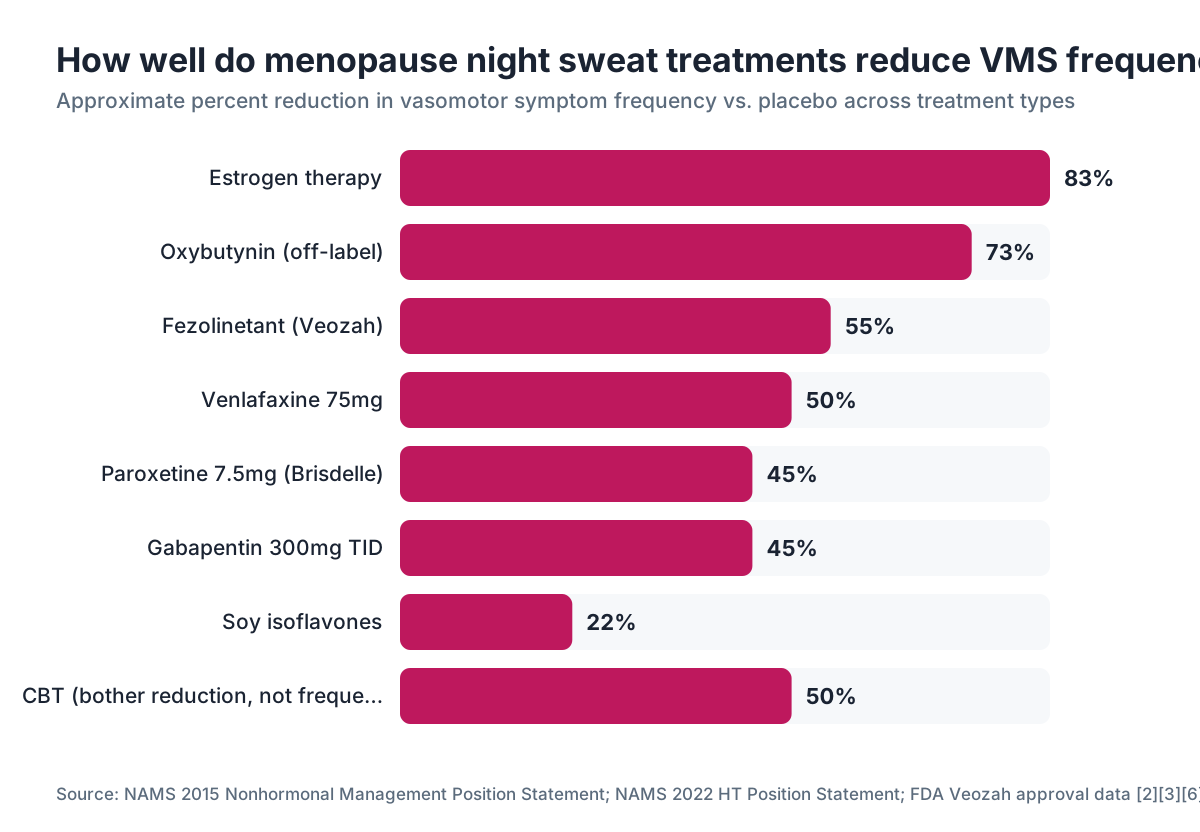
Estrogen (with progesterone for women who have a uterus) reduces the frequency and severity of VMS by 75 to 90% in clinical trials versus placebo [2]. Nothing else comes close to that effect size. Systemic estrogen, whether by pill, patch, gel, or spray, reaches the hypothalamus where the thermostat problem starts.
The estrogen patch is often the pick for women with cardiovascular risk factors because transdermal delivery skips first-pass liver metabolism, which matters for clotting risk. The 2022 NAMS position statement notes that transdermal estrogen does not appear to raise VTE (venous thromboembolism) risk the way oral estrogen does [2].
Women with a uterus need estrogen paired with progesterone or a progestin to protect the uterine lining. Micronized progesterone (Prometrium) is the bioidentical option and has a favorable safety signal in current evidence compared with synthetic progestins, though the gap is smaller than some compounding advocates claim.
A telehealth provider like WomenRx can assess your symptom severity, review your history, and prescribe hormone replacement therapy if you're a good candidate, without the wait for a specialty appointment.
For women who can't take hormones (estrogen-sensitive cancers, certain clotting disorders, some cardiovascular conditions), here are the non-hormonal options with real evidence:
| Treatment | Effect on VMS frequency | Notes | |---|---|---| | Fezolinetant (Veozah) | ~50 to 60% reduction [3] | FDA-approved 2023; non-hormonal; needs liver monitoring | | Venlafaxine 75mg | ~40 to 60% reduction [6] | SNRI; longest track record of the non-hormonal drugs | | Paroxetine 7.5mg (Brisdelle) | ~33 to 65% reduction [6] | Only FDA-approved SSRI for VMS; low-dose formulation | | Gabapentin 300mg TID | ~40 to 50% reduction [6] | Sedating; some use it specifically for night symptoms | | CBT (cognitive behavioral therapy) | Large drop in bother/sleep disruption [7] | Doesn't cut frequency but cuts impact | | Oxybutynin 2.5 to 5mg | ~73% reduction in one trial [8] | Anticholinergic; approved for bladder, used off-label for VMS | | Clonidine | Modest reduction | Side effects limit use; not a first-line choice |
Is hormone therapy safe for treating night sweats?
This is the question that kept women from effective treatment for over two decades, mostly because of how the 2002 Women's Health Initiative (WHI) results reached the public.
The WHI found a small increased absolute risk of breast cancer, heart disease, stroke, and blood clots in the group taking combined oral estrogen plus synthetic progestin (conjugated equine estrogen plus medroxyprogesterone acetate) [2]. The relative risk numbers sounded alarming. The absolute risk numbers were much smaller. For breast cancer, the WHI found an extra 8 cases per 10,000 women per year in the combined hormone group. That's a real risk, and it's roughly the same as the risk from one alcoholic drink a day.
Age reframes all of it. The WHI enrolled women with an average age of 63, many more than a decade past menopause. Later analyses of women who started hormone therapy in their 40s or early 50s, close to menopause onset, found a different and often more favorable risk profile, especially for cardiovascular outcomes. The Endocrine Society's 2015 Scientific Statement calls this the "timing hypothesis" or "window of opportunity": starting estrogen within 10 years of menopause or before age 60 looks more favorable on benefit-risk than starting later [9].
For most healthy women under 60 and within 10 years of menopause, NAMS concludes the benefits of hormone therapy outweigh the risks. The 2022 NAMS Hormone Therapy Position Statement states: "For women aged younger than 60 years or within 10 years of menopause onset and who have no contraindications, the benefit-risk ratio is favorable for treatment of bothersome VMS" [2].
Women with a personal history of hormone receptor-positive breast cancer, unexplained vaginal bleeding, active liver disease, or a history of blood clots generally should not take systemic estrogen without specialist input. Everyone else deserves an honest conversation about their own risk, not a reflexive no.
What lifestyle changes actually reduce night sweats?
Lifestyle changes help, but keep your expectations honest. They won't hand you the 75 to 90% reduction estrogen does. For mild symptoms, or as a complement to medical treatment, they earn their place.
Keep your bedroom cool. A room at 65 to 68°F (18 to 20°C) narrows the gap between your core temperature and the air, so the thermostatic overshoot matters less. Moisture-wicking sleepwear and cooling mattress toppers (the water-circulation kind) show benefit in small studies, though large trials are missing.
Cut evening triggers. Alcohol is the biggest dietary trigger for VMS in most surveys. It causes peripheral vasodilation and destabilizes thermostatic control directly. Caffeine and spicy food get reported often too, though that evidence is observational rather than experimental.
Weight loss reduces VMS severity. A trial published in Menopause in 2010 found women in a structured weight loss program had greater VMS reduction than controls [10]. The effect was modest, not dramatic, but it's a real secondary payoff of weight management in midlife.
Exercise is a mixed bag. Acute vigorous exercise can trigger a flash in the moment, yet regular moderate exercise tracks with lower VMS bother in observational data. The mechanism probably runs through better sleep and mood, not direct thermoregulation.
CBT built for hot flashes has the strongest evidence of any behavioral approach. It doesn't cut flash frequency, but it meaningfully reduces how much flashes wreck sleep and daily function, which for many women is the whole point [7].
For women thinking about weight management in the menopause years more broadly, our article on semaglutide for weight loss covers how GLP-1 medications fit in.
Do supplements or herbal remedies help with night sweats?
The honest answer: the data is weak, the effect sizes are small, and the supplement industry's marketing runs miles ahead of the science.
Black cohosh (Actaea racemosa) is the most studied herbal for VMS. The trials contradict each other. A 2006 Cochrane review and several trials since found no reliable benefit over placebo; a handful found modest benefit. Germany's Commission E has approved it for VMS, but the evidence in 2024 isn't convincing by pharmaceutical standards. There's also a small but documented risk of liver toxicity.
Phytoestrogens (isoflavones from soy, red clover) have weak estrogen-like activity. Meta-analyses suggest they cut hot flash frequency by about 20 to 25% versus placebo, real but small. The studies run short and use varying doses. For women with estrogen-sensitive cancers, the safety of concentrated isoflavone supplements is unclear.
Evening primrose oil, valerian root, and dong quai lack credible trial evidence for VMS.
Magnesium glycinate, sold everywhere for sleep, may improve sleep quality indirectly, but it doesn't touch the thermoregulatory mechanism behind night sweats.
Polypodium leucotomos and pycnogenol have a few small positive trials but nothing near the quality of evidence for approved treatments.
If you want to try a supplement, black cohosh or soy isoflavones sit closest to real, if modest, evidence. Skip them if you have a history of liver disease or hormone-sensitive cancer. And know this: the supplement you buy may not contain what the label says. The FDA does not regulate supplements for potency or purity the way it regulates drugs.
How do night sweats affect sleep and overall health?
Sleep disruption from night sweats is not a minor inconvenience. It compounds in serious ways.
Every time a night sweat wakes you, you lose the sleep architecture that repairs memory, regulates metabolism, and steadies mood. Women with frequent VMS show higher rates of insomnia, depression, and cognitive complaints in observational studies. Whether those mood and cognitive symptoms come from the broken sleep, from low estrogen directly, or from both is still being sorted out, but the cluster is real and consistent.
Cardiovascular health is in the picture too. A 2020 analysis in Menopause found women with frequent, severe VMS had more subclinical atherosclerosis markers than women with mild or no symptoms, independent of the usual cardiovascular risk factors [4]. That may mean VMS flag underlying cardiovascular vulnerability, more than a thermostat glitch.
Bone density belongs here as well. Sleep deprivation raises cortisol, which is catabolic for bone. So severe night sweats, by wrecking sleep, may add a second pathway to the bone loss that already speeds up around menopause. Women losing sleep to night sweats who carry other osteoporosis risk factors should ask their provider about a bone density test.
And the mental toll: chronic sleep loss from night sweats erodes quality of life month after month. Women who have managed severe night sweats for 3 to 4 years without effective treatment often arrive at an appointment saying they "feel like a different person." They aren't exaggerating. Sleep is not optional. Treating the night sweats is treating the sleep problem.
What should you ask your doctor about night sweats?
Come in with three things ready: a frequency count (how many times a night you're waking), a severity rating (mild inconvenience versus drenching and needing to change clothes), and how long it's been going on.
Questions worth raising:
Am I a candidate for hormone therapy? If a provider says no without discussing your specific health history and the current evidence, push back or get a second opinion. A blanket refusal built on 2002 WHI headlines is not current evidence-based medicine.
If I can't do estrogen, what's the strongest non-hormonal option? For most women without contraindications, that's fezolinetant or venlafaxine. Ask why they're recommending one over the other for your situation.
How long should I expect to use any treatment? There's no automatic expiration date on hormone therapy for healthy women. NAMS says therapy should not be stopped at an arbitrary age if the woman is still symptomatic and benefits still outweigh risks [2].
What are my options if my symptoms mainly disrupt sleep? Gabapentin at night, CBT for hot flashes, or tightening sleep hygiene alongside VMS treatment are all legitimate angles.
One more thing worth knowing: an FSH level above about 30 mIU/mL, together with symptoms and absent or irregular periods, generally confirms the menopause transition. But FSH testing alone isn't required to diagnose menopause. The diagnosis is clinical. For more on how it's diagnosed, see our article on when does menopause start.
Can night sweats be a sign of something other than menopause?
Yes. A clinician seeing a woman in her late 40s or 50s with night sweats should not default to menopause without working through the differential.
Conditions that cause night sweats on their own or alongside menopause:
Thyroid disease: hyperthyroidism speeds up metabolic rate and brings heat intolerance and sweating. A TSH is worth checking if there's any doubt.
Infections: tuberculosis is the classic cause of drenching night sweats. HIV and other chronic infections can present the same way.
Blood cancers: lymphoma (Hodgkin's and non-Hodgkin's) classically causes night sweats as part of the "B symptom" set, along with fever and unintentional weight loss. Night sweats with unexplained weight loss need evaluation before anyone blames menopause.
Medications: tamoxifen (used in breast cancer prevention and treatment) causes VMS by blocking estrogen. SNRIs, SSRIs, and some blood pressure drugs also cause sweating. If night sweats started with a new medication, the medication is the likely cause.
Anxiety and panic disorder: nocturnal panic attacks can look nearly identical to VMS.
Acid reflux, obstructive sleep apnea, and diabetes (from nighttime hypoglycemia) can also show up as night sweating.
Context separates these. Menopausal VMS usually come with other transition symptoms (irregular periods, vaginal dryness, mood changes), respond to estrogen, and line up with the expected timing of the menopause transition. If the picture doesn't fit, look further.
What are the treatment options if you want to avoid hormones?
Some women can't take hormones because of breast cancer history, clotting disorders, or personal preference. The non-hormonal toolkit has grown a lot in the last five years.
Fezolinetant (Veozah) is the newest and most targeted option. It's a neurokinin 3 receptor antagonist that blocks the pathway driving VMS at the hypothalamic level. In the SKYLIGHT clinical trials it reduced VMS frequency by roughly 50 to 60% versus placebo at the 45mg once-daily dose [3]. It requires liver enzyme monitoring, and it's expensive (US list price has been cited around $550 a month, though insurance coverage is widening). It's the right conversation if estrogen is genuinely off the table.
Venlafaxine (Effexor) at 75mg daily has the longest evidence track record of the non-hormonal drugs for VMS. It first surfaced as helpful for breast cancer survivors on tamoxifen and has been studied in many trials since. The effect is meaningful: about 40 to 60% reduction in frequency [6]. It needs a slow taper when you stop.
Paroxetine 7.5mg (Brisdelle) is the only SSRI formulation FDA-approved specifically for menopause VMS. Standard antidepressant doses of paroxetine run higher; this low-dose version was built to minimize side effects for VMS use [6].
Gabapentin 300mg three times daily has solid evidence for night sweats in particular, partly thanks to its sedating effect. It suits women whose main problem is nighttime waking.
Oxybutynin, an anticholinergic approved for overactive bladder, cut hot flash frequency by 73% in a trial published in Menopause in 2019 [8]. It's used off-label for VMS and can cause dry mouth and constipation.
CBT for hot flashes, delivered in groups or digitally, reduces the bother and sleep disruption from VMS without changing flush frequency. The MENOS trials in the UK showed meaningful quality-of-life gains [7].
For women managing weight and exploring GLP-1 medications alongside menopause symptoms, see our articles on semaglutide and semaglutide vs tirzepatide. Some early observational data hints that GLP-1 receptor agonists may modestly reduce VMS severity, likely through weight loss and metabolic effects, but this is not an approved use and the evidence is preliminary.
Frequently asked questions
How many times a night is considered severe for menopause night sweats?
Clinical trials typically define moderate-to-severe VMS as 7 or more moderate or severe episodes per 24 hours (day and night combined). If you're waking 3 or more times a night soaked or with real discomfort, most clinicians would call that severe. That level is a strong argument for medical treatment rather than lifestyle changes alone.
Can night sweats start before periods stop in perimenopause?
Yes, and it surprises many women. Night sweats often begin in perimenopause, sometimes years before the final period, when estrogen swings are unpredictable rather than consistently low. SWAN data show VMS peak around the final menstrual period, not years after. If you have irregular periods and night sweats in your 40s, you're likely in perimenopause, and the treatment options are the same.
Do night sweats eventually stop on their own?
For most women, yes, eventually. But the median duration is 7.4 years from the first frequent symptom, not the 2 to 3 years older guidance suggested. Some women, especially those who started symptoms early in the transition, have VMS for over a decade. Waiting them out is a valid choice, but knowing the realistic timeline helps you decide whether to treat.
Does drinking more water help with night sweats?
Staying well-hydrated supports general thermoregulation, but no clinical trial shows that drinking more water meaningfully cuts night sweat frequency or severity. Replacing fluids lost through sweating is sensible, and dehydration can worsen sleep, but hydration alone is not a treatment for menopause VMS.
Can night sweats affect my relationship or partner's sleep?
Absolutely, and it's underreported. Frequent waking, sheet changes, and temperature-related restlessness disrupt a partner's sleep too. Some couples switch to separate blankets or sleeping arrangements during the worst phases. That's practical, not a relationship problem. Treating the night sweats fixes the root; in the meantime, split bedding and cooling mattress toppers help both people.
What is the fastest way to cool down during a night sweat episode?
Keep a small fan on the nightstand aimed at your face and chest. A cool spray bottle nearby works for quick relief. Ice packs wrapped in a thin cloth on the wrists or neck cool core temperature faster than fanning alone. A moisture-wicking sleep surface spares you the second phase of lying in damp sheets, which drags out the discomfort after the flush.
Can night sweats cause weight gain?
Night sweats don't directly cause weight gain, but the sleep deprivation they cause does affect metabolism. Poor sleep raises ghrelin (hunger hormone), lowers leptin (satiety hormone), pushes up cortisol, and cuts insulin sensitivity. Women with chronic sleep disruption from VMS face the same metabolic headwind as anyone with chronic insomnia. Treating the sleep disruption, by treating the night sweats, improves this.
Is it safe to take hormone therapy if I only have night sweats and no other symptoms?
Yes. Night sweats alone, when they disrupt sleep and quality of life, are a recognized indication for hormone therapy. You don't need every menopause symptom to qualify. The decision rests on symptom burden, your health history, and the benefit-risk balance, not a checklist of symptoms. Talk with a provider who's current on the 2022 NAMS position statement.
How are menopause night sweats different from hot flashes?
They're the same physiological event at different times of day. A hot flash is a vasomotor symptom during waking hours; a night sweat is that same thermoregulatory cascade during sleep. Night sweats often feel more disruptive because they interrupt sleep architecture, and waking in a damp bed is more distressing than a daytime flush that passes without other fallout.
Do menopause night sweats get worse with age?
Not with calendar age exactly, but they tend to peak in the 2 years around the final menstrual period, when estrogen is most unstable. After that, frequency usually eases off, though some women plateau for years. Women who start HRT and then stop may see a temporary rebound in symptoms.
Can younger women in early perimenopause get night sweats?
Yes. Perimenopause can begin in the early 40s, and night sweats can start years before the final period. If you're in your early 40s with irregular cycles and night sweats, the transition may have begun. Lab work (FSH, estradiol) is sometimes checked, though the values swing wildly during perimenopause and can mislead. Clinical picture and symptoms carry more weight.
What lab tests should I get if I have night sweats?
If the picture fits the menopause transition (age 45 to 55, irregular or absent periods, other VMS), you don't necessarily need labs to start treatment. Providers often check FSH and estradiol to confirm, plus TSH to rule out thyroid disease. A metabolic panel and CBC can screen for infection, anemia, or metabolic issues. If weight loss or fever comes with the night sweats, a fuller evaluation is warranted.
Does magnesium help with menopause night sweats?
No strong randomized trial shows magnesium directly reduces VMS frequency. Some small studies suggest it may improve sleep quality in general, which could soften the overall impact of night sweats. It's low-risk in reasonable doses (300 to 400mg magnesium glycinate) and worth trying as a sleep-support add-on, but don't expect it to replace estrogen or proven non-hormonal treatments for severe symptoms.
Can cognitive behavioral therapy actually help night sweats?
CBT built for hot flashes doesn't reduce flush frequency. It does meaningfully reduce how much flashes disrupt sleep and daily function, which is often what women care about most. The MENOS trials showed clear improvements in problem rating, sleep quality, and mood. It's a legitimate option, especially for women who can't or don't want medication, and it's available digitally, which improves access.
Sources
- Endocrine Society, Menopause Hormone Therapy: An Endocrine Society Scientific Statement
- North American Menopause Society (NAMS), The 2022 Hormone Therapy Position Statement
- FDA Drug Approval, Veozah (fezolinetant), May 2023
- SWAN (Study of Women's Health Across the Nation), University of Michigan / NIH-funded longitudinal cohort
- Avis NE et al., JAMA Internal Medicine, 2015: Duration of menopausal vasomotor symptoms across the menopause transition
- NAMS, Nonhormonal Management of Menopause-Associated Vasomotor Symptoms: 2015 Position Statement
- Ayers B et al., MENOS trials (Menopause-Specific CBT), published in Menopause and Psycho-Oncology journals
- Babbar S et al., Menopause, 2019: Oxybutynin for hot flushes clinical trial
- Endocrine Society, Scientific Statement on Menopause Hormone Therapy, Journal of Clinical Endocrinology and Metabolism, 2015
- Kroenke CH et al., Menopause journal, 2010: Weight loss and VMS reduction trial
- NIH National Institute on Aging, Menopause overview page
- FDA, Brisdelle (paroxetine 7.5mg) prescribing information