Natural supplements for perimenopause: what actually works
TL;DR: A few supplements have real evidence for specific perimenopause symptoms. Black cohosh cuts hot flashes in several trials. Magnesium helps sleep and mood. Soy and red clover isoflavones modestly reduce hot flash frequency. Melatonin improves sleep quality at low doses. None matches hormone therapy for severe symptoms, but they are reasonable first steps or add-ons when HRT isn't your choice.
What is perimenopause and why do symptoms happen?
Perimenopause is the stretch before your final period when estrogen and progesterone production goes erratic. It usually starts in the mid-to-late 40s, though some women notice changes in their late 30s. Our guide on perimenopause age walks through the timing.
The unpredictability is the problem. Estrogen doesn't decline in a tidy line. It surges and crashes, and those swings drive hot flashes, broken sleep, mood shifts, brain fog, and irregular periods. Progesterone tends to drop first, which is why cycle irregularity often shows up before the classic hot flashes do. Our article on progesterone explains that early shift.
By full perimenopause, the hypothalamus struggles to regulate body temperature because it's used estrogen as a signal for decades [1]. That's the target for most supplements. They try to do one of three things: mimic estrogen weakly, calm the central nervous system, or prop up neurotransmitters that the estrogen drop knocks around.
Which supplements have real evidence for perimenopause symptoms?
The honest answer is that the evidence here is thinner and messier than supplement marketing suggests. Most trials are short, small, and industry-funded. A few ingredients still have enough consistent data to consider.
Here's a quick reference before we go deeper:
| Supplement | Best evidence for | Typical dose studied | Strength of evidence | |---|---|---|---| | Black cohosh | Hot flashes, night sweats | 20-40 mg extract (2x/day) | Moderate [2] | | Soy isoflavones | Hot flash frequency | 40-80 mg/day | Moderate [3] | | Red clover isoflavones | Hot flash frequency | 40-160 mg/day | Moderate [3] | | Magnesium | Sleep, mood, bone | 300-400 mg/day | Fair [4] | | Melatonin | Sleep onset, sleep quality | 0.5-3 mg at bedtime | Fair [5] | | Ashwagandha | Stress, sleep, thyroid | 300-600 mg/day | Early [6] | | Evening primrose oil | Hot flashes | 500-1000 mg/day | Weak [7] | | St. John's Wort | Mood (mild depression) | 300 mg 3x/day | Fair, serious interactions [8] |
Nothing in that table is a cure. Treat these as dials you turn up or down, not switches.
Does black cohosh actually work for hot flashes?
Yes, modestly. Black cohosh (Actaea racemosa) is the most studied herb for menopausal symptoms, and a 2012 Cochrane review of 16 trials found a real but small reduction in hot flash frequency and severity versus placebo [2]. The North American Menopause Society lists it as a nonhormonal option for women who can't or won't use hormone therapy [1].
The mechanism is still unclear. The old idea that it acts like estrogen has mostly been dropped. Current thinking is that it works on serotonin receptors in the hypothalamus, which would explain the temperature effect without estrogenic activity in breast tissue.
Most positive trials used 20 mg of standardized extract (isopropanolic or ethanolic) twice daily. Products vary wildly. Germany's Commission E, the official herb-regulatory body there, approved black cohosh for menopausal complaints at this dose.
One safety note. Liver toxicity has been reported in rare cases, though the causal link is disputed [2]. NAMS suggests limiting use to six months and avoiding it with existing liver disease. If you have a hormone-sensitive cancer, talk to your oncologist first, even though the evidence of estrogenic activity is weak.
Do phytoestrogens (soy and red clover) reduce hot flashes?
They do, by a modest margin. Phytoestrogens are plant compounds that bind weakly to estrogen receptors. The two main classes are isoflavones (soy, red clover) and lignans (flaxseed), and most of the hot flash research sits on isoflavones.
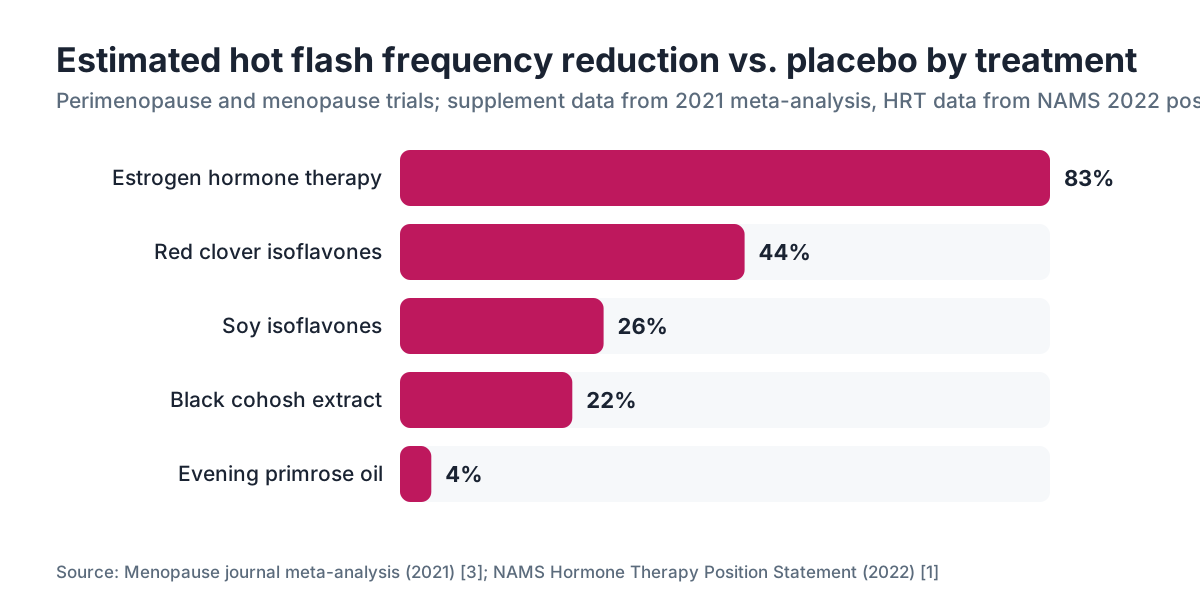
A 2021 meta-analysis in Menopause covering 23 randomized trials found soy isoflavones cut hot flash frequency by about 26% versus placebo, and red clover isoflavones by roughly 44% [3]. Those numbers read well until you translate them: going from 8 hot flashes a day to 5 or 6. Real, but not dramatic.
The best responders are women who convert daidzein (a soy isoflavone) into equol, a metabolite with stronger estrogenic activity. About 30-50% of Western women can do this, versus closer to 60% of Asian women. That gap may partly explain why the early epidemiological data from Japan and China looked so promising.
Flaxseed lignans have weaker evidence. Some small trials show benefit for mood and vaginal dryness; the hot flash data are mixed. The fiber and omega-3 content are a genuine bonus either way.
Women with estrogen-receptor-positive breast cancer should check with their oncologist before using any phytoestrogen in supplement form. Food sources (edamame, tofu, soy milk) at normal dietary levels are generally considered safe and are a reasonable place to start.
What does magnesium do for perimenopause?
Magnesium is the most underrated supplement for perimenopausal women, and it costs almost nothing. Around 48% of Americans fall short of the RDA for magnesium from diet alone [4], and estrogen swings seem to change how efficiently the body holds onto it.
The evidence covers three areas.
Sleep. A 2012 randomized trial in the Journal of Research in Medical Sciences found 500 mg of magnesium daily for 8 weeks improved sleep time, sleep efficiency, and early morning awakening versus placebo in older adults [4]. Perimenopause-specific trials are smaller but point the same way.
Mood and anxiety. Magnesium is a cofactor in serotonin synthesis and modulates GABA receptors. Low magnesium tracks with higher depression scores in observational data, though that's correlation, not proof.
Bone. Estrogen helps keep magnesium in bone, so as estrogen falls, losses speed up. You need adequate magnesium for vitamin D activation and for calcium metabolism. A bone density test is worth considering if you're over 40 with risk factors, but getting your magnesium intake right is a sensible baseline first.
The most bioavailable forms are magnesium glycinate and magnesium malate. Magnesium oxide, the cheap form in most drugstore bottles, absorbs poorly and mostly acts as a laxative. Aim for 300-400 mg daily in split doses. The NIH sets the tolerable upper limit from supplements at 350 mg/day; above that, GI side effects are common.
Can melatonin help with perimenopausal sleep problems?
For some sleep problems, yes. Perimenopausal insomnia has several causes: hot flashes wake you, falling progesterone reduces GABA-mediated sleep depth, and your own melatonin output declines with age. So topping it up makes sense.
A 2014 randomized controlled trial in Maturitas found 3 mg of melatonin nightly for 6 months improved sleep quality scores and, as a secondary finding, mood and depressive symptoms in perimenopausal women versus placebo [5]. The mood result is interesting but needs replication before anyone leans on it.
What melatonin does well: shortens sleep onset, cuts nighttime waking, and improves how well-rested you feel. What it doesn't do: stop the night sweats that wake you in the first place. If hot flashes drive your insomnia, melatonin alone won't get you there.
Dose matters more than most people think. Most over-the-counter melatonin in the US is sold at 5-10 mg, which is 5 to 20 times the physiological dose. Most sleep researchers suggest starting at 0.5 mg and staying at or below 3 mg. Higher doses cause morning grogginess and may suppress your own melatonin production over time.
Is ashwagandha worth taking during perimenopause?
It's worth a try if anxiety or a sluggish thyroid is part of your picture. Ashwagandha (Withania somnifera) is an adaptogen thought to modulate the stress response. The perimenopause-specific evidence is early, but a 2021 randomized trial in the Journal of Ethnopharmacology found 300 mg twice daily for 8 weeks improved menopause quality-of-life scores, reduced anxiety, and modestly improved thyroid hormone levels (TSH, T3) in women with subclinical hypothyroidism [6].
The thyroid finding matters because thyroid trouble is more common in perimenopause and mimics it: fatigue, brain fog, weight gain, mood changes. Ashwagandha's thyroid effect is small, but if subclinical hypothyroidism and perimenopausal symptoms overlap in you, it's one of the few supplements that might touch both at once.
Safety looks reasonable at studied doses. Rare liver toxicity cases have shown up with very high doses. Skip it if you're pregnant, have autoimmune thyroid disease, or take thyroid medication without your doctor's input, since it can move hormone levels.
What about St. John's Wort, evening primrose, and DHEA?
Three different stories here. St. John's Wort (Hypericum perforatum) has decent evidence for mild-to-moderate depression, which matters because mood changes hit many perimenopausal women. A 2007 trial in Menopause found St. John's Wort combined with black cohosh improved menopausal symptoms, including psychological complaints, better than either alone [8].
The catch with St. John's Wort is drug interactions. It's a strong inducer of CYP3A4 enzymes, so it can cut blood levels of birth control pills, antidepressants, blood thinners, and HIV medications. The FDA has warned about this [8]. On any prescription? Check interactions before you start.
Evening primrose oil (EPO) is popular and mostly disappointing. The gamma-linolenic acid may trim hot flash severity a little, but a review of the trials found no significant effect on frequency [7]. It won't hurt you. It's just probably not doing much.
DHEA is a hormone precursor, not a plant, and it sits in a gray zone. Low-dose vaginal DHEA (prasterone) is FDA-approved for genitourinary syndrome of menopause under the brand Intrarosa [9]. Oral DHEA at 25-50 mg daily is sold over the counter, but the evidence for systemic perimenopause symptoms is inconsistent, and higher doses raise androgens in ways that can cause acne or hair thinning. This one deserves a conversation with a clinician, not a self-directed guess.
How do supplements compare to hormone therapy for perimenopause?
Here's the answer most supplement articles dodge: for moderate-to-severe hot flashes and night sweats, hormone therapy works better than any supplement we have, and the gap is large.
The NAMS 2022 Hormone Therapy Position Statement puts it plainly: "Hormone therapy remains the most effective treatment for vasomotor symptoms and the genitourinary syndrome of menopause" [1]. Estrogen therapy typically cuts hot flash frequency by 75-90%. The best supplements get you 25-44%.
Supplements still make sense in real situations. You have contraindications to hormone therapy (certain cancers, uncontrolled hypertension, active clotting disorders). Your symptoms are mild and don't feel worth a prescription. You want to try something before committing to hormones. Or you're adding supplements on top of low-dose hormones to handle what's left over.
Our guides on hormone replacement therapy and the estrogen patch cover the options in detail. Providers at WomenRx can evaluate whether hormone therapy fits your history, which matters because the risk-benefit math is genuinely individual.
The framing many women get stuck in, "natural" supplements versus "risky" hormones, is a false choice. Both carry risks and benefits. The real question is which risk-benefit profile matches your symptoms, your history, and what you actually want.
What supplements support bone health during perimenopause?
Bone loss speeds up around menopause. Estrogen is the main brake on bone breakdown, and as it drops, bone mineral density can fall 1-2% a year or more in the first few years after your final period [10]. Getting ahead of this during perimenopause pays off.
Calcium. The recommended intake for women 51 and older is 1,200 mg/day from all sources, food and supplements combined, per the NIH Office of Dietary Supplements [10]. Food calcium is better. If you're getting 800 mg from food, you need a 400 mg supplement, not another 1,200 mg on top. Excess calcium from supplements (not food) has been tied to cardiovascular risk in some observational studies, so more is not better.
Vitamin D. You need it for calcium absorption and bone mineralization. The NIH recommends 600-800 IU daily, and many clinicians go higher in documented deficiency. The Endocrine Society recommends testing 25-OH vitamin D and targeting 40-60 ng/mL [11]. Vitamin D3 (cholecalciferol) raises serum levels better than D2.
Vitamin K2. Less talked about, increasingly supported. K2 (specifically the MK-7 form) activates osteocalcin, a protein that binds calcium to bone. A 2013 trial in Osteoporosis International found MK-7 at 180 mcg/day for 3 years improved bone strength in postmenopausal women versus placebo [12]. Perimenopause-specific evidence is thinner, but the mechanism holds up.
Magnesium (covered above) rounds out the bone stack. If you don't know where your bone density stands, a bone density test gives you a real baseline.
Are perimenopause supplements safe? What are the real risks?
The FDA does not approve dietary supplements for safety or effectiveness before they reach shelves. Say that out loud. The FDA only acts after a product has caused documented harm [13]. So a supplement's safety profile is only as good as the research done after it's already selling.
The main risks:
Drug interactions. St. John's Wort (major), black cohosh (minor, mainly with hepatotoxic drugs), DHEA (hormone-active). On any prescription, run your supplement list past a pharmacist. It takes five minutes and catches problems doctors often miss.
Contaminants. A 2018 study in JAMA Network Open found that 30% of tested supplements contained unlisted active pharmaceutical ingredients or problematic contaminants [13]. Third-party testing seals (USP, NSF International, ConsumerLab) aren't perfect, but they cut the risk a lot.
Hormone-sensitive conditions. Women with ER-positive breast cancer, or a history of it, should be cautious with phytoestrogens in supplement doses and with DHEA. Food-level phytoestrogens are generally considered okay; concentrated supplements are a different question.
Liver toxicity. Rare, reported with black cohosh, ashwagandha, and kava. Stop any of them if you develop unexplained fatigue, yellow skin, or right-upper-quadrant pain.
The safest options here, side-effect wise, are magnesium, low-dose melatonin, and dietary phytoestrogens. They also carry reasonably consistent evidence. That's where I'd start if someone asked me to pick two or three.
How do you choose a quality supplement? What should you look for on the label?
Supplement quality is all over the map. An analysis by ConsumerLab found that 30% of herbal products tested either didn't contain what the label claimed or were contaminated [13]. Here's what matters when you read a label.
Third-party certification. Look for USP Verified, NSF Certified for Sport, or NSF's certification for non-sport dietary supplements. These groups test independently that the label matches the bottle and that nothing dangerous slipped in.
Standardized extract versus raw powder. For black cohosh, look for standardized extract (usually isopropanolic or ethanolic, 2.5% triterpene glycosides). For ashwagandha, look for KSM-66 or Sensoril, the forms used in most positive trials. For melatonin, the form matters less than the dose.
Dose. Does the product actually contain the dose used in trials? Many "proprietary blends" cram six herbs at sub-therapeutic amounts so the label looks impressive. Check each ingredient against the doses in the table above.
Form. Magnesium glycinate or malate over oxide. Vitamin D3 over D2. These aren't marketing lines; they're absorption differences backed by pharmacokinetic data.
Expiration and storage. Many botanical compounds break down fast in heat and light. Reputable brands store temperature-sensitive products properly and print real expiration dates.
When should you see a doctor instead of trying supplements?
Supplements are the wrong first call in a few situations, and skipping a medical workup can cost you.
See a clinician if your periods have stopped for more than 60 days and you're under 45 (this needs evaluation, not supplements), if hot flashes wreck your sleep every night, if you have significant depression or anxiety (more than mild mood shifts), if vaginal dryness is bad enough to affect sex or daily comfort (local estrogen or DHEA beats any oral supplement here), or if you've gained more than 10 pounds without diet changes (thyroid and insulin issues both look like this in perimenopause).
There's another reason to see someone: getting personal about it. The "try everything at once" approach makes it impossible to know what's working. A clinician who knows your history, has run hormone panels, and understands your risk factors can help you sequence things instead of spending $300 a month on a stack that's 80% doing nothing.
WomenRx offers telehealth evaluation for perimenopausal women, including hormone panels and options that run from supplements to FDA-approved hormone therapy. The point is a plan built for you, not a template.
And if you're wondering whether weight management medication belongs in your perimenopause picture, weight gain is common in this transition, and semaglutide for weight loss is one option worth understanding.
Frequently asked questions
What is the most effective natural supplement for perimenopause hot flashes?
Black cohosh and red clover isoflavones have the most consistent trial data for hot flash reduction. Red clover isoflavones cut hot flash frequency by roughly 44% in a 2021 meta-analysis of 23 trials. Black cohosh also shows meaningful benefit in multiple randomized trials. Neither matches hormone therapy, which typically reduces hot flash frequency by 75-90%, but they're reasonable starting points for mild-to-moderate symptoms.
Can I take supplements and hormone therapy at the same time?
Most low-risk supplements (magnesium, melatonin, vitamin D, dietary phytoestrogens) are fine alongside hormone therapy. St. John's Wort is the big exception because it induces liver enzymes that break down estrogen, which can weaken your HRT dose. Black cohosh combined with prescription estrogen hasn't been well studied for additive effects. Tell your prescriber everything you're taking before combining anything.
How long does it take for perimenopause supplements to work?
Most trials run 8-12 weeks before measuring results, and that's a realistic timeframe. Black cohosh trials usually show measurable hot flash reduction by weeks 4-8. Magnesium for sleep can work faster, sometimes within 1-2 weeks. Phytoestrogens may take up to 12 weeks to reach their modest plateau. If you've given something a full 8 weeks at the right dose and feel nothing, it's probably not your supplement.
Is DHEA safe to take over the counter for perimenopause?
Vaginal DHEA (prasterone) is FDA-approved for genitourinary symptoms and is well studied at that route and dose. Oral DHEA supplements (25-50 mg) sold over the counter are legal but have inconsistent evidence for systemic perimenopause symptoms, and higher doses can raise androgen levels enough to cause acne or hair thinning in some women. Discuss this one with a clinician rather than self-prescribing, especially with any hormone-sensitive history.
What supplements help with perimenopause anxiety and mood swings?
Magnesium glycinate has decent evidence for anxiety through GABA receptor modulation. Ashwagandha (300 mg twice daily) reduced anxiety significantly in a 2021 randomized trial. St. John's Wort has real evidence for mild-to-moderate depression but carries serious drug interaction risks. Melatonin's 2014 RCT found mood improvements as a secondary result at 3 mg nightly. If anxiety or depression is genuinely affecting your functioning, a clinician evaluation matters more than any supplement.
Do phytoestrogens increase breast cancer risk?
The evidence is genuinely mixed, and the signal differs for food versus supplement doses. Most large observational studies show no increased breast cancer risk from dietary soy; some suggest a modest protective effect. Concentrated isoflavone supplements are less studied, especially in women with hormone-receptor-positive breast cancer or a history of it. Current guidance from NAMS and most oncology societies is that dietary phytoestrogen intake is likely safe, but high-dose supplement use should be discussed with an oncologist in that population.
Can supplements help with perimenopause brain fog?
Brain fog in perimenopause is partly driven by broken sleep and partly by direct estrogen effects on cognition. Supplements that improve sleep quality (magnesium, melatonin) may help brain fog indirectly. Some small ashwagandha trials show gains in memory and processing speed. Omega-3 fatty acids have theoretical support (DHA matters for neuronal function), but evidence specific to perimenopausal brain fog is weak. Better sleep is the most tractable target for most women.
What is the best magnesium form for perimenopause sleep problems?
Magnesium glycinate is generally the best tolerated and most bioavailable form for sleep and anxiety. Magnesium threonate is marketed for brain function and has some interesting early data. Magnesium oxide, the most common form in cheap products, absorbs poorly and mainly works as a laxative. Aim for 200-400 mg elemental magnesium as glycinate, taken 1-2 hours before bed. Start lower and build up gradually to avoid loose stools.
Are adaptogen supplements like maca and ashwagandha worth trying in perimenopause?
Ashwagandha has the best clinical evidence of the adaptogens for perimenopausal symptoms, with a 2021 RCT showing gains in menopausal quality of life, anxiety, and thyroid hormone levels. Maca (Lepidium meyenii) has a few small positive trials for sexual dysfunction and mood in postmenopausal women, but they're small and methodologically weak. Neither should be expected to match hormone therapy, but ashwagandha in particular is low-risk and has enough signal for anxiety and sleep.
How do I know if my symptoms are perimenopause or something else?
Perimenopause symptoms (irregular cycles, hot flashes, disrupted sleep, mood changes) overlap heavily with thyroid dysfunction, adrenal issues, and depression. A basic hormone panel with FSH, LH, estradiol, TSH, and a complete blood count can rule out other causes. FSH above 10-12 IU/L on day 3 of a cycle, or above 25-30 IU/L generally, suggests perimenopause in the right context. No single lab value is diagnostic; the clinical picture matters. Our guide on when does menopause start covers the diagnostic criteria.
What vitamins should every perimenopausal woman be taking?
The short list with real evidence: vitamin D3 (test your level first, target 40-60 ng/mL per Endocrine Society guidance), magnesium glycinate (most women don't get enough from diet), and a food-based B-complex if your diet is restrictive, since B6 and B12 affect mood and energy. Calcium from food beats supplements. Omega-3s (EPA/DHA from fish oil or algae) have good cardiovascular and anti-inflammatory evidence even where the perimenopause-specific data is modest.
Is melatonin safe to take long term for perimenopausal insomnia?
Short-term safety is well established. Long-term data beyond 6-12 months is limited. The main concern with extended use is possible suppression of the pineal gland's own melatonin output, though human trials haven't shown this consistently. Keeping the dose low (0.5-3 mg) reduces that theoretical risk. Most sleep specialists treat melatonin as a tool to reset circadian rhythm rather than a nightly pill forever, so pairing it with good sleep habits makes more sense than indefinite use.
Can I find out if WomenRx prescribes treatments for perimenopause symptoms?
WomenRx is a telehealth platform that evaluates and treats perimenopausal and menopausal women, including hormone therapy options and personalized plans. The focus is evidence-based care that considers your full hormone picture. If you want to understand your options beyond supplements, including FDA-approved hormone therapy and other prescription treatments, their providers can review your history, run appropriate labs, and help you decide what fits your situation.
Sources
- North American Menopause Society (NAMS), 2022 Hormone Therapy Position Statement
- Cochrane Database of Systematic Reviews, Leach MJ & Moore V, 2012: Black cohosh for menopausal symptoms
- Menopause journal, Ghazanfarpour M et al., 2021: Phytoestrogens meta-analysis (23 RCTs)
- NIH Office of Dietary Supplements: Magnesium Fact Sheet for Health Professionals
- Maturitas journal, Bellipanni G et al., 2014: Melatonin supplementation in perimenopausal women
- Journal of Ethnopharmacology, Gopal S et al., 2021: Ashwagandha in perimenopausal women
- Cochrane Database of Systematic Reviews: Evening primrose oil review for menopausal symptoms
- FDA MedWatch and Drug Safety Communications: St. John's Wort drug interactions
- FDA Drug Approval Database: Intrarosa (prasterone) NDA 208470
- NIH Office of Dietary Supplements: Calcium Fact Sheet for Health Professionals
- Endocrine Society Clinical Practice Guideline: Vitamin D Deficiency, 2011 (Holick MF et al.)
- Osteoporosis International, Knapen MH et al., 2013: MK-7 vitamin K2 and bone strength
- JAMA Network Open, Tucker J et al., 2018: Supplement contamination study