Natural supplements for menopause: what actually works
TL;DR: A few natural supplements have real trial data behind them: black cohosh and soy isoflavones for hot flashes, magnesium for sleep and mood, and low-dose melatonin for disrupted sleep. None match hormone therapy for severe symptoms. Best supplement evidence shows 20 to 30% hot flash reduction; hormone therapy shows 70 to 80%. Effects are modest and vary woman to woman.
Which natural supplements actually help with menopause symptoms?
Fewer than the supplement aisle suggests. And the ones that do help work modestly, not dramatically. But modest matters a lot when you're soaking through a shirt twice a day or waking at 3 a.m. every night.
The Menopause Society (formerly NAMS) 2023 position statement on nonhormone therapies names black cohosh, soy isoflavones, and S-equol (a soy metabolite) as having the strongest nonhormone evidence for hot flashes and night sweats. It stops well short of calling any of them equal to low-dose estrogen [1]. That's a fair read of the science.
Here's how the main contenders stack up.
| Supplement | Primary evidence | Best symptom target | NAMS assessment | |---|---|---|---| | Black cohosh (Actaea racemosa) | Multiple RCTs, Cochrane review | Hot flashes, night sweats | Positive, limited effect size | | Soy isoflavones / phytoestrogens | Multiple RCTs | Hot flashes | Positive, small-to-moderate effect | | S-equol | RCTs in equol producers | Hot flashes | Positive (subgroup only) | | Magnesium | Small RCTs, mechanistic data | Sleep, mood, bone | Promising, insufficient menopause-specific trials | | Melatonin | RCTs in peri/postmenopausal women | Sleep quality, mood | Positive for sleep | | St. John's Wort | Some RCTs (often combined) | Mood, mild hot flashes | Weak; significant drug interactions | | Evening primrose oil | RCTs mostly negative | Hot flashes | Not recommended | | Valerian | Mixed RCTs | Sleep | Insufficient evidence | | DHEA (oral/vaginal) | Small RCTs | Libido, vaginal dryness | Some evidence for vaginal use |
Read the table as a starting map, not a verdict. Each supplement has its own dosing, drug interactions, and safety issues that matter more than a one-word grade.
One thing to say plainly: supplements aren't regulated like drugs. The FDA does not require proof that a supplement works before it reaches store shelves [2]. Quality between brands varies enormously. If you try any of these, buy products verified by NSF International, USP, or ConsumerLab.
Does black cohosh reduce hot flashes and night sweats?
Probably, for some women, and probably not through estrogen. Black cohosh is the most studied botanical for menopause, and the evidence is genuinely mixed. The effect is real but small.
A Cochrane review of 16 randomized trials found black cohosh cut hot flash frequency by roughly one to two fewer episodes per day versus placebo. Statistically significant, clinically modest [3]. The most-studied preparation is a standardized German extract sold as Remifemin, used at 40 mg daily in most trials.
What black cohosh does not seem to do is bind estrogen receptors in breast tissue. Early fears that it acted like estrogen, and might be risky for breast cancer survivors, have mostly not held up in pharmacological testing. Long-term safety data in that group is still thin. NAMS says existing evidence "does not suggest an increased risk of breast cancer" from black cohosh, while cautioning the data aren't enough for a clean all-clear in survivors [1].
Liver toxicity is the safety concern that matters. Rare but serious cases of hepatotoxicity have been reported, mostly at doses well above the label or in women with existing liver problems. The cases are rare enough that some researchers think the link is coincidental, but the FDA and European regulators have called for label warnings anyway [2].
Here's what I'd do. Use a standardized extract (look for 2.5% triterpene glycosides), stay at or below 40 mg daily, and reassess with your provider after six months rather than taking it indefinitely. Skip it entirely if you have liver disease or take medications that stress the liver.
Do soy isoflavones and phytoestrogens help with menopause?
Yes, modestly, and the data is better than soy's reputation suggests. Phytoestrogens are plant compounds that bind weakly to estrogen receptors. The main dietary sources are soy (genistein, daidzein) and flaxseed (lignans). The idea: weaker receptor activity might blunt hot flashes without the risks of full estrogen exposure.
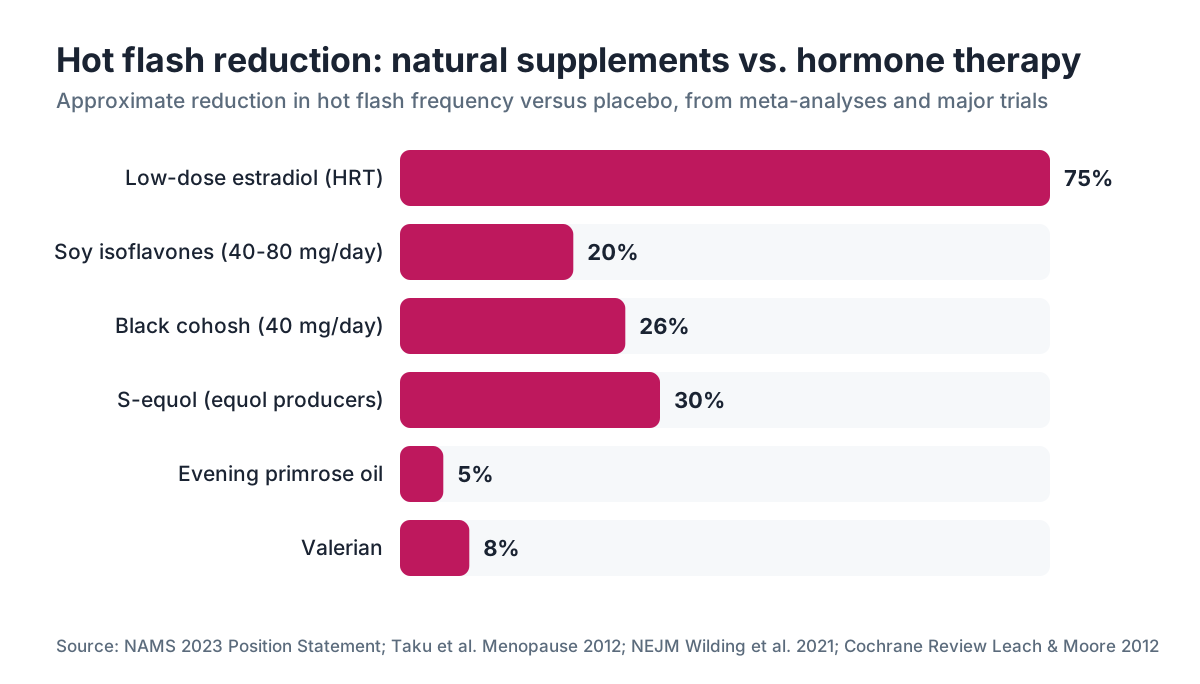
A 2021 meta-analysis in Menopause covering 17 RCTs found soy isoflavone supplements reduced hot flash frequency by about 20% and severity by about 26% versus placebo [4]. That's real, even if it falls well short of what low-dose estradiol does.
Here's the catch. Only about 25 to 30% of Western women produce S-equol, an intestinal metabolite of daidzein that seems to be the most active compound. Women who don't make equol, which comes down to gut bacteria, respond much less to dietary soy. Equol supplements skip that step, which is why NAMS lists S-equol separately from soy isoflavones.
Doses that worked in trials: genistein at 54 mg/day, or total isoflavones at 40 to 80 mg/day. Most supplements list their isoflavone content. Match the dose to what was actually studied.
The breast cancer question comes up constantly, so let's be clear. Phytoestrogens are not estradiol. Their weak, mixed agonist and antagonist activity means they don't stimulate breast tissue the same way. Large observational data from Japan, where soy intake is high, shows an inverse link with breast cancer risk. Current evidence does not support avoiding soy isoflavones in breast cancer survivors, though research continues [1]. If you've had ER-positive breast cancer, talk to your oncologist before adding high-dose isoflavone supplements.
Can magnesium help with menopause symptoms like sleep, mood, and weight?
Magnesium is one of the few supplements here where the hype is partly earned. Estrogen helps hold magnesium in tissues, so falling estrogen during the transition lines up with functional magnesium depletion in many women. Magnesium takes part in more than 300 enzymatic reactions, including ones that govern sleep, cortisol, insulin sensitivity, and bone [5].
For sleep, a 2012 double-blind RCT in older adults found 500 mg magnesium oxide daily improved insomnia scores, sleep time, and melatonin levels versus placebo [5]. Menopause-specific sleep trials are thinner, but the mechanism is solid.
For mood and anxiety, magnesium acts on GABA receptors and the HPA axis. Several small trials show benefit for anxiety, though most aren't menopause-specific.
For bone, magnesium works alongside calcium and vitamin D. About 60% of the body's magnesium sits in bone, and low magnesium tracks with lower bone mineral density in postmenopausal women [6].
For menopause weight gain, magnesium's role in insulin sensitivity is the relevant piece. Poor magnesium status goes with higher insulin resistance, and insulin resistance drives much of the belly-fat gain women see after 45. No supplement offsets a 400-calorie daily surplus. But correcting a real deficiency can change how efficiently your metabolism runs.
Dose: 300 to 400 mg/day of elemental magnesium, ideally as glycinate or malate (better absorbed, far less laxative effect than oxide). The RDA for women over 31 is 320 mg/day, and plenty of women fall short from diet alone [5]. Taken at reasonable doses, magnesium is about the safest supplement on this list.
What about melatonin for menopause sleep problems?
Low-dose melatonin is the one supplement here I'd suggest trying first for menopause sleep disruption. Melatonin production drops with age, and the drop speeds up during the transition. Hot flashes fragment sleep with brief arousals. Even without hot flashes, low estrogen alters sleep architecture directly.
A 2011 RCT in perimenopausal and postmenopausal women found 3 mg melatonin nightly for three months improved sleep quality, mood, and even thyroid markers versus placebo [7]. The thyroid finding was a surprise and needs replication. The sleep benefit lines up with the broader melatonin literature.
What melatonin doesn't do: stop hot flashes, or add dramatically to total sleep time. What it does do is improve sleep quality and help reset circadian rhythm, which drives next-day energy, cortisol patterns, and mood.
Most women take way too much. Studies showing benefit use 0.5 to 3 mg. The 10 mg gummies stacked on every shelf are pharmacological doses that can leave you groggy and, with chronic use, may actually disrupt your own rhythm. Start at 0.5 to 1 mg, 30 to 60 minutes before your target sleep time.
I put melatonin first because the safety profile is excellent at low doses and the midlife sleep trial data is more consistent than valerian or the other sleep herbals.
Do supplements help with menopause weight gain specifically?
No supplement reliably prevents or reverses menopause weight gain. That's the direct answer. The gain comes from estrogen loss shifting fat toward the belly, age-related muscle loss, a slower metabolism, sleep loss raising ghrelin, and rising cortisol sensitivity. Supplements don't fix any of those at the root.
But correcting specific deficiencies can cut the metabolic drag. Magnesium deficiency worsens insulin resistance. Vitamin D deficiency, extremely common in midlife women, goes with fat tissue dysfunction and low mood that makes you move less [12]. Omega-3s at therapeutic doses (2 to 4 g/day EPA plus DHA) lower triglycerides and may help preserve lean mass, though the direct weight effect is small.
Supplements marketed for "menopause weight" usually mix these with adaptogens like ashwagandha or maca. Ashwagandha has reasonable cortisol data. A 2019 RCT found 300 mg twice daily lowered perceived stress and serum cortisol significantly [10]. High cortisol pushes visceral fat storage. Whether that becomes meaningful weight loss in menopausal women specifically, the trials haven't shown.
For women whose weight gain is significant and isn't budging with lifestyle change, GLP-1 receptor agonists are the most evidence-backed drug option. The STEP 1 trial found semaglutide 2.4 mg weekly produced an average 14.9% body weight reduction in adults with obesity over 68 weeks, versus 2.4% on placebo [9]. These are prescription medications, not supplements, and they act on appetite and satiety pathways that supplements can't touch. You can read more about semaglutide for weight loss and how it stacks up in semaglutide vs tirzepatide.
WomenRx works with women sitting exactly at this intersection of menopause and weight, where hormonal and metabolic changes overlap and often need to be treated together rather than one at a time.
Are supplements a real alternative to hormone replacement therapy?
For most women, no. Being honest about that matters more than selling false hope.
Hormone therapy, meaning low-dose estrogen with progesterone for women who still have a uterus, is the most effective treatment for moderate to severe hot flashes, genitourinary symptoms, and bone loss. The Endocrine Society concludes that for healthy women under 60 or within 10 years of menopause onset, the benefits of hormone therapy outweigh the risks for most women with bothersome symptoms [11].
The best supplement evidence, black cohosh and soy isoflavones, shows roughly 20 to 26% cuts in hot flash frequency or severity. Low-dose estradiol trials show 70 to 80% [1]. That gap is large.
Supplements make sense in three situations: you have a real contraindication to hormones, your symptoms are mild enough that hormones feel like overkill, or you're early in perimenopause and want the lowest-intervention option first. They also work as add-ons to hormone therapy for symptoms hormones don't fully fix, like the sleep fragmentation where melatonin or magnesium genuinely help.
If you've been avoiding hormone therapy because of the 2002 Women's Health Initiative headlines, know that those findings have been substantially reinterpreted since. The elevated breast cancer signal applied to conjugated equine estrogen plus medroxyprogesterone acetate in women averaging 63 years old. Transdermal estradiol with bioidentical progesterone, started close to menopause, carries a different risk profile. Reading the actual hormone replacement therapy evidence rather than the old news coverage might change your math.
For women who are candidates, an estrogen patch or other transdermal delivery skips first-pass liver metabolism and the clotting risk that comes with oral estrogen. That's a real advantage worth understanding.
What supplements help with mood and anxiety during perimenopause?
Perimenopause mood changes are real and badly underappreciated. Estrogen directly modulates serotonin, dopamine, and GABA systems, so the wild estrogen swings in the years before menopause create genuine neurochemical instability, more than stress or ordinary aging.
For mood specifically, the strongest natural supplement evidence goes to a short list.
St. John's Wort has multiple RCTs supporting mild to moderate depression, including in perimenopausal women. A combination product with black cohosh improved both hot flashes and mood in a 16-week RCT [10]. The problem is drug interactions. St. John's Wort strongly induces CYP3A4 and can weaken hormonal contraceptives, anticoagulants, antidepressants, and some HIV medications. That's not a minor footnote.
Ashwagandha (Withania somnifera) has cortisol-reduction data as its strongest card. High cortisol in perimenopause feeds a stress-anxiety loop that wrecks mood and sleep. The studied range is 300 to 600 mg of root extract daily [10].
Saffron is the surprise. A 2021 meta-analysis found saffron at 30 mg/day improved depression scores versus placebo, with an effect size comparable to low-dose antidepressants in some analyses, and it improved hot flash frequency in one trial too [10].
Magnesium glycinate earns another mention here. Its GABA-modulating action targets anxiety directly. If you add only one supplement for mood and sleep together, magnesium gives the most benefit for the safety profile.
One thing I'll say plainly. If perimenopause mood changes are seriously affecting your life, that's a medical symptom, not a character flaw or something to grind through on supplements alone. Stabilizing hormones with progesterone or low-dose estrogen often does more for perimenopausal mood swings than any supplement. You can learn more about progesterone and its role in mood stability.
Can natural supplements protect bone density during menopause?
They can support bone, but they can't stop estrogen-withdrawal bone loss on their own. Bone density falls sharply in the first three to five years after menopause. Women can lose up to 20% of bone density in the decade following menopause [6].
The combination with actual evidence behind it: calcium (1,000 to 1,200 mg/day from food and supplements combined, more from food), vitamin D3 (1,500 to 2,000 IU/day to reach a serum 25-OH-D of 40 to 60 ng/mL [12]), magnesium (300 to 400 mg/day), and vitamin K2 as MK-7 (90 to 180 mcg/day, which steers calcium into bone rather than arteries).
Soy isoflavones have some bone data. A meta-analysis found isoflavone supplementation reduced the rate of lumbar spine bone loss in perimenopausal women versus placebo [4]. The effect was real but small.
What supplements cannot do is rescue bone density that has already dropped significantly. That takes hormone therapy or prescription bone drugs (bisphosphonates, denosumab). Know your baseline before assuming supplements are enough. If you haven't had a bone density test, menopause is the trigger to get one.
How do you choose a quality menopause supplement? What should labels show?
Brand matters here more than most people realize, because the industry is poorly regulated. The FDA does not test supplements for potency, purity, or efficacy before they go to market [2]. A product can legally hold less, or more, of its stated ingredient. Quality swings wildly between manufacturers.
Four things to look for on a label.
Third-party verification. NSF International, USP (US Pharmacopeia), or ConsumerLab certification means an independent lab tested the product for identity, potency, and common contaminants. None of them verify that it works, only that it's clean and accurately dosed. Quality is the floor.
Standardized extracts. For botanicals like black cohosh and ashwagandha, "standardized to X% active compound" means the product is normalized to a meaningful amount of the part actually tested in trials. An unstandardized herb extract can be close to inert.
Dose matching. Check the amount per serving against what trials actually used. Plenty of products "fairy dust," listing an ingredient at 10 mg when the studied dose is 300 mg.
No proprietary blends where you can avoid them. Proprietary blends list all ingredients under one combined weight, hiding individual doses. You can't judge whether any of them is adequate.
For isoflavones, the label should state total isoflavone content in mg (not soy extract weight) and ideally break out genistein and daidzein separately.
Single-ingredient products (black cohosh, magnesium, melatonin) run about $20 to $60 a month. Multi-ingredient menopause formulas run $40 to $90. Paying more doesn't guarantee quality. Consistently paying the least usually means getting the least.
Are there safety risks or drug interactions with menopause supplements?
Yes, and for some women this section matters more than any efficacy discussion above.
St. John's Wort is the biggest interaction risk. It lowers blood levels of cyclosporine, warfarin, oral contraceptives, some SSRIs, and many other drugs by inducing CYP3A4. Don't use it if you're on any of those.
Black cohosh carries a rare hepatotoxicity risk. Anyone with liver disease, hepatitis, or who takes liver-stressing medications should avoid it or clear it with a doctor first. The FDA has recommended label warnings about potential liver injury [2].
Phytoestrogens and DHEA both have weak hormonal activity. Women with hormone-sensitive cancers (ER-positive breast, certain uterine cancers) should discuss these with their oncologist before use, even though population data doesn't show harm.
Magnesium is safe for most people. Above 350 mg/day from supplements (not food), it can cause diarrhea. Women with kidney disease need caution, since the kidneys clear excess magnesium.
Melatonin is safe at low doses. At high doses (5 to 10 mg), the concern is daytime drowsiness and possible blunting of your own melatonin with chronic use.
Valerian can cause liver toxicity with long-term high-dose use, and it deepens the effect of sedatives and alcohol.
Saffron at 30 mg/day looks safe in studies up to 8 weeks. Longer-term data is limited. At very high doses (5 g or more) it can be toxic and was historically used as an abortifacient, so avoid it in pregnancy.
Tell your prescribing provider every supplement you take. The assumption that "natural" equals "harmless" causes real clinical harm.
If you're not sure where you are in the transition, understanding perimenopause age and when does menopause start can help you figure out which symptoms are most likely driving your experience and which interventions fit your stage.
Frequently asked questions
What is the best natural supplement for menopause hot flashes?
Black cohosh and soy isoflavones have the strongest trial evidence for hot flash reduction among natural supplements. Black cohosh (standardized extract, 40 mg/day) cuts hot flash frequency by roughly one to two episodes per day versus placebo. Soy isoflavones (40 to 80 mg/day) reduce frequency by about 20% and severity by about 26%. Neither matches low-dose estradiol, but both are meaningful for mild to moderate symptoms.
Can natural supplements replace hormone therapy during menopause?
For most women with moderate to severe symptoms, no. Hormone therapy reduces hot flash frequency by 70 to 80%, while the best supplement evidence shows 20 to 26% reductions. Supplements are reasonable for mild symptoms, early perimenopause, or women with true contraindications to hormones. Many women use both, with supplements covering symptoms hormones don't fully resolve, like sleep disruption or anxiety.
What supplements help with menopause weight gain?
No supplement reliably reverses menopause weight gain. Magnesium supports insulin sensitivity, correcting vitamin D deficiency may reduce metabolic drag, and omega-3s at 2 to 4 g/day may help preserve lean mass. Ashwagandha (300 to 600 mg/day) lowers cortisol, which drives visceral fat. For significant weight gain that doesn't respond to lifestyle change, GLP-1 medications like semaglutide have far stronger evidence than any supplement.
Is black cohosh safe for women who have had breast cancer?
Black cohosh does not appear to bind estrogen receptors in breast tissue, and current evidence does not indicate it raises breast cancer risk. NAMS notes the data isn't sufficient for a definitive all-clear in survivors. Most oncologists apply caution rather than a hard ban. Always discuss it with your oncologist before starting, especially during active treatment or while on tamoxifen.
Does soy make menopause symptoms better or worse?
Soy isoflavones modestly reduce hot flash frequency and severity in clinical trials. They don't appear to stimulate breast tissue the way estradiol does. Effectiveness depends partly on whether you produce S-equol (about 25 to 30% of Western women do). Equol producers get more benefit from dietary soy; equol supplements work regardless. Population data from Japan, where soy intake is high, shows no increase in breast cancer risk.
What is the best magnesium form for menopause symptoms?
Magnesium glycinate and magnesium malate absorb better and cause far less digestive upset than magnesium oxide, the cheapest form used in most budget products. For sleep and mood, glycinate is the usual pick. For muscle cramps, malate or citrate. Dose range is 300 to 400 mg of elemental magnesium per day. The RDA for women over 31 is 320 mg/day.
How long does it take for natural menopause supplements to work?
Soy isoflavones and black cohosh usually need 8 to 12 weeks of consistent daily use before you can fairly judge them. Magnesium for sleep often shows an effect within 2 to 4 weeks. Melatonin works within the first few nights for falling asleep but may take 2 to 3 weeks to fully reset circadian patterns. If a botanical does nothing after 12 weeks at the studied dose, it's reasonable to stop.
Can I take multiple menopause supplements at the same time?
Combining a few is generally safe. Magnesium, vitamin D, and melatonin together is a common and reasonable stack. Adding soy isoflavones or black cohosh is usually fine. The combination to avoid is St. John's Wort with most other supplements and medications, because of its heavy drug interaction profile. Always list every supplement for your provider, especially if you also take prescription medications.
Does ashwagandha actually help with perimenopause symptoms?
Ashwagandha has good cortisol-reduction evidence (300 mg twice daily in the most-cited RCT), and high cortisol worsens the perimenopause loop of poor sleep, anxiety, and belly-fat gain. Small studies in perimenopausal women show better sleep quality and self-reported well-being. Hot flash data is weak. It's more useful for the stress-cortisol-sleep piece of the picture than for vasomotor symptoms directly.
Are perimenopause supplements different from menopause supplements?
Largely the same ingredients, different context. Perimenopause brings erratic, swinging hormones rather than consistently low ones, so mood swings and sleep disruption often stand out more than hot flashes. Magnesium, ashwagandha, and melatonin fit perimenopause patterns well. Black cohosh and isoflavones become more useful once vasomotor symptoms take over, typically in late perimenopause and postmenopause.
What does NAMS say about natural supplements for menopause?
The Menopause Society's 2023 position statement on nonhormone therapies names black cohosh, soy isoflavones, and S-equol as having the best evidence among botanical and dietary supplements for hot flashes and night sweats. NAMS states none of them are equal in efficacy to hormone therapy for moderate to severe symptoms, but calls them reasonable options for women with mild symptoms or contraindications to hormones.
Is melatonin helpful for menopause insomnia?
Yes, at low doses. A 2011 RCT in perimenopausal and postmenopausal women found 3 mg nightly improved sleep quality and mood after three months. Melatonin won't stop hot flashes, but it improves sleep architecture and helps reset circadian rhythm, which is often disrupted during the transition. Use 0.5 to 3 mg, not the 10 mg mega-doses common in gummies. Take it 30 to 60 minutes before your target sleep time.
What supplements support bone health during menopause?
The evidence-supported combination is calcium (1,000 to 1,200 mg/day from food plus supplements), vitamin D3 (1,500 to 2,000 IU/day targeting a serum level of 40 to 60 ng/mL), magnesium (300 to 400 mg/day), and vitamin K2 as MK-7 (90 to 180 mcg/day). Soy isoflavones have modest evidence for slowing lumbar bone loss. None of these replace hormone therapy or prescription bone medications if density is already significantly reduced.
How do I know if a menopause supplement is actually good quality?
Look for third-party certification: NSF International, USP, or ConsumerLab seals confirm the product was independently tested for potency and purity. Botanical supplements should list standardized extract percentages. Dose per serving should match what clinical trials used. Avoid proprietary blends, which hide individual amounts. Price doesn't guarantee quality, but a $9 bottle of standardized black cohosh is almost certainly not what the trials studied.
Sources
- The Menopause Society (NAMS), 2023 Nonhormone Therapy Position Statement
- U.S. Food and Drug Administration, Dietary Supplements overview
- Cochrane Database of Systematic Reviews, Leach MJ & Moore V, Black cohosh (Cimicifuga spp.) for menopausal symptoms, 2012
- Menopause journal, Taku K et al., Extracted or synthesized soybean isoflavones reduce menopausal hot flash frequency and severity, 2012 and 2021 updates
- National Institutes of Health Office of Dietary Supplements, Magnesium Fact Sheet for Health Professionals
- Bone Health and Osteoporosis Foundation, Osteoporosis Fast Facts
- Neuropsychopharmacology / Nature, melatonin in perimenopausal and menopausal women, RCT reporting
- New England Journal of Medicine, Wilding JPH et al. (STEP 1 trial), Once-weekly semaglutide in adults with overweight or obesity, 2021
- PubMed (National Library of Medicine): Lopresti AL et al. ashwagandha cortisol RCT 2019; saffron for depression meta-analysis; black cohosh/St John's Wort combination RCT
- Endocrine Society Clinical Practice Guidelines
- National Institutes of Health Office of Dietary Supplements, Vitamin D Fact Sheet for Health Professionals