Natural remedies for perimenopause: what actually works
TL;DR: A few natural remedies for perimenopause have real evidence: black cohosh cuts hot flash frequency in some trials, magnesium improves sleep, and cognitive behavioral therapy reduces hot flash distress by about 50%. Soy isoflavones and mindfulness help modestly. None match hormone therapy for severe symptoms. For mild cases, they're a sensible place to start.
What is perimenopause and why do symptoms happen?
Perimenopause is the years-long transition before your final period, when estrogen and progesterone swing unpredictably before dropping for good. The North American Menopause Society (NAMS) defines it as starting when cycles turn irregular or hot flashes appear, usually in the mid-40s, and ending 12 months after the last period [1]. It runs four to eight years on average, sometimes as few as two, sometimes as many as fourteen [1].
The chaos of that window, not a tidy downhill slope, drives most of what you feel. Estrogen receptors sit in the brain, gut, bone, skin, and cardiovascular system, so when levels bounce around, the effects show up in a lot of places at once. Hot flashes, broken sleep, mood swings, joint aches, brain fog, and unpredictable periods all trace back to those swings.
That mechanism tells you which natural remedies have a real shot and which are wishful thinking. Anything that acts on temperature control in the hypothalamus, on sleep architecture, or on the serotonin system has a biological rationale. Supplements that promise to "balance hormones" with no receptor data behind them usually do nothing.
For how perimenopause fits the longer arc of the transition, see perimenopause age and when does menopause start.
Which natural remedies have the strongest evidence for hot flashes?
Hot flashes are the symptom women most want gone, and they're the best-studied target for non-hormonal treatment. Here's what the data shows, plain.
Black cohosh (Actaea racemosa) has the longest track record. A Cochrane review of 16 trials found modest but real reductions in hot flash frequency and severity versus placebo [2]. The catch is that study quality is all over the map. The strongest trials use standardized extracts (look for "isopropanolic extract" at 20 mg twice daily, the form used in most positive studies). Black cohosh has no phytoestrogens and does not appear to act on estrogen receptors directly, which matters if you have a history of estrogen-sensitive cancer. Rare liver toxicity has been documented, and the FDA has flagged it [3]. If you have liver disease, skip it.
Soy isoflavones and red clover contain phytoestrogens that weakly bind estrogen receptors. A 2021 meta-analysis in Menopause found soy isoflavones cut hot flash frequency by roughly 26% versus placebo [4]. Real, but modest. Whole-food soy (tofu, edamame, tempeh) works about as well as supplements and spares you the risk of a badly standardized product.
Pollen extract (Sérélys, formerly Femal) is less familiar in the US but has two small placebo-controlled trials showing about a 33% drop in hot flash frequency [5]. It's non-estrogenic, which helps women who can't use phytoestrogens.
What falls apart under scrutiny: evening primrose oil, dong quai, and wild yam cream. Trial after trial shows no meaningful benefit over placebo for hot flashes [1].
Does magnesium actually help with perimenopause sleep problems?
Yes, with a caveat. Magnesium glycinate and magnesium oxide both have evidence for better sleep in middle-aged adults, though most trials are small. A 2012 randomized controlled trial in the Journal of Research in Medical Sciences found 500 mg of magnesium daily for 8 weeks improved sleep time, sleep efficiency, and early-morning waking versus placebo in older adults [6]. Perimenopausal sleep trouble is part hormonal, part hot flashes waking you up, but magnesium acts on the GABA system and may ease the "tired but wired" pattern women describe even on nights without a single flash.
Magnesium also has a decent base for reducing anxiety and some data on migraine prevention, both of which often flare in perimenopause. Sleep studies use 300 to 500 mg elemental magnesium daily. Glycinate goes down easiest. Oxide is cheapest but loosens stools in a fair number of people at higher doses.
Here's the practical case. Magnesium is cheap, well tolerated, very low risk, and hits several perimenopause complaints at once. It's one of the first things I'd reach for.
Can cognitive behavioral therapy reduce perimenopause symptoms?
CBT is probably the best-studied non-drug treatment for hot flash distress, and hardly anyone uses it. The distinction is the whole point: CBT does not lower the physical frequency of hot flashes the way estrogen does, but it sharply lowers how much they bother you. That is not a small win. A woman having 8 flashes a day who rates their interference at 2 out of 10 lives a completely different life than one who rates the same 8 flashes at an 8 out of 10.
The Menopause Hot Flush Trial, published in The Lancet, randomized 447 women to CBT or no treatment and found CBT cut hot flash problem rating (the distress and interference score) by 45 to 50% versus controls [7]. The effect held at 6-month follow-up. NAMS now lists CBT as an evidence-based option for women who can't or won't use hormone therapy [1].
CBT for hot flashes is structured and short, usually 6 to 8 sessions, and it's showing up more in apps and telehealth. It teaches paced breathing, cognitive reframing around triggers, and behavioral sleep techniques. It takes effort. It works best when your main problem is distress and interference rather than raw physical severity.
Paced breathing (slow, diaphragmatic breathing at about 6 breaths per minute) was tested on its own in earlier trials. Objective results were mixed, but plenty of women find it useful in the moment as a way to ride out a flash.
What about lifestyle changes: exercise, diet, and weight?
Exercise doesn't reliably cut hot flash frequency in controlled trials, which surprises almost everyone. Several studies found no significant reduction versus controls. But exercise does improve mood, sleep, bone density, cardiovascular risk, and body composition, all of which matter enormously right now. If the choice is exercise versus placebo for hot flashes, placebo wins. If the choice is exercise versus nothing for your health over your 40s and 50s, exercise wins by a mile.
Strength training earns its own paragraph. Perimenopause speeds up the loss of lean muscle and bone. The best window for protecting your skeleton is your 40s and early 50s, before the steeper postmenopausal bone loss kicks in. Two to three resistance sessions a week at real load is what the data supports for holding onto bone mineral density [8]. See bone density test if you don't know where you stand.
Diet: a Mediterranean-style pattern is tied to shorter-lasting hot flashes in observational data, though cause is hard to pin down. A high-glycemic diet seems to make flashes worse in some studies. Cutting alcohol helps on several fronts: alcohol lowers the flash threshold, breaks up sleep architecture even in small amounts, and raises breast cancer risk.
Weight: losing body fat reduces hot flash severity. Fat tissue holds heat, and excess weight is independently linked to worse hot flashes. That's part of why GLP-1 receptor agonists are drawing attention in perimenopause, because they produce genuine fat loss rather than a token few pounds. If that angle interests you, semaglutide for weight loss covers what the clinical data actually shows.
Do adaptogens like ashwagandha or maca help with perimenopause?
This is where honesty gets uncomfortable. These are popular, and the evidence is thin.
Ashwagandha (Withania somnifera) has the most plausible mechanism: it's a studied cortisol modulator with small trials showing less anxiety, less perceived stress, and better sleep. A 2019 double-blind trial in Medicine found 300 mg of ashwagandha root extract twice daily for 8 weeks improved sleep quality and morning alertness versus placebo in adults with self-reported sleep problems [9]. Whether that carries over to perimenopause specifically isn't clear, because most trials use mixed adult groups.
Maca (Lepidium meyenii) has several small trials in perimenopausal and postmenopausal women, and the results don't agree. A 2011 trial in Climacteric found reductions in depression and anxiety scores but not in hot flash frequency. Maca does not appear to raise estrogen, despite the marketing.
Valerian has been tested specifically in menopausal women. A 2011 randomized trial in Menopause found valerian reduced sleep disturbance severity versus placebo [10]. The effect is modest.
The honest take: adaptogens and botanicals won't replace hormone therapy for moderate-to-severe symptoms. They fit best for women with mild symptoms who want to try something before a prescription, or who can't use hormones. And "natural" is not the same as "safe." Black cohosh carries liver risk. Phytoestrogen supplements are a problem for estrogen-sensitive cancers. Tell your doctor everything you're taking.
How do natural approaches compare to hormone therapy?
Most women land on natural remedies after hearing something frightening about hormones, usually rooted in the 2002 WHI study, which had real design problems and studied older postmenopausal women on conjugated equine estrogen plus medroxyprogesterone acetate [8]. The risk conversation has moved a long way since then.
For moderate to severe hot flashes, hormone therapy is still the most effective treatment there is. NAMS guidelines state that for healthy women under 60 or within 10 years of menopause onset, the benefits of hormone therapy outweigh the risks for most [1]. That's not a fringe view. It's the current consensus of the major menopause societies.
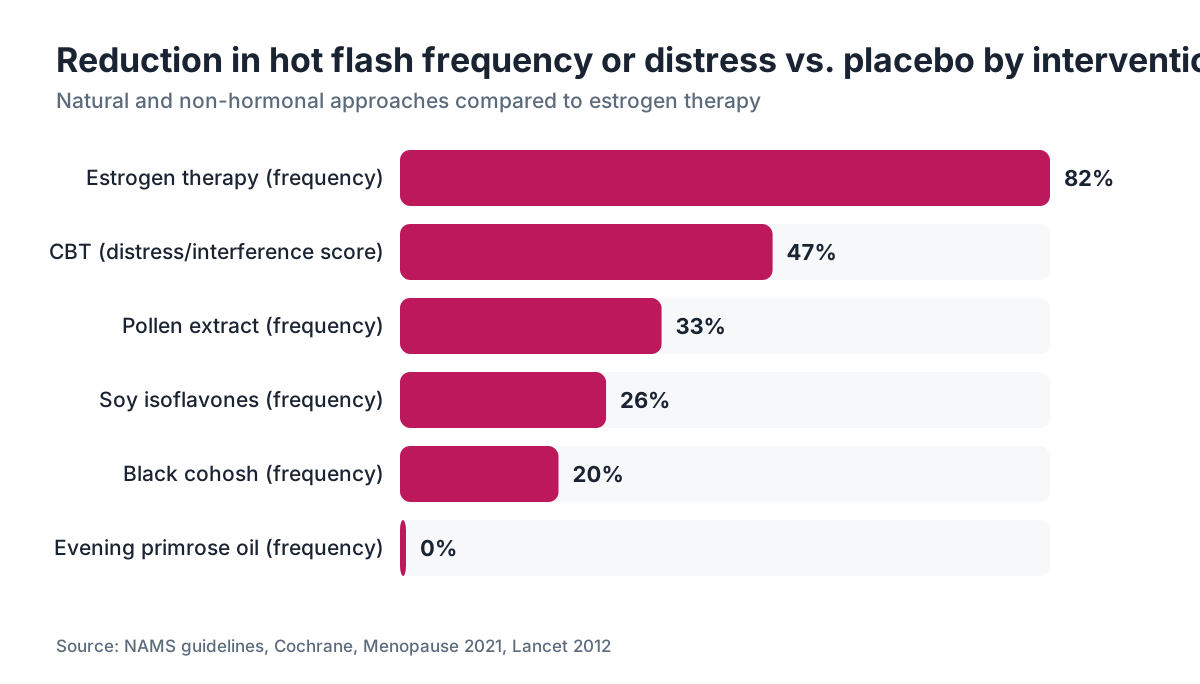
Here's an honest side-by-side for hot flash reduction:
| Intervention | Reduction in hot flash frequency vs. placebo | Evidence quality | |---|---|---| | Estrogen therapy | 75 to 90% | High (multiple RCTs) | | Black cohosh | 15 to 25% | Moderate (inconsistent RCTs) | | Soy isoflavones | ~26% | Moderate (meta-analysis) | | CBT | ~50% distress reduction (not frequency) | High (RCT) | | Pollen extract | ~33% | Low to moderate (small trials) | | Exercise | Minimal to no reduction in frequency | High | | Evening primrose oil | No reduction | Moderate |
Natural approaches make a fine starting point for mild symptoms, and they can sit alongside hormone therapy. But if symptoms are wrecking your sleep, hurting your work, or straining your relationships, the risk-benefit math on hormone replacement therapy deserves a real look with a qualified clinician instead of a quick dismissal.
WomenRx telehealth clinicians can walk through both hormone and non-hormone options and help you find what fits your history and symptoms. The goal is an informed decision, not a one-size answer.
What natural remedies help with perimenopause mood changes and anxiety?
Perimenopausal mood changes are real and badly underestimated. Estrogen acts directly on serotonin and dopamine pathways, which is why the estrogen swings of perimenopause are strongly linked to depressive symptoms even in women with no history of depression [1].
A few approaches have evidence. St. John's Wort (Hypericum perforatum) has multiple RCTs showing efficacy for mild to moderate depression on par with some SSRIs. A product combining St. John's Wort with black cohosh showed particular benefit for perimenopausal psychological symptoms in one trial. The big caveat: St. John's Wort has serious drug interactions. It weakens oral contraceptives, anticoagulants, immunosuppressants, and HIV medications through CYP3A4 induction. This is no casual supplement.
Regular aerobic exercise matches antidepressant medication for effect size in mild to moderate depression across several meta-analyses, and the benefit holds up better after you stop. That's a big deal.
Magnesium (again) has modest evidence for anxiety. Omega-3 fatty acids (EPA in particular) have a reasonable base for depressive symptoms, with trials generally using 1 to 2 grams of EPA-rich fish oil daily.
If your mood symptoms are significant, talk to a clinician. Perimenopausal depression responds well to both estrogen therapy and to SSRIs and SNRIs. Toughing it out on the "natural" route can drag out months of avoidable suffering.
Are there natural remedies for perimenopause brain fog and memory issues?
Brain fog is one of the most common perimenopause complaints and one of the least talked about. Women describe reaching for words that won't come, working memory that slips, thinking that feels a step slow. It isn't in your head. Objective cognitive testing in perimenopausal women shows measurable dips in verbal memory and processing speed during the transition, which tend to recover in early postmenopause [15].
For brain fog specifically, the natural-remedy evidence is slim. Omega-3 fatty acids have data for general cognitive aging. Sleep is probably the single biggest lever you control: poor sleep directly wrecks memory consolidation and executive function, so anything that improves your sleep (magnesium, CBT, sleep hygiene, treating hot flash waking) likely helps your thinking too.
Aerobic exercise has the best data for protecting cognition with age. Even 150 minutes a week of moderate activity is tied to meaningfully slower cognitive decline in long-term observational data.
Phosphatidylserine supplements get marketed for cognitive support. The FDA allows a qualified health claim that phosphatidylserine may reduce the risk of cognitive dysfunction in the elderly, while describing the evidence as "very limited and preliminary" [3].
Nobody has strong data on natural remedies for perimenopausal brain fog specifically. The closest is estrogen therapy, which the SWAN study found improved verbal memory scores in women who started it early in the transition [15].
What natural approaches help with perimenopause joint pain and inflammation?
Joint pain catches a lot of women off guard. Estrogen is anti-inflammatory and helps maintain cartilage. As it drops, aches, stiffness, and even new arthritis symptoms turn up.
Omega-3 fatty acids (EPA and DHA) have the most consistent evidence for calming joint inflammation. A 2017 Cochrane review found fish oil reduced joint pain intensity and morning stiffness in rheumatoid arthritis populations, and the anti-inflammatory mechanism is plausible for estrogen-withdrawal joint symptoms too, though trials in perimenopausal joint pain specifically are rare [11].
Turmeric and curcumin have a huge marketing footprint and a much smaller evidence base. Small trials show modest anti-inflammatory effects, but curcumin absorbs poorly unless paired with piperine (black pepper extract). A 2016 meta-analysis in the Journal of Medicinal Food found significant improvements in osteoarthritis pain scores, though the effect sizes were modest [12]. Worth a try if joint pain is your main complaint, at 500 to 1000 mg of curcumin with piperine daily. It won't replace estrogen for women with real symptoms.
Movement is medicine here too. Strength training eases joint pain over time by building the muscle that supports the joint. Swimming and cycling work when weight-bearing exercise hurts too much to keep up.
What should you actually try first if symptoms are mild?
A practical sequence built on evidence, safety, and cost:
-
Magnesium glycinate 300 to 400 mg at bedtime for sleep and anxiety. Cheap, safe, hits several symptoms.
-
Consistent resistance training plus 150 minutes of moderate aerobic exercise a week. Covers bone, mood, cognition, and body composition together.
-
Cut alcohol and high-glycemic foods. Both worsen hot flashes and sleep with nothing to show in return.
-
Black cohosh (standardized isopropanolic extract, 20 mg twice daily) if hot flashes are your main problem. Give it 8 to 12 weeks before you judge it.
-
CBT or a structured mindfulness program for hot flash distress, or if anxiety and mood run high.
-
Soy isoflavones from whole foods (two to three servings of traditional soy daily) if you want phytoestrogen support without the supplement guesswork.
If symptoms don't ease meaningfully in two to three months, or if they're already moderate to severe, talk to a clinician about progesterone or estrogen patch options. The window for maximum cardiovascular and bone benefit from hormone therapy is early in the transition, not years down the line.
WomenRx can connect you with clinicians who work in exactly this window and who won't wave off your symptoms as "just perimenopause."
Are natural remedies safe for women with a history of breast cancer?
This one needs a straight answer: some are, some aren't, and the stakes are high enough that you go through the list with your oncologist rather than winging it.
Black cohosh does not appear estrogenic in breast tissue and isn't contraindicated by most guidelines for survivors, though the evidence is limited. A 2007 prospective cohort found no increased recurrence risk in survivors using black cohosh, but the sample sizes were small [2].
Phytoestrogens (soy isoflavones, red clover) are trickier. Dietary soy at whole-food amounts is generally considered safe based on Asian population data. High-dose isoflavone supplements are another story, and many oncologists advise against them in hormone-receptor-positive cancer, though the evidence there is genuinely uncertain.
St. John's Wort isn't estrogenic, but it interacts with tamoxifen by inducing CYP enzymes and lowering its blood levels. This is a documented, clinically significant interaction. Do not use St. John's Wort while on tamoxifen.
For survivors with significant hot flashes, non-hormonal prescription options (venlafaxine, gabapentin, oxybutynin) have reasonably good evidence and are often the better call. CBT stays fully safe and effective no matter your cancer history.
Frequently asked questions
What is the most effective natural remedy for hot flashes during perimenopause?
Black cohosh has the strongest evidence among botanicals for hot flash frequency, with a Cochrane review of 16 trials finding modest but real reductions. CBT cuts how much hot flashes interfere with daily life by about 45 to 50%, which matters clinically even though it doesn't lower physical frequency. Neither matches hormone therapy for severe symptoms.
How long does it take for natural remedies to work for perimenopause symptoms?
Most botanicals and supplements need 8 to 12 weeks before you can honestly judge them. Black cohosh trials usually run 12 weeks. Magnesium for sleep can show effects in 2 to 4 weeks. CBT courses run 6 to 8 sessions over about 8 weeks. If you see no change after 12 weeks of consistent use, that supplement probably won't work for you.
Can diet changes help with perimenopause symptoms?
A Mediterranean-style diet is tied to shorter-lasting hot flashes in observational data. Cutting alcohol and high-glycemic foods has direct evidence for lowering hot flash severity. Traditional soy foods (two to three servings daily) supply phytoestrogens that reduce hot flash frequency by about 26% on average in trials. Diet works best inside a broader plan, not on its own.
Is soy safe during perimenopause?
Whole-food soy (tofu, tempeh, edamame, miso) is safe for most women during perimenopause, including most breast cancer survivors, based on large Asian population studies and prospective data. High-dose isoflavone supplements are a different matter, especially with hormone-receptor-positive cancer, and belong in a conversation with an oncologist. Whole-food soy works about as well as supplements for hot flashes.
Does exercise help perimenopause symptoms?
Exercise doesn't reliably cut hot flash frequency in controlled trials, but it substantially improves sleep, mood, bone density, cardiovascular risk, and body composition during perimenopause. Resistance training matters most for holding onto lean muscle and bone as estrogen falls. The health case for exercise in perimenopause is strong even though the hot flash data disappoints.
What vitamins should I take during perimenopause?
Vitamin D and calcium matter for bone as estrogen falls. Most adults run low on vitamin D; 1000 to 2000 IU daily is a reasonable start unless you've tested and know your level. Magnesium supports sleep and mood. Omega-3s (EPA/DHA) have evidence for joint pain and mood. B vitamins support energy metabolism. Beyond these, the evidence for most perimenopause-marketed supplements is thin.
Can magnesium help with perimenopause anxiety and sleep?
Yes, with good plausibility. Magnesium modulates GABA receptors, and a 2012 randomized trial (Journal of Research in Medical Sciences) showed better sleep time, efficiency, and early-morning waking at 500 mg daily. For anxiety the evidence is more modest but fits the mechanism. Magnesium glycinate is the best-tolerated form. Doses of 300 to 500 mg elemental magnesium at bedtime are typical.
What are natural remedies for perimenopause mood swings?
Regular aerobic exercise matches antidepressant medication for effect size in mild to moderate depression. St. John's Wort has RCT evidence for mild to moderate depression but serious drug interactions (including with oral contraceptives and tamoxifen). Omega-3s (1 to 2 grams EPA daily) have modest mood evidence. If mood symptoms are significant, don't rely on supplements alone; perimenopausal depression responds well to both estrogen therapy and standard antidepressants.
Are there natural remedies that help with perimenopause weight gain?
Perimenopausal weight gain comes mostly from metabolic shifts as estrogen declines plus normal aging. Resistance training preserves lean muscle and resting metabolic rate. Cutting ultra-processed food and alcohol helps. Protein at 1.2 to 1.6 grams per kilogram of body weight supports muscle. No supplement has meaningful evidence for reversing this weight gain; GLP-1 receptor agonists like semaglutide have the strongest data for real fat loss.
Can ashwagandha help with perimenopause?
Ashwagandha has small trials showing less stress, anxiety, and sleep disturbance in general adult populations. A 2019 double-blind trial found better sleep quality at 300 mg twice daily over 8 weeks. Data specifically in perimenopausal women is limited. It's a reasonable option for stress and sleep if symptoms are mild, but it won't touch hot flashes and doesn't replace hormone therapy in moderate to severe cases.
Is it worth trying natural remedies before hormone therapy?
For mild symptoms, yes, a 2 to 3 month trial of evidence-based natural approaches is reasonable. For moderate to severe symptoms, waiting costs you: there's a window, roughly within 10 years of menopause onset and before age 60, when hormone therapy gives the most cardiovascular and bone benefit. Spending a year on things that don't work shrinks that window. Severity should set the urgency, not ideology about "natural" versus prescription.
What natural remedies help with perimenopause night sweats?
Night sweats are hot flashes during sleep. Black cohosh, soy isoflavones, and pollen extract all have some trial evidence for cutting their frequency. Practically: keep the bedroom cold (below 67°F), use moisture-wicking bedding, skip alcohol within 3 hours of sleep, and try magnesium at bedtime for its sleep-stabilizing effect. CBT sleep techniques help with the wake-up-drenched-and-can't-fall-back-asleep pattern specifically.
What does NAMS recommend for non-hormonal perimenopause treatment?
NAMS's 2023 nonhormonal position statement rates CBT as high-quality evidence for reducing hot flash problem rating. It lists weight loss, avoiding triggers, and paced breathing as lower-risk lifestyle steps. Among prescription non-hormonal options, paroxetine 7.5 mg is the only FDA-approved drug for hot flashes. Fezolinetant (Veozah), a neurokinin B antagonist, was FDA-approved in 2023 [14]. NAMS does not endorse most botanical supplements as first-line.
How do I know if my symptoms are severe enough to consider hormone therapy?
A useful self-check: are your symptoms breaking your sleep most nights, hurting your work, or making you feel like you're not yourself? A yes to any of these means natural remedies alone probably won't be enough, and the risk-benefit math for hormone therapy shifts toward treatment. A clinician who specializes in menopause can help you place yourself on the severity spectrum and match options to your health history.
Sources
- North American Menopause Society (NAMS), Menopause Practice: A Clinician's Guide
- Leach MJ, Moore V. Cochrane Database of Systematic Reviews: Black cohosh for menopausal symptoms
- U.S. Food and Drug Administration, Dietary Supplements
- Palacios S et al. Menopause 2021: Soy isoflavone meta-analysis on hot flash frequency
- Winther K, Rein E, Hedman C. Climacteric 2005: Femal (pollen extract) RCT
- Abbasi B et al. Journal of Research in Medical Sciences 2012: magnesium and sleep RCT
- Ayers B et al. The Lancet 2012: Menopause Hot Flush Trial, CBT for hot flashes
- Rossouw JE et al. JAMA 2002: Women's Health Initiative HRT trial
- Langade D et al. Medicine 2019: ashwagandha and sleep double-blind trial
- Taavoni S et al. Menopause 2011: valerian and sleep in menopausal women RCT
- Cochrane Database of Systematic Reviews: omega-3 fatty acids for rheumatoid arthritis
- Daily JW et al. Journal of Medicinal Food 2016: curcumin meta-analysis for osteoarthritis pain
- U.S. National Institute on Aging, Menopause information page
- U.S. Food and Drug Administration, Drugs (Veozah/fezolinetant approval 2023)
- Greendale GA et al. SWAN study, Neurology 2009: cognitive changes in perimenopause