Natural remedies for menopause: what actually works
TL;DR: A few natural approaches have real evidence: cognitive behavioral therapy and hypnotherapy for hot flashes, soy isoflavones and black cohosh for mild relief, resistance training and a protein-first diet for menopause weight gain. None match menopausal hormone therapy for moderate-to-severe symptoms. Most carry far lower risk, and they're worth trying first or alongside medical care.
What natural remedies actually help with menopause symptoms?
Here's the honest version: a handful work reasonably well, most sit somewhere between mildly helpful and placebo, and a few have enough safety concerns to skip. Do not expect a botanical version of estrogen. Estrogen is estrogen. But if your symptoms are mild, you have reasons to avoid hormones, or you want to layer complementary strategies on top of hormone therapy, the options below earn your time.
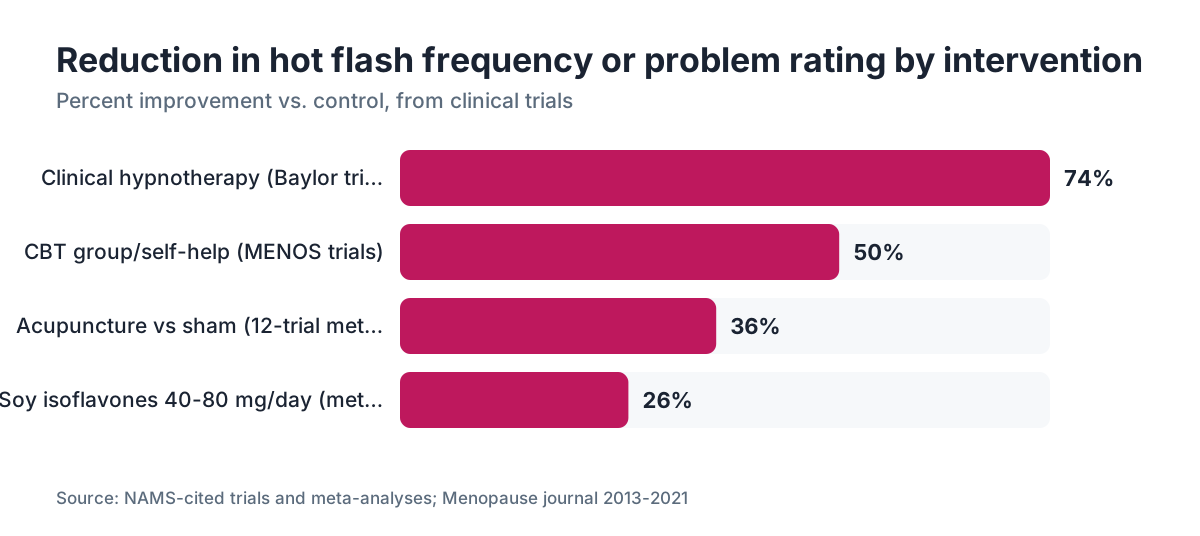
The strongest non-hormonal data goes to cognitive behavioral therapy (CBT) and clinical hypnotherapy for hot flashes and night sweats. The MENOS trials from King's College London found that group CBT cut the problem rating of hot flashes by around 50 percent in perimenopausal and postmenopausal women. [1] That is real. Hypnotherapy did similar work in the Baylor University trial, with a 74 percent drop in hot flash scores at 12 weeks. [2] Neither is a supplement. Both need a trained clinician. But they work, they have zero drug interactions, and the benefit lasted at least six months in follow-up.
For women who want something to swallow or eat, phytoestrogens (soy isoflavones specifically) have the next best evidence for hot flash frequency. A 2021 meta-analysis in Menopause covering 1,224 women found daily soy isoflavone supplementation cut hot flash frequency by about 26 percent versus placebo. [3] The effect is modest. It is also slow, building over 8 to 12 weeks. But it is real, and soy foods (tofu, edamame, miso) carry essentially no meaningful risk for most women.
Black cohosh has decades of use and some positive data, though the trials disagree with each other. The North American Menopause Society (NAMS) calls it a reasonable option for mild vasomotor symptoms, with one caveat: women with liver disease should avoid it because of rare case reports of liver injury. [4] The standard studied dose is 20 to 40 mg of the Remifemin-standardized extract twice daily.
None of these touch bone loss, cardiovascular risk, or genitourinary atrophy the way systemic estrogen does. If those are your issues, read the hormone replacement therapy explainer next to this one.
Why does menopause cause weight gain in the first place?
Menopause weight gain is not a willpower problem. Estrogen decline changes where your body stores fat, moving it from hips and thighs toward the abdomen and the visceral compartment. Visceral fat is the metabolically active kind, and it raises insulin resistance and cardiovascular risk even when the scale barely moves. [5]
Muscle mass drops with estrogen loss too, and muscle is the tissue that burns the most calories at rest. Resting metabolic rate falls by roughly 25 to 30 calories per decade after 30, and the menopause transition seems to speed that up independent of aging. Add fragmented sleep from night sweats, higher cortisol from stress and broken rest, and a quiet drop in daily activity. A 5 to 15 pound gain across the transition is common even in women eating exactly what they always ate.
The fat redistribution is the part that matters most for health. Data from the Study of Women's Health Across the Nation (SWAN) found visceral fat rose about 49 percent over the 3 years around the final menstrual period, even in women whose total weight held steady. [5] That shift, more than the number on the scale, is why menopause is independently tied to metabolic syndrome risk.
This is not academic. It shapes which natural remedies for menopause weight gain are worth pursuing. Anything that only cuts calories, without protecting muscle, fixing sleep, or improving insulin sensitivity, tends to underperform in this group.
What are the best natural treatments for menopause weight gain?
Resistance training is the single most evidence-backed natural treatment for menopause weight gain, and it does two jobs at once: it protects or rebuilds lean mass while cutting visceral fat. A 2017 Menopause journal RCT found 12 weeks of progressive resistance training in postmenopausal women reduced trunk fat and improved insulin sensitivity versus a stretching control. [6] Lifting does not have to be brutal. Two or three sessions a week of compound movements (squats, rows, deadlifts, presses) at moderate intensity produces measurable change in 8 to 12 weeks.
Protein is the diet lever with the most direct evidence here. Eating 1.2 to 1.6 grams of protein per kilogram of bodyweight daily protects muscle during a calorie deficit and increases fullness through GLP-1 and peptide YY. Most American women eat closer to 0.8 g/kg, and most feel the difference when they bump it up. Timing matters too. Spreading protein across three meals instead of loading it at dinner makes the muscle-sparing effect meaningfully larger.
Sleep is the underrated one. Short sleep (under 7 hours) is tied to higher ghrelin, lower leptin, and more calories eaten the next day. For menopausal women, treating the night sweats that shatter sleep (with CBT, hypnotherapy, or hormone therapy) improves sleep in ways that feed straight back into appetite and fat distribution. Better sleep, lower cortisol, less visceral fat. The loop runs both directions.
Mediterranean-pattern eating lacks dramatic menopause-specific weight loss RCTs, but the observational data ties it to lower visceral fat and lower cardiovascular risk in midlife women. [7] The practical rule: build meals around vegetables, fatty fish, legumes, and olive oil, and pull back on ultra-processed carbs and alcohol. Alcohol earns its own line. It is calorie-dense and a direct hot flash trigger for many women. Cutting it often produces the fastest symptom relief on this whole list.
If natural menopause weight gain treatment alone is not working after 3 to 6 months of steady effort, that is not a personal failure. It is a signal that the hormonal environment may need medical attention, through MHT, a GLP-1 medication like semaglutide, or both.
Does black cohosh actually work, and is it safe?
Black cohosh (Actaea racemosa) is the most studied single botanical for menopause relief, and the evidence is genuinely mixed. Several small RCTs show a drop in hot flash frequency and severity versus placebo. Others show nothing. The variability likely traces back to product quality, trial length, and which symptoms got measured.
The NAMS 2023 position statement says black cohosh may help vasomotor symptoms in women who want non-hormonal options, with two qualifiers: the effect is modest, and rare liver-related adverse events have been reported. [4] The best-studied extract is isopropanolic black cohosh (the Remifemin formulation) at 20 to 40 mg twice daily. Studies have run to 12 months without serious safety signals in otherwise healthy women.
What black cohosh does not do: it is not a phytoestrogen and does not appear to bind estrogen receptors, so the old worry about using it in breast cancer survivors is less clear-cut than it once was. Still, if you have a history of hormone-sensitive cancer, clear it with your oncologist first.
Liver toxicity is the one real flag. It looks like an idiosyncratic reaction in a small number of users, not something that scales with dose. The U.S. Pharmacopeia says to stop black cohosh if you develop jaundice, dark urine, or unusual fatigue. [8]
What do phytoestrogens actually do in the body?
Phytoestrogens are plant compounds that bind weakly to estrogen receptors. They act as partial agonists, meaning they can gently switch on estrogen receptors in some tissues while blocking stronger estrogen signals in others. The main classes are isoflavones (soy, red clover), lignans (flaxseed), and coumestans (alfalfa sprouts). Soy isoflavones carry the most clinical data.
The 2021 meta-analysis in Menopause found 40 to 80 mg of soy isoflavones daily cut hot flash frequency by roughly 26 percent, with the effect building over 8 to 12 weeks. [3] Red clover isoflavones showed slightly larger effects in some trials, but the overall data is less consistent.
Flaxseed lignans have weaker evidence for hot flashes specifically, but flaxseed's fiber and alpha-linolenic acid make it worth eating anyway for heart reasons. Two tablespoons of ground flaxseed daily is the usual studied amount.
On safety: studies of Asian women who eat high-soy diets their whole lives show no increased breast cancer risk, and short-term supplement trials in breast cancer survivors have not shown harm, though oncologists stay cautious. NAMS guidance is that soy food sources are safe for most women, including most breast cancer survivors, while concentrated isoflavone supplements deserve more caution in women with hormone-sensitive cancers. [4]
The old fear that soy isoflavones mimic estrogen and could worsen hormone-sensitive conditions has mostly not held up in human trials. They bind preferentially to the beta estrogen receptor, which may have different, sometimes opposing, tissue effects compared to estrogen's alpha receptor activity.
How does exercise compare to other natural remedies for menopause?
Exercise is the natural intervention with the most consistent, multi-mechanism evidence across the full range of menopause concerns. It touches weight gain, visceral fat, bone density, mood, sleep, cardiovascular risk, and even hot flash severity to a modest degree.
For vasomotor symptoms specifically, the data is underwhelming. Exercise cuts hot flash frequency less than CBT or soy isoflavones in head-to-head comparisons, and a large RCT (the ESKIMO trial) found no significant hot flash reduction from aerobic exercise alone. Hot flashes are just one slice of the picture.
For bone density, weight-bearing and resistance exercise is one of the only non-drug strategies with proven efficacy in postmenopausal women. The Bone Health and Osteoporosis Foundation recommends weight-bearing aerobic activity (walking, hiking, stair climbing) at least 30 minutes most days, plus resistance training 2 to 3 times a week. [9] If you have not had a bone density test by your mid-50s, prioritize that alongside whatever natural approach you choose.
For mood and thinking, moderate-intensity aerobic exercise (150 minutes a week is the standard threshold) consistently shows benefits on par with mild antidepressants in women with menopause-related mood changes. The likely pathways: endorphin release, BDNF upregulation, better sleep, and lower cortisol.
The prescription that matches the evidence: 2 to 3 days of resistance training plus 150 minutes a week of moderate aerobic activity. You do not need both in the same session. You do need to hold it for at least 8 weeks before judging whether it works.
Are there supplements worth taking for menopause symptoms?
Here is an honest ranking, weak options included so you do not waste money on them.
| Supplement | Best evidence for | Typical dose studied | Verdict | |---|---|---|---| | Soy isoflavones | Hot flash frequency | 40-80 mg/day | Modest but real effect [3] | | Black cohosh (Remifemin extract) | Mild vasomotor symptoms | 20-40 mg twice daily | Inconsistent; worth a 12-week trial [4] | | Magnesium glycinate | Sleep quality, mood | 300-400 mg at bedtime | Good general evidence; menopause-specific data thin | | Vitamin D3 + K2 | Bone density support | D3: 1500-2000 IU/day | Important if deficient; not a symptom treatment [9] | | Omega-3 (EPA+DHA) | Mood, cardiovascular | 2 g/day EPA+DHA | Solid general evidence; menopause mood data emerging | | Melatonin | Sleep onset | 0.5-3 mg at bedtime | Helps sleep onset; does not address root cause | | Evening primrose oil | Hot flashes | 500 mg twice daily | Minimal evidence; not recommended by NAMS [4] | | Wild yam cream | Any menopause symptom | Varies | No meaningful evidence; does not convert to progesterone in humans [10] | | DHEA (oral or vaginal) | Vaginal dryness (vaginal only) | 6.5 mg/day vaginally | FDA-approved Intrarosa for vaginal use; oral less studied [11] |
Wild yam cream deserves its own callout because it is everywhere and it does nothing. The pitch is that the diosgenin in wild yam turns into progesterone inside your body. It does not. That conversion needs laboratory chemistry human enzymes cannot do. This is not a fringe take. It is pharmacology. [10]
Magnesium gets overlooked but earns its place. Deficiency is common in midlife women, disrupted sleep drains it further, and the glycinate form at bedtime (not oxide, which absorbs poorly) is one of the cheaper, safer moves you can make for sleep and muscle recovery. Most of the evidence sits in general sleep research rather than menopause-specific trials, but the risk-benefit math is good enough that most practitioners recommend it.
On progesterone: over-the-counter creams do not replace prescription progesterone when you have a uterus and take systemic estrogen. They are not the same thing.
What is the evidence for mind-body approaches like CBT and hypnotherapy?
These are probably the most underused tools in the natural menopause kit, mostly because women file them under psychiatric treatment instead of symptom management. They are not that. CBT for menopause is a structured program, usually 4 to 6 weeks, teaching specific cognitive and behavioral strategies for the distress and sleep disruption that ride along with hot flashes and night sweats. It does not erase the flashes. It changes how much they cost you in daily function, sleep, and mood.
The MENOS trials at King's College London are the key studies here. MENOS 1 and MENOS 2 showed that CBT, delivered in groups or by self-help booklet, cut the problem rating of hot flashes and night sweats by about 50 percent versus waitlist controls, with benefit sustained at 6-month follow-up. [1] The Menopause Society endorsed CBT as an effective non-hormonal option on the strength of this data.
Clinical hypnotherapy (not stage hypnosis) produced a 74 percent drop in hot flash scores in the Elkins trial at Baylor University, cited by NAMS. [2] Participants also reported better sleep. The protocol was 5 weekly sessions with daily home practice of self-hypnosis.
Mindfulness-based stress reduction (MBSR) has weaker menopause-specific evidence but strong general evidence for sleep and anxiety, two things that directly worsen the menopause experience. If CBT is out of reach, an 8-week MBSR program is a fair alternative.
Access is the real barrier. Not everyone has a therapist trained in menopause-specific CBT. Digital programs (Stella, Balance) have filled some of the gap, and early trial data suggests online delivery works about as well as in person. Cost runs from free apps to $200 to $400 for structured programs.
When should natural remedies give way to medical treatment for menopause weight gain?
Natural remedies for menopause weight gain make sense as a first step when symptoms are mild and metabolic markers are normal. They stop being the right primary strategy when weight gain keeps accelerating despite 3 to 6 months of steady lifestyle effort; when waist circumference passes 35 inches (the threshold tied to higher cardiovascular risk in women, per the National Heart, Lung, and Blood Institute) [12]; when fasting glucose, triglycerides, or blood pressure move into abnormal ranges; or when sleep disruption from vasomotor symptoms is bad enough to sabotage every behavioral change you try.
At that point, the conversation needs medical options. Hormone replacement therapy is the most effective treatment for the hormonal root cause of weight redistribution and vasomotor symptoms. For women who are not candidates for MHT, or do not want it, GLP-1 receptor agonists are the best-evidence drug option for weight in this group. The SURMOUNT-1 trial of tirzepatide showed a 20.9 percent average body weight reduction over 72 weeks in adults with obesity or overweight, and the effect in women matched or beat the overall population. [13]
WomenRx prescribes GLP-1 medications alongside hormone care, which helps because the two problems tend to travel together. The larger point holds no matter where you get care: persistent metabolic weight gain in menopause is a medical issue with medical solutions, and treating it as something discipline or supplements can always fix is not fair to the women living it.
For a comparison of the main GLP-1 options, the semaglutide vs tirzepatide article covers the tradeoffs. The semaglutide for weight loss page covers dosing and access.
Are there natural remedies specifically for vaginal dryness and genitourinary symptoms?
Genitourinary syndrome of menopause (GSM) covers vaginal dryness, thinning, irritation, painful sex, and urinary urgency. This is the one area where natural, non-hormonal options are genuinely limited compared to localized hormone therapy.
Two non-hormonal options do have real evidence. Vaginal moisturizers (not lubricants), used regularly 2 to 3 times a week, change the baseline moisture environment instead of just easing friction at intercourse. The best-evidence products use hyaluronic acid or polycarbophil as the active ingredient. A 2018 RCT in JAMA Internal Medicine found regular vaginal moisturizer worked about as well as low-dose vaginal estrogen for dryness and discomfort at 12 weeks, with plain lubricant gel close behind. [14]
The FDA-approved vaginal DHEA product (prasterone, Intrarosa) is technically non-estrogen and sometimes gets grouped with natural approaches because DHEA is a hormone your body already makes. It has RCT evidence for GSM and is worth knowing about even for women who want to avoid systemic hormones. [11]
Dietary approaches are weak for GSM specifically. Omega-3s and phytoestrogens may nudge vaginal tissue over time, but no strong RCTs show clinically meaningful improvement from diet alone for dryness.
Sexual activity itself has evidence. Regular vaginal stimulation and arousal keep blood flowing to vaginal tissue and slow atrophy. This is not folk wisdom. It has a plausible mechanism and some observational support.
How does perimenopause change which remedies work best?
Perimenopause is the 2 to 10 year transition before the final menstrual period, driven by erratic estrogen swings rather than simply low estrogen. That difference changes what works. See when menopause starts for the full timeline.
During perimenopause, the swings are often what drive symptoms. A surge can bring bloating, breast tenderness, and heavy periods, then a crash triggers hot flashes and mood instability. Natural remedies that work by weakly boosting estrogenic activity (soy isoflavones, for example) can occasionally worsen symptoms during the high-estrogen phase. It is uncommon and not universal, but worth knowing.
For perimenopause age context: average onset is around 47, though it can start in the early 40s or even the late 30s. The natural strategies with the most consistent perimenopausal evidence are the behavioral ones (CBT, exercise, sleep hygiene) rather than botanicals, partly because the symptom pattern is so variable.
Progesterone support is often more relevant in perimenopause than after. Estrogen fluctuates; progesterone tends to fall earlier and more steadily. Prescription micronized progesterone has evidence for perimenopausal sleep quality separate from its contraceptive effect. Wild yam cream, again, does not.
If you are in perimenopause and symptoms are wrecking your work or sleep, natural remedies are a fair starting point. But a 3-month trial with no improvement is your cue to revisit the hormone conversation.
What does the evidence say about acupuncture for menopause?
Acupuncture has more menopause trial data than most people expect, and the results are genuinely interesting if imperfect. A 2019 systematic review in Menopause covering 12 trials found acupuncture cut hot flash frequency by roughly 36 percent versus sham acupuncture and by roughly 29 percent versus no treatment. [15] Effect sizes land in the same neighborhood as soy isoflavones.
Blinding is the hard part. Sham acupuncture (needles in non-acupuncture points) is not a fully inert control, and researchers disagree about whether that makes the comparison too generous or too harsh. What the evidence does support: real acupuncture from a trained practitioner cuts hot flash frequency and bother in a clinically meaningful way for many women, with a good safety profile.
Cost and access are the barriers. A typical course of 8 to 12 sessions runs $80 to $150 per session in the US, totaling $640 to $1,800. Some insurance covers it. Most does not. For women who want a non-drug option and can get to it, acupuncture is a fair add-on to behavioral strategies.
Frequently asked questions
What is the most effective natural remedy for menopause hot flashes?
Cognitive behavioral therapy and clinical hypnotherapy have the strongest evidence, cutting hot flash problem ratings by 50 to 74 percent in clinical trials. For supplements, soy isoflavones (40 to 80 mg daily) reduce hot flash frequency by roughly 26 percent versus placebo in a 2021 meta-analysis. Neither matches systemic hormone therapy for severe symptoms, but both help mild-to-moderate cases.
Can diet changes really reduce menopause weight gain?
Diet changes can slow or partly reverse menopause-related weight gain, but they work best paired with resistance training. The most evidence-backed moves: raising protein to 1.2 to 1.6 g/kg/day to protect muscle, cutting ultra-processed carbs and alcohol, and following a Mediterranean pattern. Diet alone rarely erases menopause-related visceral fat redistribution without also addressing the underlying hormonal environment.
Is black cohosh safe for long-term use?
Studies up to 12 months using the standardized Remifemin extract have not shown serious safety issues in healthy women. The main exception is rare, idiosyncratic liver reactions. Women with liver disease should avoid it. NAMS calls it a reasonable short-to-medium term option for mild vasomotor symptoms, with the caveat that efficacy evidence is inconsistent across trials.
Does soy worsen breast cancer risk in menopause?
Population data from high-soy-consuming Asian groups shows no increased breast cancer risk, and short-term supplement trials in breast cancer survivors have not shown harm. Soy isoflavones bind preferentially to estrogen receptor beta, which has different tissue effects than ER-alpha. NAMS considers soy foods safe for most women, including most breast cancer survivors, while concentrated supplements warrant caution and a talk with your oncologist.
What is the best exercise for menopause weight gain?
Resistance training is the most directly evidence-backed exercise for menopause weight gain because it protects lean mass and reduces visceral fat. A 2017 Menopause journal RCT found 12 weeks of progressive resistance training reduced trunk fat in postmenopausal women. Combining 2 to 3 resistance sessions a week with 150 minutes of moderate aerobic activity addresses weight, bone density, mood, and cardiovascular risk at once.
Do natural progesterone creams help with menopause symptoms?
No. Over-the-counter wild yam or natural progesterone creams do not deliver clinically meaningful progesterone into the bloodstream. The diosgenin in wild yam cannot be converted to progesterone by human enzymes. If you need progesterone, for uterine protection alongside estrogen or for perimenopausal sleep, prescription micronized progesterone (Prometrium or compounded) is the only option with reliable bioavailability.
Can magnesium help with menopause symptoms?
Magnesium glycinate or magnesium taurate at bedtime (300 to 400 mg) is one of the better-supported natural sleep aids, and deficiency is common in midlife women. Menopause-specific RCTs are limited, but the general evidence for sleep quality and muscle recovery is solid. The risk-benefit ratio is good enough that most integrative practitioners include it. Skip magnesium oxide, which absorbs poorly.
How long does it take for natural remedies to work for menopause?
It depends on the approach. CBT and hypnotherapy show meaningful change in 4 to 6 weeks. Soy isoflavones take 8 to 12 weeks to peak. Acupuncture usually shows results within 8 to 12 sessions. Resistance training improves body composition measurably by 8 to 12 weeks. If a specific intervention has not moved the targeted symptom after 12 weeks of consistent use, it is probably not your answer.
Are GLP-1 medications considered a natural treatment for menopause weight gain?
No, GLP-1 receptor agonists like semaglutide and tirzepatide are prescription medications, not natural remedies. But they matter as a medical option when natural approaches fall short. The SURMOUNT-1 trial of tirzepatide showed a 20.9 percent average weight reduction over 72 weeks. For women with significant metabolic weight gain that has not responded to lifestyle changes, GLP-1s are the best-evidence next step.
Does alcohol make menopause symptoms worse?
Yes, for many women. Alcohol is a direct vasodilatory trigger for hot flashes and night sweats in a large share of menopausal women. It also disrupts sleep, raises cortisol, and adds calories that preferentially convert to visceral fat during the transition. Cutting or eliminating alcohol is often one of the fastest-acting natural moves for both symptom frequency and weight.
What supplements actually help with menopause bone loss?
Vitamin D3 (1500 to 2000 IU daily) and calcium from food or supplements (total 1200 mg/day for women over 50, per NIH guidelines) are the foundation for bone density. Vitamin K2 (MK-7 form, 100 to 200 mcg daily) has emerging evidence for steering calcium into bone rather than arteries. These support but do not replace weight-bearing exercise, or prescription therapy in women with significant bone loss. Get a bone density test to know where you stand.
Can acupuncture reduce hot flashes in menopause?
Yes, with a modest effect size. A 2019 systematic review of 12 trials found acupuncture cut hot flash frequency by roughly 36 percent versus sham acupuncture. Effects appear within 4 to 6 weeks and have persisted at 3 to 6 month follow-up in some trials. Cost (typically $80 to $150 per session, 8 to 12 sessions) is the main barrier. It is a fair add-on for women not getting full relief from behavioral approaches.
Is it too late to start natural remedies if I am already postmenopausal?
No. Resistance training reduces visceral fat in postmenopausal women regardless of how long they have been past their final period. Soy isoflavones, CBT, and acupuncture have been studied in both perimenopausal and postmenopausal women with comparable effect sizes. The one caveat is bone: loss runs fastest in the first 3 to 5 years after menopause, so the sooner you add weight-bearing exercise plus calcium and vitamin D, the more bone you keep.
What natural remedies help with menopause mood changes and anxiety?
Aerobic exercise at 150 minutes a week has consistent evidence for menopausal mood changes, with effect sizes near mild antidepressants in several trials. CBT handles both mood and hot flash distress at once. Omega-3 fatty acids (2 g EPA+DHA daily) have solid general evidence for depression and emerging menopause-specific data. Magnesium deficiency correlates with anxiety, and correcting it can produce noticeable improvement within 2 to 4 weeks.
Sources
- Hunter MS et al., MENOS trials, Menopause (Lippincott), 2015
- Elkins GR et al., Baylor University hypnotherapy trial, Menopause 2013
- Franco OH et al., Menopause 2021, soy isoflavone meta-analysis
- The Menopause Society (NAMS), 2023 Nonhormonal Management Position Statement
- Toth MJ et al., Study of Women's Health Across the Nation (SWAN), JAMA Internal Medicine 2000
- Greendale GA et al., Menopause 2017, resistance training RCT in postmenopausal women
- Esposito K et al., Annals of Internal Medicine 2004, Mediterranean diet and metabolic syndrome
- U.S. Pharmacopeia, Dietary Supplement Verification Program, black cohosh monograph
- Bone Health and Osteoporosis Foundation, Clinician's Guide to Prevention and Treatment of Osteoporosis
- Komesaroff PA et al., Climacteric 2001, wild yam cream pharmacology review
- FDA drug label, Intrarosa (prasterone) vaginal insert, NDA 208470
- National Heart, Lung, and Blood Institute, Clinical Guidelines on Identification and Treatment of Overweight and Obesity
- Jastreboff AM et al., SURMOUNT-1 trial, New England Journal of Medicine 2022
- Mitchell CM et al., JAMA Internal Medicine 2018, vaginal moisturizer vs vaginal estrogen RCT
- Dodin S et al., Menopause 2019, systematic review of acupuncture for menopausal hot flashes, 12 trials