Natural progesterone: what it is, how it works, and who needs it
TL;DR: Natural progesterone, also called bioidentical progesterone, is chemically identical to the hormone your ovaries make. FDA-approved oral micronized progesterone (Prometrium) and progesterone vaginal gel are the best-studied forms. Most perimenopausal and postmenopausal women who have a uterus need progesterone alongside estrogen to protect the uterine lining. Benefits include better sleep and lower clot risk compared to synthetic progestins.
What is natural progesterone, and how is it different from synthetic progestins?
Natural progesterone means a molecule that is structurally identical to the progesterone your body produces. In clinical and regulatory language, it is often called bioidentical progesterone or micronized progesterone. The word "natural" does not mean it comes directly from your body or a plant with no processing: it is typically derived from wild yam or soy and then chemically converted in a lab into a molecule that perfectly matches human progesterone. What matters is the final structure, and that structure is identical to yours [1].
Synthetic progestins, by contrast, are molecules designed to mimic progesterone's effects but are chemically different. Examples include medroxyprogesterone acetate (MPA, brand name Provera), norethindrone, and levonorgestrel. These work at the progesterone receptor but also bind, to varying degrees, to androgen, glucocorticoid, and mineralocorticoid receptors. Those off-target effects are why progestins have a somewhat different side effect and risk profile than natural progesterone [2].
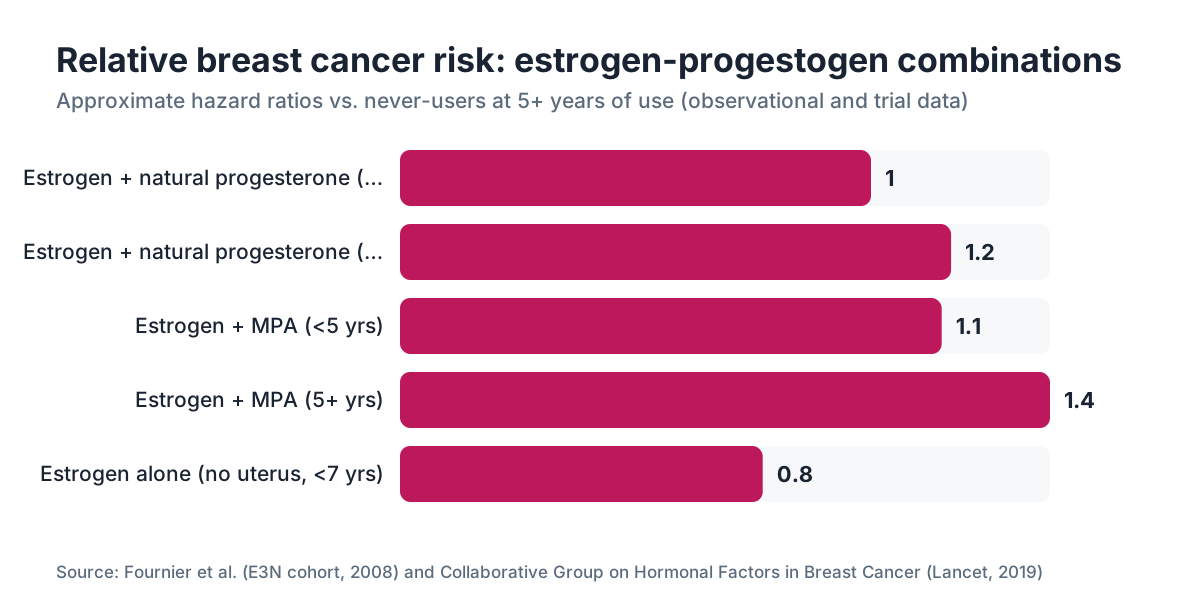
This distinction is more than semantic. The Women's Health Initiative (WHI) trial that raised alarm about hormone therapy in 2002 used conjugated equine estrogen combined with MPA, not with natural progesterone. When researchers re-examined data from the French E3N cohort study, which tracked over 80,000 women, those who used estrogen with natural progesterone had no significantly elevated breast cancer risk at 5 years compared to never-users, while those using estrogen with synthetic progestins did [3]. The data are not perfectly clean, but the difference is real enough that NAMS, the Menopause Society, specifically calls it out in their guidance [1].
So: natural progesterone and synthetic progestins are not interchangeable, even though both are often called "the progestogen" in a hormone therapy regimen.
What does progesterone actually do in your body?
Progesterone has three jobs most women know about, and several they do not.
The most familiar job is uterine protection. Estrogen causes the uterine lining (endometrium) to grow. Unchecked growth is a setup for endometrial hyperplasia and, eventually, endometrial cancer. Progesterone counteracts that growth, thinning and stabilizing the lining. Any woman who still has her uterus and is taking systemic estrogen must take a progestogen alongside it [1]. This is not optional.
The second job is in pregnancy, where progesterone keeps the uterine environment stable and suppresses uterine contractions. This is why low progesterone is sometimes implicated in early pregnancy loss, though the data on progesterone supplementation for recurrent miscarriage is complicated and still being refined [4].
The third, and increasingly recognized, job is in the brain. Progesterone metabolizes to allopregnanolone, a neurosteroid that binds to GABA-A receptors, the same receptor system that benzodiazepines and alcohol act on. That is why progesterone has a calming, sleep-promoting effect. Oral micronized progesterone in particular, because it goes through first-pass liver metabolism, produces high levels of allopregnanolone. Women frequently report better sleep on oral progesterone than on synthetic progestins, and small controlled trials support this [5].
Progesterone also has effects on bone metabolism, mood regulation, thyroid function, and fluid balance (it is naturally natriuretic, meaning it helps the body shed sodium and water, which counteracts some of aldosterone's effects). These are real effects, though the clinical evidence for some of them is weaker than for the uterine and sleep effects. Be skeptical of claims that progesterone will fix everything hormonal in your life. The honest evidence is strongest for uterine protection, sleep, and possibly mood.
What forms of natural progesterone are available, and which are FDA-approved?
There are two FDA-approved forms of natural (bioidentical) progesterone, and then a longer list of compounded options.
First, oral micronized progesterone. Sold as Prometrium (and available in generic form), it comes in 100 mg and 200 mg capsules. The capsules are suspended in peanut oil, which matters if you have a peanut allergy. The typical dose for endometrial protection when combined with daily estrogen is 100 mg taken at bedtime; with cyclic estrogen regimens, 200 mg for 12 to 14 days per month is more common. The FDA approved Prometrium in 1998 [6].
Second, progesterone vaginal gel. Sold as Crinone (4% and 8%) and Prochieve, these are FDA-approved primarily for infertility and luteal phase support, not for menopausal hormone therapy. They deliver progesterone locally to the uterus with limited systemic absorption. Some clinicians use vaginal progesterone off-label for perimenopausal women who cannot tolerate oral progesterone's sedating effects, but evidence for adequate endometrial protection via the vaginal route in menopausal HRT is thinner than for oral [9].
Compounded progesterone comes in oral capsules, topical creams, gels, troches (lozenges), and vaginal suppositories. The FDA does not approve compounded medications, though compounding itself is legal under specific pharmacy regulations. Topical progesterone cream is popular, but absorption through skin is variable and often insufficient to protect the endometrium. The Endocrine Society's 2016 position statement on bioidentical hormones explicitly notes that there is insufficient evidence that progesterone creams reliably protect the endometrium [2]. That is a serious concern for any woman with a uterus.
A useful way to see this:
| Form | FDA-approved? | Endometrial protection evidence | Sedation effect | Notes | |---|---|---|---|---| | Oral micronized progesterone (Prometrium) | Yes | Strong | Yes (take at bedtime) | Peanut oil base | | Vaginal progesterone gel (Crinone) | Yes (infertility) | Limited for MHT | Minimal | Off-label for MHT | | Compounded oral capsule | No | Reasonable if dosed correctly | Yes | Quality varies by pharmacy | | Topical cream (compounded) | No | Poor/insufficient | Minimal | Not recommended if uterus intact | | Troche/lozenge | No | Uncertain | Variable | Absorbed buccally, bypasses liver |
If you have a uterus, the oral micronized progesterone pill is the form with the most evidence behind it. That is where I would start.
Who needs natural progesterone, and who doesn't?
The answer depends almost entirely on whether you still have your uterus.
If you have a uterus and are taking systemic estrogen, you need a progestogen. Full stop. The risk of endometrial cancer from unopposed estrogen is substantial: studies show roughly a 2 to 12 times higher risk depending on dose and duration [1]. Natural progesterone (oral micronized) is one appropriate choice. Synthetic progestins are another. Your provider's job is to help you weigh which is better for you specifically.
If you had a hysterectomy, you do not need a progestogen for endometrial protection because you no longer have an endometrium. Some women and providers choose to add progesterone anyway for its sleep benefits or theoretical breast-protective effects, but that is an optional, individualized decision, not a safety requirement.
Perimenopausal women, meaning women in the years before the final menstrual period when cycles become irregular, often have low progesterone production even when estrogen levels are still relatively normal. This is called progesterone insufficiency or luteal phase deficiency. Symptoms can include irregular periods, PMS-type mood changes, poor sleep, and heavy or prolonged bleeding. In this group, low-dose progesterone (often 100 mg orally at bedtime for part of the cycle) is sometimes used to smooth out that transition, though not all providers agree on the evidence base for this approach.
Women who are pregnant or trying to conceive may receive progesterone supplementation (typically vaginal or injectable) if their luteal phase progesterone is low or if they have had recurrent miscarriage. This is a distinct clinical use from menopause management.
For perimenopause age details and what to expect as cycles shift, that context matters a lot when discussing whether and how much progesterone you need. Similarly, the decision about progesterone is inseparable from the broader hormone replacement therapy conversation.
What does the research actually say about progesterone and breast cancer risk?
This is where the conversation gets genuinely nuanced, and where you need to be careful about oversimplified claims in both directions.
The 2002 WHI trial found an increased breast cancer risk with combined estrogen plus MPA (a hazard ratio of about 1.26 after 5 years of use) [7]. That finding scared millions of women off hormone therapy, many of whom went on to suffer more fractures, more hot flashes, and worse quality of life than they needed to. The caveat that got lost: the trial used MPA, not natural progesterone.
The French E3N cohort study, with over 80,000 postmenopausal women followed for up to 8 years, found that women using estrogen plus natural progesterone did not have a significantly elevated breast cancer risk compared to non-users, while women using estrogen plus progestins did [3]. This is observational data, not a randomized trial, so confounding is possible. But the biology fits: natural progesterone does not appear to drive breast cell proliferation the way MPA does in laboratory studies.
A 2019 analysis in the Lancet found that any progestogen use, including natural progesterone, was associated with some increase in breast cancer risk with longer use, with the risk smaller for natural progesterone than for MPA [8]. For less than 5 years of use, the absolute excess risk tied to natural progesterone was small. For longer durations, the picture gets murkier.
Here is the honest summary. Natural progesterone appears to carry a lower breast cancer risk signal than synthetic progestins, particularly MPA. It is probably not entirely risk-free, especially with long-term use. Women with BRCA mutations or a strong family history need individualized counseling from a specialist, not a blanket answer from any article, including this one. The Menopause Society states that estrogen-progestogen therapy raises breast cancer risk, and that the risk may be lower with micronized progesterone than with synthetic progestins [1].
How does oral micronized progesterone help with sleep?
Sleep disruption is one of the most underrated symptoms of perimenopause and menopause. It is also one of the few places where natural progesterone has a real, reasonably well-documented edge over synthetic progestins.
Oral progesterone is metabolized in the gut and liver into allopregnanolone and other neuroactive steroids that act as positive allosteric modulators of GABA-A receptors [5]. In plain terms, they turn up the calming, inhibitory tone of the nervous system. The sedating effect is noticeable enough that 100 mg at bedtime is the standard dosing instruction, not because the timing changes uterine protection, but because most women fall asleep more easily on it and find any morning grogginess manageable when they take it at night.
A small but meaningful randomized controlled trial published in the journal Menopause in 2018 found that oral micronized progesterone improved objective sleep measures compared to placebo in postmenopausal women, particularly slow-wave sleep [5]. Synthetic progestins do not produce the same allopregnanolone pathway effects, which is why women who switch from MPA to oral micronized progesterone often report they sleep better.
If you are waking at 3 a.m., ruminating, or watching your sleep quality slide in your 40s or early 50s, low progesterone may be part of it. That said, sleep in perimenopause is also wrecked by estrogen-driven hot flashes and by normal aging changes in sleep architecture. Progesterone is one piece, not the whole answer.
What is the right dose of natural progesterone for hormone therapy?
Standard dosing for oral micronized progesterone in menopause hormone therapy comes in two patterns.
100 mg daily (continuous regimen, taken with estrogen every day). This is used when the goal is no menstrual bleeding, which is more common in postmenopausal women.
200 mg for 12 to 14 days per month (sequential regimen, used with cyclic estrogen). This mimics a more natural cycle and typically produces a scheduled withdrawal bleed. It is used more often in perimenopause.
These are FDA-approved dosing recommendations for Prometrium [6]. Compounded progesterone dosed similarly (100 or 200 mg oral capsule) likely reaches similar serum levels, though batch-to-batch consistency at compounding pharmacies varies.
Vaginal progesterone gel for menopausal HRT is not well-standardized because it is off-label for that indication. Some providers use 45 to 100 mg vaginally 2 to 3 times weekly. Serum progesterone levels run lower with vaginal administration than oral, but local uterine levels may be adequate. The evidence for endometrial protection via this route in HRT is limited, which is a genuine caution [9].
Blood tests can measure serum progesterone, but with oral dosing the interpretation is tricky because progesterone is metabolized so fast. A 4-hour post-dose level of 5 to 10 ng/mL is often cited as a target for oral progesterone, but these ranges are not as well-standardized as thyroid or estradiol reference ranges. If a provider is ordering lots of serum progesterone tests to "optimize" your dose to the nanogram, that is beyond what the evidence supports.
For the broader hormone therapy picture, our article on hormone replacement therapy covers how progesterone fits with estrogen choices, including the estrogen patch.
Is over-the-counter progesterone cream the same as prescription natural progesterone?
No. This is one of the most common and most consequential misunderstandings in women's health.
Over-the-counter progesterone creams, sold in health food stores and online under names like Emerita Pro-Gest or various "bioidentical" creams, typically contain low doses of progesterone (often 20 mg per application). The progesterone in these creams may be extracted from yam, but wild yam extract on its own does not convert to progesterone in your body. Your liver cannot do that conversion, even though laboratory processes can [10]. Products labeled "wild yam cream" without actual pharmaceutical-grade progesterone are essentially inert for any hormonal purpose.
For creams that do contain real progesterone, the skin absorption problem remains. Progesterone is lipophilic and accumulates in fat tissue, so blood serum levels often do not reflect how much you have applied. Skin-applied progesterone does not reliably reach the uterine concentrations needed to prevent endometrial hyperplasia when estrogen is on board [11].
The Endocrine Society is direct on this point, stating in its 2016 position statement that there is a lack of evidence to support claims that compounded bioidentical hormones are safer or more effective than those approved by the FDA [2]. OTC creams get even less oversight than compounded preparations.
If you have a uterus and are using estrogen, an OTC cream is not a substitute for prescription progesterone. If you do not have a uterus and you use a cream because you believe it helps you sleep or feel calmer, the pharmacological plausibility is low, though placebo effects are real and not nothing. Just be honest with yourself about what you are paying for.
What are the side effects of natural progesterone?
The most common side effect of oral micronized progesterone is sedation, which is why bedtime dosing is standard. Most women find this manageable, and plenty welcome it as a sleep aid. A minority find morning grogginess hard, especially if they metabolize progesterone slowly.
Other reported side effects include breast tenderness (less common than with synthetic progestins), bloating, mild mood changes in either direction, and shifts in bleeding patterns. Some women feel more emotionally flat or occasionally low on progesterone, while others find it calming and mood-stabilizing. The variation is real, and it likely comes down to individual differences in how progesterone and its metabolites act on brain receptors.
Headaches are possible, particularly in women who are migraine-prone. Natural progesterone seems to trigger fewer migraines than synthetic progestins for many women, because its metabolites have a different central nervous system profile, but responses vary.
One advantage over MPA: natural progesterone does not appear to worsen insulin resistance, and it has a neutral to slightly favorable effect on lipid profiles compared to some progestins. Women with metabolic concerns or prediabetes may find this meaningful [2].
Progesterone also does not bind strongly to androgen receptors, so it does not typically cause acne, hair thinning, or the skin effects that show up with androgenic progestins like levonorgestrel or norethindrone. If those symptoms bothered you on a synthetic progestin, switching to natural progesterone often clears them.
Serious adverse events with natural progesterone are rare. Unlike synthetic progestins, oral micronized progesterone does not appear to raise venous thromboembolism risk [12]. That is a meaningful safety distinction for women with clotting risk factors.
Can natural progesterone help with perimenopause symptoms specifically?
Perimenopause is the transition period, often lasting 4 to 10 years, during which ovarian function declines erratically. Early on, cycles turn irregular, and one of the first hormones to drop is progesterone, because ovulation gets less consistent and less vigorous. Estrogen can be normal or even high in early perimenopause due to compensatory ovarian stimulation. So some perimenopausal women are relatively estrogen-dominant with low progesterone, though that framing is debated in endocrinology.
Common symptoms that may improve with progesterone in perimenopause include irregular or heavy periods (low-dose progesterone for part of the cycle can regulate bleeding), poor sleep, anxiety and irritability that worsen in the second half of the cycle, and breast tenderness tied to luteal phase insufficiency.
The evidence base for perimenopause-specific progesterone use is thinner than for postmenopausal HRT, partly because trials in this age group are hard to design (irregular cycles make endpoints messy). Clinically, many providers start with 100 mg oral micronized progesterone at bedtime for 2 weeks each month for perimenopausal women with the symptoms above, then adjust based on response.
For a broader map of when and why perimenopause happens, see our guides on perimenopause age and when does menopause start. Understanding the timing helps you know whether your symptoms are likely progesterone-related or driven by something else entirely.
At WomenRx, progesterone prescribing decisions are individualized based on your symptom pattern, cycle history, and whether you also need estrogen. A telehealth visit with a hormone-specialized provider can clarify which approach fits your situation.
How does natural progesterone interact with other medications or conditions?
A few interactions and contraindications are worth knowing.
Liver metabolism: oral progesterone is heavily metabolized by CYP3A4 enzymes in the liver. Drugs that induce CYP3A4 (like rifampin, carbamazepine, phenytoin, and St. John's Wort) can lower progesterone levels significantly. Drugs that inhibit CYP3A4 (like ketoconazole or some HIV medications) can raise them. If you take any of these regularly, tell your prescriber.
Breast cancer history: most oncologists advise against hormone therapy, including progesterone, in women with a history of hormone receptor-positive breast cancer. The data are not conclusive enough to say progesterone is definitely safe here, and the default is caution. Hormone receptor-negative breast cancer survivors are a different conversation, one that should happen with an oncologist who knows your case.
Depression: the link between progesterone and mood is complicated. For most women, natural progesterone is mood-neutral or mildly calming. But a subset, particularly those with a history of premenstrual dysphoric disorder (PMDD) or postpartum depression, are unusually sensitive to progesterone's neurosteroid metabolites and may feel worse mood, anxiety, or depression on it. If that is your history, start low and track your mood carefully.
Peanut allergy: Prometrium capsules are suspended in peanut oil. With a documented peanut allergy, you need a compounded formulation without peanut oil, or a different form of progesterone entirely.
Thyroid function: progesterone shifts thyroid-binding globulin and can nudge thyroid lab values. If you are on thyroid medication and start progesterone, recheck your TSH within a few months.
Nobody has excellent long-term data on natural progesterone interactions specifically, because most pharmacokinetic studies used synthetic progestins. The closest available data extrapolates from MPA studies, which is imperfect.
Should you test your progesterone levels, and what do the numbers mean?
Serum progesterone testing is useful in a few contexts and nearly useless in others.
In a regular menstrual cycle, a progesterone level drawn 7 days after ovulation (the "day 21" level, though timing to your actual ovulation matters more than the calendar date) can confirm whether you ovulated. A level above 3 ng/mL generally confirms ovulation occurred; a level above 10 ng/mL points to a strong luteal phase. Below 3 ng/mL mid-luteal is a reasonable flag for luteal phase insufficiency [4].
In postmenopausal women not on progesterone therapy, levels are predictably low (typically below 0.5 ng/mL), and testing adds little.
In women on oral micronized progesterone, serum levels are hard to interpret because progesterone is absorbed, peaks within 2 to 4 hours, then drops. A random level or a morning trough will look low even in someone on an adequate dose. Some providers check a 4-hour post-dose level targeting 5 to 10 ng/mL, but this is not standardized clinical practice, and adjusting doses based on it is not well-validated. Don't panic if a progesterone level drawn at the wrong time looks low on your therapy.
Saliva and urine testing get marketed hard by some functional medicine providers. Saliva progesterone testing is especially problematic for women using topical progesterone cream, because progesterone concentrates in saliva from sublingual or buccal absorption and produces misleadingly high readings that do not reflect actual uterine or serum concentrations. The FDA has stated that salivary hormone tests used to guide hormone therapy dosing are not validated for clinical decision-making [2].
The most reliable read on whether your progesterone therapy is working is symptom tracking, plus, if there is any concern about endometrial effects, an annual endometrial biopsy or ultrasound in women on estrogen with a uterus.
Frequently asked questions
Is natural progesterone the same as bioidentical progesterone?
Yes, these terms mean the same thing in clinical practice. Both refer to a progesterone molecule that is structurally identical to what your ovaries produce. It is typically derived from plant sources (yam or soy) and converted in a pharmaceutical lab. FDA-approved oral micronized progesterone (Prometrium) and compounded progesterone capsules both qualify as bioidentical, but they differ in regulatory oversight and quality assurance.
Can I take natural progesterone if I have had a hysterectomy?
You do not need progesterone for endometrial protection if you have had a hysterectomy, because you no longer have a uterus. Some women and providers choose to add it for sleep benefits or potential breast-protective effects, but this is optional and individualized. Women with a hysterectomy who take estrogen alone have a simpler, lower-risk HRT regimen. Discuss the risk-benefit tradeoff with a hormone-specialized provider.
How quickly does natural progesterone start working?
The sedating and sleep effects of oral micronized progesterone are often noticeable within the first few nights. Menstrual cycle regulation effects in perimenopause typically take one to two full cycles to become apparent. Endometrial protection is considered established with consistent use at adequate doses. Most women notice changes in sleep and mood within two to four weeks of starting.
Can natural progesterone cause weight gain?
Natural progesterone has less tendency to cause weight gain than some synthetic progestins, particularly those with androgenic activity. It is roughly weight-neutral for most women. Some women experience mild, temporary bloating early in use due to its mineralocorticoid effects, but this usually resolves. Unlike MPA, natural progesterone does not significantly worsen insulin resistance, which matters for women who are metabolically vulnerable.
What is the difference between progesterone cream and progesterone pills?
Progesterone cream (topical) has variable skin absorption, accumulates in fat tissue, and does not reliably achieve the blood or uterine concentrations needed to protect the endometrium. Oral micronized progesterone pills (Prometrium or compounded equivalent) deliver consistent serum levels and have strong evidence for endometrial protection. If you have a uterus and are taking estrogen, pills are the evidence-backed choice. Cream is insufficient for that purpose.
Can natural progesterone help with anxiety?
For many women, yes. Oral progesterone metabolizes to allopregnanolone, which enhances GABA-A receptor activity, producing a calming effect. Women with perimenopause-related anxiety, especially anxiety that worsens in the second half of the cycle, often report improvement. However, a subset of women with PMDD or postpartum depression history can experience the opposite: increased anxiety or mood changes. Starting low and monitoring your response carefully is wise.
Is Prometrium the same as natural progesterone?
Yes. Prometrium is the brand name for FDA-approved oral micronized progesterone 100 mg and 200 mg capsules. It is bioidentical to human progesterone, suspended in peanut oil. Generic oral micronized progesterone is also available. Prometrium is considered the gold standard for endometrial protection in women taking estrogen therapy, with the most extensive clinical trial data behind it of any progesterone formulation.
Does natural progesterone protect against breast cancer?
Evidence suggests natural progesterone carries a lower breast cancer risk signal than synthetic progestins like MPA, but it is probably not entirely risk-free with long-term use. The French E3N cohort study (80,000+ women) found no significant breast cancer elevation with estrogen plus natural progesterone at under 5 years of use. Longer use, and use in women with elevated baseline risk, requires individualized discussion with an oncologist or menopause specialist.
What are the signs that my progesterone is too low?
Low progesterone commonly shows up as irregular or heavy periods, PMS-like symptoms in the second half of the cycle (bloating, mood swings, breast tenderness), poor sleep, and anxiety that peaks premenstrually. In perimenopause, when ovulation becomes inconsistent, these symptoms often intensify. A mid-luteal serum progesterone below 3 ng/mL can confirm inadequate ovulation, though symptoms plus timing are often more informative than a single lab value.
Can I use natural progesterone without estrogen?
Yes, though the evidence base for progesterone-only therapy in menopause is thinner than for combined estrogen-progesterone regimens. Some perimenopausal women use progesterone alone for cycle regulation, sleep, and mood support when their estrogen levels are still adequate. Progesterone alone does not reliably treat hot flashes, which are estrogen-driven. If your main symptoms are estrogen-deficiency symptoms like severe hot flashes, you likely need estrogen too, not progesterone alone.
How long can I safely stay on natural progesterone?
There is no universally agreed maximum duration. NAMS guidance supports the use of hormone therapy, including progesterone, as long as benefits outweigh risks for the individual woman, with periodic reassessment. Most long-term safety data goes to 5 to 7 years. Women who remain symptomatic without HRT, or who have osteoporosis or cardiovascular indications, may have a favorable risk-benefit balance for longer use. Annual review with your prescriber is standard practice.
Is compounded progesterone as effective as Prometrium?
A well-formulated compounded oral progesterone capsule should achieve similar serum levels to Prometrium if dosed equivalently. The key variables are pharmacy quality and consistency. Compounded preparations lack FDA batch testing, so potency can vary. For most women, if peanut allergy is not an issue, FDA-approved Prometrium is the lower-risk choice for known, consistent dosing. Compounded versions are reasonable alternatives for women who need peanut-free formulations or non-standard doses.
Does natural progesterone affect bone density?
Progesterone has some direct bone-building effects through osteoblast receptors, and combined estrogen-progesterone therapy clearly protects bone density better than no treatment. Whether progesterone adds bone-protective benefit over estrogen alone is less certain; the evidence is mixed. Estrogen is the primary driver of bone protection in hormone therapy. If osteoporosis is a concern, a bone density test is a reasonable starting point to assess where you stand before and during treatment.
Sources
- The Menopause Society (NAMS), Hormone Therapy Position Statement 2022
- Endocrine Society, Position Statement on Bioidentical Hormones 2016
- Fournier A et al., E3N Cohort Study, Breast Cancer Research and Treatment, 2008
- ACOG Practice Bulletin No. 200, Early Pregnancy Loss
- Caufriez A et al., Menopause journal, 2018: Oral micronized progesterone and sleep
- FDA Drug Label, Prometrium (progesterone) capsules 100 mg, 200 mg
- Women's Health Initiative Writing Group, JAMA 2002
- Collaborative Group on Hormonal Factors in Breast Cancer, Lancet 2019
- FDA Drug Label, Crinone (progesterone gel)
- NIH National Center for Complementary and Integrative Health, Wild Yam
- Stanczyk FZ et al., Menopause, 2013: Pharmacokinetics of progesterone delivered by different routes
- Canonico M et al., Circulation, 2007: VTE and hormone therapy