Musculoskeletal syndrome of menopause: what it is and how to treat it
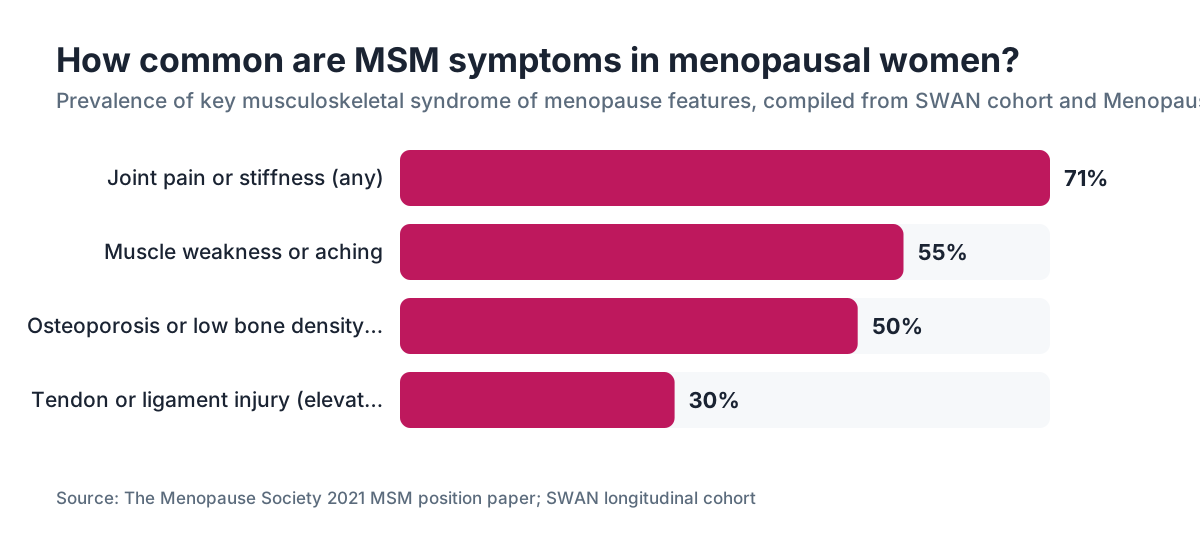
TL;DR: Musculoskeletal syndrome of menopause (MSM) is the cluster of joint pain, muscle loss, tendon stiffness, and rising fracture risk that tracks falling estrogen. Roughly 71% of women in menopause report musculoskeletal pain. Estrogen therapy, resistance training, protein, and vitamin D have the best evidence. This is a real clinical entity, more than aging.
What is the musculoskeletal syndrome of menopause?
The musculoskeletal syndrome of menopause (MSM) is a term formally proposed in 2021 by the Menopause Society (formerly NAMS) to describe the musculoskeletal changes driven directly by estrogen loss, not simply by getting older [1]. The syndrome includes arthralgias (joint aches), loss of skeletal muscle mass and strength (sarcopenia), tendon and ligament laxity, and accelerating bone loss that raises fracture risk.
Before MSM had a name, most women were told their aching knees or stiff fingers were just arthritis or aging. They are often neither. Estrogen receptors sit on chondrocytes, osteoblasts, skeletal muscle cells, and tenocytes, so every major connective tissue type responds to the hormone directly [1]. When estrogen drops in perimenopause and after, those tissues lose protective signaling at the same time. That is why the symptoms tend to show up together.
The term was introduced partly to push clinicians to screen for MSM systematically and to stop pinning every midlife musculoskeletal complaint on osteoarthritis. A woman describing joint pain at her menopause visit deserves an estrogen-centered workup more than an automatic referral to orthopedics.
How common is musculoskeletal pain during menopause?
Joint pain is the most underappreciated symptom of menopause. The Study of Women's Health Across the Nation (SWAN) followed over 3,000 women and found that musculoskeletal pain rose significantly across the menopausal transition, with roughly 50 to 60% of perimenopausal and postmenopausal women reporting joint pain or stiffness at any given assessment [2].
Other estimates run higher. A Menopause Society position paper cited figures as high as 71% of menopausal women reporting musculoskeletal symptoms [1]. The numbers vary because definitions differ across studies, hot flashes and poor sleep amplify how pain feels, and many women never mention musculoskeletal complaints to a clinician at all.
Sarcopenia tells a similar story. Women lose 3 to 8% of muscle mass per decade after 30, and the rate speeds up around menopause because estrogen normally suppresses muscle protein breakdown [3]. By age 60, many women have lost enough muscle to raise their fall and fracture risk.
The functional burden is real. Musculoskeletal conditions are already the leading cause of disability worldwide, and MSM adds a concentrated wave of new cases in women aged 45 to 65.
Why does estrogen loss cause joint pain, muscle loss, and bone problems?
Estrogen does several things in musculoskeletal tissue that almost nobody learns in a standard anatomy course.
In cartilage, estrogen keeps chondrocytes alive and tamps down inflammatory cytokines like IL-1 and TNF-alpha that degrade joint cartilage. When estrogen falls, low-grade joint inflammation climbs and cartilage breakdown speeds up [1]. That is why women develop osteoarthritis at higher rates than men of the same age, and why arthritis often worsens in the years right after the final menstrual period.
In bone, estrogen slows osteoclast activity (the cells that break bone down). Without it, osteoclasts run hot. In the first five years after menopause, women can lose 2 to 3% of bone mineral density per year [4]. Over a decade, that builds a genuinely dangerous fracture profile. The Bone Health and Osteoporosis Foundation estimates that 1 in 2 women over 50 will have an osteoporosis-related fracture in her lifetime [4].
In muscle, estrogen tunes satellite cell activity (the stem cells that repair muscle fiber) and lowers myostatin, a protein that limits muscle growth. Less estrogen means slower repair, faster atrophy, and declining strength even when a woman trains regularly [3]. This is not laziness. It is biology.
In tendons and ligaments, estrogen drives collagen synthesis. Falling estrogen tracks with less collagen and more tendon laxity, which partly explains why Achilles injuries and rotator cuff problems climb around menopause [1].
All four processes run at once, driven by the same hormonal shift. That is what makes MSM a syndrome rather than a list of unrelated complaints.
What are the symptoms of musculoskeletal syndrome of menopause?
MSM symptoms are wide-ranging, which is exactly why they get missed or misattributed.
Joint pain is the most common complaint. It can hit any joint but tends to settle in the hands, knees, and hips. The pain often feels worse in the morning, which leads many women and their doctors to suspect rheumatoid arthritis. Here is the difference: inflammatory markers like CRP and anti-CCP antibodies are typically normal in MSM, and symptoms often track with hormonal changes over time [1].
Muscle aches and weakness show up too, sometimes described as a diffuse heaviness or the loss of strength a woman used to take for granted. Stairs feel harder. Jars get difficult to open. Women blame being out of shape when the real driver is hormonal.
Tendon pain, including plantar fasciitis, tennis elbow, and shoulder impingement, gets more frequent around menopause. The SWAN musculoskeletal work noted higher tendon and ligament injury risk in the transition years [2].
Fractures are the most serious consequence. A woman can feel fine until a wrist or vertebral fracture reveals that her bone density has been quietly eroding for years. Vertebral compression fractures often happen with no trauma at all, just everyday loading on a spine that has lost its structural density [4].
Fibromyalgia-like widespread pain also clusters with menopause, though the relationship is messy. Estrogen shapes central pain processing, so the pain amplification of fibromyalgia and the joint pain of MSM can overlap and feed each other.
How is MSM diagnosed?
No single blood test or scan diagnoses MSM. It is a clinical diagnosis, made by fitting the timing, the symptom pattern, and the hormonal context together.
A good evaluation starts with history: when did symptoms start, do they track with menstrual changes or perimenopause onset, are other menopausal symptoms present? Ruling out inflammatory arthritis with ESR, CRP, RF, and anti-CCP antibodies is reasonable when joint pain is prominent. Thyroid dysfunction should be excluded too, because hypothyroidism causes overlapping symptoms and is common in midlife women.
Bone density testing with a DEXA scan is the standard for fracture risk. The U.S. Preventive Services Task Force recommends screening all women 65 and older, plus earlier screening for women under 65 with risk factors including early menopause, low body weight, or a family history of osteoporosis [5]. If you are postmenopausal with any of those risk factors and have not had a DEXA scan, ask your clinician for one. Our guide to bone density tests walks through what the test involves.
Hormone testing (FSH, estradiol) can confirm menopausal status and add context, though both fluctuate hard in perimenopause and a single reading settles nothing. You can see the fuller picture in our pieces on menopause and when menopause starts.
Functional tests like grip strength and gait speed are underused but genuinely informative. Grip strength below 20 kg in women is tied to sarcopenia and worse health outcomes across multiple large studies [3].
Does hormone replacement therapy help with musculoskeletal symptoms?
Yes, and the evidence is fairly solid for several parts of MSM.
For bone density, hormone therapy (HT) is one of the most effective tools we have. The Women's Health Initiative (WHI) showed that combined estrogen-progestogen therapy cut hip fracture risk by 34% and vertebral fracture risk by 34% versus placebo [6]. Those are not trivial numbers. The FDA has approved estrogen therapy specifically for preventing postmenopausal osteoporosis, so this is not an off-label use [6].
For joint pain, the evidence is more observational but consistent. The WHI also found women on hormone therapy reported less joint pain and stiffness than those on placebo. SWAN analyses repeatedly linked lower endogenous estradiol to higher musculoskeletal pain scores [2].
For muscle mass and strength, the data are promising but the effect is modest. Estrogen therapy appears to slow muscle loss and may support satellite cell function, but it does not replace resistance training. The honest summary: HT helps preserve muscle, but it cannot build muscle on its own.
For tendon health, estrogen's role in collagen synthesis suggests a benefit, and a few small studies show improved tendon properties on HT, but large randomized trials on tendons are missing.
Timing matters enormously. Starting HT within 10 years of menopause or before age 60 carries a more favorable benefit-risk profile, a principle known as the timing hypothesis and backed by the Menopause Society's 2022 position statement [7]. Starting HT 20 years out is a different clinical situation with a different risk calculation.
If you are weighing HT, our articles on hormone replacement therapy and the estrogen patch cover the forms and dosing in detail.
What role do exercise and nutrition play in treating MSM?
Exercise is not optional for MSM. It is the single most important non-hormonal intervention, and the evidence base is enormous.
Resistance training stimulates muscle protein synthesis, counters the muscle loss of estrogen deficiency, and improves bone density at loaded sites. A meta-analysis in the Journal of Bone and Mineral Research found progressive resistance training raised lumbar spine BMD by roughly 1 to 3% in postmenopausal women over 12 to 24 months [3]. That matters, because a 1% BMD gain translates to about a 1.5 to 2% drop in fracture risk.
Impact exercise (walking, hiking, dancing, jumping rope) loads the skeleton differently than lifting and adds complementary bone stimulation. Both together beat either alone. Yoga and tai chi sharpen balance and cut fall risk, the other half of fracture prevention.
Protein is the most underrated nutritional lever for MSM. Most women over 50 eat well below what their muscle needs. Current evidence supports 1.2 to 1.6 grams of protein per kilogram of body weight per day for women trying to preserve or build muscle, well above the 0.8 g/kg RDA that was designed to prevent deficiency, not optimize function [3]. Spreading protein across meals matters too. Muscle protein synthesis responds to individual meal doses, so 30 to 40 grams at each of three meals beats the same total dumped mostly at dinner.
Calcium and vitamin D are foundational. The NIH recommends 1,200 mg of calcium daily for women over 50 and 600 to 800 IU of vitamin D, with many experts pushing 1,000 to 2,000 IU to hold serum 25-hydroxyvitamin D at a sufficient level [8]. Plenty of midlife women are deficient in vitamin D without knowing it. A simple blood test checks your level.
Omega-3s, collagen peptides, and creatine monohydrate all have some supporting evidence for muscle and joint health in postmenopausal women, but none of their individual effect sizes comes close to consistent resistance training and adequate protein.
Does weight and body composition affect musculoskeletal syndrome of menopause?
Body composition is tied deeply to MSM, and the relationship runs both directions.
Excess adipose tissue is inflammatory. Visceral fat secretes cytokines including IL-6 and TNF-alpha that worsen joint inflammation and may speed cartilage degradation. Extra weight also loads joints mechanically, knees and hips especially, so it worsens arthralgias even without the inflammation [1].
At the same time, low body weight and low fat mass raise fracture risk. They strip away the modest mechanical loading benefit of adipose tissue and reduce the aromatization of androgens to estrogen in fat cells, which supplies some residual estrogen after menopause.
Menopause itself shifts body composition toward more fat and less muscle, even with no change in calories or exercise. The hormonal shift rewires how the body partitions fuel and builds tissue. That is why the strategies that kept a woman lean in her 30s often stop working in her late 40s.
GLP-1 receptor agonists like semaglutide and tirzepatide matter here because they drive large weight loss that can lighten joint load and improve mobility. The SURMOUNT-1 trial of tirzepatide showed average weight loss of 20.9% of body weight in adults with obesity, which would meaningfully cut mechanical joint stress [9]. The catch: GLP-1 drugs also strip lean mass alongside fat, so pairing them with high protein and resistance training is especially important in women with MSM. Our comparison of semaglutide vs tirzepatide covers that tradeoff.
At WomenRx, clinicians who prescribe GLP-1s for women in menopause routinely talk through muscle preservation alongside the prescription, because weight loss without muscle protection can worsen the sarcopenia side of MSM even while it eases joint pain.
How does MSM differ from regular osteoarthritis or fibromyalgia?
Women ask this constantly in exam rooms, and the answer shapes treatment.
Osteoarthritis (OA) is structural joint degeneration: cartilage breaks down, bony spurs form, and imaging shows joint space narrowing. MSM arthralgias often precede structural changes and may not show up on X-ray at all. They come from inflammation and lost chondroprotection, not (at first) from mechanical wear. MSM and OA still overlap and can coexist, and untreated MSM arthralgias can progress to structural OA over years. Treating the hormonal component early may slow that, though long-term trials built to test it are still needed.
Rheumatoid arthritis (RA) is autoimmune, with characteristic antibodies (RF, anti-CCP), bilateral symmetric small-joint involvement, high inflammatory markers, and morning stiffness lasting over an hour. MSM joint pain can feel similar but usually lacks the antibody signature and the sustained morning stiffness. Any woman with joint swelling, antibody-positive labs, or symptoms that ignore hormonal and lifestyle treatment deserves a rheumatology referral.
Fibromyalgia involves central sensitization, widespread pain with specific tender points, and outsized fatigue and cognitive symptoms. It is more common in women and clusters around midlife. Estrogen shapes serotonin and pain processing in the brain, so fibromyalgia and MSM likely share some biological ground. They can coexist, but fibromyalgia has its own treatment path (low-dose tricyclics, SNRIs, aerobic exercise, CBT) that differs from the HT and resistance training approach for MSM.
What treatments are available for MSM if you cannot or choose not to use hormones?
Hormone therapy is the most targeted MSM treatment because it addresses the root cause, but it is not right for everyone. Women with certain hormone-sensitive cancers, active clot disorders, or other contraindications need non-hormonal options.
For bone protection, bisphosphonates (alendronate, risedronate, zoledronic acid) are FDA-approved osteoporosis drugs with a long evidence record. They cut vertebral fracture risk by 40 to 70% and hip fracture risk by roughly 40 to 50% in women with established osteoporosis [10]. Denosumab, a biologic that targets RANK ligand, is an injection every six months and works well for women who cannot tolerate oral bisphosphonates. Romosozumab and teriparatide are bone-building agents held in reserve for severe osteoporosis.
For muscle mass, resistance training and adequate protein come first regardless of hormonal status. Creatine monohydrate (3 to 5 grams daily) has a reasonable evidence base for muscle mass and strength in postmenopausal women and costs almost nothing.
For joint pain, topical NSAIDs (diclofenac gel) give a good local effect with less systemic risk than oral NSAIDs, which should be used sparingly in older women given GI and cardiovascular risks. Physical therapy for joint-specific strengthening is underused and genuinely effective.
If you are mapping out options, our articles on progesterone and perimenopause age help clarify what the hormonal transition looks like and what tools exist at each stage.
Nobody has solid long-term data on the newer peptide approaches for muscle preservation, though research on compounds like MK-677 and BPC-157 is active. The honest answer: the evidence base for peptides in MSM is much thinner than for HT, bisphosphonates, or resistance training.
When should you see a doctor for musculoskeletal symptoms around menopause?
See a clinician sooner rather than later if you notice joint swelling or warmth (more than aching), if you have a family history of osteoporosis and no DEXA scan yet, if you feel real muscle weakness rather than just stiffness, or if you fractured a bone from low-force trauma like a minor fall or a sneeze, which points to underlying bone loss.
For most women with typical MSM symptoms (aching joints, morning stiffness, gradual strength decline that tracks with perimenopause), the conversation starts with a primary care doctor or a menopause specialist. A good visit covers hormonal status, a DEXA scan if indicated, thyroid function, vitamin D level, and a discussion of HT candidacy.
The Menopause Society keeps a directory of certified menopause practitioners at menopause.org [7]. Telehealth menopause practices, including WomenRx, can be a practical way to reach clinicians who understand MSM and can prescribe HT when appropriate, especially for women far from any menopause specialist.
Do not wait for symptoms to turn severe. The bone loss of menopause is largely silent, and the muscle loss is gradual enough that many women miss it until a meaningful chunk of their functional capacity is already gone. Early intervention consistently beats late intervention in MSM.
Frequently asked questions
Is musculoskeletal syndrome of menopause a recognized medical diagnosis?
MSM was formally proposed as a clinical entity in 2021 by the Menopause Society to give clinicians a framework for the cluster of joint, muscle, bone, and tendon changes driven by estrogen loss. It is not yet a standalone ICD-10 code, but it is recognized in menopause medicine literature and increasingly in clinical guidelines. Think of it as a named syndrome, the way metabolic syndrome is a named cluster, rather than one single diagnosis.
Can musculoskeletal pain start before menopause is complete?
Yes. Many women notice joint aches and muscle changes during perimenopause, sometimes years before their last period. Estrogen swings erratically in perimenopause, and even stretches of relative estrogen deficiency can trigger MSM symptoms. The SWAN study showed musculoskeletal pain starts climbing in the late perimenopausal transition, before menopause is complete. Early recognition and treatment during perimenopause may help slow progression.
Will my joint pain get better on its own after menopause stabilizes?
For some women, arthralgias ease slightly as the body adapts to consistently lower estrogen. For others, especially those who develop structural joint changes, symptoms persist or worsen. The bone loss and muscle loss parts of MSM do not self-correct; they continue without active intervention. Waiting it out is a reasonable short-term move for mild pain, but it is no plan for bone density or muscle mass.
Does hormone therapy reverse bone loss, or just stop further loss?
Both, to different degrees. Hormone therapy mainly prevents further bone loss by suppressing osteoclast overactivity. It can also produce modest bone density gains, especially at the spine, typically 2 to 5% over 2 to 3 years. It does not rebuild severely depleted bone the way anabolic agents like teriparatide can. For women with established osteoporosis and very low density, HT alone may not be enough, and combination approaches are worth discussing.
Is the joint pain of menopause the same as rheumatoid arthritis?
No. Rheumatoid arthritis is autoimmune, identified by antibodies (rheumatoid factor, anti-CCP), sustained morning stiffness over an hour, and joint swelling, usually in a symmetric small-joint pattern. MSM arthralgias typically lack these antibodies, track with hormonal changes, and may improve on estrogen therapy. Any woman with persistent joint swelling, positive antibody tests, or symptoms that ignore hormonal and lifestyle treatment should be evaluated by a rheumatologist.
How much protein do menopausal women actually need?
Current evidence supports 1.2 to 1.6 grams of protein per kilogram of body weight per day for postmenopausal women trying to maintain or build muscle, well above the 0.8 g/kg general RDA. Spreading intake across meals (aiming for 30 to 40 grams per meal) works better than the same total at one sitting. For a 140-pound woman, that is roughly 76 to 101 grams of protein daily at minimum.
Does low estrogen cause fibromyalgia?
The relationship is associative, not directly causal. Estrogen shapes serotonin and central pain processing, so estrogen loss may lower the pain threshold and feed central sensitization. Fibromyalgia rates are higher in women and peak around midlife, which hints at hormonal influence. But fibromyalgia has a complex, multifactorial cause and is not simply low estrogen. Some women with fibromyalgia report improvement on HT; controlled trial data are limited.
What exercises are best for musculoskeletal syndrome of menopause?
Resistance training is the priority: two to three sessions a week hitting major muscle groups with progressive overload. Weight-bearing aerobic exercise (walking, hiking, dancing) adds complementary bone stimulation. Balance training (yoga, tai chi) cuts fall risk. Do not rest completely during flares; low-impact movement like swimming or cycling keeps joints mobile without mechanical stress. All three types together beat any single one.
Can vitamin D and calcium alone protect my bones through menopause?
They are necessary but not sufficient alone. Adequate vitamin D (serum 25-OH-D above 30 to 40 ng/mL) and calcium (1,200 mg daily for women over 50) reduce fracture risk and support bone quality. But without estrogen or a bone-active drug, they cannot fully offset the osteoclast activation of menopause. Treat them as the foundation other interventions build on, not a standalone bone protection strategy.
Do GLP-1 drugs like semaglutide worsen muscle loss in menopause?
GLP-1 receptor agonists cause weight loss that includes both fat and lean muscle, with lean mass typically making up 25 to 40% of total weight lost in trials. For menopausal women already losing muscle to estrogen deficiency, that is a real concern. Pairing GLP-1 therapy with high protein (at least 1.2 to 1.6 g/kg daily) and consistent resistance training substantially blunts muscle loss. Clinicians prescribing GLP-1s to menopausal women should address this directly.
At what age does musculoskeletal syndrome of menopause typically begin?
MSM symptoms most often emerge in the late 40s to early 50s, during the perimenopausal and early postmenopausal years. The average age of menopause in the U.S. is 51, and many women notice joint and muscle changes 2 to 5 years before their final period. Women who go through surgical menopause or premature ovarian insufficiency before age 40 can develop MSM earlier and face a larger cumulative burden of bone and muscle loss.
Is sarcopenia during menopause inevitable?
Some muscle decline after menopause is nearly universal without intervention, but significant sarcopenia (the kind that impairs function and raises fall risk) is largely preventable. Women who train with resistance consistently, eat enough protein, and manage hormonal changes with HT when appropriate hold onto far more muscle than those who do neither. Sarcopenia is not destiny; it is a risk that active management can substantially reduce.
Can I get tested for MSM at a regular doctor's visit?
There is no single MSM test, but a primary care doctor or menopause specialist can assess your risk with a clinical history, a DEXA bone density scan, thyroid and vitamin D blood tests, and by ruling out inflammatory arthritis. A grip strength measurement adds useful functional data. If your doctor waves off musculoskeletal complaints as just aging, asking specifically about MSM and requesting a DEXA scan are reasonable ways to advocate for yourself.
Sources
- The Menopause Society (NAMS), Menopause journal 2021, Musculoskeletal Syndrome of Menopause position paper
- Study of Women's Health Across the Nation (SWAN), NIH-funded longitudinal cohort
- Journal of Bone and Mineral Research, resistance training and postmenopausal bone/muscle outcomes meta-analysis
- Bone Health and Osteoporosis Foundation (formerly National Osteoporosis Foundation)
- U.S. Preventive Services Task Force, Osteoporosis to Prevent Fractures Screening Recommendation
- Women's Health Initiative, JAMA 2002 and NEJM 2003, HRT randomized controlled trial
- The Menopause Society (NAMS), 2022 Hormone Therapy Position Statement
- National Institutes of Health Office of Dietary Supplements, Calcium and Vitamin D Fact Sheets
- SURMOUNT-1 trial, Jastreboff et al., NEJM 2022, tirzepatide phase 3 trial
- FDA Drug Label, alendronate (Fosamax) and bisphosphonate class osteoporosis approvals