Micronized progesterone: what every woman should know
TL;DR: Micronized progesterone is bioidentical progesterone ground into tiny particles so your body absorbs it properly. It's the form recommended by NAMS and the Endocrine Society for most women on hormone therapy because it has a better cardiovascular and breast-safety profile than older synthetic progestins, and it improves sleep. The FDA-approved oral brand is Prometrium; vaginal formulations also exist.
What is micronized progesterone, exactly?
Progesterone is a hormone your ovaries produce during the second half of every menstrual cycle. After ovulation, it rises sharply to prepare the uterine lining for a possible pregnancy. If pregnancy doesn't happen, it falls, your period comes, and the cycle restarts. During perimenopause and menopause, that production collapses, and the lining of the uterus can overgrow if estrogen is given without something to oppose it.
That's where progesterone supplementation comes in. But the word "progesterone" on a label doesn't tell you much by itself. For decades, most hormone therapy used synthetic progestins, molecules engineered in a lab to mimic progesterone's effect on the uterine lining. They work for that purpose, but they also bind to other hormone receptors in ways natural progesterone doesn't, and that extra binding is where a lot of the side-effect problems come from.
Micronized progesterone is chemically identical to what your ovaries make. "Micronized" means the progesterone crystals have been ground down to particles small enough (typically under 10 microns) to dissolve in an oil medium, usually peanut or sunflower oil, so the gut can actually absorb them [11]. Without micronization, oral progesterone is nearly insoluble and passes through almost entirely unabsorbed. The micronization step is what makes it bioavailable.
The FDA-approved oral capsule (Prometrium, 100 mg and 200 mg) was approved in 1998 and is manufactured by AbbVie. There are also FDA-approved vaginal gels and suppositories that deliver progesterone directly to uterine tissue with less systemic exposure. Compounded versions exist too, and we'll get into the tradeoffs below.
How is micronized progesterone different from synthetic progestins like medroxyprogesterone acetate?
This is the question that changed how most physicians prescribe hormone therapy. Two molecules do the same job on the uterine lining, but everything else about them differs.
Synthetic progestins, medroxyprogesterone acetate (MPA) being the most studied, were the standard of care for decades. The Women's Health Initiative (WHI) trial, which alarmed the world in 2002, used conjugated equine estrogen plus MPA in its combined-hormone arm. That arm showed a small but real increase in breast cancer risk (hazard ratio 1.26 after 5.6 years) and cardiovascular events in older women who started therapy well past menopause [2]. MPA also binds androgenic and glucocorticoid receptors, which contributes to bloating, mood changes, and lipid changes that progesterone itself doesn't cause.
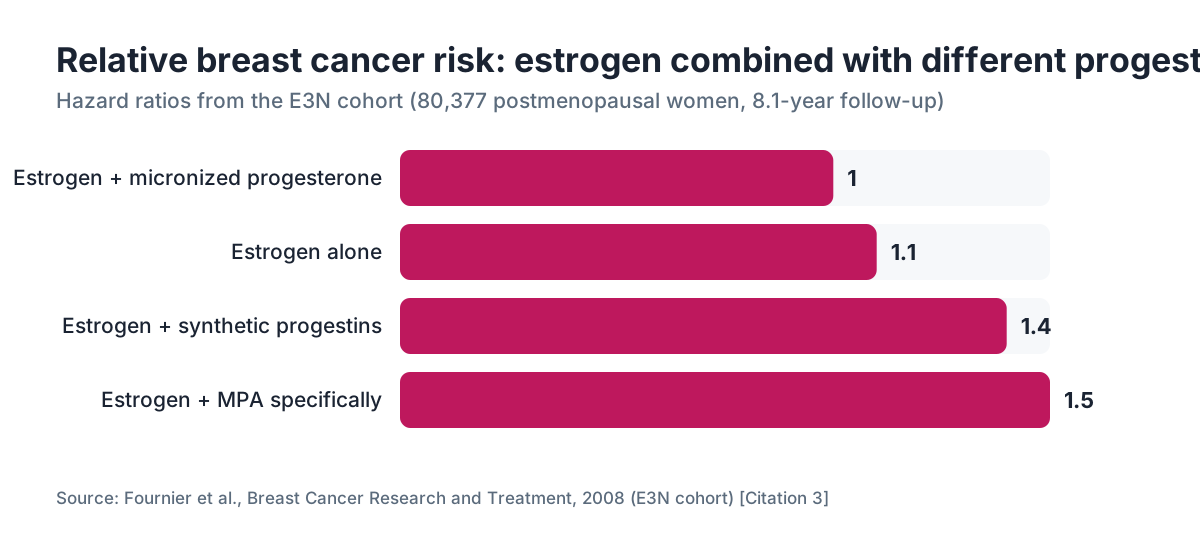
Micronized progesterone binds almost exclusively to progesterone receptors. The large French E3N cohort study followed 80,377 postmenopausal women and found that women using estrogen plus micronized progesterone had no statistically significant increase in breast cancer risk over 8.1 years of follow-up, while women using estrogen plus synthetic progestins did [3]. That's a big prospective study, not a randomized trial, so causation can't be stated with certainty. But the finding is consistent across several European cohorts and is one reason NAMS and the Endocrine Society now prefer micronized progesterone for women who need progestogen protection.
The cardiovascular story is similar. Micronized progesterone appears to be vasodilatory and doesn't harm HDL cholesterol the way MPA does [4]. It also doesn't blunt estrogen's favorable effect on vascular endothelium to the same degree.
A practical note: the two are not interchangeable milligram for milligram. Prometrium 200 mg nightly gives adequate endometrial protection with standard estrogen doses. MPA was typically dosed at 2.5 mg daily. Comparing doses across the two classes isn't clean, because the receptor binding profiles differ.
For a broader look at how progestogens fit into the full hormone picture, see our article on hormone replacement therapy.
Who actually needs to take micronized progesterone?
If you still have a uterus and you're taking estrogen, you need some form of progestogen. Full stop. Estrogen alone thickens the uterine lining, and if it overgrows unchecked, the risk of endometrial cancer rises meaningfully, roughly 2 to 12 times depending on dose and duration [5]. Progesterone keeps that lining in check.
Women who've had a hysterectomy generally don't need progesterone for endometrial protection, though some clinicians add it for its sleep and neurological benefits. That's a conversation worth having with your provider rather than a blanket rule.
Perimenopause adds nuance. Your cycles may still be coming, but progesterone output after ovulation can be erratic and low years before periods stop. Some women in their 40s start low-dose progesterone specifically for sleep and mood, even while still cycling. If you're curious about where you fall in that timeline, our perimenopause age explainer and the piece on when does menopause start give you the context.
Women using an estrogen patch, ring, or gel as their primary hormone therapy still need oral or vaginal progesterone if they have a uterus. The delivery route of estrogen doesn't change the uterine risk. See our estrogen patch article for how that pairing typically works.
What dose of micronized progesterone is standard for menopause?
For continuous combined therapy (taken every day, no scheduled break), Prometrium 100 mg nightly is the typical dose alongside standard estrogen. For cyclic or sequential therapy, where you take progesterone for 12 to 14 days each month to produce a withdrawal bleed, 200 mg nightly is the standard [6].
The FDA label for Prometrium lists 200 mg orally for 12 days per 28-day cycle for endometrial protection in postmenopausal women receiving 0.625 mg conjugated estrogen [1]. Many prescribers now use it continuously at 100 mg to avoid withdrawal bleeds, particularly in women who've been postmenopausal for several years.
Vaginal progesterone is dosed differently because absorption goes directly to uterine tissue. Crinone 4% gel and Endometrin (a vaginal insert) are FDA-approved for luteal phase support in assisted reproduction but are sometimes used off-label in menopause management. Compounded vaginal suppositories are another option, typically 100 to 200 mg, though standardization varies between pharmacies.
Dosing in perimenopause for symptom management (sleep, anxiety) rather than endometrial protection is less standardized. Some clinicians use 100 mg nightly from day 14 through 28 of the cycle, mirroring natural luteal phase timing. Others use 100 mg every night regardless of cycle day. Nobody has a large randomized trial on this specific question; most guidance comes from clinical experience and extrapolation from the postmenopausal data.
What are the benefits of micronized progesterone beyond protecting the uterus?
The uterine protection story is settled. The other benefits are real but less rigidly proven, and honesty requires saying that.
Sleep is the one most women notice first. Micronized progesterone is metabolized in the liver and brain to allopregnanolone, a neurosteroid that binds GABA-A receptors, the same receptors targeted by benzodiazepines and sleep medications. A small randomized trial by Proctor et al. (2003) found that 300 mg of oral micronized progesterone improved subjective sleep quality in postmenopausal women [7]. The effect is real enough that many clinicians tell women to take their Prometrium at bedtime rather than in the morning.
Mood and anxiety. Allopregnanolone is anxiolytic. Women who are sensitive to the GABA effect often report less anxiety and emotional volatility on micronized progesterone. Women who are sensitive in the opposite direction (a smaller group) can feel dysphoric or depressed, particularly at higher doses. If you've ever had severe PMS or PMDD, talk this through carefully with your prescriber before assuming progesterone will help your mood.
Bone. Progesterone receptors exist on osteoblasts. Some data suggest progesterone independently supports bone formation, though the effect size is smaller than estrogen's and the evidence is thinner. For bone loss specifically, the bone density test article explains what to track.
Cardiovascular. As noted above, micronized progesterone doesn't worsen lipids or vasodilation the way MPA does. Whether it actively improves cardiovascular outcomes is not established from randomized data.
Breast. This is complicated. Laboratory and some epidemiological data suggest micronized progesterone is less proliferative in breast tissue than MPA. The E3N study is the most-cited evidence [3]. But a 2019 UK study (Million Women Study reanalysis) found risk with all progestogens including "natural" progesterone, though the relative risk for micronized progesterone was lower than for synthetic types. This area is not settled. If you have a personal history of breast cancer or strong family history, this conversation belongs with your oncologist.
What are the side effects of micronized progesterone?
Sedation is the most common. Taking 200 mg at bedtime means most women sleep well; taking it in the morning means some women can't function. Dose matters: 100 mg causes noticeably less sedation than 200 mg.
Bloating and breast tenderness can occur, though both are usually milder than with synthetic progestins. Headache is reported by roughly 10 to 15% of users in clinical data.
Mood changes. As mentioned, a subset of women, particularly those with a PMDD history, may feel worse on progesterone rather than better. This isn't a reason to avoid it if you need endometrial protection, but the dose may need adjusting, or the vaginal route considered (lower systemic and neurological exposure).
Allergy. Prometrium capsules contain peanut oil. If you have a peanut allergy, the oral capsule is contraindicated [1]. Vaginal compounded progesterone in a different oil base is the alternative.
Other considerations: Prometrium can amplify sedative medications, so combining it with benzodiazepines, sleep aids, or alcohol should be done carefully. It can also lower seizure threshold at high doses in some women.
Is compounded progesterone as good as FDA-approved Prometrium?
Compounded micronized progesterone is widely used, particularly in vaginal suppository form. The core molecule is the same. The variable is manufacturing consistency.
FDA-approved Prometrium goes through rigorous quality testing: potency, dissolution rate, sterility, particle size uniformity. Compounding pharmacies, even PCAB-accredited ones, operate under different oversight. The FDA has repeatedly noted that compounded hormone preparations may not deliver the labeled dose reliably, particularly for progesterone, which is tricky to formulate [8].
For oral use, I'd start with Prometrium, and if you're cost-sensitive, use generic (generic progesterone 100 mg and 200 mg capsules are widely available and substantially cheaper than brand). For vaginal use where Prometrium's peanut oil base is a problem, a compounded formulation from an accredited pharmacy is a reasonable choice.
One thing that's genuinely unproven: "progesterone cream" sold over the counter. These creams typically contain small amounts of progesterone, but transdermal absorption through intact skin is poor, and serum progesterone levels after cream application are low and erratic. NAMS does not endorse OTC progesterone cream for endometrial protection [9]. If you're relying on it to protect your uterus while taking estrogen, that's a real safety concern.
If you're exploring your options through a telehealth provider, platforms like WomenRx that specialize in women's hormones can prescribe FDA-approved oral progesterone and discuss whether compounded vaginal formulations fit your situation.
How is micronized progesterone used in perimenopause, versus after menopause?
Most of the published evidence on progesterone is in postmenopausal women on hormone therapy. Perimenopause is messier, because you're still producing some hormones, your cycle may be irregular, and you may not need full HRT yet.
Some clinicians prescribe micronized progesterone alone during perimenopause for sleep disruption, hot flashes, and anxiety, without adding estrogen, for women whose estrogen levels are still adequate. The theory is that erratic progesterone production in the late luteal phase drives many perimenopausal symptoms even before estrogen declines much. The evidence for this is observational and mechanistic rather than randomized trial data. Clinical experience is that it helps some women a lot and others not at all.
For women who are perimenopausal and still cycling, using progesterone days 14 through 28 of the cycle mimics natural luteal-phase progesterone and is generally well tolerated. For women with very irregular cycles, this is harder to time, and some clinicians move to nightly dosing.
If your main symptom is sleep disruption and you're in your 40s with irregular cycles, a conversation with your menopause-trained provider about 100 mg progesterone at bedtime is worth having. It's a low-risk intervention with a reasonable evidence base for sleep, even if the perimenopause-specific trial data is thin.
What does micronized progesterone cost, and is it covered by insurance?
Generic oral progesterone capsules (100 mg and 200 mg) are usually covered by most commercial insurance plans and Medicare Part D when prescribed for endometrial protection with estrogen therapy. Cash prices vary widely. At major retail pharmacies, 30 capsules of generic progesterone 200 mg run roughly $30 to $60 without insurance using a GoodRx-type coupon. Brand Prometrium runs more, typically $90 to $160 for 30 capsules, before insurance.
Vaginal compounded progesterone suppositories cost roughly $60 to $120 per month depending on the pharmacy and dose, and are usually not covered by insurance because they're compounded.
FDA-approved vaginal products like Crinone and Endometrin are expensive and mostly covered for fertility indications rather than menopause management, so off-label use often means paying out of pocket.
The practical answer for most women: ask your prescriber to write for generic oral micronized progesterone (the generic is therapeutically equivalent to Prometrium), check GoodRx or Cost Plus Drugs for cash pricing, and if cost is the barrier, say so, so your prescriber can help you find the most affordable formulation.
What do NAMS, the Endocrine Society, and the FDA actually say about micronized progesterone?
These organizations don't agree on every detail, but there's meaningful consensus on a few points.
The North American Menopause Society 2022 Hormone Therapy Position Statement states that "micronized progesterone and dydrogesterone have more favorable effects compared to medroxyprogesterone acetate on breast tissue" and that "micronized progesterone appears to have less effect on cardiovascular risk markers than synthetic progestogens" [9]. NAMS recommends the lowest effective dose for the shortest duration consistent with treatment goals, for progestogens as for all hormones.
The Endocrine Society's 2015 clinical practice guideline on menopausal hormone therapy suggests using progestogens with the most favorable risk profiles, explicitly noting that micronized progesterone and dydrogesterone have better safety signals than MPA [4].
The FDA-approved label for Prometrium states it is indicated for "prevention of endometrial hyperplasia in nonhysterectomized postmenopausal women who are receiving conjugated estrogens tablets" [1]. The label warns about peanut oil allergy and notes the potential for sedation.
A point worth stating plainly: none of these organizations call micronized progesterone risk-free. They call it lower risk than the alternatives. There's a difference. If you've had hormone-receptor-positive breast cancer, the progesterone conversation is a specialist-level discussion, not something to decide from a website.
How do you take micronized progesterone, and does timing matter?
Take oral micronized progesterone at bedtime. This is near-universal guidance and for good reason: the sedating metabolites peak 1 to 3 hours after ingestion and wear off by morning, which makes bedtime dosing a feature rather than a problem. Taking it with a small amount of fat (a few crackers, a small glass of milk) improves absorption because the peanut-oil formulation is already lipid-based, and added dietary fat pushes bioavailability higher still.
Continuous versus cyclic dosing is a prescriber decision based on your goals. Most women who want to avoid monthly withdrawal bleeds take 100 mg every night continuously. Women who prefer a more "natural" cycling pattern, or who are earlier in menopause, may use 200 mg for 12 days of a 28-day calendar cycle.
If you're also taking a sedating medication (antihistamines, certain antidepressants, sleep aids), stagger the timing or discuss it with your prescriber, since the combination can be more sedating than either alone.
For vaginal suppositories or gel, the timing is more flexible because the GABA-metabolite effect is lower with vaginal delivery. Some women who want the endometrial protection but not the sleep effect use vaginal progesterone for exactly that reason.
One thing to know if you switch between oral and vaginal routes: serum progesterone levels read differently on labs. Vaginal progesterone produces high uterine-tissue levels but relatively low serum levels. Don't assume a low serum level means the vaginal route isn't working for uterine protection. It's a route-specific quirk, not treatment failure.
Frequently asked questions
Is micronized progesterone the same as natural progesterone?
Yes, chemically. Micronized progesterone is bioidentical to the progesterone your ovaries make. "Micronized" refers to how the particles are processed for absorption, not a different molecule. It differs from synthetic progestins like medroxyprogesterone acetate, which are structurally modified and bind additional receptors.
Can micronized progesterone help with sleep?
Yes, and this is one of its best-documented secondary benefits. Oral micronized progesterone is metabolized to allopregnanolone, which binds GABA-A receptors and produces sedation and anxiolysis. A 2003 randomized trial found 300 mg improved subjective sleep quality in postmenopausal women. Most clinicians prescribe it at bedtime for this reason.
What is the difference between Prometrium and compounded progesterone?
Prometrium is FDA-approved oral micronized progesterone in a peanut-oil capsule, subject to federal quality standards. Compounded progesterone uses the same molecule but is mixed by a compounding pharmacy without the same regulatory testing for potency and consistency. Generic Prometrium is widely available and usually cheaper than compounded preparations for oral use.
Does micronized progesterone cause weight gain?
This is a common concern, and the evidence is reassuring. Micronized progesterone doesn't appear to cause weight gain the way some synthetic progestins can. It doesn't have the androgenic activity that drives fat redistribution. Some women report mild temporary bloating, but controlled studies don't show meaningful weight change attributable to micronized progesterone at standard doses.
Can you use micronized progesterone if you have a peanut allergy?
No, not Prometrium. The capsules contain peanut oil, and the FDA label lists peanut allergy as a contraindication. The alternative is a compounded progesterone formulation prepared in a different oil base (coconut oil, cocoa butter, or olive oil are common), or a vaginal suppository prepared without peanut oil.
How long does it take for micronized progesterone to work?
For sleep, many women notice an effect within the first few nights. For endometrial protection, it's working from day one biochemically, but you wouldn't know it directly. For mood effects, most women who respond see noticeable change within 2 to 4 weeks of consistent nightly use. If you're not seeing any benefit after 6 to 8 weeks, that's worth discussing with your prescriber.
Is micronized progesterone safer for the breast than synthetic progestins?
The evidence suggests yes, though it's not zero-risk. The E3N cohort (80,377 women) found no significant breast cancer increase with estrogen plus micronized progesterone over 8 years, while estrogen plus synthetic progestins did show increased risk. This was an observational study, not a randomized trial. NAMS and the Endocrine Society both note micronized progesterone has a more favorable breast safety profile than medroxyprogesterone acetate.
What blood tests should I check while taking micronized progesterone?
There's no mandated monitoring panel specific to micronized progesterone. Standard hormone therapy follow-up typically includes an annual clinical review, endometrial assessment if you have unexplained bleeding, and any labs your prescriber orders to assess overall hormone balance. Serum progesterone levels are useful for vaginal formulations mainly to confirm ovulation or luteal phase adequacy, less so to monitor replacement therapy.
Can progesterone cream from a health food store protect my uterus?
No, reliably. Over-the-counter progesterone creams produce low and erratic serum levels because transdermal absorption of progesterone is poor. NAMS explicitly does not endorse OTC progesterone cream for endometrial protection. If you're taking systemic estrogen and relying on OTC cream to protect your uterus, you should talk to a prescriber about a proper progestogen dose.
Does micronized progesterone affect mood negatively in some women?
Yes, in a minority of women. Those with a history of PMDD or severe PMS may find progesterone worsens rather than improves mood. The same GABA-activating metabolites that calm most women can produce dysphoria or depressive symptoms in those with GABA-sensitivity differences. The vaginal route, which produces lower neurosteroid levels, is an option if oral progesterone consistently worsens mood.
Can micronized progesterone help hot flashes?
By itself, the evidence is modest. Oral micronized progesterone at 300 mg reduced hot flash frequency in a small Canadian randomized trial (the Hitchcock trial, 2012). It's not nearly as effective as estrogen for vasomotor symptoms, but for women who can't take estrogen, it's one option. Most of the hot flash benefit in standard HRT comes from the estrogen component.
What happens if I stop taking micronized progesterone suddenly?
If you've been on continuous therapy and stop abruptly, you may get a withdrawal bleed from the drop in progestogen. You may also notice a return of sleep difficulties if those were being managed by the GABA effect. There's no dangerous withdrawal syndrome the way there is with certain medications, but stopping it while continuing estrogen leaves your uterine lining unprotected, which is a real concern.
Is micronized progesterone FDA-approved?
Yes. Prometrium (micronized progesterone in peanut oil) has been FDA-approved since 1998 for prevention of endometrial hyperplasia in postmenopausal women taking conjugated estrogen, and for secondary amenorrhea. Generic micronized progesterone capsules are also FDA-approved. Vaginal compounded forms and OTC creams are not FDA-approved products.
Can I take micronized progesterone without estrogen?
Yes. Some clinicians prescribe it alone in perimenopause for sleep, mood, or cycle irregularity without adding estrogen. It won't protect bone or eliminate hot flashes the way estrogen does, but for women whose main issue is progesterone deficiency rather than estrogen deficiency, it can meaningfully improve quality of life. This is an off-label use supported by clinical practice rather than large randomized trials.
Sources
- FDA, Prometrium (progesterone, USP) prescribing information
- Writing Group for the Women's Health Initiative Investigators, JAMA 2002
- Fournier et al., Breast Cancer Research and Treatment, 2008 (E3N cohort)
- Endocrine Society, Clinical Practice Guideline: Menopausal Hormone Therapy, 2015
- NCI, Endometrial Cancer Prevention (PDQ), National Cancer Institute
- NAMS, The 2022 Hormone Therapy Position Statement of The North American Menopause Society
- Proctor et al., Obstetrics & Gynecology, 2003
- FDA, Bioidentical Hormone Therapy page, FDA.gov
- NAMS, The 2022 Hormone Therapy Position Statement (OTC progesterone cream)
- Hitchcock & Prior, Climacteric, 2012
- Stanczyk et al., Menopause, 2013 (pharmacokinetics review)