Microdose semaglutide: what it is, who it helps, and how it works
TL;DR: Microdosing semaglutide means using doses below the standard 0.25 mg starting dose, typically 0.05 mg to 0.1 mg weekly, to get metabolic and appetite benefits with fewer side effects. It has no FDA-approved protocol, but compounding pharmacies fill these doses. It may suit women who are sensitive to GLP-1 medications, already at a healthy weight, or using semaglutide alongside hormone therapy.
What does microdose semaglutide actually mean?
The phrase 'microdose' has no official FDA definition in the GLP-1 space. Clinicians who use it are generally referring to weekly semaglutide injections at doses below the 0.25 mg starting dose listed in Ozempic's prescribing information, often somewhere between 0.05 mg and 0.15 mg per week [1]. Some compounding pharmacies fill doses as low as 0.025 mg, though there is no published trial testing anything below 0.25 mg in humans.
The concept borrowed its name from psychiatry and psychedelic research, where 'microdosing' means taking a dose too small to produce the drug's primary effect but large enough to influence physiology. In the semaglutide context, the goal is different: providers want the appetite suppression, slower gastric emptying, and insulin-sensitizing effects, just with fewer nausea and vomiting events than the standard titration produces.
Brand-name Ozempic and Wegovy come in fixed pen formats that cannot deliver sub-0.25 mg doses. So microdosing requires either a compounded injectable from a 503A or 503B pharmacy, or careful manipulation of a standard pen, which most pharmacists would not recommend. For practical purposes, microdose semaglutide is almost always compounded semaglutide drawn from a multi-dose vial.
What is the standard semaglutide dosing schedule, and how does microdosing differ?
Ozempic's FDA-approved label starts patients at 0.25 mg once weekly for four weeks, then moves to 0.5 mg, with further increases to 1 mg or 2 mg based on glycemic control [1]. Wegovy's weight-loss protocol is more aggressive, escalating from 0.25 mg all the way to 2.4 mg over 16 to 20 weeks [2].
Microdosing intentionally stalls before that first rung. A typical protocol used by compounding-forward telehealth practices starts at 0.05 mg or 0.1 mg weekly and holds there for four to eight weeks before any increase, or stays at that level indefinitely if the patient is meeting her goals without escalation.
Here is how the standard titration compares to common microdose approaches:
| Phase | Ozempic label (T2D) | Wegovy label (obesity) | Typical microdose protocol | |---|---|---|---| | Month 1 | 0.25 mg/wk | 0.25 mg/wk | 0.05 to 0.10 mg/wk | | Month 2 | 0.5 mg/wk | 0.5 mg/wk | 0.10 to 0.25 mg/wk | | Month 3 to 4 | 1.0 mg/wk (maintenance) | 1.0 mg/wk | 0.25 mg/wk (may stay here) | | Month 5+ | Up to 2.0 mg/wk | 1.7 mg/wk | Individualized; may not increase |
The practical implication is that a woman microdosing may spend months at doses the standard protocol passes through in a single month, or she may never reach the doses where the STEP trials saw their biggest weight-loss numbers.
Does microdose semaglutide actually cause less nausea?
This is the core clinical argument for microdosing, and the reasoning is physiologically sound even if direct trial data at sub-0.25 mg doses does not exist.
Nausea from semaglutide is dose-dependent. In the STEP 1 trial, nausea occurred in 44% of the semaglutide group, with most events clustering in the first eight weeks of treatment and during each dose escalation [2]. The drug slows gastric emptying and activates GLP-1 receptors in the brainstem's area postrema, a region that coordinates nausea and vomiting. Higher plasma drug concentrations mean stronger stimulation of those receptors.
Slower titration, which is not the same as permanent microdosing but is related, does appear to reduce early GI events. A 2023 analysis of the SCALE and STEP programs noted that patients who tolerated slower escalation had better long-term adherence. The logic is that gradual receptor exposure allows some degree of tachyphylaxis, meaning the nausea receptors become less reactive over time [3].
Where it gets honest: nobody has a randomized controlled trial comparing 0.1 mg versus 0.25 mg starting doses on nausea rates. The clinical community is extrapolating from dose-response data collected at standard doses. That extrapolation is reasonable. It is still an extrapolation.
How much weight can you lose on a microdose?
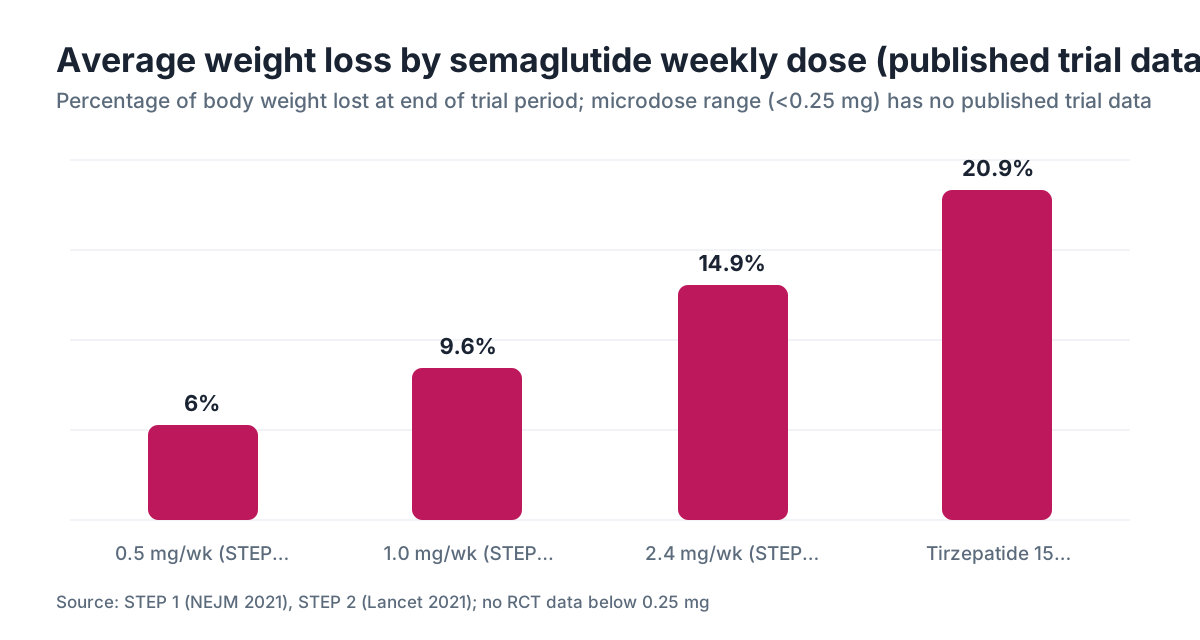
Less than the standard protocol, almost certainly. The STEP 1 trial, which used doses reaching 2.4 mg weekly, found an average weight loss of 14.9% of body weight at 68 weeks [2]. That number drops sharply at lower doses. STEP 2, which studied patients with type 2 diabetes at 1 mg and 2.4 mg, found 9.6% weight loss at 1 mg and roughly 6% at 0.5 mg [4].
There is no STEP trial at 0.1 mg. The dose-response relationship in published data suggests that somewhere below 0.5 mg, weight loss becomes modest, probably 2% to 5% of body weight at steady state. That sounds unimpressive next to headlines about 15% losses. Context matters.
A woman who is perimenopausal, gaining belly fat driven by estrogen decline rather than constant hunger, and who wants to hold her current weight rather than lose 30 pounds, might find that 3% to 4% of body weight (roughly 5 to 7 pounds for a 160-pound woman) plus better appetite regulation is exactly what she needs. Microdosing is probably the wrong tool for someone with a BMI over 35 who needs aggressive weight loss. It may be the right tool for someone who wants the metabolic protection without the dramatic appetite suppression that interferes with eating enough protein.
The semaglutide for weight loss page has a full breakdown of what the STEP data actually predicts for different starting BMIs.
Who is a good candidate for microdose semaglutide?
Good candidates tend to fall into a few overlapping groups, and the clinical logic for each is different.
Women who are GI-sensitive. If a previous GLP-1 experience caused intolerable nausea at 0.25 mg, starting lower and titrating much more slowly is a reasonable retry strategy. This is probably the most defensible use case because the pharmacology supports it.
Women in perimenopause or early menopause who want metabolic protection. Perimenopause triggers visceral fat redistribution driven by fluctuating and eventually falling estrogen. Some clinicians are pairing low-dose semaglutide with hormone replacement therapy to address both the hormonal driver of fat gain and the appetite side simultaneously. There is no trial specifically testing this combination, but both interventions have independent evidence for improving insulin sensitivity in midlife women.
Women at a healthy BMI who want appetite regulation. A woman at a BMI of 23 who finds herself stress-eating or struggling with cravings tied to hormonal fluctuation is not a candidate for full-dose Wegovy. Microdosing gives her a pharmacological nudge without putting her at risk for excessive weight loss or muscle wasting.
Women who discontinued semaglutide due to side effects and want to restart. A slow re-titration from a very low dose is a common clinical strategy in this group.
Poor candidates include anyone with a personal or family history of medullary thyroid carcinoma or multiple endocrine neoplasia type 2 (the FDA label's contraindication applies at any dose), anyone with active pancreatitis, and anyone with severe gastroparesis, since semaglutide slows gastric emptying further [1].
What does microdose semaglutide cost, and is it covered by insurance?
Brand-name Ozempic and Wegovy at standard doses run $900 to $1,100 per month without insurance [5]. Insurance coverage for Wegovy for weight loss remains limited, with many commercial plans excluding it.
Compounded microdose semaglutide is substantially cheaper, typically $100 to $300 per month depending on dose and pharmacy, though prices vary widely. That lower cost comes with a real caveat: the FDA does not review or approve compounded medications for potency, sterility, or bioavailability. The FDA has raised concerns about the accuracy of concentration labeling in compounded semaglutide products [6].
Insurance will not cover compounded semaglutide. It is always out of pocket. For many women, that math still works out favorably against brand-name pricing without coverage, but the quality assurance gap is real and worth taking seriously when choosing a pharmacy.
A telehealth program like WomenRx can help you identify which compounding pharmacies meet strict quality standards. That matters more at microdoses, where concentration accuracy is especially important because even small errors in a 0.05 mg dose represent a large percentage of the intended dose.
How do you actually administer a microdose of semaglutide?
Compounded semaglutide comes as a multi-dose vial, typically at a concentration of 1 mg/mL or 2 mg/mL, with a supply of insulin-style syringes. To draw a 0.1 mg dose from a 1 mg/mL vial, you would pull 0.1 mL into the syringe. At 2 mg/mL, a 0.1 mg dose is 0.05 mL, which is a very small volume and requires a syringe with fine gradations.
Injection is subcutaneous, meaning just under the skin, in the abdomen, thigh, or upper arm. The needle is short (typically 4 mm to 8 mm) and the injection is similar to what people with diabetes use for insulin. Most people find it less uncomfortable than they expect.
The syringe draw step is where errors happen. If your prescribed dose is 0.05 mg, a concentration mistake or a measurement error of just 0.1 mL could double or triple your dose. This is why getting your compounded medication from a pharmacy that provides a certificate of analysis, confirming actual concentration, matters more for microdosing than it does at full therapeutic doses.
Store vials refrigerated (36 to 46 degrees Fahrenheit) and protected from light. Once opened, most compounded semaglutide vials are stable for 28 days refrigerated, though you should verify this with your specific pharmacy.
Can microdose semaglutide be combined with hormone therapy?
Yes, and this combination is generating real clinical interest. The reasoning goes like this: estrogen loss in menopause directly increases visceral adiposity and reduces insulin sensitivity. GLP-1 receptor agonists improve insulin sensitivity and reduce appetite. Restoring estrogen through hormone replacement therapy or an estrogen patch addresses the root hormonal driver. The two interventions work on complementary pathways.
A 2023 retrospective analysis published in Menopause noted that postmenopausal women on estrogen therapy lost more weight per unit of GLP-1 agonist dose than women not on estrogen, suggesting a possible potentiating interaction, though the study was small and observational [7]. The North American Menopause Society (NAMS) has not issued a formal position on combining GLP-1s with hormone therapy, but several NAMS clinical experts have publicly discussed the combination as reasonable for appropriately selected women.
What nobody has yet is a prospective randomized trial specifically testing low-dose semaglutide plus estrogen versus either alone in perimenopausal women. That gap means clinicians are making individualized judgments, which is not inherently wrong, but it does mean your provider should be able to articulate why the combination makes sense for you specifically.
If you are on progesterone as part of a complete hormone regimen, there are no known interactions with semaglutide. Both are metabolized separately and there is no pharmacokinetic concern in the published literature.
What are the risks of microdosing semaglutide that people underestimate?
The side effects people talk about, nausea, vomiting, diarrhea, are less likely at lower doses. The risks people underestimate are different.
Muscle loss. Even modest caloric restriction combined with GLP-1-mediated appetite suppression can accelerate muscle loss, especially in women over 50 who are already losing muscle to age-related sarcopenia. A woman eating 300 fewer calories per day due to appetite suppression may not notice that a meaningful fraction of what she is losing is lean mass rather than fat. Resistance training and adequate protein intake (most experts suggest 1.2 to 1.6 grams per kilogram of body weight daily) are essential, not optional, for anyone on a GLP-1, including at microdoses.
Bone density. Rapid weight loss at higher doses is associated with bone density loss, partly from reduced mechanical loading and partly from nutritional gaps. At microdoses the concern is smaller but not zero, particularly for perimenopausal women who are already losing bone. A bone density test before starting any GLP-1 program is reasonable if you are in your late 40s or 50s.
Delayed gastric emptying as a drug interaction risk. Semaglutide slows gastric emptying even at low doses, which can alter the absorption timing of oral medications. Oral contraceptives, thyroid medications, and some blood pressure drugs may be affected. Tell your prescriber everything you take.
Rebound appetite. When semaglutide is stopped, appetite typically returns within weeks as the drug clears (half-life is approximately one week) [1]. Some women who microdose expect a permanent reset and are unprepared for this. The medication manages appetite only while you take it.
What does the FDA say about compounded semaglutide for microdosing?
The FDA's position on compounded semaglutide has shifted significantly. In 2024, the FDA declared that FDA-approved semaglutide products (Ozempic, Wegovy, Rybelsus) are no longer in shortage, which means the legal basis under which 503A and 503B compounding pharmacies could produce copies of those products expired [6]. The FDA directed these pharmacies to cease production.
As of mid-2025, several 503A pharmacies were still operating in a legally contested gray area, with trade groups filing lawsuits challenging the FDA's shortage determination. The regulatory situation is genuinely unsettled. The FDA has stated, as quoted directly from its guidance, that "patients should be aware that compounded drugs are not FDA-approved" and that the agency has "received reports of adverse events" from compounded semaglutide products [6].
This matters for microdosing specifically because the only practical way to get sub-0.25 mg doses is through compounding. If compounding becomes unavailable or illegal in your state, microdosing as currently practiced is not possible with brand-name products. Anyone building a clinical plan around compounded microdose semaglutide should understand this regulatory uncertainty and have a contingency plan.
The compounded semaglutide article on this site tracks the current legal status with updated sourcing.
How does microdose semaglutide compare to tirzepatide at low doses?
Tirzepatide (Mounjaro, Zepbound) activates both GLP-1 and GIP receptors, which gives it a stronger weight-loss effect per milligram at standard doses. The SURMOUNT-1 trial found a mean weight reduction of 20.9% at the 15 mg dose, compared to roughly 14.9% for semaglutide 2.4 mg in STEP 1 [2][8].
But at microdoses, the comparison is messier. Both drugs have similar GI side effect profiles driven by GLP-1 receptor activation. Some clinicians report that tirzepatide's GIP component may actually reduce nausea slightly compared to a pure GLP-1 agonist at equivalent doses, though this has not been formally tested below standard starting doses.
Compounded tirzepatide is available at similar pricing to compounded semaglutide and faces the same regulatory uncertainty. The choice between them at microdose ranges is largely clinical preference and individual response. Neither has published microdose-specific trial data.
See the full semaglutide vs tirzepatide comparison for the complete head-to-head.
How long does it take to feel effects at a microdose?
Semaglutide reaches steady-state plasma concentrations after four to five weeks of weekly dosing regardless of dose level [1]. At standard doses, most people notice appetite changes within the first one to two weeks, sometimes sooner.
At microdoses, the timeline is similar but the effects are subtler. You are probably not going to notice a dramatic reduction in appetite the first week. What many women describe at 0.05 mg to 0.1 mg is a softer version of the full-dose effect: slightly smaller portions feel satisfying, the urge to snack in the evening diminishes, and food noise (the constant background thinking about food) quiets somewhat.
If you feel nothing at 0.1 mg after six weeks, that is a reasonable signal to increase the dose, assuming your prescriber agrees and your side effect tolerance is good. If you feel queasy even at 0.05 mg, that is information too and may indicate you need an even slower start or that semaglutide is not the right fit.
Patience is genuinely required here. Some women spend two to three months at microdoses before finding the dose where the benefit-to-side-effect ratio feels right. That slower approach is the point, not a problem.
What should you ask your provider before starting a microdose protocol?
Most telehealth platforms that prescribe semaglutide will accommodate microdose requests, but the quality of monitoring varies. WomenRx, for example, designs its GLP-1 programs specifically for perimenopausal and postmenopausal women and structures follow-ups around hormonal context, more than weight.
Regardless of where you get care, ask these questions before starting:
What pharmacy do you use, and do they provide a certificate of analysis for each batch? Concentration accuracy is especially important at microdoses.
What baseline labs do you require? Fasting glucose, HbA1c, thyroid function, and a lipid panel are standard. Some providers add a full metabolic panel.
How do you handle dose adjustments? You want a prescriber who will individualize your titration rather than auto-escalate you on a fixed schedule.
What is your protocol if I lose too much weight or develop signs of sarcopenia? This question tells you whether the practice thinks about lean mass, which many do not.
Do you integrate hormone therapy? If you are perimenopausal, a practice that considers semaglutide alongside your hormonal status is likely to give you a better outcome than one treating weight in isolation.
Ask about the prescriber's medical background too. GLP-1 prescribing for women in midlife sits at the intersection of endocrinology, gynecology, and obesity medicine. A provider trained in at least one of those areas, or working under supervision of one, is better than a general practice that adopted GLP-1 prescribing purely as a revenue line.
Frequently asked questions
Is microdose semaglutide FDA approved?
No. The FDA has approved semaglutide at 0.25 mg as the minimum starting dose for Ozempic and Wegovy. Doses below that threshold have no FDA approval and are only available through compounding pharmacies, which operate under separate regulatory authority. The FDA does not review compounded products for safety or efficacy before they reach patients.
Can I get microdose semaglutide from a regular pharmacy?
No. Standard pharmacies fill brand-name Ozempic and Wegovy pens, which cannot deliver doses below 0.25 mg. Microdose semaglutide requires a compounding pharmacy, typically accessed through a telehealth provider or a physician who works with a 503A compounding pharmacy. You will need a prescription.
Will I still lose weight on a microdose of semaglutide?
Probably yes, but less than at therapeutic doses. Published dose-response data shows weight loss of roughly 6% at 0.5 mg and 14.9% at 2.4 mg weekly in the STEP trials. At 0.1 mg, realistic expectations are probably 2% to 5% of body weight. For women who need modest weight stabilization rather than major loss, that may be enough.
What is the lowest dose of semaglutide that has any effect?
The lowest dose tested in published human trials is 0.25 mg weekly, the standard starting dose. No randomized controlled trial has tested sub-0.25 mg doses for efficacy. Clinicians prescribing lower amounts are extrapolating from the drug's pharmacology and dose-response curve, not from direct trial evidence at those levels.
Can I microdose semaglutide if I am at a healthy weight?
Some providers prescribe low-dose semaglutide for appetite regulation in women at normal BMI, particularly during perimenopause when hormonal shifts drive cravings or metabolic changes. This is off-label. The risk is losing weight you do not need to lose, so careful monitoring of body composition, more than scale weight, is important.
Does microdose semaglutide help with insulin resistance even without significant weight loss?
Semaglutide improves insulin sensitivity through direct GLP-1 receptor mechanisms beyond just weight loss, including effects on the liver and pancreatic beta cells. These mechanisms are dose-dependent but may be present at low doses. Formal evidence at microdose levels is absent, but the pharmacology supports modest benefit even at sub-therapeutic doses.
How do I know if my compounded semaglutide is the right concentration?
Ask your pharmacy for a certificate of analysis (COA) for each batch, which should show the measured concentration of semaglutide in the vial. Reputable 503A compounding pharmacies produce COAs as standard practice. If your pharmacy cannot provide one, that is a significant quality concern, especially at microdoses where small concentration errors are proportionally large.
Can semaglutide at any dose cause hair loss?
Hair loss (telogen effluvium) has been reported with semaglutide and is thought to be related to rapid caloric restriction and weight loss rather than a direct drug effect. At microdoses where weight loss is modest, hair loss is less likely. Adequate protein intake and gradual weight loss rather than rapid loss are the main protective factors.
How is microdose semaglutide different from a slow titration of standard semaglutide?
Slow titration means spending more time at each FDA-approved dose step (0.25 mg, 0.5 mg, 1 mg) before advancing. Microdosing means starting and possibly staying below 0.25 mg indefinitely. Slow titration uses approved doses and standard pens. Microdosing requires compounding. The goals overlap, reducing early side effects, but microdosing is a distinct off-label approach.
Will my regular doctor prescribe microdose semaglutide?
Most primary care physicians will not. Microdose compounded semaglutide is off-label, requires familiarity with compounding pharmacy workflows, and sits outside most standard-of-care guidelines. Telehealth platforms specializing in women's metabolic health or obesity medicine physicians are more likely to offer it. Bring the topic up explicitly and be prepared to advocate for yourself.
Is microdose semaglutide safe during perimenopause?
There are no trials specifically studying semaglutide during perimenopause. The drug's contraindications, including history of medullary thyroid carcinoma or MEN2, apply regardless of menopause status. For otherwise healthy perimenopausal women, the safety profile at low doses appears similar to the general adult population, but individualized clinical evaluation is necessary before starting.
How long should I stay on a microdose before deciding if it is working?
Give it at least eight to twelve weeks at a stable dose before drawing conclusions. Semaglutide takes four to five weeks to reach steady-state at any dose, and the appetite effects continue to build after that. Evaluating efficacy at week two or three is too early. Track how you feel, your food choices, and body composition, more than the scale.
Sources
- FDA, Ozempic (semaglutide) prescribing information
- Wilding JPH et al., STEP 1 Trial, New England Journal of Medicine, 2021
- Rubino DM et al., STEP 4 Trial, JAMA, 2021
- Davies M et al., STEP 2 Trial, Lancet, 2021
- GoodRx, Ozempic and Wegovy price estimates
- FDA, information on compounded semaglutide and drug shortages
- Menopause journal, observational analysis of GLP-1 agonists in postmenopausal women, 2023
- Jastreboff AM et al., SURMOUNT-1 Trial, New England Journal of Medicine, 2022
- North American Menopause Society (NAMS), menopause.org clinical resources
- Endocrine Society, Clinical Practice Guideline on Pharmacological Management of Obesity, 2015
- FDA, Wegovy (semaglutide 2.4 mg) prescribing information
- USP Compounding Standards, USP 797 sterile compounding guidelines