Menopause weight loss: why it's hard and what actually works
TL;DR: Most women gain 5-8 pounds during the menopause transition, driven by falling estrogen, rising cortisol, muscle loss, and insulin resistance. Cutting calories alone rarely works because the hormonal environment fights back. The strategies with the best evidence are hormone replacement therapy, resistance training, protein-forward eating, and, for significant weight, GLP-1 receptor agonists like semaglutide or tirzepatide.
Why do women gain weight during menopause?
The average woman gains roughly 1.5 pounds per year in her late 40s and early 50s, according to the Study of Women's Health Across the Nation (SWAN), and the total over the menopause transition is typically 5-8 pounds [1]. Hormones drive most of that. Not willpower. Not laziness.
Estrogen does a lot of metabolic work that most women don't know about. It helps maintain insulin sensitivity, keeps appetite-regulating hormones like leptin and ghrelin in balance, and signals fat to be stored in the hips and thighs rather than the abdomen. When estrogen falls, the body shifts fat storage to the visceral compartment, the deep belly fat that wraps around organs and raises metabolic disease risk [2]. That is not a cosmetic problem. Visceral fat is metabolically active in a way that promotes inflammation and insulin resistance.
At the same time, muscle mass drops. Women lose roughly 3-8% of skeletal muscle per decade after age 30, and that rate speeds up after menopause [3]. Less muscle means a lower resting metabolic rate. A 52-year-old woman may burn 200-300 fewer calories per day than she did at 38, with no change in activity level. Eating the same food produces a different result.
Cortisol also rises as estrogen falls. Elevated cortisol promotes fat storage in the abdomen and drives carbohydrate cravings. Sleep disruption, which is extremely common in perimenopause and menopause, makes cortisol worse. Poor sleep for even a few nights measurably reduces insulin sensitivity the next day.
The three forces stack. Dropping estrogen, shrinking muscle, rising cortisol. A woman can eat exactly what she ate at 40 and still gain weight steadily. That is not a character flaw. It is a physiological environment that asks for a different strategy.
When does weight gain start: perimenopause or after menopause?
Weight gain usually begins in perimenopause, not after the final menstrual period. Perimenopause can start as early as the mid-30s, though the average onset is around age 47, and it lasts 4-10 years [4]. Estrogen fluctuates wildly during this phase rather than declining steadily, and those swings are enough to start shifting body composition toward more fat and less muscle.
Many women are caught off guard. They still have periods, they feel generally like themselves, yet the abdomen thickens and clothes fit differently even with no change in diet. That early shift is real. By the time periods stop and menopause is confirmed (12 consecutive months without a period), the average American woman is 51-52 years old [4], and the abdominal fat redistribution is already well underway.
The implication is simple. Address muscle loss and nutrition in your late 40s, during perimenopause, and you get better outcomes than waiting until menopause is confirmed. The hormonal environment is already changing. The earlier you intervene, the less you're fighting uphill.
Does hormone replacement therapy help with menopause weight loss?
HRT does not produce dramatic weight loss by itself. That expectation sets women up for disappointment. What HRT does is change where the body stores fat, slow the rate of muscle loss, and modestly improve insulin sensitivity, all of which make other weight-loss interventions work better [2].
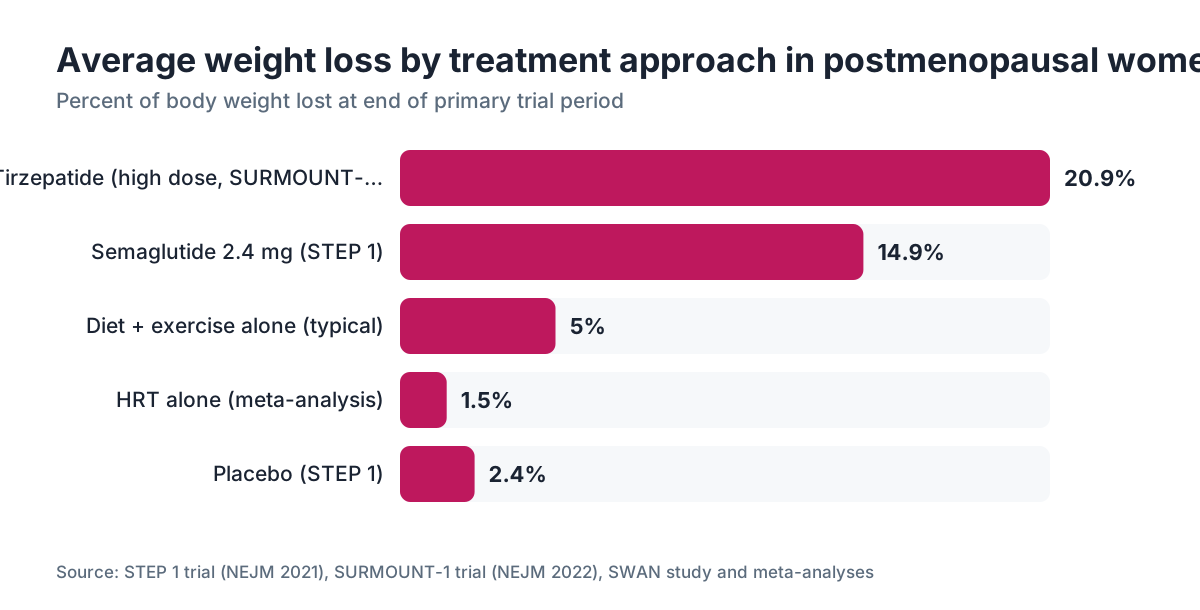
A 2019 meta-analysis in Obesity Reviews looked at 23 trials and found that estrogen-based HRT reduced total body fat mass and abdominal fat in postmenopausal women compared to placebo, with the strongest effects on visceral fat [2]. Women on HRT also lost less lean muscle mass. The effect on the scale was modest: about 1-2 kg of fat reduction on average. But the change in body composition, less visceral fat and more preserved muscle, matters independently of what the scale says.
Hormone replacement therapy comes in different forms. Transdermal options like the estrogen patch are often preferred because they avoid the first-pass liver metabolism that oral estrogen goes through, which may have a more favorable effect on triglycerides and clotting factors. Most women with a uterus also need progesterone to protect the uterine lining. The type matters: micronized progesterone (Prometrium) appears more weight-neutral than synthetic progestins.
The North American Menopause Society (NAMS) states in its 2022 hormone therapy position statement that "for most healthy symptomatic women who are younger than age 60 or within 10 years of menopause onset, the benefits of systemic hormone therapy outweigh the risks" [5]. That window matters. HRT started early in menopause has better evidence for metabolic benefits than HRT started a decade or more after the final period.
Think of HRT as leveling the metabolic playing field rather than as a weight loss drug. It makes the field more even. What you do on that field still decides the result.
Do GLP-1 medications work for menopausal women specifically?
GLP-1 receptor agonists, semaglutide (Ozempic, Wegovy) and tirzepatide (Mounjaro, Zepbound), are the most effective drugs for weight loss in any adult population, and the data on menopausal women looks promising even though the main trials weren't designed around menopausal status.
The STEP 1 trial of semaglutide 2.4 mg (Wegovy) found an average weight loss of 14.9% of body weight over 68 weeks versus 2.4% for placebo [6]. The SURMOUNT-1 trial of tirzepatide found average weight loss of 20.9% at the highest dose versus 3.1% for placebo [7]. Both trials enrolled mostly middle-aged women with obesity, the group most likely to be in menopause. Subgroup analyses by menopausal status haven't been published, but the average participant in STEP 1 was a 46-year-old woman, which means a large share of participants were perimenopausal or postmenopausal.
Mechanistically, GLP-1 drugs hit the exact problems menopause creates: they reduce appetite, slow gastric emptying (which blunts postmeal glucose spikes), and appear to preferentially reduce visceral fat. A 2022 analysis in Obesity found that semaglutide reduced visceral fat area by about 34% in adults with obesity [6].
The concern with any significant weight loss, GLP-1-driven or not, is muscle and bone loss. GLP-1 drugs don't preserve muscle the way resistance training does, and postmenopausal women are already at elevated risk for osteoporosis. This is a real consideration, not a reason to avoid GLP-1s but a reason to pair them with resistance training and adequate protein (at least 1.2 grams per kilogram of body weight daily).
For a direct comparison of the two leading options, see semaglutide vs tirzepatide. For women considering semaglutide for weight loss, the evidence on dosing and titration for older women is worth understanding before starting.
WomenRx offers GLP-1 evaluation and prescribing for women in menopause, with clinicians who also weigh hormonal context, which matters for getting dosing and monitoring right.
One caution: compounded semaglutide has become widely available as a workaround for brand-name shortages, but FDA has been clear about its concerns. "FDA has received reports of adverse events, some requiring hospitalization, related to dosing errors with compounded semaglutide products," the agency warned in a 2024 safety communication [8]. If you go that route, use a licensed pharmacy and a clinician who knows what they're doing. See more on compounded semaglutide.
What diet approach works best for weight loss in menopause?
No single diet wins head-to-head trials in postmenopausal women, but the research settles on a few consistent principles.
Protein is the macronutrient to get right first. Postmenopausal women need more dietary protein than younger women to hit the same rate of muscle protein synthesis, because muscle cells become less responsive to the anabolic signal of protein with age. The evidence supports 1.2-1.6 grams of protein per kilogram of body weight daily for older adults trying to maintain or build muscle [3]. For a 150-pound (68 kg) woman, that's 82-109 grams of protein per day, more than most women eat.
Caloric restriction still matters, but the size of the deficit matters more than the specific macro pattern. Very low calorie diets, under 800 calories, speed up muscle loss in postmenopausal women and should generally be avoided outside medical supervision. A moderate deficit of 300-500 calories below maintenance is more sustainable and holds onto more lean tissue.
Refined carbohydrates and added sugars deserve specific attention in menopause because insulin resistance is higher. Foods that spike blood sugar quickly drive more fat storage and more hunger. That doesn't mean going fully ketogenic (the evidence for keto in postmenopausal women is mixed and the diet is hard to sustain), but it does mean prioritizing whole grains, legumes, vegetables, and fruit over processed carbohydrates.
Time-restricted eating, usually eating within an 8-10 hour window, has modest supporting evidence in menopausal women. A 2020 randomized trial in the New England Journal of Medicine found that time-restricted eating without calorie counting produced small but real reductions in weight and metabolic markers [9]. The benefit seems to come partly from naturally eating less and partly from aligning meals with circadian rhythms, which get disrupted in menopause. It's a reasonable tool, not a magic one.
Alcohol deserves a direct mention. Many women don't realize that even moderate drinking, 1-2 drinks per day, can meaningfully wreck sleep quality, raise cortisol, add calories, and reduce fat oxidation. Cutting back on alcohol often moves the scale faster than any supplement.
What kind of exercise is most effective for menopause weight loss?
Resistance training is the single most useful form of exercise for menopausal women trying to manage weight and body composition. Not cardio. Resistance training.
The reason is muscle. Cardio burns calories during the session. Resistance training builds muscle that burns calories at rest, around the clock. Since menopausal women are already losing muscle faster than they did earlier in life, lifting addresses the body composition shift and the metabolic rate decline at the same time. Research in the journal Menopause found that postmenopausal women who did resistance training twice weekly for 16 weeks reduced body fat percentage and improved insulin sensitivity compared to controls [3].
For practical guidance, aim for 2-3 sessions per week built on compound movements: squats, deadlifts, rows, presses. You need progressive overload, meaning you have to challenge the muscle enough that it grows. Light resistance bands feel pleasant but don't stimulate enough muscle protein synthesis to produce meaningful change.
Cardio still belongs in the picture, especially for cardiovascular health, which becomes more important as estrogen falls. But if a menopausal woman has limited time and has to choose, resistance training first, cardio second.
High-intensity interval training (HIIT) has good evidence for metabolic benefits and is time-efficient, but it raises cortisol acutely. For women who are already sleep-deprived and stressed, too much HIIT can backfire. Moderate-intensity sessions, 30-40 minutes at a pace where you can hold a conversation but are working, tend to be better tolerated hormonally.
Bone health is a related reason to lift. Postmenopausal women lose bone density fast, and weight-bearing resistance exercise is one of the few interventions proven to slow that loss. A bone density test (DEXA scan) is worth getting at menopause so you know where you stand before bone loss becomes a fracture risk.
What are the best supplements for menopause weight loss?
Honest answer: most supplements marketed for menopause weight loss have weak or no clinical evidence. The category isn't empty, but you should know what the research actually says before spending money.
Creatine monohydrate has the strongest evidence of any supplement for preserving or building muscle in older women. A 2021 meta-analysis in Nutrients found that creatine in postmenopausal women, combined with resistance training, improved lean mass and strength compared to resistance training alone [10]. The dose is 3-5 grams daily. It's cheap, safe, and unglamorous, which is probably why supplement marketing ignores it.
Vitamin D is not a weight loss supplement, but deficiency is extremely common in postmenopausal women and impairs muscle function, mood, immune function, and insulin sensitivity. Many women in the SWAN study had insufficient vitamin D levels [1]. A serum 25-OH vitamin D level of 40-60 ng/mL is a reasonable target. That often takes 2,000-4,000 IU daily, though optimal dosing depends on your baseline.
Magnesium, particularly magnesium glycinate, helps with sleep quality and cortisol regulation. Neither directly burns fat, but better sleep measurably improves insulin sensitivity and reduces appetite-hormone disruption. Sleep is underrated as a weight management tool in menopause.
Omega-3 fatty acids (fish oil) have modest evidence for reducing visceral fat and improving insulin sensitivity in postmenopausal women, with doses of 2-4 grams EPA plus DHA showing the clearest effects [9].
Black cohosh, phytoestrogens like red clover, and evening primrose oil get marketed as the best menopause supplements for weight loss and the best perimenopause supplements for weight loss. The evidence for weight loss specifically is thin for all of them. Black cohosh has decent evidence for hot flash reduction. Phytoestrogens have mixed trial results. None of them do what estrogen does metabolically.
Myoinositol deserves a mention because some small trials in perimenopausal women with insulin resistance show improvements in fasting glucose and weight. Doses studied are typically 2-4 grams daily. The evidence is preliminary but biologically plausible. It's low-risk and inexpensive if you want to try it.
Save your money on proprietary "menopause metabolism blends." The active ingredients are usually proprietary doses of green tea extract and caffeine. Green tea extract at doses around 400-500 mg EGCG shows a very modest thermogenic effect in some trials, roughly 80-100 extra calories burned per day, which is real but small [9]. Caffeine does the same. Neither offsets the metabolic effects of menopause on its own.
How much weight loss is realistic during menopause, and how fast?
Realistic expectations matter enormously, because unrealistic ones lead women to quit strategies that are actually working.
With diet and exercise changes alone, most postmenopausal women can expect to lose 0.5-1 pound per week, or about 1-2 pounds per month, over a sustained effort. That adds up to 12-24 pounds in a year, which is meaningful. The rate is slower than what younger women get on the same deficit, because the metabolic rate is lower and hormonal conditions are less friendly.
With HRT added, the body composition shift helps. Women tend to lose more visceral fat relative to total weight lost, and they hold onto more muscle. The scale might not move faster, but the shape changes more than the number suggests.
With GLP-1 medications, the numbers are different. The STEP 1 trial showed 14.9% average body weight reduction over 68 weeks, and the highest tirzepatide doses showed 20.9% in SURMOUNT-1 [6][7]. For a 190-pound woman, 14.9% is 28 pounds. Those are averages, with large individual variation, and they require staying on the medication long-term to keep the result.
One factor that discourages women: the first two to four weeks of a new eating or exercise plan often produce minimal scale movement because of water retention changes and the body adjusting. This is especially pronounced in women who add protein (which pulls more water into muscle) or who start resistance training (same effect). Push through that first month before deciding the approach isn't working.
Does cortisol and stress management actually affect menopause weight gain?
Yes, and this is probably the most underappreciated lever.
Postmenopausal women have measurably higher 24-hour cortisol levels than premenopausal women matched for age and body mass, according to research from the SWAN study [1]. Cortisol drives visceral fat deposition, disrupts sleep, and promotes insulin resistance. All three make weight loss harder.
The interventions with the best evidence for lowering cortisol in this population are: better sleep (7-8 hours, with sleep hygiene and sometimes melatonin or magnesium), less alcohol, less excess cardio (more than 60 minutes daily without adequate recovery can chronically raise cortisol), and mind-body practices like yoga or meditation. A 2019 trial in the journal Menopause found that a 12-week yoga program in postmenopausal women reduced cortisol and self-reported food cravings compared to controls [5].
This isn't soft advice. Cortisol runs on the same hormonal pathways as estrogen and insulin. Ignoring stress while obsessing over macros is like driving with a slow tire leak. You can keep pumping in air (eat less), but the leak keeps working against you.
What does the research say about GLP-1s plus HRT together?
This is where the science is still catching up to clinical practice. There are no large randomized trials studying GLP-1 medications combined with hormone therapy in menopausal women. What exists are smaller observational studies and mechanistic reasoning.
The mechanistic case for combining them is reasonable. HRT improves the hormonal environment for fat metabolism and muscle maintenance. GLP-1 drugs reduce appetite and drive a significant caloric deficit. Together they theoretically address both the hormonal causes of weight gain and the behavioral side (appetite dysregulation). Some clinicians report that women on both tend to lose more fat and hold more lean mass than on either alone, but that is clinical observation, not controlled trial evidence.
One concern: GLP-1 drugs slow gastric emptying, which can in theory affect absorption of oral medications including oral estrogen. This doesn't apply to transdermal forms like patches or gels. For women on oral HRT who start a GLP-1, the practical move is to consider switching to a transdermal form to keep estrogen absorption consistent.
WomenRx clinicians manage this combination regularly and can help you think through the right HRT form and GLP-1 pairing for your situation. Semaglutide and hormone replacement therapy are both treatments they offer together.
Given the muscle and bone loss risks of significant weight loss in postmenopausal women, anyone on a GLP-1 drug should get a bone density test at baseline and monitor it annually.
Are there risks specific to weight loss in postmenopausal women?
Yes. Three deserve specific attention.
Bone density loss is the most serious. Significant weight loss, whether from diet alone, surgery, or GLP-1 medication, reduces bone mineral density. Postmenopausal women already lose bone fast because of low estrogen. A 2023 study in JAMA Network Open found that participants using semaglutide had reductions in bone mineral density compared to placebo over 68 weeks [6]. The clinical advice: do resistance training, get adequate calcium (1,200 mg daily for postmenopausal women) and vitamin D, and get a DEXA scan before and during significant weight loss.
Muscle loss compounds the bone problem. Rapid weight loss without adequate protein and resistance training can mean losing as much lean mass as fat mass. That is counterproductive for metabolic rate and functional strength. Eating at least 1.2 grams of protein per kilogram of body weight and lifting 2-3 times per week are not optional extras for menopausal women losing weight. They are the infrastructure.
Cardiovascular risk changes with weight loss in complicated ways. Losing visceral fat and improving insulin sensitivity clearly lowers cardiovascular risk. But some aggressive weight loss methods can raise LDL transiently. For postmenopausal women, who lose the cardiovascular protection of estrogen, lipid monitoring during weight loss is sensible.
What does a realistic weight management plan for menopause look like?
Here is a practical framework based on the evidence above, not a protocol to follow without talking to your own clinician.
First, get your hormones assessed. Know whether you're in perimenopause or postmenopause, and know your estrogen and FSH levels. If you're a candidate for HRT (no strong contraindications, within 10 years of menopause onset), that conversation belongs at the beginning of any weight plan, not as an afterthought.
Second, build your dietary foundation around protein. Aim for 30-40 grams at each of three meals rather than trying to hit a daily total in one sitting. That pattern drives muscle protein synthesis better than a single large protein load.
Third, start resistance training before you start cutting calories. Building a base of muscle first makes the caloric deficit more effective because you have more metabolically active tissue. Two to three months of lifting before aggressive restriction is not wasted time.
Fourth, if you've been eating well and exercising consistently for 6-12 months without meaningful results, or if you have more than 30-40 pounds to lose, a conversation about GLP-1 medication is warranted. Weight bias in medicine sometimes leads clinicians to undertreat menopause-related weight gain with the same tools they'd use for younger patients. You're allowed to ask for the full menu of evidence-based options.
Fifth, monitor. A DEXA scan at baseline gives you a real body composition number, better than scale weight, and tells you whether your plan is preserving muscle while cutting fat. Repeat it annually. Blood work including fasting insulin, HbA1c, and a lipid panel gives you metabolic context beyond the scale.
Frequently asked questions
Can you actually lose weight during menopause, or is it impossible?
You can absolutely lose weight during and after menopause. The process is harder and slower than at younger ages because of hormonal changes, muscle loss, and lower metabolic rate, but it's not impossible. Women in the STEP 1 semaglutide trial, many of them menopausal, lost an average of 14.9% of body weight. Diet, exercise, HRT, and GLP-1 medications each work through different mechanisms, and combining them tends to produce the best results.
What is the best diet for weight loss during menopause?
No single diet wins across all trials in postmenopausal women, but the consistent principles are: eat 1.2-1.6 grams of protein per kilogram of body weight daily, reduce refined carbohydrates and added sugar, and create a moderate calorie deficit of 300-500 calories. Very low calorie diets speed up muscle loss and should be avoided. Time-restricted eating within an 8-10 hour window has modest supporting evidence and may help regulate appetite.
Does menopause belly fat go away with weight loss?
Yes, but visceral (belly) fat is the last type most women lose and needs both a caloric deficit and hormonal support to shift efficiently. HRT reduces visceral fat preferentially compared to placebo, and GLP-1 drugs like semaglutide have been shown to reduce visceral fat area by about 34% in clinical studies. Resistance training also helps by improving insulin sensitivity, the main driver of abdominal fat accumulation in menopause.
How long does it take to lose weight after starting menopause?
With diet and exercise changes, expect 0.5-1 pound per week on average, meaning 6-12 months to lose 20-25 pounds. The first 4 weeks often show minimal scale movement due to water retention from protein and muscle adaptation. With GLP-1 medications, meaningful weight loss typically starts within 4-8 weeks of reaching therapeutic dosing, with most of the total loss occurring in the first 6-9 months.
Does HRT cause weight gain or weight loss?
HRT does not cause weight gain in controlled studies. A 2019 meta-analysis in Obesity Reviews found that estrogen-based HRT reduced total body fat and abdominal fat compared to placebo. What it mainly does is shift fat distribution away from the abdomen and preserve muscle mass, which improves body composition even when scale weight doesn't change dramatically. Weight gain that coincides with starting HRT is usually from the underlying menopause transition, not the HRT itself.
What are the best menopause supplements for weight loss?
The most evidence-backed options are creatine monohydrate (3-5 grams daily, combined with resistance training) for muscle preservation, vitamin D to correct the near-universal deficiency in postmenopausal women, magnesium glycinate for sleep and cortisol regulation, and omega-3 fatty acids for modest visceral fat reduction. Proprietary menopause blends and most phytoestrogen products have weak evidence for weight loss specifically. Save your money on those.
Is semaglutide safe for women in menopause?
Semaglutide is FDA-approved for weight management (Wegovy) and type 2 diabetes (Ozempic). Most trial participants were middle-aged women, a group that overlaps substantially with menopause. The main menopause-specific concern is bone density loss during significant weight loss. Women taking semaglutide in menopause should do resistance training, eat adequate protein, get a baseline DEXA scan, and consider HRT if they're candidates for it to partially offset bone loss risk.
What is the best perimenopause supplement for weight loss?
Creatine monohydrate has the strongest evidence in this age group, particularly when paired with resistance training. Myoinositol shows promise in small trials for perimenopausal women with insulin resistance, reducing fasting glucose and modestly aiding weight. Vitamin D correction helps any woman with deficiency, which is very common. Supplements alone won't overcome the hormonal shifts of perimenopause; they work best as additions to a good diet and exercise foundation.
Why am I gaining weight so fast in perimenopause even though I eat the same?
Because the hormonal environment changed, not your habits. Falling and fluctuating estrogen shifts fat storage from hips and thighs to the abdomen, muscle mass begins declining, and insulin sensitivity drops. Resting metabolic rate falls with muscle loss. Rising cortisol from disrupted sleep adds to the problem. The same food that maintained your weight at 40 now creates a caloric surplus. Adjusting protein intake up and starting resistance training are the first practical steps.
Should I get a DEXA scan before losing weight in menopause?
Yes. A DEXA scan gives you actual body fat percentage and lean mass numbers, better than scale weight, and sets your baseline bone density before weight loss. Postmenopausal women lose bone during significant weight loss, and knowing your starting bone density helps you and your clinician decide whether extra bone protection (bisphosphonates, HRT, or specific supplementation) is warranted. Many insurance plans cover DEXA scans for women over 65, and many cover them earlier if risk factors are present.
Does intermittent fasting work for menopause weight loss?
Time-restricted eating (eating within an 8-10 hour window) has modest evidence in postmenopausal women. A 2020 randomized trial found small but real reductions in weight and metabolic markers without explicit calorie counting. Extended fasting, 24 hours or more, is harder to recommend because it risks speeding up muscle loss in women who already have low muscle mass. If intermittent fasting appeals to you, a 16:8 window with adequate protein in the eating window is a reasonable approach.
Can losing weight in menopause help with hot flashes?
Yes. Adipose (fat) tissue generates heat and is associated with more severe hot flashes. Studies have found that overweight and obese women have more frequent and more intense vasomotor symptoms than women at lower body weights. Weight loss of 10% or more of body weight has been linked to meaningful reduction in hot flash frequency in several trials. It's not a replacement for HRT, which is much more effective for severe vasomotor symptoms, but it's a real benefit.
How does sleep affect weight loss in menopause?
Sleep deprivation, which is extremely common in menopause from night sweats and changing sleep architecture, measurably raises cortisol, increases ghrelin (the hunger hormone), decreases leptin (the satiety hormone), and reduces insulin sensitivity by the next day. Women getting less than 6 hours of sleep consistently have worse weight loss outcomes than those getting 7-8 hours, even on identical diets. Treating insomnia and night sweats is not separate from the weight loss plan. It's part of it.
What is the role of insulin resistance in menopause weight gain?
Insulin resistance increases significantly after menopause because estrogen normally helps maintain insulin sensitivity. When estrogen falls, cells become less responsive to insulin, so the pancreas has to make more to clear glucose from the blood. High circulating insulin promotes fat storage, particularly visceral fat. This is why reducing refined carbohydrates, doing resistance training, and maintaining a healthy weight matter more after menopause, and why GLP-1 drugs, which directly improve insulin signaling, suit this population well.
Sources
- SWAN (Study of Women's Health Across the Nation), Michigan Medicine / University of Michigan
- Davis SR et al., Obesity Reviews (2019): 'Understanding weight gain at menopause'
- Cruz-Jentoft AJ et al., Age and Ageing (2019): 'Sarcopenia: revised European consensus on definition and diagnosis'
- NIH Office on Women's Health: Menopause basics
- North American Menopause Society (NAMS): 2022 Hormone Therapy Position Statement
- Wilding JPH et al., NEJM (2021): STEP 1 trial of semaglutide 2.4 mg (Wegovy)
- Jastreboff AM et al., NEJM (2022): SURMOUNT-1 trial of tirzepatide
- FDA Drug Safety Communication: Compounded semaglutide products (2024)
- Lowe DA et al., NEJM (2020): Time-restricted eating trial
- Lanhers C et al., Nutrients (2021): Meta-analysis of creatine in older women
- National Institute on Aging (NIA): Menopause and bone health
- Endocrine Society: Clinical Practice Guidelines